


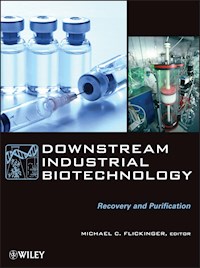
Downstream Industrial Biotechnology E-Book
244,99 €
Mehr erfahren.
- Herausgeber: John Wiley & Sons
- Kategorie: Fachliteratur
- Sprache: Englisch
DOWNSTREAM INDUSTRIAL BIOTECHNOLOGY An affordable, easily accessible desk reference on biomanufacturing, focused on downstream recovery and purification Advances in the fundamental knowledge surrounding biotechnology, novel materials, and advanced engineering approaches continue to be translated into bioprocesses that bring new products to market at a significantly faster pace than most other industries. Industrial scale biotechnology and new manufacturing methods are revolutionizing medicine, environmental monitoring and remediation, consumer products, food production, agriculture, and forestry, and continue to be a major area of research. The downstream stage in industrial biotechnology refers to recovery, isolation, and purification of the microbial products from cell debris, processing medium and contaminating biomolecules from the upstream process into a finished product such as biopharmaceuticals and vaccines. Downstream process design has the greatest impact on overall biomanufacturing cost because not only does the biochemistry of different products ( e.g., peptides, proteins, hormones, antibiotics, and complex antigens) dictate different methods for the isolation and purification of these products, but contaminating byproducts can also reduce overall process yield, and may have serious consequences on clinical safety and efficacy. Therefore downstream separation scientists and engineers are continually seeking to eliminate, or combine, unit operations to minimize the number of process steps in order to maximize product recovery at a specified concentration and purity. Based on Wiley's Encyclopedia of Industrial Biotechnology: Bioprocess, Bioseparation, and Cell Technology, this volume features fifty articles that provide information on down- stream recovery of cells and protein capture; process development and facility design; equipment; PAT in downstream processes; downstream cGMP operations; and regulatory compliance. It covers: * Cell wall disruption and lysis * Cell recovery by centrifugation and filtration * Large-scale protein chromatography * Scale down of biopharmaceutical purification operations * Lipopolysaccharide removal * Porous media in biotechnology * Equipment used in industrial protein purification * Affinity chromatography * Antibody purification, monoclonal and polyclonal * Protein aggregation, precipitation and crystallization * Freeze-drying of biopharmaceuticals * Biopharmaceutical facility design and validation * Pharmaceutical bioburden testing * Regulatory requirements Ideal for graduate and advanced undergraduate courses on biomanufacturing, biochemical engineering, biopharmaceutical facility design, biochemistry, industrial microbiology, gene expression technology, and cell culture technology, Downstream Industrial Biotechnology is also a highly recommended resource for industry professionals and libraries.
Sie lesen das E-Book in den Legimi-Apps auf:
Seitenzahl: 2441
Veröffentlichungsjahr: 2013
Ähnliche




















Table of Contents
Title Page
Copyright
Preface
Contributors
Part I: Introduction
Introduction
Chapter 1: Bioprocess Design, Computer-Aided
1.1 Introduction
1.2 Benefits From the Use of Computer Aids
1.3 Commercially Available Tools
1.4 Monoclonal Antibody Example
1.5 Design and Operation of Multiproduct Facilities
1.6 Summary and Conclusions
References
Part II: Downstream recovery of cells and protein capture
Chapter 2: Cell Separation, Centrifugation
2.1 Introduction
2.2 Centrifugal Separation
2.3 Types of Centrifugal Separators
2.4 Fluid and Particle Dynamics
2.5 The Theoretical Size of a Centrifugal Separator
2.6 Selection of Type and Size of Centrifuge
2.7 Description of Some Applications
2.8 Installation and Operation
2.9 Centrifugation Versus Microfiltration
2.10 Nomenclature
References
Chapter 3: Cell Disruption, Micromechanical Properties
3.1 Introduction
3.2 Microorganisms: Composition and Morphology
3.3 Micromechanical Properties of Microorganisms
3.4 Cell Disruption
3.5 Comparison of Different Cell Disruption Devices
3.6 Correlation of Micromechanical Results with Cell Disruption Results
3.7 Nomenclature
3.8 Greek Letters
References
Chapter 4: Cell Separation, Yeast Flocculation
4.1 Introduction
4.2 Microbial Aggregation and Yeast Flocculation: Scope and Definitions
4.3 Genetics of Yeast Flocculation
4.4 Molecular Mechanism of Yeast Flocculation
4.5 Inductively Versus Constitutively Flocculent Strains
4.6 Environmental Factors Affecting Yeast Flocculation
4.7 Yeast Flocculation and Biotechnological Processes
4.8 Conclusions
References
Chapter 5: Cell Wall Disruption and Lysis
5.1 Introduction
5.2 The Cell Wall
5.3 Assessment of the Disruption Yield
5.4 Methods of Cell Wall Disruption
5.5 Effects of Cell Disruption on Downstream Operations
5.6 Process Intensification By Integration of Disruption with Protein Capture
References
Chapter 6: Expanded Bed Chromatography, Surface Energetics of Biomass Deposition
6.1 Introduction
6.2 Technical Challenges in EBA
6.3 Surface Thermodynamics of Biomass Deposition in EBA
6.4 Surface Energetics and Protein Adsorption
6.5 Conclusion
6.6 Nomenclature
References
Further Reading
Chapter 7: Filter Aids
7.1 Introduction
7.2 Process Clarification
7.3 Porous Media in Dynamic Process Filtrations
7.4 Fundamental Principles of Diatomite Filtration
7.5 Grade Selection and Optimization
7.6 Systematic Methods Development Approach to Grade Selection
7.7 Summary
References
Chapter 8: Protein Adsorption, Expanded Bed
8.1 Introduction
8.2 Theory
8.3 Principles of Operation
8.4 Equipment
8.5 Applications
References
Further Reading
Part III: Process Development in Downstream Purification
Chapter 9: Scaledown Of Biopharmaceutical Purification Operations
9.1 Introduction
9.2 General Considerations
9.3 Centrifugation
9.4 Homogenization
9.5 Refolding
9.6 Precipitation
9.7 Chromatography
9.8 Microfiltration And Ultrafiltration/Diafiltration (UF/DF)
9.9 Viral Clearance Via Chromatography And Filtration
9.10 Viral Inactivation
9.11 Membrane Adsorbers
9.12 Summary
9.13 List Of Abbreviations
9.14 Nomenclature
References
Chapter 10: Adsorption in Simulated Moving Beds (SMB)
10.1 Introduction
10.2 Fundamentals of Chromatographic Separations
10.3 Design of Operating Conditions
10.4 Applications
10.5 Advances of SMB Technology
10.6 Concluding Remarks
10.7 Nomenclature
References
Further reading
Chapter 11: Adsorption of Proteins with Synthetic Materials
11.1 Interfaces
11.2 Proteins at Interfaces
References
Chapter 12: Affinity Fusions for Protein Purification
12.1 Introduction
12.2 Systems for Rapid Protein Capture
12.3 Stabilization of Expressed Proteins
12.4 Detection of Produced Proteins
12.5 Removal of Affinity Tags
12.6 Utilization of Fusion Proteins as Antigens
12.7 Subunit Immunogens for Vaccine Research
12.8 Conclusions
References
Chapter 13: Bioseparation, Magnetic Particle Adsorbents
13.1 Introduction
13.2 Selected Scalable Synthesis Procedures
13.3 Magnetic Adsorbents for Laboratory Separations
13.4 Magnetic Separation Techniques
13.5 Summary
References
Chapter 14: High Throughput Technologies in Bioprocess Development
14.1 Introduction
14.2 HTT Applied to Upstream Cell Culture Development
14.3 HTT Applied to Downstream Purification Development
14.4 Analysis Needs for High Throughput Formats
14.5 Experimental Design for HTT
14.6 Conclusion
References
Chapter 15: Large-Scale Protein Purification, Self-Cleaving Aggregation Tags
15.1 Introduction
15.2 Conventional Affinity-Tag Technology
15.3 Self-Cleaving in Proteins
15.4 Conventional Self-Cleavable Affinity Tags
15.5 Self-Cleaving Aggregation Tags
15.6 Advantages, Economy and Future Prospects of Self-Cleaving Aggregation-Tag Technologies
References
Chapter 16: Lipopolysaccharide, LPS removal, Depyrogenation
16.1 Introduction
16.2 Endotoxins: Chemical and Physical Properties
16.3 Mechanism of Endotoxin Action
16.4 Techniques Applied for Endotoxin Removal
16.5 Endotoxin Removal in Biotechnology Manufacturing Processes
References
Chapter 17: Porous Media in Biotechnology
17.1 Introduction
17.2 General Definitions
17.3 Characteristics of Porous Media
17.4 Transport Phenomena in Porous Systems
17.5 Porous Media in Bioprocesses
17.6 Conclusion
References
Chapter 18: Protein Aggregation and Precipitation, Measurement and Control
18.1 Introduction
18.2 Combining Methods to Follow Aggregation and Precipitation and Determine The Structure of Complexes
18.3 SPECTRAL METHODS FOR MEASURING SOLUBILITY AND PROTEIN ASSOCIATION
18.4 Understanding Protein-Solvent Interactions Protein Stability in A Practical Sense
18.5 DETERMINING THE SURFACE CHARGE AND HYDROPHOBICITY OF A PROTEIN
18.6 Empirical Models for Salting in and Precipitation with Various Agents
18.7 MODELS FOR DETERMINING THE EFFECT OF CO-SOLVENTS ON PROTEIN FOLDING
18.8 Computer Design of More Soluble Proteins
18.9 Automatic Homology Modeling
18.10 Modeling Using Self-Correcting Distance Geometry with The Programs CLUSTAL, MASIA, NOAH, DIAMOD, and FANTOM, to Develop A 3D Model of A Protein
18.11 Conclusions
References
Part IV: Equipment Design for Downstream Recovery and Protein Purification
Chapter 19: Cleaning and Sanitation in Downstream Processes
19.1 Introduction
19.2 Designing an Effective Cleaning Protocol for Downstream Bioprocesses
19.3 Chromatographic Media
19.4 Cross-Flow Filtration (CFF)
19.5 Equipment
19.6 Sanitization and Sterilization
19.7 Cleaning Validation
19.8 Conclusions
References
Chapter 20: Clean-in-place
20.1 Introduction
20.2 The Requirement for CIP Systems
20.3 General Outline of a CIP Regime
20.4 CIP Chemicals
20.5 CIP Design and Construction
20.6 CIP Configuration
20.7 Automation
20.8 Validation and Verification
References
Further Reading
Chapter 21: Large Scale Chromatography Columns, Modeling Flow Distribution
21.1 Introduction
21.2 Challenges of Scaling up Chromatography
21.3 Analysis on the Wall Effect
21.4 Model the Coupling Between Bed Compression and Flow
21.5 IMPACT OF HARDWARE DESIGN ON THE FLOW IN LARGE COLUMNS
21.6 Modeling the Transport of Elution and Hetp Analysis
Summary
List of Abbreviations
Nomenclature
References
Chapter 22: Pumps, Industrial
22.1 Introduction
22.2 Theory
22.3 Centrifugal Pumps
22.4 Positive Displacement Pumps
22.5 Drivers
22.6 Special Considerations for Bioprocessing Pumps
22.7 Troubleshooting
Additional Reading
Part V: Downstream cGMP Operations
Chapter 23: Affinity Chromatography of Plasma Proteins
23.1 Introduction
23.2 Ligands and Supports for Affinity Purification
23.3 Application of Affinity Chromatography in Plasma Protein Processes
23.4 Quality Control of Affinity-Purified Proteins
23.5 Conclusions
References
Chapter 24: Antibody Purification, Monoclonal and Polyclonal
24.1 Introduction
24.2 Approach to Downstream Processing
24.3 Affinity Chromatography
24.4 Ion-Exchange Chromatography
24.5 Hydrophobic Interaction Chromatography
24.6 Ceramic Hydroxyapatite Chromatography
24.7 Mixed Mode Chromatography
24.8 Purification of IgM
24.9 Platform Processes
24.10 Conclusion
References
Chapter 25: Chromatographic Purification of Virus Particles
25.1 Introduction
25.2 Chromatographic Separation Methods
25.3 Adsorption Chromatography
25.4 Ion Exchange Chromatography
25.5 Hydrophobic Interactions Chromatography
25.6 Multimodal Methods
25.7 Other Multimodal Methods
25.8 Biospecific Affinity Chromatography
25.9 Process Development
25.10 Sample Definition
25.11 Sample Preparation
25.12 Initial Screening
25.13 Biospecific Affinity
25.14 Interpretation of Initial Results
25.15 Concluding Remarks
25.16 Recommended Reading
References
Chapter 26: Chromatography, Hydrophobic Interaction
26.1 Introduction
26.2 Hydrophobic Interaction
26.3 Hydrophobic Interaction Chromatography
26.4 Classifying of Media and Modelling of Chromatographic Results
26.5 The Chromatography Conditions
26.6 Regeneration and Cleaning-in-Place
26.7 Optimization Procedures
26.8 Applications
References
Chapter 27: Chromatography, Radial Flow
27.1 Introduction
27.2 Radial Flow Column Configurations
27.3 Packing Procedures for RFC Columns
27.4 Pressure Drops of RFC Columns
27.5 Comparison of Radial- and Axial Flow Columns
27.6 Pros and Cons of RFC Columns
27.7 Application Examples
27.8 Mathematical Modeling of Radial Flow Chromatography
27.9 Scale-Up of RFC Columns
27.10 Conclusions
Nomenclature
Greek Letters
References
Chapter 28: Drying, Biological Materials
28.1 Introduction
28.2 Drying of Biotechnological Products
28.3 Effect of Drying on Biotechnological Product Quality
28.4 Basic Principle of Drying
28.5 Commonly Used Dryers
28.6 Some Emerging Drying Technologies
28.7 Closing Remarks
References
Chapter 29: Freeze-Drying, Pharmaceuticals
29.1 Introduction
29.2 Pharmaceutical Freeze-Drying: Fundamentals
29.3 Challenges and New Advancements in Freeze-Drying
References
Chapter 30: Freezing, Biopharmaceutical
30.1 Introduction
30.2 Freezing of Solutions
30.3 Thawing of Solutions
30.4 Freeze-Thaw Scale Up
30.5 Conclusion
References
Chapter 31: Membrane Chromatography
31.1 Introduction
31.2 The Basic Concept
31.3 Limiting Factors in Membrane Adsorption Processes
31.4 Optimizing The Performance of Adsorptive Membranes
31.5 POSITIONING OF MEMBRANE ADSORPTION IN A PURIFICATION TRAIN
31.6 Applications
31.7 Concluding Remarks
Nomenclature
References
Chapter 32: Membrane Separations
32.1 Membrane Separations
32.2 Introduction
32.3 Three major applications of membrane separations
32.4 Classification of Membranes and Membrane Processes
32.5 Membrane Chemistry, Structure and Function
32.6 Methods of Membrane Manufacture
32.7 How Membrane Processes are Operated
32.8 Conclusion
References
Chapter 33: Plasmid Purification
33.1 Introduction
33.2 Therapeutic Plasmids
33.3 Cell Lysis
33.4 Chromatographic Methods
33.5 Nonchromatographic Methods
33.6 Industrial Processes
33.7 Conclusions and Perspectives
References
Chapter 34: Protein Chromatography, Manufacturing Scale
34.1 Introduction
34.2 Scale-Up of Chromatography
34.3 Impact of Chromatographic Parameters at Manufacturing Scale
34.4 Practical Issues Regarding Chromatography at Manufacturing Scale
34.5 Basic Chromatography Setup
References
Chapter 35: Protein Crystallization, Kinetics
35.1 Protein Molecules in Solution
35.2 Homogeneous Nucleation
35.3 Heterogeneous Nucleation
35.4 Nonclassical Approach to Nucleation
35.5 Crystal Growth
35.6 Crystallization in Forced Solution Flow Regime
References
Chapter 36: Protein Purification, Aqueous Liquid Extraction
36.1 Introduction
36.2 Biochemical Fundamentals
36.3 Alternative Two-Phase Systems
36.4 Applications
36.5 Conclusion
References
Chapter 37: Protein Ultrafiltration
37.1 Introduction
37.2 Theoretical Principles
37.3 Membrane Materials, Characterization, and Fouling
37.4 Modules and Devices
37.5 Equipment
37.6 Process Configurations
37.7 Process Design—Ultrafiltration
37.8 High Performance Tangential Flow Filtration
37.9 Scale-Up
Nomenclature
References
Chapter 38: Virus Retentive Filters
38.1 Process Virology Overview
38.2 Principles of Operation
38.3 Physical Attributes
38.4 Process Considerations
38.5 Filtration Modes
38.6 Filter Classes
38.7 Integrity Testing
38.8 Performance
38.9 Validation (Virus Clearance Evaluation) Studies
38.10 Future Trends
38.11 Concluding Comments
List of Abbreviations
References
Part VI: Biopharmaceutical Facility Validation
Chapter 39: Biopharmaceutical Facility Design and Validation
39.1 Introduction
39.2 Designing for Compliance
39.3 Risk Management
39.4 Qualification/Verification
39.5 Process Validation
List of Abbreviations
References
Chapter 40: Closed Systems in Bioprocessing
40.1 Introduction
40.2 Definition of Closed Systems
40.3 Closed System Design
40.4 Impact on Facility Design
40.5 Impact on Operations
40.6 Summary
References
Chapter 41: Facility Design for Single Use (SU) Downstream Materials
41.1 Introduction
41.2 Facility Design
41.3 Cell Culture
41.4 Purification
41.5 Applications in A Fill and Finish Plant
41.6 Media Buffer
41.7 Costs
41.8 Conclusions
References
Chapter 42: Cgmps For Production Rooms
42.1 General Points for Facility Design
42.2 Design of HVAC System Parameters
References
Additional Reading
Chapter 43: Heating, Ventilation, and Air Conditioning
43.1 Introduction
43.2 HVAC Design Process
43.3 Regulation and Code Consideration
43.4 Temperature, Humidity, and Airflow
43.5 Pressurization
43.6 Air Handling Systems
43.7 Dehumidifiers
43.8 Humidifiers
43.9 Air Handling Unit Application
43.10 Return and Exhaust Fan Selection and Locations
43.11 HEPA Filters
43.12 Terminal Air Control Devices
43.13 Air Terminal Outlets
43.14 Duct Materials, Pressure, and Cleanability
43.15 System Operating Procedures
43.16 Emergency Electrical Power
43.17 Building Control and Automation Systems
43.18 Testing, Balancing, and Cleaning
43.19 Validation
43.20 Summary
References
Chapter 44: Sterilization-in-Place (SIP)
44.1 Introduction
44.2 Applications
44.3 Steam-in-Place Technology
44.4 Alternative SIP Technologies
References
Part VII: FDA cGMP Regulatory Compliance
Chapter 45: Pharmaceutical Bioburden Testing
45.1 Introduction
45.2 Bioburden Considerations
45.3 Standard Industry Methodologies
45.4 New and Rapid Technologies
45.5 Conclusion
References
Further Reading
Chapter 46: Chromatography, Industrial Scale Validation
46.1 Introduction
46.2 Systems Requirements
46.3 CFR Part 11 Software Evaluation Checklist for Closed Systems which do not use Biometrics
46.4 Gmp Requirements
46.5 Conclusion
Chapter 47: GMPs and GLSPs
47.1 Introduction
47.2 Facility Regulatory Guidelines
47.3 Major Focuses of Facility Performance Validation
47.4 Investigations Of Nonconformances And Deviations
Chapter 48: Quality by Design (QBD)
48.1 Biopharmaceutical Development
48.2 Key Steps for Implementing QbD
48.3 Quality Risk Management for Biopharmaceuticals
48.4 Design Space(S) for Biopharmaceuticals
48.5 PAT in Biopharmaceutical Manufacture
48.6 Hypothetical QbD Case Study for a Biopharmaceutical: Anion Exchange Chromatography
48.7 FDA's QbD Pilot Program for Biopharmaceuticals
48.8 Summary
48.9 List of Abbreviations
Chapter 49: Regulatory Requirements, European Community
49.1 The European Union
49.2 The European Medicines Agency (EMEA)
49.3 New Drug Approval Routes Coordinated by the Emea
49.4 The Emea in the Context of Drug Development and Manufacture
49.5 Concluding Remarks
References
Index
Copyright © 2013 by John Wiley & Sons, Inc. All rights reserved
Published by John Wiley & Sons, Inc., Hoboken, New Jersey
Published simultaneously in Canada
No part of this publication may be reproduced, stored in a retrieval system, or transmitted in any form or by any means, electronic, mechanical, photocopying, recording, scanning, or otherwise, except as permitted under Section 107 or 108 of the 1976 United States Copyright Act, without either the prior written permission of the Publisher, or authorization through payment of the appropriate per-copy fee to the Copyright Clearance Center, Inc., 222 Rosewood Drive, Danvers, MA 01923, (978) 750-8400, fax (978) 750-4470, or on the web at www.copyright.com. Requests to the Publisher for permission should be addressed to the Permissions Department, John Wiley & Sons, Inc., 111 River Street, Hoboken, NJ 07030, (201) 748-6011, fax (201) 748-6008, or online at http://www.wiley.com/go/permission.
Limit of Liability/Disclaimer of Warranty: While the publisher and author have used their best efforts in preparing this book, they make no representations or warranties with respect to the accuracy or completeness of the contents of this book and specifically disclaim any implied warranties of merchantability or fitness for a particular purpose. No warranty may be created or extended by sales representatives or written sales materials. The advice and strategies contained herein may not be suitable for your situation. You should consult with a professional where appropriate. Neither the publisher nor author shall be liable for any loss of profit or any other commercial damages, including but not limited to special, incidental, consequential, or other damages.
For general information on our other products and services or for technical support, please contact our Customer Care Department within the United States at (800) 762-2974, outside the United States at (317) 572-3993 or fax (317) 572-4002.
Wiley also publishes its books in a variety of electronic formats. Some content that appears in print may not be available in electronic formats. For more information about Wiley products, visit our web site at www.wiley.com.
Library of Congress Cataloging-in-Publication Data:
Encyclopedia of industrial biotechnology. Selections.
Downstream industrial biotechnology : recovery and purification / edited by Michael C. Flickinger.
pages cm
Includes bibliographical references and index.
ISBN 978-1-118-13124-4 (hardback)
1. Biotechnology-Encyclopedias. I. Flickinger, Michael C., editor of compilation. II. Title.
TP248.16.E533 2013
660.6--dc23
2012030526
Preface
Downstream Industrial Biotechnology is a compilation of essential in depth articles, organized topically and listed in alphabetical format, for biopharmaceutical, bioprocess and biologics process scientists, engineers and regulatory professionals from the comprehensive seven volumes of the Encyclopedia of Industrial Biotechnology. Process development for the manufacture of complex biomolecules involves solving many scientific, compliance and technical problems quickly in order to support pilot, preclinical and clinical development, technology transfer and manufacturing start-up. Every organization develops new processes from accumulated process knowledge. Accumulated process knowledge has a very significant impact on accelerating the time to market (and reducing the financial resources required) of products manufactured using recombinant DNA and living microbes, cells, transgenic plants or transgenic mammals. However, when an entirely new upstream platform or downstream unit operation is needed, there are few books that will quickly provide the depth of industry-relevant background. Downstream Industrial Biotechnology can fill this void as an advanced desk reference. This volume includes relevant biology, protein purification and engineering literature with abundant process examples provide by industry subject matter experts (SMEs) and academic scholars. This desk reference will also be useful for advanced biomanufacturing students and professionals to quickly gain in depth knowledge on how to design processes (and facilities) capable of being licensed to manufacture enzymes, biopharmaceutical intermediates, human and veterinary biopharmaceuticals or vaccines. The opportunity is yours to leverage the combined knowledge from scores of industry professionals from around the world who have contributed to Downstream Industrial Biotechnology to reduce the time and cost to deliver engineered proteins, biomolecules and cost-effective biologics to the market and especially to millions of patients worldwide.
Professor Michael C. Flickinger, Editor
Golden LEAF Biomanufacturing Training and Education Center (BTEC)
Department of Chemical and Biomolecular Engineering
North Carolina State University
Raleigh, North Carolina, 27695-7928, USA
Contributors
Muhammad Aasim Downstream Bioprocessing Laboratory, School of Engineering and Science, Jacobs University, Bremen, Germany
Oscar Aguilar Centro de Biotecnologa Tecnologico de Monterrey, Monterrey, Mexico
Mattias Ahnfelt GE Healthcare Bio-Sciences AB, Uppsala, Sweden
Hazel Aranha GAEA Resources Inc., Northport, New York, USA
Claude Artois University of Surrey, Guildford, Surrey, United Kingdom; SmithKline Beecham Biologicals, Rixensart, Belgium
Hans Axelsson Alfa Laval AB, Tumba, Sweden
Diana C.S. Azevedo Federal University of Ceara, Fortaleza-CE, Brazil
H.S.C. Barbosa Center of Chemistry, University of Minho, Campus de Gualtar, Braga, Portugal
Sonja Berensmeier Technische Universitat Munchen, Institute of Biochemical Engineering, Garching, Germany
Joseph Bertolini CSL Bioplasma, Broadmeadows, Victoria, Australia
Darcy Birse Fast Trak Biopharma Services, GE Healthcare, Piscataway, New Jersey, USA
Eggert Brekkan GE Healthcare Bio-Sciences AB, Uppsala, Sweden
Phil J. Bremer University of Otago, Dunedin, New Zealand
Kurt Brorson Office of Biotech Products, Center for Drug Evaluation and Research, Food and Drug Administration, Silver Spring, Maryland, USA
Kurt Brorson Office of Pharmaceutical Science, Center for Drug Evaluation and Research, United States Food and Drug Administration
Thierry Burnouf Human Protein Process Sciences, Lille, France
Trent Carrier Invitrogen, part of Life Technologies, Grand Island, New York, USA
David Clark Centocor R&D, Spring House, Pennsylvania, USA
Efrem Curcio University of Calabria, Arcavacata di Rende (CS), Italy
Jean Didelez University of Surrey, Guildford, Surrey, United Kingdom; SmithKline Beecham Biologicals, Rixensart, Belgium
Gianluca Di Profio Institute on Membrane Technology (ITM-CNR), c/o University of Calabria, Arcavacata di Rende (CS), Italy; University of Calabria, Arcavacata di Rende (CS), Italy
Dennis Dobie Fluor Daniel, Marlton, New Jersey, USA
Ed Domanico Tri-Clover, Valencia, California, USA
Enrico Drioli Institute on Membrane Technology ITM-CNR, At University of Calabria, Rende, Italy
Zhiwu Fang Amgen Inc., Systems Informatics, Thousand Oaks, California, USA
Patrick Florent University of Surrey, Guildford, Surrey, United Kingdom; SmithKline Beecham Biologicals, Rixensart, Belgium
Matthias Franzreb Karlsruhe Institute of Technology, Institute for Functional Interfaces, Eggenstein-Leopoldshafen, Germany
Pete Gagnon Validated Biosystems, San Clemente, California, USA
F.A.P. Garcia University of Coimbra, Coimbra, Portugal
Tom Gervais Centocor R&D Spring House, Pennsylvania, USA
Iraj Ghazi The Ohio State University, Columbus, Ohio, USA
Siddartha Ghose Aston University, Birmingham, United Kingdom
Guy Godeau University of Surrey, Guildford, Surrey, United Kingdom; SmithKline Beecham Biologicals, Rixensart, Belgium
Susanne Graslund Structural Genomics Consortium, Karolinska Institutet, Stockholm, Sweden
Tingyue Gu Ohio University, Athens, Ohio, USA
Martin Hammarstrom Structural Genomics Consortium, Karolinska Institutet, Stockholm, Sweden
Richard Hassett Invitrogen, part of Life Technologies, Grand Island, New York, USA
Eva Heldin GE Healthcare Bio-Sciences AB, Uppsala, Sweden
Nathaniel G. Hentz, PhD North Carolina State University, Golden LEAF Biomanufacturing Training and Education Center, Raleigh, North Carolina, USA
Birgit Hickstein Clausthal University of Technology, Institute of Chemical Process Engineering, Clausthal-Zellerfeld, Germany
Timothy John Hobley Technical University of Denmark, Systems of Biology, Lyngby, Denmark
Tony Hunt Advanced Minerals Corporation, Santa Barbara, California, USA
Omkar Joshi Bayer HealthCare LLC, Berkeley, California, USA
Varsha S. Joshi Chemical Engineering Department, Indian Institute of Technology Delhi, Hauz Khas, New Delhi, India
Adalberto Pessoa Jr. School of Pharmaceutical Sciences, University of Sao Paulo, Brazil
Amaro G. Barreto Jr. Escola de Quimica, Universidade Federal do Rio de Janeiro, Rio de Janeiro-RJ,Brazil
Ivanildo J. Silva Jr. Federal University of Ceara, Fortaleza-CE, Brazil
Beth H. Junker Bioprocess R&D Merck Research Laboratories, Rahway, New Jersey, USA
Manohar Kalyanpur Consultant, Bioseparations & Pharmaceutical Validation, Plaisir, France
Ingo Kampen Technische Universitat, Institute for Particle Technology, Braunschweig, Germany
Mansoor A. Khan Office of Pharmaceutical Science, Center for Drug Evaluation and Research, United States Food and Drug Administration
Alexandros Koulouris Intelligen Europe, Thermi, Greece
Maria-Regina Kula Heinrich Heine University Dusseldorf, Julich, Germany
Ingo Kampen Arno Kwade Technische Universitat, Institute for Particle Technology, Braunschweig, Germany
Per Kaarsnas Institute of Biology and Chemical Engineering, Malardalens hogskola, Eskilstuna, Sweden
Marcelo Fernandez Lahore Downstream Bioprocessing Laboratory, School of Engineering and Science, Jacobs University, Bremen, Germany
Philippe Lam Pharmaceutical Development Genentech, Inc., South San Francisco, California, USA
Chung Lim Law The University of Nottingham, Malaysia Campus, Selangor, Malaysia
Jinsong Liu Product Development, Abraxis BioScience, Melrose Park, Illinois, USA
Scott Lute Office of Biotech Products, Center for Drug Evaluation and Research, Food and Drug Administration, Silver Spring, Maryland, USA
Perola O. Magalhaes University of Brasilia, Brasilia, DF, Brazil
Robert Z. Maigetter Centocor R&D, Spring House, Pennsylvania, USA
J.C. Marcos Center of Chemistry, University of Minho, Campus de Gualtar, Braga, Portugal
Joseph McGuire Oregon State University, Corvallis, Oregon, USA
George Miesegaes Office of Biotech Products, Center for Drug Evaluation and Research, Food and Drug Administration, Silver Spring, Maryland, USA
Jamie Moore Pharmaceutical Development Genentech, Inc., South San Francisco, California, USA
Manuel Mota IBB, Centro de Eng. Biologica, University of Minho, Portugal
Arun S. Mujumdar National University of Singapore, Singapore
P.T. Noble Fluor Daniel GmbH, Wiesbaden, Germany
Jeffery N. Odum CPIP Biotech Sector Lead & Director of Operations Integrated Project Services
Jeffery Odum IPS, Morrisville (RTP), North Carolina, USA
Victor Papavasileiou Intelligen Europe, Leiden, The Netherlands
Jun T. Park Office of Pharmaceutical Science, Center for Drug Evaluation and Research, United States Food and Drug Administration
Steve Peppers Invitrogen, part of Life Technologies, Grand Island, New York, USA
Demetri Petrides Intelligen, Inc., Scotch Plains, New Jersey, USA
Urs Alexander Peuker TU Bergakademie Freiberg, Institute for Mechanical Process Engineering and Mineral Processing, Freiberg, Germany
John Pieracci Biogen Idec, San Diego, California, USA
Tom Piombino Integrated Project Services, Inc., Lafayette Hill, Pennsylvania, USA
Tina Pitarresi Fast Trak Biopharma Services, GE Healthcare, Piscataway, New Jersey, USA
Mirjana Radosevich Human Protein Process Sciences, Lille, France
Anurag S. Rathore Chemical Engineering Department, Indian Institute of Technology Delhi, Hauz Khas, New Delhi, India
Erik K. Read Office of Pharmaceutical Science, Center for Drug Evaluation and Research, United States Food and Drug Administration
James J. Reilly Laureate Pharma, Inc., Princeton, New Jersey, USA
Robert van Reis Genentech, Inc., South San Francisco, California, USA
Craig Robinson GE Healthcare, Westborough, Massachusetts, USA
Carl A. Rockburne The Rockburne Group, Atlanta, Georgia, USA
Gustav Rodrigo GE Healthcare Bio-Sciences AB, Uppsala, Sweden
Cesar C. Santana School of Chemical Engineering, State University of Campinas, Campinas-SP, Brazil
Maria Schafer TU Bergakademie Freiberg, Institute for Mechanical Process Engineering and Mineral Processing, Freiberg, Germany
Catherine H. Schein Sealy Center for Structural Biology and Molecular Biophysics, Sealy Center for Vaccine Development, University of Texas Medical Branch, Galveston, Texas, USA
Richard Brent Seale University of Otago, Dunedin, New Zealand
Klaus Selber Heinrich Heine University Dusseldorf, Julich, Germany
Rakhi B. Shah Office of Pharmaceutical Science, Center for Drug Evaluation and Research, United States Food and Drug Administration
Bryan Shingle Centocor R&D Spring House, Pennsylvania, USA
Charles Siletti Intelligen, Inc., Mt. Laurel, New Jersey, USA
Eduardo V. Soares Bioengineering Laboratory, Superior Institute of Engineering from Porto Polytechnic Institute, Porto, Portugal; IBB-Institute for Biotechnology and Bioengineering, Centre for Biological Engineering, Universidade do Minho, Braga, Portugal
Gail Sofer GE Healthcare, Piscataway, New Jersey, USA
Bob Stover Tri-Clover, Valencia, California, USA
Jorg Thommes Biogen Idec, San Diego, California, USA
Owen Thomas University of Birmingham, Biochemical Engineering, Birmingham, United Kingdom
Claudio Thomasin Centocor R&D, Spring House, Pennsylvania, USA
Michiel E. Ultee Laureate Pharma, Inc., Princeton, New Jersey, USA
Greg Van Slyke Invitrogen, part of Life Technologies, Grand Island, New York, USA
Rami Reddy Vennapusa Downstream Bioprocessing Laboratory, School of Engineering and Science, Jacobs University, Bremen, Germany
Gary Walsh Industrial Biochemistry and Materials Surface Sciences Institute, University of Limerick, Limerick City, Ireland
Dave A. Wareheim Centocor R&D Spring House, Pennsylvania, USA
Sandy Weinberg Clayton State University, Atlanta, Georgia, USA
Christian Wood Centocor R&D Spring House, Pennsylvania, USA
David W. Wood The Ohio State University, Columbus, Ohio, USA
Alexander Yelshin Polotsk State University,~Novopolotsk, Belarus
Inna Yelshina Polotsk State University, Novopolotsk, Belarus
Jonathan Yourkin GE Instruments, Boulder, Colorado
David (Xiaojian) Zhao Invitrogen, part of Life Technologies, Grand Island, New York, USA
Andrew L. Zydney The Pennsylvania State University, University Park, Pennsylvania, USA
Part I
Introduction
Introduction
Downstream biomanufacturing processes increase product concentration and purity, while decreasing process volume. Therefore, decreasing process volume without loss of product is essential to increase product purity, while at the same time eliminating product contaminants. The biochemistry of different products (peptides, proteins, hormones, low-molecular-weight metabolic intermediates, complex antigens etc.), all of which are liable to degradation, dictates that different separation methods be used to isolate and purify these products from contaminating biomolecules produced by the upstream process. Optimal downstream product yield is the yield of recovered product in the appropriate final biologically active form and purity. Purified but inactive product is a contaminant, reduces overall process yield, and may have serious consequences on clinical safety and efficacy. That is why downstream process design has the greatest impact on the overall biomanufacturing cost.
As product purity increases, more product can be lost to inactivation, nonspecific binding to equipment surfaces, binding to membranes, and chromatography media or by precipitation, thus decreasing the recovery of product. Because of these potential losses, each additional separation step may reduce overall yield. Therefore, downstream separation scientists and engineers are continually seeking to eliminate or combine unit operations to minimize the number of process steps in order to maximize product recovery at a specified concentration and purity.
Section II of Downstream Industrial Biotechnology includes detailed methods used for the initial steps of cell separation, cell disruption (for intracellular products), filter aids and adsorbents for rapid protein capture and initial volume reduction. Each of these steps is critically affected by upstream process design (volume, product concentration, and contaminants derived from the growth media or host cells), which impacts every subsequent step of downstream product recovery and purification. In particular, cell separation and cell disruption methods can have a dramatic effect on contributing (or minimizing) contaminants such as nucleic acids, host cell proteins, cell membrane fragments or pyrogenic lipopolysaccharides that need to be removed from the final product in subsequent separation steps.
Although each upstream process decision impacts downstream product recovery and purification, not all contaminants come from upstream operations. In some cases contaminants can also be generated by downstream operations, as inactivated product (due to heating, proteolysis, photoinactivation or precipitation), bioburden or microbial contamination introduced during downstream operations (from the environment, water, operations staff etc.) or contaminants derived from materials in direct contact with the product (extractable, leachable contaminants).
The downstream steps described in Section III are optimized by absorbent surface area, selectivity, binding capacity, and degree of volume reduction to purify product in the concentration range needed for each subsequent step to meet overall criteria of scale, stability, purity, and potency. Therefore, close integration of the characteristics of the upstream biological system that produces the product with the engineering and optimal performance of the downstream product separation, concentration. and purification operations are essential. This means that separation engineers, bioseparation and bioanalytical scientists, and manufacturing operations staff with broad expertise in working with labile biological molecules all need to work and communicate effectively as a team to design a downstream process that can be scaled from the laboratory bench and transferred to the manufacturing scale. It also means that downstream process scientists must continually provide feedback information to upstream process engineers and scientists to minimize the impact of upstream changes (cell line changes, media composition changes, the addition of antifoam, degradation of product during in-process storage or holds) on downstream separation operations. Therefore, the companion volumes of Upstream Industrial Biotechnology should also be consulted when designing a downstream process.
Each downstream step requires process development and optimization (for purity, overall yield) because of the complexity of the structure of the biological molecules being purified and the complexity of contaminants. Section III also includes approaches for scale down of purification operations. Each downstream step is expensive to optimize at the pilot or manufacturing scale. This expense is not only due to the scale of the equipment and expense of the separation media, but also because of the large quantity of valuable product needed to carry out optimization studies at scale.
Downstream operations require specialized equipment designed for separation of proteins, peptides, virus, particulate antigens or low-molecular-weight biomolecules while minimizing product degradation. Sections IV and V focus on large scale equipment design and fluid transfer systems, and describe in detail many types of industrial bioseparation equipment. Of particular concern for products derived from mammalian cell lines are effective methods for virus inactivation and viral filtration that can be validated with model virus challenge. These methods are described in section V.
Not only do the upstream and downstream processes need to be designed to meet cGMPs and be capable of being licensed, but the facility used to carry out the process also must be designed so that it can be licensed. Section VI and VII of Downstream address facility design, facility validation, clean-in-place (CIP) and sterilization-in-place (SIP) methods. A major advance in facility design for downstream processes is the growing impact of single use (SU) disposable downstream materials and this is described in Section VI.
The overall goal of all downstream operations is not only to purify bulk product for formulation, but to achieve regulatory compliance and licensure so that final formulated and filled product can be released to consumers, physicians or patients. Section VII describes how Process Analytical Technology (PAT), bioburden testing and Quality by Design (QbD) impact downstream process design and contribute to regulatory compliance both for the USFDA and European regulatory agencies.
Chapter 1
Bioprocess Design, Computer-Aided
Victor Papavasileiou
Intelligen Europe, Leiden, The Netherlands
Charles Siletti
Intelligen, Inc., Mt. Laurel, New Jersey
Alexandros Koulouris
Intelligen Europe, Thermi, Greece
Demetri Petrides
Intelligen, Inc., Scotch Plains, New Jersey
1.1 Introduction
Bioprocess design is the conceptual work done prior to commercialization of a biological product. Given information on the potential market demand for a new product, bioprocess design endeavors to answer the following questions: What are the required amounts of raw materials and utilities for manufacturing a certain amount of product per year? What is the required size of process equipment and supporting utilities? Can the product be manufactured in an existing facility or is a new plant required? What is the total capital investment for a new facility? What is the manufacturing cost? How long does a single batch take? What is the minimum time between consecutive batches? During the course of a batch, what is the demand for various resources (e.g. raw materials, labor, and utilities)? Which process steps or resources are the likely production bottlenecks? What process and equipment changes can increase throughput? What is the environmental impact of the process? Which design is the “best” among several plausible alternatives?
Lesen Sie weiter in der vollständigen Ausgabe!
Lesen Sie weiter in der vollständigen Ausgabe!
Lesen Sie weiter in der vollständigen Ausgabe!
Lesen Sie weiter in der vollständigen Ausgabe!
Lesen Sie weiter in der vollständigen Ausgabe!
Lesen Sie weiter in der vollständigen Ausgabe!
Lesen Sie weiter in der vollständigen Ausgabe!
Lesen Sie weiter in der vollständigen Ausgabe!
Lesen Sie weiter in der vollständigen Ausgabe!
Lesen Sie weiter in der vollständigen Ausgabe!
Lesen Sie weiter in der vollständigen Ausgabe!
Lesen Sie weiter in der vollständigen Ausgabe!
Lesen Sie weiter in der vollständigen Ausgabe!
Lesen Sie weiter in der vollständigen Ausgabe!
Lesen Sie weiter in der vollständigen Ausgabe!
Lesen Sie weiter in der vollständigen Ausgabe!
Lesen Sie weiter in der vollständigen Ausgabe!
Lesen Sie weiter in der vollständigen Ausgabe!
Lesen Sie weiter in der vollständigen Ausgabe!
Lesen Sie weiter in der vollständigen Ausgabe!
Lesen Sie weiter in der vollständigen Ausgabe!
Lesen Sie weiter in der vollständigen Ausgabe!
Lesen Sie weiter in der vollständigen Ausgabe!
Lesen Sie weiter in der vollständigen Ausgabe!
Lesen Sie weiter in der vollständigen Ausgabe!
Lesen Sie weiter in der vollständigen Ausgabe!
Lesen Sie weiter in der vollständigen Ausgabe!
Lesen Sie weiter in der vollständigen Ausgabe!
Lesen Sie weiter in der vollständigen Ausgabe!
Lesen Sie weiter in der vollständigen Ausgabe!
Lesen Sie weiter in der vollständigen Ausgabe!
Lesen Sie weiter in der vollständigen Ausgabe!
Lesen Sie weiter in der vollständigen Ausgabe!
Lesen Sie weiter in der vollständigen Ausgabe!
Lesen Sie weiter in der vollständigen Ausgabe!
Lesen Sie weiter in der vollständigen Ausgabe!
Lesen Sie weiter in der vollständigen Ausgabe!
Lesen Sie weiter in der vollständigen Ausgabe!
Lesen Sie weiter in der vollständigen Ausgabe!
Lesen Sie weiter in der vollständigen Ausgabe!
Lesen Sie weiter in der vollständigen Ausgabe!
Lesen Sie weiter in der vollständigen Ausgabe!
Lesen Sie weiter in der vollständigen Ausgabe!
Lesen Sie weiter in der vollständigen Ausgabe!
Lesen Sie weiter in der vollständigen Ausgabe!
Lesen Sie weiter in der vollständigen Ausgabe!
Lesen Sie weiter in der vollständigen Ausgabe!
Lesen Sie weiter in der vollständigen Ausgabe!
Lesen Sie weiter in der vollständigen Ausgabe!
Lesen Sie weiter in der vollständigen Ausgabe!
Lesen Sie weiter in der vollständigen Ausgabe!
Lesen Sie weiter in der vollständigen Ausgabe!
Lesen Sie weiter in der vollständigen Ausgabe!
Lesen Sie weiter in der vollständigen Ausgabe!
Lesen Sie weiter in der vollständigen Ausgabe!




