


9,59 €
Mehr erfahren.
- Herausgeber: ONE
- Kategorie: Gesellschafts- und Liebesromane
- Sprache: Englisch
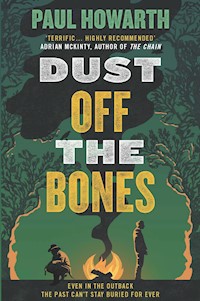
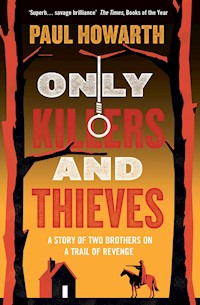
The Times Historical Book of the Month ''Vivid, page-turning [and] unlike anything else you'll read this year. Do not miss it' Gabriel Bergmoser, author of The Hunted Even in the vast outback, the past can't stay buried forever Death follows young Tommy McBride everywhere. Five years ago his family was murdered, and now a freak accident sends him fleeing into the wilderness of the Australian outback with a man lying dead in his wake. But Tommy is haunted by even worse - as children, he and his brother Billy witnessed the state-sanctioned massacre of the Indigenous Kurrong people by the ruthless Native Police Inspector Noone, and they haven't seen each other since. When an official inquiry is launched into the massacre, the successful life that Billy has built for himself comes under threat. He sets off in search of his long lost brother, but isn't the only one on Tommy's trail―Inspector Noone is looking for him too, and will do anything to stop the truth from coming to light.
Das E-Book können Sie in Legimi-Apps oder einer beliebigen App lesen, die das folgende Format unterstützen:
Veröffentlichungsjahr: 2021
Ähnliche



















1
Praise for ONLY KILLERS AND THIEVES
Book of the Year in The Times and Crime Time
‘Outstanding debut… a powerful novel of crimes in a bleak landscape’
Nick Rennison, Sunday Times
‘Gripping… Howarth has a real feel for small details of characterisation and setting… [an] intriguing new writer’
Alexander Larman, Observer
‘A gripping and vivid novel. Paul Howarth brings early Queensland to life so well that you can practically smell the horses’
John Boyne
‘Just try putting this book down. An original, breathless, compelling debut’
Jess Walter
‘Only Killers and Thieves is a historical novel, but the savagery it depicts is still a matter to be reckoned with in contemporary Australia… an impressive debut’
Tim Winton
‘Howarth’s stunning debut has shades of Cormac McCarthy and Patrick deWitt… a book that grips from the outset’
Sarah Gilmartin, Irish Times
‘Australia in the 1880s feels like the Wild West in this outstanding debut about the hunt for a family’s killers’
The Times
‘Paul Howarth has delivered an instant classic’
Irish Independent
‘Vivid, hypnotic, horrifying… stunning’
Sunday Express
2
3
5
7
To my parents, Stephen and Marion, for making anything possible
8
9
‘The chief topic of the past week has been the trial of the seven black troopers for the murder of aboriginals at Irvinebank, and that of ex Sub-Inspector Nichols for being an accessory before the fact to the same. The trial of Nichols only lasted about half a day. The evidence for the Crown was of such a nature [that] the police magistrate said there was not much use going on with the case. The prisoner was discharged amid considerable applause.’
from ‘the irvinebank murders’, an article in The Queenslander, 7 february 1885 (abridged)
10
CONTENTS
PROLOGUE · 1885
Central Queensland, Australia
12
They stood on the bank of the desert crater, staring down into hell. Trampled humpies, scattered possessions, discarded weapons, severed limbs, all bogged in a churn of crimson mud; the camp had become a slaughter yard. One of the men wept openly. The other vomited on the ground. Not two days ago they had been here, in this crater, welcomed by the Kurrong people, attempting to preach to them, sharing a meal. Now that same entire community lay heaped in an enormous pyre: a knot of mangled bodies, popping, crackling, peeling as they burned. A thick smoke column rising. A smell both men would carry to their graves.
After four days’ non-stop riding over a wasteland of sun-scorched scrub they reached the settled colony in the east, and the single-street outpost of Bewley perched on its frontier. Desperate and dishevelled they tore into town, slid from their saddles, and scrambled along a narrow path to the courthouse, bursting through the black-tarred double doors into the cool flagstone lobby beyond.
‘An outrage! A most terrible outrage!’
From his desk by the wall, the clerk looked up at the piebald-faced white man, fair skin bleached and blotted by the sun, and a properly dressed native like none they got round here. ‘Help you?’ he called, and startled, the white man spun.
‘There’s been an outrage in the desert. A hundred killed! More!’
A guard wandered out from the cell block and crossed the lobby to where they stood, glaring at them, cocking and uncocking his revolver with his thumb, but before he could speak, a side door 14opened and out barrelled Police Magistrate MacIntyre, barking, ‘Donnaghy, get that darkie out of here, or else throw him in the cells.’
The accent was thick Scots. The guard smiled, clicked his tongue, tossed his head towards the doors. Nobody moved. The guard cocked the revolver again, but the white man said, ‘Matthew, please,’ and reluctantly he went outside, Donnaghy following a few paces behind.
‘Well now,’ Magistrate MacIntyre said, ‘what do we have here?’
‘There’s been an outrage in—’
‘Yes, yes, I heard all that. What I mean is: who the hell are you?’
‘Reverend Francis Bean, sir. That is Matthew.’
‘Ah, missionaries.’
‘Yes we are.’
‘I don’t suppose you’d thank me for a whisky then?’
Reverend Bean cast about the lobby. ‘Perhaps just some water, if I may.’
The magistrate steered him towards the office. ‘Come through here and I’ll find you some. Let’s you and me have a little talk.’
They sat on either side of a rosewood writing desk, MacIntyre cupping his chin in his hand, Reverend Bean fidgeting in his chair. Wiping his hands on his trousers, picking at his shirt hem; he’d soaked his chest with water, gulping it down. MacIntyre waited, expressionless, slumped over the desk, as falteringly Reverend Bean began recounting all that had happened, all they had seen: the horror of the crater, the posse they’d encountered the day before, the tall man who’d been leading them, the one calling himself Noone.
‘And how are you so sure,’ MacIntyre asked finally, once Reverend Bean was done, ‘that this group of men you claim you met were Native Police?’
‘The officer admitted as much himself.’15
‘I see.’ With great effort the magistrate shifted his bulk and heaved himself upright. ‘And did Inspector Noone tell you the nature of his work out there, I wonder?’
‘He had two young white boys with him. There’d been a murder, he said.’
‘Exactly. Three innocents, butchered by savages in their own home. Those poor McBride brothers lost their parents, their little sister, their whole family just about. Meaning it now falls on Inspector Noone to find the culprits and bring them before the law. You don’t object to justice being done in the colony, do you, Reverend Bean?’
‘They can’t all have been suspects, surely. There were women and children in that camp. It was obviously pre-planned.’
‘Obvious to who? You? Yet you didn’t try to stop them, or warn the Kurrong?’
Reverend Bean was aghast. ‘But, I couldn’t have…’
‘You did nothing. Ran away, in fact. Do I have that right?’
‘There were far too many of them. We were unarmed!’
MacIntyre only shrugged.
‘You don’t understand. The things Noone threatened me with…’
‘Are nothing compared to what he’ll do if he learns you’ve been in here telling tales. Noone is not a man to be trifled with. Not if you value your life.’
Reverend Bean had turned ashen. He looked suddenly unwell. Steeling himself, he said, ‘There is only one authority I answer to, and it is not Inspector Noone.’
‘Well then, make your statement. But I promise you, he will find you, and when he does no god will be able to protect you then.’
The magistrate reached for one of the pens in a double holder on his desk, dipped it in the inkwell, and held it poised over his writing pad. His bushy eyebrow lifted, watching the reverend 16writhe, as a drop of black ink slid slowly along the gully, hung from the nib in a teardrop, then spattered on the pad.
‘Forgive me Lord, I haven’t the strength,’ Reverend Bean whispered, jumping to his feet and scurrying for the door. As his footsteps receded over the lobby flagstones, MacIntyre speared his pen into its holder and flopped back in his chair.
‘If it’s spiritual guidance you’re in need of,’ the magistrate called after him, laughing, ‘there’s a church at the end of the street!’
Outside, Matthew was sheltering in the shade of the courthouse wall. He hurried over, asked what had happened; Reverend Bean only blinked into the glare.
‘Father? What did he say?’
‘He’ll take care of it now, Matthew.’ His voice distant, detached.
‘Take care how?’
‘We’ve done our duty. It’s no longer our concern.’
Matthew glanced at the courthouse doors. ‘And you believe him?’
‘We have no choice. He is a man of the law, after all.’
‘So were them others what did it!’
‘I know that,’ Reverend Bean said sadly. ‘Yes, I know they were.’
They rode out of Bewley later that afternoon, heading for Mulumba, as had once been their original plan. They were washed now, and clean-shaven, and had provisions in their saddlebags; the reverend had bought a pint of rum. They were no longer talking. Hardly a word between them since. When they passed the little church at the far end of town, Matthew blessed himself dutifully and muttered a short prayer, while in sight of the cross above the doorway, Reverend Bean turned his back on the building, and hung his head in shame.
PART I · 1890
Five years later
18
1
BILLY MCBRIDE
The heaving bar of the Bewley Hotel erupted at the sight of the wall-eyed musician shuffling out from behind the curtain screen, the drinkers whistling and catcalling and rising from their chairs, hurling whatever was at hand, as the young man laden with all manner of pipes and gongs parped and jangled his way to the centre of the stage. Through spectacles as thick as bottle ends he gazed out at the crowd, missiles sailing by him, or in some cases finding their mark, then put his lips to the mouth organ, blew a tentative note, and by pumping a foot pedal struck a beat on his drum. He wore it like a backpack, a giant bass with ‘Frankie’s Travelling Dance Band’ stencilled in black lettering on the dirty cream skin, one of many musical contraptions he was scaffolded in. Next came a puff on the kazoo, a ridiculous birdlike honking that drew roars of derision from the crowd. They’d been expecting Theresa and her tassels. Her name was on the chalkboard outside. Instead they’d got this strange little man wearing clackers and cowbells, clutching a ukulele, a hand-horn strapped to his knee. They heckled him all the harder. Despite everything, Frankie began to play.
From a table near the doors, farthest from the stage, Billy McBride sipped his whisky and watched the performance steadily unravel. A chair was thrown at Frankie, glass smashed on the floor; someone had Horace, the hotelier, by his collar, demanding he get Theresa out here now. Regardless, the kid was really going for it, 20playing for his life so it seemed: cheeks puffing, eyes bulging, flapping his elbows and knees. A bloke took his shirt off and jumped up onstage, began imitating Theresa, fondling himself and calling her name. Frankie stalled and the man shook him. Frankie rattled like a box of spoons. ‘Play, you little bastard, I’m dancing!’ the man yelled, to cheers from the crowd. Billy smirked and saw off his drink, rose to his feet, and started walking. He had to get the kid out of here. Only one way this would end.
Pushing his way to the stage, jostling between the men—one took exception and turned with his fist raised, only to realise who he’d be swinging at and apologetically lower it again. Billy moved past him, bounded up the stage steps, and briefly the barroom fell still. He spoke with the shirtless man, a hand on his shoulder, and obediently he rejoined the crowd. There was booing. Someone shouted for Billy to leave it alone. But now Billy had Frankie by the arm and was steering him off the stage, the drinkers reluctantly parting, a similar reluctance in Frankie too, Billy noticed, like this was a calling he couldn’t leave. Billy could almost imagine him, tramping from town to town, maybe after years of watching his father perform this selfsame sorry act. Then one day the old man keels over and the act becomes Frankie’s to perform, playing street corners for coppers, these dead-end drinking halls, desperately trying to better his father’s legacy, or build one of his own.
Well, that much felt familiar. Billy could relate to that at least.
Out the door they stumbled, onto the lamplit verandah, down the steps to the dark dirt road. The crowd surged after them, and still Frankie was resisting—Billy had half a mind to let him go, see what became of him then. On a night just like this he’d once seen a hair cream salesman nearly mated with a dog, only for the dog to save them both by fighting harder than the man. That was what Frankie had in store for him, if he didn’t get out of town.21
The musician lost his footing coming down the steps, tripped and, unbalanced by his instruments, fell and landed face first in the dust. That brightened the mood a little. Laughter from the men spilling outside. Stuck on their cattle stations, or mustering the lonely bush, what they needed was entertainment, preferably from Theresa, but you couldn’t be too choosy out here. Billy hooked Frankie by the arm then when he was partway up let him go again, to great guffaws from the crowd. Billy smiled at them. The men now egging him on. Frankie was up to his hands and knees, his bass drum wobbling—Billy gave him a kick up the backside.
‘Get up,’ he whispered. ‘Get out of here. Run.’
Frankie climbed to his feet and stood there dumbly, pushed his spectacles up the bridge of his nose. He squinted longingly at the hotel but Billy took hold of the drum and spun him around facing east.
‘I said run, you bastard! Run!’
Another kick up the backside, harder this time, and Frankie began edging away. Billy let him get so far then set off after him, kicking him down the road, the crowd howling as the pair disappeared into the darkness at the edge of town, only the white drum skin visible, swinging back and forth, accompanied by an occasional clash of cymbals or the honk of a knee horn.
Billy returned to a grand ovation. He wasn’t short of a drink all night.
* * *
Sunlight glinted in the brass fittings and upturned glasses strewn over the tables and bar, smoke and dust hanging in thick swirls. Birds chirruped outside. A carriage clattered by. Slumped in a wooden chair, Billy opened a single eyelid and squinted at the wreckage of the room. Snoring bodies on the tables, in the chairs, on the floor. Someone farted. Billy tried to move. His throat 22burned like hellfire and both his hands were numb. He struggled upright and glanced out of the window and wondered what had happened to his horse. Could have sworn he’d left Buck outside by the water trough, but he’d not been there when Billy had chased off that musician last night. He cupped his face with his hands and groaned into the darkness, caught the stale and deathly blowback of his breath.
‘Morning.’
Horace wandered through from a back room, carrying a mop and bucket; unshaven, his bald head glistening, white shirt unbuttoned to his chest. He set down his things, fetched a towel and a tray, and began clearing those tables he could get to, gathering up the glasses, wiping the surfaces down.
‘What time is it?’ Billy croaked.
‘Seven.’
‘In the morning?’
‘What d’you reckon?’
Billy dragged himself to standing, clutching the chair-back for support. ‘Some night in here last night,’ he said.
‘There’s water behind the bar if you want it.’
‘How about some breakfast n’all?’
‘Don’t bloody push it. I should be charging you lot lodging as it is.’
Billy made it to the bar, flung himself against the counter, and clung on. When he had his balance he reached over and found a water pitcher, filled a glass and downed it, filled the glass again.
‘Better?’ Horace asked, walking over, the tray clinking in his hands.
‘Getting there.’
Horace unloaded the tray, watching Billy sidelong, picking his moment to speak. He had known the McBride family for years now—the father had been a touchy bugger too before he died. 23Now Billy had taken his place in the town and at the bar, came down from the station most rest days, and usually ended up like this. Not that Horace could blame him. The shit that young man had been through would have broken most anyone else.
‘Ask you something?’ Horace said.
Billy lowered his glass and looked at him. ‘If you want.’
‘Why’d you save the hide of that music man last night?’
‘Saved you, more like—they’d have tore this place to the ground.’
‘Come off it, Billy. You didn’t know him from somewhere?’
‘Where the hell would I know him from? Where’d you even find him?’
Horace shrugged. ‘Wandered in asking if he could play. I’d have sent him packing but Theresa’s got a fever from the clap.’
‘You should have changed the chalkboard then.’
‘You reckon? And get nobody in?’
‘Mate,’ Billy said, shaking his head, ‘where else are we going to go?’
Horace waited to see if he’d speak again, then when he didn’t said, ‘Suit yourself,’ and went back to the tables with his tray. Billy sipped his water and watched him in the long mirror, then paused and cleared his throat.
‘Reminded me a bit of my brother,’ he said.
In the Drover’s Rest roadhouse he ate a plate of sausage and eggs, with fried potatoes, bread and butter, and coffee as black as tar, then set about finding his missing horse. Buck had once been his father’s, a chestnut-coloured brumby he’d caught and tamed, and Billy would have been sorry to lose him, though he doubted he’d got too far. He walked along the main street, returning greetings as they came: Saturday morning, but already people were at it, happy and eager to start the day. Billy didn’t know how they could stand it, this little town, their little lives. If he could have left by now he would have. Had the choice ever been his.24
He found the horse in the livery stables. Jones the stableman had spotted Buck wandering and brought him inside for the night: ‘I fed him and brushed him for you, made sure he slept. Ride all day if he has to. No worries about that.’
Billy pulled a handful of coins from his pocket. ‘What do I owe you?’
‘Oh, no charge for you Billy-lad. Not with all what you done.’
Grimly Billy looked at him. He swallowed, bit down hard. Grinning stupidly, Jones folded his hands into the bib of his overalls and shook his outsize head. Billy dropped the coins back into his pocket. ‘Appreciate it,’ he said.
A half mile out of town the native camps began: once a small smattering of humpies, now almost a township in its own right. Makeshift tents and woven gunyahs, piles of salvaged scrap, people living among it, hundreds now it seemed, drifting out of the bush and settling here, arse-to-cheek with the town. They watched him pass, pausing in their chores, children breaking off their games; Billy couldn’t stand to look at them. He rested his hand on the butt of his revolver, kept his head down, and rode through open scrub country towards Broken Ridge cattle station, his home for the last five years. Really there was nowhere else out here. The drought had taken it all. Little family-run smallholdings like Glendale, his father’s old place, that had one by one folded or been abandoned or been swallowed by Broken Ridge. Families that for generations had tended the same patch of land had fled east without hardly a fight, and now lived in cities working in shops or on building sites or instead tended tiny hobby-farms, milking every morning, shearing the wool off a dozen dumb sheep.
Softcocks, in Billy’s view. Should have stayed and ridden it out.
In his hut on the workers’ compound, he stripped off his clothes and lay on the bed and slept off last night’s excess, then woke feeling fresher but slicked in a thin film of sweat. Early afternoon now, 25the hut burning up: Billy washed himself with soap and dressed in a clean shirt and slacks. He shaved in the little mirror, careful around his beard, and combed his dark hair, though only barely, the two had never really got along. His father’s sad eyes staring back at him. The lump where his brother Tommy had once broken his nose. Handsome, they generally called him, though he looked a long way older than his twenty-one years.
The broad track led straight up the hillside through a moat of barren scrub and linked the compound with the main Broken Ridge homestead. A grand white colonial mansion house with a wraparound verandah propped on wooden stilts, perching on the hillside beneath the towering sandstone escarpment that gave the station its name, overlooking its landholding, or as much as could be seen from here. The Broken Ridge empire stretched for thousands of square miles: excepting Bewley itself and those few ruined smallholdings still gamely hanging on, in one way or another almost the entire district was Sullivan land.
At the bottom of the steps Billy dismounted and stood waiting for the native stableboy to fetch his horse. The stables were up behind the house, across a clearing; the boy was slumped on a stool outside the door. Billy whistled for him. The boy glanced up and swiped away flies, then rose and slouched into the barn. Billy stood raging. Insolent little fuck. When it became clear the boy wasn’t going to return he tied Buck tight to the balustrades and left him there, in the hope he would shit on the steps.
There were voices on the verandah. Billy reached the top of the stairs and found two men sitting at an outside table, voile curtains billowing behind them through the open French doors. One Billy already knew: Wilson Drummond, Katherine’s father, the man who’d first traded her to John Sullivan when she was only eighteen, then shot out here like a rat into a grain store when he’d heard the squatter had died, heirless, giving his daughter 26first claim on all he owned. The other man he didn’t recognise. Younger, with floppy fair hair and a smooth city face; Billy could guess exactly what he was about. This would be the third such show-pony Drummond had dragged out here and tried to stud, wooed with the promise of riches and land. But then they saw what that fortune would require of them, the work, the heat, the dust, the flies, not to mention the woman they’d be marrying, who could be just as ungovernable as her land when she put her mind to it, and none had stuck it yet.
Their conversation stalled when they noticed him. Wilson Drummond set down his wineglass and stood, saying, ‘Billy, my boy, good to see you. Though it’s not the best time, I’m afraid.’
He’d never spoken so warmly to Billy before. ‘It’s Katherine I’m here for,’ he replied. ‘She inside?’
Drummond glanced anxiously at the city boy, who was watching Billy while he drank. ‘Charles,’ Drummond said, ‘this is Billy McBride, the young man I was telling you about—his family had that little run to the south there. Tragic circumstances, obviously, but we’re glad to still have him on board. I’m sure you’ll find him very useful, being a local lad and all. Billy, this is Charles Sinclair, Katherine’s fiancé.’
He took his time about standing. Dabbed his lips with a napkin, folded it, set it aside, making Billy wait. Finally he ambled over with his hand outstretched, and Billy couldn’t think of a way to not: he shook the hand forcefully, found it soft and damp and feminine, an urge to wipe off his own once they were done.
‘A pleasure,’ Sinclair said. ‘Wilson speaks very highly of you.’
‘Is that right?’
Sinclair laughed, turned to the view of the hillside and the pastures far beyond. ‘Quite the country you have out here. I had no idea what to expect.’
‘It’s not for everyone,’ Billy said.27
‘Well, I’m very much looking forward to becoming acquainted with it. Wilson tells me we owe you quite the debt. All this land and not a native to trouble us—almost sounds too good to be true!’
Billy glanced to the west, to the distant shadow of the ranges, to all that lay beyond, as Wilson Drummond said, ‘I was telling him about how you saw off those myalls after what happened with your family.’
‘That ain’t none of his business. None of yours, neither.’
A silence hung between them. Drummond said, ‘No, I suppose not.’
‘Anyway,’ Billy said, ‘we still do have it. Glendale, it’s still ours.’
‘Sorry?’
‘You said we used to have a run south of here. We still do. It’s my land.’
Drummond hummed doubtfully. ‘It’s not quite that simple, Billy.’
‘How’s that now?’
‘Well, your father’s lease ended when he was killed, sadly, meaning the land reverts to the agent, who holds it on my behalf. I’ve been through it all with the lawyers. Getting the estate ready for Charles.’
Billy looked between them. His jaw creased. ‘On your behalf now, is it?’
‘On behalf of the station, then.’
‘Which last I checked belongs to a Sullivan, which you ain’t.’
‘It amounts to the same thing.’
‘It amounts to illegal dummying, did your lawyers tell you that? Only reason that agent’s there in the first place is to get around the Land Acts. John told me how things work round here—I know exactly where I bloody well stand.’
He marched away along the verandah, heard Charles Sinclair let out another laugh. Turning in through the front door, he 28brushed past the waiting houseboy, knocking him against the wall, then strode along the carpeted hallway and into the vast whitewashed atrium around which the house revolved. A broad staircase swept up to a balcony landing, the ceiling vaulted into the roof space high above, while the white-panelled ground-floor walls were inset with matching white-panelled doors, identifiable only by their little brass knobs. Billy made for the one tucked under the staircase, composed himself, knocked, and cracked it ajar.
The room that had once been John Sullivan’s parlour was now the office from which his young widow ran the estate. Working at the same desk her husband had been shot over, sitting in the same chair in which he’d bled out, Katherine looked up when Billy entered, and smiled. Framed in sunlight from the window behind her, her dark ringlets tumbling, her eyes dark also, and very bright. She set down her pen in the groove and folded her hands on the desk, her bare forearms tanned golden brown. She was wearing a yellow blouse with blue and white trim, and just the very sight of her caught in Billy’s chest.
‘Mr McBride,’ she said playfully, ‘I’m certainly surprised to see you.’
Billy stepped forward, closed the door. ‘I just met your new fiancé outside.’
‘Oh? And what did you make of him?’
‘I’m sure you’ll be very happy the pair of you.’
‘I’m glad you approve.’
‘I never said I approved.’
‘You don’t think he’s suitable?’
‘I think he’s suitable for slapping in his smug city mouth.’
She spluttered laughter. ‘The idea had crossed my mind too.’
‘Probably best coming from you then.’
‘We haven’t quite got to that stage yet.’
‘Well, I’d hurry up about it. Looks like he’s settling in.’29
‘The man’s only been here a few days.’
‘I’d have slapped the bastard the minute he first walked up them steps.’
Amused, she leaned back in her chair. The leather gently creaked. She had redecorated the room since her husband’s days, taken down the wall-mounted trophies, repapered in cool pastel shades. But the two wingback chairs were still there, angled in front of the desk. Billy hovered between them, fidgeting his hands.
‘So then,’ Katherine said with mock formality, ‘aside from disparaging my fiancé, was there another reason for this interruption? Anything else I can do for you? Anything on your mind?’
‘Aye, there is actually.’
Her eyes flinched at his sincerity, but she continued, ‘Well, I’m sure it’s very important, since you’re all dressed up for the occasion. If I’m not mistaken you might even have acquainted your hair with a comb.’
Billy looked at his get-up. ‘I’d been working, so…’
‘I’m honoured. You want to tell me what this is all about?’
‘Maybe after?’ he said timidly, hopefully; Katherine caught the implication and the tremble in his voice, and she was up and moving, their little dance over, hurrying around the desk in a rustle of skirts, grabbing him and kissing him, pulling him against her open-mouthed. Gasping, they parted, such desire in her eyes. Trailing his hand she went to the door, locked it, kissed him again. She gathered her skirts to her waist and leaned back against the desk, and they fucked then, frantically, silently, as had become their way.
It was over quickly, never lasted long, stolen moments all they had. They staggered apart and righted themselves, Billy fastening his trousers, Katherine pulling up her underwear, shrugging down her skirts, both suddenly bashful; if anything, Billy was worse. This thing between them had been at her instigation from the outset; 30he had never been the one in charge. Katherine laughed shyly. Billy smiled and looked away. She stepped close and he held her, kissed the top of her head.
‘I missed you,’ she said into his chest. ‘Where have you been?’
‘Working. Same as always.’
‘It’s been weeks, Billy.’
‘I come up too often as it is.’
‘You don’t come up often enough.’
‘The men’ll start suspecting. Probably already do.’
‘I don’t care. Do you?’
Billy didn’t answer.
‘If I made you head stockman you could come up as often as you liked.’
‘Headman? The bloody boy won’t even stable my horse!’
‘He’s difficult that one. Young.’
‘They’re all difficult.’
‘It wouldn’t be the house staff you’d be in charge of.’
‘I’ve told you, I don’t want it.’
‘You know what the men think of you. You’re the best one for the job.’
‘They don’t know nothing about me. Anyhow, Joe’s alright.’
‘You’ve never liked him.’
‘He’s too soft is his problem. That old cripple Morris has to go.’
‘The one with the knee?’
‘Mm-hm.’
‘I heard he has nowhere else.’
‘Nobody has anywhere else.’
‘Oh, you’re a coldhearted man, Billy McBride.’
‘Is that what you think of me now?’
‘Well, it’s some way of courting, asking me to throw a cripple out on his ear.’
‘Courting, are we? I thought you was engaged?’31
‘When anyone bothers to ask my opinion on the matter, they’ll soon find out that I’m not.’
She stepped away, unlocked the door, and Billy sat in one of the leather wingbacks, watching her move around the room. She fixed them both a whisky, dropped a slice of lemon in each, a new fashion she’d picked up somewhere that Billy didn’t care for at all. Besides, he’d had enough whisky last night.
He took the drink anyway, thanked her; Katherine sat down opposite, smiled, and took a sip. ‘Seemed like you might really have something to tell me?’
‘Aye, there’s something.’ Turning the tumbler back and forth in his hands.
‘Come on then, let’s have it out.’
He swallowed hard and looked at her. ‘It’s time I went back to Glendale, made a proper go of the run. The paddocks are up, all it’s waiting on’s a mob, and there’s a sale at the Lawton cattle yards the week after next.’
She was watching him evenly. Another sip of her drink. ‘And you plan on living down there?’
‘It’s not far.’
‘No, it’s not. But you’re ready for that? The house?’
‘It’s only a house.’
‘Seems like you’ve made your mind up.’
‘You know it’s just something I have to do.’
‘On your own, though?’
‘I’ll still get up to see you whenever I can.’
‘Whenever you can. So, I’m not to have any part in this venture?’
‘Well, that’s what we need to talk about: the terms.’
Katherine inhaled and slow-blinked. ‘Not as a business partner, Billy, for goodness’ sake. You can have whatever you need. Men, cattle, horses…John ruined your family, it’s the least you deserve. What I’m asking is—’32
‘Not all of us he didn’t. I’m still around.’
‘What I’m asking is, where do I fit in these plans?’
Billy shifted in the wingback. ‘Like I said, I’ll get up when I can.’
‘Well, lucky me.’
‘What, then? What do you want? Aren’t you getting married anyhow?’
‘You know I’m not.’
Katherine put her glass on a side table and came to kneel by Billy’s chair. She laid a hand on his arm. ‘Look, I know what it means to you, turning Glendale around. But is that all you want from life? Is there really nothing else?’
Billy didn’t answer her. Staring into his drink.
‘I can’t hold them off forever, Billy. The crows have been circling this place since John died. I’ll need a husband eventually. It shouldn’t matter but it does.’
‘So hitch yourself to that plank out there, if it bothers you so much.’
‘And wouldn’t that bother you?’
‘Course it bloody would.’
Her hand slid free. She backed away and perched on the edge of her chair again. ‘Do something about it, then. You could run the two stations as one.’
Already he was shaking his head. ‘I need to get Glendale going on its own.’
‘Why? Because your father couldn’t? What does that prove?’
‘That’s just how it is.’
‘And how long will all this take?’
He shrugged. ‘Couple of years, maybe. Depends on the rains.’
‘A couple of years, Billy?’
‘I’m not asking you to wait.’
‘So what are you asking?’
‘Like you said: cattle, supplies, I might need—’33
‘Have you even been listening to a word I’ve said?’
‘—a proper deed, I reckon. Your old man’s out there now saying the land ain’t even mine!’
Billy’s anger withered under her gaze. A wall clock counted the silence until eventually Katherine stirred and said, ‘Well, at least now I know where I stand with you: a means to a bloody deed.’
‘Don’t be like that now.’
‘How else can I be?’ she said, her voice faltering. ‘I’m offering you everything and you’re breaking my heart, and what’s worse is I don’t think you even know you’re doing it.’
She rounded the desk and sat down, picked up her pen and dipped it, her face flushed and her eyes watery, the pen trembling faintly in her hand. She spoke without looking at him: ‘I’ve work to do.’
‘I didn’t mean it how you took it. It came out all wrong.’
‘I’ll send word to Joe. Take whatever you need.’
‘Katie, please.’
‘I’m busy, I said.’
There was a knock at the door. It opened and her father was standing there, asking, ‘So, what’s this business that’s so important? Anything I need to know?’
‘Billy’s moving back to Glendale, setting up on his own. We’re sorry to lose him, but I think it’s for the best. I’ve told him the land is his and we’ll get him started with anything he needs. Joe can take care of the arrangements.’
Wilson Drummond scowled as he processed this news, but the way Katherine had said it gave him little chance to object. She flicked her eyes to Billy then went back to her work, and for a moment Billy sat there gripping his whisky tumbler and staring at her, before lurching to his feet and making for the door. Drummond jumped aside to let him pass, and Billy slammed the tumbler so hard on the table that the lemon slice was still bobbing long after he’d left the room.
2
TOMMY MCBRIDE
Four hundred miles south of Bewley, near the border with New South Wales, dawn filtered through the dusty bunkhouse of a sheep station called Barren Downs. Men rising groggily from their swags and cot beds, groaning and hacking, pulling on their clothes and boots. The door opened, raw sunlight breaking the gloom, as one of them stepped outside and pissed loudly against the wall. The others called him a filthy bastard. He told them to go to hell. Low laughter, muted chattering, suddenly broken by a cry from across the room. It was the new boy, Tommy McBride, tossing in his bedroll, moaning in his dreams; someone yelled for him to shut the fuck up. Irritably they went on dressing, then filed out into the morning sun, the station overseer the last to leave. A tall, wiry Tasmanian by the name of Cal Burns, he stood rolling a cigarette in the aisle. Licked it, lit it, plucked a string of loose tobacco from his lip, watching Tommy sleep. The hell he was dreaming about, Burns didn’t know. Boy writhed like a whore in heat. And not for the first time, either. Burns shook his head. It had been a mistake ever setting him on. Him and his blackboy both.
‘Wakey-wakey, you crazy bastard. Rise and fucking shine.’
Burns tapped the ash from his cigarette over Tommy’s face, nudged him with his boot cap, then outright kicked him in the gut. Tommy woke, gasping. Wrenched from the smoke-filled crater: ash swirling, boots suckered, the wounded crawling through the 35slurry, the dead piled into mounds. He’d heard a gunshot, felt the blood spatter on his face; now he jerked onto his elbow and looked up to find Noone laughing over him, those ghostly pale eyes, only the voice when he spoke didn’t belong to Noone at all: ‘I thought I already warned you to cut that mad shit out.’
Burns crushed his cigarette, left the bunkhouse, boots clipping the wooden boards, and steadily Tommy realised where he was. He wiped his face, relief washing through him, cast off his tangled bedroll and began dressing. Blue-eyed, fair-haired and freckled, boyish for nineteen, but the years had put a thickness in his shoulders and arms. He pulled on his boots quickly, then hurried out of the barn.
Last into breakfast, Tommy collected his oats, bread, and tea, and amid the bustle of the dining hall looked for somewhere to sit. There were no empty places. Nobody offered to make room. He knew how his dreams unsettled them; yes, they came less frequently these days, but in places like this once was often enough. Superstitious types, stockmen. As Tommy knew all too well. He managed to find a bench-end to perch on, kept his eyes down, ate his meal. He could feel the others watching him, his left hand particularly, its two missing fingers, holding his mug in an awkward, pinched grip.
‘Acting like none of you’s never had a bloody nightmare before.’
Grumbling around him. Tommy ate his oats. At the head of the table Cal Burns stood and began doling out jobs for the day: yardwork, stockwork, repairs, errands to be run. One by one they received their instructions, gathered their breakfast things and left, until only Tommy, Burns, and a stockman called Alan Ames remained.
‘McBride,’ Burns snapped, ‘you and your blackboy can finish that fencing. Most useless pair of bastards I ever hired. I want that paddock done by Sunday, understand?’36
The paddock was miles of fencing, impossible in that time. Tommy shrugged and nodded, and Burns spluttered, ‘Look at him nodding, dumb as a bloody mule.’
Ames laughed. Tommy drained his tea. Picked up his mug and bowl.
‘And I don’t want no cockeyed fence line on account of that gammy hand.’
‘Hand’s fine,’ Tommy said, standing, a quick glance at Burns. ‘So’s the fence.’
‘Bugger me, it speaks, Cal,’ Ames said. ‘Thought he was crippled and mute.’
At the servery Tommy pocketed a hunk of leftover bread, then when he came outside found that his bedroll and clothes had been scattered throughout the yard, payback for disturbing them all last night. Sniggering, the men watched him chase his things down and ball them into a bundle that he carried to the stables, where Beau’s big grey head was already hanging expectantly over the door of his stall.
‘Don’t,’ Tommy warned him. ‘I’ve took enough shit this morning as it is.’
The horse nickered doubtfully. Tommy petted him and briefly rested his brow on his neck, then saddled him, tied up the bundle, and led him back outside. A few of the men were still lingering; Tommy took off at a gallop, before they started up again.
Arthur was mounted and waiting on the track by the native workers’ camp, the little village of tents and shelters in which they ate and slept: chewing on a long grass stalk, hair wild and unkempt, beard to his chest, and frail even at this distance, drowned by his baggy work clothes.
‘What time d’you call this?’ he hollered, when Tommy came in range.
‘I was late waking.’37
‘Oh yeah? How d’you manage that in a bunkhouse full of men?’
Tommy drew up alongside him. ‘Give it a rest—you ready?’
Arthur noticed the bundled clothes and bedroll. ‘Planning a trip?’
‘Just looking after what’s mine.’
‘Any reason?’
‘Nope.’
Arthur eyed him carefully. ‘You sure about that, Tommy?’
‘I just told you, didn’t I?’
Arthur turned away, blew out the grass stalk through the gap from his missing front tooth, then set off without another word. After a moment Tommy caught him up and the two of them rode in silence, west through swaying grassland, side by side together, as it had been these past five years. Ruefully Tommy glanced across at his old friend. He might still have had a brother out there, wherever Billy was these days, but in reality Arthur was the closest thing to family that Tommy had left. But the silences between them were getting longer, and louder; Tommy hid how things still affected him, lied about his dreams. He was ashamed, was the truth of it. No doubt Arthur could tell. The old man knew him better than probably anyone—yet look how he kept his distance, how far apart they rode.
‘You’ve not even asked where we’re headed,’ Tommy called over, an attempt at a joke, since they’d done the same work three weeks straight.
‘Mate, it’s written all over your miserable face.’
Their tools were where they’d left them, by the fence line, near the creek, scattered beside the final post they’d driven yesterday. Despite the many days they’d been at this, the paddock was still barely half done, a long seam of metal cutting through the grass heads where there should have been none. The thing gave Tommy shivers. Made him think of cheese wire. Of slicing something off.38
‘Burns says he wants it finished by Sunday.’
‘Wants what finished by Sunday?’
‘The paddock.’
Arthur laughed. ‘Bloke’s taking the piss.’
‘Well, that’s what he said this morning.’
‘He’s only fucking with you, Tommy.’
Better, Tommy figured, to let Arthur believe that. ‘Yeah,’ he said. ‘I know.’
They got to work. Pacing out the next fence post, checking the alignment, marking the spot. Tommy softened the ground with the pickaxe while Arthur carried the post across. He stuck the point in the broken soil and asked if Tommy wanted to hit or hold first.
‘Either way.’
‘Just choose one.’
‘You choose.’
‘Fine.’
Arthur dragged the sledgehammer over, a broad snake track carved in the dirt, took off his shirt and hung it over the nearest section of wire, his body scarred and bald and lean, waited for Tommy to do the same.
‘You ain’t wrapping up your hands?’
‘Get on with it,’ Tommy said, kneeling with his head lowered and arms extended, as if in prayer to the post. He waved off a fly impatiently. Arthur set his feet apart.
‘Last chance. I won’t spare you.’
‘Get on with it, I said.’
Arthur sighed, hefted the sledgehammer, swung, and a shudder ran through Tommy to his boots. The hollow crack caromed across the fields, birds scattering from the red gums, sheep lifting their heads. Arthur snatched a breath and wound up another swing and Tommy bit down hard and bore it, the post nudging through his stinging hands, into the hardened earth.39
Come midday they’d put in another nine fence posts and tacked between each three lengths of wire so taut they pinged. Both men now bare-skinned and glistening—quietly, Tommy had relented, wrapped his shirt around his hands. They called time on the morning and stood clicking out their backs and loosening their joints, squinting into a high hard sun. Tommy put on his shirt again, Arthur left his on the wire, and wearily they trudged across a bare earth clearing to the creek bank, sat down beneath their usual tree. Leaning against the trunk, they divvied up their food and ate in silence, then closed their eyes and dozed in the dappled sunlight, the birds chattering above them, the creek trickling by, neither noticing the pair of riders crossing the paddock behind.
Two tramlines cut through the long grass towards the fence: Cal Burns and a young stationhand. Only Burns dismounted; the boy remained on his horse. Burns settled his hat, kicked a fencepost, flicked the wire, scanned the field, noticed the shoulders protruding either side of the red gum. He walked closer, into the clearing, smiled, and said to the boy, ‘Watch this,’ then drew his revolver, cocked it, and fired a warning shot high into the air.
The crack sent Tommy scrambling. He dropped to the dirt, covered his head with both hands, eyes wide and full of fear, as Arthur swivelled and looked around the tree and told him, ‘It’s alright, mate, it’s alright. It’s only Burns.’
They could already hear him howling. Arthur took hold of Tommy’s arm, hauled him to his feet, and led him out into the field, Tommy unsteady from the shock still, trembling, fixing Burns with a hateful glare. The overseer could not stop laughing, egging on the stationhand.
‘Look at the bloody state of him! You’re wetter than a waterhole, McBride!’40
‘Don’t do nothing stupid now,’ Arthur whispered as they neared, shuffling into the clearing, presenting themselves in front of Burns.
‘And what, are you two courting now—let go of his arm.’
Arthur did so. Tommy swayed a little then straightened. His face was flushed, his jaw set, eyes boring into Burns. The overseer noticed and his own expression changed.
‘I was only pulling your pizzle, boy. Take a bloody joke.’
‘Nothing funny about it,’ Tommy said. ‘The hell’s your problem?’
‘Sleeping on the job’s my problem. Lucky I don’t have you both flogged.’
‘Lunchtime, boss,’ Arthur said.
Burns sneered at him. ‘You watch your mouth, nigger. And put a fucking shirt on, you ain’t in the tribe no more.’
Arthur hesitated, glanced at Tommy, then slipped past Burns to the fence line, where his shirt still hung on the wire. Burns stepped close to Tommy, almost nose to nose, a smell of tobacco and tooth rot when he spoke: ‘Eyes on you like dinner plates—you got something more to say to me, McBride?’
The muscle on Tommy’s jawline creased. Holding it all in. He’d known so many men like this over the years, most overseers were the same. The first had been the absolute worst of them—he could still taste Raymond Locke’s filthy fingers digging in his mouth, trying to pinch his tongue. Locke got what was coming in the end, though. The sounds he’d made while Noone tortured him, the unearthly way he’d screamed…
Burns was still waiting. ‘No, nothing,’ Tommy said. They needed the money, him and Arthur, the food, the lodgings, the work. This was the first steady living they’d made in months.
‘So what’s with the face?’
‘There was no call to shoot at us. We were only having lunch.’41
‘I shot in the bloody air! Hell, if I’d shot at you you’d have known about it. Don’t be so soft.’ Burns scowled at him. ‘What’s wrong with you, anyway? There something not right in your head?’
He tapped the revolver against Tommy’s forehead. Tommy only blinked. Glancing at Arthur, pulling his shirt on, he said, ‘Best be getting on, boss,’ through gritted teeth. ‘Lots more posts need putting in.’
‘I asked you a question. What’s your problem? What’s with them dreams?’
‘Like I said, we’d best be getting on.’
Burns’s eyes narrowed. ‘You’ve always been a cocky cunt, haven’t you, McBride. Thinking you’re better than the rest of us. Acting like your shit don’t stink.’
Tommy went to move past him. Burns put a hand on his chest, his revolver hand, the gun metal warm through Tommy’s shirt. A darkness was slowly consuming the overseer; it was right there in his stare. Smirking, he slopped his tongue around his mouth, stepped back, and raised the revolver, four distinct clicks of the hammer ratcheting through its gates.
‘How about this? Not so cocky now, eh?’
Tommy could hardly hear him. All a blur behind the muzzle: he’d been thrust back five years, into the foothills of the Bewley ranges, far away in the north, watching Noone corral a group of natives and a pack of wild dogs, demanding that they lay down their spears; then, when they didn’t obey him, levelling his gilded silver pistol at one man’s forehead, just as Burns did to Tommy now, and casually blowing open his face.
Tommy lunged, knocking aside the revolver and shoving Burns so hard he fell. Incredible, how little weight there was to him, how easily he went down. No control when he landed. Limp as a sack of grain. Body first, then his head, whipping backwards and 42smacking off the sunbaked earth with such force that it bounced like a ball.
All was still for a moment. Cal Burns didn’t move. His eyes rolled so only the whites were visible and his legs began to twitch to the toes. His arms lay flaccid, his hands upturned—Tommy looked on in despair. Why had he pointed the revolver? Why had he even fallen? Why not just stumble? Why not catch himself when he hit the ground? Vaguely he was aware of movement in the paddock—Arthur running from the fence line, the young stationhand turning his horse and bolting across the fields—but now blood had begun to seep from Burns’s nostril and trickle down his cheek, and although Arthur arrived, yelling ‘Fuck, Tommy!’ and fumbling for a pulse in the overseer’s neck, Tommy knew just by the look of him, and from the dozens, the hundreds, of corpses he’d seen in his short life, that he wasn’t waking up. He turned away, horrified. Chalk another on his tally. Burns was as good as dead.
3
BILLY MCBRIDE
In a clearing around the back of his family’s old farmhouse, Billy stood twisting his hat in his hands, staring at two bare-earth graves overgrown with weeds and buffel grass, indistinguishable from the surrounding scrub, as if the bush had swallowed them totally; only the crooked white crosses remained.
‘Paddocks are up, anyhow. Drought’s broke. I got rid of that dam.’
He stared off into the distance, the breeze ruffling his hair and those few parts of his clothing not stuck down with sweat; behind him the rusted windmill creaked but didn’t turn. It was years since he’d been down here, since that day he and Tommy had dug these holes and dropped their parents in. He should have visited more often, kept the plots clear, maybe put a fence around and got them proper headstones, or plaques with both their names.
‘So I’ll be heading out to Lawton soon, I reckon. Start up with a new mob.’




