


Erhalten Sie Zugang zu diesem und mehr als 300000 Büchern ab EUR 5,99 monatlich.
- Herausgeber: Independent Thinking Press
- Kategorie: Bildung
- Sprache: Englisch
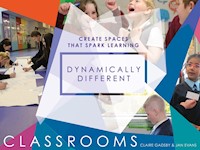
In Dynamically Different Classrooms: Create spaces that spark learning, Claire Gadsby and Jan Evans provide teachers with a visually striking masterclass on how to maximise the potential of every cubic inch of the learning environment. Classrooms are private places. A lucky few - consultants and inspectors among them - get to visit hundreds of classrooms a year, yet many teachers never get the opportunity to see how other practitioners 'do it'. In Dynamically Different Classrooms, however, experienced educators Claire and Jan take away the guesswork by inviting teachers into a unique journey of classroom discovery that shows them how to design and use the space within their classroom in such a way that enhances their pupils' learning experiences. Bursting with a rich variety of practical ideas, this inspiring guide to the great indoors talks you through the 'clue corners', 'ceiling circuits' and 'windows of opportunity' waiting to be discovered in your classroom and shares 148 high-impact techniques proven to boost pupils' engagement, long-term learning and progress. The techniques are dispersed across five chapters - each covering a specified aspect of the classroom (e.g. wall displays) - and are tagged to cross-reference with the following six key themes in order to help you navigate your own pathway through the chapters according to your development priorities: Metacognition and self-regulated learning Emotional engagement Retrieval and revision Responsive teaching Oracy and 'word wealth' Collaborative learning. The strategies can be adapted for use with all age groups and will stimulate busy teachers to reimagine the learning space through a more creative lens. Each theme is underpinned by robust research in the book's introduction, in which the authors discuss the key findings and explore how effective classroom design can help unlock the potential of various pedagogical approaches. The book also features a range of illuminating case studies from various schools across the UK, and is beautifully decorated with full-colour photographs that capture the techniques in action to make it even easier for you to adopt and adapt these design principles in your own dynamically different classroom. Suitable for teachers, trainees, teaching assistants and senior leaders in both primary and secondary schools. Chapters include: Chapter 1 - Beyond displays: from static to dynamic; Chapter 2 - Nothing wasted: storing learning to resurrect and revive later; Chapter 3 - Floors: not just for standing or sitting on; Chapter 4 - Zoning: one classroom, endless possibilities; Conclusion: the legacy of the learning. Customer Notice: this book contains a large amount of full colour images, therefore any digital version would be better rendered by being viewed using a device with a colour display.
Sie lesen das E-Book in den Legimi-Apps auf:
Seitenzahl: 235
Veröffentlichungsjahr: 2019
Das E-Book (TTS) können Sie hören im Abo „Legimi Premium” in Legimi-Apps auf:
Ähnliche
















Praise for Dynamically Different Classrooms
Calling all teachers: this book will help you rethink your thinking and rejuvenate your learning strategies.
Dr Andy Cope, teacher, author and the UK’s one and only doctor of happiness
There are plenty of books looking at the ‘how’ and ‘what’ of teaching, but not many ask us to consider the ‘where’. In Dynamically Different Classrooms, however, Claire Gadsby and Jan Evans do exactly that as they share ideas and strategies that are underpinned by solid research and have been sourced from years of working with primary, middle and secondary schools across the UK to help create learning environments that enable every child to progress and thrive.
Does this mean spending endless hours constructing complex and beautiful wall displays, or spending non-existent funds on fancy furniture? Nope, the suggestions in this book are much smarter than that – supporting educators to rethink the space in which they teach, and make it work more effectively for them and their pupils.
Helen Mulley, Editor, Teach Secondary
Dynamically Different Classrooms combines learning theory with a range of practical strategies and shows how the classroom can be the arena to bring it all to life.
If we believe in active learning, this is a book to be acted upon.
Mick Waters, Professor of Education, University of Wolverhampton
Dynamically Different Classrooms breathes life into thinking creatively about teaching and learning. It is full not only of ideas proven to work, but also of methodological insights into why they work. Each chapter offers ideas about a different area of learning, often sharing powerful reminders that a fresh look at how we use our classroom space can make all the difference. It also provides a refreshing take on the holistic view of teaching the whole child, taking into account a consideration of emotional responses.
This book will be fantastically useful for primary and secondary school teachers alike – and I believe every parent in the land would want their child to have the kind of learning experience that it champions, where the importance is placed on creativity, resilience and curiosity rather than on exam results alone.
Rachel Jones, teacher, King Edward VI School, author of Teacher Geek and curator of Don’t Change the Light Bulbs
In an educational landscape where different trends and fads come and go, Dynamically Different Classrooms is filled with the wisdom that only experience can bring. The main messages from recent and robust research are all put in one place and told through an array of creative examples and practical strategies, which makes this book a treasure trove of inspiration and ideas!
Chris Martin, Principal, St Thomas Aquinas Catholic Secondary School
It is no surprise to me that Claire Gadsby and Jan Evans would produce a book that communicates such energy and excitement in both content and tone. We have benefitted as a school from Jan’s wealth of experience in developing active engagement in children through higher-order questioning, and we shall certainly ‘magpie’ from the wonderful variety of ideas presented here. As ever, Claire and Jan’s passion is infectious – and it is refreshing to come across a book that leaves the reader feeling so energised.
Clare Smith, Head Teacher, St Joseph’s Catholic Primary School
Claire:
For my precious daughter Poppy Matilda who brings joy, always.
And for my dear friend and mentor Annabel Luery, who first showed me what great teaching looks like and who inspires me to this day.
Jan:
For Laura and David – I am always so proud of you both.
And for Teddy Albert – may your learning journey be exciting and fun.
ACKNOWLEDGEMENTS
Thank you to all the teachers, teaching assistants and pupils who have always made us feel so welcome in their classrooms. Your willingness, enthusiasm and creativity have been a constant source of inspiration. We literally could not have written this book without you.
Jane, our wonderful photographer and friend, thank you for bringing the ideas to life. You instantly ‘got’ what we wanted to do and set about capturing some truly moving classroom moments as photos that we never tire of looking at.
Many thanks to Ian Gilbert for challenging our thinking and for steering us in the right direction. Your insight and advice was invaluable.
Our heartfelt thanks go to the whole team at Independent Thinking Press who listened to our original ideas and who have been incredibly patient and reassuring as this book has evolved.
Special thanks must go to our amazing editor, Louise. You have encouraged us and shown incredible patience, tact and understanding. Your attention to detail is amazing and you have been so in tune with our thinking that it has felt very much a joint effort. As the saying goes: ‘you have gone above and beyond …’
Finally, thank you from the bottom of our hearts to our longsuffering partners, Kevin and Bob. For all your love, patience and support throughout the process of writing this book.
Claire:
Kevin, thank you for all your love and support. I couldn’t do any of this without you.
Jan:
Bob, you are my rock, always.
CONTENTS
INTRODUCTION
Imagine a classroom where every display invites an active pupil response. Where learning clues fall from the ceiling. Where the floors feature challenges. Welcome to the world of dynamically different classrooms.
As education consultants we have worked with thousands of teachers over the years and a great deal of our time has been spent developing techniques to help pupils become autonomous learners who are actively engaged and confident in their learning, and able to transfer and apply it at different times and in different contexts. All too often, though, we felt that teachers were overlooking a key element in their practice: namely the contribution that their physical classroom environment could make to learning.
Over three years, we have had the privilege of working with primary, middle, secondary and special schools across the UK, exploring the untapped potential of their classrooms. This action research evolved to become the Dynamically Different Classroom Project and has directly informed this book. We have developed and refined the suggested techniques through our coaching work with teachers and, whilst we know that you may already be using some of these ideas, we hope that we offer an abundance of new ones to try.
I had never really considered the impact of a well-constructed display. I had only ever been taught that they should look lovely, and maybe have some keywords for the children to use. However, the Dynamically Different Classroom training genuinely transformed my practice. I no longer create displays prior to learning: the display is our learning. We ask questions; we try to answer them; we evidence our learning and share the journey week by week through photographs, video links and sticky notes. Displays shouldn’t be symmetrical boards that look good on Pinterest or Instagram: they should be purposeful and should support learning. Following the training, I hope that mine are. However, I know that mastering the art of a dynamically different classroom is an ongoing process, and I am incredibly excited to continue to trial many more of Claire and Jan’s ideas to aid the teaching and learning in my classroom.
Rosie, Hoyland Common Primary
So what do we mean by ‘dynamically different’?
The term ‘dynamic’ is synonymous with:
Continuous change or progress.
Activity and vigour.
Powerful energy.
Effective action.
These are the very ideas that define the spirit of the dynamically different classroom: a space where engagement and movement are expected, and displays and the environment constantly evolve.
We are keen for teachers to re-examine the dynamics of their own classroom in order to establish an optimum, positive atmosphere where pupils feel comfortable communicating with each other and with their teacher. Investing time and energy in developing this kind of connected classroom, where pupils perceive each other as allies and not judges, is crucial for the development of metacognitive, confident learners.
From captives to captivated
A ‘standard’ primary classroom, built for 30 pupils, should be at least 56 m2, although 70 m2 is recommended to allow flexible use and wheelchair access (Department for Education and Skills, 2005: 31). Guidelines for secondary schools consider a similar space to be standard for 30 pupils, at 60 m2 (Department for Education and Skills, 2004: 34). Pupils are essentially captive in these small classrooms for, according to our calculations, approximately 10,500 hours of their young lives, at a time when they are least equipped to deal with such physical constraint.
Movement is advocated strongly throughout this book for a variety of reasons. Not only does it seem common sense to punctuate those hours of classroom containment with regular physical movement, there is also a wealth of scientific evidence attesting to the link between movement and learning:
We know exercise fuels the brain with oxygen, but it also feeds it neurotropins (high-nutrient chemical ‘packages’) to increase the number of connections between neurons. Most astonishingly, exercise is known to increase the baseline of new neuron growth. Rats grow more brain cells when they exercise than when they don’t exercise (Van Praag et al., 1999). In addition, studies link this increased neurogenesis to increased cognition, better memory, and reduced likelihood of depression (Kempermann, 2002).
(Jensen, 2005: 63)
Jensen (2005: 66) goes on to say that simply incorporating movement into routine classroom activities would re-energise pupils and fuel their brains with oxygen and that, ‘Teachers who insist that students remain seated during the entire class period are not promoting optimal conditions for learning.’
However, although the value of using movement within learning experiences is becoming increasingly acknowledged, it can feel uncomfortable. Some teachers find it difficult to know how to incorporate this, especially as pupils get older and physically larger.
Rather than suppressing youngsters’ energy and desire for movement, we have set out to deliberately harness this with many of the techniques, to further boost both engagement and retention. Keeping young people active, engaged and healthy in the physical environment where they spend the majority of their waking hours should be a top priority for all teachers.
We cannot magically make our classrooms bigger, but incorporating movement into lessons does not actually require a massive area. In this book, we explore how you can allow every pupil to experience the finite classroom space in an almost infinite number of ways.
At Westwood, we make use of every surface: the ceilings, floors, windows and walls are all used to engage our children and we encourage them not to be restricted to writing in exercise books – this sees them choosing to write on the tables, windows or on sugar paper. It is normal to see children laying on their tummies on the floor or curled up in a comfy chair to complete their work.
Lauraine, Westwood Primary School
Teachers often comment on a sense of ‘initiative overload’ when exposed to new ideas about practice, compounded by insufficient time to dive beneath the surface to explore where and how the underlying principles connect. What we’ve tried to do in this book is to distil some of the main messages from recent, robust research about the role of the environment in children’s learning and produce a range of practical techniques that you can use to maximise the potential of your classroom. We invite you to focus on common features at the heart of any effective pedagogical approach and then to harness your own creativity to make full use of your physical learning environment.
The merits, or otherwise, of various methods of curriculum delivery are always the subject of much debate in education and, like Agatha Christie’s play The Mousetrap, will probably continue to ‘run and run’. There has always been a danger of creating an extreme ‘pendulum swing’ approach with pedagogical styles when, as with most things, a varied and balanced approach is generally best. As the teacher, only you know your current pupils’ individual needs, and only you will know when it is more appropriate to incorporate different elements – such as whole-class teaching, inquiry-based group work, individual project work, etc. Your classroom’s physical environment is both a reflection of and a delivery agent for your pedagogical approach.
The classroom environment has recently been subject to some extreme, alternative approaches, as demonstrated on social media, where people have posted images of their newly stripped back, minimalist classrooms along with accounts of how they have exchanged their brightly coloured display boards for plain white ones. Overstimulation for pupils – especially for those with special educational needs and disabilities (SEND) – caused by crammed, colourful walls is often cited as the main reason for this. However, a study by the University of Salford, conducted with primary school children, showed that when a carefully thought out physical environment considered the elements of stimulation, individualisation and naturalness, it could have a significant impact on academic achievement:
Differences in the physical characteristics of classrooms explain 16% of the variation in learning progress over a year for the 3766 pupils included in the study. Or to make this more tangible, it is estimated that the impact of moving an ‘average’ child from the least effective to the most effective space would be around 1.3 sub-levels, a big impact when pupils typically make 2 sub-levels progress a year.
(Barrett et al., 2015: 3)
Particularly relevant is that when looking at the influence of visual stimulation in the classroom, the report findings showed a curvilinear effect, with high or low levels of complexity producing poorer learning conditions (Barrett et al., 2015: 34). In other words, the ‘Goldilocks’ alternative of a ‘just right’, intermediate level had the greatest impact on pupils’ learning. The National Association of Special Educational Needs (nasen) also highlighted the role a well-resourced classroom could play, especially in reducing pressure on working memory (nasen, 2015: 7).
As noted previously, only you really know the make-up of your pupils and, obviously, you have to be very mindful of their individual needs whilst still promoting an inclusive approach. Chapter 2 contains a case study of a Year 8 nurture group which demonstrates how this can be achieved. The teacher, Amie, wanted to incorporate some techniques that could have been very overwhelming for particular pupils. However, she discussed the planned activities with them and together they formulated a way to proceed. The resulting lesson was very successful and the pupils’ sustained engagement, and the impact on their learning, was obvious for all to see. The techniques in this book aim to give you a repertoire of ideas to make your classroom environment purposeful, provocative and engaging whilst striking the appropriate balance in terms of stimulation.
A systematic review of evidence across all phases of education, commissioned by Education Scotland, identified the most effective learning environments and conditions for the development of creative thinking and problem-solving skills (Davies et al., 2013). The report concluded that the findings concerning the impact of environment on pupils’ attainment, and the resulting policy recommendations, have implications for all teachers. Recommendations included having classrooms that can be used flexibly and allow the movement of pupils around different areas to support the growth of their ideas. The report also found evidence about the value of incorporating an element of novelty and pupil choice into the classroom.
All of these elements are strongly promoted throughout the following chapters and the techniques are designed to provide some novel ways to support you in the development of these aspects of your pedagogical approach.
Of all the approaches which focus on the significance of the classroom environment, perhaps one of the most well-known is Reggio Emilia. Although arising originally from the pre-school and primary phases of education, its fundamental ideas about the settings in which children learn have relevance for all stages. The Reggio Emilia philosophy talks about three educators being in the classroom at any one time: the teacher, the child and the environment. This approach stresses the role of the environment as the ‘third teacher’ in the total, interactive educational experience (Robson and Mastrangelo, 2017).
Thinking of the environment in this way sets up the expectation that pupils will interact with it. Therefore, there is an implied responsibility on the part of the teacher to do their utmost to ensure that the physical environment promotes and supports active engagement.
Your classroom is your domain and it can be difficult to look at it afresh and break away from old habits and routines. However, by considering the environment as the third teacher, and by questioning your present use of it, you can begin to notice how your surroundings can become a truly dynamic space that contributes to children’s learning.
Next steps
The vast majority of the techniques in this book can be adapted to use with all age groups. Whilst some ideas may seem to fit more naturally with primary or secondary, we would urge you not to dismiss the more experimental and active techniques as suitable for younger learners only. We have seen some very creative approaches work with older pupils, where teachers have adopted a tongue-in-cheek attitude and played on their adolescent, ironic sense of humour.
Research tells us that we have a rising tide of mental health issues amongst our young people. They are more stressed, insular and depressed today than ever before, with the pressure of exams often cited as a particular concern for teenagers:
An alarming number of young people feel paralysed by their circumstances and crippling self-doubt. More than a quarter (28 per cent) do not feel in control of their lives and 16 per cent go as far as to say they think their life will amount to nothing, no matter how hard they try. Many young people feel trapped by their circumstances, with almost a fifth (18 per cent)stating that they do not have the ability to change their circumstances if they want to.
(The Prince’s Trust, 2017: 14)
Throughout the pilot phase of the Dynamically Different Classroom Project, we were continually struck by the positive impact of the more innovative, physical techniques on older learners. Watching GCSE pupils work together to unleash learning-link paper chains from the ceiling (see Chapter 2) or lie shoulder to shoulder to complete whole-class learning scrolls (see Chapter 3) was fascinating.
At a stage in their lives when pupils are besieged by all that adolescence involves, these techniques brought a little lightness and playfulness back. Yes, we saw surprise when we asked pupils to lie down on the floor, and got more than a few odd looks when paper plates were introduced as Tasty Tacos (see Chapter 2), but after the initial typical teenage cynicism, we witnessed genuine curiosity and engagement. We saw pupils relaxing into collaborative working. We saw them laughing and chatting about the work. We saw memorable learning happening precisely because it was unusual and collaborative. We saw young people enjoying learning. Ultimately, your own professional knowledge and creativity are the only ‘limiters’ as to how, when and where these techniques can be tweaked and put to good use.
Working smarter
We estimate that the average teacher will deliver more than 20,000 lessons during a 30-year career and, as a well-worn adage states, ‘If you always do what you’ve always done, you’ll always get what you’ve always got.’ We are keen for teachers to work smarter, not harder, and to explore the cumulative effect of marginal gains: those tiny little tweaks to existing good practice which, when added together, can lead to dynamic shifts and improved outcomes for pupils.
One aspect of working smarter when thinking about how the learning will unfold involves teachers redirecting their creative energy into designing the infrastructure of the classroom. This would mark the end of the anonymous learning space and provide a real opportunity for teachers to make bold, customised choices, not merely in terms of fixtures, fittings and aesthetics, but in terms of the more fundamental beliefs they have as educators.
The physicality of a dynamically different classroom operates as an active teaching tool, boosting both engagement and progress. Consider the following quick tweaks:
Any existing display can be quickly adapted and made more interactive and engaging by being used as a memory aid, team competition or ‘spot the red herring’ style challenge (see Chapter 1).
Any ceiling can be used as a virtual ‘cloud storage’ system where current learning is deposited (perhaps as learning-link paper chains), before being reintroduced when the pupils least expect it (see Chapter 2).
Any floor can be repurposed to form a ‘circuit training’ lesson, with stepping stone challenges between each station (see Chapter 3).
Any corner can be used dynamically to target different learning outcomes – for example, the teacher could offer differentiated support by modelling a task and inviting pupils to Magpie Me (see Chapter 4).
The fundamental premise is that there is nothing static within this kind of classroom: everything is kept ‘simmering’, ready to turn up the learning heat. Once the space is set up, a teacher can very easily redirect and refresh the learning merely by using the infrastructure itself as a dynamic learning tool. Time invested in maximising the classroom’s potential influence on pupil outcomes will never be time wasted.
It was interesting to hear from teachers involved in the pilot of the Dynamically Different Classroom Project about the immediate impact that they saw after incorporating some of the techniques. Generally, they said:
They were impressed by the way in which pupils responded to the techniques and the sustained level of engagement.
They felt that high-quality learning was generated but that minimal input from them had been required during the actual lessons.
They felt they had been able to circulate more freely and therefore able to respond to the needs and interests of specific groups and individuals more effectively.
They were genuinely impressed with the nature and quality of the discussions generated and saw pupils expressing their ideas with greater confidence.
They were surprised by the way in which pupils easily assumed responsibility and started to direct their own learning.
They felt that pupils had shown greater curiosity and demonstrated more satisfaction with their learning.
They felt that their teaching had been refreshed and they felt energised, wanting to carry on trying out new approaches.
It may also be comforting to teachers in this current climate of accountability to remember that when pupils become advocates of their own learning – and demonstrate this in explicit, audible and highly visible ways – the evidence of their progress becomes incontrovertible.
Many of the teachers initially involved in the project decided to start implementing techniques by focusing on separate areas of their classrooms. However, some decided that they wanted to adopt a more holistic approach and follow a themed focus across the environment.
To accommodate both preferences we have taken six key themes and cross-referenced each of the techniques to one of them. (Although, obviously, we appreciate that many of the techniques will address more than one theme.) You can use this colour-coding to navigate your own pathway through the chapters according to your development priorities.
Our six themes are:
1. Metacognition and self-regulated learning
Metacognition describes pupils’ ability to monitor, direct and review their learning. Effective metacognitive strategies get learners to think about their own learning more explicitly. Teaching them to set goals – and monitor and evaluate their own academic progress and challenges – is a key part of this process, with an Education Endowment Foundation (EEF) report recommending that we should, ‘Set an appropriate level of challenge to develop pupils’ self-regulation and metacognition’ (Quigley, Muijs and Stringer, 2018: 18).
Whilst these skills are undoubtedly important, they are also tricky to cultivate. We want our pupils to be risk takers: to be unafraid to try and to fail. However, young people receive conflicting messages. ‘Be careful,’ say their worried parents whilst the world is crying out for resilient characters who are happy to take risks and develop entrepreneurial spirits by daring to try new things and by growing through failures. Whilst motivational posters, assemblies and visiting speakers are commonplace in schools, what can be done to move away from the rhetoric and change actual practice?
Psychology reminds us that people can experience exactly the same stimulus or event, such as riding on a roller coaster, but have completely different responses to it. The key difference rests on whether we perceive it as a threat or an opportunity (Busch and Watson, 2017: 42). People are able to reframe their perceptions and this skill can be explicitly taught to pupils by using language such as, ‘Although this may feel stressful, this is an opportunity to …’
We need to ensure that all lessons are sufficiently challenging so that each pupil routinely has to explore, clarify and refine their conceptual understanding. We want them to be excited about not being sure yet and about the prospect of trying to become surer. This process of finding your own way out of uncertainty is what James Nottingham refers to as being in the ‘learning pit’.1
Hopefully we are all familiar with the definite, physical and positive feeling we get when we’ve mastered a challenge that moved us out of our comfort zone (and with the almost involuntary fist-pump gesture that often accompanies these successes). Nothing is as energising or engaging as working at the very edge of your ability. When you are truly ‘in the zone’ or in a ‘state of flow’, you want to stay there; quitting is an unsatisfactory outcome (Csikszentmihalyi, 2002). Designing lessons that have appropriate, differentiated levels of challenge for our pupils is a major component of engaging them emotionally.
To genuinely improve learning, lessons may well need to be more difficult. Sometimes, as teachers, we make things too easy and too comfortable – and this, in turn, can convey low expectations. Indeed, one of the key recommendations from boys’ achievement expert Gary Wilson (2013: 1) is to stop doing everything for them.




