


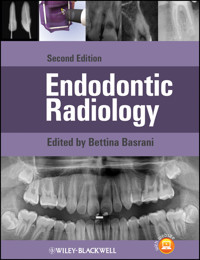
Endodontic Radiology E-Book
147,99 €
Mehr erfahren.
- Herausgeber: John Wiley & Sons
- Kategorie: Fachliteratur
- Sprache: Englisch
Endodontic Radiology, 2nd edition, is a unique reference that examines all aspects of radiographic imaging related to endodontics. Dr. Bettina Basrani and a team of prestigious international contributors build upon traditional radiographic techniques and include the latest information available on digital radiographs and cone beam computed tomography. More than an overview of equipment, the book delves into radiographic interpretation, differential diagnosis, technical difficulties and special circumstances when taking radiographs during the endodontic treatment, and how to choose the correct radiographic technique to obtain the desired images. Chapters explain general radiographic techniques; intraoral techniques; standard radiographs and interpretation; digital radiographs and their manipulation, storage, and interpretation; and CBCT principles, techniques, and clinical considerations.
Sie lesen das E-Book in den Legimi-Apps auf:
Seitenzahl: 620
Veröffentlichungsjahr: 2012
Ähnliche




















Table of Contents
Cover
Title page
Copyright page
Dedication
About the Editor
Contributors
Foreword
Preface
Acknowledgments
Part 1: General Principles and Techniques
1 General Principles of Radiology in Endodontics
History of dental radiology
Hazards of X-ray radiation
Objectives of dental radiography
Limitations of X-rays in endodontics
Digital radiography systems (DRS)
Characteristics of the radiograph
Control and characteristics of the X-ray machine
Radiographic processing
Viewing conditions for radiographs
Radiographic interpretation
New horizons in endodontic imaging
2 Intraoral Radiographic Principles and Techniques
Intraoral radiography
Patient preparation
Infection control protocol
Radiation hygiene
Receptor preparation
Receptor holders
Receptor holders during endodontic procedures
Receptor exposure
Receptor processing
Image evaluation and radiographic interpretation
The periapical radiograph
Concepts unique to each technique
The bisecting angle technique
The long cone paralleling technique
The bite-wing radiograph
The occlusal radiograph
Extraoral uses for occlusal radiographs
Extraoral radiography
The panoramic radiograph
3 Special Situations
Pregnancy
Radiation therapy
Gag reflexes
Torus
Patients with physical disabilities
Patients with trismus
Patients where the floor of the mouth is nondepressible
Narrow palatal
4 Intraoral Digital Imaging
Intraoral digital imaging
Digital sensors
Bisecting-the-angle and occlusal radiography
5 Radiographic Considerations Before the Endodontic Treatment Is Initiated
Introduction
Anatomy of dental tissues
6 Radiographic Analysis of Anomalous Tooth Forms and Morphological Variations Related to Endodontics
Dens evaginatus
Dens invaginatus
Radix entomolaris
Taurodontism
Dilaceration
Microdontia
Amelogenesis imperfecta
Dentinogenesis imperfecta
Dentine dysplasia
Talon cusp
Part 2: Endodontic Disease
7 Radiographic Expression of Endodontic Disease
Endodontic disease
Endodontic-induced periostitis of the nasal cavity and antrum
Endodontic-induced periostitis of the jaws
Cysts of endodontic origin
Internal root resorption
Summary
8 Image Interpretation of Periapical Abnormalities
General principles
Periapical pathoses
9 Radiographic Interpretation of Traumatic Injuries
Introduction
Stage of root development
Traumatic injuries
Injuries to the hard dental tissues and the pulp
Injuries to the periodontal tissues
Injuries to the supporting bone
Injuries to the oral mucosa
Sequelae of traumatic injuries
Conclusions
10 Radiographic Analysis of Acquired Pathological Dental Conditions
Tooth wear
Resorption
Pulp stone
Hypercementosis
Conclusion
11 Radiographic Analysis of Periodontal and Endodontic Lesions
Introduction
Normal anatomy of alveolar process and periodontal ligament
Radiographic appearance of periodontitis
Radiographic appearance of endodontic infection and apical periodontitis
Differential diagnosis
Conclusion
12 Radiographic Imaging in Implant Dentistry
Normal radiographic findings around dental implants
Abnormal radiographic findings around dental implants
Preoperative radiographic planning for implant surgery
Intraoral radiography
Extraoral imagining techniques
Tomographic radiography and CT
Cone beam CT
Application of imaging techniques
Imaging during stage I implant surgery
Imaging at abutment and prosthetic component connections
Conclusion
Part 3: Sequence of Endodontic Treatment
13 Radiographic Considerations during the Endodontic Treatment
Introduction
Diagnosis
Preoperative radiograph and anatomy
Preoperative radiograph and access: “access for success”
Radiograph for verification of the working length
Canal preparation
Radiograph for verification of master apical file (MAF)
Intracanal medication
Cone fit radiograph
Postoperative radiograph
Recall
Documentation
Special consideration in endodontic radiography
Infection control in dental radiography
14 Electronic Apex Locators and Conventional Radiograph in Working Length Measurement
Introduction
WL measurement methods
History of apex locators
Clinical technique
Advantages of apex locators
Limitation of apex locators
Comparing EAL to radiographs
Apex locator’s employment in the detection of perforations
The effect of different parameters on performance of EALs
Conclusion
15 Vertical Root Fractures: Radiological Diagnosis
Introduction: Vertical root fracture (VRF) incidence and consequences
Mechanisms and risk factors for VRF
Radiographic appearance of VRF
Cone beam computed tomography (CBCT) as an aid in detecting VRF
Diagnosis of VRF: The integration of clinical and radiographic signs
Conclusions
16 Healing of Chronic Apical Periodontitis
Introduction
Radiographic features of apical periodontitis
Tissue responses to materials and procedures
Characteristics of healing of chronic apical periodontitis
Clinical experiments and epidemiology
The PAI in clinical studies
Epidemiology of apical periodontitis
Concluding remarks
Part 4: Teaching and Research
17 Radiographic Consideration for Endodontic Teaching
Preclinical endodontics
18 Micro-Computed Tomography in Endodontic Research
Introduction
How does micro-CT work?
Applications in endodontics
Limitations
Conclusions
Part 5: Advanced Techniques
19 Alternative Imaging Systems in Endodontics
Ultrasound real-time echotomography
MRI
20 Introduction to Cone Beam Computed Tomography
21 Interpretation of Periapical Lesions Using Cone Beam Computed Tomography
Introduction
Apical periodontitis detected using CBCT images
Periapical index based on CBCT
Detection of inflammatory root resorption using CBCT
Map-reading strategy to diagnose endodontic lesions associated with root perforations
Apical periodontitis, dental granulomas, radicular cysts: Imaging methods and microscopic findings
Conclusions
Part 6: Clinical Cases
22 Clinical Cases
Case 1
Case 2
Case 3
Case 4
Case 5
Case 6
Case 7
APICAL SURGERY
Case 8
Case 9
Case 10
Case 11
Appendix
23 Clinical Impact of Cone Beam Computed Tomography in Root Canal Treatment
Case 1
Case 2
Case 3
Case 4
Case 5
Case 6
Case 7
Case 8
Case 9
Case 10
Case 11
Index
This edition first published 2012 © 2012 by John Wiley & Sons, Inc.
First Edition, Radiología en Endodoncia by Enrique Basrani © 2002 AMOLCA
Wiley-Blackwell is an imprint of John Wiley & Sons, formed by the merger of Wiley’s global Scientific, Technical and Medical business with Blackwell Publishing.
Editorial offices: 2121 State Avenue, Ames, Iowa 50014-8300, USA
The Atrium, Southern Gate, Chichester, West Sussex, PO19 8SQ, UK
9600 Garsington Road, Oxford, OX4 2DQ, UK
For details of our global editorial offices, for customer services and for information about how to apply for permission to reuse the copyright material in this book please see our website at www.wiley.com/wiley-blackwell.
Authorization to photocopy items for internal or personal use, or the internal or personal use of specific clients, is granted by Blackwell Publishing, provided that the base fee is paid directly to the Copyright Clearance Center, 222 Rosewood Drive, Danvers, MA 01923. For those organizations that have been granted a photocopy license by CCC, a separate system of payments has been arranged. The fee codes for users of the Transactional Reporting Service are ISBN-13: 978-0-4709-5849-0/2012.
Designations used by companies to distinguish their products are often claimed as trademarks. All brand names and product names used in this book are trade names, service marks, trademarks or registered trademarks of their respective owners. The publisher is not associated with any product or vendor mentioned in this book. This publication is designed to provide accurate and authoritative information in regard to the subject matter covered. It is sold on the understanding that the publisher is not engaged in rendering professional services. If professional advice or other expert assistance is required, the services of a competent professional should be sought.
Library of Congress Cataloging-in-Publication Data
Endodontic radiology / edited by Bettina Basrani. – 2nd ed.
p. ; cm.
Rev. ed. of: Radiologia en endodoncia / [ed. por] Enrique Basrani. c2003.
Includes bibliographical references and index.
ISBN 978-0-470-95849-0 (hardcover : alk. paper)
I. Basrani, Bettina. II. Radiología en endodoncia.
[DNLM: 1. Dental Pulp Cavity–radiography. 2. Root Canal Therapy–methods. 3. Periapical Diseases–radiography. WN 230]
617.6342059–dc23
2012005062
A catalogue record for this book is available from the British Library.
Wiley also publishes its books in a variety of electronic formats. Some content that appears in print may not be available in electronic books.
“Every great dream begins with a dreamer. Always remember, you have within you the strength, the patience, and the passion to reach for the stars to change the world.”
Harriet Tubman
This book is dedicated to my children, Jonathan and Daniel, to encourage them to follow their dreams with conviction and hard work, and especially with love.
About the Editor
Dr. Bettina Basrani is Tenured Associate Professor and Co-Director, MSc Program in Endodontics on the Faculty of Dentistry, University of Toronto, in Ontario, Canada. Dr. Basrani received her D.D.S. degree from the University of Buenos Aires and a Specialty Diploma in Endodontics and Ph.D. from Maimonides University in Buenos Aires, Argentina. A long-time educator and researcher, she began her teaching career at the University of Buenos Aires. In 2000, she moved to Canada to serve as Head of the Endodontic Program at Dalhousie University, Halifax, Nova Scotia. In 2004, she moved to Toronto, where she has continued her academic and clinical work, nurturing two careers in parallel—those of educator/researcher and practicing clinician. Internationally recognized as a leading authority in endodontics and as an excellent lecturer, effectively combining clinical and scientific information, Dr. Basrani has received many teacher awards throughout her career and has international courses and lectures, over 30 peer-reviewed scientific publications, textbook chapters, and abstracts to her credit. She serves as an Editorial Board Member for the Journal of Endodontics and International Endodontic Journal. Dr. Basrani is a member of many endodontics societies around the world, and also serves on the special committee to develop researchers of the American Association of Endodontics. She makes her home in Toronto, where she is married to Canadian psychiatrist Dr. Howard Alter and spends her leisure time taking their sons, Jonathan and Daniel, to soccer practices, chess tournaments, skating lessons, and piano recitals.
Contributors
Ana Helena Gonçalves Alencar, DDS, MSc, PhDProfessor of EndodonticsDepartment of Oral ScienceFederal University of GoiásGoiânia, GO, Brazil
Amir Azarpazhooh, DDS, MSc, PhD, FRCD(C)Assistant ProfessorDiscipline of Dental Public Health and Discipline of EndodonticsFaculty of DentistryUniversity of TorontoToronto, Ontario, Canada
Carlos Bóveda Z.DDS, Specialist in EndodonticsPrivate PracticeLimited to EndodonticsCentro de Especialidades OdontológicasCaracas, Venezuela
Mike Reis Bueno, DDS, MSc, PhDProfessor of Semiology and StomatologyUniversity of CuiabáCuiabá, MT, Brazil
Girolamo Campisi, MDSpecialist in RadiologyUniversity of CagliariItaly
Mindy Cash, BSc, DDSLecturerOral and Maxillofacial RadiologyFaculty of DentistryUniversity of TorontoToronto, Ontario, Canada
Nestor Cohenca, DDSDiplomate, American Board of EndodonticsAssociate Professor, Department of EndodonticsAdjunct Associate Professor, Department of Pediatric DentistrySchool of DentistryUniversity of WashingtonSeattle, WA, USA
Jeffrey M. Coil, DMD, MSD, PhD, FRCD(C), FADI, FACDDiplomate, American Board of EndodonticsDirector of Graduate EndodonticsDepartment of Oral Biological & Medical SciencesFaculty of DentistryUniversity of British ColumbiaVancouver, British Columbia, Canada
Elisabetta Cotti, DDS, MSProfessor and ChairmanDepartment of Conservative Dentistry and EndodonticsUniversity of CagliariItaly
Carlos Estrela, DDS, MSc, PhDChairman and Professor of EndodonticsDepartment of Oral ScienceFederal University of GoiásGoiânia, GO, Brazil
Anda Kfir, DMDLecturerSpecialist in EndodonticsCoordinator, Department of EndodontologySchool of Dental MedicineTel-Aviv UniversityTel-Aviv, Israel
Anil Kishen, BDS, MDS, PhDAssociate ProfessorDiscipline of EndodonticsFaculty of DentistryUniversity of TorontoToronto, Ontario, Canada
Jim Yuan Lai, DMD, MSc(Perio), MEd, FRCD(C)Assistant Professor and Discipline HeadPeriodontologyFaculty of DentistryUniversity of TorontoToronto, Ontario, Canada
Ernest W. N. Lam, DMD, MSc, PhD, FRCD(C)Diplomate, American Board of Oral and Maxillofacial RadiologyAssociate Professor and HeadDiscipline of Oral and Maxillofacial RadiologyFaculty of DentistryUniversity of TorontoToronto, Canada
Gevik Malkhassian DDS, MSc, FRCD(C)Assistant ProfessorDiscipline of EndodonticsFaculty of DentistryUniversity of TorontoToronto, Ontario, Canada
Harold H. Messer, MDSc, PhDEmeritus ProfessorMelbourne Dental SchoolUniversity of MelbourneMelbourne, Australia
Mana Mirfendereski, BSc, DMD, MSc, FRCD(C)Discipline of EndodonticsUniversity of TorontoToronto, Ontario, Canada
Yosef Nahmias, DDS, MScPrivate PracticeOakville, Ontario, Canada
Le O’Leary, DDSPrivate PracticePlano, TX, USA
Dag Ørstavik, dr. odont.Professor and ChairmanDepartment of EndodonticsInstitute of Clinical DentistryFaculty of DentistryUniversity of OsloOslo, Norway
Ove Peters, DMD MS PhDDiplomate, American Board of EndodonticsProfessor and Co-ChairDepartment of EndodonticsUniversity of the Pacific, Arthur A. Dugoni School of DentistrySan Francisco, CA, USA
Andres Plazas DDS, EndodontistAssistant ProfessorDiscipline of EndodonticsFaculty of DentistryUniversity of Toronto
Calvin D. Torneck DDS, MS, FRCDDiplomate, American Board of EndodonticsProfessor EmeritusDiscipline of EndodonticsFaculty of DentistryUniversity of TorontoToronto, Ontario, Canada
Foreword
The new edition of Endodontic Radiology represents a change of generations and the evolutionary process this change encompasses.
The first edition of Radiologia en Endodoncia was a unique textbook published in Spanish in 2003. It was edited by Prof. Enrique E. Basrani, Dr. Ana Julia Blank, and Dr. Maria Teresa Cañete, all from the Maimonides University in Buenos Aires, Argentina, and included contributions from 21 prominent educators and clinicians from Latin America and beyond. It was the first textbook to provide readers with a comprehensive digest of all aspects of radiology related to endodontic therapy. It explained radiology from the endodontic perspective, and it explained many aspects of endodontics through the radiology perspective. It captured the state-of-the-art radiographic technologies available to clinicians at the beginning of the 21st century. In addition to a comprehensive, detailed description of the basic “bread-and-butter” applications of radiology in endodontics, the first edition included at its end several brief chapters featuring the “cutting edge” technologies of that period, including digital radiography, electronic image processing, and digital subtraction. Little could be known at that time that within one decade, what was cutting edge would become the bread and butter, and that newer technologies would emerge that would revolutionize the applications of radiology in endodontics.
Professor Emeritus Enrique E. Basrani
The second edition of Endodontic Radiology in front of you has been authored by Dr. Bettina Basrani, the late Prof. Basrani’s daughter. She is the representative of the younger generation, but she remains her father’s daughter. An experienced endodontist, she is as dedicated to endodontics and to education as her father was throughout his illustrious career. While in the first edition she coauthored a short chapter with colleagues, she has since taken it upon herself to update her late father’s labor of love and to make it current for the contemporary clinician. True to her generation, she has been able to expand international and interdisciplinary collaborations, allowing the reader to benefit from contributions by 19 foremost educators, researchers, and clinicians from Australia, Brazil, Canada, Israel, Italy, Norway, the United States and Venezuela, spanning across four different disciplines of dentistry. With access to this collective international expertise, the reader gains an in-depth and wide-ranging insight into the current state of radiology applications in endodontics.
With the change of generations in authorship, the second edition’s content also has evolved greatly from the original published in less than one decade ago. In this respect it provides the clinician an updated, current, and thorough reference to the critical role of radiology in all steps of endodontic therapy. Accurate diagnosis of endodontic diseases and sequellae after traumatic injury to teeth, appreciation of the sites and extent of associated bone loss, insight into the anatomy of teeth, morphology of the endodontic system and resorptive defects, precise execution of endodontic treatment procedures, assessment of treatment outcome, documentation and effective communication of treated cases among dental professionals, all require sophisticated use of radiology at each step. The second edition of Endodontic Radiology will guide the clinician toward achieving the required sophistication in applying the most current radiological tools to benefit their patients.
Another aspect of the generation change and evolution is extension of the availability of the information to a much wider readership. Whereas the first edition could only benefit readers versed in Spanish, the second edition of Endodontic Radiology published in English will benefit numerous clinicians all over the world.
All clinicians, both general dentists and specialists in different disciplines of dentistry including endodontists, will acquire critical knowledge by reading this current textbook. The acquired knowledge, in turn, will provide the clinicians with the basis for sophisticated use of radiological tools when providing endodontic care to their patients, resulting in upgraded quality of treatment.
Prof. Shimon FriedmanHead, Discipline of EndodonticsDirector, MSc Program in EndodonticsFaculty of DentistryUniversity of TorontoToronto, Ontario, Canada
Preface
Radiology is an indispensable tool in endodontic practice and provides the clinician with information that is not otherwise accessible. It is also an ever-expanding field driven exponentially by constant changes in technology. It is for these reasons that this textbook, devoted to achieving a mastery of radiographic techniques and understanding in radiographic interpretation as applied to endodontic, is of particular importance to those who teach, study, and practice in this field.
There has been only one textbook dedicated entirely to endodontic radiology that has been published up to now, Radiologia en Endodoncia, by my father, Professor Emeritus Dr. Enrique Basrani (1928–2001) in collaboration with his colleagues, Dr. Teresa Cañete and Dr. Ana Blank. Published in Spanish in 2001, it gained wide academic acceptance in many Spanish-speaking countries. This English revised version on the same topic both fills an academic void for those who practice endodontics in non-Spanish-speaking countries and satisfies my personal wish to continue the work originally undertaken by my father. Radiologia en Endodoncia was his sixth and last book. He was a pioneer of our specialty, internationally recognized for his ability to inspire and motivate others to love what he loved: The art of endodontics. Now, eleven years after his untimely death, he is still remembered by his colleagues, peers, and students for his unique vision and passion for knowledge.
The field of endodontic imaging is changing and expanding rapidly, and it is for this reason that several chapters incorporating the application of the newer technologies and the information gained through them have been included in this edition.
This book is not intended to cover in detail every aspect of dental radiology; its purpose is directed toward improving endodontic treatment outcomes by identifying and expanding the link between endodontic practice and radiographic imaging.
Clarity in endodontics is comprehended through the shadows. As Leonard Cohen put it: “That's how the light gets in.” Enjoy the book, and I welcome your feedback at any time.
Bettina Basrani
Acknowledgments
I would like to thank the Dean of the University of Toronto, Faculty of Dentistry, Dr. David Mock, for granting me a sabbatical from my position at the Department of Endodontics to pursue writing this book. This decision was enthusiastically supported by the Head of the Endodontic Department, Dr. Shimon Friedman, who has always been ahead of his time and who constantly inspires all of us who work around him with his knowledge and wisdom.
Special recognitions to my collaborators on this project, all keen, clever, and dedicated specialists who contributed the highest quality of knowledge. Some of the collaborators have a lifetime of experience and others are recent graduates; some are pure academicians while others are pure clinicians. I thank them all for the enthusiasm they brought to the project.
I want to acknowledge Dr. Lyon Schwartzben for his invaluable help in editing the early manuscript.
Special thanks to Andrea Cormier and James Fiege from the Media Services Department at the Faculty of Dentistry for their beautiful photographs and diagrams.
My gratitude to Rick Blanchette, Melissa Wahl, and all the team from Wiley-Blackwell, who trusted and honored me with this project and helped me throughout the process.
My final thanks are to my family, starting with my parents Clarita and Enrique Basrani for providing me with the opportunity to be where I am today. They have always been my biggest fans and gave me motivation and inspiration to follow my academic career without limits and with unconditional love. My brother, Dr. Damian Basrani, for his care and support throughout my entire personal life and professional career. To my dear and extraordinary husband, Dr. Howard Alter, for keeping me grounded, and because his encouragement, input, and constructive criticism have been priceless.
Finally, I’d like to conclude by thanking you, the reader of Endodontic Radiology, Second Edition, for reading this book, and hope that it has served its purpose of enhancing your clinical practice. Enjoy!
Part 1General Principles and Techniques
1
General Principles of Radiology in Endodontics
Anda Kfir and Bettina Basrani
“… And God said: Let there be light. And there was light. And God saw the light, which it was good; and God divided the light from the darkness …”
(Genesis 1:3–4, The Bible, King James version)
Endodontics is the branch of dentistry in which radiology plays a critical indispensable role. Radiology illuminates what otherwise would be dark and hidden zones and allows the dentists to visualize areas not accessible by other diagnostic means. It is the use of oral radiographs which enables visualization of the bone around the apices of the teeth, as well as the results of the root canal treatments, and as such it has allowed turning endodontics into a scientific professional entity (Grossman, 1982).
History of Dental Radiology
The many developments over the years in the field of dental radiology cannot be adequately appreciated without looking back to the discovery of X-radiation.
The Cathode Tube
The first step occurred in 1870. Wilhelm Hittorf found that a partially evacuated discharged tube could emit rays able to produce heat and cause a greenish-yellow glow when they strike glass. By placing a magnet within easy reach and changing the path of the rays Varley determined that these rays were negatively charged particles and they were later called electrons. It was Goldstein from Germany who called the streams of charged particles “cathode rays.” He was followed by William Crooks, an English chemist, who redesigned the vacuum tube which subsequently was known as Hittorf–Crookes tube. In 1894, Philip Lenard studied the cathode rays’ behavior with the aid of a tube with an aluminum window. He placed screens with fluorescent salts outside the aluminum window and found that most of the rays could penetrate the window and make the fluorescent screen glow. He noticed that when the tube and screens were separated, the light emitted decreased. When they were separated by 8 cm, the screens would not fluoresce.
Radiographs
Dr. Wilhelm Conrad Roentgen from Würzberg, Germany, studied rays emitted from a tube in a darkened room; he noticed that some crystals of barium platinocyanide from a table nearby became fluorescent The observation was made on the evening of Friday, November 8, 1895. Roentgen understood that the tube was emitting some hitherto unknown kind of ray which produced the fluorescence and called this rays “X-rays” because the nature of the rays was unknown and uncertain. He also noticed that if a metallic object was placed between the tube and screen, it cast a shadow, and he reported a number of “shadow-pictures” he had photographed. One was the shadow of a set of weights in a closed box; another was a piece of metal whose homogeneity was revealed by the X-rays. But the most interesting picture was of the bones of his wife’s hand which was exposed to the rays for 15 minutes. This was the first radiograph taken of the human body and represented the beginning of practicing radiology in medicine and dentistry.
Roentgen continued to study the X-rays and found that the beam could be diminished in relation to what was placed in its path. The only material that completely absorbed the beam was lead. He went on with his experiments and finally defined the following features of X-rays: (1) they are able to distinguish between various thicknesses of materials; (2) they cause certain elements to fluoresce; (3) they are made of pure energy with no mass; (4) they go in straight lines; and (5) they are not detectable by human senses. Roentgen’s great work revolutionized the diagnostic capabilities of the medical and dental professions, and he was awarded with the first Nobel Prize in Physics in 1901. In modern terms, X-ray radiation is a form of electromagnetic radiation with a wavelength from 0.01 to 10 nm. It is emitted from a metal anode (usually tungsten, molybdenum, or copper) when subjected to a stream of accelerated electrons coming from the cathode.
Lesen Sie weiter in der vollständigen Ausgabe!
Lesen Sie weiter in der vollständigen Ausgabe!
Lesen Sie weiter in der vollständigen Ausgabe!
Lesen Sie weiter in der vollständigen Ausgabe!
Lesen Sie weiter in der vollständigen Ausgabe!
Lesen Sie weiter in der vollständigen Ausgabe!
Lesen Sie weiter in der vollständigen Ausgabe!
Lesen Sie weiter in der vollständigen Ausgabe!
Lesen Sie weiter in der vollständigen Ausgabe!
Lesen Sie weiter in der vollständigen Ausgabe!
Lesen Sie weiter in der vollständigen Ausgabe!
Lesen Sie weiter in der vollständigen Ausgabe!
Lesen Sie weiter in der vollständigen Ausgabe!
Lesen Sie weiter in der vollständigen Ausgabe!
Lesen Sie weiter in der vollständigen Ausgabe!
Lesen Sie weiter in der vollständigen Ausgabe!
Lesen Sie weiter in der vollständigen Ausgabe!
Lesen Sie weiter in der vollständigen Ausgabe!
Lesen Sie weiter in der vollständigen Ausgabe!
Lesen Sie weiter in der vollständigen Ausgabe!
Lesen Sie weiter in der vollständigen Ausgabe!
Lesen Sie weiter in der vollständigen Ausgabe!
Lesen Sie weiter in der vollständigen Ausgabe!
Lesen Sie weiter in der vollständigen Ausgabe!
Lesen Sie weiter in der vollständigen Ausgabe!
Lesen Sie weiter in der vollständigen Ausgabe!
Lesen Sie weiter in der vollständigen Ausgabe!
Lesen Sie weiter in der vollständigen Ausgabe!




