


Erhalten Sie Zugang zu diesem und mehr als 300000 Büchern ab EUR 5,99 monatlich.
- Herausgeber: Istros Books
- Kategorie: Gesellschafts- und Liebesromane
- Sprache: Englisch
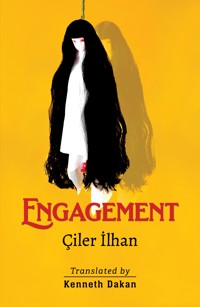
A celebratory dinner and engagement ceremony is to be held at a large home in Our Village, in southeast Turkey. Halil, the cousin of the future bride, Leyla, is sent to a nearby village to buy the traditional cologne. Leyla's sister, Maral, is told to go door-to-door to remind everyone to attend. Throughout the long day, the other women of the household clean, cook and toil. Meanwhile, a dust storm descends out of nowhere and a menacing mist settles over the village streets. This harrowing tale, which spans sixteen hours and is told through the eyes of a mysterious narrator, delves into the bad blood between two timeless villages where most of the men are heavily armed village guards, and there is money to be made in agriculture, oil, fish farms and more. Geographical complexities, tangled relations, hazy memories and unreliable witnesses make for a story in which perhaps is nothing as it seems…
Sie lesen das E-Book in den Legimi-Apps auf:
Seitenzahl: 108
Veröffentlichungsjahr: 2024
Das E-Book (TTS) können Sie hören im Abo „Legimi Premium” in Legimi-Apps auf:
Ähnliche




















ENGAGEMENT
To the precious children of Our Village
EAU DE COLOGNE
Maral had forgotten all about the eau de cologne even though her mother had reminded her two days previously: ‘You can’t hold out a bottle of warm cologne for guests. It’s bought beforehand, kept in the fridge and splashed cold onto cupped palms.’ What a bad start to the day! Surely no good will come of it.
And so, it fell on Halil to get the scent, since Maral and her favorite aunt, never-married Nasibe (in this place, an unmarried woman is an old maid, a spinster or stuck-at-home–so let us say, instead, that Maral and her favorite aunt, the Spinster Nasibe) were supposed to go door-to-door to invite guests over for the evening. Maral had her work cut out for her. You see, Nasibe only has one good arm; the left one was stunted and useless. The village had more than its fair share of crazies and cripples. City people came once to do research: ‘If you people keep marrying each other,’ a woman in thick-rimmed glasses said, ‘nothing will ever change.’
It was a beautiful morning. In the month of May. What can turn green, has. The people down on the plains call those living here cayı, meaning ‘mountain people’. But there are no mountains. There are rolling hills, and at their feet greenery blossoming in spring sunshine. Green, green, yellow. Yellow, yellow, flatness. Flat, flat, hill. So goes the landscape in these parts, where sheep far outnumber fields. Such a perfect day, were it not for the sandstorm. Or, actually, the sandstorm might have swept in near sundown.
I’ll wear my new shoes now so they’re broken in by the evening.
That is what Halil was thinking.
But the soles were leather. And bound to slip.
CHUNKY
They were not his first pair of leather shoes, of course. Few households were forced to scrape by in this village; most had plenty. This was true of his father Hasan and his mother Gülüm. True too of his youngest aunt, Nasibe, and his elder aunts, Hatice and Rahime. Of his Uncle Ömer, too. And from this abundance would come all the trouble.
But it was Chunky that caused the first tumble.
Halil loved morning milk fresh from the cow, always had done. They say a prize cock crows in the egg; well, you could still cradle him in two hands when he started favoring cow’s milk over his mother’s. But Chunky grew uneasy that day when he reached for her udder from behind. She never did that, but animal instinct might have told her that today was no ordinary day. She threw her bulk into a kick, as if they were coming to cut her throat. True to her name, Chunky was the fattest cow around.
Halil lost his balance and banged his head hard, leaving him dazed. Chunky was confused too. As Halil moaned and groaned flat on his back, she went up and licked him.
What a bother on this of all days! Who had time to take Halil to a clinic in town when everybody was already up to their ears in work? ‘Ah, Halil, you’re every bit as clumsy as your mother says!’
LEYLA
Her hair was like her name. Dark as the night. Cloaking her to the waist. Bilal had been smitten by this hair while still a boy. This he told to Leyla many years later. When she reached the age of twenty, and continued to reject all her matches–including the son of an uncle a few weeks previously–her father Cemal had decided in anger to give her in marriage to Tahsin, a relative from town, so she would not end up a ‘stuck-at-home’. The second he heard, Bilal jumped into his Renault and gulped down seventy kilometres of road quick as a pill. In this village, men know to stay away when the man of the house is gone.
Bilal, a blood relation on his mother’s side, stepped right up and knocked on the front door. It was opened by Leyla’s mother, Fatma, she too, with hair like the night. When she saw Bilal standing there, so pale, she understood immediately. Fatma was such a sensitive soul. She really was. When he stammered something about having business in the village and his last-minute decision to drop by, she believed him, or so she made him believe.
‘Come sit for a bit and I’ll make you coffee,’ she said, waving him in.
Bilal took his towering frame inside. In the village, his cousin clumsy Halil was called ‘Tall Halil,’ for he had been lanky as a boy, though often sickly and bed-ridden. Back then, all the thrashings in the world could not persuade him to clean his supper plate. But unlike Halil, Bilal was a roly-poly boy, with a good appetite. Now the cousins had both grown into poplars.
Here, they call the biggest room in the house the divanhane. Leyla’s father was once the village headman, meaning many visitors streamed in and out of this house, and still did. These homes are spacious compared to city apartments whose bedrooms are no bigger than chickpeas and whose sitting rooms are broad beans at best. Bilal picked his way across the precious carpets and sat down on one of the floor cushions lining the walls. His back comfortably up against yellow, green and purple pillows shrouded in white lace, he brought his fingers to the end of his mustache and twisted, fidgeting away the minutes. It was the scant mustache of a man of twenty-two, and pristine. The mad dash here was all well and good, but what now? His heart beat something terrible for Leyla. He couldn’t say anything about this, though, not to the women of the house. What a mistake! Pulling himself together, he decided he would head back as soon as the usual small talk had petered out. As he sprawled against the pillows, hands on his knees, his eyes landed on a skillfully embroidered Shahmaran motif: straight into the eyes of this wise half-woman/half-snake who legend told had been killed so that Man could gain curative powers. Was she trying to tell him something?
Bilal squirmed and sighed as Fatma prepared coffee in a kitchen whose supply of pots and pans could easily have cooked up a feast for hundreds. She called her eldest daughter, Leyla, to her side.
‘Here, take this coffee to Bilal,’ she instructed. ‘And if you’ve got something to say, girl, say it now.’
Should Fatma have known better than to bring those two lovebirds together? Perhaps. But then again, there is no getting around fate.
ROAD
Halil walked past the village houses, some nicely plastered and others half-naked; most built of hollow clay blocks and a few made of sun-dried brick. They were all one or two stories tall, with flat terrace roofs. The men were either on guard or asleep, out with the herds or tending the fields. The women were rocking babies or washing windows, kneading dough for sembusek or crushing tomatoes for paste. Children too young for school were out in the streets barefoot playing ride-the-horse, military police games, hide-and-go-seek, jump rope, five stones and dodgeball. But for the dark clouds gathering overhead, it was a perfectly ordinary day. Or perhaps it was closer to evening when the clouds came.
With the boundless energy of a sixteen-year-old and no thought for his splitting headache, Halil scurried along in his leather-soled shoes and a white short-sleeved shirt. The grocer’s shop in the square was open early, as always, but the apprentice was manning the till, which meant that the owner, Fatty Bekir, must have been snoring away still in his bed. There was not a single bottle of cologne to be had, yet alone ten. As luck would have it. Nobody would see this as Halil’s bad luck, though. They would say that Fatma and Cemal neglected to offer the annual sacrifice at Sheykh Shrine. That they failed to distribute the obligatory alms to the poor. That they not only skipped a few of their five-times-a-day prayers, but they also pleaded high blood pressure and soaring sugar levels so that, long before sundown, they could gobble bread and cheese behind closed curtains during Ramadan. Some would say that is what caused their terrible misfortune. When the boss is away, the tongues of the minions wag. Others would point to the long-running trout farm dispute between the family in Our Village and the family in Other Village. ‘That’s what caused the catastrophe,’ they would say.
What complicated matters even more was that everyone was related, both in Our Village and in Other Village; furthermore, everyone in Our Village had blood ties to everyone in Other Village. The five fingers of the same hand are indeed similar, but is it fair to say that they are all the same? The gunmen, every last one of them, were from Other Village, just six or seven kilometres down the road. All of them were relatives of Halil and Leyla. The beetle bores from within the tree. And it is a fact that Sultan was both the mother of the ringleader and Leyla’s eldest aunt.
Yes, the ringleader was Osman. And his mother was Sultan, the unluckiest of seven siblings. For she, mother of hind-leg-of-the-devil Osman, was also Halil’s eldest aunt, and the very same Sultan who had shielded her eight children from a masked squad many years previously, during a late night raid. The Sultan, mother of my-way-or-the-highway Osman, who was struck by the squad leader’s bullet. The Sultan, mother of suck-a-man-dry Osman, who was blamed when her husband just up and disappeared one day; the Sultan whose house was muddied by military boots once a week; the Sultan whose oldest son was killed by a guerrilla during military service. Turn over any stone and there was Osman’s mother, Sultan, she who never lived up to her birth name and never knew a moment of luxury; she who crumpled into a blood-red rag in front of her children with a bullet in her chest, dead. And what did young Osman do? What could he do? His big brother was dead and his father was long-gone. He was the head of the house now. If counted one by one, his years on this earth came to fifteen, years that squeezed him dry and left him hard. Well, what Osman did was collect his seven orphaned siblings and move to Other Village. That was the day that Osman–calculating Osman, ringleader Osman, sheik Osman–picked up a taste for tobacco. All while on the move.
HALIİL
Halil saw that there was no cologne to be had in Our Village, so where was the nearest place to get some? In Other Village, where Osman lived. It was six or seven kilometres away. The walk would take about an hour.
It is true that Halil’s mother saw him as a clumsy fool, but he must have had a capable side, too, for how else would he have been one of only three people to give the shroud the slip on that black night? The rest would be buried in the village graveyard he was nearing on his journey that day. Halil did not like graveyards one bit, but this one was situated right at the village entrance and he had no choice but to pass it. This place was full of memories hazy and razor-sharp. When he fell into a fever as a boy of four, his parents had decided to take him there. To Sheykh Shrine. You know, that freshly entombed sheykh who rose to his feet as though to perform the standing part of his namaz prayers. The sheykh who made the poor, rich; who made the blind, see and made the sick, well. That sheykh. This was the nineties, an era when the state blacklisted the entire region and security checkpoints controlled access to every town.
There were no health services anywhere near the village and travel risked trouble, so his mother Gülüm and father Hasan bundled their boy in their arms and made their way to the edge of the village, to Sheykh Shrine. So fiery with fever was his little forehead that if unleashed it could have scorched the mountains and plains. As they passed the cemetery, ghosts were visible above the tombstones; disembodied heads, floating and flitting a few meters above the white slabs. Yet they seemed cheerful, those heads, and a few of them had winked and smiled at Halil. But he wet himself anyway. Putting it down to fever, his mother did not get cross with him at the time, and there was no whack with a stick. But his father let loose a terrible curse. How could a child of his, a little man no less, be pissing his pants at this age?




