


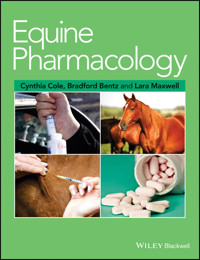
Equine Pharmacology E-Book
94,99 €
Mehr erfahren.
- Herausgeber: John Wiley & Sons
- Kategorie: Fachliteratur
- Sprache: Englisch
Equine Pharmacology combines highly practical therapeutic guidance with reliable scientific background information to provide a clinically relevant resource. Taking a body systems approach to the subject, the book offers the equine clinician fast access to drug options for a given disease, with additional information available for reference as needed. Logically organized to lead the reader through the clinical decision-making process, Equine Pharmacology is a user-friendly reference for pharmacological information on the horse. The book begins with a general review section presenting the principles of antimicrobials, anesthesia, analgesics, anti-parasitics, foals, fluid therapy, and drug and medication control programs. The remainder of the book is devoted to a body systems approach to therapeutics, allowing the reader to search by affected system or specific disease to find detailed advice on drug therapy. Equine Pharmacology is an invaluable addition to the practice library for any clinician treating equine patients.
Sie lesen das E-Book in den Legimi-Apps auf:
Seitenzahl: 1049
Veröffentlichungsjahr: 2014
Ähnliche




















CONTENTS
Cover
Title page
Copyright page
Contributors
Preface
SECTION I: General Review Section
CHAPTER 1: Horse of a different color
Introduction
Idiosyncrasies related to route of administration
Drug interactions
Veterinary compounding pharmacies
References
CHAPTER 2: Basics of antimicrobial therapy for the horse
Historical perspective
The bacterial cell wall
Antimicrobials versus antibiotics
Isolate
Aerobes and anaerobes
Empirical versus culture and sensitivity-guided treatment
Spectrum approach for empirical therapy
Antimicrobial pharmacodynamics
In vitro
sensitivity testing
Postantibiotic effect (PAE)
Patterns of microbial killing
Susceptibility, sensitivity, and resistance
Antimicrobial drug interactions
Antimicrobials used in equine medicine
References
CHAPTER 3: Anesthesia and sedation in the field
Clinical pharmacology of equine anesthetic drugs
References
CHAPTER 4: Clinical application of equine analgesics
Use of systemic analgesics
Antispasmodic medications
Use of intra-articular analgesics
Epidural administration of analgesic drugs
Analgesic use in foals
References
CHAPTER 5: Pharmacology of nonsteroidal anti-inflammatory drugs
The inflammatory cascade
Indications and use of NSAIDs in horses
Pharmacokinetics of NSAIDs in horses
Adverse effects of the use of NSAIDs in horses
Novel targets of classic NSAIDs
New NSAIDs
References
CHAPTER 6: Parasiticides for use in horses
Introduction
Resistance issues
Specific anthelmintics
Broad-spectrum combination anthelmintic products
General Recommendations
References
CHAPTER 7: Foals are not just mini horses
Unique aspects of foal pharmacology
Clinical pharmacology for neonatal diseases
Gastrointestinal pharmacology: Enteritis, ulcer prophylaxis, and ileus
Respiratory pharmacology
Treatment of hypoventilation in neonatal foals
Seizure control
References
CHAPTER 8: Fluids and electrolytes for the equine clinician
Principles of fluid therapy
Identifying patients requiring fluid therapy
Volume of fluids to administer
Rate of fluid administration
Choosing the type of fluid to be administered
Route of fluid administration
Practical aspects of fluid therapy
Monitoring fluid therapy
Complications of fluid therapy
Conclusions
References
CHAPTER 9: Drug and medication control programs in equine athletes
Introduction
Regulation of equine sport
Governing authorities
Practicing within a regulated environment
Compounded medications
Over-the-counter products and herbal remedies and supplements
The drug testing process
Conclusion
Reference
SECTION II: Therapeutics
CHAPTER 10: Clinical pharmacology of the respiratory system
Respiratory anatomy as it pertains to clinical pharmacology
Respiratory tract defense system
Considerations for distribution of drugs to the respiratory system
Infectious diseases of the LRT
Noninfectious LRT disease
Exercise-induced pulmonary hemorrhage (EIPH)
Infectious diseases of the URT
Noninfectious diseases of the URT
References
CHAPTER 11: Clinical application of gastrointestinal therapeutics
Therapy for the equine gastric ulcer syndrome
Therapy for diarrhea and infectious causes of GI disease
Therapy for ileus
References
CHAPTER 12: Treatment of equine nervous system disorders
Introduction
Central nervous system trauma
Cervical vertebral stenotic myelopathy
Equine protozoal myeloencephalitis
Viral disease of the equine nervous system
Equine degenerative myelopathy/neuroaxonal dystrophy
Equine motor neuron disease
Headshaking
Cauda equina syndrome
Equine reflex hypertonia (stringhalt)
Seizure control and management in horses
Narcolepsy
Antimicrobial therapy for CNS infections
Lyme disease/neuroborreliosis
Hepatic encephalopathy
Drugs used for behavioral modification
References
CHAPTER 13: Clinical pharmacology of the equine musculoskeletal system
Nonsteroidal anti-inflammatory drugs
Pharmacological approaches for the treatment of navicular syndrome
Pharmacological approaches to the treatment of laminitis
Perineural and intra-articular anesthesia (diagnostic blocking for lameness exams)
Pharmacological management of osteoarthritis
Medications used for the treatment of epaxial and other muscle pain
Medications used to treat/prevent rhabdomyolysis
Medications used in the prevention and management of hyperkalemic periodic paralysis
Medications used to treat toxin-induced musculoskeletal disorders
Corynebacterium pseudotuberculosis
infections (ulcerative lymphangitis, pigeon fever, pigeon breast)
Appendicular cellulitis
Vasculitis and purpura hemorrhagica
Immune-mediated polymyositis
Bacteria-
associated myositis/myonecrosis
MRSA infections of the musculoskeletal system
Drugs used for regional administration and treatment of septic arthritis/osteomyelitis/physitis
Lyme disease
References
CHAPTER 14: Therapy of the eye
Ocular anatomy, routes of ocular drug administration, and barriers to drug penetration
Ophthalmic drug formulation
Methods of ocular drug delivery
Drug therapy for examination and diagnostic testing
Drug therapy for keratitis
Keratomalacia
Stromal abscess
Drug therapy for noninfectious keratitis
Drug therapy for uveitis
Drug therapy for glaucoma
References
CHAPTER 15: Pharmacological treatment of equine endocrine diseases
Introduction
Equine metabolic syndrome (EMS)
Pituitary pars intermedia dysfunction (PPID)
References
CHAPTER 16: Equine cardiovascular clinical pharmacology
Congestive heart failure
Medical management of cardiac arrhythmias
Acknowledgment
References
CHAPTER 17: Clinical pharmacology of diseases of the equine urinary system
Acute renal failure
Management of acute leptospirosis
Chronic renal failure
Therapeutic approaches to urinary incontinence and retention
Treatment of urinary tract infections
Therapeutic options for urolithiasis
References
Index
End User License Agreement
List of Tables
Chapter 01
Table 1.1 Pharmacokinetic and pharmacodynamic drug interactions in horses
Chapter 02
Table 2.1 General PD classification of common antimicrobials.
Chapter 03
Table 3.1 Expected effects of administration of A-2 adrenergic agonists to the horse.
Table 3.2 Sedation/analgesia for standing procedures in the horse.
Table 3.3 Commonly used equine anesthetic premedications.
Table 3.4 Equine induction protocols.
Table 3.5 Maintenance anesthesia using TIVA.
Table 3.6 MAC values of inhalant anesthetics in the horse.
Chapter 06
Table 6.1 Summary of common equine anthelmintics, doses, and indications.
Table 6.2 Common equine parasite prepatent periods.
Chapter 07
Table 7.1 Dosing guidelines for medications commonly used in foals.
Chapter 08
Table 8.1 Summary of clinical signs associated with hypovolemia and dehydration in adult horses.
Table 8.2 Composition of some commercially available fluids.
Chapter 10
Table 10.1 Common antibiotics administered to adult horses with respiratory infections.
Table 10.2 Common antifungals administered to adult horses with respiratory infections.
Table 10.3 Inhaled medications used in RAO and IAD: anti-inflammatories.
Table 10.4 Systemic medications used in RAO and IAD.
Table 10.5 Inhaled medications used in RAO and IAD: bronchodilators and mast cell stabilizers.
Chapter 13
Table 13.1 Comparison of solubility of corticosteroid esters and release rates.
Table 13.2 Comparison of corticosteroid potency and duration of action.
Table 13.3 FDA-approved HA products.
Table 13.4 Reported disease-modifying effects of hyaluronan relative to molecular weight.
Chapter 14
Table 14.1 Commercially available ointment preparations.
Table 14.2 Ophthalmic antibacterial solutions.
Table 14.3 Ophthalmic antifungal solutions.
Table 14.4 Agents for inhibition of collagenases/proteases.
Table 14.5 Topical anti-inflammatory drugs.
Chapter 16
Table 16.1 Classification of drugs used to treat CHF.
Table 16.2 Classification of antiarrhythmic drugs.
Table 16.3 Drugs commonly used to treat cardiovascular disease.
Chapter 17
Table 17.1 Names, indications, and doses of the drugs most commonly in neurogenic incontinence.
List of Illustrations
Chapter 17
Figure 17.1 Algorithm for the management of oliguric renal failure in horses.
Guide
Cover
Table of Contents
Begin Reading
Pages
iii
iv
vi
vii
viii
1
3
4
5
6
7
8
9
10
11
12
13
14
16
17
18
19
20
21
22
23
24
25
26
27
28
29
30
31
32
33
34
35
36
37
38
39
40
41
43
44
45
46
47
48
49
50
51
52
53
54
55
56
59
63
64
65
66
67
68
69
70
71
73
75
76
77
78
79
80
81
82
83
84
85
86
87
88
89
90
91
92
93
94
95
96
97
98
99
100
101
104
105
106
107
108
109
110
111
112
113
114
115
118
119
120
121
122
123
124
125
126
127
128
129
130
131
132
133
134
135
136
137
139
140
141
142
143
153
154
155
156
162
163
169
170
174
175
176
177
179
183
184
185
186
187
188
189
190
191
192
193
194
195
196
197
198
199
200
201
202
203
204
205
206
207
208
209
210
211
212
213
214
215
216
217
218
219
220
221
222
223
224
225
226
227
228
229
230
231
232
233
234
235
236
237
238
239
240
241
242
243
244
245
246
247
248
249
250
251
252
253
254
255
256
257
258
259
260
261
262
263
264
265
266
267
268
269
270
271
272
273
274
275
276
277
278
279
280
281
282
283
284
285
286
287
288
289
290
291
292
293
294
295
296
297
298
299
300
301
302
303
304
305
306
307
308
309
310
311
312
313
314
315
316
317
318
319
320
Equine Pharmacology
EDITORS
Cynthia Cole DVM, PhD, DACVCP
Director of Research & Development, Mars Veterinary, Portland, Oregon, USA
Bradford Bentz VMD, MS, DACVIM, DACVECC, DABVP (equine)
Equine Medicine and Surgery, Bossier City, Louisiana, USA
Lara Maxwell DVM, PhD, DACVCP
Oklahoma State University, Stillwater, Oklahoma, USA
This edition first published 2015 © 2015 by John Wiley & Sons, Inc.
Editorial offices1606 Golden Aspen Drive, Suites 103 and 104, Ames, Iowa 50014-8300, USAThe Atrium, Southern Gate, Chichester, West Sussex, PO19 8SQ, UK9600 Garsington Road, Oxford, OX4 2DQ, UK
For details of our global editorial offices, for customer services and for information about how to apply for permission to reuse the copyright material in this book please see our website at www.wiley.com/wiley-blackwell.
Authorization to photocopy items for internal or personal use, or the internal or personal use of specific clients, is granted by Blackwell Publishing, provided that the base fee is paid directly to the Copyright Clearance Center, 222 Rosewood Drive, Danvers, MA 01923. For those organizations that have been granted a photocopy license by CCC, a separate system of payments has been arranged. The fee codes for users of the Transactional Reporting Service are ISBN-13: 978-0-8138-2262-4/2015.
Designations used by companies to distinguish their products are often claimed as trademarks. All brand names and product names used in this book are trade names, service marks, trademarks or registered trademarks of their respective owners. The publisher is not associated with any product or vendor mentioned in this book.
The contents of this work are intended to further general scientific research, understanding, and discussion only and are not intended and should not be relied upon as recommending or promoting a specific method, diagnosis, or treatment by health science practitioners for any particular patient. The publisher and the author make no representations or warranties with respect to the accuracy or completeness of the contents of this work and specifically disclaim all warranties, including without limitation any implied warranties of fitness for a particular purpose. In view of ongoing research, equipment modifications, changes in governmental regulations, and the constant flow of information relating to the use of medicines, equipment, and devices, the reader is urged to review and evaluate the information provided in the package insert or instructions for each medicine, equipment, or device for, among other things, any changes in the instructions or indication of usage and for added warnings and precautions. Readers should consult with a specialist where appropriate. The fact that an organization or Website is referred to in this work as a citation and/or a potential source of further information does not mean that the author or the publisher endorses the information the organization or Website may provide or recommendations it may make. Further, readers should be aware that Internet Websites listed in this work may have changed or disappeared between when this work was written and when it is read. No warranty may be created or extended by any promotional statements for this work. Neither the publisher nor the author shall be liable for any damages arising herefrom.
Library of Congress Cataloging-in-Publication data applied for.
Hardback ISBN: 9780813822624
A catalogue record for this book is available from the British Library.
Wiley also publishes its books in a variety of electronic formats. Some content that appears in print may not be available in electronic books.
Contributors
Bradford Bentz, VMD, MS, DACVIM, DACVECC, DABVP (equine)Equine Medicine and SurgeryBossier City, LA, USA
Jennifer E. Carter, DVM, MANZCVS, DACVAA, CVPPLecturer in Veterinary AnaesthesiaFaculty of Veterinary ScienceUniversity of MelbourneWerribee, Australia
Michelle L. Ceresia, PharmDAssociate ProfessorMCPHS UniversityBoston, MA, USA
Cynthia Cole, DVM, PhD, DACVCPDirector of Research & DevelopmentMars VeterinaryPortland, OR, USA
Tad Coles, DVMKansas City, MO, USA
Jennifer Durenburger, DVM, JDDirector of RacingMassachusetts Gaming CommissionBoston, MA, USA
Amber Labelle, DVM, MS, DACVOAssistant ProfessorComparative OphthalmologyVeterinary Teaching HospitalUniversity of Illinois Urbana-ChampaignUrbana, IL, USA
Randy Lynn, DVM, MS, DACVCPGreensboro, NC, USA
K. Gary Magdesian, DVM, DACVIM, ACVCP, ACVECCHenry Endowed Chair in Emergency Medicine and Critical CareSchool of Veterinary MedicineUniversity of CaliforniaDavis, CA, USA
Dianne McFarlane, DVM, PhD, DACVIM, ABVPAssociate Professor/Ricks-Rapp ProfessorOklahoma State UniversityStillwater, OK, USA
Lara Maxwell, DVM, PhD, DACVCPAssociate ProfessorOklahoma State UniversityStillwater, OK, USA
Melissa R. Mazan, DVM, Diplomate ACVIMAssociate ProfessorDepartment of Clinical SciencesCummings School of Veterinary MedicineTufts UniversityNorth Grafton, MA, USA
Nora Nogradi, DVM, DACVIMEquine Internal Medicine SpecialistDubai Equine HospitalDubai, United Arab Emirates
Sheilah A. Robertson, BVMS (Hons), PhD, DECVAA, DACVAA, Dip ECAWBM (WSEL)Specialist in Welfare Science, Ethics and Law, DACAW, MRCVSProfessorDepartment of Large Animal Clinical SciencesUniversity of Florida College of Veterinary MedicineGainesville, FL, USA
L. Chris Sanchez, DVM, PhD, DACVIMAssociate ProfessorDepartment of Large Animal Clinical SciencesUniversity of Florida College of Veterinary MedicineGainesville, FL, USA
Meg Sleeper, VMD, DACVIM (Cardiology)Associate Professor of Cardiology/Clinician EducatorSchool of Veterinary MedicineUniversity of PennsylvaniaPhiladelphia, PA, USA
Brett Tennent-Brown, BVSc, MS, DACVIM, DACVECCThe University of MelbourneHawthorn, Victoria, Australia
Balazs Toth, DVM, MS, MSc, DACVIMSection HeadEquine Internal MedicineEquine Department and ClinicSzent István UniversityDora-Major, Hungary
Scot Waterman, DVMAnimal Welfare and Medical AdvisorArizona Department of RacingTucson, AZ, USA
Preface
The objective of this book is to provide practitioners and veterinary students with a concise and practical guide to equine clinical pharmacology. Although some equine pharmacology texts choose to emphasize complete in-depth reviews of the scientific literature, this approach does not necessarily help the practitioner choose the best therapeutic approach for a specific clinical situation. In contrast, whereas formulary texts are extremely popular for their ease of use and simplicity, there is much more to the successful use of therapeutic medications in horses than simply choosing a dose and dosing frequency. Therefore, we sought authors for this book who are both experts in the specific topic of interest and also had experience or interest in clinical pharmacology. Because we wanted the text to be very practical with a clinical approach, we sought individuals who deal with medication issues on a regular basis, either in their patients in the clinics, in the course of their research, or in many cases a combination of both.
The text is divided into two sections. Section 1 begins with a discussion of some of the important differences between horses and other species in terms of clinical pharmacology. This is an extremely important chapter because many of the therapeutics used in horses have not been well studied and their potential benefits and risks are extrapolated from studies in other species. Practitioners need to be aware of the limitations and caveats of such extrapolations. This section also covers a broad range of clinical pharmacology topics that commonly confront the equine practitioner, including antimicrobials, anesthesia, analgesics, nonsteroidal anti-inflammatory drugs (NSAIDs), and anti-parasiticides. A separate chapter on the clinical pharmacology of foals was included to stress how their unique physiology has ramifications in the use of therapeutics in neonates. Although fluids and electrolytes are not uniformly considered to be within the realm of clinical pharmacology, we included a chapter on this topic because fluids and electrolyte balance are critical components of many therapeutic plans for critically ill horses. Finally, a discussion of drug and medication control programs was included because most equine athletes compete under such regulations, so it is important for practitioners to know where they can get accurate, up-to-date information on those rules. Section 2 takes a systems approach to clinical pharmacology. Often pharmacology is presented by drug classes, but rarely is only a single class of drugs indicated in the treatment of a disease condition. By discussing therapeutic approaches for diseases that affect each organ system, a concise, logical, and comprehensive guide is provided to the practitioner. The systems covered range from the ophthalmic to cardiovascular. Because the same drug may be used in the therapy of several different diseases, therapeutics may appear in multiple chapters. For example, the use of NSAIDs is discussed in a summary chapter in Section 1 but are also included in several chapters in Section 2.
SECTION IGeneral Review Section
CHAPTER 1Horse of a different color: Peculiarities of equine pharmacology
Lara Maxwell
Oklahoma State University, Stillwater, OK, USA
Introduction
Horses are different. Practitioners expect such differences, given the unique anatomy and physiology of the many species encountered within veterinary medicine. Nonetheless, the appropriate use of therapeutic agents can be particularly challenging in the horse. Small animal practitioners have an advantage over other veterinary clinicians when novel therapeutics are investigated for veterinary use, as the pharmacology of investigational drugs is often described in dogs before they are used in people. However, if the dog is the prototypical species of basic pharmacological research, then the horse is just the opposite. The many idiosyncrasies of equine anatomy and physiology can make the behavior of drugs in this species highly unpredictable. Drugs that are well absorbed after oral administration, safe, and efficacious in other species may be poorly absorbed, toxic, or ineffective in horses. This chapter will investigate the sources of some of these pharmacological peculiarities and address strategies for using drugs safely and effectively in horses despite these inherent challenges.
Lesen Sie weiter in der vollständigen Ausgabe!
Lesen Sie weiter in der vollständigen Ausgabe!
Lesen Sie weiter in der vollständigen Ausgabe!
Lesen Sie weiter in der vollständigen Ausgabe!
Lesen Sie weiter in der vollständigen Ausgabe!
Lesen Sie weiter in der vollständigen Ausgabe!
Lesen Sie weiter in der vollständigen Ausgabe!
Lesen Sie weiter in der vollständigen Ausgabe!
Lesen Sie weiter in der vollständigen Ausgabe!
Lesen Sie weiter in der vollständigen Ausgabe!
Lesen Sie weiter in der vollständigen Ausgabe!
Lesen Sie weiter in der vollständigen Ausgabe!
Lesen Sie weiter in der vollständigen Ausgabe!
Lesen Sie weiter in der vollständigen Ausgabe!
Lesen Sie weiter in der vollständigen Ausgabe!
Lesen Sie weiter in der vollständigen Ausgabe!
Lesen Sie weiter in der vollständigen Ausgabe!
Lesen Sie weiter in der vollständigen Ausgabe!
Lesen Sie weiter in der vollständigen Ausgabe!




