


47,99 €
Mehr erfahren.
- Herausgeber: John Wiley & Sons
- Kategorie: Wissenschaft und neue Technologien
- Sprache: Englisch
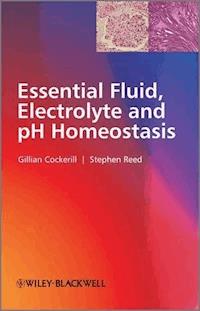
This textbook provides a unique, pocket-sized, self-directed study guide to fluid, electrolyte and acid base homeostasis for undergraduate biomedical science, pharmacology, medical and allied health students. It details the chemical (mostly ionic) composition of body fluids, explains how abnormalities arise, what laboratory tests can be used to identify and analyze the cause of these disorders and shows how normality can be achieved to maintain health.
Sie lesen das E-Book in den Legimi-Apps auf:
Seitenzahl: 340
Veröffentlichungsjahr: 2011
Ähnliche



















Contents
Cover
Title Page
Copyright
Dedication
List of figures
List of tables
Preface
Acknowledgements
Part 1: Background theory and basic concepts
Overview
SECTION 1.i: Introduction and overview
SECTION 1.ii: Water
SECTION 1.iii: Solutions: concentrations and colligative properties of solutes
SECTION 1.iv: Self-assessment exercise 1.1
SECTION 1.v: Acids and bases
SECTION 1.vi: Buffers and the Henderson-Hasselbalch equation
SECTION 1.vii: Self-assessment exercise 1.2
SECTION 1.viii: Body fluids and their composition: overview
ECF
ICF
ISF
SECTION 1.ix: Fluid balance: (a) between fluid compartments and (b) intake and loss
(a) Fluid moves between body compartments
(b) Intake and loss
SECTION 1.x: Ionic composition and electrical neutrality
SECTION 1.xi: Water and ion distribution between compartments 1: Physical chemistry
(a) Osmosis
(b) The Gibbs-Donnan equilibrium
SECTION 1.xii: Water and ion distribution between compartments 1: Physiology
Ion pumps
Water distribution
SECTION 1.xiii: Osmoregulation: solvent and solute balance
SECTION 1.xiv: Self-assessment exercise 1.3
SECTION 1.xv: Summary of Part 1
Answers to Part 1 self-assessment exercises
Part 2: Fluid and electrolyte homeostasis
Overview
Normal physiology
SECTION 2.i: Fluid translocation: plasma to ISF and ISF to ICF
Fluid movement from plasma to ISF
Fluid movement from ISF to ICF
SECTION 2.ii: Renal function: a brief overview
SECTION 2.iii: Renal regulation of blood composition
SECTION 2.iv: Self-assessment exercise 2.1
SECTION 2.v: Minerals: key roles in physiology and metabolism
SECTION 2.vi: Sodium and potassium
Sodium
Potassium
SECTION 2.vii: Sodium and water homeostasis: renal regulation of blood pressure and blood volume
SECTION 2.viii: Calcium and magnesium
Calcium
Magnesium
SECTION 2.ix: Iron
SECTION 2.x: Selected trace elements: Mn, Co, Se and S
SECTION 2.xi: Anions: bicarbonate, chloride, phosphate and proteins
SECTION 2.xii: Self-assessment exercise 2.2
SECTION 2.xiii: Laboratory measurements 1: Osmometry
(i) Quantification of plasma or urine osmolality
SECTION 2.xiv: Laboratory measurements 2: Ion selective electrodes (ISEs)
Ion selective electrodes
Direct or indirect analysis?
SECTION 2.xv: Laboratory measurements 3: Calcium, magnesium, vitamin D, phosphate and iron
SECTION 2.xvi: Laboratory measurements 4: Miscellaneous methods for clinically useful analytes
(i) Flame-based methods for cations
(ii) Albumin and total protein estimation
(iii) Urea
(iv) Glucose
SECTION 2.xvii: Self-assessment exercise 2.3
Disorders of fluid and electrolyte balance
SECTION 2.xviii: Introduction
SECTION 2.xix: Principles of data interpretation
Factitious results
Pseudohyperkalaemia
Pseudohyponatraemia
Hypocalcaemia
Urine analysis
Monitoring plasma values
SECTION 2.xx: Sodium, protein and water
SECTION 2.xxi: Hypernatraemia
Hypernatraemia due to loss of fluid through renal or non-renal routes
Hypernatraemia due to salt gain
Case studies
SECTION 2.xxii: Hyponatraemia
Signs and symptoms
Case studies
SECTION 2.xxiii: Disturbances of potassium homeostasis
SECTION 2.xxiv: Hyperkalaemia
Signs and symptoms
Case studies
SECTION 2.xxv: Hypokalaemia
Signs and symptoms
Non-renal mechanisms
Renal-related causes of hypokalaemia
Case studies
SECTION 2.xxvi: Disturbances of calcium or magnesium balance
Hypercalcaemia
Case studies
Hypocalcaemia
Magnesium
SECTION 2.xxvii: Disorders of iron homeostasis
SECTION 2.xxviii: Self-assessment exercise 2.4
Case studies
SECTION 2.xxix: Summary of Part 2
Answers to Part 2 self-assessment exercises
Part 3: Acid-base homeostasis
Overview
Normal physiological processes
SECTION 3.i: Acidity, pH and buffers: recap of some basic chemistry
SECTION 3.ii: Some worked example calculations
SECTION 3.iii: Self-assessment exercise 3.1
SECTION 3.iv: Homeostasis and the ‘daily acid challenge’
SECTION 3.v: Physiological buffering
The carbonic acid/bicarbonate (H2CO3 / HCO3−) buffer system
SECTION 3.vi: The role of the kidney in acid-base homeostasis
Carbonic anhydrase in the renal tubule
SECTION 3.vii: Respiration: gas pressures and breathing
Gas exchange in the lung
SECTION 3.viii: The role of red cells: gas carriage by haemoglobin
Haemoglobin (Hb) as a buffer and the Bohr effect: deoxyhaemoglobin is a stronger base than oxyhaemoglobin
SECTION 3.ix: Self-assessment exercise 3.2
SECTION 3.x: The liver and gastrointestinal tract in acid-base homeostasis
SECTION 3.xi: The ‘traditional’ versus the ‘modern’ view of acid-base homeostasis
SECTION 3.xii: Stewart's three independent factors
(1) Strong ion difference (SID)
(2) Carbon dioxide
(3) Total weak acid concentration, ATOT
Effective SID and SIG
SECTION 3.xiii: Laboratory measurement of pH, PCO2 and bicarbonate
Gas probes
Acid-base disturbances
SECTION 3.xiv: Classification of primary changes based on pH and aetiology
SECTION 3.xv: Overview of mechanisms
(a) Respiratory imbalances
(b) Non-respiratory (‘metabolic’) imbalances
(c) Mixed disturbances
SECTION 3.xvi: Physiological correction of primary disturbances
SECTION 3.xvii: Check the data
SECTION 3.xviii: Self-assessment exercise 3.3
SECTION 3.xix: Non-respiratory (metabolic) acidosis
(a) Diabetic ketoacidosis (DKA)
(b) Lactate acidosis
(c) Renal disease and dysfunction
(d) Drugs
(e) Diarrhoea
SECTION 3.xx: Metabolic acidosis: detailed case studies
SECTION 3.xxi: Non-respiratory (metabolic) alkalosis: overview
Mechanisms of maintenance of alkalaemia
SECTION 3.xxii: Non-respiratory (metabolic) alkalosis: causes
(a) Vomiting
(b) Diuretics
(c) Mineralocorticoid excess
Case studies
SECTION 3.xxiii: Self-assessment exercise 3.4
SECTION 3.xxiv: Respiratory disorders: overview
SECTION 3.xxv: Physiological consequences of respiratory disorders
SECTION 3.xxvi: Respiratory disorders: case studies
(a) Respiratory acidosis
(b) Respiratory alkalosis
SECTION 3.xxvii: Summary of Part 3
Answers to Part 3 self-assessment exercises
Appendix
Appendix I: Glossary and abbreviations
Appendix II: Reference ranges
Index
This edition first published 2011 © 2011 by by John Wiley & Sons, Ltd.
Wiley-Blackwell is an imprint of John Wiley & Sons, formed by the merger of Wiley's global Scientific, Technical and Medical business with Blackwell Publishing.
Registered Office
John Wiley & Sons Ltd, The Atrium, Southern Gate, Chichester, West Sussex, PO19 8SQ, UK
Editorial Offices
350 Main Street, Malden, MA 02148-5020, USA The Atrium, Southern Gate, Chichester, West Sussex, PO19 8SQ, UK 9600 Garsington Road, Oxford, OX4 2DQ, UK
For details of our global editorial offices, for customer services and for information about how to apply for permission to reuse the copyright material in this book please see our website at www.wiley.com/wiley-blackwell.
The right of the author to be identified as the author of this work has been asserted in accordance with the UK Copyright, Designs and Patents Act 1988.
All rights reserved. No part of this publication may be reproduced, stored in a retrieval system, or transmitted, in any form or by any means, electronic, mechanical, photocopying, recording or otherwise, except as permitted by the UK Copyright, Designs and Patents Act 1988, without the prior permission of the publisher.
Designations used by companies to distinguish their products are often claimed as trademarks. All brand names and product names used in this book are trade names, service marks, trademarks or registered trademarks of their respective owners. The publisher is not associated with any product or vendor mentioned in this book. This publication is designed to provide accurate and authoritative information in regard to the subject matter covered. It is sold on the understanding that the publisher is not engaged in rendering professional services. If professional advice or other expert assistance is required, the services of a competent professional should be sought.
Library of Congress Cataloging-in-Publication Data
Cockerill, Gillian. Essential fluid, electrolyte, and pH homeostasis / Gillian Cockerill, Stephen Reed. p.; cm. Includes index. ISBN 978-0-470-68306-4 (pbk.) 1. Body fluids. 2. Acid-Base Equilibrium. 3. Water-electrolyte balance (Physiology) I. Reed, Stephen, 1954- II. Title. [DNLM: 1. Body Fluids--chemistry. 2. Acid-Base equilibrium--physiology. 3. Body Fluid Compartments--physiology. 4. Water-Electrolyte Balance--physiology. 5. Water-Electrolyte Imbalance. QU 105] QP90.5.C55 2011 612′.01522--dc23 2011015327
A catalogue record for this book is available from the British Library.
This book is published in the following electronic formats: ePDF 9781119971894; ePub 9781119973669; Wiley Online Library 9780470683064; Mobi 9781119973676
In loving memory of MW, EMS, IW and JFH
List of figures
FigureTitleSection1.1Transport processes1.i1.2Ionic balance within and between compartments1.i1.3Polarity of water1.ii1.4Vapour pressure1.iii1.5Acid-base behaviour of alanine1.v1.6Total body water1.viii1.7Body fluids are in dynamic flux1.ix1.8Ionogram1.x1.9Solvent, solute gradients1.xi1.10Tonicity1.xi1.11Gibbs-Donnan equilibrium1.xi1.12Sodium pump1.xii1.13Fluid movement between blood, ISF and ICF1.xii1.14Starling's hypothesis1.xii1.15Osmosis1.xiii2.1Starling's forces2.i2.2Drainage of ISF2.i2.3Renal nephron2.ii2.4Sodium gradient2.ii2.5Kinetics of renal tubular transport2.ii2.6ADH structure2.iii2.7Relationship between ADH and osmolality2.iii2.8Adrenal steroid synthesis2.iii2.9Steroid structures2.iii2.10Natriuretic peptide structure2.iii2.11Renin-angiotensin-aldosterone cascade2.vii2.12Renin and ACE produce angiotensin II2.vii2.13Oedema2.vii2.14Calcium distribution and turnover2.viii2.15Vitamin D3 synthesis2.viii2.16Control of vitamin D3 synthesis2.viii2.17Iron uptake and distribution2.ix2.18Cooling curves2.xiii2.19Cryoscopy2.xiii2.20Ion selective electrodes2.xiv2.21Ionophores2.xiv2.22Logarithmic response of an ISE2.xiv2.23Fluid displacement by proteins and lipoproteins2.xiv2.24Distribution of intravenous fluids2.xviii3.1Lactate utilisation by liver3.iv3.2Simplified diagram of the role of the nephron3.vi3.3Ammonia and phosphate are bases3.vi3.4Glutamine is a carrier of NH33.vi3.5Carbonic anhydrase and glutaminase3.vi3.6Influence of arterial gas pressures on respiratory rate3.vii3.7Gas diffusion in the lungs3.vii3.8The oxygen dissociation curve3.viii3.9Rapoport-Leubering shunt3.viii3.10Bohr effect3.viii3.11Role of red blood cells: chloride shift3.viii3.12Cori cycle3.x3.13Ketogenesis3.x3.14Anion gap3.xv3.15Compensation for respiratory acidosis3.xvi3.16Compensation for respiratory alkalosis3.xvi3.17Compensation for metabolic acidosis3.xvi3.18Compensation for metabolic alkalosis3.xvi3.19Overproduction of lactate3.xixList of tables
TableTitleSection1.1Typical pKa values1.v1.2Total body water1.viii1.3Major Solutes 1.viii1.4Comparison of plasma and CSF1.viii1.5Typical fluid balance 1.ix1.6Volumes of fluids and secretions1.ix2.1Natriuretic peptides2.iii2.2Minerals2.v2.3Distribution of iron2.ix2.4Electrometric methods2.xiv2.5Factitious results2.xix2.6Typical values for error2.xix2.7Reference ranges2.xix2.8Hyper-and hyponatraemia2.xx2.9Hyper- and hypomagnesaemia2.xxvi3.1Physiological compensation3.xvi3.2Causes of metabolic acidosis3.xix3.3Renal tubular acidoses3.xix3.4Some common causes of respiratory disorders3.xxivPreface
‘All vital mechanisms, no matter how varied they may be, have always but one end, that of preserving the constancy of the conditions of the internal environment.’
With these words, Claude Bernard in 1857 gave what was probably the first definition of the process we now know as ‘homeostasis’, even though the term, derived from the Greek homoios meaning ‘the same’, was not coined until the 1920s.
Those events that collectively constitute ‘life’ can all be described in terms of chemical and physical processes; cell biology in particular is chemistry in disguise! The purpose of this short text is to act as a primer for students meeting key topics for the first time, but sections of this book will also be useful as a quick revision guide for more advanced students. The text, supported by diagrams, aims to explain physiochemical processes related to the homeostatic maintenance of:
i. electrochemical neutrality (anion/cation balance);
ii. osmotic balance (regulation of the concentrations of solutes inside and outside cells, and
iii. hydrogen ion balance.
The mechanisms of fluid, electrolyte and acid-base homeostasis are fundamental to normal cellular function and therefore have a major impact on the health of the individual, and an imbalance may lead to a life-threatening situation. Processes of fluid, electrolyte and acid-base regulation that are physiologically interrelated are the ones which students often find most difficult to understand, partly because of their complexity.
This introductory text is divided into three main Parts dealing initially with basic physicochemical concepts, then aspects of normal and abnormal physiology. Each part is presented as a number of Sections which are essentially ‘bite-sized chunks’ of key information. The book is designed such that it may be read as continuous prose, or, and because each Section more or less stands alone, the reader may dip into the text for the purposes of review or revision of particular topics. Some concepts are described in several sections to ensure that relevant sections are fairly self-contained, but will also allow the reader the opportunity to revisit and consolidate essential material. The contents covered range from basic chemistry and physiology to more advanced concepts which are applied to clinically relevant situations. Selected aspects of analysis and discussion of some of the pitfalls of interpretation of laboratory data are also to be found. There are numerous Self Assessment Exercises based on understanding of key concepts, data-handling problems and case studies for reinforcement of the learning process. We hope the text will be of value to laboratory staff and ward-based staff in endeavouring to understand what many see as a ‘very difficult’ topic area.
Acknowledgements
Our thanks go to the production and editorial staff at John Wiley; Nicky McGirr, Fiona Woods, Izzy Canning and Celia Carden, Liz Renwick and Samantha Jones. To several colleagues especially, David Gaze and Dr Nawaf Al-Subaie (both St George’s) for help with case studies, and Alison Boydell (Westminster) who offered constructive comment on the manuscript.
Also, to Colin Samuell, a valued colleague who provided some of the case histories, and more importantly an inspiring teacher who has made many difficult concepts understandable to countless numbers of students (including SR).
Part 1
Background theory and basic concepts
Overview
The purpose of Part 1 is to review some important concepts of physical chemistry and to introduce key ideas of physiology, all of which will provide underpinning knowledge for deeper study in Parts 2 and 3. Although some understanding of solutions, acids, bases, pH and buffers may have been acquired from previous studies, these topics are included here for revision; some readers may choose to omit certain sections.
An overview is given of body fluid compartments, their volumes and their chemical compositions. Importantly, concepts relating to osmotic balance and electrical neutrality of physiological fluids are also discussed.
SECTION 1.i
Introduction and overview
The human body is, by weight, predominantly water: the total volume1 being distributed into two major compartments. The larger proportion is located inside cells (intracellular fluid, ICF) with a smaller volume occurring as extracellular fluid (ECF). To function effectively, cells must maintain correct fluid volume balance, ionic balance, osmotic balance and acid-base balance. Two fundamental physicochemical phenomena, namely electroneutrality and osmosis (‘osmoneutrality’), have significant effects on cellular function. Homeostatic mechanisms operate to maintain physiological steady-state conditions of ionic and solute concentrations.
Lesen Sie weiter in der vollständigen Ausgabe!
Lesen Sie weiter in der vollständigen Ausgabe!
Lesen Sie weiter in der vollständigen Ausgabe!
Lesen Sie weiter in der vollständigen Ausgabe!
Lesen Sie weiter in der vollständigen Ausgabe!
Lesen Sie weiter in der vollständigen Ausgabe!
Lesen Sie weiter in der vollständigen Ausgabe!
Lesen Sie weiter in der vollständigen Ausgabe!
Lesen Sie weiter in der vollständigen Ausgabe!
Lesen Sie weiter in der vollständigen Ausgabe!
Lesen Sie weiter in der vollständigen Ausgabe!
Lesen Sie weiter in der vollständigen Ausgabe!
Lesen Sie weiter in der vollständigen Ausgabe!
Lesen Sie weiter in der vollständigen Ausgabe!
Lesen Sie weiter in der vollständigen Ausgabe!
Lesen Sie weiter in der vollständigen Ausgabe!
Lesen Sie weiter in der vollständigen Ausgabe!
Lesen Sie weiter in der vollständigen Ausgabe!
Lesen Sie weiter in der vollständigen Ausgabe!
Lesen Sie weiter in der vollständigen Ausgabe!
Lesen Sie weiter in der vollständigen Ausgabe!
Lesen Sie weiter in der vollständigen Ausgabe!
Lesen Sie weiter in der vollständigen Ausgabe!
Lesen Sie weiter in der vollständigen Ausgabe!
Lesen Sie weiter in der vollständigen Ausgabe!
Lesen Sie weiter in der vollständigen Ausgabe!
Lesen Sie weiter in der vollständigen Ausgabe!
Lesen Sie weiter in der vollständigen Ausgabe!
Lesen Sie weiter in der vollständigen Ausgabe!
Lesen Sie weiter in der vollständigen Ausgabe!
Lesen Sie weiter in der vollständigen Ausgabe!
Lesen Sie weiter in der vollständigen Ausgabe!
Lesen Sie weiter in der vollständigen Ausgabe!
Lesen Sie weiter in der vollständigen Ausgabe!
Lesen Sie weiter in der vollständigen Ausgabe!
Lesen Sie weiter in der vollständigen Ausgabe!
Lesen Sie weiter in der vollständigen Ausgabe!
Lesen Sie weiter in der vollständigen Ausgabe!
Lesen Sie weiter in der vollständigen Ausgabe!
Lesen Sie weiter in der vollständigen Ausgabe!
Lesen Sie weiter in der vollständigen Ausgabe!
Lesen Sie weiter in der vollständigen Ausgabe!
Lesen Sie weiter in der vollständigen Ausgabe!
Lesen Sie weiter in der vollständigen Ausgabe!
Lesen Sie weiter in der vollständigen Ausgabe!
Lesen Sie weiter in der vollständigen Ausgabe!
Lesen Sie weiter in der vollständigen Ausgabe!
Lesen Sie weiter in der vollständigen Ausgabe!
Lesen Sie weiter in der vollständigen Ausgabe!
Lesen Sie weiter in der vollständigen Ausgabe!
Lesen Sie weiter in der vollständigen Ausgabe!
Lesen Sie weiter in der vollständigen Ausgabe!
Lesen Sie weiter in der vollständigen Ausgabe!
Lesen Sie weiter in der vollständigen Ausgabe!
Lesen Sie weiter in der vollständigen Ausgabe!
Lesen Sie weiter in der vollständigen Ausgabe!
Lesen Sie weiter in der vollständigen Ausgabe!
Lesen Sie weiter in der vollständigen Ausgabe!
Lesen Sie weiter in der vollständigen Ausgabe!
Lesen Sie weiter in der vollständigen Ausgabe!
Lesen Sie weiter in der vollständigen Ausgabe!
Lesen Sie weiter in der vollständigen Ausgabe!
Lesen Sie weiter in der vollständigen Ausgabe!
Lesen Sie weiter in der vollständigen Ausgabe!
Lesen Sie weiter in der vollständigen Ausgabe!
Lesen Sie weiter in der vollständigen Ausgabe!
Lesen Sie weiter in der vollständigen Ausgabe!
Lesen Sie weiter in der vollständigen Ausgabe!
Lesen Sie weiter in der vollständigen Ausgabe!
Lesen Sie weiter in der vollständigen Ausgabe!
Lesen Sie weiter in der vollständigen Ausgabe!
Lesen Sie weiter in der vollständigen Ausgabe!
Lesen Sie weiter in der vollständigen Ausgabe!
Lesen Sie weiter in der vollständigen Ausgabe!
Lesen Sie weiter in der vollständigen Ausgabe!
Lesen Sie weiter in der vollständigen Ausgabe!
Lesen Sie weiter in der vollständigen Ausgabe!
Lesen Sie weiter in der vollständigen Ausgabe!




