


5,99 €
Mehr erfahren.
- Herausgeber: BookRix
- Kategorie: Religion und Spiritualität
- Sprache: Englisch
Sacred Narratives, Liturgical Practice, and African Christian Identity
There are many Bible study guides—but there is nothing quite like this one.
The Ethiopian Bible User Guide opens the door to one of Christianity’s oldest, richest, and most misunderstood traditions. While most Christians are familiar with the 66- or 73-book Bible, very few realize that the Ethiopian Orthodox Tewahedo Church preserves an 88-book canon, including ancient texts such as 1 Enoch, Jubilees, 4 Baruch, Ezra Kali, and the Prayer of Manasses—books that shaped early Jewish and Christian thought yet disappeared from most Western Bibles.
This guide is not merely academic. It is historical, theological, devotional, and cultural, designed to help readers understand, experience, and engage the Ethiopian Bible as a living tradition rather than a forgotten curiosity.
Inside this book, you will:
• Discover how and why Ethiopia preserved a wider biblical canon when other traditions narrowed theirs
• Explore the theology, Christology, and sacramental worldview of the Ethiopian Orthodox Church
• Learn how Scripture is read, sung, prayed, and lived through liturgy, fasting, and daily life
• Gain clear, accessible introductions to rare and sacred books absent from Western Bibles
• Understand the African Christian identity behind the texts—rooted in Aksum, the Solomonic tradition, and early Christianity
• Engage with guided study questions, prayers, reflections, timelines, canon charts, and glossaries designed for both personal devotion and group study
Unlike Western study guides that treat Scripture as a text to analyze, this book presents the Ethiopian Bible as a living Word—carried in processions, chanted in worship, woven into calendars, art, music, law, and everyday life. It shows how faith, history, and Scripture remain inseparable in one of the world’s most enduring Christian civilizations.
Whether you are:
• a theology student or scholar seeking deeper historical context
• a pastor or teacher looking to enrich teaching with global Christian perspectives
• a devout reader longing for deeper roots and forgotten texts
• or simply curious about Christianity beyond Europe and the West
—this guide will transform how you understand the Bible itself.
By the final page, you will not only know what the Ethiopian Bible contains—you will understand why it matters, how it has endured for nearly two millennia, and what it still offers the modern world.
This is more than a guide.
It is an invitation into a living faith, a preserved canon, and a sacred heritage the world is only beginning to rediscover.
Buy a copy now and step into one of Christianity’s deepest and most extraordinary biblical traditions.
Das E-Book können Sie in Legimi-Apps oder einer beliebigen App lesen, die das folgende Format unterstützen:
Veröffentlichungsjahr: 2026
Ähnliche



















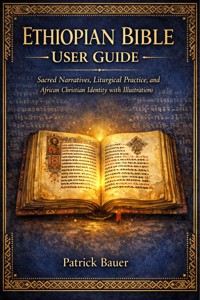
Ethiopian Bible User Guide
Sacred Narratives, Liturgical Practice, and African Christian Identity with Illustrations
Patrick Bauer
Copyright Notice
Copyright © 2026
All rights reserved.
No part of this publication may be reproduced, stored in a retrieval system, or transmitted in any form or by any means—electronic, mechanical, photocopying, recording, scanning, or otherwise—without the prior written permission of the publisher, except in the case of brief quotations used in critical articles or reviews.
This book is a work of research, commentary, and educational study. It is not an official publication of the Ethiopian Orthodox Tewahedo Church, nor does it claim ecclesiastical authority. Biblical passages, quotations, and references are used under the doctrine of fair use for educational purposes.
Every effort has been made to provide accurate and reliable information. However, the publisher and author make no representations or warranties with respect to the completeness, reliability, or accuracy of the content and disclaim any liability arising directly or indirectly from the use of this material. Readers are encouraged to consult primary sources and qualified teachers for deeper study.
Table of Contents
Introduction
The Story That Began in Aksum
Why This Guide Matters Today
Ethiopia’s Gift to Christianity
Reading Scripture with Ethiopian Eyes
The Wider Canon: A World of Forgotten Texts
History as Theology
Chapter 1: Welcome to the World of the Ethiopian Bible
What Makes the Ethiopian Bible Unique
The Journey of the 88 Sacred Books
Ethiopia’s Role in Preserving Ancient Christianity
Why the Ethiopian Bible Matters Today
Chapter 2: Key Theological Concepts in the Ethiopian Orthodox Tradition
Christology in the Ethiopian Church
Sacraments and the Role of Scripture
Tradition, Liturgy, and the Living Word
The Interplay of Faith and Daily Life
Chapter 3: Approaching the Text – Principles for Interpretation
How Ethiopian Christians Read Scripture
The Spiritual Lens of Allegory and Symbol
Questions, Prayer, and Reflection as Tools
Chapter 4: The Canon of the Ethiopian Bible
The Interplay of Faith and Daily Life
Unique Apocryphal Texts (Enoch, Jubilees, Baruch, Ezra Kali)
Differences from Western Canons
Welcome to the World of the Ethiopian Bible
Canon as a Mirror of Ethiopian Identity
Chapter 5: Historical and Cultural Context
From the Ethiopian Eunuch in Acts 8 to the Nine Saints
The Solomonic Dynasty and Biblical Heritage
Monasteries as Guardians of Scripture
The Bible in Art, Music, and Oral Tradition
Chapter 6: Sacred and Apocryphal Books
The Book of Enoch: Visions of Heaven and Earth
The Book of Jubilees: Law and Covenant Retold
4 Baruch and Ezra Kali: Hope and Exile
The Prayer of Manasses and Other Rare Texts
Chapter 7: Theological Themes and Motifs
Covenant and Law in the Ethiopian Context
Christ, the Cross, and Resurrection in the Tradition
Angels, Demons, and the Spiritual Cosmos
The Ethiopian Vision of the End Times
Chapter 8: Worship and Devotion
Scripture in the Divine Liturgy
Psalms and Hymns as Living Scripture
Fasting, Feasts, and Biblical Calendars
Monastic Devotion and Daily Scripture
Chapter 9: Reflections and Guided Study
Study Questions for Deeper Engagement
Prayers for Reading and Meditation
Reflection Tools for Teachers and Pastors
Personal Application for Modern Believers
Chapter 10: Preservation and Scholarship
Ancient Manuscripts and Their Craftsmanship
Preservation Efforts in Modern Times
Translation Projects and Global Scholarship
Digitalization and Worldwide Access
Chapter 11: Comparative Perspectives
Ethiopian vs. Catholic Canon
Ethiopian vs. Protestant Canon
Ethiopian vs. Greek and Eastern Orthodox Canon
Why Ethiopia Preserves a Wider Canon
Chapter 12: Legacy and Living Faith
The Ethiopian Bible in Today’s Church
Diaspora Communities and Global Witness
The Bible as a Bridge to African Identity
Why the Ethiopian Bible Matters for the World
Appendix
Part I: Canon Charts & Book Summaries
Part II: Timelines & Historical Milestones
Part III: Glossary of Key Terms
Part IV: Study Aids & Practical Tools
Part V: Bibliography & Recommended Resources
Introduction
There are books that inform, and there are books that transform. The Ethiopian Bible belongs to the second category — a sacred treasury that has shaped the spiritual, cultural, and historical imagination of one of the world’s oldest Christian civilizations. To engage with it is not merely to read words on parchment, but to step into an ancient stream of living faith, one that has carried countless believers for nearly two millennia.
For many people raised in Western Christianity, “the Bible” conjures up either the 66 books of the Protestant canon or the 73 books of the Roman Catholic canon. Rarely do they realize that there exists another canon, one that is broader, older in some ways, and deeply intertwined with a distinct Christian tradition: the Ethiopian Orthodox Tewahedo Church. This tradition treasures 88 canonical books, preserved faithfully in the Ge’ez language, bound in ornate manuscripts, and carried in the hearts and prayers of its faithful.
To study this Bible is to encounter texts such as 1 Enoch, quoted in the Epistle of Jude but excluded from most Western Bibles. It is to wrestle with the theological weight of the Book of Jubilees, which retells the early narratives of Genesis and Exodus with striking detail. It is to kneel with the humbled King Manasses as he prays words of repentance that have survived in Ethiopia when they were lost elsewhere. It is to sit with books like 4 Baruch and Ezra Kali, which shaped early Christian understanding of exile, hope, and return.
What sets the Ethiopian Bible apart is not merely the number of books, but the way it has been lived. This canon is not locked away in libraries or reduced to academic study. It has been sung in hymns, proclaimed in liturgies, illustrated in manuscripts, and carried into daily life. For Ethiopian Christians, the Bible is not simply a reference text; it is a spiritual atmosphere in which life unfolds.
This guide exists to invite you into that atmosphere. It is written not only to inform but to form; not merely to analyze but to accompany. Whether you are a scholar, a pastor, a student of theology, or a seeker of spiritual depth, this book is designed as your companion into one of Christianity’s oldest and richest traditions.
The Story That Began in Aksum
To understand the Ethiopian Bible, one must first understand the world of Aksum, the powerful kingdom that flourished in the Horn of Africa nearly 1,700 years ago. Aksum was a crossroads of trade, culture, and ideas. Its merchants traveled along the Red Sea, exchanging goods with Arabia, Egypt, and India. Its kings inscribed inscriptions in multiple languages, revealing a cosmopolitan civilization proud of its heritage and open to influence.
It was in this world that Christianity took root. According to tradition, the gospel first arrived in Ethiopia through the story of the Ethiopian eunuch in the Book of Acts (Acts 8:26–40). Baptized by Philip on the road from Jerusalem to Gaza, this court official carried the message of Jesus back to his homeland. Whether or not this event marked the very first Christian presence in Ethiopia, it became a symbol of Ethiopia’s unique place in salvation history.
By the fourth century, Christianity had become the faith of the Ethiopian monarchy. King Ezana, the ruler of Aksum, declared the empire Christian, placing Ethiopia alongside Armenia as one of the earliest nations to embrace the faith. With this conversion came the need for Scripture in a language the people could understand. Thus began the translation of the Bible into Ge’ez, an ancient Semitic tongue that would become the liturgical and literary foundation of Ethiopian Christianity.
What distinguished Ethiopia’s journey, however, was its independence of canon formation. While the churches of Rome, Constantinople, and Antioch debated which books to include or exclude, Ethiopia preserved a broader collection. The Ethiopian canon reflected a worldview shaped not only by early Christianity but also by its Semitic roots, African context, and enduring sense of continuity with Israel. In this way, Ethiopia became a living ark, carrying texts and traditions that elsewhere were forgotten.
Why This Guide Matters Today
The question naturally arises: Why should modern readers care about the Ethiopian Bible? After all, countless study guides already exist for the Protestant or Catholic canons. Why add another layer of complexity?
The answer lies in what the Ethiopian Bible offers: a chance to rediscover Christianity with fresh eyes.
It expands horizons
: The Ethiopian canon includes works that shaped early Judaism and Christianity but later vanished from Western use. Engaging with these texts helps us appreciate the diversity of early faith.
It grounds history in devotion
: Ethiopian manuscripts are not dry academic artifacts. They are prayed, sung, and revered as sacred. They show us how Scripture and worship are inseparable.
It nourishes spirituality
: This guide is not only commentary but also prayer and reflection. By encountering these texts devotionally, readers can deepen their personal walk with God.
It bridges traditions
: At a time when Christianity is often divided, learning from Ethiopia offers a model of listening and humility. The Ethiopian Bible reminds us that no one tradition has the full story.
For scholars, this guide offers a gateway into manuscripts and texts that have shaped early theology. For pastors, it provides reflection questions and prayers that enrich teaching and preaching. For lay readers, it opens a doorway to the beauty of one of the world’s oldest Christian traditions.
A Guide Designed for You
This guide has been designed with multiple readers in mind. It is structured to provide background, commentary, themes, prayers, and questions for every major section of the Ethiopian Bible.
For scholars
: Historical and textual analysis that situates Ethiopian texts within the broader world of early Christianity.
For pastors and teachers
: Clear themes, ready-to-use reflection questions, and devotional prayers that connect text to community.
For seekers and believers
: Invitations to personal engagement with Scripture, not only as literature but as living word.
Throughout, we balance head and heart. Every chapter includes theological depth, but also space for prayer. Every section explores historical detail, but also offers personal reflection. Our goal is that this guide will not simply sit on a shelf, but become a companion you return to again and again.
Ethiopia’s Gift to Christianity
One of the great tragedies of church history is that the Ethiopian witness has too often been marginalized. For centuries, Western Christianity looked at Ethiopia with a mixture of fascination and condescension. Missionaries sometimes treated Ethiopian Christians as if they had preserved a distorted or incomplete gospel, unaware that in fact Ethiopia had preserved texts that the West had lost.
Today, however, a new appreciation is emerging. Scholars recognize that without Ethiopia, we would not know the full text of 1 Enoch. Without Ethiopia, Jubilees would remain a fragmented curiosity. Without Ethiopia, our sense of the diversity of early Christianity would be impoverished. In an era when Christians long for deeper roots, Ethiopia’s Bible is a reminder that faith is bigger than the boundaries of Europe and America.
But beyond scholarship, Ethiopia offers something more profound: a living model of devotion. In Ethiopia, the Bible is not an artifact of the past but the heartbeat of the present. It shapes calendars, guides prayers, and inspires art. It forms the backbone of a culture where faith and life are inseparable.
For anyone longing to reconnect with the depth of Christian tradition, the Ethiopian Bible is a gift. And this guide is your tool to unwrap that gift.
A Journey Together
This guide is not intended to overwhelm you with information. Instead, it is meant to be a journey. Like a trusted companion on a pilgrimage, it walks beside you, pointing out landmarks, asking thoughtful questions, and inviting prayer at every stop.
As you travel through these pages, you will:
Learn the
historical context
of how the Ethiopian Bible came to be.
Encounter
unique books
like Enoch and Jubilees in a devotional framework.
Reflect on
theological themes
that connect Scripture to everyday life.
Pray with words that Ethiopian Christians have prayed for centuries.
By the end, you will not only know more about the Ethiopian Bible — you will have lived more deeply within its world.
Reading Scripture with Ethiopian Eyes
One of the most rewarding aspects of engaging the Ethiopian Bible is the chance to see familiar stories through a new lens. Genesis, Exodus, the Psalms, the Gospels — these are the same books known across the Christian world. Yet in Ethiopia, they are read with particular rhythms, emphases, and theological insights that make them feel fresh.
In Ethiopian liturgy, for example, the Psalms are not simply recited; they are sung with melodies that have been passed down for generations. In monasteries, entire nights are devoted to chanting the Psalter, making the words not only texts to be studied but songs that shape the soul. The Gospels are carried into churches in ornate processions, wrapped in cloths, kissed by the faithful, and placed upon altars. The reverence shown to the text communicates a truth: Scripture is not only words to be read — it is a living presence to be honored.
This approach challenges modern readers to reconsider their own relationship to the Bible. Too often, Scripture is treated as an intellectual puzzle or a sourcebook for moral arguments. But in Ethiopia, the Bible is experienced as mystery, beauty, and power. To study it is to pray it. To hear it is to encounter the divine.
This guide, therefore, encourages you to adopt the same posture. As you read commentary or historical notes, take moments to pause, breathe, and imagine the text not just as information but as a living word.
The Wider Canon: A World of Forgotten Texts
Perhaps the most striking difference between the Ethiopian Bible and its Western counterparts is the scope of its canon. With 88 books, it is the most expansive biblical collection in use today. For readers who have grown up with a shorter canon, this can feel overwhelming at first. But it is also exhilarating.
Consider 1 Enoch. This ancient Jewish text, preserved almost entirely in Ge’ez, describes visions of heavenly realms, angels, and cosmic judgment. Quoted in the New Testament but excluded from most canons, it offers insight into how early Christians understood the spiritual world. Ethiopian Christians never regarded it as optional or peripheral; for them, it was part of the Bible’s heartbeat.
Or take the Book of Jubilees, which retells the narratives of Genesis and Exodus with a heightened sense of chronology and covenant. In Ethiopia, this book shaped not only theology but also culture, influencing calendars, feasts, and ways of marking time.
Other works, such as 4 Baruch and Ezra Kali, reflect themes of exile, restoration, and faithfulness under pressure. They speak to the lived experience of a people who have endured hardship while clinging to hope.
For Western readers, encountering these books is like opening windows into rooms long locked. They reveal that the early Church was more diverse in its scriptural imagination than we often assume. They remind us that canon formation was not uniform but complex, local, and rooted in living traditions.
This guide does not shy away from these differences. Instead, it embraces them as opportunities for learning, dialogue, and deeper faith.
History as Theology
In Ethiopia, history and theology are not separate disciplines. To tell the story of the Bible’s preservation is to tell a story of faith. Monks who painstakingly copied manuscripts did so not only to conserve information but to serve God. Kings who carried the Bible into battle did so as a sign of covenant. Families who handed down Psalters treated them as heirlooms more precious than gold.
The Ethiopian Bible is a reminder that faith is embodied in history. Every parchment page carries not only words but fingerprints, prayers, and tears. Every illuminated manuscript reflects the devotion of artists who saw beauty as a form of worship. Every canon list is a testimony to decisions made in community, not by abstract councils but by living churches.
As you read this guide, you will notice how often historical context appears alongside theological reflection. This is intentional. To understand Ethiopian Christianity is to recognize that history itself is sacred. The church fathers of Ethiopia did not see themselves as inventors but as guardians of a treasure passed down from the apostles.
Scripture in Daily Life
Another feature that distinguishes the Ethiopian experience is the integration of Scripture into daily rhythms. In traditional Ethiopian villages, life is measured not by the hands of a clock but by the cadence of prayer and Scripture. Morning begins with Psalms. Feasts are marked by readings from the Gospels. Fasts are accompanied by prophetic calls to repentance.
Children often learn to read by studying biblical texts in Ge’ez. Monks memorize vast portions of Scripture. Farmers carry verses with them into the fields. Even architecture reflects the Bible’s presence: churches are often built as symbolic representations of Scripture, with sanctuaries divided into three parts, echoing the Old Testament temple.
For Western readers accustomed to compartmentalizing faith, this holistic integration can be eye-opening. It challenges us to see that the Bible is not meant to be a Sunday-only book but a way of life.
A Spiritual Companion, Not Just a Study Guide
At this point, it is important to emphasize what this guide aims to be. It is not an encyclopedia of information. It is not a substitute for reading the Bible itself. Rather, it is a companion — a trusted voice to walk alongside you as you journey through Scripture.
Each chapter of this guide begins with a human-like introduction, offering context, story, and tone. Subchapters then provide structured exploration: historical background, theological themes, and devotional reflections. At key moments, prayers and questions invite you to stop and engage personally. Sketch illustration prompts allow you to imagine visually what you are learning.
By combining these elements, the guide mirrors the Ethiopian approach itself: Scripture is not only studied but sung, prayed, and pictured.
Preparing for the Journey
Before you turn the page to Chapter 1, take a moment to prepare yourself for what lies ahead. This is not a casual read. The Ethiopian Bible is vast, layered, and sometimes unfamiliar. But it is also nourishing, beautiful, and transformative.
Here are a few attitudes to bring with you:
Curiosity
: Approach each text with openness, even if it challenges your assumptions.
Humility
: Recognize that Ethiopians have preserved these traditions for centuries; we come as learners, not masters.
Patience
: Some passages may seem obscure or repetitive; allow them to unfold in their own time.
Prayerfulness
: Read not only with your mind but with your heart, inviting God to speak through the words.
Closing Reflection
The Ethiopian Bible User Guide is not merely a book about a book. It is an invitation into a spiritual heritage that has endured for nearly two thousand years. It is an opportunity to encounter the Bible not only as Western tradition has framed it but as Ethiopian Christians have lived it. It is a chance to rediscover Christianity as a global faith with deep African roots.
As you read, you will discover that the Ethiopian Bible is more than ink and parchment. It is a living witness — one that sings, prays, and breathes with the faith of a people. To study it is to be drawn into their story. To pray it is to join a chorus that has never ceased. To honor it is to honor the God who continues to speak through it.
May this guide serve you as both map and companion. May it open your eyes to texts you have never read, deepen your love for the God who inspired them, and connect you to brothers and sisters whose faith has preserved them. May it remind you that Scripture is not a relic of the past but a living word for today.
Welcome, then, to the journey. The Ethiopian Bible awaits you.
Chapter 1: Welcome to the World of the Ethiopian Bible
What Makes the Ethiopian Bible Unique
When most Christians think of “the Bible,” they usually mean a fairly standard collection of books. A Catholic may count seventy-three, a Protestant sixty-six, an Eastern Orthodox believer seventy-six to eighty-one, depending on tradition. Yet in Ethiopia, the Bible is something broader, older, and distinct — a canon of eighty-eight books that includes writings almost entirely unknown to Western Christians.
This difference is not simply about numbers. It represents a different story of Christianity’s growth, one rooted in the highlands of East Africa rather than the councils of Europe. The Ethiopian Orthodox Tewahedo Church has preserved a wider biblical library than any other Christian tradition, one that includes works such as:
1 Enoch
, a text brimming with visions of angels and the mysteries of heaven.
The Book of Jubilees
, which retells Genesis and Exodus with striking detail and chronological order.
4 Baruch
(also known as the Rest of Baruch), recounting themes of exile, grief, and restoration.
Ezra Kali
, a text unique to Ethiopian tradition.
The Prayer of Manasses
, words of repentance preserved in Ethiopia when nearly forgotten elsewhere.
Together, these writings expand the biblical imagination. They remind us that the early Church did not share a single fixed canon but a diverse set of scriptural traditions. Ethiopia’s decision to keep these books is not an accident; it reflects a vision of Scripture as vast, inclusive, and spiritually nourishing.
A Living Witness to Early Christianity
What makes the Ethiopian Bible truly unique is not only what it contains but how it has been preserved. While other branches of Christianity narrowed their canons through debate and exclusion, Ethiopia embraced memory and continuity.
For nearly 2,000 years, Ethiopian monks, priests, and laypeople lived with this wider canon. They copied manuscripts by hand on parchment. They decorated them with vivid illuminations of saints, angels, and symbolic designs. They carried them into churches wrapped in protective cloths, kissed by the faithful before being read aloud. They sang their words in liturgy, taught them to children, and drew on them in law, art, and poetry.
Unlike many Western Christians, Ethiopians did not experience Scripture as primarily a private book for individual study. Instead, it was a communal treasure — chanted, celebrated, and embodied in daily life. This integration of Scripture into every dimension of culture makes the Ethiopian Bible not only unique in content but unique in practice and devotion.
Why the Ethiopian Canon Is Wider
Scholars have long debated why Ethiopia’s canon is so wide. Some suggest that isolation from European church councils left Ethiopia free to preserve older traditions. Others argue that the Ethiopian Church deliberately chose to maintain a fuller set of sacred writings to safeguard continuity with the Jewish and early Christian heritage.
Whatever the precise reasons, the effect is clear:
Continuity with Judaism
: Books like Jubilees reflect deep concern with covenant, law, and sacred time.
Early Christian Imagination
: Enoch and Baruch show how early believers wrestled with themes of angels, demons, exile, and hope.
Spiritual Breadth
: By including more voices, Ethiopia preserved a richer vision of God’s work in the world.
In other words, the Ethiopian Bible is not wider by accident. It is wider by theological intention — a decision to honor the full sweep of the sacred tradition.
Beyond Numbers: A Cultural Canon
To describe the Ethiopian Bible only in terms of the number of books risks missing something deeper. What makes it unique is not only what is inside its pages but how those pages live within Ethiopian culture.
In Worship
: Every liturgy is saturated with biblical language, echoing Psalms and Gospels.
In Music
: Traditional chants, known as
zema
, draw heavily on scriptural motifs.
In Law and Politics
: The
Fetha Nagast
(“Law of the Kings”), Ethiopia’s medieval legal code, draws authority from biblical precedent.
In Art and Architecture
: Churches carved from rock at Lalibela, or painted with biblical frescoes, embody Scripture in stone and color.
In Everyday Life
: Farmers bless their plows with Psalms, families name children after biblical heroes, and proverbs drawn from Scripture shape speech.
Thus, the Ethiopian Bible is not simply a text. It is a cultural atmosphere, permeating life in ways few modern readers can imagine.
What Western Christians Missed
For centuries, Western Christians did not know the full richness of the Ethiopian canon. When missionaries and explorers first encountered it, they were astonished. Books long thought lost were found in active use. Entire traditions, such as the visions of Enoch, were preserved in Ethiopia when forgotten elsewhere.
This discovery forced scholars to reconsider the history of the canon. It revealed that what many assumed to be the “standard Bible” was in fact only one of several possible collections. It also challenged the assumption that the Western path of canon formation was the only legitimate one.
In this sense, Ethiopia stands as a living witness to Christianity’s diversity. It reminds us that the faith has never been uniform but has always been pluriform, with local churches preserving different voices of the tradition.
A Bible That Breathes Africa
Another unique feature of the Ethiopian Bible is how deeply it is rooted in African soil. Unlike translations that passed through Greek or Latin dominance, the Ethiopian Bible speaks in Ge’ez, a Semitic tongue indigenous to the Horn of Africa. Its manuscripts are crafted in styles reflecting Ethiopian artistry. Its theology resonates with African cultural patterns of community, memory, and resilience.
To read the Ethiopian Bible is to encounter a Christianity that is not imported or borrowed but deeply indigenous to Africa. This is a powerful corrective to the often Eurocentric view of Christian history. It shows that Africa was not only a receiver of Christianity but a guardian and shaper of it.
Why This Uniqueness Matters
For modern readers, the uniqueness of the Ethiopian Bible is not just a curiosity. It is an invitation to broaden faith and deepen understanding.
It challenges the assumption that the Bible must look the same everywhere.
It reminds us that Christian tradition has multiple legitimate streams.
It provides texts that expand our vision of God’s work in history.
It shows us a living example of faith where Scripture and culture are inseparably woven.
To engage with the Ethiopian Bible, therefore, is not only to study another canon but to rediscover Christianity itself.
Closing Reflection
So, what makes the Ethiopian Bible unique? Not merely the eighty-eight books. Not merely the preservation of Enoch or Jubilees. Not even the beauty of its manuscripts or the longevity of its tradition. What makes it unique is that it is a living testimony: a canon that has breathed within a community for nearly two thousand years, shaping their prayers, their laws, their art, and their very sense of identity.
For Western Christians, this uniqueness can feel at once disorienting and exhilarating. Disorienting because it unsettles the assumption of a single universal canon. Exhilarating because it opens new windows into God’s revelation.
To begin the journey into the Ethiopian Bible is to step into a larger story — one that stretches from the deserts of ancient Israel to the mountains of Ethiopia, from the voices of angels in Enoch to the hymns of modern priests. It is to encounter a Bible that is not only read but lived.
This, more than anything else, is what makes the Ethiopian Bible unique.
The Journey of the 88 Sacred Books
The Ethiopian Bible is not merely a collection of texts bound in leather or parchment. It is a journey — a long pilgrimage of sacred words traveling through centuries, carried in the hands of monks, kings, mothers, and children. Its eighty-eight books did not simply appear overnight. They were gathered, translated, guarded, sung, sometimes nearly lost, and always cherished.
To speak of the “journey of the 88 sacred books” is to trace the passage of Scripture across geography, language, and time. It is to see how an ancient African kingdom absorbed the gospel, made it its own, and built a canon that reflects not only the theology of early Christianity but also the unique heart of Ethiopia.
In many ways, these eighty-eight books are like pilgrims themselves — travelers who have moved through deserts, monasteries, and mountain churches, enduring hardship yet never ceasing to bear witness. Their journey is a testimony to the resilience of faith and the devotion of a people who refused to let the Word of God be diminished.
From Jerusalem to Aksum: The Early Seeds
The journey begins in the story told in Acts 8: the Ethiopian court official who met Philip on the desert road. In this dramatic encounter, an Ethiopian reads Isaiah aloud, puzzled, until Philip explains the prophecy as fulfilled in Jesus Christ. Baptized in the water by the roadside, the official returns home carrying not only faith but Scripture.
Whether this story is literal history or a symbolic memory, it points to an essential truth: Ethiopia’s relationship with the Bible began at the very roots of Christianity itself. From Jerusalem, texts and traditions found their way to the highlands of Africa. By the time King Ezana made Christianity the official religion of Aksum in the fourth century, Scripture was already being translated into Ge’ez, ensuring that the Bible would not remain foreign but become woven into Ethiopia’s own language and culture.
Unlike in Europe, where Christianity grew through Latin or Greek dominance, the Ethiopian story is marked by translation into an indigenous tongue from the start. This decision would profoundly shape the journey of the sacred books, giving them deep resonance in daily worship and life.
The Role of the Monasteries
If Ethiopia was the soil, monasteries were the roots that held the sacred books firm. Monks were the scribes, translators, singers, and guardians of the canon. They lived in remote caves, carved stone churches, and mountain sanctuaries, dedicating their lives to prayer and copying Scripture.
Imagine a monk in the tenth century sitting at a wooden desk, quill in hand, scratching letters into parchment stretched from animal skin. He pauses to pray before writing the name of God, perhaps decorating the margin with a small cross or symbol. Hours turn to days, days to years, but the labor continues. Without such devotion, the journey of the 88 books might have ended long ago.
Monasteries not only copied texts but also interpreted and taught them. Children were trained to read Ge’ez through Psalms and prayers. Hymns incorporated entire passages of Scripture. Stories from Jubilees or Enoch were retold around firesides. Thus, the books were not only preserved on parchment but planted in memory.
The Canon Takes Shape
The journey of the Ethiopian canon was gradual, not a single event. Unlike the councils of Rome or Carthage, which defined smaller canons in the West, the Ethiopian Church developed its canon organically, rooted in tradition and practice. Over time, the collection solidified into eighty-eight books — broader than any other Christian canon.
Why 88? Scholars suggest that the Ethiopian Church sought to maintain a continuity with the Jewish scriptures alongside the Christian writings. Books like Jubilees and Enoch, valued by early Judaism but lost in other traditions, remained central in Ethiopia. The New Testament was embraced fully, but not at the expense of older treasures.
The canon includes:
The Old Testament (46 books)
, similar to other traditions but with additions.
The Deuterocanonical and unique texts
, such as Enoch, Jubilees, 4 Baruch, Ezra Kali.
The New Testament (35 books)
, including the familiar Gospels, Acts, and Epistles but also extra works preserved only in Ethiopia.
Liturgical and prayer texts
, which enrich worship and devotion.
This expansive vision reflects Ethiopia’s theological conviction: God’s revelation is vast, and the Church’s role is to preserve as much of it as possible.
Threats and Preservation
The journey of the 88 sacred books was not without danger. Ethiopia faced invasions, internal conflicts, and pressures from foreign missionaries who sometimes dismissed the Ethiopian canon as “corrupt” or “excessive.”
Yet again and again, the books survived. During times of war, manuscripts were hidden in caves. When Protestant missionaries brought shorter Bibles, Ethiopians insisted on preserving their full canon. Even today, while digital editions circulate, the most revered form remains the handwritten manuscript, carried into church services as both sacred text and holy object.
The resilience of the canon demonstrates something profound: for Ethiopians, these books are not negotiable. They are part of the community’s identity, as inseparable as language or land.
Cultural Journey: From Text to Life
As the sacred books traveled through history, they also shaped culture. Their influence can be seen in Ethiopian law, where biblical precedents guided justice; in music, where chants echo the rhythms of Psalms; and in art, where illuminated manuscripts inspired frescoes and church murals.
The stories of Enoch’s visions or Jubilees’ retelling of Genesis became part of oral folklore. Proverbs drawn from Scripture enriched everyday speech. Festivals reflected the biblical calendar. In this way, the books were not only carried physically but lived communally, transforming culture as much as theology.
Into the Modern Era
The journey continues today. With the advent of printing and digital technology, the 88 books are no longer confined to parchment and monasteries. They are being translated into modern languages, studied in seminaries, and accessed worldwide through libraries and online platforms.
Yet modernity also brings challenges. Some Ethiopian Christians worry that the younger generation, accustomed to printed books, may lose reverence for the ancient manuscripts. Others fear that exposure to Western canons may weaken devotion to Ethiopia’s broader tradition.
Still, the journey of the 88 sacred books shows remarkable resilience. From deserts to monasteries to digital screens, the canon continues to inspire and instruct.
Closing Reflection
The journey of the 88 sacred books is ultimately a journey of faithfulness — God’s faithfulness in preserving His word, and the faithfulness of Ethiopian Christians in guarding it. These books have crossed centuries of challenge and change, yet they remain alive, chanted in worship and revered in homes.
To read them is to walk with generations who refused to let the Word fade. It is to step into a tradition where Scripture is not only read but lived, not only studied but sung, not only preserved but celebrated.
The uniqueness of the Ethiopian Bible (as explored in Subchapter 1.1) becomes clearer when we see the journey of its 88 books. They are not static relics. They are pilgrims, travelers, companions — always moving, always alive.
Ethiopia’s Role in Preserving Ancient Christianity
When Christianity took root in Ethiopia during the fourth century, it was still a young and expanding faith. The Roman Empire had only just begun to accept it. The great councils of Nicaea and Chalcedon were still defining doctrine. The lines between what would later become Catholic, Orthodox, and other branches had not yet hardened.
Ethiopia entered Christianity at this formative moment — and unlike many other regions, it did so with a degree of independence. Though bishops were initially consecrated in Alexandria, Ethiopian Christians quickly developed their own rhythm of worship, their own liturgical languages, and their own approach to canon. By the time Europe was reshaping Christianity through councils and reformations, Ethiopia had already preserved a more ancient expression of the faith, one that still survives today.
This role of preservation is central to understanding why the Ethiopian Bible matters. Ethiopia was not simply a recipient of Christianity. It became a guardian of traditions that might otherwise have been lost.
Christianity on the Edge of the World
From the perspective of Rome or Constantinople, Ethiopia was on the edge of the known world. Geographically, the kingdom of Aksum sat at a crossroads: connected to the Red Sea and Arabian Peninsula, yet shielded by mountains and deserts from constant outside interference.
This relative isolation allowed Ethiopia to preserve elements of early Christianity even as the rest of the Christian world changed. While Greek and Latin came to dominate theology elsewhere, Ge’ez remained the scriptural language in Ethiopia. While Western churches trimmed their canons, Ethiopia kept the wider set of sacred books. While political upheavals and schisms divided other regions, Ethiopia maintained continuity.
Isolation was not total — Ethiopia engaged with Egypt, the Holy Land, and even India through trade and pilgrimage — but it was enough to protect the integrity of its Christian tradition. What looked like marginality from a Western perspective was, in reality, a fortress of preservation.
Guardians of Texts and Traditions
One of Ethiopia’s greatest contributions to global Christianity is its role as guardian of ancient texts. Without Ethiopian manuscripts, the world would know very little of works like 1 Enoch or Jubilees. These books survived in scattered fragments elsewhere but remained whole in Ethiopia because monks faithfully copied and transmitted them across centuries.
But Ethiopia preserved more than books. It preserved:
Liturgical patterns
: Ancient chants, hymns, and prayers that echo the earliest centuries of Christianity.
Theological emphases
: A Christology and sacramental theology rooted in the early Church but developed in uniquely Ethiopian ways.
Monastic culture
: Communities of prayer and asceticism modeled on the Desert Fathers, continuing without interruption from late antiquity to today.
Sacred art and architecture
: Rock-hewn churches, illuminated manuscripts, and processional crosses that embody the integration of faith and culture.
In this sense, Ethiopia is not only a keeper of texts but of an entire ecosystem of early Christianity. It shows us how faith can endure not only in libraries but in lives.
Ethiopia as a Bridge
Ethiopia’s role was not only preservation but also mediation. Situated between the Mediterranean world, Arabia, and Africa, Ethiopia served as a bridge through which Christian ideas traveled. Pilgrims from Ethiopia visited Jerusalem, leaving behind accounts that enriched the memory of the Holy Land. Ethiopian monks debated with Muslims and Jews, contributing to interreligious encounters. Through its connection with Egypt, Ethiopia kept alive links with broader Christendom even during times of division.
This bridging role ensured that Ethiopia was never entirely cut off. It was a living archive that remained in dialogue with other traditions while safeguarding its own.




