


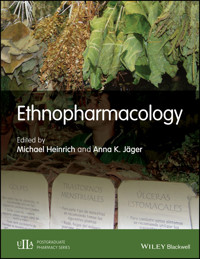
Ethnopharmacology E-Book
83,99 €
Mehr erfahren.
- Herausgeber: John Wiley & Sons
- Kategorie: Wissenschaft und neue Technologien
- Serie: Postgraduate Pharmacy Series
- Sprache: Englisch
Ethnopharmacology is one of the world’s fastest-growing scientific disciplines encompassing a diverse range of subjects. It links natural sciences research on medicinal, aromatic and toxic plants with socio-cultural studies and has often been associated with the development of new drugs. The Editors of Ethnopharmacology have assembled an international team of renowned contributors to provide a critical synthesis of the substantial body of new knowledge and evidence on the subject that has emerged over the past decade.
Divided into three parts, the book begins with an overview of the subject including a brief history, ethnopharmacological methods, the role of intellectual property protection, key analytical approaches, the role of ethnopharmacology in primary/secondary education and links to biodiversity and ecological research. Part two looks at ethnopharmacological contributions to modern therapeutics across a range of conditions including CNS disorders, cancer, bone and joint health and parasitic diseases. The final part is devoted to regional perspectives covering all continents, providing a state-of-the –art assessment of the status of ethnopharmacological research globally.
- A comprehensive, critical synthesis of the latest developments in ethnopharmacology.
- Includes a section devoted to ethnopharmacological contributions to modern therapeutics across a range of conditions.
- Contributions are from leading international experts in the field.
This timely book will prove invaluable for researchers and students across a range of subjects including ethnopharmacology, ethnobotany, medicinal plant research and natural products research.
Ethnopharmacology- A Reader is part of the ULLA Series in Pharmaceutical Sciences www.ullapharmsci.org
Sie lesen das E-Book in den Legimi-Apps auf:
Seitenzahl: 975
Veröffentlichungsjahr: 2015
Ähnliche




















Table of Contents
Cover
Title Page
Copyright
Contributors
Series Foreword
ULLA Pharmacy Series
Preface
Abbreviations
Part I: Ethnopharmacology: The Fundamental Challenges
Chapter 1: Ethnopharmacology: A Short History of a Multidisciplinary Field of Research
1.1 Introduction
Acknowledgements
References
Chapter 2: Medicinal Plant Research: A Reflection on Translational Tasks
2.1 Introduction
2.2 Translational research: preclinical research
2.3 Translational research: clinical research
2.4 Reaching the patient
2.5 A ‘developed’ traditional medicine system
References
Chapter 3: The Anthropology of Ethnopharmacology
3.1 Introduction
3.2 Primary example: Traditional medicine in New York City
3.3 An example from ancient Roman architecture
3.4 An example from native North America
3.5 Comparative ethnobotany
3.6 Conclusions
References
Chapter 4: Quantitative and Comparative Methods in Ethnopharmacology
4.1 Introduction
4.2 Research questions
4.3 Field research
4.4 Analyzing the data
4.5 Pharmacological research
4.6 Contextualization
4.7 Conclusion
References
Chapter 5: Biodiversity, Conservation and Ethnopharmacology
5.1 Introduction
5.2 Changing attitudes to the ownership of biodiversity
5.3 Medicinal and aromatic plants as resources
5.4 How many species?
5.5 Chemical diversity
5.6 Wild harvesting and over-collection
5.7 Medicinal plant conservation
5.8 Conservation approaches
5.9 Protected areas
5.10 Community conservation
5.11 Genetic conservation
5.12 Cultivation
5.13 Conclusions
References
Chapter 6: Ecopharmacognosy
6.1 Introduction
6.2 Sustainable medicines and pharmacognosy
6.3 Ecopharmacognosy: background
6.4 Ecopharmacognosy practices
6.5 Conclusions
Acknowledgements
References
Chapter 7: NMR-based Metabolomics and Hyphenated NMR Techniques: A Perfect Match in Natural Products Research
7.1 Introduction
7.2 Metabolomics
7.3 Principles of NMR-based metabolomics
7.4 NMR-based metabolomics in natural products research
7.5 Hyphenated NMR techniques
7.6 Principle of HPLC-SPE-NMR
7.7 High-resolution bioassay-coupled HPLC-SPE-NMR
7.8 Combining metabolomics and hyphenated NMR techniques
7.9 Perspectives in ethnopharmacology
7.10 Conclusions
References
Chapter 8: New Medicines Based On Traditional Knowledge: Indigenous and Intellectual Property Rights from an Ethnopharmacological Perspective
8.1 Introduction
8.2 The legal framework
8.3 Industrial research in an ethnopharmacological context
8.4 Some case studies
8.5 Conclusions
Note
References
Chapter 9: Ethnopharmacology and Intellectual Property Rights
9.1 Introduction
9.2 Indigenous community rights and traditional knowledge
9.3 Identifying a partner
9.4 Hurdles in considering IP
9.5 Building an effective IP portfolio
9.6 The patentability of products of nature
9.7 Conclusion
References
Chapter 10: Ethnopharmacology in Elementary, Primary and Secondary Education: Current Perspectives and Future Prospects
10.1 Introduction
10.2 Ethnopharmacology: a multidisciplinary subject for education
10.3 Developing an ethnopharmacological curriculum: some strategies
10.4 Conclusions
References
Part II: The Pharmacological Angle
Chapter 11: Anti-infective Agents: The Example of Antibacterial Drug Leads
11.1 Introduction
11.2 Bacterial resistance
11.3 Plant-derived antibacterial agents
11.4 Basic requirements for successful antimicrobial drug discovery (Cos
et al.
, 2006)
11.5 Conclusion
References
Chapter 12: Searching for New Treatments of Malaria
12.1 Introduction
12.2 Traditional herbal remedies as a source of antimalarial lead compounds
12.3 Developments from established antimalarials
12.4 Non-traditional medicine sources of potential antimalarials
12.5 Alternative strategies in the search for natural antimalarial compounds
12.6 Herbal preparations for the treatment of malaria
12.7 Conclusion and future prospects
References
Chapter 13: CNS Disorders
13.1 Introduction
13.2 Epilepsy
13.3 Depression and anxiety
13.4 Insomnia
13.5 Sedatives
13.6 Dementia
13.7 Conclusion
References
Chapter 14: Respiratory Conditions
14.1 Introduction
14.2 Case studies
14.3 Conclusions
Acknowledgments
References
Chapter 15: Can there be an Ethnopharmacology of Inflammation?
15.1 Introduction
15.2 Ethnopharmacology of inflammation: some examples
15.3 Conclusions
References
Chapter 16: Epidermal Growth Factor Receptors and Downstream Signalling Pathways as Cancer Treatment Targets for Medicinal Plants
16.1 Role of epidermal growth factor receptors for cancer biology
16.2 Inhibition of epidermal growth factor signalling by phytochemicals and medicinal plants
16.3 Conclusions and perspectives
References
Chapter 17: From Ethnopharmacological Field Study to Phytochemistry and Preclinical Research: The Example of Ghanaian Medicinal Plants for Improved Wound Healing
17.1 Introduction
17.2 Results
17.3 Conclusion
References
Chapter 18: Gynaecological, Andrological and Urological Problems: An Ethnopharmacological Perspective
18.1 Introduction
18.2 Menstrual disorders
18.3 Postpartum use
18.4 Vaginal applications
18.5 Female infertility
18.6 Andrology
18.7 Urology
References
Chapter 19: Ethnopharmacological Aspects of Bone and Joint Health
19.1 Introduction
19.2 Current views of bone and joint disorders
19.3 Traditional views of bone disorders
19.4 Conclusions
References
Chapter 20: Diabetes and Metabolic Disorders: An Ethnopharmacological Perspective
20.1 Introduction
20.2 Type-2 diabetes
20.3 Metabolic syndrome
20.4 Case studies
20.5 Conclusions
Acknowledgments
References
Chapter 21: The Ethnopharmacology of the Food–Medicine Interface: The Example of Marketing Traditional Products in Europe
21.1 Introduction
21.2 Medicinal products for human use
21.3 Food
21.4 Consumer protection - security and protection against fraud
21.5 Intended normal use: the distinction between medicinal products and foods
21.6 Conclusion
References
Chapter 22: Retrospective Treatment-Outcome as a Method of Collecting Clinical Data in Ethnopharmacological Surveys
22.1 Introduction
22.2 Key concepts: clinical data, outcome and patient progress
22.3 Evaluation of the effectiveness and safety of traditional medicines
22.4 The role of ethnopharmacologists and ethnobotanists
22.5 Collection of clinical data during ethnopharmacological field studies
22.6 Example of a method for gathering clinical data during field surveys
22.7 Conclusion: clinical data and field surveys for a positive impact on health
References
Part III: Ethnopharmacology: Regional Perspectives
Chapter 23: Ethnopharmacology in Sub-Sahara Africa: Current Trends and Future Perspectives
23.1 Introduction
23.2 Role of traditional medicine in Africa
23.3 Ethnopharmacological research in sub-Saharan Africa
23.4 Challenges of traditional medicine in Africa
23.5 Future perspectives
23.6 Conclusions
Acknowledgements
References
Chapter 24: Ethnopharmacology and Integrative Medicine: An Indian Perspective
24.1 Ethnopharmacology and the development of traditional medicine in India
24.2 Biological wealth and ancient wisdom
24.3 Indian systems of medicine
24.4 Ayurveda: the Indian system of medicine
24.5 Siddha
24.6 Unani
24.7 Traditional knowledge digital library
24.8 Integrated approaches for the development of Indian traditional medicine
24.9 Conclusion
Acknowledgements
References
Chapter 25: Chinese Medicine: Contentions and Global Complexities
25.1 Introduction
25.2 Ancient concepts meet scientific understanding
25.3 Traditional and modern dosage forms and application
25.4 Medicinal plant production in China
25.5 Quality and safety
25.6 Aristolochic acids
25.7 Regulatory requirements
25.8 Training practitioners of TCM
25.9 Future prospects
References
Chapter 26: Chinese Medicinal Processing: A Characteristic Aspect of the Ethnopharmacology of Traditional Chinese Medicine
26.1 Introduction
26.2 Definition, methods and historical changes in Chinese medicinal processing
26.3 Present state of Chinese medicinal processing
26.4 Prospect for future developments in Chinese medicinal processing
References
Chapter 27: A South-East Asian Perspective on Ethnopharmacology
27.1 Introduction
27.2 Ethnopharmacology in Thailand
27.3 Ethnopharmacology in Malaysia
27.4 Ethnopharmacology in Indonesia
27.5 Ethnopharmacology in the Philippines
27.6 Ethnopharmacology in Vietnam
27.7 Ethnopharmacology in Myanmar, Lao PDR and Cambodia
27.8 Ethnopharmacology in Singapore and Brunei
27.9 Conclusion
Acknowledgement
References
Chapter 28: Historical Approaches in Ethnopharmacology
28.1 Introduction
28.2 Historical texts in ethnopharmacological research
28.3 Methodological aspects
28.4 Challenges in the analysis of historical texts
28.5 Opportunities offered by a historical approach
28.6 Conclusions
References
Chapter 29: Medical Ethnobotany and Ethnopharmacology of Europe
29.1 Introduction
29.2 A brief history of European medicinal plants studies
29.3 Modern European medico-ethnobotanical studies
29.4 European ethnomedicinal flora
29.5 Adaptation, syncretism and resilience of traditional pharmacopoeias
29.6 Pharmacological studies of European medicinal plants
29.7 Concluding remarks
References
Chapter 30: Ethnopharmacology in the Eastern Mediterranean and the Middle East: ‘The Sun Rises from the East, but Shines on the Eastern Mediterranean’
30.1 Introduction
30.2 Ethnobotany and ethnopharmacology in the Balkan region
30.3 Modern ethnobotany and ethnopharmacology in the Middle East
30.4 Ethnobotany and ethnopharmacology in Turkey
30.5 Concluding remarks
References
Chapter 31: Ethnopharmacology in Australia and Oceania
31.1 Introduction
31.2 Ethnopharmacological ‘classics’
31.3 Australian aromatic plants
31.4 Recent developments: aromatic plants
31.5 Recent developments: cancer and HIV
31.6 Conclusion
References
Chapter 32: Ethnopharmacology in Central and South America
32.1 Introduction
32.2 The development of drugs
32.3 Beyond the development of new drugs
32.4 Bridging indigenous and western knowledge
32.5 Hallucinogens
32.6 Conclusion
References
Chapter 33: Perspectives on Ethnopharmacology in Mexico
33.1 Introduction
33.2 Mexican tradition
33.3 Compilation of medicinal plants
33.4 Medicinal plant complex
33.5 Markets and medicinal plants
33.6 Bioprospection and conservation
33.7 Conclusions
Acknowledgements
References
Chapter 34: Encounters with Elephants: A Personal Perspective on Ethnopharmacology
34.1 Introduction
34.2 The primacy of plants
34.3 Sources: dirty hands and databases
34.4 From cultural use to chemistry
34.5 Chemistry as a starter
34.6 Botany as a basis
34.7 Of mice and men and microwell plates
34.8 Aims and ethics
34.9 Molecules and mixtures
34.10 Tales of the unexpected
34.11 The end of the matter
References
Index
End User License Agreement
Pages
xvii
xviii
xix
xx
xxi
xxii
xxiii
xxiv
xxv
xxvi
xxvii
xxviii
xxix
xxx
3
4
5
6
7
8
9
11
12
13
14
15
16
17
18
19
20
21
22
23
24
25
26
27
28
29
30
31
32
33
34
35
36
37
38
39
40
41
42
43
44
45
46
47
48
49
50
51
53
54
55
56
57
58
59
60
61
62
63
64
65
66
67
68
69
70
71
72
73
74
75
76
77
78
79
80
81
82
83
84
85
87
88
89
90
91
92
93
94
95
96
97
98
99
100
101
102
103
104
105
106
107
111
112
113
114
115
116
117
118
119
120
121
123
124
125
126
127
128
129
130
131
132
133
134
135
136
137
138
139
140
141
142
143
144
145
147
148
149
150
151
152
153
154
155
156
157
159
160
161
162
163
164
165
166
167
169
170
171
172
173
174
175
176
177
179
180
181
182
183
184
185
186
187
188
189
190
191
192
193
194
195
196
197
199
200
201
202
203
204
205
206
207
208
209
210
211
213
214
215
216
217
218
219
220
221
222
223
224
225
227
228
229
230
231
232
233
234
235
236
237
239
240
241
242
243
244
245
246
247
248
249
251
252
253
254
255
256
257
258
259
260
261
265
266
267
268
269
270
271
272
273
274
275
276
277
279
280
281
282
283
284
285
286
287
288
289
290
291
292
293
294
295
296
297
298
299
300
301
302
303
304
305
306
307
308
309
310
311
312
313
314
315
316
317
318
319
320
321
322
323
324
325
326
327
328
329
330
331
333
334
335
336
337
338
339
340
341
343
344
345
346
347
348
349
350
351
352
353
354
355
357
358
359
360
361
362
363
365
366
367
368
369
370
371
372
373
374
375
376
377
378
379
380
381
382
383
384
385
386
387
388
389
390
391
393
394
395
396
397
398
399
400
401
402
403
404
405
406
407
408
409
410
411
412
413
1
109
263
415
416
417
418
419
420
421
422
423
424
425
426
427
428
429
430
431
Guide
Cover
Table of Contents
Series Foreword
Preface
Part I: Ethnopharmacology: The Fundamental Challenges
Begin Reading
List of Illustrations
Chapter 2: Medicinal Plant Research: A Reflection on Translational Tasks
Figure 2.1 Estimate of continental origin of commercialized medicinal plants.
Chapter 3: The Anthropology of Ethnopharmacology
Figure 3.1 Storefront of a
botánica
in New York City. Banner reads: ‘Cleansing treatment for all kinds of problems’.
Figure 3.2 Inside a
botánica
in New York City. Statues and candles for spiritual well-being.
Figure 3.3 Inside a
botánica
in New York City. Boxes of dried medicinal plants for health care.
Figure 3.4
Geranium maculatum
L. Wild geranium or crane's bill in flower.
Figure 3.5 Wild geranium seeds, with ‘hooks’.
Figure 3.6 Regression analysis of native North American medicinal plants (by family) on all North American plants.
Chapter 7: NMR-based Metabolomics and Hyphenated NMR Techniques: A Perfect Match in Natural Products Research
Figure 7.1 Total number of publications employing metabolomics/metabonomics (gray bars) and publications employing metabolomics/metabonomics for investigation of plant extracts (black bars).
Figure 7.2 Workflow in metabolomics studies.
Figure 7.3 Diagram showing the procedures for PCA in NMR-based metabolomics.
Figure 7.4 Score and loading plot from
1
H NMR-based PCA of aqueous methanol extracts of wild-type and CSA-line transgenic tobacco. (Source: Choi
et al
. 2004. Reproduced with permission of Elsevier.)
Figure 7.5 Overlaid TOCSY spectra of nematodes
Pristionchus pacificus
(Ppa, light grey) and
Panagrellus redivivus
(Pre, dark grey) extracts (a) and the corresponding score plots (b) separating the two nematodes along principal component 1 based on their differing metabolome. (Source: Robinette
et al
. 2011. Reproduced with permission of American Chemical Society.)
Figure 7.6 Schematic presentation of the HPLC-HRMS-SPE-NMR operated in the tube-transfer mode with 1.7-mm NMR tubes and cryogenically cooled probe.
Figure 7.7 Principle of bioassay-coupled HPLC-HRMS-SPE-NMR. (Source: Schmidt
et al
. 2014. Reproduced with permission of Elsevier.)
Figure 7.8 Analytical-scale HPLC chromatogram of caper bud extract (top) and the corresponding radical scavenging profile (bottom) (a). Compounds 4–10 identified using HPLC-SPE-NMR (b). (Source: Wiese
et al
. 2013. Reproduced with permission of Elsevier.)
Figure 7.9 Experimental setup for combined use of NMR- and MS-based metabolomics, high-resolution α-glucosidase profiling and HPLC-SPE-NMR for investigation of bioactive constituents in
Allium
. (Source: Schmidt
et al
. 2014. Reproduced with permission of Elsevier.)
Chapter 8: New Medicines Based On Traditional Knowledge: Indigenous and Intellectual Property Rights from an Ethnopharmacological Perspective
Figure 8.1 Structure of prostatin.
Figure 8.2 Structure of galanthamine.
Figure 8.3 Structures of the two hunger-suppressing pregnane glycosides isolated from
Hoodia gordonii
(Masson) Sweet ex Decne (Apocynaceae).
Chapter 10: Ethnopharmacology in Elementary, Primary and Secondary Education: Current Perspectives and Future Prospects
Figure 10.1 Secondary education students developing skills using traditional methods in the greenhouse at Los Olmos High School, Albacete, Spain (image: A. Verde).
Figure 10.2 Secondary education students using traditional essential oil distillation facilities at the science fair at Los Olmos High School, Albacete, Spain (image: A. Verde).
Chapter 11: Anti-infective Agents: The Example of Antibacterial Drug Leads
Figure 11.1 Overview of the most important virulence factors in bacteria.
Figure 11.2 Three QS systems in Gram-negative bacteria. A, AI-1-based strategy using AHL molecules. B, AI-2-based strategy using quorum sensing signals derived from the precursor DPD. C, AI-3-based strategy using an AI of unknown structure. Inner membrane (IM), outer membrane (OM). Adapted from Parker and Sperandio (2009).
Figure 11.3 Overview of a biofilm. A biofilm is composed of multiple bacteria, which are attached to a surface and surrounded by an extracellular matrix.
Figure 11.4 Four major antibiotic resistance mechanisms.
Chapter 16: Epidermal Growth Factor Receptors and Downstream Signalling Pathways as Cancer Treatment Targets for Medicinal Plants
Figure 16.1 Signal transduction of HER family members and their inhibition by natural products.
Chapter 17: From Ethnopharmacological Field Study to Phytochemistry and Preclinical Research: The Example of Ghanaian Medicinal Plants for Improved Wound Healing
Figure 17.1 Structural features of hydrolysable ellagitannins from
P. muellerianus:
1a
and
1b
equilibrium geraniin,
1c
phenazine derivative of geraniin,
2
corilagin,
3
furosin.
Figure 17.2 Identification and quantification of geraniin in a methanol/water (7:3) extract from
P. muellerianus
by HPLC. For experimental details see Agyare
et al.
(2011).
Figure 17.3 Influence of aqueous extract from
P. muellerianus,
geraniin and furosin on collagen production in NHDF as determined by ELISA. PC, positive control (1% ascorbic acid); NC, negative control (untreated cells).
Figure 17.4 Influence of 1 and 10 μg/ml of
C. mucronatum
aqueous extract on expression of differentiation-specific involucrin in pNHEK after 7 days treatment as determined by mmunofluorescence assay using a confocal laser scanning microscope. A, untreated cells, negative control; B, CaCl
2
(2 mM), positive control; C, 1 μg/ml; D, 10 μg/ml. Magnification ×88.
Figure 17.5 Influence of 1 and 10 μg/ml of
C. mucronatum
aqueous extract on expression of differentiation-specific cytokeratin CK1 in pNHEK after 7 days of treatment as determined by immunofluorescence assay using a confocal laser scanning microscope. A, untreated cells, negative control; B, CaCl
2
(2 mM), positive control; C, 1 μg/ml; D, 10 μg/ml. Magnification ×88.
Chapter 20: Diabetes and Metabolic Disorders: An Ethnopharmacological Perspective
Figure 20.1 Chlorogenic acid (left) and isoorientin (right) isolated from
Cecropia Obtusifolia
.
Figure 20.2 Isorhamnetin, calein C and the 6-hydroxyacetyl-5-hydroxy-2 2-dimethyl-2-chromene isolated from
Brickellia cavanillesii
.
Figure 20.3 Kuguaglycoside isolated from
Momordica charantia.
Figure 20.4 Cordyrrole A isolated from
Cordyceps militaris
.
Figure 20.5 (3,3-dimethylallyl) halfordinol isolated from
Aegle marmelos
.
Chapter 21: The Ethnopharmacology of the Food–Medicine Interface: The Example of Marketing Traditional Products in Europe
Figure 21.1 Decision tree for the medicine–nutrition interface. Please refer to text for more details.
Chapter 23: Ethnopharmacology in Sub-Sahara Africa: Current Trends and Future Perspectives
Figure 23.1 The 20 leading causes of death in Africa (WHO, 2014).
Figure 23.2 The number of scientific publications from Africa compared to the global total in Science Direct journals over the last 10 years (January 2004 to December 2013), based on the search words ‘traditional medicine’ and ‘traditional medicine in Africa’. The data were collected in October 2014. (Note: The analysis serves to give a general trend and is not a comprehensive study).
Figure 23.3 An overview of conservation status of plant species in some sub-Sahara countries. CAM, Cameroon; CON, Congo; CIV, Côte d'Ivoire; GAB, Gabon; GHA, Ghana; KEN, Kenya; MAG, Madagascar; NIG, Nigeria; SA, South Africa; TAN, Tanzania. Source of data: IUCN (2014).
Chapter 24: Ethnopharmacology and Integrative Medicine: An Indian Perspective
Figure 24.1 The goals of Ayurveda.
Figure 24.2 The objective of Ayurveda in
Charaka Samhita
.
Figure 24.3 Major disciplines and specialties in Ayurveda.
Figure 24.4 Validation of an Ayurvedic formulation
triphala
by HPLC.
Figure 24.5 Validation of an Ayurvedic formulation
trikatu
by HPLC.
Figure 24.6 Integrated approaches towards the development of Ayurveda.
Chapter 26: Chinese Medicinal Processing: A Characteristic Aspect of the Ethnopharmacology of Traditional Chinese Medicine
Figure 26.1 Processed Chinese angelica root (
danggui
,
Angelica sinensis
(Oliv.) Diels) and aconite lateral root (
fuzi
,
Aconitum carmichaeli
Debx.) products.
Figure 26.2 Medicinal processing scenes and equipments (A) and steps of processing aconite lateral root (
fuzi
,
Aconitum carmichaeli
Debx.) (B) in
Concise Addendum to Grandfather Lei's Treatise on Herbal Processing (Bu Yi Lei Gong Pao Zhi Bian Lian)
.
Figure 26.3 A sketch of Chinese medicinal processing procedures: 1, storage; 2, cleaning; 3, soaking; 4, cutting; 5, stir-frying; 6, steaming.
Chapter 27: A South-East Asian Perspective on Ethnopharmacology
Figure 27.1 The main dimensions of ethnopharmacology research in ASEAN countries.
Figure 27.2 The metabolomic study network in Thailand and its approach in herbal medicine research.
Figure 27.3 Example of systematic analysis of
A. paniculata
effects on platelet function in Thai healthy volunteers (unpublished data). Gene expression and protein measurements of cyclooxygenase-1 (COX-1), COX-2, P-selectin and thromboxane A
2
were measured to examine patient-to-patient variability in platelet aggregation. Data at 0 hour represents baseline measurement whereas data for 2 and 24 h represent relative changes normalized by the 0-hr baseline. A, Two-way hierarchical clustering of patient-to-patient variations and the relationship of parameters. B, Score plot from the principal component analysis (PCA) showing similarity of platelet function among all patients. Results were illustrated using different marker types for the different agonists, including ADP at 5 μM, collagen at 1 μg/ml, epinephrine at 1 and 25 μM. Platelet status of the volunteers are as follows; disaggregated- 8, hyperaggregated- 1, 2, 4, 6, normal—3, 5, 7, 9. C, Loading plot from the PCA analysis showing contributions of the measured parameters towards each principal component 1 and 2. D, Linear discriminant analysis of the measured parameters by genders; female—1, 2, 4, 5, 10, male—3, 6, 7, 8, 9.
Figure 27.4 Jamu brand.
Figure 27.5 Plan for the development of Jamu.
Chapter 29: Medical Ethnobotany and Ethnopharmacology of Europe
Figure 29.1 Countries where medico-ethnobotanical studies were conducted (1992–2014, based on data retrieved from Scopus, 30 August 2014).
Figure 29.2 Number of papers published annually on medico-ethnobotanical studies in Europe (1992–2014, based on data retrieved from Scopus, 30 August 2014).
Chapter 32: Ethnopharmacology in Central and South America
Figure 32.1 Proposed structure of crofelemer, proanthocyanidin oligomer from the latex of
Croton lechleri.
Figure 32.2 α-Humulene and β-caryophyllene are the constituents considered responsible for the anti-inflammatory activity of the essential oil of
Cordia verbenacea
DC.
List of Tables
Chapter 10: Ethnopharmacology in Elementary, Primary and Secondary Education: Current Perspectives and Future Prospects
Table 10.1 Proposal for basic knowledge and skills content (Figure 10.1) in the field of ethnopharmacology adjusted to different educational levels
Chapter 16: Epidermal Growth Factor Receptors and Downstream Signalling Pathways as Cancer Treatment Targets for Medicinal Plants
Table 16.1 Plants and mixtures from traditional Chinese medicine with activity against EGFR
Table 16.2 Plants and mixtures from traditional Chinese medicine with activity against HER2
Chapter 17: From Ethnopharmacological Field Study to Phytochemistry and Preclinical Research: The Example of Ghanaian Medicinal Plants for Improved Wound Healing
Table 17.1 Medicinal plants used for the management of various wounds in Bosomtwi-Atwima-Kwanwonwa district, Ghana, according ethnopharmacological survey
Table 17.2 Influence of aqueous extracts and ethanolic extracts at 10 and 100 μg/ml for 72 h on mitochondrial activity of HaCaT keratinocytes (MTT test)
Table 17.3 Influence of aqueous extracts at 10, 50 and 100 μg/ml for 72 h on mitochondrial activity (MTT test) and mitogenic proliferation (BrdU incorporation ELISA) of HaCaT keratinocytes and primary skin fibroblasts
Chapter 19: Ethnopharmacological Aspects of Bone and Joint Health
Table 19.1 A selection of medicinal plants traditionally used to treat bone and joint disorders, including gout
Chapter 22: Retrospective Treatment-Outcome as a Method of Collecting Clinical Data in Ethnopharmacological Surveys
Table 22.1 Databases with results from clinical studies on herbal medicine
Table 22.2 Traditional antimalarial recipes in Mali, usages and clinical outcome (patient reported whether he/she was cured after being treated or whether the treatment failed) (from Diallo
et al.
, 2006)
Table 22.3 Correlation between plants used and reported outcome in a study on traditional treatments for malaria in Mali
Chapter 26: Chinese Medicinal Processing: A Characteristic Aspect of the Ethnopharmacology of Traditional Chinese Medicine
Table 26.1 Main medicinal processing methods listed in the
Chinese Pharmacopoeia
(2010)
Table 26.2 Processing methods of Chinese angelica root (
danggui
,
Angelica sinensis
(Oliv.) Diels) and aconite lateral root (
fuzi, Aconitum carmichaeli
Debx.)
Table 26.3 Comparison of processing methods in mainland China and Hong Kong
Table 26.4 Comparison of processing methods described in the Vietnamese, Japanese and Chinese pharmacopoeias
Chapter 27: A South-East Asian Perspective on Ethnopharmacology
Table 27.1 Summary of TM systems in ASEAN countries (Chuthaputti and Boonterm, 2010a)
Table 27.2 Ethnopharmacology in ASEAN countries – implications of policy on political targets and main scientific aims
Table 27.3 Top traditional herbs under current R&D focus in Malaysia
Table 27.4 First 10 Herbal Plants Approved by the Department of Health (DOH) for Traditional Use in the Philippines
Chapter 31: Ethnopharmacology in Australia and Oceania
Table 31.1 Listed chemotypes of
Eremophila longifolia
(Sadgrove and Jones, 2014a)
Chapter 32: Ethnopharmacology in Central and South America
Table 32.1 Percentage of indigenous population by country in Central and South America (end 1990s to the beginning of 2000s)
Chapter 33: Perspectives on Ethnopharmacology in Mexico
Table 33.1 Examples of state inventories of medicinal plants in Mexico
Table 33.2 Comparative Table of the objectives of the CBD and the ICBG
Ethnopharmacology
Edited by
Michael Heinrich
Centre for Pharmacognosy and Phytotherapy/Research Cluster Biodiversity andMedicines, UCL School of PharmacyUniversity of LondonUK
Anna K. Jäger
Department of Drug Design and PharmacologyFaculty of Health and Medicinal SciencesUniversity of CopenhagenDenmark
This edition first published 2015 © 2015 by John Wiley & Sons Ltd
Registered office: John Wiley & Sons, Ltd, The Atrium, Southern Gate, Chichester, West Sussex, PO19 8SQ, UK
Editorial offices: 9600 Garsington Road, Oxford, OX4 2DQ, UK
The Atrium, Southern Gate, Chichester, West Sussex, PO19 8SQ, UK
111 River Street, Hoboken, NJ 07030-5774, USA
For details of our global editorial offices, for customer services and for information about how to apply for permission to reuse the copyright material in this book please see our website at www.wiley.com/wiley-blackwell.
The right of the author to be identified as the author of this work has been asserted in accordance with the UK Copyright, Designs and Patents Act 1988.
All rights reserved. No part of this publication may be reproduced, stored in a retrieval system, or transmitted, in any form or by any means, electronic, mechanical, photocopying, recording or otherwise, except as permitted by the UK Copyright, Designs and Patents Act 1988, without the prior permission of the publisher.
Designations used by companies to distinguish their products are often claimed as trademarks. All brand names and product names used in this book are trade names, service marks, trademarks or registered trademarks of their respective owners. The publisher is not associated with any product or vendor mentioned in this book.
Limit of Liability/Disclaimer of Warranty: While the publisher and author(s) have used their best efforts in preparing this book, they make no representations or warranties with respect to the accuracy or completeness of the contents of this book and specifically disclaim any implied warranties of merchantability or fitness for a particular purpose. It is sold on the understanding that the publisher is not engaged in rendering professional services and neither the publisher nor the author shall be liable for damages arising herefrom. If professional advice or other expert assistance is required, the services of a competent professional should be sought.
Library of Congress Cataloging-in-Publication Data applied for.
ISBN: 9781118930748
A catalogue record for this book is available from the British Library.
Wiley also publishes its books in a variety of electronic formats. Some content that appears in print may not be available in electronic books.
Contributors
Christian Agyare
Department of Pharmaceutics, Faculty of Pharmacy and Pharmaceutical Sciences, College of Health Sciences, Kwame Nkrumah University of Science and Technology, Ghana
Pravit Akarasereenont
Department of Pharmacology, Faculty of Medicine Siriraj Hospital, Mahidol University, Thailand, and Center of Applied Thai Traditional Medicine, Faculty of Medicine Siriraj Hospital, Mahidol University, Thailand.
Adolfo Andrade-Cetto
Department of Cell Biology, School of Sciences, National Autonomous University of Mexico, Mexico
Adeyemi O. Aremu
Research Centre for Plant Growth and Development, School of Life Sciences, University of KwaZulu-Natal, South Africa
Alex Asase
Department of Botany, University of Ghana, Ghana
Lesen Sie weiter in der vollständigen Ausgabe!
Lesen Sie weiter in der vollständigen Ausgabe!
Lesen Sie weiter in der vollständigen Ausgabe!
Lesen Sie weiter in der vollständigen Ausgabe!
Lesen Sie weiter in der vollständigen Ausgabe!
Lesen Sie weiter in der vollständigen Ausgabe!
Lesen Sie weiter in der vollständigen Ausgabe!
Lesen Sie weiter in der vollständigen Ausgabe!
Lesen Sie weiter in der vollständigen Ausgabe!
Lesen Sie weiter in der vollständigen Ausgabe!
Lesen Sie weiter in der vollständigen Ausgabe!
Lesen Sie weiter in der vollständigen Ausgabe!
Lesen Sie weiter in der vollständigen Ausgabe!
Lesen Sie weiter in der vollständigen Ausgabe!
Lesen Sie weiter in der vollständigen Ausgabe!
Lesen Sie weiter in der vollständigen Ausgabe!
Lesen Sie weiter in der vollständigen Ausgabe!
Lesen Sie weiter in der vollständigen Ausgabe!
Lesen Sie weiter in der vollständigen Ausgabe!
Lesen Sie weiter in der vollständigen Ausgabe!
Lesen Sie weiter in der vollständigen Ausgabe!
Lesen Sie weiter in der vollständigen Ausgabe!
Lesen Sie weiter in der vollständigen Ausgabe!
Lesen Sie weiter in der vollständigen Ausgabe!
Lesen Sie weiter in der vollständigen Ausgabe!
Lesen Sie weiter in der vollständigen Ausgabe!
Lesen Sie weiter in der vollständigen Ausgabe!
Lesen Sie weiter in der vollständigen Ausgabe!
Lesen Sie weiter in der vollständigen Ausgabe!
Lesen Sie weiter in der vollständigen Ausgabe!
Lesen Sie weiter in der vollständigen Ausgabe!
Lesen Sie weiter in der vollständigen Ausgabe!
Lesen Sie weiter in der vollständigen Ausgabe!
Lesen Sie weiter in der vollständigen Ausgabe!
Lesen Sie weiter in der vollständigen Ausgabe!
Lesen Sie weiter in der vollständigen Ausgabe!
Lesen Sie weiter in der vollständigen Ausgabe!
Lesen Sie weiter in der vollständigen Ausgabe!
Lesen Sie weiter in der vollständigen Ausgabe!
Lesen Sie weiter in der vollständigen Ausgabe!
Lesen Sie weiter in der vollständigen Ausgabe!
Lesen Sie weiter in der vollständigen Ausgabe!




