


Evolution of Virulence in Eukaryotic Microbes E-Book
144,99 €
Mehr erfahren.
- Herausgeber: John Wiley & Sons
- Kategorie: Wissenschaft und neue Technologien
- Sprache: Englisch
A unique and timely review of the emergence of eukaryotic virulence in fungi, oomycetes, and protozoa, as they affect both animals and plants Evolution of Virulence in Eukaryotic Microbes addresses new developments in defining the molecular basis of virulence in eukaryotic pathogens. By examining how pathogenic determinants have evolved in concert with their hosts, often overcoming innate and adaptive immune mechanisms, the book takes a fresh look at the selective processes that have shaped their evolution. Introductory chapters ground the reader in principal evolutionary themes such as phylogenetics and genetic exchange, building a basis of knowledge for later chapters covering advances in genetic tools, how pathogens exchange genetic material in nature, and the common themes of evolutionary adaptation that lead to disease in different hosts. With the goal of linking the research findings of the many disparate scientific communities in the field, the book: * Assembles for the first time a collection of chapters on the diversity of eukaryotic microorganisms and the influence of evolutionary forces on the origins and emergence of their virulent attributes * Highlights examples from three important, divergent groups of eukaryotic microorganisms that cause disease in animals and plants: oomycetes, protozoan parasites, and fungi * Covers how the development of genetic tools has fostered the identification and functional analyses of virulence determinants * Addresses how pathogens exchange genetic material in nature via classical or modified meiotic processes, horizontal gene transfer, and sexual cycles including those that are cryptic or even unisexual * Provides a broad framework for formulating future studies by illustrating themes common to different pathogenic microbes Evolution of Virulence in Eukaryotic Microbes is an ideal book for microbiologists, evolutionary biologists and medical professionals, as well as graduate students, postdoctoral fellows, and faculty members working on the evolution of pathogens.
Sie lesen das E-Book in den Legimi-Apps auf:
Seitenzahl: 1426
Veröffentlichungsjahr: 2012
Ähnliche




















Table of Contents
Cover
Title page
Copyright page
PREFACE
ACKNOWLEDGMENTS
CONTRIBUTORS
PART I: GENERAL OVERVIEWS
CHAPTER 1 POPULATION GENETICS AND PARASITE DIVERSITY
MUTATION
GENETIC DIVERSITY AND RANDOM GENETIC DRIFT
THE NEUTRAL THEORY
MUTATION AND SELECTION
EFFECTIVE POPULATION SIZE
VARIATION IN MUTATION RATES
WHAT CAN WE LEARN FROM POLYMORPHISM AND DIVERGENCE?
CONCLUSIONS
ACKNOWLEDGMENT
CHAPTER 2 EVOLUTION OF MEIOSIS, RECOMBINATION, AND SEXUAL REPRODUCTION IN EUKARYOTIC MICROBES
DEFINING SEX
MECHANISMS OF SEX
DETECTING SEXUAL REPRODUCTION
EVOLUTIONARY IMPACTS OF SEXUAL REPRODUCTION
ACKNOWLEDGMENTS
CHAPTER 3 PHYLOGENOMIC ANALYSIS
INTRODUCTION
ASSEMBLING DATA SETS FOR ANALYSES
MULTIPLE ALIGNMENT CONSTRUCTION AND EDITING
METHODS OF PHYLOGENETIC ESTIMATION
SELECTING AN APPROPRIATE PHYLOGENETIC MODEL
ASSESSING STATISTICAL SIGNIFICANCE
SYSTEMATIC ERROR AND DEALING PHYLOGENETIC ARTIFACTS
WHY PHYLOGENETIC SIGNALS OF DIFFERENT GENES CAN DIFFER AND WHY IT MATTERS
CONCLUSIONS
CHAPTER 4 PHYLOGENETICS AND EVOLUTION OF VIRULENCE IN THE KINGDOM FUNGI
GENERAL CONCEPTS ON FUNGAL EVOLUTION
FUNGAL PHYLOGENY
MECHANISMS TO GENERATE GENETIC DIVERSITY
EVOLUTION OF FUNGAL PATHOGENS
CONCLUDING REMARKS
PART II: POPULATION GENETICS AND EVOLUTIONARY APPROACHES
CHAPTER 5 MALARIA: HOST RANGE, DIVERSITY, AND SPECIATION
EARLY PHYLOGENETIC STUDIES
THE ORIGIN OF P. FALCIPARUM
THE ORIGIN OF P. VIVAX
P. OVALE AND P. MALARIAE
HOST SWITCHES: PUBLIC HEALTH IMPLICATIONS
MOLECULAR BASIS FOR THE HUMAN MALARIA TOLL
CHAPTER 6 FROM POPULATION GENOMICS TO ELUCIDATED TRAITS IN PLASMODIUM FALCIPARUM
POPULATION STRUCTURE
LINKAGE DISEQUILIBRIUM (LD)
DIVERSITY AND DIVERGENCE
GWASs
APPLICATION OF GWAS TO DRUG RESISTANCE
ELUCIDATED TRAIT FOR DRUG RESISTANCE DISCOVERED USING GWAS
SUMMARY POINTS
CHAPTER 7 SELECTIVE SWEEPS IN HUMAN MALARIA PARASITES
INTRODUCTION
TYPES OF SELECTION
HITCHHIKING
COMMON GENETIC VARIATIONS IN MALARIA PARASITES
DRUG SELECTIVE SWEEPS IN P. FALCIPARUM
CONCLUSION
ACKNOWLEDGMENTS
CHAPTER 8 EVOLUTION OF DRUG RESISTANCE IN FUNGI
THE MAJOR ANTIFUNGAL CLASSES AND THEIR MODE OF ACTION
ADAPTIVE MECHANISMS
NATURAL VARIATION IN RESISTANCE TO ANTIFUNGAL DRUGS
EVOLUTION OF DRUG RESISTANCE IN THE HUMAN HOST
EXPERIMENTAL EVOLUTION OF DRUG RESISTANCE
THWARTING THE EVOLUTION OF DRUG RESISTANCE
HOST MODEL SYSTEMS FOR DRUG SCREENING
CONCLUSION
CHAPTER 9 DISCOVERY OF EXTANT SEXUAL CYCLES IN HUMAN PATHOGENIC FUNGI AND THEIR ROLES IN THE GENERATION OF DIVERSITY AND VIRULENCE
MATING IN C. NEOFORMANS
SAME-SEX MATING IN CRYPTOCOCCUS
THE ADVANTAGES OF UNISEXUAL MATING IN CRYPTOCOCCUS SPECIES
MATING AND PATHOGENESIS IN C. NEOFORMANS
MATING IN ASPERGILLUS SPECIES
DISCOVERY OF A SEXUAL CYCLE IN A. FUMIGATUS
MATING AND DISEASE IN ASPERGILLUS
MATING IN CANDIDA SPECIES
THE WHITE-OPAQUE PHENOTYPIC SWITCH
C. ALBICANS SAME-SEX MATING AND THE PARASEXUAL CYCLE
SEXUAL REPRODUCTION IN OTHER CANDIDA SPECIES
MATING AND PATHOGENESIS IN CANDIDA
SEX IN OTHER HUMAN FUNGAL PATHOGENS
SEX AND FUNGAL PATHOGENS: A BROADER VIEW
ACKNOWLEDGMENTS
CHAPTER 10 WORLDWIDE MIGRATIONS, HOST SHIFTS, AND REEMERGENCE OF PHYTOPHTHORA INFESTANS, THE PLANT DESTROYER
INTRODUCTION
EMERGENCE OF LATE BLIGHT IN THE UNITED STATES AND EUROPE
EVOLUTIONARY POSITION AND PHYLOGENETIC RELATIONSHIPS OF PHYTOPHTHORA SPP.
LIFE HISTORY OF THE PATHOGEN
POPULATION BIOLOGY: MIGRATION THEORIES OF P. INFESTANS IN THE 19TH CENTURY
WHAT mtDNA HAPLOTYPE CAUSED THE FAMINE AND WHERE DID IT COME FROM?
WHEN DID THE mtDNA HAPLOTYPE Ib MIGRATE FROM SOUTH AMERICA?
HISTORIC MIGRATIONS: “OUT-OF-SOUTH AMERICA” MIGRATION HYPOTHESIS
HOST SHIFTS AND JUMPS
WHY IS LATE BLIGHT A REEMERGING DISEASE?
CONCLUSIONS
CHAPTER 11 EXPERIMENTAL AND NATURAL EVOLUTION OF THE CRYPTOCOCCUS NEOFORMANS AND CRYPTOCOCCUS GATTII SPECIES COMPLEX
INTRODUCTION TO THE CRYPTOCOCCUS NEOFORMANS SPECIES COMPLEX (CNSC)
GENETIC REQUIREMENTS FOR VIRULENCE
ANALYSES OF NATURAL POPULATIONS OF THE C. NEOFORMANS SPECIES COMPLEX
MICROEVOLUTION DURING INFECTION
EXPERIMENTAL EVOLUTION STUDY OF HIGH TEMPERATURE GROWTH AND IMPLICATIONS FOR LIFE HISTORY EVOLUTION IN HUMAN PATHOGENS
RELATIONSHIP BETWEEN SEX AND VIRULENCE
CONCLUDING REMARKS
CHAPTER 12 POPULATION GENETICS, DIVERSITY, AND SPREAD OF VIRULENCE IN TOXOPLASMA GONDII
IMPORTANCE
VARIABLE CLINICAL OUTCOMES
PHYLOGENETIC CONTEXT AND TYPICAL TRANSMISSION MODES
REMARKABLE TRANSMISSION MODALITIES FOR T. GONDII
CLONAL AND SEXUAL PROPAGATION
ACUTE INFECTION AND VIRULENCE IN THE MOUSE MODEL
CHRONIC INFECTION, BEHAVIOR, AND MORBIDITY
FUTURE PROSPECTS
PART III: FORWARD AND REVERSE GENETIC SYSTEMS FOR DEFINING VIRULENCE
CHAPTER 13 GENETIC CROSSES IN PLASMODIUM FALCIPARUM: ANALYSIS OF DRUG RESISTANCE
INTRODUCTION
THE CLASSICAL GENETICS APPROACH
MAPPING MAJOR GENE EFFECTS
MULTIGENIC TRAITS AND QTL MAPPING
CLASSICAL GENETICS IN THE ERA OF DATA-DRIVEN SCIENCE
SUMMARY
CHAPTER 14 GENETIC MAPPING OF VIRULENCE IN RODENT MALARIAS
THE MURINE RODENT MALARIA PARASITES
THE DEFINITION OF VIRULENCE IN MALARIA
APPROACHES TO THE STUDY OF VIRULENCE IN MALARIA
APPROACHES TO THE GENETIC INVESTIGATION OF MALARIA PARASITES
THE GENETIC ANALYSIS OF VIRULENCE IN RODENT MALARIA PARASITES
THE RETICULOCYTE BINDING-LIKE PROTEINS (RBLs) OF P. Y. YOELII
HOST FACTORS THAT MODULATE THE VIRULENCE OF P. Y. YOELII PARASITES
SUMMARY
CHAPTER 15 GENETIC MAPPING OF ACUTE VIRULENCE IN TOXOPLASMA GONDII
THE ORGANISM, LIFE CYCLE, AND TRANSMISSION
MOUSE MODEL: STRENGTHS AND LIMITATIONS
THE IMMUNE RESPONSE AND CONTROL OF INFECTION
HOST CELL INVASION AND PROTEIN SECRETION
SUBVERSION OF HOST CELL SIGNALING
EXPERIMENTAL GENETICS
NATURE HAS PROVIDED US WITH HIGHLY INFORMATIVE “VARIANTS”
KEY PARAMETERS AND USES OF THE GENETIC MAP
MAPPING BIOLOGICALLY IMPORTANT PHENOTYPIC DIFFERENCES
ROP18: A POLYMORPHIC PV MEMBRANE PROTEIN THAT INTERSECTS AT LEAST TWO CRITICAL AND DISTINCT HOST PATHWAYS INVOLVED IN THE IMMUNE RESPONSE
ROP16: A TYROSINE KINASE TARGETED TO THE HOST NUCLEUS THAT DRAMATICALLY ALTERS THE CHARACTER OF THE HOST IMMUNE RESPONSE
ROP5: A CRUCIALLY IMPORTANT BUT ENIGMATIC PSEUDOKINASE
GRA15: POLYMORPHIC DENSE GRA PROTEINS CAN ALSO IMPACT THE HOST IN A STRAIN-SPECIFIC MANNER
RELEVANCE TO OTHER HOSTS, TRANSMISSION, AND POPULATION
SUMMARY AND FUTURE DIRECTIONS
ACKNOWLEDGMENTS
CHAPTER 16 VIRULENCE IN AFRICAN TRYPANOSOMES: GENETIC AND MOLECULAR APPROACHES
INTRODUCTION
THE VIRULENCE PHENOTYPE
GENETIC BASIS OF VIRULENCE
CONCLUSIONS AND FUTURE PROSPECTS
ACKNOWLEDGMENTS
CHAPTER 17 THE EVOLUTION OF ANTIGENIC VARIATION IN AFRICAN TRYPANOSOMES
INTRODUCTION
WHAT WAS THE ORIGIN OF THE VSG?
HOW DID THE VSG FAMILY BECOME SO LARGE AND DIVERSE AND HOW IS IT EVOLVING AT PRESENT?
ARE THE FEATURES OF T. BRUCEI VSG ANTIGENIC VARIATION APPLICABLE TO ALL TRYPANOSOMES WITH ANTIGENIC VARIATION?
SUMMARY
CHAPTER 18 ANTIGENIC VARIATION, ADHERENCE, AND VIRULENCE IN MALARIA
INTRODUCTION
PfEMP1, CYTOADHERENCE, AND var GENES
THE var GENE REPERTOIRE AND GENOMIC ORGANIZATION OF THE FAMILY
ASSESSING THE var REPERTOIRE
MECHANISMS OF VARIANT ANTIGEN DIVERSIFICATION
EVOLUTIONARY ORIGINS OF var GENES
PfEMP1 PROTEIN STRUCTURE–FUNCTION
VAR2CSA AND PLACENTAL MALARIA
PfEMP1 EXPRESSION IN THE YOUNG, NONIMMUNE, AND IN NONPLACENTAL SEVERE DISEASE
CONTROL OF var GENE TRANSCRIPTION, SWITCHING, AND EPIGENETIC MEMORY
CONCLUSIONS
CHAPTER 19 INVASION LIGAND DIVERSITY AND PATHOGENESIS IN BLOOD-STAGE MALARIA
INTRODUCTION
DISCOVERY OF HIGH AFFINITY PARASITE LIGANDS AND RECEPTORS FOR ERYTHROCYTE INVASION
IDENTIFICATION OF MULTIPLE ERYTHROCYTE RECEPTORS FOR INVASION
DIVERSITY IN SEQUENCE AND EXPRESSION OF PLASMODIUM INVASION LIGANDS DEFINES INVASION PATHWAYS
FUNCTIONAL ANALYSES OF LIGAND–RECEPTOR INTERACTIONS IN PLASMODIUM spp. IN VITRO
BIOLOGICAL CONSEQUENCES OF DIVERSITY IN LIGAND–RECEPTOR INTERACTIONS
IN VIVO PATHOLOGICAL CONSEQUENCES OF DIVERSITY IN LIGAND–RECEPTOR INTERACTIONS
OTHER INVASION LIGANDS INVOLVED IN ALTERNATIVE INVASION PATHWAY UTILIZATION?
CONCLUSIONS AND FUTURE QUESTIONS
PART IV: COMPARATIVE “OMICS” APPROACHES TO DEFINING VIRULENCE
CHAPTER 20 EVOLUTION OF VIRULENCE IN OOMYCETE PLANT PATHOGENS
INTRODUCTION
THE BASIS AND BASICS OF PLANT–PATHOGEN COEVOLUTION
OOMYCETE MAMPs: ACTIVATING THE FRONTLINE OF PLANT DEFENSE
THE EXPANDING OOMYCETE EFFECTOR COLLECTION: SUPPRESSORS OF PTI AND MANIPULATORS OF HOST METABOLISM
CYTOPLASMIC EFFECTORS
ETI TO OOMYCETE PLANT PATHOGENS
BIOTROPHY VERSUS NECROTROPHY: GENOME STUDIES REVEAL THE DIFFERENCES
THE FUTURE: FROM SYSTEMS BIOLOGY TO TRANSLATIONAL RESEARCH
CHAPTER 21 EVOLUTION AND GENOMICS OF THE PATHOGENIC CANDIDA SPECIES COMPLEX
INTRODUCTION: THE ORGANISMS AND THEIR PATHOECOLOGY
GENOME ANALYSIS: C. gLABRATA
GENOME ANALYSIS: CTG CLADE
GENE EXPRESSION DIFFERENCES
MORPHOLOGY AND VIRULENCE
ANALYSIS OF THE MATING PATHWAY
TYPING, POPULATION ECOLOGY, AND EVOLUTION
CONCLUSION
ACKNOWLEDGMENTS
CHAPTER 22 EVOLUTION OF ENTAMOEBA HISTOLYTICA VIRULENCE
INTRODUCTION
GENETIC DIVERSITY
LINK BETWEEN GENOTYPE AND VIRULENCE
VIRULENCE MECHANISMS
SUMMARY, LIMITATIONS, AND OPPORTUNITIES FOR FUTURE WORK
CHAPTER 23 SEX AND VIRULENCE IN BASIDIOMYCETE PATHOGENS
INTRODUCTION TO THE BASIDIOMYCOTA
SMUT FUNGI
CRYPTOCOCCUS SPECIES
RUST FUNGI
SUMMARY
CHAPTER 24 EMERGENCE OF THE CHYTRID FUNGUS BATRACHOCHYTRIUM DENDROBATIDIS AND GLOBAL AMPHIBIAN DECLINES
INTRODUCTION
HOST–PATHOGEN INTERACTIONS AND PATHOGENICITY IN Bd
COMPARATIVE EVOLUTIONARY GENOMICS OF Bd
GLOBAL VECTORS OF Bd
POPULATION GENOMICS OF Bd AND THE ORIGINS OF THE Bd PANZOOTIC
VARIATION IN VIRULENCE AND PATTERNS OF DIVERSITY AMONG LINEAGES OF Bd
SUMMARY POINTS
ACKNOWLEDGMENTS
CHAPTER 25 IMPACT OF HORIZONTAL GENE TRANSFER ON VIRULENCE OF FUNGAL PATHOGENS OF PLANTS
INTRODUCTION
EVIDENCE USED TO SUPPORT THE OCCURRENCE OF HGT
FREQUENCY OF HGT AND PROPOSED MECHANISMS OF TRANSFER
HGT OF SINGLE GENES
HGT OF CLUSTERS OF GENES ENCODING ENZYMES FOR BIOSYNTHESIS OF SECONDARY METABOLITE TOXINS
HORIZONTAL CHROMOSOME TRANSFER
CONCLUSIONS
ACKNOWLEDGMENT
CHAPTER 26 EVOLUTION OF PLANT PATHOGENICITY IN FUSARIUM SPECIES
INTRODUCTION
DETERMINANTS OF PATHOGENICITY WITHIN THE GENUS FUSARIUM
EVOLUTION OF PATHOGENICITY REVEALED THROUGH FUSARIUM COMPARATIVE GENOMICS
EVOLUTION OF SECONDARY METABOLITE GENE CLUSTERS ASSOCIATED WITH PATHOGENICITY
CONCLUSION
CHAPTER 27 GENETIC, GENOMIC, AND MOLECULAR APPROACHES TO DEFINE VIRULENCE OF ASPERGILLUS FUMIGATUS
INTRODUCTION
CONCLUSION
CHAPTER 28 CRYPTOSPORIDIUM: COMPARATIVE GENOMICS AND PATHOGENESIS
INTRODUCTION
PATHOGENESIS AND VIRULENCE
EVOLUTION, GENOMICS, AND POPULATION STRUCTURE
CHALLENGES AND UNANSWERED QUESTIONS
Index
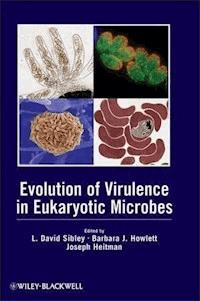
Front Cover: Top left: Sexual fruiting body of Pyrenophora tritici-repentis the cause of tan spot of wheat (image credit Kasia Rybak). Top right: Immunofluorescence image of intracellular tachyzoites of Toxoplasma gondii, a common opportunistic pathogen of humans (image credit Jennifer Gordon). Bottom left: Zygospore of Mucor circinelloides, a dimorphic fungal plant pathogen (image credit Soo Chan Lee): used with permission PLoS Pathog 7(6): e1002086. Bottom right: Intracellular trophozoite of Plasmodium falciparum, the cause of malaria, within red blood cell (image credit Wandy Beatty).
Back Cover: Top: Electron micrograph of blood stream trypanosomes of Trypanosoma brucei (image credit Wandy Beatty). Bottom: Yeast and hyphal forms of Candida tropicalis (image credit Ying-Lien Chen)
Copyright © 2012 by Wiley-Blackwell. All rights reserved
Published by John Wiley & Sons, Inc., Hoboken, New Jersey
Published simultaneously in Canada
No part of this publication may be reproduced, stored in a retrieval system, or transmitted in any form or by any means, electronic, mechanical, photocopying, recording, scanning, or otherwise, except as permitted under Section 107 or 108 of the 1976 United States Copyright Act, without either the prior written permission of the Publisher, or authorization through payment of the appropriate per-copy fee to the Copyright Clearance Center, Inc., 222 Rosewood Drive, Danvers, MA 01923, (978) 750-8400, fax (978) 750-4470, or on the web at www.copyright.com. Requests to the Publisher for permission should be addressed to the Permissions Department, John Wiley & Sons, Inc., 111 River Street, Hoboken, NJ 07030, (201) 748-6011, fax (201) 748-6008, or online at http://www.wiley.com/go/permissions.
Limit of Liability/Disclaimer of Warranty: While the publisher and author have used their best efforts in preparing this book, they make no representations or warranties with respect to the accuracy or completeness of the contents of this book and specifically disclaim any implied warranties of merchantability or fitness for a particular purpose. No warranty may be created or extended by sales representatives or written sales materials. The advice and strategies contained herein may not be suitable for your situation. You should consult with a professional where appropriate. Neither the publisher nor author shall be liable for any loss of profit or any other commercial damages, including but not limited to special, incidental, consequential, or other damages.
For general information on our other products and services or for technical support, please contact our Customer Care Department within the United States at (800) 762-2974, outside the United States at (317) 572-3993 or fax (317) 572-4002.
Wiley also publishes its books in a variety of electronic formats. Some content that appears in print may not be available in electronic formats. For more information about Wiley products, visit our web site at www.wiley.com.
Library of Congress Cataloging-in-Publication Data:
Sibley, L. David.
Evolution of virulence in eukaryotic microbes / editors, L. David Sibley, Barbara J. Howlett, Joseph Heitman.
p. cm.
Includes index.
ISBN 978-1-118-03818-5 (hardback)
1. Protista. 2. Eukaryotic cells. 3. Microbial genomics. 4. Virulence (Microbiology)–Genetic aspects. I. Howlett, Barbara J. II. Heitman, Joseph. III. Title.
QR74.5.S53 2012
579–dc23
2011051095
PREFACE
This volume assembles for the first time a collection of chapters on the diversity of eukaryotic microorganisms and the influence of evolutionary forces on the origins and emergence of their virulence attributes. In selecting the topics for this volume, we have highlighted examples from three important, divergent groups of eukaryotic microorganisms that cause disease in animals and plants. These include oomycetes, the cause of serious blights in plants, such as the Irish potato famine, protozoan parasites of humans, including Plasmodium, the causative agent of malaria, and fungi that cause diseases in animals and plants. Although phylogenetically diverse in the eukaryotic tree of life, each of these groups has adopted pathogenic lifestyles on plant or animal hosts that often result in serious diseases. Traditionally, studies on these three groups of organisms have been pursued by independent scientific communities. Hence, our goal for this volume is to serve as a bridge that links findings from these disparate communities, resulting in a synthesis of knowledge that voices common themes in evolution and pathogenesis.
The overarching theme of this volume is how pathogenic determinants of eukaryotic microorganisms have evolved in concert with their hosts, often overcoming innate and adaptive immune mechanisms. Host defenses are not prominently featured here as there are many volumes covering these aspects of the host–microbe interaction. Rather, our focus is on pathogenic determinants and evolutionary processes that have shaped microbial pathogen genomes and the resulting complex biology they orchestrate. The initial chapters cover general, broad principles of evolution, phylogenetics, and genetic exchange. In many cases, our appreciation of the virulence traits of pathogens has been driven by genetic approaches, either classical or molecular. Hence, one of the subthemes for the book is how the development of genetic tools has fostered the identification and functional analyses of virulence determinants. An equally important subtheme is how pathogens exchange genetic material in nature, including via classical or modified meiotic processes, horizontal gene transfer, and sexual cycles including those that are cryptic or even unisexual. Since genetic exchange provides the means to shuffle genomes and to acquire new determinants, these processes play a central role in the evolution of virulence. The combined treatment of different inheritance systems highlights common mechanisms of evolutionary adaptations that led to the emergence of the capacity to cause disease in diverse hosts.
In comparison to viral and bacterial pathogens, eukaryotic microorganisms are characterized by large genome sizes, complex biological life cycles, and shared biological features with their hosts. These properties combine to create challenges in studying eukaryotic pathogens, both in the laboratory and in animal and plant models. However, these challenges are counterbalanced by recent advances in genetics, comparative genomics, phylogenetics, and evolutionary analyses that have accelerated progress in defining the molecular basis of virulence in eukaryotic pathogens. In the contributions contained herein, these advances illuminate how coevolution between hosts and pathogens has shaped their interactions and the resulting outcome in terms of pathogenesis. Common themes between different pathogenic microbes are illustrated, providing a broad framework for formulating future studies.
We are grateful to all of the authors for their excellent series of contributed chapters, and we hope that the resulting volume will enrich discussions and even drive novel research on eukaryotic pathogens. As with all such publication ventures, this synthesis across disciplines is an experiment. We welcome you as readers to communicate to us ways in which we may have succeeded and also ways in which the focus of our efforts might be sharpened in possible future editions.
L. DAVID SIBLEYBARBARA J. HOWLETTJOSEPH HEITMAN
ACKNOWLEDGMENTS
We thank Eileen Wojciechowski for outstanding administrative assistance and Cecelia Shertz for editing prowess. We are greatly indebted in particular to Janet Whealen, without whom this volume would not have been possible. More than anyone, Jan was responsible for keeping editors and authors on track and for reminding us of both important formatting aspects and timelines. We thank Dr. Karen Chambers, Editor, Life Science, Wiley-Blackwell, for the initial concept this volume and for helping us navigate the complexity of a large publishing house. We are also grateful to Anna Ehlers and other members of the Wiley-Blackwell editorial team for assistance with compiling the final volume. Finally, we acknowledge each of our families for their forbearance during this project.
CONTRIBUTORS
JAMES W. AJIOKA, PHD, Department of Pathology, University of Cambridge, Cambridge, UK
FRANCISCO J. AYALA, PHD, Department of Ecology and Evolutionary Biology, University of California, Irvine, CA
GUUS BAKKEREN, PHD, Pacific Agri-Food Research Centre, Agriculture and Agri-Food Canada, Summerland, BC, Canada
J. DAVID BARRY, PHD, Wellcome Trust Centre for Molecular Parasitology, Institute of Infection, Immunity and Inflammation, College of Medical, Veterinary and Life Sciences, University of Glasgow, Glasgow, UK
RICHARD J. BENNETT, PHD, Department of Molecular Microbiology and Immunology, Brown University, Providence, RI
JIM L. BEYNON, PHD, School of Life Sciences, The University of Warwick, Warwick, UK
PAUL R. J. BIRCH, PHD, Division of Plant Sciences, University of Dundee at James Hutton Institute, Invergowrie Dundee, UK
JOHN C. BOOTHROYD, PHD, Department of Microbiology and Immunology, Stanford University School of Medicine, Stanford, CA
GERALDINE BUTLER, PHD, UCD School of Biomolecular & Biomedical Science, Conway Institute, University College Dublin, Belfield, Ireland
RICHARD CARTER, PHD, School of Biological Sciences, University of Edinburgh, Edinburgh, UK
ARTURO CASADEVALL, MD, PHD, Department of Microbiology and Immunology, Albert Einstein College of Medicine, Bronx, NY
HSIAO-HAN CHANG, Department of Organismic and Evolutionary Biology, Harvard University, Cambridge, MA
MARY E. COATES, PHD, School of Life Sciences, University of Warwick, Warwick, UK
LEAH E. COWEN, PHD, Department of Molecular Genetics, University of Toronto, Toronto, ON, Canada
RICHARD CULLETON, PHD, Malaria Unit, Institute of Tropical Medicine, Nagasaki University, Nagasaki, Japan
RACHEL F. DANIELS, Department of Immunology and Infectious Diseases, Harvard School of Public Health, Boston, MA
KIRK W. DEITSCH, PHD, Department of Microbiology and Immunology, Weill Medical College of Cornell University, New York, NY
MANOJ T. DURAISINGH, PHD, Harvard School of Public Health, Boston, MA
JEFFREY D. DVORIN, MD, PHD, Children’s Hospital Boston, Boston, MA
ANANIAS A. ESCALANTE, PHD, Center for Evolutionary Medicine and Informatics, The Biodesign Institute, Arizona State University, Tempe, AZ
RHYS A. FARRER, BSC, MSC, Department of Infectious Disease Epidemiology, Imperial College, London, UK
MICHAEL T. FERDIG, PHD, Eck Institute for Global Health, Department of Biological Sciences, University of Notre Dame, Notre Dame, IN
MATTHEW C. FISHER, PHD, Department of Infectious Disease Epidemiology, Imperial College, London, UK
MONICA A. GARCIA-SOLACHE, MD, PHD, Department of Microbiology and Immunology, Albert Einstein College of Medicine, Bronx, NY
NEIL A. R. GOW, PHD, School of Medical Sciences, Institute of Medical Sciences, University of Aberdeen, Aberdeen, UK
DANIEL L. HARTL, PHD, Department of Organismic and Evolutionary Biology, Harvard University, Cambridge, MA
JOSEPH HEITMAN, MD, PHD, Departments of Molecular Genetics and Microbiology, Pharmacology & Cancer Biology & Medicine, Duke University Medical Center, Durham, NC
JESSICA A. HILL, MSC, Department of Molecular Genetics, University of Toronto, Toronto, ON, Canada
SAMANTHA J. HOOT, PHD, Seattle Biomedical Research Institute, Seattle, WA
BARBARA J. HOWLETT, PHD, School of Botany, The University of Melbourne, Melbourne, VIC, Australia
CHRISTINA M. HULL, PHD, Department of Biomolecular Chemistry and Department of Medical Microbiology and Immunology, University of Wisconsin, School of Medicine and Public Health, Madison, WI
CHRISTOPHER D. HUSTON, MD, Division of Infectious Diseases, University of Vermont College of Medicine, Burlington, VT
ALEXANDER IDNURM, PHD, Division of Cell Biology and Biophysics, School of Biological Sciences, University of Missouri-Kansas City, Kansas City, MO
ANDREW P. JACKSON, DPHIL, Pathogen Genomics, Wellcome Trust Sanger Institute, Hinxton, UK
SATOMI KATO, PHD, Center for Tropical and Emerging Global Diseases, University of Georgia, Athens, GA
JESSICA C. KISSINGER, PHD, Department of Genetics, Institute of Bioinformatics, and Center for Tropical and Emerging Global Diseases, University of Georgia, Athens, GA
H. CORBY KISTLER, PHD, USDA ARS Cereal Disease Laboratory, University of Minnesota, St. Paul, MN
MARTIN KOLISKO, PHD, Centre for Comparative Genomics and Evolutionary Bioinformatics, Department of Biology, Dalhousie University, Halifax, NS, Canada
EMILIA K. KRUZEL, PHD, Department of Biomolecular Chemistry, University of Wisconsin, School of Medicine and Public Health, Madison, WI
JEAN-PAUL LATGE, PHD, Institut Pasteur, Unité des Aspergillus, Paris, France
WENJUN LI, PHD, Department of Molecular Genetics and Microbiology, Duke University Medical Center, Durham, NC
JOHN M. LOGSDON, JR., PHD, Department of Biology, University of Iowa, Iowa City, IA
MICHAEL LORENZ, PHD, Department of Microbiology and Molecular Genetics, University of Texas-Houston, Houston, Texas
LI-JUN MA, PHD, College of Nature Sciences, University of Massachusetts, Amherst, MA
ANNETTE MACLEOD, PHD, University of Glasgow, College of Medical, Veterinary and Life Sciences, Glasgow, UK
LIAM J. MORRISON, PHD, University of Glasgow, College of Medical, Veterinary and Life Sciences, Glasgow, UK
LAETITIA MUSZKIETA, PHD, Institut Pasteur, Unité des Aspergillus, Paris, France
DANIEL E. NEAFSEY, PHD, Broad Institute, Cambridge, MA
KIRSTEN NIELSEN, PHD, Department of Microbiology, University of Minnesota, Minneapolis, MN
RICHARD P. OLIVER, PHD, Australian Centre for Necrotrophic Fungal Pathogens, Curtin University, Perth, WA, Australia
PETER R. PREISER, PHD, Division of Molecular Genetics and Cell Biology, School of Biological Sciences, Nanyang Technological University, Singapore
MARTIJN REP, PHD, Molecular Plant Pathology, Swammerdam Institute for Life Sciences, University of Amsterdam, Amsterdam, The Netherlands
JEAN BEAGLE RISTAINO, PHD, Department of Plant Pathology, North Carolina State University, Raleigh, NC
ANDREW J. ROGER, PHD, Centre for Comparative Genomics and Evolutionary Bioinformatics, Department of Biochemistry and Molecular Biology, Dalhousie University, Halifax, NS, Canada
BENJAMIN M. ROSENTHAL, SD, Animal Parasitic Disease Laboratory, Agriculture Research Service, USDA, Beltsville, MD
PARDIS C. SABETI, DPHIL, MD, FAS Center for Systems Biology, Harvard University, Cambridge, MA
ELIZABETH SAVELKOUL, Department of Biology, University of Iowa, Iowa City, IA
STEPHEN F. SCHAFFNER, PHD, Broad Institute, Cambridge, MA
L. DAVID SIBLEY, PHD, Department of Molecular Microbiology, Washington University School of Medicine, St. Louis, MO
ALASTAIR G. B. SIMPSON, PHD, Centre for Comparative Genomics and Evolutionary Bioinformatics, Department of Biology, Dalhousie University, Halifax, NS, Canada
UPINDER SINGH, MD, Division of Infectious Diseases and Geographic Medicine, Departments of Internal Medicine and Microbiology and Immunology, Stanford University School of Medicine, Stanford, CA
JOSEPH SMITH, PHD, Seattle Biomedical Research Institute, Seattle, WA
JASON E. STAJICH, PHD, Department of Plant Pathology and Microbiology, University of California, Riverside, CA
WILLIAM J. STEINBACH, MD, Department of Pediatrics and Department of Molecular Genetics and Microbiology, Duke University, Durham, NC
XIN-ZHUAN SU, PHD, Malaria Functional Genomics Section, Laboratory of Malaria and Vector Research, National Institute of Allergy and Infectious Disease, National Institutes of Health, Rockville, MD
ANDY TAIT, PHD, University of Glasgow, College of Medical, Veterinary and Life Sciences, Glasgow, UK
JOHN C. TAN, PHD, Genomics Core Facility, Eck Institute for Global Health, University of Notre Dame, Notre Dame, IN
SARAH K. VOLKMAN, SCD, Department of Immunology and Infectious Disease, Harvard School of Public Health, Boston, MA
THEODORE C. WHITE, PHD, School of Biological Sciences, University of Missouri-Kansas City, Kansas City, MO
DYANN F. WIRTH, PHD, Department of Immunology and Infectious Disease, Harvard School of Public Health, Boston, MA
JOHN C. WOOTTON, PHD, NCBI, NLM, NIH, Computational Biology Branch, National Center for Biotechnology Information, National Library of Medicine, National Institutes of Health, Bethesda, MD
JIANPING XU, PHD, Department of Biology, McMaster University, Hamilton, ON, Canada
PART IGENERAL OVERVIEWS
CHAPTER 1
POPULATION GENETICS AND PARASITE DIVERSITY
HSIAO-HAN CHANG, RACHEL F. DANIELS, and DANIEL L. HARTL
MUTATION
Mutation encompasses a wide range of changes from substitution of single nucleotides to relocation of entire segments of chromosomes. Single-nucleotide polymorphisms (SNPs) include transitions and transversions that exchange bases within or across purine and pyrimidine classes. Some nucleotide substitutions can affect the codon for an amino acid without changing the amino acid (a synonymous SNP). When the mutant codon does code for a different amino acid, the SNP is nonsynonymous. Some mutations insert or delete one or a small number of nucleotide bases and shift the reading frame of the translational machinery, causing a usually nonfunctional product to be translated from the RNA transcript.
On a larger genetic scale than single-nucleotide changes, copy number variations (CNVs) are mutations caused by mobile genetic elements like insertion sequences, transposons, or retroelements. Genes can also be duplicated through chromosomal mutations such as transpositions and translocations; like the other types of CNVs, these mutations place genes out of their normal genetic context and away from their normal regulatory elements. The new copies may also be less prone to correction by processes such as gene conversion, leaving them free to accumulate further mutations. A special class of copy number polymorphisms consists of minisatellites and microsatellites with variable numbers of tandem repeats of relatively short stretches of DNA.
Mutation can have significant consequences on populations. For example, the effects of nonsynonymous SNPs and CNVs have been associated with reduced drug sensitivity in Plasmodium falciparum, the apicomplexan parasite that causes most malaria deaths. The implications of these and other types of mutations in populations of P. falciparum and other eukaryotic microbes will be discussed in greater detail in later chapters.
At the beginning of population genetics, the only way to observe mutations was through direct polymorphic evidence: Mendel’s vaunted peas, Kettlewell’s melanic moths, and Galton’s amazing catalog of continuous traits all owed their phenotypic variation to different versions of genes where mutations had caused the organisms to appear different from each other. Increasingly sophisticated techniques such as allozyme (also known as allelic isozyme) and restriction fragment length polymorphism (RFLP) analyses allowed more direct studies of protein and DNA differences between individuals within populations and among species. These early experiments formed the basis for many current theories in population genetics and remain informative to the present day. The recent emergence of cost-effective technologies such as DNA and protein arrays has changed the scale and accelerated the discovery of diversity from single genes or proteins to genomes and proteomes in massively multiplexed studies involving larger numbers of individuals within and among populations. Advances in sequencing technologies have further enhanced the deluge of new data available to researchers. With lowered costs and increased coverage, entire genomes can be sequenced for a complete picture of polymorphic sites across populations and time. Further technological advances like hybrid selection and single-molecule amplification mean that pathogens and other microorganisms—including eukaryotic microbes—that cannot be separated from host material or cultured in sufficient quantities to allow easy sequencing under previous technologies can now be sequenced directly from patients or the environment. These technologies do not rely on culturing systems and offer researchers glimpses of the population genetics of pathogens whose mechanisms of virulence may be intractable for study in model organisms.
Lesen Sie weiter in der vollständigen Ausgabe!
Lesen Sie weiter in der vollständigen Ausgabe!
Lesen Sie weiter in der vollständigen Ausgabe!
Lesen Sie weiter in der vollständigen Ausgabe!
Lesen Sie weiter in der vollständigen Ausgabe!
Lesen Sie weiter in der vollständigen Ausgabe!
Lesen Sie weiter in der vollständigen Ausgabe!
Lesen Sie weiter in der vollständigen Ausgabe!
Lesen Sie weiter in der vollständigen Ausgabe!
Lesen Sie weiter in der vollständigen Ausgabe!
Lesen Sie weiter in der vollständigen Ausgabe!
Lesen Sie weiter in der vollständigen Ausgabe!
Lesen Sie weiter in der vollständigen Ausgabe!
Lesen Sie weiter in der vollständigen Ausgabe!
Lesen Sie weiter in der vollständigen Ausgabe!
Lesen Sie weiter in der vollständigen Ausgabe!
Lesen Sie weiter in der vollständigen Ausgabe!
Lesen Sie weiter in der vollständigen Ausgabe!
Lesen Sie weiter in der vollständigen Ausgabe!
Lesen Sie weiter in der vollständigen Ausgabe!
Lesen Sie weiter in der vollständigen Ausgabe!
Lesen Sie weiter in der vollständigen Ausgabe!
Lesen Sie weiter in der vollständigen Ausgabe!
Lesen Sie weiter in der vollständigen Ausgabe!
Lesen Sie weiter in der vollständigen Ausgabe!
Lesen Sie weiter in der vollständigen Ausgabe!
Lesen Sie weiter in der vollständigen Ausgabe!
Lesen Sie weiter in der vollständigen Ausgabe!
Lesen Sie weiter in der vollständigen Ausgabe!
Lesen Sie weiter in der vollständigen Ausgabe!
Lesen Sie weiter in der vollständigen Ausgabe!




