


20,99 €
Mehr erfahren.
- Herausgeber: John Wiley & Sons
- Kategorie: Geisteswissenschaft
- Sprache: Englisch
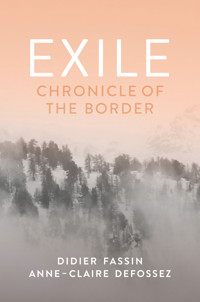
In recent decades, the forced displacement of populations has fueled nationalism and xenophobia across the world, arousing fear and hostility. Policies have been implemented to deter migrants, crack down on humanitarian workers and externalize border monitoring in remote territories. Men, women and children who flee political violence, religious persecution or poverty in their country and set off on journeys often lasting years may find themselves on dangerous routes where they face police brutality, gang rackets, confinement camps, barbed-wire fences, the rigors of the desert and the perils of the sea. Many lose their lives.
But what do we really know about the experience of these people, the hazards they encounter, repression they endure, and the assistance they receive? This is what Didier Fassin and Anne-Claire Defossez set out to uncover through the research they conducted at the border between Italy and France, in a region of the Alps that has become, since the mid-2010s, a privileged site of passage for people arriving in Europe from Afghanistan, Iran, the Maghreb and sub-Saharan Africa. Over a period of five years, they collected their poignant stories, participated in the activities of a shelter, took part in mountain rescue operations, interviewed politicians, policy makers and law enforcement officers. Their investigation reveals the ineffectiveness of the militarization of the border and the dismay of the police who are aware of the futility of their mission; it attests to the solidarity and commitment of the volunteers; and it explores the form of life of exiles, which has become a defining feature of our time.
This timely and well-researched book will be of great value to students and scholars in sociology, anthropology, politics and geography, and to anyone interested in migration and refugees today.
Sie lesen das E-Book in den Legimi-Apps auf:
Seitenzahl: 778
Veröffentlichungsjahr: 2025
Ähnliche












CONTENTS
Cover
Table of Contents
Title Page
Copyright
Dedication
Quote
Acknowledgments
Preface to the English Edition
Map
Prologue: The Passage
Notes
Chapter 1 Migration upon Migration
Notes
Chapter 2 No Choice but to Leave
Notes
Chapter 3 On the Road, Destination Unknown
Notes
Chapter 4 A Border Overstepped
Notes
Chapter 5 The Use of Public Force
Notes
Chapter 6 Bridges over Walls
Notes
Chapter 7 Death in This Valley
Notes
Conclusion: In This World
Notes
Glossary
References
Index
End User License Agreement
Guide
Cover
Table of Contents
Title Page
Copyright
Dedication
Quote
Acknowledgments
Preface to the English Edition
Map
Prologue The Passage
Begin Reading
Conclusion: In This World
Glossary
References
Index
End User License Agreement
Pages
iii
iv
v
vi
x
xi
xii
xiii
xiv
xv
xvi
xvii
xviii
xix
xx
1
2
3
4
5
6
7
8
9
10
11
12
13
14
15
16
17
18
19
20
21
22
23
24
25
26
27
28
29
30
31
32
33
34
35
36
37
38
39
40
41
42
43
44
45
46
47
48
49
50
51
52
53
54
55
56
57
58
59
60
61
62
63
64
65
66
67
68
69
70
71
72
73
74
75
76
77
78
79
80
81
82
83
84
85
86
87
88
89
90
91
92
93
94
95
96
97
98
99
100
101
102
103
104
105
106
107
108
109
110
111
112
113
114
115
116
117
118
119
120
121
122
123
124
125
126
127
128
129
130
131
132
133
134
135
136
137
138
139
140
141
142
143
144
145
146
147
148
149
150
151
152
153
154
155
156
157
158
159
160
161
162
163
164
165
166
167
168
169
170
171
172
173
174
175
176
177
178
179
180
181
182
183
184
185
186
187
188
189
190
191
192
193
194
195
196
197
198
199
200
201
202
203
204
205
206
207
208
209
210
211
212
213
214
215
216
217
218
219
220
221
222
223
224
225
226
227
228
229
230
231
232
233
234
235
236
237
238
239
240
241
242
243
244
245
246
247
248
249
250
251
252
253
254
255
256
257
258
299
300
301
302
303
304
305
306
307
308
309
310
311
312
313
314
315
316
317
318
319
320
321
322
323
Exile
Chronicle of the Border
Didier Fassin and Anne-Claire Defossez
Translated by Rachel Gomme
polity
Copyright © Didier Fassin and Anne-Claire Defossez 2025
The right of Didier Fassin and Anne-Claire Defossez to be identified as Authors of this Work has been asserted in accordance with the UK Copyright, Designs and Patents Act 1988.
First published in French as L’Exil, toujours recommencé: Chronique de la frontière, Éditions du Seuil, 2024
Excerpt from Now, as You Awaken by Mahmoud Darwish. English translation copyright © 2006 by Omnia Amin and Rick London. Reprinted with permission.
First published in English by Polity Press, 2025
Polity Press65 Bridge StreetCambridge CB2 1UR, UK
Polity Press111 River StreetHoboken, NJ 07030, USA
All rights reserved. Except for the quotation of short passages for the purpose of criticism and review, no part of this publication may be reproduced, stored in a retrieval system or transmitted, in any form or by any means, electronic, mechanical, photocopying, recording or otherwise, without the prior permission of the publisher.
ISBN-13: 978-1-5095-6860-4
A catalogue record for this book is available from the British Library.
Library of Congress Control Number: 2024946164
The publisher has used its best endeavours to ensure that the URLs for external websites referred to in this book are correct and active at the time of going to press. However, the publisher has no responsibility for the websites and can make no guarantee that a site will remain live or that the content is or will remain appropriate.
Every effort has been made to trace all copyright holders, but if any have been overlooked the publisher will be pleased to include any necessary credits in any subsequent reprint or edition.
For further information on Polity, visit our website:politybooks.com
Dedication
To the women and men who face the vicissitudes and hardships of the road to escape persecution, conflicts, and poverty
To the children who have passed through these ordeals and those who were born during the journey, because they are already part of the society of tomorrow
To the women and men of good will who stand up against institutional ill-treatment of exiles and political violence on the borders
To the memory of those who have died in the Alps at the end of their exile
The exiles don’t look back when leaving
one place of exile – for more exile
lies ahead, they’ve become familiar
with the circular road, nothing to the front
or to the rear, no north or south.
Mahmoud Darwish, Now, as You Awaken
Borders work on the plain. Barbed wire is rolled out
and no one can get across. Impossible in the mountains.
Erri De Luca, Nature Exposed
Acknowledgments
Our book benefited from the support of The NOMIS Foundation, and we extend our thanks to its director, Markus Reinhard, and the late chair of the board of directors, Georg Heinrich Thyssen. It was also supported by a residency at the Villa Medici, the Académie Française in Rome; we are grateful to its director, Sam Stourdzé, and its general secretary, Simon Garcia. We express our gratitude to John Thompson at Polity, for his trust and suggestions, and to Rachel Gomme, for the attention she devoted to the translation of our book, and to Caroline Richmond, for the meticulous copyediting of the manuscript.
This research owes a great deal to all those who, over the five years of our fieldwork, were willing to talk with us and to invite us into their world. We are indebted to the women and men who set up, ran, and continue to run the Refuges Solidaires: the volunteers, young and not so young, for their infectious energy and enthusiasm; the current and former staff, particularly Emma Lawrence and Pauline Rey, for giving us of their time; the administrators, especially Marie Marchello, Alain Mouchet, and Philippe Wyon, whose generous welcome and valuable assistance contributed much to our understanding of hospitality in Briançon. We extend our thanks to the members of Tous Migrants, particularly Agnès Antoine, Stéphanie Besson, Pâquerette Forest, and above all Michel Rousseau, for long, amicable conversations about exiles’ rights. We were warmly welcomed by the House of Youth and Culture as soon as we arrived, and our thanks go to its director, Luc Marchello. We had occasional but intense collaborations with members of the Maraude Collective on behalf of Médecins du Monde, which is locally coordinated by Isabelle Lorre. We learned a lot about the arcane details of the law from Émilie Pesselier of ANAFÉ. We are thankful to Monseigneur Xavier Malle, bishop of Gap, and to Jean-Michel Bardet, the priest in Briançon, for explaining the Church’s position and commitment, and also to Jean-Yves Montallet of Secours Catholique. In Gap, volunteers from CIMADE and the Hospitalité network helped us to comprehend the delicate issue of unaccompanied foreign minors. In Oulx, volunteers from the Salesian refuge, particularly Eloisa Franchi, Silvia Gilardi, and Silvia Massara, received us with warmth and told us about the history of solidarity in the Val di Susa.
The successive mayors of Briançon, Gérard Fromm and Arnaud Murgia, the mayor of Oulx, Andrea Terzolo, and deputy mayors of Briançon and Montgenèvre shared their perspectives on the local stakes involved in the migration issue. At the Gap regional court the two successive presiding judges, Isabelle Defarge and Sophie Boyer, the children’s judge, Benjamin Banizette, and the public prosecutor, Florent Crouhy, opened the doors of criminal trials to us and offered us their interpretations. The Hautes-Alpes director of public safety, Joël Terry, Commander Alain Fernez, in charge of the Briançon precinct, Commander Sébastien Forest, who heads the Briançon gendarmerie company, and Commander Gonzague Dupré, at the time head of the PGHM, helped us to better understand the work of their organizations well beyond the issue of migration. Captain Olivier Cousin, at the time head of the CRSHM, shared his ethical approach to rescue. Commander Jérôme Boni met with us at the border police post. We deeply appreciated the candidness of those law enforcement officers, whether currently working or retired, who spoke to us under guarantee of anonymity. Although we did talk with one deputy prefect of Briançon and one chief of staff at the Hautes-Alpes prefecture, we regret that the two prefects in post during the course of our research did not respond to our many requests for a meeting, and nor did the members of the office in charge of unaccompanied minors at the Hautes-Alpes département council. The head of the Briançon Municipal Archives, Arnaud Gangneux, introduced us to the wealth of documentation his service holds on migration since the revolutionary era. Over the years, we had rich discussions with students, researchers, musicians, photographers, and filmmakers, either resident or traveling through.
However, our work would not have been possible without the encounters and exchanges we had with the exiled women and men who shared elements of their stories with us. Our debt to them is immense, and we hope that this book does justice to their confidence. For their form of life – this ever-recommencing exile – is not only essential to understanding the contemporary world; it also augurs its future.
Preface to the English Edition
As a global phenomenon, migration has considerably accelerated in recent decades. According to the International Organization for Migration, over the past half century the number of people living in a country different from the one where they were born has tripled, reaching 281 million, which corresponds to 3.6 percent of the world’s population – 12 percent in Europe and 16 percent in North America. Reasons for migrating are multiple, depending a lot on the economic and political situation of the country of departure and on the social and financial resources of the persons concerned. A particular configuration is that of the so-called forcibly displaced, namely, in the language of the United Nations High Commissioner for Refugees, people who have left their home as “a result of persecution, conflict, violence, human rights violations and events seriously disturbing public order.” They were 117 million in 2023, with 68 million being internally displaced in their own country and 49 million having moved to another one as refugees, including 6 million Palestinians, asylum seekers waiting for a decision regarding their status, or persons in need of international protection. It is an almost fivefold increase since 2000, when there were 21 million “persons of concern” to the international organization. This increase is attributed largely to the deterioration of peace and security in many places. Indeed, the number of “conflict-related fatalities” appears to be statistically related to the number of forcibly displaced persons: according to the same source, between 2009 and 2023, both have been multiplied by five. But Western countries have only a small share of those who have fled beyond their borders, since 69 percent live in neighboring countries, mostly in Asia and Africa, and 75 percent are present in low- and middle-income countries. For instance, Chad hosted 600,000 Sudanese in 2023, twice as many as all migrants and refugees who reached Europe during that same year, and, in 2015, Lebanon received 1 million Syrians who had left their country as a result of the civil war, twice as many as the whole of Europe, which in proportion of their respective populations represented a rate 250 times higher.
In this context of objective increased mobility worldwide, especially in the form of forced displacement, and of subjective apprehension of a migrant and refugee crisis, contradicted by the fact that, at its height in the middle of the 2010s, the arrivals corresponded only to approximately 2 per 1,000 inhabitants of Europe, the political configuration of the continent rapidly changed. The media played an important role in the representation of the situation, caricaturing it through disquieting statistics and unsettling images. The specter of an invasion was raised, the thesis of the clash of civilizations resonated with growing anxieties, and the conspiracy theory of the great replacement became widely spread. The far right found in the new state of affairs a justification for the hostile discourse against immigration that it had promoted for decades, particularly in France and Italy, but also in Austria, Belgium, the Netherlands, and a good part of the former Eastern bloc, while new parties emerged with xenophobia more or less disguised under the defense of national identity as their main doctrine, notably in Germany, Britain, Spain, and even Scandinavia. The conservatives often embraced these themes and, when they were in power, voted in restrictive and repressive laws. The left, which had been marginalized on most of the continent, rarely manifested a strong opposition to this deleterious trend and even sometimes endorsed it. However, such an evolution was all the more remarkable since opinion polls across Europe showed that immigration was not a major concern compared with the cost of living, environmental issues, and international instability, among others: it was actually ranked sixth among people’s preoccupations according to the 2022 Eurobarometer. The subject was in fact instrumentalized by politicians. Thus, in difficulty after a series of unpopular reforms on the labor code, social benefits, and pensions, the French president tried to provoke a diversion by launching a one-year debate on immigration with the objective of toughening the legislation. He let the right prepare the text, which was praised by the far right and voted in by his own party, the law being then partially repealed by the Constitutional Council.
But it is the European Union that became the major player on the topic. Dominated by the right and center right, it adopted policies sometimes dictated by hardliners led by the Lega Nord, the German CSU, the Austrian FPÖ, and the Visegrád Group, composed of Hungary, Poland, Slovakia, and the Czech Republic, four countries which have the lowest rates of asylum seekers in Europe, thus demonstrating the discrepancy between the reality of the situation and its construction as a problem. At the end of the twentieth century, the European Union had already confused in its approach to the topic two questions that were supposed to rely on completely distinct logics and therefore be treated separately: asylum, which protects refugees under international law, and immigration, which is left to the initiative of sovereign states. From 2015 on, it deployed an array of measures not only to prevent irregular immigration but also to restrain the rights of those who tried to reach its shores. The border control agency Frontex, whose director was discharged for organizing pushbacks and was later elected to the European Parliament for the Rassemblement National, had its budget multiplied fivefold in seven years. Reception centers sometimes designated as hotspots were created at the gates of Europe, serving in fact as detention camps where people were crowding in and violence became endemic. Paradoxically, while the Schengen Convention had created an area comprising twenty-nine countries which had abolished border control, the latter was reestablished and sometimes even extended to a larger territory – but only for people deemed non-European on the basis of racial profiling. However, the most significant innovation was the externalization of immigration policies, with a series of agreements signed with Turkey, Morocco, Algeria, Tunisia, Egypt, and Lebanon, to prevent by any means people from crossing the Mediterranean, and with sub-Saharan countries, notably Niger, to enact restrictive laws and organize harsh repression against smugglers and migrants. This process has rendered journeys much more perilous and caused the deaths of tens of thousands of men, women, and children in the Sahara and the Mediterranean.
Such is the historical and political background of the research we conducted during five years in the Alps, at the border between Italy and France, which had become in the late 2010s one of the two main entrance sites for people coming from the East, through the Balkan route, and from the South, via the Sahara and the Mediterranean.
* * *
Why did we choose this region, called the Briançonnais on the French side and the Val di Susa on the Italian one, with the Échelle and Montgenèvre passes in between? The first reason is that it has been, at least for the past two thousand years, a strategic crossing point for warriors, invaders, vandals, troops, deserters, refugees, hawkers, peasants, masons, industrial workers, and, more recently, tourists. Over the centuries, passage has been alternately free or prevented. Migrants were sometimes needed, sometimes rejected. The border was actually an invention of the eighteenth century, as were passports to control the mobility of people. In other words, facts that tend to be taken for granted were the result of human interventions whose direction changed with time. The second – and more important – reason for choosing this territory is that we found out that significant events had occurred in recent years. Local mobilization had started to denounce the antiimmigrant policies of the state and prevent the accidents people were exposed to in the mountains. A spectacular and ephemeral alt-right operation had been organized to block one of the passes and call public attention to irregular crossings, with, in response, an important demonstration by citizens of the region to reclaim the border and condemn xenophobia. Subsequently, the government had sent police reinforcements and announced the militarization of the zone.
There were of course other actors – those who were attempting to enter French territory and who remained at a distance from the sound and the fury of these confrontations, as they wanted to be as little visible as possible. We call them “exiles,” a term increasingly used by those who work with them or study their experience, as it avoids making the decision as to whether they are “migrants,” as officials name them to ignore their request for protection, “refugees,” as nongovernmental organizations tend to call them, although this is not their status, or “asylum seekers,” as many of them would want to be recognized, although they are not even permitted to file an application. In sum, a scene was taking place with three main protagonists: exiles; activists who strive to rescue them, host them, and claim their rights; and law enforcement agents who endeavor to prevent the former from crossing and the latter from assisting them.
The literature on borders and migration is immense and global. Legal scholars, political scientists, historians, sociologists, anthropologists, and, quite often, geographers have studied on the six continents the hardening of policies, the work of concerned institutions, the activity of border forces, the attitudes of nationals toward migrants, the mobilization of nongovernmental organizations, the tribulations of exiles during their journey, the everyday life in refugee camps, and many other aspects of this question. We think that one original aspect of our research is to have been able to conduct a parallel ethnography of these three protagonists of the scene at the border between France and Italy. Although the methodological and ethical challenges were very different in the three investigations, we granted the same importance to each of them. We were able to spend more time and got to know better the activists, not only because they were our entry into the field and accepted our collaboration, notably in reception and rescue activities, but also because we shared common principles and values with many of them. We had a much harder time in accessing law enforcement agents, but eventually succeeded via the political intervention of senior officials, informal mediation through local acquaintances, the observation of court proceedings, and unexpected, unpleasant, but illuminating interactions on the occasion of identity checks, ticket issuing, or hearings. We met hundreds of exiles, mostly at the refuge of Briançon and in a variety of situations, but had longer conversations or even interviews with some of them only when trust was established and conditions seemed favorable. These methodological and ethical considerations allowed us to account for the diversity of each category of protagonists, the differences of political views and practical involvement within the activist community, the variations in the ideological positioning and moral dispositions among law enforcement agents, and the disparities in the social conditions and traumatic experiences of exiles, without ignoring tensions and conflicts but also without minimizing commonalities and convergences.
As we studied the confrontation between these three protagonists, what was perhaps the most striking fact is the discrepancy between the resources and efforts displayed by the state to prevent exiles from crossing the border and the meager results of this undertaking. Not only did the number of people concerned seem derisory – an average of four thousand individuals per year; that is, hardly more than ten per day – but the arrests and pushbacks did not dissuade them from making attempts until they eventually reached Briançon, from where they continued their journey. All police officers and senior officials admitted that their task was Sisyphean: they knew that they were not able to deter crossings. The hundreds of military deployed and the millions of euros spent each year for the control of the border were almost useless. In fact, we estimated that this was one of the most cost-ineffective French public policies. Yet, was it not that it served other purposes and had other consequences than what was officially its goal? First, the real purpose was less to actually block the passage of people than to exhibit the will of the state to affirm its sovereignty in a context of far-right denunciations of its powerlessness. More than anything else, it was a political performance. Second, the main consequence was not to prevent exiles from crossing the border but to expose them to the risk of injury, frostbite, and sometimes death. Even if it was not the original intention, it was a deliberate enterprise of endangerment.
But the border can be approached in another way: not as a scene where we observe and interact with the protagonists but as a prism through which we access elements of the exiles’ journey. Contrary to the rare scholars and journalists who have carried out impressive research by following people as they traveled across sub-Saharan Africa or Southern Europe, we have explored their tribulations through their accounts, or, rather, through fragments thereof, because it was unusual to have them describe their entire journey, as our exchanges were often informal discussions. Narratives have well-known limitations. They are reconstructions in which certain events become more salient while others fade away, certain facts may be consciously or unconsciously modified, exaggerated, or erased. This is why we corroborated their accounts with testimonies made by other exiles and reports produced by nongovernmental organizations or international agencies. However, we do not presume and do not expect our interviewees’ transparency. Besides, we are interested not only in the empirical information they can provide but also in the interpretation they produce and the meaning they attach to what they experienced. For us, both objective and subjective elements of the narratives are relevant to apprehend what exiles live through.
Since we met the exiles in Briançon, an obvious bias is that we have information only about those who reached the French border, so that their journeys could seem to have had, from the start, France as their final destination. Nothing is further from the truth. Not only did many of them want to continue their trip to Britain and Germany, sometimes to Spain, Belgium, or Sweden, with France being only a stage on their journey, but it appeared that Europe had not always been envisaged as their ultimate goal. Afghans and Iranians had sometimes settled in Turkey for years before they had to flee the growing repression of the Turkish police. Malians, Guineans, and Cameroonians had sometimes worked in Algeria for months before they decided to leave because of the constant harassment by Algerian forces. More generally, exiles adapted their project to circumstances, in particular the hardship they endured, but they also paid attention to rumors, listened to the advice of their fellow travelers, or took the opportunity of joining a group. Their journey was often characterized by uncertainty. This is what we wanted to express in the French title of our book, whose literal translation is “Ever-recommencing exile,” This is also what the Latin etymology of the word indicated: exilium refers to both the pressure to leave and the indeterminacy of the journey.
The oral and written documents we collected converged on one piece of evidence: the banality of the violence and the violation of rights experienced by most exiles during their journey. They were the victims of smugglers, gang members, and police officers, but also of coercive national policies and complicit international support. Indeed, their narratives unveiled the geopolitics at stake. The delegation by the European Union of the dirty work of repression to governments that owe little to democracy and are often xenophobic had pernicious consequences. In Niger, the punitive legislation demanded by Europe had for effect to expose exiles to extreme risks, as their smugglers took alternative routes through the desert on which a breakdown could mean death by dehydration and heatstroke, mortality having multiplied eightfold after the enactment of the law. In Morocco, the agreement signed with the EU legitimized the brutal practices of law enforcement across the country and the deportation of exiles in the middle of the desert without food or water. Launches offered to the Libyan coastguard and information sent to them by Frontex about the geolocation of dinghies led to the arrest of exiles in the Mediterranean and later their confinement in Libyan prisons, where torture and ransoming were the rule. But the European Union also sanctioned the use of force at its own borders by the three countries depicted as its ramparts against invaders – Greece, Croatia, and Poland – which have been keen on exercising their authorized prerogative to torment exiles, humiliate them, and strip them of their possessions. The responsibility of European countries for the adversity encountered by people during their journey on the various routes they took is thus as distressing as it is obscured.
Whereas, on the basis of the narratives we collected and the complementary investigation we conducted, we present exiles as victims of international and national policies as well as of criminal activities by police forces or armed groups, we do not regard them as victims in essence. On the contrary, we describe the many ways in which they reveal their agency. They demonstrate their ability to adjust to exacting situations, invent tactics to circumvent obstacles, and protect the most vulnerable among them, notably children. They show solidarity with fellow travelers met on the road by giving them GPS points to avoid arrest, by paying their expenses or their smugglers when they have run out of money, by encouraging them when they are on the verge of giving up, by transporting them to a hospital when they have been wounded. More than anything else, they manifest a persistence in their unwavering will to continue, to surmount difficulties, to try again and again to cross borders, dozens of times, until they succeed. To speak of resilience would be to diminish what we prefer to characterize as resistance, although it is rarely acknowledged as such. However, we refuse to romanticize or trivialize their experience, as is sometimes done. In fact, as a result of the formidable constraints and hindrances, their journey, which often lasts years, is more than a parenthesis in their life between two countries – the one they left and the one where they hope to stay. It is a form of life per se, with a constant exposure to risk.
* * *
While our research concerns a particular area with a specific history and a specific setting, it is clear that its results share many similarities with research conducted on other borders, although each of them have their political and environmental singularities. The United Kingdom, where immigration was the main reason for the country leaving the European Union, has proceeded with a dual externalization of the control of its border, in Calais and in Rwanda, neither of them fulfilling its official objective: despite the Le Touquet agreement, which leads France, paradoxically, to prevent unwanted exiles from leaving the country, these latter increasingly cross the Channel to reach British shores; and, on account of legal obstacles, the plan to send asylum seekers to Africa to have their asylum request examined has been abandoned. The United States authorities have been hardening their policies to reject exiles from Central America often fleeing lethal violence in their own country: they have determined quotas for asylum seekers, have separated children from their parents, have expanded detention centers with harrowing conditions, have turned a blind eye to the brutality of police forces, have established camps on the Mexican side of the border where people are exposed to local mafias, and have constrained those who persevere in their project to go through the deadly Sonoran Desert; none of these measures, which contravene human rights and international law, has prevented exiles from trying to achieve their goal, often at the risk of death during their journey. Australia has been a pioneer in what has probably been the most radical experiment in the shifting of its border by the artificial excision of its territory: the so-called Pacific Solution consisted in preventing asylum seekers, many of them from Iran, Afghanistan, and Sri Lanka, from claiming their right to protection under the Geneva Convention by intercepting their boats, deporting them to the foreign islands of Nauru and Manus, and developing so-called offshore processing of their request; declared cruel, inhuman, or degrading treatment by the International Criminal Court, the policy was eventually discontinued. We could add more countries to this list, but what is remarkable is that, beyond the idiosyncrasies of each case, two elements that we observed at the French–Italian border and analyzed on the Saharan and Balkan routes are constant, albeit with important variations in their expression and intensity: on the one hand, the violence exerted on exiles and the violations of their rights; on the other, the relative inefficacy of supposed control of immigration.
That the Western world has renounced its values and principles, abandoning the ethical commitments it professes as part of its alleged identity, and even superiority, and ignoring the international legislation it has established, proclaiming its standards as universal, is profoundly unsettling. The dehumanization of exiles through xenophobic discourse and brutalization practices, while often they had been forced to leave their country to escape life-threatening situations, is undoubtedly a preoccupying moral regression that manifestations of solidarity and mobilizations of citizens attempt to contain. The way these exiles are treated and mistreated is definitely a worrying signature of our time.
D. F. and A.-C. D., August 2024
Map of the Region
Courtesy of Éditions du Seuil
PrologueThe Passage
It is their fourth time trying to cross the border. On the three previous occasions they were stopped by the French police and sent back to the Italian side. The first attempt was the most grueling. The man, his wife, eight months pregnant, and their nine-year-old son had taken the bus that runs from Oulx, in the Val di Susa, to Briançon via the Montgenèvre pass, one of the most accessible in the Alps.1 Like all the exiles attempting to traverse the pass, they got off the bus at Claviere, the last Italian village before the crossing into French territory. They know that the border police systematically check for any foreigners present in the bus.2 But they did not set off immediately. They waited for night, as they had been advised, because at eight in the evening it was still daylight in early July, and they could easily be spotted by the gendarmes who monitor the area. Hidden behind a building, they watched as darkness descended over the mountains and the lights of the village shops and bars went out one by one. Another Iranian family they had met a few days earlier, in the Italian refuge where they stayed for a short while, was with them. At one o’clock they finally set out on a hiking path.
To avoid the border post, they chose to go via the mountainside, through the forest. For three hours they walked in the dark on indistinct paths, when suddenly, as they crossed a clearing where they thought they were far enough away to avoid being detected by the police, gendarmes a little below in the valley, who probably spotted them through their night-vision binoculars, shouted at them to stop. They started to run. Then they thought they heard a gunshot. They took fright and stopped. Terrified, the pregnant woman started trembling violently, fearing they might be shot. For the next half an hour she remained sitting, unable to speak, trying to pull herself together. The four officers came up to them and, purely as a formality, asked to see the residence permit they obviously did not have. Then they took the two families down to the border post, where they were handed over to the police, who registered them, made them sign documents they did not understand, and explained in rudimentary English that they were being taken back to Italy.
At the border post, the pregnant woman complained of abdominal pain and asked to see a doctor. She was close to her due date and was worried that the physical exertion and emotion had stimulated contractions. An officer replied sarcastically that she should not worry; pregnancy was, after all, a natural phenomenon and there was no need to call a health professional. She was not even given the water she requested. Only the children received a carton of milk each. The group was then placed for the rest of the night in a prefab furnished with three basic beds, two tables, and blankets. In the early morning, an Italian Red Cross vehicle came to fetch them and took them back to the refuge in Oulx run by nongovernmental organizations.
Two days later, the two families joined forces for another attempt. But they chose a different route. At the Casa Cantoniera, the large abandoned stationhouse situated on the road out of Oulx that activists had taken over and turned into accommodation for exiles, they had been told of a small camp, set up by volunteers above Claviere, where they could rest before setting out and be shown the path on the Italian side. They made their way there and were welcomed. At eight in the morning they began to climb. An hour and a half later they were arrested once again. They were taken back to the border post, where the same scenario took place, except that they had a Farsi interpreter on the phone, enabling them to understand what they were being asked, which was to sign a document confirming refusal of entry. The officers were equally inattentive to the pregnant woman. She was given nothing to drink. The children received a few biscuits. After three hours in the prefab, it was the Italian police who came to fetch them and take them back to the valley.
The following day the man, his wife, and their son set out again, this time on their own. They tried out yet another different timing. They took the bus in the morning, waited for some hours in Claviere, and then set out in the afternoon, taking the same route as the day before and hoping not to meet anybody. But three hours later they were stopped and taken to the border post, where the same officers, seeing them again, laughed at their fruitless perseverance. Later the Italian Red Cross came from Oulx and drove them back to the refuge.
This is therefore their fourth attempt. The earlier failures have certainly done nothing to dissuade them. Originally from Shiraz, they had to leave Iran two years ago, knowing they were in danger, and since then have encountered many other hardships. On the Balkan route, like all exiles, they had to deal with the dreaded Croatian police. They made twenty-five attempts to cross the border from Bosnia, constantly changing location to increase their chances of getting across. They were arrested, insulted, and humiliated. Several times their possessions were burned and their mobile phone destroyed. The man was beaten and had his shoes taken away before they were sent back. Yet they did not give up, and on the twenty-sixth attempt they finally succeeded. Given this experience, a few setbacks on the French border were not about to make them give up.
Having slept in a tent at the solidarity campsite, they leave at dawn. This time they decide to take a much higher path, through the woods, moving away from the GPS points their compatriots gave them. The ascent, off-track, over rocky terrain, is exhausting. Finally they come to a forest road and follow it, without knowing whether they are going in the right direction. When they see a vehicle in the distance, fearing that it is the police, they rush toward the mountainside and climb up among the trees until they are no longer visible from the road. Exhausted, the woman says that she cannot go any further. The man realizes that they are lost. They have been walking for eight hours in what they call “the jungle,” a generic term for any hostile natural environment. By chance, although they are far from any human presence, they have a signal on their phone. A few days earlier, in Italy, they had met a compatriot aged around thirty; they later heard from him that he had succeeded in entering France. He is in Briançon. They decide to send him a message asking for help.
The young man, who has temporary accommodation in the little house called the “solidarity refuge” which hosts exiles passing through, informs us. Alongside the research we have been conducting on the border, we volunteer in various capacities at this shelter. One of us welcomes new arrivals, registers them, and helps them prepare for the next stage of their journey. The other provides medical consultations for the sick and injured whose condition does not need hospital treatment and goes out at night on rescue operations called maraudes to assist people in trouble in the mountains. On this day, in the middle of the afternoon, we are the only volunteers present in the refuge, together with a few dozen exiles; some of them are listening to music inside, while others are in the courtyard chatting in the sun or playing football. We therefore decide to go up to the pass to try to find the three exiles and bring them to the shelter. Formerly prohibited, such assistance is now legal provided that there is no financial benefit. However, it is subject to interception by the police, who take the foreigners back to the border and make identity checks on the volunteers.
The description of the situation we are given is quite concerning – three people exhausted and lost in the mountains, one of them a woman who is eight months pregnant and one a child. The GPS location they transmitted shows that they are in French territory, but at a distance from the route of the GR5 hiking trail that runs from Montgenèvre to Briançon. Given that they are not in danger related to mountain conditions, it does not seem necessary to call the emergency 112 number for assistance, especially as they themselves have chosen not to, for fear of being arrested and sent back again to Italy. Like all exiles who venture into the Alps, the man and his wife know that they can call this number. To do it in their stead would be to betray the trust that their companion, like them, has placed in citizen solidarity. It is therefore evident that we ourselves must go to find them and bring them to the valley, so that the woman can have an obstetric examination at the hospital. We ask them to stay where they are and head toward the pass to try to meet them.
At the outskirts of Montgenèvre, on the French side, we leave our car and set off on a forest road. It is the start of the hiking trail that goes down to the valley, but the GPS location soon leads us to fork off, climbing toward mountain massifs well to the south. After an hour and a half’s walking, we find the three exiles, who have hidden behind a larch copse clinging to a steep slope. Reassured by our presence, they join us on the path below, but the woman’s state of fatigue makes the going slow. About fifty meters from where we have parked our car, as we begin to feel the relief of making it without hindrance, we see a gendarmerie vehicle approaching slowly. Passing close to us, the officers stare at us for a moment and then drive on. In truth, as the Iranian woman is blonde and light-skinned, and one of us is holding the boy’s hand, we look like two couples out for a walk.
When they arrive at the refuge, the family is taken care of and the woman is driven to the hospital. The following day, having rested from their exhausting trek and been reassured about the state of the pregnancy, the father and mother and their little boy take the train to Paris. From there they go to Calais, where they meet their elder son, who lives in Germany. He arrived some years earlier as an unaccompanied minor but has not been granted the refugee status he hoped for when he came of age there. The family, finally reunited, tries in vain to get to England. The parents then decide to go to Germany, a country that seems more welcoming and where they want to seek asylum together. It is there that the woman gives birth to a little boy in hospital, on the very day they arrive.
* * *
At the beginning of one of the most famous texts in anthropology, published in 1940 and known as “The bridge,” Max Gluckman, the founder of the Manchester School, renowned for developing “case studies,” explains: “As a starting point for my analysis I describe a series of events as I recorded them on a single day. Social situations are a large part of the raw material of the anthropologist. They are the events he observes and from them and their interrelationships in a particular society he abstracts the social structure, relationships, institutions, etc., of that society.”3 He adds: “I have deliberately chosen these particular events from my note-books, but I might equally well have selected many other events.” In other words, the case study presented was only one of many that he could have recounted and that would have led to the same conclusions. Three elements of this brief text, which records the inauguration of a bridge in southern Africa in the late 1930s, made their mark on the history of anthropology and influenced its subsequent practice: the detailed description of facts that reveal broader social and political issues around power relations, but also cooperation between the white colonizer and the colonized Black people; the presence of the author recounting his interactions with the other protagonists in the first person; and the critical gaze on a society marked by the effects of racial segregation. Three elements that ran counter to tendencies that were common in the discipline at that time and that have still not entirely disappeared: valuing abstraction, eliding the presence of the ethnographer, and assuming that the analysis can be neutral.
Although historically and geographically distant from this colonial scene, the account we have just given and the analysis we will develop in this book follow in this intellectual tradition: they are concerned with a “social situation.” Firstly, we start from cases we observed and were told about in order to understand broader and more complex phenomena in the treatment of exiles in French society: the turning back of this Iranian family on three occasions, leading them to take ever more dangerous paths through the mountains, reflects border control policies that are as ineffective as they are repressive, since the family’s fourth attempt to cross meets with success. Secondly, we do not elide our presence, because it has implications for the events we recount, though we limit its mentioning to what is methodologically and ethically significant: the assistance we gave this couple and their son, which derived from the conditions of our research, makes it possible to grasp both the experience of exiles and the work of the volunteers who bring them to shelter in a more concrete way than interviews could; in addition, it contributes to the relation of trust established on this occasion, which facilitates later conversations. Thirdly, we adopt a critical reading, which consists not in condemning but in revealing, simply through description, the gap between the official discourse of the authorities and the practices of the police: although she is in an advanced stage of pregnancy and reports suffering from abdominal pain, the woman is taken back to the border three times in succession rather than being sent to hospital, as the police are supposed to do in such cases. Moreover, like Max Gluckman, we could have described many other scenes drawn from our research notebook. This one is nothing exceptional. It is the rule.
What do we learn from it? Directly or indirectly, this scene links together the three protagonists in the theater of the border: exiles lost in the mountains, border force officers who arrest them, and volunteers who come to their aid. First, there are the exiles, the Iranian couple with their young son. We know little of their story. Of the couple, only the woman speaks English, and as soon as she arrived in the valley she was taken to hospital for an obstetric examination. Shortly after she returned, she set off for the north with her husband and son. Besides, for ethical reasons, when people have just undergone traumatic experiences, we generally avoid asking them questions about their history that could make them relive previous experiences of interrogation and limit ourselves to small talk, aiming above all to soothe their anxiety. We know nothing of the threats the couple were under in Iran, because they did not mention them; when the woman described the tribulations of crossing the Croatian border, it was only to make clear that they had been through much harsher ordeals during the course of their journey than the one to which they had just been subjected. Second, there are the border police, who operate from the post located at the pass, and the gendarmes from the two mobile squadrons, dispatched each month as reinforcements from all over France to patrol the border. The former register the exiles often intercepted by the latter on the road or in the mountains, then with their Italian colleagues they organize the so-called readmission procedure, which is in fact a pushback to the other side of the border. The panic attack the woman suffered when they were stopped the first time resulted from an emotional reaction on seeing armed gendarmes moving rapidly toward her in the dark; the sarcastic comments addressed to her a little later when she asked to see a doctor came from a police officer who refused her request. Finally, there are the volunteers, some of whom go out on maraudes in the mountains, with the aim of bringing to shelter people in danger after crossing the border, while others welcome them in the valley, in the refuge, where the exiles can rest for a few days before continuing their journey. The fact that we were those volunteers in this case was a matter of circumstance.
Exiles, police and gendarmes, volunteers and support organizations. To these human protagonists, to whom we return throughout this text, we need to add two other, omnipresent, non-human agents: the border and the mountains. In different ways – because one is the product of political decisions, while the other is a natural feature altered by human activity – both are powerfully present on the stage on which exiles, border force officers, and solidarity activists meet. They are not a backdrop but living, protean, and versatile entities.
On the one hand, the border between Italy and France, in the Hautes-Alpes département, has a long history of migration and conflict. Remarkably, however, whereas it had almost ceased to exist during the 1990s following the signing of the Schengen Agreement, it was reborn from its ashes in 2015 as a result of the terrorist attacks in Paris. The customs office that had been closed was not reestablished, but a mobile customs unit continues to make checks. By contrast, the border post, which a few years earlier had been transformed from an obsolete premises into a modern building, saw its police staff increase, as well as being boosted by military reinforcements, while its main activity shifted from detecting smuggled goods and surveilling drug trafficking to combating irregular immigration. As to the border itself, once a line where occasional checks of suspect vehicles were made, it has become a strip inside French territory, twenty kilometers wide, within which individuals and vehicles may be stopped, their documents verified, and, where applicable, their pushback implemented. Although this broadening of the border area was written into law as early as 1993, just before the Schengen Convention came into force, it was rarely applied before the mid-2010s. Since then, the border, militarized and redrawn, has become an area keeping exiles vulnerable several hours after they have stepped over the line separating the two countries; it also extends even further, to ten kilometers around France’s international stations, ports, and airports, in a multitude of circles within which checks may be made. A ubiquitous threat, the tentacles of the border thus keep exiles in a state of permanent insecurity.4 The border worms its way into bodies, in the fear felt at the sight of a uniform, in the gradual awareness that even skin color is a mark of danger – the light skin of the Iranian woman accompanied by volunteers serving inversely as protection under the scrutiny of the gendarmes in their vehicle. The embodiment of the border is now an integral part of the experience of exile.
On the other hand, the mountains, around the pass that is monitored by the police, become an uneasy friend to exiles. It is by climbing peaks, descending into valleys, trekking through snow, taking advantage of the rain, and therefore by following increasingly indistinct and dangerous paths that they augment their chances of escaping the vigilance of police and gendarmes. These mountains, with which some are so unfamiliar that they take them on without appropriate footwear or clothing, simultaneously protect and expose them. Rendered docile by tourism during the day, at night they break free and defy the exiles. Around the village of Montgenèvre, daytimes are for skiing in winter, for golf in summer. But, after dusk, shadows cross the deserted ski slopes and golf courses before disappearing into inhospitable forests, at the risk of fall and injury. It would be easy to reach the valley in three hours by the hiking trail. Yet, exiles need a whole night, sometimes several days if they get lost, because the mountains offer them only their steep sides, their risky paths, their impenetrable thickets, their deceptive rivers, their impassable rock barriers.
These two entities, the border and the mountains, are not independent of each other: they are bound together. The mountains give the border its form. They materialize it, on both the physical and the human level. Whether the border is a desert, a sea, a forest, a river, a plain, or mountains, it is always different, be it in the description a geographer might give or in the experience exiles may have of it. Depending on whether it is open to traffic, whether there is a post, a wall, fences, barbed wire, whether there are police, soldiers, guards, customs officers to control it, whether or not they are authorized to shoot at those who are trying to cross illegally, exiles are well aware that each one is a different reality. They have experienced many over the course of their journey.5 The mountain border that is our subject here is in itself an obstacle that is easy to cross by road for white Europeans, more difficult for Afghans or Iranians, and still more difficult for Black Africans. It differentiates exiles on the basis of color. Because it is not possible to build walls, to lay fences, or to roll out barbed wire there – though this has been attempted in time of war, ineffectually – border force officers have been posted there, yet with little hope of sealing it entirely. Exiles cross it.
This, then, is the singular “social situation” we are concerned with on either side of the Montgenèvre pass. How, though, can we go beyond this context: in other words, how can we move from the particular to the general, from the local to the global? A student of the anthropologist Jaap van Velsen, who himself studied with Max Gluckman, the sociologist Michael Burawoy was trained in Zambia in the tradition of the Manchester School, of which he has retained its “extended case study” method, helping to redefine it on the basis of his research in the mines of the Copperbelt and the factories of the Soviet Union.6 In his view, the key is still to start from a particular “situation” in order to grasp the social relations that form and change within it. But it is also to draw “generalizations” from it, to connect empirical material to theoretical analysis and “to move from the ‘micro’ to the ‘macro’.” Thus, our research in the Briançon region, by revealing what goes on in a refuge and around a pass, during a rescue intervention and at a demonstration, in a police operation and in a courtroom, enables us to decipher the twists and turns of a policy and the diverse expressions of solidarity and to draw from this a more general reflection on the contemporary treatment of exiles. However, the approach we develop here expands the extended case study, both temporally and spatially. Indeed, by drawing on narratives, collated documents, and academic writings to reconstruct the journeys of women and men from their countries – Guinea, Cameroon, Morocco, Afghanistan, Iran, and others – to Briançon, we aim to offer a global reading of hopes and dangers, power relations and forms of resistance, global upheavals and the violence of borders, situating them in a longer, colonial and postcolonial, history of unequal relations between societies. Ultimately, this is what characterizes the forms of life of exile.
* * *
Forms of life. This expression, which has become popular currency in the humanities and social sciences since the 2000s, was coined by Ludwig Wittgenstein. In his Philosophical Investigations, published posthumously in 1953, it appears in a spare, sibylline way that has opened it to multiple interpretations.7 We use the phrase to describe modes of existence that have features in common, wherever they are, and that place ethical and political issues in tension. The forced nomadism of women and men who, for various reasons, feel they have to leave their country to seek protection or a better life in another country – a place rarely decided in advance or, if it is, one that may change depending on what ensues – is a form of life thus defined.8 These women and men share certain similar experiences of oppression and suffering, uncertainty and hope, that test the ethical foundations and the political principles of the societies they pass through or in which they find refuge.
These forms of life reflect the disorders of the world. Well before the fall of Kabul, abandoned by the United States and its allies twenty years after they invaded Afghanistan, the advance of the Taliban in the east of the country had forced tens of thousands of women and men, many of them Hazaras subject to persecution because of their ethnicity and their religion, to migrate. In neighbouring Iraq, the invasion by coalition forces, also led by the United States, and the fighting that followed this intervention, killing hundreds of thousands, led to mass population displacement, particularly of Kurds. Before them it was the Syrians, whose towns and villages had been destroyed by bombs dropped indiscriminately on residential areas by Russian planes, and who left to escape the advance of Ba’athist troops after suffering the attacks of Islamic State. After them came the Iranians, victims of the mullah regime’s repression of popular demonstrations in reaction to the death of a young woman at the hands of the morality police, who objected to the way she was wearing her hijab. In the sub-Saharan region there have been, over the years, Sudanese fleeing the massacres in Darfur, Eritreans human rights violations, Ethiopians the pillaging of warring armies, Malians the massacres of Al-Qaida in the Islamic Maghreb, Guineans government repression of opposition, Somalis attacks by Al-Shabab, Cameroonians the crimes of Boko Haram, Congolese the Kivu conflict that caused the death of millions of them, amid almost universal indifference – and still others.
Each of these tragic exiles results from specific configurations, but Western countries are involved in many of them, whether over the long history of the formation and division of colonial empires in the Middle




