


Erhalten Sie Zugang zu diesem und mehr als 300000 Büchern ab EUR 5,99 monatlich.
- Herausgeber: Nick Hern Books
- Kategorie: Poesie und Drama
- Serie: NHB Modern Plays
- Sprache: Englisch
A twenty-four-hour school fundraiser in a semi-rural town takes on a new urgency when farmer's daughter Cara refuses to eat again until the supermarkets she holds responsible for her father's suicide agree to her demands. Fast is an ensemble play for teenage performers created by award-winning playwright Fin Kennedy. Fast was commissioned by Y Touring theatre company, and was workshopped at Regent High School in Camden, London, before being performed as part of a young people's summer school run by Y Touring in August 2014.
Sie lesen das E-Book in den Legimi-Apps auf:
Seitenzahl: 69
Veröffentlichungsjahr: 2015
Das E-Book (TTS) können Sie hören im Abo „Legimi Premium” in Legimi-Apps auf:
Ähnliche












Fin Kennedy
FAST
NICK HERN BOOKS
London
www.nickhernbooks.co.uk
Contents
Title Page
Introduction
FAST
Author’s Note
Original Production
Fast
Endnotes
About the Author
Copyright and Performing Rights Information
Introduction
Fin Kennedy
I first experimented with writing for an ensemble in my very first play for teenagers, East End Tales, a series of dramatic poems about inner-city life, written for multiple voices and inspired by articles in East London newspapers. At the time (2004) I was writer-on-attachment at Half Moon Young People’s Theatre, developing my first professional play for young audiences for a national tour. That play, Locked In, involved only three actors, largely because they were all professionals who needed paying – and also because the entire show had to fit into the back of a van. East End Tales, however, was the result of a short residency in an East London school, into which Half Moon sent me as part of my own professional development as I learned to write for their target age group.
Writing a play for young people themselves to perform, as opposed to professional actors performing for an audience of young people, is a very different thing. For a start, in the former, large casts are actively encouraged so that as many people as possible can take part. This presents challenges as well as opportunities. Maintaining coherent storylines and meaningful character arcs for ten, fifteen or even twenty named roles is not always possible, especially when the overall running time is unlikely to exceed forty-five minutes. Then there is the nature of rehearsals stretching over weeks or even months, and the likelihood of cast changes due to teenagers’ busy lives, clashes with other projects or just general dropouts.
One technique I developed to deal with these variables is a choral writing style, which uses nameless narrators to introduce and guide the telling of the story. This can accommodate anything from two to twenty narrators in the chorus. Often the language is in a playful, lyrical style, which makes the lines easier to learn – the idea is that everyone learns the lot, so that in the event of cast changes (or drying on stage) others can cover the lines. This form also plays to one of teenagers’ great strengths – acknowledging the audience and telling them a story directly. Young actors are naturally good at this, and audiences love its conspiratorial nature. Other, named parts can and do emerge, but the chorus of narrators is never far away.
The three plays contained in this volume are therefore for large casts of young actors aged thirteen to nineteen. Cast sizes can vary due to this ensemble style, but the minimum is about eight (for The Domino Effect, though it can be done with more), and the maximum about sixteen (for The Dream Collector). Fast is more fixed as it uses named characters throughout, and tries to do justice to giving each of them a journey, but even so it can be performed with either nine or twelve actors (depending on whether the four older parts double or are separated out). Ensemble casting can also include non-speaking parts, who can use physical theatre, dance and music to create stylised representations of the world of the play. In this respect, the only upper limit on cast size is the imagination of the company taking the play on.
Each script in this volume was developed with a different group of diverse young people in inner London, though the characters and stories are universal enough to suit most young people’s groups. The specific circumstances of ethnicity, culture and geographical location are less important than a strong ensemble ethos. A willingness to experiment with a physical performance aesthetic will help significantly, as will a commitment to working together to create the onstage magic necessary to tell these stories in a way which will delight an audience, allow transitions to unfold smoothly, and communicate each story’s emotional truth.
Each play was conceived under different circumstances and it may help those of you hoping to stage them if I tell you a little bit about how each of them came about.
The Dream Collector
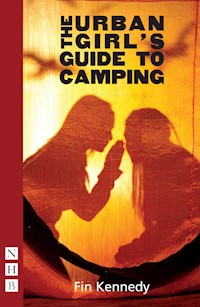
The Dream Collector was the fifth play developed with my long-term collaborators, Mulberry School for Girls in Shadwell, East London, with whom I have been creating new plays for over ten years. (Our first four are also published by Nick Hern Books in The Urban Girl’s Guide to Camping and other plays.) However, in 2012 we added a new twist. By this time our work had become known locally as a pioneering partnership between a playwright and an inner-city state school. In an effort to continually evolve the way we work together, and to share some of the expertise we had built up, we decided to reach out to another local school during the making of our next play, and see if it was possible to develop a new play across two schools simultaneously. I approached local comprehensive, St Paul’s Way Trust School in Bow, who were eager to be involved.
The practicalities of such an arrangement at first appeared to be problematic. If I was the sole writer then clearly I could only be in one school at a time. Yet running joint sessions, in which one school’s students would travel after school to attend workshops at their partner school, would soon become expensive and logistically difficult. With sessions having to start some time after 3.30 p.m. in order to allow the other school’s students to arrive, what would the students already on site do in the meantime?
After some deliberation, our solution was simple. As the one who was the most easily mobile, why didn’t I travel between schools, taking the ideas for the play with me? In this way we hit upon what turned out to be quite a neat model. After-school workshops were held twice a week on different days, one in each school. I would develop ideas with Mulberry in one session, then take them with me to St Paul’s Way, presenting them to their students, developing them further, then taking the new ideas back with me to Mulberry the following week. The whole thing became like a long-distance version of the party game ‘Consequences’. It was fun – each week the students were eager to see what new ideas the other school’s group had added to their own. In this way, the two groups never actually met one another until the readthrough of the first draft of the complete play.
All this had an impact on the play’s form. The Dream Collector concerns a Year-Eleven school group who go on a Media Studies trip to an isolated country house which had belonged to a black-and-white movie pioneer, Charles Somna. Upon arriving, they soon discover that Somna was responsible for much more than the creation of mere movies – as the inventor of the Somnagraph he had built the world’s first machine for screening your dreams. Once they step through the movie screen and enter the Dreamworld, each of the young friends meets their dream double, the sinister Neverborn…
The idea of having essentially two casts within one play was deliberate. It was intended to allow two real casts to rehearse their parts separately if necessary. While the Neverborn are present during the journey to Charles Somna’s house, the Real-World cast are not aware of them. Both casts could (in theory) rehearse their sections separately and come together later in the process to put the final show together. This could be useful in future iterations, if two groups within the same school cannot rehearse together for timetabling reasons.
However, once the play was written, it became clear that the logistics of joint rehearsals across two schools would be insurmountable. Who would direct the show? If it was to be two teachers, one in each school, how would creative responsibility be equitably shared? Would rehearsals have to wait each day for half the cast to show up from the other school? In which school would the set reside?
In the end, each school agreed to stage their own separate production. At first this seemed to be a pity, but the benefits soon became clear. Each school had co-commissioned the play via an equal financial investment, and that investment suddenly reached twice as many students. Eventually, each school’s students were able to visit one another’s production and discuss the creative choices made with a deep knowledge of the play. For some, this became a piece of coursework.




