


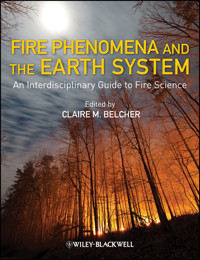
Fire Phenomena and the Earth System E-Book
93,99 €
Mehr erfahren.
- Herausgeber: John Wiley & Sons
- Kategorie: Wissenschaft und neue Technologien
- Sprache: Englisch
Fire plays a key role in Earth system processes. Wildfires influence the carbon cycle and the nutrient balance of our planet, and may even play a role in regulating the oxygen content of our atmosphere. The evolutionary history of plants has been intimately tied to fire and this in part explains the distribution of our ecosystems and their ability to withstand the effects of natural fires today.
Fire Phenomena and the Earth System brings together the various subdisciplines within fire science to provide a synthesis of our understanding of the role of wildfire in the Earth system. The book shows how knowledge of fire phenomena and the nature of combustion of natural fuels can be used to understand modern wildfires, interpret fire events in the geological record and to understand the role of fire in a variety of Earth system processes. By bringing together chapters written by leading international researchers from a range of geological, environmental, chemical and engineering disciplines, the book will stimulate the exchange of ideas and knowledge across these subject areas. Fire Phenomena and the Earth System provides a truly interdisciplinary guide that can inform us about Earth’s past, present and beyond.
Readership: Advanced students and researchers across a wide range of earth, environmental and life sciences, including biogeochemistry, paleoclimatology, atmospheric science, palaeontology and paleoecology, combustion science, ecology and forestry.
Sie lesen das E-Book in den Legimi-Apps auf:
Seitenzahl: 858
Veröffentlichungsjahr: 2013
Ähnliche




















Contents
Contributors
Foreword
Preface
Acknowledgements
Part 1: Fire Behaviour
1 An Introduction to Combustion in Organic Materials
1.1 Introduction
1.2 The Reactive Zone
1.3 Fuel Generation
1.4 Summary
2 Smouldering Fires and Natural Fuels
2.1 Overview
2.2 Introduction
2.3 Smouldering vs Flaming Combustion
2.4 Ignition and Extinction
2.5 Behaviour of a Smouldering Wildfire
2.6 Fate of Organic Matter
2.7 Depth of Burn
2.8 Damage to the Soil
2.9 Case Study: 2006 Rothiemurchus Peat Fire
2.10 Smouldering Fires at the Global Scale
2.11 Feedbacks in the Climate System
2.12 Concluding Remarks
Acknowledgements
3 Experimental Understanding of Wildland Fires
3.1 Introduction
3.2 An Activity in Constant Evolution
3.3 The Different Scales Involved in Wildland Fires
3.4 Micro-Scale Experiments
3.5 Bench-Scale Laboratory Experiments
3.6 Large-Scale Laboratory Experiments
3.7 Field-Scale Experiments
3.8 Conclusions
3.9 Acknowledgements
4 Wildfire Behaviour and Danger Ratings
4.1 Introduction
4.2 Factors Influencing Wildland Fire Behaviour
4.3 Fuel Types and Models
4.4 Mathematical Fire Behaviour Modelling
4.5 Fire Danger Rating Systems
4.6 Concluding Remarks
5 Satellite Remote Sensing of Fires
5.1 Introduction
5.2 Satellite Remote Sensing Systems
5.3 Satellite Remote Sensing of Fire
5.4 Summary
Part 2: Fire and the Biosphere
6 Understanding Fire Regimes and the Ecological Effects of Fire
6.1 Introduction
6.2 Fire Regimes, Plant Functional Traits and Stable States
6.3 Conclusions
7 Plant Adaptations to Fire: an Evolutionary Perspective
7.1 Introduction
7.2 Fire Impacts and Fire Regime
7.3 Surviving Fire: the Evolution of Fire Traits
7.4 Enhancing Fire
7.5 Incidental Impacts of Fire: Do Fire Regimes Influence Speciation Rates?
7.6 The Phylogenetic Perspective on the Dating of Fire
7.7 Conclusions
Acknowledgments
8 Fire and the Land Surface
8.1 Introduction
8.2 Direct Effects of Fire on Vegetation Cover, Rock and Soil
8.3 Indirect Effects of Fire
8.4 Longer-term Effects on Biomass and Carbon Fluxes
8.5 Conclusions and Outlook
9 Identification of Black Carbon in the Earth System
9.1 Introduction
9.2 Black Carbon in the Atmospheric Sciences
9.3 Black Carbon in Terrestrial and Oceanic Systems
9.4 Recent Developments Involving Black Carbon
9.5 Consequences for Method Development
9.6 Interdisciplinary Comparison of Methods to Measure Black Carbon in Soils and Sediments
9.7 Perspectives
Part 3: Fire and the Earth’s Past
10 Identifying Past Fire Events
10.1 Introduction
10.2 Charcoal
10.3 Soot and Black Carbon
10.4 Polycyclic Aromatic Hydrocarbons
10.5 Physical/Ecological Changes and Past Fire Events
10.6 Conclusions
Acknowledgements
11 A 21 000-Year History of Fire
11.1 Introduction: Sedimentary Charcoal Records of Global Fire Activity
11.2 The Global Charcoal Database and Reconstructing the Past 21 000 Years of Earth’s Fire History
11.3 Global Fire Activity from the Last Glacial Maximum until Present
11.4 Conclusions
Acknowledgements
12 A 450-Million-Year History of Fire
12.1 Introduction
12.2 The Fundamental Requirements of Fire
12.3 Ignition: Lightning, Sparks, Volcanoes and Asteroids
12.4 Air: Ancient Atmospheric Oxygen Concentration and the Flammability of our Planet
12.5 Fuel: Past Vegetation Changes and Fire
12.6 Summary
Acknowledgements
Part 4: Fire and the Earth System
13 Evaluating the Atmospheric Impact of Wildfires
13.1 Introduction
13.2 Constructing Emission Inventories for Atmospheric Chemistry Modelling
13.3 Spatial and Temporal Variability of Fire Emissions
13.4 Impact of Fires on Meteorology
13.5 Fires and Air Quality
13.6 Understanding the Interactions Between Fires and Climate Change
13.7 Towards an Integrated Analysis of Fire Impacts
14 The Dependence of Flame Spread and Probability of Ignition on Atmospheric Oxygen: an Experimental Investigation
14.1 Introduction
14.2 Rate of Spread of Small Test Fires as a Function of Oxygen and Moisture Content
14.3 Probability of Ignition of a Spreading Flame
14.4 Comparison with Other Studies
14.5 Conclusion: Implications for Past Atmospheric Oxygen
Acknowledgements
15 Fire Feedbacks on Atmospheric Oxygen
15.1 Introduction
15.2 The Oxygen Puzzle
15.3 Feedbacks on Atmospheric Oxygen
15.4 Why do Existing Models Disagree?
15.5 How Strong are Fire Feedbacks?
15.6 Changing the Nature of Fire Feedbacks
15.7 Discussion
15.8 Conclusion
16 Biochar and Carbon Sequestration
16.1 Introduction
16.2 What is Biochar and its Purpose?
16.3 Production of Biochar
16.4 Properties of Biochar and their Impact on its Function
16.5 Carbon Mitigation Potential and Biochar Stability
16.6 Challenges to Biochar Deployment
16.7 Conclusions
Index
DEDICATION
Joseph Priestley famously used a magnifying glass to focus the sun’s rays on a small sample of mercury(II) oxide. The heating of the compound produced a gas that he observed allowed a candle to burn more brightly and in which a mouse, contained within a jar, could live four times longer than in the same quantity of ‘common air’. This gas, which he termed ‘dephlogisticated air’, was oxygen, which breathes life both into our planet and into fire.
This book is dedicated to those, like Priestley, who dare to discover, seek the truth and push the boundaries of knowledge in order to believe.
This edition first published 2013 © 2013 by John Wiley & Sons, Ltd
Wiley-Blackwell is an imprint of John Wiley & Sons, formed by the merger of Wiley’s global Scientific, Technical and Medical business with Blackwell Publishing.
Registered OfficeJohn Wiley & Sons, Ltd, The Atrium, Southern Gate, Chichester, West Sussex, PO19 8SQ, UK
Editorial Offices9600 Garsington Road, Oxford, OX4 2DQ, UKThe Atrium, Southern Gate, Chichester, West Sussex, PO19 8SQ, UK111 River Street, Hoboken, NJ 07030-5774, USA
For details of our global editorial offices, for customer services and for information about how to apply for permission to reuse the copyright material in this book please see our website at www.wiley.com/wiley-blackwell.
The right of the authors to be identified as the authors of this work has been asserted in accordance with the UK Copyright, Designs and Patents Act 1988.
All rights reserved. No part of this publication may be reproduced, stored in a retrieval system, or transmitted, in any form or by any means, electronic, mechanical, photocopying, recording or otherwise, except as permitted by the UK Copyright, Designs and Patents Act 1988, without the prior permission of the publisher.
Designations used by companies to distinguish their products are often claimed as trademarks. All brand names and product names used in this book are trade names, service marks, trademarks or registered trademarks of their respective owners. The publisher is not associated with any product or vendor mentioned in this book.
Limit of Liability/Disclaimer of Warranty: While the publisher and author(s) have used their best efforts in preparing this book, they make no representations or warranties with respect to the accuracy or completeness of the contents of this book and specifically disclaim any implied warranties of merchantability or fitness for a particular purpose. It is sold on the understanding that the publisher is not engaged in rendering professional services and neither the publisher nor the author shall be liable for damages arising herefrom. If professional advice or other expert assistance is required, the services of a competent professional should be sought.
Library of Congress Cataloging-in-Publication Data
Fire phenomena and the Earth system : an interdisciplinary guide to fire science / edited by Claire M. Belcher, Department of Geography, College of Life and Environmental Science, University of Exeter, Exeter, UK.pages cmIncludes bibliographical references and index.
ISBN 978-0-470-65748-5 (hardback : alk. paper) – ISBN 978-1-118-52953-9 – ISBN 978-1-118-52954-6 (epdf) – ISBN 978-1-118-52955-3 (emobi) – ISBN 978-1-118-52956-0 (epub) 1. Wildfires–Environmental aspects. 2. Forest fires–Environmental aspects. 3. Environmental geology. I. Belcher, Claire M., editor of compilation. SD421.F5165 2013363.37′9–dc23
2013001793
A catalogue record for this book is available from the British Library.
Wiley also publishes its books in a variety of electronic formats. Some content that appears in print may not be available in electronic books.
Cover image: Forest Fire Under Full Moon. © Jon Beard/Shutterstock.comCover design by Nicki Averill Design & Illustration
Contributors
SAMUEL ABIVENDepartment of Geography, University of Zurich, Winterthurerstrasse 190, CH-8057 Zürich, SwitzerlandCLAIRE M. BELCHERCollege of Life and Environmental Sciences, The University of Exeter, Exeter, Devon, UKWILLIAM J. BOND Department of Biological Sciences, University of Cape Town, Rondebosch, South AfricaLUIGI BOSCHETTIDepartment of Forest, Rangeland, and Fire Sciences, University of Idaho, Moscow, ID, USAMARGARET E. COLLINSONDepartment of Earth Sciences, Royal Holloway University of London, Egham, Surrey, UKG. MATT DAVIESSchool of Interdisciplinary Studies, University of Glasgow, Rutherford/McGowen Building, Crichton University Campus, Dumfries, UKSTEFAN H. DOERRDepartment of Geography, College of Science, Swansea University, Singleton Park, Swansea, UKIAN J. GLASSPOOLDepartment of Geology, Field Museum of Natural History, 1400 S. Lake Shore Drive, Chicago, IL, USAKAREN HAMMESDepartment of Geography, University of Zurich, Winterthurerstrasse 190, CH-8057 Zürich, SwitzerlandTIMOTHY M. LENTONCollege of Life and Environmental Sciences, University of Exeter, Exeter, Devon, UKJAMES E. LOVELOCKCoombe Mill, St Giles on the Heath, Launceston, Cornwall, UKONDŘEJ MAŠEKSchool of Geosciences, University of Edinburgh, Edinburgh, Mid Lothian, UKJEREMY J. MIDGLEYDepartment of Biological Sciences, University of Cape Town, Rondebosch, South AfricaELSA PASTORCentre d’Estudis del Risc Tecnològic, Universitat Politècnica de Catalunya, BarcelonaTech, Barcelona, Catalonia, SpainEULALIA PLANASCentre d’Estudis del Risc Tecnològic, Universitat Politècnica de Catalunya, BarcelonaTech, Barcelona, Catalonia, SpainMITCHELL J. POWERNatural History Museum of Utah, Department of Geography, University of Utah, Salt Lake City, UT, USAGUILLERMO REINDepartment of Mechanical Engineering, Imperial College London, London, UKDAVID P. ROYGeographic Information Science Center of Excellence, South Dakota State University, Brookings, SD, USAANDREW C. SCOTTDepartment of Earth Sciences, Royal Holloway University of London, Egham, Surrey, UKRICHARD A. SHAKESBYDepartment of Geography, College of Science, Swansea University, Singleton Park, Swansea, UKALBERT SIMEONIDepartment of Fire Protection Engineering, Worcester Polytechnic Institute, Worcester, MA, USAALISTAIR M.S. SMITHDepartment of Forest, Rangeland, and Fire Sciences, University of Idaho, Moscow, ID, USAJOSE L. TOREROSchool of Civil Engineering, The University of Queensland, Brisbane, Queensland, AustraliaSOLENE TURQUETY Université Pierre et Marie Curie – Paris 06, Laboratoire de Météorologie Dynamique (LMD), Institut Pierre Simon Laplace (IPSL), Paris, FranceANDREW J. WATSONSchool of Environmental Sciences, University of East Anglia, Norwich, Norfolk, UK
Foreword
This book sets out to act as a catalyst to bring together diverse groups of scientists with interests in fire and fire-related processes to collaborate across a wide range of disciplines. The scientists are drawn from a spectrum of disciplines, ranging from those concerned with fire in industrial and domestic settings (where imperfections in humanity’s harnessing of fire exposes us to a series of hazards) to those with interests in the role of fire in natural ecosystems, now and in the past. Inter alia, a study of the involvement of fire in the history of terrestrial life in deep time, and its links with atmospheric composition and climate, will help inform the current debate on global warming and its potential impact.
The first part of the book introduces flaming and smouldering combustion and surveys some important aspects of wildland fires. In Chapter 1, Torero introduces some of the fundamentals that are relevant to our understanding of ignition and flaming combustion of solid ‘fuels’. Flame being a gas-phase process, ‘burning’ of a combustible solid involves pyrolysis of the fuel, releasing low molecular weight flammable vapours, which mix and burn with oxygen from the air, releasing gaseous and particulate products (‘smoke’) that will be dispersed in the atmosphere. Biomass materials will invariably leave behind a carbonaceous residue, which may be partly consumed by heterogeneous oxidation but a significant amount may survive the fire. The fate of such material from wildfire is discussed in Chapter 8 by Doerr and Shakesby, who refer to it as ‘ash’, although the term ‘black carbon’ is used to describe all combustion-generated carbonaceous matter, including that released into the atmosphere. Hammes and Abiven (Chapter 9) discuss a number of techniques that may be used to analyse black carbon found in the Earth system.
Biomass materials may also undergo smouldering combustion as discussed by Rein in Chapter 2. This process does not involve flame and in the present context is associated with the burning of subsurface accumulations of organic material such as peat. It is a very slow process in comparison to flaming combustion which has a high rate of generation of fire products and can lead to very high rates of fire spread. This is explored in Chapter 3 by Simeoni in a review of experimental work that has contributed to our understanding of the mechanisms of burning and fire spread. The focus has been on the development of predictive models for fire spread rate, informed by the results of experiments, which range in size from small-scale laboratory tests to full-scale burns in live vegetation. This theme is picked up and developed further by Pastor and Planas in Chapter 4. They examine in greater detail the role of the structure of the fuel bed (tree canopy, shrub, forest litter, etc.) and its characteristics (moisture content, size of individual fuel elements, etc.) in determining the fire hazard rating, a concept that is widely used in areas that are prone to wildfire. The first part concludes with an overview of the use of remote sensing of fires from satellites by Roy et al. (Chapter 5). This technique can monitor the spread of large wildfires and be used to determine the extent of damage caused. Such data should allow fire spread models to be tested to greater effect as well as providing more accurate assessments to be made of the total amount of material consumed in a given fire. The latter can be used to estimate the impact of the fire on atmospheric pollution.
The second part reaches into the relationship between fire and the biosphere – all forms of terrestrial life. Davies (Chapter 6) leads off with an exploration of the ecology of fire, about which we have seen a surge of literature in recent decades. What to fire scientists is regarded as ‘fuel’ is for plant ecologists a vast range of different plant communities, with different flammabilities and with a range of different responses to fire during the course of their evolution. Many aspects of this kind of fire ecology lead into considering the time dimension of change in climate as seen in the geological record, and hence to changes in atmospheric composition through time. Midgley and Bond (Chapter 7) focus on those changes in plant structure and behaviour that enable them to survive exposure to fire – and the extreme case of certain serotinous (fire-adapted) species, where exposure to fire is a requirement for the release of seeds – and the regeneration of the plant population following fire. Above all, they explore how plants have evolved in response to fire as a recurring feature of their environment, and the kinds of changes that this selective pressure has brought about in plants. Doerr and Shakesby (Chapter 8) move on to consider the impact of fire on the physical environment, beyond just the removal of the biomass as fuel, to the effect on the hydrology and geochemistry of the soil and what lies beneath it. The physical effect of fire depends on the two related parameters of fire severity and fire intensity, which are in turn dependent on the character of the fuel involved and the temperature reached in the burning process. These in turn influence the ease with which plant colonization and succession can ensue. Some communities are well adapted to frequent occurrence of wildfires, while others are not, and take far longer to become re-established. The impact of fire on the soil will of course be influenced by where within that range a given fire falls, and hence there is a strong element of uncertainty in predicting the physical environment’s response to a given fire episode.
The third part bears the heading ‘Fire and the Earth’s Past’. Glasspool and Scott (Chapter 10) deal with the recognition of char in ancient sediment records, which represent the occurrence of wildfire through the geological past, back over some 400 million years – indeed, for as long as land-adapted plants have generated biomass as fuel. They explore the significance of fossil charcoal as a measure of the incidence of wildfire through the course of Earth history, with its links to palaeoclimate, the character of the vegetation and the composition of the palaeoatmosphere. The study of fossil charcoal has given us a unique insight into all three of those components of time past. The last 21 000 years of the fire record of Earth history is pursued in depth by Power (Chapter 11), who sees evidence for major changes in the fire regimes through that period of drastic climate change. That interval takes us from full glacial conditions in high northern latitudes, through progressive warming as we move into the present Interglacial, and this of course impacts on the vegetation, the incidence of wildfire and eventually the involvement of humans with their exploitation of fire for cooking, heating and industrial applications. Belcher, Collinson and Scott (Chapter 12) review the whole range of phenomena linking the evolution of plant life on land with the changes in atmospheric composition that ensued. As they explain, the oxygen content of the air through that period had already been generated by photosynthesis by algae and photosynthetic bacteria from an originally carbon-dioxide-rich atmosphere at a much earlier period of Earth history. Changes that took place as terrestrial vegetation evolved from small reed-like herbs to massive forest trees included alteration of the carbon dioxide and oxygen levels, and with that, the vulnerability to wildfire. Major events in plant evolution – the rise of conifer forests, the evolutionary explosion of flowering plant diversity and their global dominance, and the eventual expansion of the grasses and grassland ecology – all had far-reaching effects on global fire ecology. Indeed, as they explain, fire has been a significant factor in evolutionary change throughout the history of plant life on land.
The final part of the book deals with the widest dimension of fire phenomena, their role in the total Earth system. Turquety (Chapter 13) reviews a series of aspects of the atmospheric and climatic impact of fire, ranging from the medical problems ensuing from inhalation of particulate matter from smoke and volatile organic compounds, to the climatic impact of the release of CO2. It is important to note that carbon dioxide released from wildfires has only been out of circulation for a geologically brief interlude, so that it is in effect a re-emission of a greenhouse gas. This places the CO2 generated by wildfire in a different category from that generated by burning fossil fuels, which are introducing into the contemporary atmosphere carbon held for many millions of years in the Earth’s crust. Turquety also emphasizes the impact that satellite imagery has had on fire studies, both as a means of measuring changes in atmospheric composition, and of mapping fire incidence at various scales.
The chapter by Watson and Lovelock (Chapter 14) takes us back to the first serious experimental investigation in the 1970s attempting to quantify the relationship between moisture content of the biomass, the process of ignition by electric spark, and the atmospheric oxygen level (which has clearly changed through the course of geological time). The experimental set-up was simple, and moist computer (paper) tape was used as a model of living plant material, ignited by a controlled electric spark. Although some thought this was too remote from the reality of a natural wildfire, the work was a real landmark in experimental fire ecology and it eventually stimulated others to develop systems involving natural biomass fuels and an experimental environment closer to reality. This chapter is important in revealing some of the details of those experiments that were published in only rather abbreviated form at the time.
The penultimate chapter by Lenton (Chapter 15) explores in depth the long-term relationship between the global incidence of fire, the atmospheric oxygen level and the biological consequences of such changes in those phenomena as are revealed in the fossil record. This includes such issues as the high level of oxygen believed by some to characterize the Carboniferous period, which made possible larger insects than have ever occurred before or since. But the principal focus of this chapter is the extent to which the incidence of fire either stabilizes the oxygen level, or has the reverse effect. On this question the evidence is conflicting, and Lenton presents results based on a new model, relating oxygen levels and the feedbacks associated with the occurrence of fire.
In the final chapter, a very different aspect of fire is explored by Mašek (Chapter 16), who deals with an aspect of biomass burning that has received relatively less attention than many others. The portion of the biomass that becomes charcoal following the occurrence of wildfire is remarkably inert chemically, and at least some of it will survive transport into the drainage system, and thence into the oceans and eventual burial in deep ocean sediments. As such, this biochar represents a route that takes the carbon from atmospheric carbon dioxide (via photosynthesis of plants) and renders it out of ‘circulation’ at least in the (geological) short term. In other words, it constitutes a form of carbon sequestration occurring naturally, and much more cheaply, than capturing the carbon dioxide resulting from the burning of fossil fuel and seeking to sequester it by human endeavour!
The Editor should be congratulated for her foresight in identifying the need for a volume of this nature. It will, almost inevitably, reveal exciting opportunities for collaborative research between scientists currently working in very different disciplines.
Bill Chaloner FRSProfessor Emeritus, Department of Earth Sciences, Royal Holloway University of LondonDougal Drysdale FRSEProfessor Emeritus, Fire Safety Engineering, The University of Edinburgh
Preface
Fire is a natural process integral to the order and function of our planet. It is both friend and foe to the human race, having strongly influenced our social development and success as a species, yet it remains a serious threat to human life. Our planet is inherently flammable. Earth’s forests and vegetation provide a vast source of fuel, and fires consume huge quantities of biomass in all ecosystems ranging across all biomes, from tundra to savanna and from boreal to tropical forests, where many of our ecosystems are considered fire dependent. Fires influence atmospheric carbon dioxide concentrations and may even regulate the oxygen content of our atmosphere enabling us to breathe. The unique products formed by fires interact with the carbon and nutrient balance of our planet. Some of these products (e.g. chars, soots and chemical signatures) are traceable in soils, sediments and ancient rocks and provide us with a record of Earth’s past fire history. The effects of fire on both the built and the natural environment have begun to generate sustained scientific interest from a broad spectrum of scientific disciplines. It is this interest, spread across the disciplines, that has led to the conception of this book, the goal of which is to unite the disciplines within fire science towards increasing our scientific understanding of the impact of fires on the Earth system.
One challenge of this book has been to get everyone onto the same page, i.e. to explain each other’s terminology and begin to communicate better our research between our strongly interlinked areas. To this end and bearing in mind the breadth of background of both the contributors and the readers, I feel it is necessary to define what I mean by the Earth system. The concept of the ’Earth system’ revolves around us considering it as a whole, where we recognize the interaction of individual processes with one another in order to produce the relative stability that allows life to thrive on our planet. This includes understanding, for example, interactions between the atmosphere and the oceans, temperature and climate, and life on land and in the oceans; and in this case how fire influences these interactions. So, whilst this book might not provide all the answers I hope that by bringing together fire scientists from all walks of the discipline, both as contributors and readers, it may move us towards gaining a better understanding of the important role that this physical force plays in maintaining our planet’s relative stability.
To this end this book comprises a state-of-the-art compendium of 16 chapters contributed and peer-reviewed by experts of international standing in their field. These chapters cover four broad themes, which constitute the four parts of this book: (1) Fire Behaviour, (2) Fire and the Biosphere, (3) Fire and the Earth’s Past, and finally (4) Fire and the Earth System. It was not possible to cover all disciplines that stretch across the fire sciences, therefore the focus of this book is on natural wildfires and their implications for Earth system processes. As such contributors have been selected who are well placed to outline core research in areas focused to improve this understanding. The book does not include archaeological research and the early interactions of humans with fire nor the impact of fire on society. This is not to say that these areas are unimportant contributions to fire science but that they fall just outside the remit of this book. The book also touches relatively little on forest fire management, for which a wealth of literature, including more than adequate books, already exists. I believe that the chapters within this book provide an excellent overview of the important research areas that contribute to improving our understanding of the role of fire in the Earth system. In the paragraph below I summarize the linkages between the core research areas highlighted in the book.
Part 1 outlines the fundamentals of fire behaviour. It shows how bench- to field-scale experiments are used to monitor and understand fire behaviour in respect to the physical and chemical conditions imposed upon the fire. This part also deals with practical applications and shows how knowledge of fire behaviour is used to predict ’fire danger’ for our modern ecosystems, as well as how such wildfires are monitored. Without this core knowledge we cannot begin to understand the true impact of fire on our ecosystems. Part 2 builds on these fundamentals and considers the influence of fire on the biosphere. Variations in vegetation impact upon the availability and type of fuel and lead the book to introduce the concept of fire regime. This concept draws on knowledge of combustion dynamics and known plant responses to fire. The part moves on to consider the evolutionary consequences of fire and how different plants have developed adaptations in order to survive fire. It then outlines the hydrological, geomorphological and geochemical impacts that fires have on the land surface via either direct effects or the addition of products of fire such that in this part fire begins to be firmly positioned within an Earth system context. In Part 3 the book looks at the influence of fire on the biosphere in Earth’s past. It links the fossil record of fire activity, as evidenced from fossil charcoals, to past variations in atmospheric composition, climate and evolutionary events in Earth’s vegetation. It shows that fire has not only been strongly influenced by climate variations in Earth’s past, but also how fire has shaped the abundant life that we see on our planet today. Finally in Part 4 the impact and relationship of fire and the Earth system are considered particularly in respect to atmospheric chemistry and composition. Over relatively short timescales it assesses the impact of fires on air quality and on the carbon cycle. Over long multi-million-year timescales it looks at the influence that variations in atmospheric oxygen have had on fire and how the prevalence of fire may feed back into regulating the oxygen content of our atmosphere. Finally we move on to consideration of future uses of the products of fire in the rapidly emerging field of biochar research, and consider how biochar might be able to provide a useful means to sequester carbon into geologically stable long-term carbon pools. As such the book captures a diversity of methods, observations and applications across different scales.
Consideration of scale is key to building an understanding of the Earth system and is therefore an important theme of this book. This compilation aims to highlight consideration of both spatial and temporal scales to those working within the fire sciences, so that each sub-discipline might explore new collaborations that better cross-cut these multitude of scales. These scales cover small to large experimental scales that are required to improve our understanding of fire. Laboratory-scale experiments allow control of conditions and increase our understanding of the chemical and physical phenomena that drive fire ignition, spread and extinction. Larger field-scale prescribed burns allow observation of real fires but allow little control over conditions. In both cases the observed phenomena can be used to develop models to describe fire behaviour. Such models might range from relatively simple cellular automata models to more complex models using computational fluid dynamics. Forest fire behaviour and risk can be modelled or predicted on the ecosystem scale using ground-based estimates of fuel loads coupled to understanding of flammability from laboratory experiments. Such fires can be monitored using satellite remote sensing, which allows us to monitor not only known fires but also to gain insight into otherwise unnoticed fires burning in remote areas. This provides us with a picture of both the size of burned areas as well as the number of fires burning yearly on our planet today. These data can be compared with historical records of fires, which can in turn be compared to pre-industrial records of fire activity, records from pre-human times, through timescales of millions of years ago. Study across these scales can allow us to estimate not only the human influence on fire over the ages but also the impacts that past environmental changes have had on Earth’s fire activity. The study of fires over both spatial and temporal scales allows us to better understand the role that fire plays in managing the carbon and nutrient balance of our planet, its influence on the atmosphere over daily to multi-million-year timescales through to evolutionary processes. I hope that you will enjoy this journey across space and time so that we can improve our understanding of the role that fire plays within the Earth system.
Claire M. Belcher
Acknowledgements
Firstly I wish to thank Guillermo Rein (Department of Mechanical Engineering, Imperial College London) for his drive along with mine to cross-cut boundaries within the fire sciences. Guillermo had significant input to the early conception of this book, which was born through our fruitful interdisciplinary collaborations that have linked Earth Science and Fire Safety Engineering. Guillermo has introduced me to many of the authors in this book particularly those in Part 1 (Fire Behaviour) and some of the authors in Part 2 (Fire and the Biosphere). Without such contacts these sections would not have such strength and expertise contained within them. I feel certain that this book would not exist if it were not for my collaborations with Guillermo.
I would like to acknowledge all the reviewers of the chapters contained within this book. These reviewers have not only provided the authors with useful input but also guidance to myself as editor. The reviewers were in alphabetical order: William Bond, Giacomo Certini, William Chaloner, Miguel Cruz, Matt Davies, Dougal Drysdale, Carole Gee, Rory Hadden, Jon Keeley, David Laird, Patrick Louchourn, Samuel Manzello, David McWerthy, Elsa Pastor, Guillermo Rein, Dylan Schwilk, Albert Simeoni, Christine Switzer, Guido van der Werf, Brian van Wilgren, Domingos Viegas, Andrew Watson, Mathew Williams and Lea Wittenberg.
I would like to acknowledge the University of Edinburgh, BRE Centre for Fire Safety Engineering, and the University of Exeter. These institutions have provided me with a wealth of support and inspiration during my periods of tenure. I thank Guillermo Rein, Jose Torero and Mathew Williams in particular for supporting my interdisciplinary approaches at the University Edinburgh, which enabled me to make links between the School of Geosciences and Fire Safety Engineering during my time there. Moreover, I would like to thank Margaret Collinson, Andrew Scott, Jennifer McElwain, Jon Yearsley, Rory Hadden, Freddy Jervis and Luke Mander for their interest, assistance with and support of my interdisciplinary fiery endeavours. I would also like to mention and thank Carol Augsberger and Surangi Punyasena for their kindness in providing me with office and lab space during my various visits to University of Illinois at Urbana Champaign where I spent some time preparing this book.
I acknowledge funding support for my research from a European Union Marie Curie Intra European Fellowship FILE PIEF-GA-2009-253780 and a Marie Curie Career Integration Grant PyroMap PCIG10-GA-2011-303610.
Finally I thank Ian Francis and all those from Wiley-Blackwell for their support, patience and for creating the final edition of the book that you see before you.
Claire M. BelcherJuly 2012
Part 1
Fire Behaviour
1 An Introduction to Combustion in Organic Materials
JOSE L. TORERO
School of Civil Engineering, The University of Queensland, Brisbane, Queensland, Australia
1.1 Introduction
Combustion is a process by which fuel and oxidizer react to produce a different set of chemical products and heat. The process is intimately linked to the nature of the fuel but also to different transport processes that define the characteristics of the combustion process. This chapter provides a brief and general description of the different processes and of commonly used nomenclature.
Discussing combustion of organic materials needs to start with simple definitions that enable the description of the main phenomena involved. Organic materials can be defined as carbon-based materials, which can be divided into natural materials and processed materials. Processed materials are those generated through some modification that alters the physical or chemical characteristics of the natural materials. Natural materials include vegetation, decomposed vegetation, coal or the large group known as hydrocarbons (oils, tars, etc.). Processed materials include timber, plastics, petrol and many other industrial products. It is important to emphasize that many inorganic materials will also combust, but these will not be discussed here.
From the combustion perspective natural or processed organic materials are no different; in both cases the combustion process can be described as a chemical reaction that is defined by the following generic expression:
(1.1)
The ‘fuel’ being the organic material and the ‘oxidizer’ being oxygen extracted in most cases from air. Chemical reactions associated with combustion are exothermic, thus the products are released with a significant amount of energy. The specific energy (i.e. joules produced per kilogram of the material) tends to be extremely high when combustion processes are compared to other energy-generating mechanisms (electric batteries, fuel cells, etc.; Fernandez-Pello, 2002). Thus, combustion of organic fuels has been a preferred source of energy.
Combustion processes have been controlled for at least 100 000 years (Stahl, 1984; James, 1989) and humans have learnt to harness the energetic content of organic fuels for cooking, comfort and power. Until the industrial revolution combustion was poorly understood and was limited to controlled burning of natural fuels (i.e. coal, wood). The Industrial Revolution generated the first true understanding of combustion (Faraday, 1908), the massive use of organic fuels, and the first attempts to modify organic compounds to produce more efficient fuels (Frank, 2005). Today, combustion of modified organic fuels represents more than 85% of the total worldwide energy production (Jacobson, 2009).
A different form of combustion is known as fire. Fire is the uncontrolled chemical oxidation of organic fuels that is generally associated with destruction. In fire, the heat of the combustion process serves to sustain the uncontrolled burning of any adjacent organic fuels. Fires occur in many forms and scales and are generally deemed as detrimental to humans, economies and the environment. Natural fires include peat, forest and underground fires (Rein, 2009) while infrastructure fires affect buildings of all natures and sizes (Torero and Rein, 2009).
To be able to discuss controlled or uncontrolled combustion of organic solids it is important to understand the fundamental underlying physical and chemical phenomena involved. The following sections will therefore present a brief discussion of combustion related processes.
Lesen Sie weiter in der vollständigen Ausgabe!
Lesen Sie weiter in der vollständigen Ausgabe!
Lesen Sie weiter in der vollständigen Ausgabe!
Lesen Sie weiter in der vollständigen Ausgabe!
Lesen Sie weiter in der vollständigen Ausgabe!
Lesen Sie weiter in der vollständigen Ausgabe!
Lesen Sie weiter in der vollständigen Ausgabe!
Lesen Sie weiter in der vollständigen Ausgabe!
Lesen Sie weiter in der vollständigen Ausgabe!
Lesen Sie weiter in der vollständigen Ausgabe!
Lesen Sie weiter in der vollständigen Ausgabe!
Lesen Sie weiter in der vollständigen Ausgabe!
Lesen Sie weiter in der vollständigen Ausgabe!
Lesen Sie weiter in der vollständigen Ausgabe!
Lesen Sie weiter in der vollständigen Ausgabe!
Lesen Sie weiter in der vollständigen Ausgabe!
Lesen Sie weiter in der vollständigen Ausgabe!
Lesen Sie weiter in der vollständigen Ausgabe!
Lesen Sie weiter in der vollständigen Ausgabe!




