


Erhalten Sie Zugang zu diesem und mehr als 300000 Büchern ab EUR 5,99 monatlich.
- Herausgeber: Nick Hern Books
- Kategorie: Poesie und Drama
- Serie: NHB Modern Plays
- Sprache: Englisch
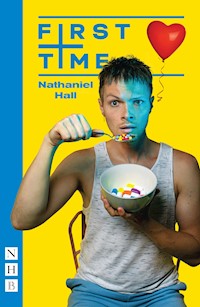
Can you remember your first time? In this hilarious and heartbreaking true story, theatre-maker and activist Nathaniel Hall can't seem to forget his. To be fair, he's had it playing on repeat for the last fifteen years… but now he's ready to lift the lid on his life-changing secret. First presented by Dibby Theatre and Waterside Arts, First Time went on to critical and audience acclaim on tour of the UK and at the 2019 Edinburgh Festival Fringe. It smashes through the stigma and shame of HIV, to present an uplifting and inspirational guide to staying positive in a negative world. This edition features the full script of FirstTime, alongside extensive material about HIV/AIDS and the themes and issues explored in the play, including several workshop plans which can be used with students and community groups. 'A truly remarkable story of triumph. I was in awe' Russell T Davies
Sie lesen das E-Book in den Legimi-Apps auf:
Seitenzahl: 101
Veröffentlichungsjahr: 2020
Das E-Book (TTS) können Sie hören im Abo „Legimi Premium” in Legimi-Apps auf:
Ähnliche


















Dibby Theatre in association with Waterside Arts
FIRST TIME
Nathaniel Hall
NICK HERN BOOKS
London
www.nickhernbooks.co.uk
Contents
Foreword
Introduction
Acknowledgements
A Poem
A Context
A Glossary
A History
Production Photos
A Play: FIRST TIME
A Letter
Workshops and Activities
Support and Services
About the Author
Copyright and Performing Rights Information
Foreword
Paul Fairweather, lifelong LGBT and HIV activist
HIV has been part of my life, politically and personally, for over thirty-five years.
I have been active in campaigning around HIV since the earliest days of the epidemic. In 1985 I was one of six gay men who set up Manchester Aidsline, now George House Trust, and I have been living with HIV myself for over twenty years. Manchester has a long and proud history of HIV and LGBT activism and I’ve been there to witness much of it.
I remember the level of fear and hatred that existed in the early days of the epidemic all too well: Greater Manchester Chief Constable James Anderton talking about ‘gay men, drug addicts and prostitutes swirling in a cesspit of their own making’; my friend Roger being forcibly held at Monsall isolation hospital (he was released only after we lobbied the council); the health service quarantining an ambulance because they thought it would give people AIDS… I could go on.
We picketed and shouted and educated whilst at the same time supporting our friends and lovers who were dying from AIDS. I could write a fabulous eulogy by my mid-thirties, not something I ever thought I would become so adept at before my retirement. I still take time to remember and celebrate the lives of all my friends who died so young. On 1 December each year (World AIDS Day) we remember those we have lost to the virus, but also commit ourselves to supporting those living with or affected by HIV across the world.
Today, the situation is very different: with medication, you can expect to live a normal lifespan. However, the stigma remains. Far too many people living with HIV feel isolated and alone, unable to tell anyone about their HIV status. First Time so clearly shows the psychological impact of being silent and the benefits of being open.
For the last three years I have managed the Positive Speakers project at George House Trust, working with an inspirational group of volunteers who tell their personal stories of living with HIV to school and college groups, staff training days, to student nurses and even to staff at GP surgeries. The power of this first- person storytelling, and their willingness to answer the frank and forthcoming questions that arise from it, cannot be underestimated in the fight against HIV.
Nathaniel Hall has been a Positive Speaker for many years. I first heard him tell his story to a group of teenage girls at a school in South Manchester. He read a letter he had written to his sixteen-year-old self telling him that despite the darkness and despair from the trauma of such a young diagnosis, his future would be full of amazing adventures. The creativity in his storytelling pre-empted the play he would go on to write, and the girls were still moved by his story and by how open he was at answering all their questions.
I have watched First Time with several different people living with HIV and have seen what a powerful impact it has had on all of them. Our stories and experiences differ hugely, but seeing the damage done by stigma and self-stigma is something we all could relate to. I felt a deep resonance with Nathaniel’s story: navigating the stigma and shame of the diagnosis, I too delayed telling my family for many years, just like he did.
At the play’s premiere in 2018, some of the other Positive Speakers and myself told our stories alongside Nathaniel onstage during a post-show discussion. The sell-out audience bristled with questions, insights and an electric energy that spilled out into the foyer and bar afterwards. We even received a standing ovation at the end, something I had never experienced before!
First Time has moved people with its truth and its humour. It’s a show full of deeply important messages about health and well- being, about stigma and shame, but with so much creativity packed into seventy minutes, it never feels like a lecture.
We know that people living with HIV all over the world have been moved by Nathaniel’s story. The play has been featured on mainstream TV, went viral on social media, has received critical acclaim and has won awards at the Edinburgh Festival Fringe. As a lifelong activist, I’m thrilled to see key public-health messages reaching such a huge audience.
The U=U message is helping in the fight against stigma and self-stigma. More and more we are speaking out, talking to our friends, family and colleagues about living with the virus, and what that means for our lives.
I’m certain that First Time will continue to be used as a catalyst for change and I’m delighted to be working with Nathaniel as a key partner of In Equal Parts, a creative community outreach project tackling HIV stigma and shame that has been inspired by the show.
I hope you enjoy reading the play, laugh and cry as you do so, but above all I hope it inspires you to challenge HIV stigma and live boldly and with pride in your own lives.
Paul Fairweather is the Positive Speakers Coordinator for George House Trust and former councillor for Harpurhey, Manchester.
Introduction
Nathaniel Hall
First times are scary, aren’t they?
In 2018 I said something out loud for the first time. It was utterly terrifying. After fifteen years of living in secret, I came out to the world a second time. You see, the first time I ever had sex, aged sixteen, I contracted HIV. Let me take you back to the summer of 2003…
I was Head Boy at my comprehensive high school in Stockport, and I wasn’t out; in fact, I even had a girlfriend. But this Head Boy was also secretly giving head… to the Deputy Head Boy, no less. You know, I was desperate to go to the prom with him on my arm, but Stockport in 2003 really wasn’t ready for that, so a cream tuxedo was the next best thing. But it hadn’t arrived at the hire shop… two hours to wait in STOCKPORT. What a depressing place…
I sat on a bench overlooking the shopping precinct to the M60 beyond. And that’s where I met him. He was older than me, mid-twenties maybe, tanned, bleached tips in his hair, ripped bootleg jeans… definitely gay. We chatted. It was validating. We swapped numbers, texted each other on our Nokia 5210s. He was so sweet, and my age wasn’t an issue to him, although, looking back, I think perhaps it should have been.
Eventually we went back to his for my ‘first time’. He pulled out a safer sex pack but just took the lube. I stopped him, I may have grown up under the shadow of Section 28, but I wasn’t stupid. He reassured me, a clean bill of sexual health, and I trusted him. After all, it was my rite of passage; he was older and wiser, surely?
My fate was sealed.
I found out I was HIV+ two weeks before my seventeenth birthday. Just a child, now forced into a very adult world. Then
I boxed up what had just happened and put it high on a shelf. I told a few lovers, fewer friends, no family. Until fourteen years later in 2017, I caught myself in the mirror still awake two days after a house party. You see, I’d convinced myself I was simply living my best queer life: parties, sex, alcohol, drugs. All fun things if you’re actually pursuing them for fun. Not so much if you’re pursuing them to mask pain. You know, I look around at my community that is supposed to be celebrating pride, but behind closed doors so many of us are drowning in shame.
And who can blame us?
Throughout history we’ve been medicalised, criminalised, dehumanised, erased, beaten, tortured, killed. And now we’re emerging from one of the worst epidemics to ravish civilisation in recent history: 35 million people dead, 38 million (and counting) living with HIV, and my community, men who have sex with men, disproportionately affected. On the road to freedom and equality, it sometimes feels like one step forwards, two steps back, and it was so easy for them to weaponise this disease to fit their own hate-filled agenda.
‘Britain threatened by gay viral plague.’ ‘“I’d shoot my son if he had AIDS,” says vicar.’
Real headlines from the British tabloid press at the height of the early AIDS crisis.
And more recently, on the front page of a national paper in 2016: ‘£5000 a year lifestyle drug… what a skewed sense of values,’ they scoffed as they pitted access to PrEP (life-saving medication that stops people contracting the virus) against access to statins for old people (thankfully, after years of campaigning, PrEP is now available for free on the NHS in England, Scotland and Wales).
I was diagnosed with HIV aged sixteen, but it was the stigma and shame, not the virus, that led me to breaking point.
Staying silent about an HIV diagnosis only confirms to others that it is something to be ashamed of. It took me over a decade to get here, but let me tell you one thing right now…
It. Is. Not… Regardless of how you caught it.
When I caught a glance of myself in the mirror on that fateful day in 2017, I realised I had bought into the narrative of stigma, and in that moment I made a pact with myself to change the narrative, and to keep shouting the new narrative until people would listen. That was the catalyst that set the wheels in motion to create First Time.
But first I had to tell my family that for the past fifteen years I had held such a huge secret from them. It was a good job I did, because nothing could have prepared me for what was about to come…
I was commissioned to write and perform the show by Waterside Arts in Greater Manchester, in association with Dibby Theatre, in the lead-up to World AIDS Day 2018. And that’s when the press picked up the story. I performed four sell- out shows amidst a whirlwind of interviews for newspapers, magazines, television and radio.
Something about my story struck a chord with millions.
Even if they didn’t have HIV themselves, it unlocked parts of their own lives where they held shame, and for those with HIV, many finally felt relief at seeing an honest portrayal on their screens and stages. It was clear to us that the full impact of this show was yet to be made, so we took it to the Edinburgh Festival Fringe in 2019 and then on a national tour. It won two awards and enjoyed audience and critical acclaim in equal measure. From alcohol and drug-fuelled rock-bottom to award- winning writer and performer in the space of two years, it’s been one hell of a journey.
But First Time is more than just a play. It’s part of a growing confidence in the HIV community to live boldly and without shame. More and more people are talking openly about their diagnoses and, very slowly, the stigma is being removed from the virus.
I have used First Time as a vehicle for my HIV activism with creative workshops, outreach and education sessions in schools, charity partnerships, rapid HIV testing at venues and fundraising parties. In Equal Parts – a community-led creative outreach project tackling HIV stigma and shame – is now helping more and more people with their diagnoses and reminding all of us that we have a role in ending HIV.




