


Flood Damage Survey and Assessment E-Book
132,99 €
Mehr erfahren.
- Herausgeber: John Wiley & Sons
- Kategorie: Wissenschaft und neue Technologien
- Serie: Geophysical Monograph Series
- Sprache: Englisch
Floods can have a devastating impact on life, property and economic resources. However, the systematic collection of damage data in the aftermath of flood events can contribute to future risk mitigation. Such data can support a variety of actions including the identification of priorities for intervention during emergencies, the creation of complete event scenarios to tailor risk mitigation strategies, the definition of victim compensation schemes, and the validation of damage models to feed cost-benefit analysis of mitigation actions. Volume highlights include: * Compilation of real world case studies elaborating on the survey experiences and best practices associated with flood damage data collection, storage and analysis, that can help strategize flood risk mitigation in an efficient manner * Coverage of different flooding phenomena such as riverine and mountain floods, spatial analysis from local to global scales, and stakeholder perspectives, e.g. public decision makers, researchers, private companies * Contributions from leading experts in the field, researchers and practitioners, including civil protection actors working at different spatial and administrative level, insurers, and professionals working in the field of natural hazard risks mitigation Flood Damage Survey and Assessment: New Insights from Research and Practice will be a valuable resource for earth scientists, hydrologists, meteorologists, geologists, geographers, civil engineers, insurers, policy makers, and planners. Read an interview with the editors to find out more: https://eos.org/editors-vox/the-value-of-disaster-damage-data
Sie lesen das E-Book in den Legimi-Apps auf:
Seitenzahl: 792
Veröffentlichungsjahr: 2017
Ähnliche




















Table of Contents
COVER
TITLE PAGE
CONTRIBUTORS
PREFACE
REFERENCES
ACKNOWLEDGMENTS
Part I: Introduction
1 Overview of the United Nations Global Loss Data Collection Initiative
1.1. DISASTER RISK REDUCTION: A FRAMEWORK FOR ACTION
1.2. THE SENDAI AND OTHER FRAMEWORKS OF 2015
1.3. THE SENDAI FRAMEWORK AND LOSS DATA COLLECTION
1.4. WHERE WE ARE: BASIC PRINCIPLES OF THE UNITED NATIONS INITIATIVE
1.5. WHERE DO WE GO? EXPERIENCE FROM THE PAST INDICATES CHALLENGES FOR THE FUTURE
1.6. CONCLUSIONS
REFERENCES
2 Technical Recommendations for Standardizing Loss Data
2.1. INTRODUCTION
2.2. REQUIREMENTS FOR LOSS DATABASES
2.3. THE LOSS DATA MODEL
2.4. TECHNICAL CHALLENGES
2.5. CHALLENGES FOR REPORTING IN THE EUROPEAN UNION
2.6. RECOMMENDATIONS FOR BEST PRACTICES IN LOSS DATA RECORDING
2.7. CONCLUSIONS
REFERENCES
Part II: Data Storage
3 Overview of Loss Data Storage at Global Scale
3.1. INTRODUCTION
3.2. EUROPEAN UNION GUIDELINES USED FOR THE CONTEXTUAL ANALYSIS OF THE DATA SETS
3.3. OVERVIEW OF DATA SETS AT GLOBAL SCALE (EM‐DAT, NATCATSERVICE, SIGMA)
3.4. NATIONAL DATA SETS INCLUDING GOOD PRACTICES (SLOVENIA, MOLDOVA, UNITED STATES, COLOMBIA)
3.5. NATIONAL DATA SETS IN A REGIONAL CONTEXT AND GLOBAL CONTEXT (EUROPEAN UNION EFFORT, THE COMMONWEALTH OF INDEPENDENT STATES EFFORT, DESINVENTAR DATABASE)
3.6. THE USE OF GLOBAL DATA SETS: A CHANGE IN PARADIGM
3.7. CONCLUSIONS: TOWARD A COMPREHENSIVE GLOBAL DATA SET
ACKNOWLEDGMENTS
REFERENCES
4 Direct and Insured Flood Damage in the United States
4.1. INTRODUCTION
4.2. FLOOD LOSS PATTERNS IN THE UNITED STATES
4.3. SOURCES OF FLOOD INFORMATION IN THE UNITED STATES
4.4. UNCERTAINTIES IN US FLOOD LOSS ACCOUNTING
4.5. FUTURE DATA NEEDS
4.6. CONCLUSION
ACKNOWLEDGMENTS AND DATA
REFERENCES
5 HOWAS21, the German Flood Damage Database
5.1. INTRODUCTION
5.2. OTHER FLOOD DAMAGE DATABASES
5.3. HOWAS21 DATABASE CONCEPT AND STRUCTURE
5.4. TECHNICAL DESIGN AND IMPLEMENTATION
5.5. DATA SOURCES: SURVEYS AND DATA ACQUISITION CAMPAIGNS
5.6. DATA QUALITY CONCEPT
5.7. EXEMPLARY DATA ANALYSES AND USE
5.8. CONCLUSIONS
REFERENCES
Part III: Data Collection
6 Best Practice of Data Collection at the Local Scale
6.1. INTRODUCTION: WHY AND WHERE TO APPLY RISPOSTA
6.2. THE LOGICAL STRUCTURE OF RISPOSTA: THE FOUR AXES
6.3. STATE OF IMPLEMENTATION OF THE RISPOSTA PROCEDURE
6.4. FLOODED AREAS, RESIDENTIAL BUILDINGS, AND INDUSTRIAL/COMMERCIAL PREMISES (DIRECT SURVEY CENTERED)
6.5. OTHER SECTORS (DATA GATHERING CENTERED)
6.6. DATA COORDINATION
6.7. CONCLUSIONS
ACKNOWLEDGMENTS
REFERENCES
7 Data Collection for a Better Understanding of What Causes Flood Damage–Experiences with Telephone Surveys
7.1. INTRODUCTION
7.2. SURVEY METHODOLOGIES AND SAMPLING STRATEGIES
7.3. LOSS DATA COLLECTION IN GERMANY AFTER SEVERE FLOOD EVENTS
7.4. CONCLUSIONS
REFERENCES
8 Utilizing Post‐Disaster Surveys to Understand the Social Context of Floods–Experiences from Northern Australia
8.1. THE MYTHOLOGIZING OF FLOODS AND NATURAL DISASTERS IN AUSTRALIAN CULTURE
8.2. NATURAL HAZARDS IN AUSTRALIA
8.3. RESEARCH IN THE POST‐DISASTER CONTEXT
8.4. CENTRE FOR DISASTER STUDIES RESEARCH
8.5. FLOOD TYPOLOGY AND IMPACTS
8.6. SPECIFIC ISSUES IDENTIFIED IN NORTHERN AUSTRALIA
8.7. IMPACT OF FLOODS
8.8. METHODOLOGY AND OBJECTIVES OF POST‐DISASTER SURVEYS
8.9. SUMMARY OF FINDINGS FROM FLOOD POST‐DISASTER SURVEYS
8.10. CONCLUSION
REFERENCES
9 Understanding Crowdsourcing and Volunteer Engagement
9.1. INTRODUCTION
9.2. UNDERSTANDING CROWDSOURCING
9.3. CASE STUDIES
9.4. HARNESSING THE POWER OF THE CROWD
9.5. SUMMARY
REFERENCES
Part IV: Data Analysis
10 After the Flood Is Before the Next Flood
10.1. INTRODUCTION: DISASTER RESILIENCE, DISASTER FORENSICS, AND POST‐EVENT REVIEW CAPABILITY
10.2. THE POST‐EVENT REVIEW CAPABILITY FRAMEWORK AND ANALYSIS
10.3. HOW A POST‐EVENT REVIEW CAPABILITY IS CONDUCTED
10.4. CONSOLIDATED FINDINGS FROM POST‐EVENT REVIEW CAPABILITY STUDIES CONDUCTED BETWEEN 2013 AND 2015
10.5. CONCLUSION
REFERENCES
11 Defining Complete Post‐Flood Scenarios to Support Risk Mitigation Strategies
11.1. INTRODUCTION
11.2. DEFINITION OF THE “COMPLETE EVENT SCENARIO” CONCEPT
11.3. KEY COMPONENTS OF A COMPLETE POST‐FLOOD EVENT SCENARIO IN THE PROPOSED METHODOLOGY
11.4. REPORTING THE COMPLETE DAMAGE SCENARIO AND APPLICATION TO THE CASE STUDY AREA
11.5. DISCUSSING THE UTILITY OF THIS WORK
11.6. CHALLENGES
11.7. CONCLUSION
REFERENCES
12 Rebuild and Improve Queensland
12.1. INTRODUCTION
12.2. AUSTRALIA AND QUEENSLAND NATURAL DISASTER SITUATIONS (2011–2015)
12.3. NATURAL DISASTER EVENTS IN QUEENSLAND
12.4. RESPONSE–DAMAGE ASSESSMENT IN QUEENSLAND
12.5. RECOVERY–THE QUEENSLAND EXPERIENCE
12.6. MITIGATION AND BETTERMENT PROGRAMS INCORPORATING DAMAGE ASSESSMENT METHODOLOGY
12.7. THE FUTURE
REFERENCES
13 Forensic Disaster Analysis of Flood Damage at Commercial and Industrial Firms
13.1. INTRODUCTION
13.2. FORENSIC ANALYSIS: QUANTITATIVE AND QUALITATIVE APPROACHES
13.3. EXAMPLE OF FORENSIC INVESTIGATION PROCEDURE
13.4. BUSINESS VULNERABILITY TO NATURAL DISASTERS
13.5. CONCLUSION: USING FORENSIC ANALYSIS FOR PLANNING BUSINESS RESILIENCE MEASURES
REFERENCES
Part V: Information and Communication Technology Tools
14 Response to Flood Events
14.1. INTRODUCTION
14.2. EMERGENCY MAPPING
14.3. COPERNICUS EMERGENCY MANAGEMENT SERVICE RAPID MAPPING
14.4. FLOOD IMPACT ASSESSMENT: OPERATIONAL APPROACH
14.5. COPERNICUS EMERGENCY MANAGEMENT SYSTEM CASE STUDY
14.6. CONCLUSIONS
ACKNOWLEDGMENTS
REFERENCES
15 Data Collection and Analysis at Local Scale: The Experience within the Poli‐RISPOSTA Project
15.1. INTRODUCTION: ROLE OF INFORMATION AND COMMUNICATION TECHNOLOGY IN DISASTER MANAGEMENT
15.2. POLI‐RISPOSTA: A FLOOD DATA MANAGEMENT SYSTEM FOR THE LOCAL/REGIONAL SCALE
15.3. REMARKS ABOUT THE POLI‐RISPOSTA INFORMATION AND COMMUNICATION TECHNOLOGY SYSTEM
15.4. CONCLUSIONS
ACKNOWLEDGMENTS AND DATA
REFERENCES
Conclusions
1. THE HISTORY OF FLOOD DAMAGE DATA COLLECTION AND MANAGEMENT
2. CURRENT MOTIVATION AND RATIONALE FOR DAMAGE DATA COLLECTION AND ASSESSMENT
3. RECOMMENDATIONS FOR THE FUTURE FOR ENABLING TECHNOLOGIES AND INTEGRATING SECTORS AND STAKEHOLDERS IN A NEW GENERATION OF POST‐FLOOD DAMAGE INFORMATION SYSTEMS
REFERENCES
INDEX
END USER LICENSE AGREEMENT
List of Tables
Chapter 01
Table 1.1 Set of Indicators Agreed Upon by the OEIWG in Geneva.
Chapter 03
Table 3.1 Global and Regional Disaster Loss Data Repositories.
Table 3.2 Good Practices of National Loss Data Sets.
Table 3.3 National Databases in a Regional and Global Context EU Databases, DesInventar and CIS Countries Database.
Table 3.4 Comparative Table on Disaster Losses Recording for EU Minimum Requirements, Sendai Requirements, EUFD/2007, Desinventar, CIS Regional Level.
Table 3.5 Complement Data Sets on Global and Regional Level with Risk and Assessment‐related Disaster Information.
Chapter 05
Table 5.1 Exemplary Overview of the Main Damage Information Tables for Private Households.
Table 5.2 Rules for the Assessment of Data Quality for Data Subsets Selected in HOWAS21.
Table 5.3 Comparison of Depth‐Damage Curve Performance Evaluated on Basis of 40 Damage Cases from the 2005 Flood in the Danube Catchment (MBE: Mean Bias Error, MAE: Mean Absolute Error, RMSE: Root Mean Square Error).
Chapter 06
Table 6.1 Main Activities Included in RISPOSTA, According to the Logical Axes of the Procedure (Time, Actors, Actions, and Exposed Sectors).
Table 6.2 Scheme of the RISPOSTA Procedure for Data Collection on the Physical Event: Activities to be Performed, Times of Actions, and Responsible Actors (Extract from Table 6.1).
Table 6.3 Scheme of the RISPOSTA Procedure for Data Collection on Damage to Residential Buildings and Industrial/Commercial Premises: Activities to be Performed, Times of Actions, and Responsible Actors (Extract from Table 6.1).
Table 6.4 Information Collected by Means of the forms for Damage to Residential Buildings [from
Molinari et al.,
2013].
Table 6.5 Information Collected by Means of the forms for Damage to Residential Buildings.
Table 6.6 Scheme of the RISPOSTA Procedure for Data Gathering: Activities to be Performed, Times of Actions, and Responsible Actors (Extract from Table 6.1).
Table 6.7 Scheme of the RISPOSTA Procedure for Data Coordination: Activities to be Performed, Times of Actions, and Responsible Actors (Extract from Table 6.1).
Chapter 07
Table 7.1 Chronological Overview of Flood Events and Related Household Surveys in Germany. In the Column “Timing,” the Number of Months Between the Damaging Event and the Data Collection is Given.
Table 7.2 Chronological Overview of Flood Events and Related Surveys Among Flood‐Affected Companies in Germany. In the Column “Timing,” the Number of Months Between the Damaging Event and the Data Collection is Given.
Table 7.3 Sub‐Sample Sizes, Item Non‐Response Rates, and Average Values for Flood Water Levels as well as Damage Costs for Buildings and Household Contents in the Household Surveys after River Floods in Germany. (See also Table 7.1).
Chapter 08
Table 8.1 Summary of Deaths in Natural Hazards in Australia: 1788–2014.
Table 8.2 Insurance Losses by Natural Hazard in Australia 1970–2013 (Millions of Dollars [2011 Dollars]).
Table 8.3 Post‐Disaster Studies Following Floods, Australia.
Table 8.4 Research Approaches to Post‐Disaster Studies.
Chapter 09
Table 9.1 Case Studies.
Chapter 10
Table 10.1 The Five Cs (capitals) that Make up a Set of Measurable Indicators.
Table 10.2 The Four Properties of a Resilient System.
Table 10.3 Disaster Forensic Methodologies Summary.
Table 10.4 PERC Studies Conducted so far.
Table 10.5 PERC Analysis Meta‐Structure.
Chapter 11
Table 11.1 Standardized Index for Post‐Event Damage Reporting.
Table 11.2 Affected Lifelines in the 2012 Flood.
Table 11.3 Affected Lifelines in the 2013 Flood.
Table 11.4 Commercial Activities Eligible Losses by Sub‐Sector, 2012 Flood.
Table 11.5 Commercial Activities, Self‐Declared Losses by Sub‐Sector, 2013 Flood.
Table 11.6 Comparison Between the Pre‐Event Damage Assessment in the Three Most Affected.
Chapter 12
Table 12.1 Summary of Reforms (Extract).
Chapter 13
Table 13.1 Forensic Analysis Listing Contributing Factors Assigned to Vulnerability Class.
Table 13.2 Assigning Impact to Affected Sectors.
Table 13.3 Assigning of Weight to Impact on Affected Sectors. Total is Calculated by Summing Weights Across all Sectors.
Table 13.4 Total Weight of Factor is Substituted Back into Vulnerabilities Columns to Calculate total Significance for Each Vulnerability.
Table 13.5 Total Weight of Each Vulnerability Calculated by Summing Accumulated Impact.
Chapter 14
Table 14.1 Imagery Used to Produce Post‐Event Maps for Flood Events (as of 31 October 2015); Number of Scenes Per Sensor Type for Delineation and Grading Maps.
Table 14.2 Timeline for the First Flood Extent Map Released in EMSR120.
List of Illustrations
Chapter 01
Figure 1.1 Consolidated extreme precipitation related disasters in South America (1970–2013).
Chapter 02
Figure 2.1 The requirements determine the data model that in turn determines the data to be collected [Re‐drawn from
De Groeve et al.,
2014].
Figure 2.2 The three application areas that generate risk knowledge, loss accounting, forensic analysis, and modeling, rely on loss, exposure, vulnerability and hazard data sets that ideally would be structured in a common spatially referenced database.
Figure 2.3 Conceptual loss data model that could be used to share loss data.
Figure 2.4 Comparison of hazard reporting and main loss indicators for 14 loss data sets originating from European Union countries.
Figure 2.5 The indicators that are considered for developing composite indicators used in Sendai recording and the corresponding data available from European loss databases.
Chapter 04
Figure 4.1 Direct and insured flood losses from three different data sources: (1) insured flood losses/claims paid through the National Flood Insurance Program as reported by FEMA, (2) direct flood losses as reported by the National Weather Service (NWS), and (3) direct flood losses as reported by the Spatial Hazard Events and Losses Database for the United States (SHELDUS). Please note that NWS losses are reported by water year (October through September) and not by calendar year as done by FEMA and SHELDUS. In addition, SHELDUS distinguishes between tropical and non‐tropical flooding. Here, only non‐tropical flooding is reported. As a result, storm surge damage is excluded, which explains the low loss estimates for 2005 (Hurricane Katrina). All trend lines show an upward trend with direct losses according to the NWS being highest, followed by direct losses as reported by SHELDUS and then insured losses.
Figure 4.2 Spatial distribution of direct, non‐tropical flood losses at the county level. The four loss categories range from light ($551 to $5 million), medium ($5 million to $50 million), and dark gray ($50 million to $500 million) to black ($500 million to $10 billion). Direct losses include property and crop losses. Losses are adjusted to 2014 dollars. Period of record is from 1960 to 2014.
Figure 4.3 Spatial distribution of direct, non‐tropical flood losses per capita at the county level. The four loss categories range from light (up to $1,000 per capita), medium ($1,000 to $10,000 per capita), and dark gray ($10,000 to $50,000 per capita) to black ($50,000 to $100,000 per capita). Losses are adjusted to 2014 dollars, and the county population counts at the time of the flood event. Period of record is from 1960 to 2014.
Figure 4.4 Map of the U.S. National Streamflow Information Program and its about 7,500 stream gauges.
Chapter 05
Figure 5.1 HOWAS21 database and web application.
Figure 5.2 HOWAS21 web application.
Figure 5.3 Locations of available flood damage data in HOWAS21.
Figure 5.4 Kite diagram for a data subset of HOWAS21 showing data quality dimensions assessed on the basis of the rules listed in Table 5.2.
Figure 5.5 Examples of absolute depth‐damage curves for residential building loss, i.e., square‐root (blue), linear (red), and polynomial (green) curves calculated on the basis of two different samples of empirical damage data (top and bottom).
Chapter 06
Figure 6.1 Typical survey context for water elevation measurement.
Chapter 07
Figure 7.1 Underlying theoretical model used to operationalize the contents of the flood loss questionnaire in Germany
Figure 7.2 Mean flood damage at residential buildings in the German federal states Bavaria and Saxony as well as in the Austrian province Tyrol for some flood events. (All prices are indexed to the reference year 2005. HOWAS data for the floods in 1985 and 1988 were taken from
Buck and Merkel
[ 1999]. SAB data for the flood 2002 were provided by the Saxon Relief Bank (Sächsische Aufbaubank), and data for the 2005 flood in Tyrol, Austria, were provided by the alpS GmbH, Innsbruck. CATI interviews as listed in Table 7.1.)
Chapter 08
Figure 8.1 Flooding hazards and CDS post‐disaster research study areas in Queensland
Map generated from Global Risk Data Platform 2015
.
Chapter 09
Figure 9.1 Technological and Organization Environment.
Chapter 11
Figure 11.1 Connection between pre‐event and post‐event scenarios.
Figure 11.2 Methodological framework to build the complete event scenario.
Figure 11.3 The Umbria region in the context of central Italy.
Figure 11.4 Affected municipalities in the 2012 and 2013 floods.
Figure 11.5 Municipalities that reported damage to industrial and commercial activities.
Figure 11.6 Distribution of damage across sectors in the 2012 and 2013 floods.
Chapter 12
Figure 12.1 Natural disaster events in Queensland 2006–2015 and expenditures under NDRRA.
Figure 12.2 Number of Local Government Authorities activated under NDRRA in Queensland 2011–2015.
Figure 12.3 Queensland cyclone activity 2010–2015.
Figure 12.4 Typical questions used in DARMSys™.
Figure 12.5 Example of Rapid Damage Assessments – Chinchilla, Queensland, October 2015. Microsoft product screenshot(s) reprinted with permission from Microsoft Corporation.
Figure 12.6 DARMSys™ case study – Cardwell, Queensland.
Figure 12.7 Data collection showing damage severity and progress of reconstruction. Microsoft product screenshot(s) reprinted with permission from Microsoft Corporation.
Figure 12.8 Example DARMSys™ data in Yeppoon following Severe Tropical Cyclone Marcia 2015. Microsoft product screenshot(s) reprinted with permission from Microsoft Corporation.
Figure 12.9 Infrastructure damage capture – feature breakdown screens.
Figure 12.10 IDARM Streamlined NDRRA submission workflow.
Figure 12.11 Reconstruction program phases 2011–2015.
Figure 12.12 Business process management life cycle.
Figure 12.13 GMRS integration.
Figure 12.14 Indicative flood mapping – Tablelands Regional Council. Microsoft product screenshot(s) reprinted with permission from Microsoft Corporation.
Figure 12.15 Betterment project performance post Severe Tropical Cyclone Marcia.
Figure 12.16 Betterment Project financial benefit forward projections.
Figure 12.17 Betterment example – Gayndah‐Mundubbera Road, North Burnett Regional Council. Microsoft product screenshot(s) reprinted with permission from Microsoft Corporation.
Figure 12.18 Betterment example – Gayndah Water Supply Intake, North Burnett Regional Council. Microsoft product screenshot(s) reprinted with permission from Microsoft Corporation.
Figure 12.19 The Master Plan for Grantham involved the relocation of the community to higher ground.
Chapter 13
Figure 13.1 Process of critical cause analysis.
Figure 13.2 Data required in relation to businesses and flooding.
Figure 13.3 Data sources and categories (sectors) for 2007 Gloucestershire flood.
Figure 13.4 Interrelationships of infrastructure system and civil society.
Figure 13.5 Significance of indirect vulnerabilities to business.
Figure 13.6 Significance of direct vulnerabilities to business.
Figure 13.7 Damage categories according to commercial activities.
Chapter 14
Figure 14.1 Share of occurrence of natural disasters by disaster type (1994–2013). [CRED, UNSIDR, 2015].
Figure 14.2 Copernicus Emergency Management Service–overview of the two main components, Early Warning and Mapping, with the two mapping modules, and indication of which phases of the disaster management cycle each is supporting.
Figure 14.3 Flooded areas derived from the water bodies extracted from the post‐event imagery and the pre‐event reference hydrography.
Figure 14.4 Example of erosion phenomena related to a flood event and impact on the road network. (a) Pre‐event situation (Source: ESRI World Imagery © Digital Globe); (b) Post‐event situation (aerial orthoimagery © European Union) with road damage assessment (completely destroyed in red and partially affected in yellow.
Figure 14.5 Example (detail) of a grading map showing damages on the road network, industrial utilities, and areas affected by floodwater: (a) Pre‐event imagery; (b) Post‐event imagery; (c) Post‐event imagery overlaid with crisis information: road blocks are identified by the crossed orange square; highly affected roads in orange; highly and moderately flooded areas in dark and light blue, respectively; moderately affected quarry in light orange.
Figure 14.6 Example of a flood delineation monitoring map, where the flood extent at two different dates is displayed with different transparent colors (previous flood extent in light blue, most recent flood extent in dark blue).
Figure 14.7 Copernicus EMS‐RM workflow (simplified).
Figure 14.8 Average duration of the four main steps controlled by the EMS‐RM service provider (April 2012–September 2015). Note that the value for “map production and delivery time” is the average for version 1.
Figure 14.9 Areas of interest and satellite image footprints of Copernicus EMS‐RM activation for floods in Spain (EMSR120).
Figure 14.10 One of the eight delineation maps produced in the Copernicus EMS‐RM activation for floods in Spain early 2015 (EMSR120). The map shows the flood extent in the area of Luceni on 28 February (light blue) and 2 March 2015 (darker blue). The zoom, which is not a feature of the standard product, gives an impression of the crisis information and the various reference layers.
Chapter 15
Figure 15.1 Poli‐RISPOSTA general architecture. Its tree main features Data Model, Web Visualization Client, and Mobile Data Collection, which are explained in detail in sections 15.2.2, 15.2.3, and 15.2.4, respectively.
Figure 15.2 Database Entity Relationship diagram.
Figure 15.3 Web Portal Functionalities. Eight basic functionalities were defined for the Poli‐RISPOSTA project: layer and documents upload, flooded area definition, damage report, direct damage survey, layers, maps, creation of graphs and tables, and archive.
Figure 15.4 Maps functionality.
Figure 15.5 Graph and Tables functionality.
Figure 15.6 Graph and Tables functionality.
Figure 15.7 Mobile map functionality.
Figure 15.8 Forms functionality.
Guide
Cover
Table of Contents
Begin Reading
Pages
iii
iv
vii
viii
ix
xi
xii
xiii
xv
1
3
4
5
6
7
8
9
10
11
12
13
14
15
16
17
18
19
20
21
22
23
24
25
26
27
28
29
31
33
34
35
36
37
38
39
40
41
42
43
44
45
46
47
48
49
50
51
53
54
55
56
57
58
59
60
61
62
63
65
66
67
68
69
70
71
72
73
74
75
77
79
80
81
82
83
84
85
86
87
88
89
90
91
92
93
94
95
96
97
98
99
100
101
102
103
104
105
106
107
108
109
110
111
112
113
114
115
116
117
118
119
120
121
122
123
124
125
126
127
128
129
130
131
132
133
134
135
137
138
139
140
141
142
143
144
145
146
147
148
149
151
152
153
154
155
156
157
158
159
160
161
162
163
164
165
166
167
168
169
170
171
173
174
175
176
177
178
179
180
181
182
183
184
185
186
187
188
189
190
191
192
193
194
195
196
197
198
199
200
201
202
203
204
205
206
207
208
209
211
213
214
215
216
217
218
219
220
221
222
223
224
225
226
227
228
229
230
231
232
233
234
235
236
237
238
239
240
241
242
243
244
245
247
248
249
250
251
252
253
254
255
256
257
258
259
260
261
262
263
264
265
266
Geophysical Monograph Series
175
A Continental Plate Boundary: Tectonics at South Island, New Zealand
David Okaya, Tim Stem, and Fred Davey (Eds.)
176
Exploring Venus as a Terrestrial Planet
Larry W. Esposito, Ellen R. Stofan, and Thomas E. Cravens (Eds.)
177
Ocean Modeling in an Eddying Regime
Matthew Hecht and Hiroyasu Hasumi (Eds.)
178
Magma to Microbe: Modeling Hydrothermal Processes at Oceanic Spreading Centers
Robert P. Lowell, Jeffrey S. Seewald, Anna Metaxas, and Michael R. Perfit (Eds.)
179
Active Tectonics and Seismic Potential of Alaska
Jeffrey T. Freymueller, Peter J. Haeussler, Robert L. Wesson, and Göran Ekström (Eds.)
180
Arctic Sea Ice Decline: Observations, Projections, Mechanisms, and Implications
Eric T. DeWeaver, Cecilia M. Bitz, and L.‐Bruno Tremblay (Eds.)
181
Midlatitude Ionospheric Dynamics and Disturbances
Paul M. Kintner, Jr., Anthea J. Coster, Tim Fuller‐Rowell, Anthony J. Mannucci, Michael Mendillo, and Roderick Heelis (Eds.)
182
The Stromboli Volcano: An Integrated Study of the 2002–2003 Eruption
Sonia Calvari, Salvatore Inguaggiato, Giuseppe Puglisi, Maurizio Ripepe, and Mauro Rosi (Eds.)
183
Carbon Sequestration and Its Role in the Global Carbon Cycle
Brian J. McPherson and Eric T. Sundquist (Eds.)
184
Carbon Cycling in Northern Peatlands
Andrew J. Baird, Lisa R. Belyea, Xavier Comas, A. S. Reeve, and Lee D. Slater (Eds.)
185
Indian Ocean Biogeochemical Processes and Ecological Variability
Jerry D. Wiggert, Raleigh R. Hood, S. Wajih A. Naqvi, Kenneth H. Brink, and Sharon L. Smith (Eds.)
186
Amazonia and Global Change
Michael Keller, Mercedes Bustamante, John Gash, and Pedro Silva Dias (Eds.)
187
Surface Ocean–Lower Atmosphere Processes
Corinne Le Quèrè and Eric S. Saltzman (Eds.)
188
Diversity of Hydrothermal Systems on Slow Spreading Ocean Ridges
Peter A. Rona, Colin W. Devey, Jérôme Dyment, and Bramley J. Murton (Eds.)
189
Climate Dynamics: Why Does Climate Vary?
De‐Zheng Sun and Frank Bryan (Eds.)
190
The Stratosphere: Dynamics, Transport, and Chemistry
L. M. Polvani, A. H. Sobel, and D. W. Waugh (Eds.)
191
Rainfall: State of the Science
Firat Y. Testik and Mekonnen Gebremichael (Eds.)
192
Antarctic Subglacial Aquatic Environments
Martin J. Siegert, Mahlon C. Kennicut II, and Robert A. Bindschadler
193
Abrupt Climate Change: Mechanisms, Patterns, and Impacts
Harunur Rashid, Leonid Polyak, and Ellen Mosley‐Thompson (Eds.)
194
Stream Restoration in Dynamic Fluvial Systems: Scientific Approaches, Analyses, and Tools
Andrew Simon, Sean J. Bennett, and Janine M. Castro (Eds.)
195
Monitoring and Modeling the Deepwater Horizon Oil Spill: A Record‐Breaking Enterprise
Yonggang Liu, Amy MacFadyen, Zhen‐Gang Ji, and Robert H. Weisberg (Eds.)
196
Extreme Events and Natural Hazards: The Complexity Perspective
A. Surjalal Sharma, Armin Bunde, Vijay P. Dimri, and Daniel N. Baker (Eds.)
197
Auroral Phenomenology and Magnetospheric Processes: Earth and Other Planets
Andreas Keiling, Eric Donovan, Fran Bagenal, and Tomas Karlsson (Eds.)
198
Climates, Landscapes, and Civilizations
Liviu Giosan, Dorian Q. Fuller, Kathleen Nicoll, Rowan K. Flad, and Peter D. Clift (Eds.)
199
Dynamics of the Earth’s Radiation Belts and Inner Magnetosphere
Danny Summers, Ian R. Mann, Daniel N. Baker, and Michael Schulz (Eds.)
200
Lagrangian Modeling of the Atmosphere
John Lin (Ed.)
201
Modeling the Ionosphere‐Thermosphere
Jospeh D. Huba, Robert W. Schunk, and George V Khazanov (Eds.)
202
The Mediterranean Sea: Temporal Variability and Spatial Patterns
Gian Luca Eusebi Borzelli, Miroslav Gacic, Piero Lionello, and Paola Malanotte‐Rizzoli (Eds.)
203
Future Earth ‐ Advancing Civic Understanding of the Anthropocene
Diana Dalbotten, Gillian Roehrig, and Patrick Hamilton (Eds.)
204
The Galápagos: A Natural Laboratory for the Earth Sciences
Karen S. Harpp, Eric Mittelstaedt, Noémi d’Ozouville, and David W. Graham (Eds.)
205
Modeling Atmospheric and Oceanic Flows: Insightsfrom Laboratory Experiments and Numerical Simulations
Thomas von Larcher and Paul D. Williams (Eds.)
206
Remote Sensing of the Terrestrial Water Cycle
Venkat Lakshmi (Eds.)
207
Magnetotails in the Solar System
Andreas Keiling, Caitríona Jackman, and Peter Delamere (Eds.)
208
Hawaiian Volcanoes: From Source to Surface
Rebecca Carey, Valerie Cayol, Michael Poland, and Dominique Weis (Eds.)
209
Sea Ice: Physics, Mechanics, and Remote Sensing
Mohammed Shokr and Nirmal Sinha (Eds.)
210
Fluid Dynamics in Complex Fractured‐Porous Systems
Boris Faybishenko, Sally M. Benson, and John E. Gale (Eds.)
211
Subduction Dynamics: From Mantle Flow to Mega Disasters
Gabriele Morra, David A. Yuen, Scott King, Sang Mook Lee, and Seth Stein (Eds.)
212
The Early Earth: Accretion and Differentiation
James Badro and Michael Walter (Eds.)
213
Global Vegetation Dynamics: Concepts and Applications in the MC1 Model
Dominique Bachelet and David Turner (Eds.)
214
Extreme Events: Observations, Modeling and Economics
Mario Chavez, Michael Ghil, and Jaime Urrutia‐Fucugauchi (Eds.)
215
Auroral Dynamics and Space Weather
Yongliang Zhang and Larry Paxton (Eds.)
216
Low‐Frequency Waves in Space Plasmas
Andreas Keiling, Dong‐Hun Lee, and Valery Nakariakov (Eds.)
217
Deep Earth: Physics and Chemistry of the Lower Mantle and Core
Hidenori Terasaki and Rebecca A. Fischer (Eds.)
218
Integrated Imaging of the Earth: Theory and Applications
Max Moorkamp, Peter G. Lelievre, Niklas Linde, and Amir Khan (Eds.)
219
Plate Boundaries and Natural Hazards
Joao Duarte and Wouter Schellart (Eds.)
220
Ionospheric Space Weather: Longitude and Hemispheric Dependences and Lower Atmosphere Forcing
Timothy Fuller‐Rowell, Endawoke Yizengaw, Patricia H. Doherty, and Sunanda Basu (Eds.)
221
Terrestrial Water Cycle and Climate Change: Natural and Human‐Induced Impacts
Qiuhong Tang and Taikan Oki (Eds.)
222
Magnetosphere‐Ionosphere Coupling in the Solar System
Charles R. Chappell, Robert W. Schunk, Peter M. Banks, James L. Burch, and Richard M. Thorne (Eds.)
223
Natural Hazard Uncertainty Assessment: Modeling and Decision Support
Karin Riley, Peter Webley, and Matthew Thompson (Eds.)
224
Hydrodynamics of Time‐Periodic Groundwater Flow: Diffusion Waves in Porous Media
Joe S. Depner and Todd C. Rasmussen (Eds.)
225
Active Global Seismology
Ibrahim Cemen and Yucel Yilmaz (Eds.)
226
Climate Extremes: Patterns and Mechanisms
S.‐Y. Simon Wang, Jin‐Ho Yoon, Christopher C. Funk, and Robert R. Gillies (Eds.)
227
Fault Zone Dynamic Processes: Evolution of Fault Properties During Seismic Rupture
Marion Y. Thomas, Thomas M. Mitchell, and Harsha S. Bhat (Eds.)
Geophysical Monograph 228
Flood Damage Survey and Assessment
New Insights from Research and Practice
Daniela MolinariScira MenoniFrancesco BallioEditors
This Work is a co‐publication of the American Geophysical Union and John Wiley and Sons, Inc.
This Work is a co‐publication between the American Geophysical Union and John Wiley & Sons, Inc.
This edition first published 2017 by John Wiley & Sons, Inc., 111 River Street, Hoboken, NJ 07030, USA and the American Geophysical Union, 2000 Florida Avenue, N.W., Washington, D.C. 20009
© 2017 the American Geophysical Union
All rights reserved. No part of this publication may be reproduced, stored in a retrieval system, or transmitted, in any form or by any means, electronic, mechanical, photocopying, recording, or otherwise, except as permitted by law. Advice on how to obtain permission to reuse material from this title is available at http://www.wiley.com/go/permissions.
Published under the aegis of the AGU Publications CommitteeBrooks Hanson, Director of PublicationsRobert van der Hilst, Chair, Publications Committee
For details about the American Geophysical Union visit us at www.agu.org.
Wiley Global Headquarters111 River Street, Hoboken, NJ 07030, USA
For details of our global editorial offices, customer services, and more information about Wiley products visit us at www.wiley.com.
Limit of Liability/Disclaimer of WarrantyWhile the publisher and authors have used their best efforts in preparing this work, they make no representations or warranties with respect to the accuracy or completeness of the contents of this work and specifically disclaim all warranties, including without limitation any implied warranties of merchantability or fitness for a particular purpose. No warranty may be created or extended by sales representatives, written sales materials, or promotional statements for this work. The fact that an organization, website, or product is referred to in this work as a citation and/or potential source of further information does not mean that the publisher and authors endorse the information or services the organization, website, or product may provide or recommendations it may make. This work is sold with the understanding that the publisher is not engaged in rendering professional services. The advice and strategies contained herein may not be suitable for your situation. You should consult with a specialist where appropriate. Neither the publisher nor authors shall be liable for any loss of profit or any other commercial damages, including but not limited to special, incidental, consequential, or other damages. Further, readers should be aware that websites listed in this work may have changed or disappeared between when this work was written and when it is read.
Library of Congress Cataloging‐in‐Publication Data is available.
ISBN: 978‐1‐119‐21792‐3
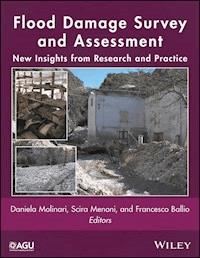
Cover image: Flash flood that occurred in the Umbria Region in the 2013 flood in the municipality of Scheggia e Pascelupo (GRID‐Politecnico di Milano, 2013). Insert 1: Wet documents in a firm flooded in the municipality of Marsciano, in Umbria in the 2012 flood (GRID‐Politecnico di Milano, 2012). Insert 2: Debris flow that occurred on November 2013 in Umbria in the municipality of Gualdo Tadino (GRID‐Politecnico di Milano, 2013).Cover design by Wiley
CONTRIBUTORS
Andrea AjmarGeodatabase AdministratorInformation Technology for Humanitarian Assistance, Cooperation and Action (ITHACA)Turin, Italy
Shahrzad AmouzadPhD StudentSchool of ArchitectureOxford Brookes UniversityOxford, UK
Danilo ArdagnaAssociate ProfessorDepartment of Electronics, Information and BioengineeringPolitecnico di MilanoMilan, Italy
Funda AtunResearch FellowDepartment of Architecture and Urban StudiesPolitecnico di MilanoMilan, Italy
Francesco BallioFull ProfessorDepartment of Civil and Environmental Engineering Politecnico di MilanoMilan, Italy
Tatiana BedrinaResearcherCIMA Research FoundationSavona, Italy
Nicola BerniHead of Functional CentreUmbria Region Civil Protection AuthorityFoligno (PG), Italy
Piero BoccardoAssociate ProfessorInteruniversity Department of Science, Design and Land PoliciesPolitecnico di TorinoTurin, Italy
Marco BrogliaScientific OfficerEuropean Commission Joint Research CentreIspra, Italy
Maria BrovelliFull ProfessorGeomatics LaboratoryDepartment of Civil and Environmental EngineeringPolitecnico di MilanoMilan, Italy
Christina CorbaneScientific and Technical Project OfficerEuropean Commission Joint Research CentreIspra, Italy
Tom De GroeveActing Head of the Global Security and Crisis Management UnitEuropean Commission Joint Research CentreIspra, Italy
Martin DolanResearch FellowSchool of ArchitectureOxford Brookes UniversityOxford, UK
Tiernan DoyleProject CoordinatorVOAD and Resilience NetworksBoCo StrongBoulder, Colorado, USA
Daniele EhrlichSenior Staff MemberEuropean Commission Joint Research CentreIspra, Italy
Melanie GallResearch Assistant ProfessorDepartment of GeographyUniversity of South CarolinaColumbia, South Carolina, USA
Fabio Giulio‐TonoloGeomatics Expert and Remote Sensing SpecialistInformation Technology for Humanitarian Assistance, Cooperation and Action (ITHACA)Turin, Italy
Yetta GurtnerResearcherCentre for Disaster StudiesJames Cook UniversityTownsville, Queensland, Australia
Sören‐Nils HaubrockDirectorBeyond Concepts GmbHOsnabrück, Germany
Adriana KeatingResearch ScholarInternational Institute for Applied Systems AnalysisLaxenburg, Austria
David KingAssociate Professor and DirectorCentre for Disaster StudiesCentre for Tropical Urban and Regional PlanningSchool of Earth and Environmental SciencesJames Cook UniversityTownsville, Queensland, Australia
Heidi KreibichSenior Scientist and Head of WG Flood Risk and Climate AdaptionSection HydrologyGFZ German Research Centre for GeosciencesPotsdam, Germany
Jan KuceraScientific OfficerEuropean Commission Joint Research CentreIspra, Italy
Jessica LamondAssociate ProfessorArchitecture and the Built EnvironmentUniversity of the West of EnglandBristol, UK
Karen MacCluneSenior Staff ScientistInstitute for Social and Environmental Transition‐InternationalBoulder, Colorado, USA
Marco MassabòProject LeaderCIMA Research FoundationSavona, Italy
Mirjana MazuranResearch AssistantDepartment of Electronics, Information and BioengineeringPolitecnico di MilanoMilan, Italy
Scira MenoniFull ProfessorDepartment of Architecture and Urban StudiesPolitecnico di MilanoMilano, Italy
Guido MinucciResearch FellowDepartment of Architecture and Urban StudiesPolitecnico di MilanoMilan, Italy
Daniela MolinariResearcherDepartment of Civil and Environmental EngineeringPolitecnico di MilanoMilan, Italy
Brendan MoonChief Executive OfficerQueensland Reconstruction AuthorityBrisbane, Australia
Meike MüllerGeoecologistDeutsche Rückversicherung NatCat‐CenterDüsseldorf, Germany
Carolina Arias MunozPhD StudentDepartment of Civil and Environmental EngineeringPolitecnico di MilanoMilan, Italy
Ray OgdenProfessor and Associate DeanSchool of ArchitectureOxford Brookes UniversityOxford, UK
Shadrock RobertsDirectorUshahidiResilience Network InitiativeAthens, Georgia, USA & Nairobi, Kenya
Roberto RudariResearch DirectorCIMA Research FoundationSavona, Italy
Kai SchröterResearcher and Project ManagerSection HydrologyGFZ German Research Centre for GeosciencesPotsdam, Germany
Julio SerjeProgram Manager/Senior Software EngineerUnited Nations Office for Disaster Risk ReductionGeneva, Switzerland
Michael SzoenyiFlood Resilience Program LeadZurich Insurance GroupZürich, Switzerland
Annegret ThiekenProfessorInstitute of Earth and Environmental ScienceUniversity of PotsdamPotsdam, Germany
Kanmani VenkateswaranResearch AssociateInstitute for Social and Environmental Transition‐InternationalBoulder, Colorado, USA
Nicholas WallimanSenior LecturerSchool of ArchitectureOxford Brookes UniversityOxford, UK
Annett WaniaScientific OfficerEuropean Commission Joint Research CentreIspra, Italy
PREFACE
In this book, state of the art methods and procedures for post‐flood damage data collection and analysis are discussed, suggesting also best practices that may guide the reader toward the improvement of the quality and comparability of data and analyses across time and geographic areas.
The fact that better data are needed is a common plea put forward by researchers in many areas of investigation, including risk analysis. The call for better data on natural hazards impacts is certainly not new and has been on the agenda for a long time. So why bother now? Today the novelty stands at multiple levels to justify the proposal of such a thorough reflection proposed to the reader.
First, not only scientists are concerned about lack of data. It also has become a strategic issue for a variety of stakeholders, pertaining both to private and public sectors, who hold responsibility in different ways for disaster risk management. This explains why in the book contributions from a variety of actors can be found, ranging from institutions working at different spatial scales, to reinsurers, to practitioners. The reasons are varied and reflect specific interests and the mission of each actor. For governments, public administrations, and national and international organizations, the need to be able to compare events across time and space has become a prominent factor as the number and the extent of disasters have been constantly increasing over the last years putting at risk lives, public investments, and economic development. To fully appreciate the root causes of such an increase, there is the need first to be able to rely on the data related to the most obvious indicators, such as the number of victims, lost assets, and damages to items and systems.
Different studies suggest that such an analysis of trends over time and across geographic areas is not really possible given the low quality of available databases and the lack of agreed upon standards that are used to collect data when a disaster strikes and afterward. In front of the evidence of increased impacts and associated costs of repair and lost revenue, particularly in times of financial crisis, the need of programming investments in mitigation becomes key, in order to achieve the best results in terms of avoided damage at sustainable costs. However, such appreciation clearly requires that the background information on which such evaluations of potential investments is done be reliable at least at a minimal level, which apparently is not the case as for now.
It would be a mistake, however, to think that such concerns take into account only public bodies. Private organizations at large would greatly benefit from an enhanced capacity to estimate and prepare for damage before an event strikes. Insurance companies have relied until now on the large amount of data that is available in their databases. However, such data are very partial, of varied quality, depending significantly on the skills and time devoted to surveys by experts appointed to set the claims after an event. Such data are useful for identifying key variables benefitting from a very large number of surveyed values, but the data cannot account for extraordinary situations (linked for example to catastrophic events or whenever cascading effects are implied) or to appreciate the interaction of factors in very complex environments. As urbanized areas have grown exponentially over the last few decades so has the complexity of disasters. A variety of interdependent and tightly interconnected systems (including social, economic, built up, natural) have created the starting point for unanticipated damage that can be very costly. Gaining a finer understanding of how a variety of initial conditions in different environments produce larger and more complex ways to solve problems is becoming an issue also for insurance and reinsurance companies. In the meanwhile, studies [Rose and Huyck, 2016] have shown that the cost of collecting new and more data is fairly repaid by the possibility of better appraising how the emergency context affects businesses and what the factors are that provoke the highest impact on businesses’ capacity to recover quickly.
The reasons for a growing interest by a variety of actors for enhanced disaster damage data that we have just discussed explain why now different initiatives at the national and international levels, such as the Working Group established by the European Union (EU) Commission, or the Sendai Framework for Action, have raised interest on the topic. At the heart of the reasons for such interest is certainly the recognition that data and information are the bricks of knowledge. It is not just a matter of accounting to better program resources to be allocated for disaster management or to evaluate trends of losses to identify the potential impact of climate or social changes leading to different patterns in the natural and the built environments. It is also an issue of identifying and selecting the most effective mitigation measures while gaining a better perspective on what the factors are of the risk function, hazard, exposure, and vulnerability, that have contributed most to the final outcome in terms of losses.
On the other hand, enhanced knowledge of natural hazards accomplished in the last decades is key for identifying what the most useful data are to collect. In addition, identifying the crucially missing information is key. Without both, a better understanding of how risk factors play in each context and better modeling capacity for forecasting damage before the event occurs will not be achieved.
The book is organized in five parts. Part I comprises two chapters that lead the reader into the international debate on loss data needs, discussing loss data requirements defined by the Sendai Framework and the main initiatives to meet such requirements.
Part II starts with a comprehensive overview of loss data storage at the global level, highlighting limits, strengths, and needs of available databases in order to accomplish the Sendai Framework requirements (Chapter 3). Then, the focus shifts to the national level with a critical discussion of flood loss databases in the United States of America (Chapter 4) and the German HOWAS21 database (Chapter 5), presented as a best practice of loss databases tailored to risk modeling needs.
Part III focuses on best practices of damage data collection, at both the meso and the local scale. As for the former, the experience gained in Germany after the Elbe flood in 2002 is analyzed (Chapter 7). In this instance, computer‐aided telephone interviews were carried out to “survey” observed damage at residential buildings and firms. Such practice is now a standard in Germany after every flood event and could be considered for replication in other countries. As for the local scale, the survey experience gained in the Umbria region (Central Italy), after the 2012 flood, is discussed in Chapter 6. Such experience brought the development of a procedure for damage data collection, at the individual affected item scale, to be implemented every time a flood occurs in the region. The procedure has been designed to meet several user needs (i.e., emergency management, damage compensation, disaster forensic, and risk modeling) and includes specific forms for damage surveys.
Chapter 8 presents a comprehensive overview of the surveys carried out at the Centre For Disaster Studies Research (at James Cook University) on the occasion of 13 floods in Australia. Such an experience can be seen as a best practice situation to address issues that contribute to mitigation as well as to understand community experience in a disaster. The main results from the study are described in terms of communities’ vulnerability and resilience. In Chapter 9, that closes the third section, the main advantages and limits of crowdsourcing as a reliable and complementary source of loss data are discussed. In detail, the authors, who are practitioners working within humanitarian organizations and community‐based flood relief organizations, describe their own experience by presenting several case studies. The latter constitute the basis for illustrating the value of crowdsourcing but reflect also on how to ensure its effective integration into disaster response.
Part IV supplies examples of data analysis, of how collected and stored data can be used to support multiple objectives for which data are collected. Following De Groeve et al. [2013], objectives can be synthetically indicated as accounting, forensic analysis, needs assessment, and improved risk modeling capacity.
The first contribution to this section deals with the Post‐Event Review Capability (PERC) methodology (Chapter 10). The methodology has been designed as part of the Zurich Insurance’s resilience alliance as a process to evaluate what happened before, during, and after a disaster, to identify the critical gaps and successes in the overall disaster risk management system, and to present actionable recommendations. Then, the use of damage data to develop complete event scenarios after flood events is discussed, providing an application to an Italian case study (Chapter 11). Chapter 12 presents the experience gained by the Queensland Reconstruction Authority in Australia after the 2010–2011 floods. The chapter highlights how the knowledge of observed impacts allowed the definition of the most suitable strategies to build a more resilient Queensland. The final contribution to this section (Chapter 13) supplies insights on the use of collected and stored data to carry out a forensic investigation of flood damage at the industrial sector. In particular, the chapter discusses how disaster forensics can be used to understand damage cause and mechanisms and then to define proper risk mitigation measures.
The last section (Part V) includes best practices on the use of Information and Communication Technology (ICT) supporting data collection, storage, and analysis. Chapter 14 focuses on the use of satellite data to survey and assess damage at the global scale. In particular, the Copernicus Emergency Management Service (EMS) is described making reference to some case studies. Chapter 15 describes tools developed within the Italian project Poli‐RISPOSTA for data collection and analysis at the local scale. Such tools consist of mobile applications for data survey, spatial databases for the storage of data, and a web‐GIS application for data analysis and representation.
Conclusions close the volume and include recommendations, guidelines, and best practices starting from the experiences described in the book.
REFERENCES
De Groeve, T., K. Poljansek, and D. Ehrlich (2013), Recording Disasters Losses: Recommendation for a European Approach, JRC Scientific and Policy Report.
Rose, A., and C. Huyck (2016), Improving catastrophe modeling for business interruption and insurance needs, Risk Analysis, doi:10.1111/risa.12550.
Daniela MolinariDepartment of Civil and Environmental EngineeringPolitecnico di Milano, Milan, Italy
Scira MenoniDepartment of Architecture and Urban StudiesPolitecnico di Milano, Milan, Italy
Francesco BallioDepartment of Civil and Environmental EngineeringPolitecnico di Milano, Milan, Italy
ACKNOWLEDGMENTS
The editors would like to thank all the authors of the chapters for their valuable contributions to the book, as well as the reviewers of the various chapters for their critiques and suggestions that surely contributed to the improvement of the book, for this final version. The editors would also like to thank AGU‐Wiley for fostering and supporting the realization of the book and, in particular, Dr. Rituparna Bose, Mary Grace Hammond, Vishnu Narayanan, Peggy Hazelwood and Shiji Sreejish for their help in the entire production phase. Finally, the editors acknowledge that the main ideas behind the design of this book come from activities carried out within the EU expert working group on disaster damage and loss data at the Joint Research Centre (JRC) and the research projects Poli‐RISPOSTA (stRumentI per la protezione civile a Supporto delle POpolazioni nel poST Alluvione), which was funded by the Poli‐SOCIAL funding scheme of Politecnico di Milano, IDEA (Improving Damage assessments to Enhance cost–benefit Analyses), a EU prevention and preparedness project in civil protection and marine pollution, funded by DG‐ECHO, G.A.N. ECHO/SUB/2014/694469 and EDUCEN ‐ European Disasters in Urban centres: a Culture Expert Network (3C [Cities, Cultures, Catastrophes]) funded by EU Horizon 2020, C.N. 653874, in which the editors have been actively involved.
Part IIntroduction
1Overview of the United Nations Global Loss Data Collection Initiative
Julio Serje
United Nations Office for Disaster, Risk Reduction, Geneva, Switzerland
ABSTRACT
The Year 2015 was marked by the emergence of three international agreements: The Sendai Framework for Disaster Risk Reduction, the 2030 Agenda for Sustainable Development, and in the Intergovernmental Panel on Climate Change (IPCC) Conference of the Parties (COP) 2015, a global legally binding agreement on Climate Change now known as the Paris Agreement.
All of these frameworks explicitly recognize the importance and usefulness of collecting and analyzing loss data in their corresponding implementations. The Sendai Framework, in particular, calls for the collection of data about disaster of all scales. It also calls for the collection of data about man‐made, technological, environmental, and other hazards, with an emphasis on climate‐related risks.
Most importantly, the Sendai Framework sets out seven targets, of which four relate to losses: mortality, people affected, economic loss, and damages to infrastructure. This implies that the coverage of national disaster loss data sets will have to be expanded to be global so that countries can report on these targets. This development represents a unique opportunity to build a bottom‐up constructed global disaster loss database.
Many actors have collected national loss data for many years. For over a decade, the United Nations (UN) system has supported and promoted the construction of national disaster databases based on the Disaster Information Management System (DesInventar) methodology and software tools. Additionally, a number of countries have been collecting data with proprietary specifications and different levels of resolution. These include several countries that collect data at a localized level, for example, European countries where data are associated with compensation mechanisms.
DesInventar‐based national data sets also cover small disasters, breaking down event data by municipality aggregates and using a rich set of indicators, which contain those that will be required to report against the Sendai Framework. The number of indicators implies bigger efforts may be required to build or retrofit and sustain these databases, which in addition can provide a clearer picture of damage trends and patterns at sub‐national scales and contribute to a better understanding of risk.
There are, however, methodological, conceptual, and practical challenges associated with a relatively localized data collection. These challenges may range from discrepancies in the perception of what an “event” is, to difficulties in the integration of multiple data sources, to the additional effort required to disaggregate information collected otherwise and the challenge of the economic valuation of the damage aggregates using a consistent and homogeneous methodology.
Despite these challenges, the 2015 edition of the Global Assessment Report on Disaster Risk Reduction (GAR) by the UN features analyses using a consolidated, homogenized, and standardized data set covering 82 countries and several states in India, which includes a uniform economic valuation of damage. The United Nations Office for Disaster Risk Reduction (United Nations International Strategy for Disaster Reduction [UNISDR]) has been using this data set as a proof of concept of what a global database could look like. The UN Initiative, which started in 2005 when only 15 countries had these data sets, has continued to approach 100 countries in 2015. It will continue with renewed enthusiasm in the next few years, with the target of global coverage by 2020, as stated by the Sendai Framework.
1.1. DISASTER RISK REDUCTION: A FRAMEWORK FOR ACTION
The concept and practice of reducing disaster losses and risk through systematic efforts to analyze and reduce the causal factors of disasters and therefore reduce its impacts is known today as Disaster Risk Reduction (DRR). Reducing exposure to hazards, lessening vulnerability of people and property, wise management of land and the environment, and improving preparedness and early warning for adverse events are all examples of disaster risk reduction [UNISDR, 2009a].
Progress in reducing risk has been undeniable over the past decades. However, global models suggest that the risk of economic losses is rising as a result of a series of factors, including increases in exposure and vulnerability, exacerbation of hazards because of climate change, and the rapidly increasing value of the assets that are exposed to major hazards [UNISDR, 2015a]. In addition, a large proportion of losses continue to be associated with small and recurring disaster events that severely damage critical public infrastructure, housing, and production, which are key pillars of growth and development in low‐ and middle‐income countries.
The long road of international agreements that started with the declaration of 1990–1999 as the International Decade for Natural Disaster Reduction (IDNDR) [UNISDR, 1999a], and which produced the Yokohama Strategy and Plan of Action, and the subsequent Hyogo Framework for Action, has shown the international continuous concern about the growing impacts of disasters.
1.2. THE SENDAI AND OTHER FRAMEWORKS OF 2015
On 18 March 2015, representatives from 187 United Nations Member States gathered in Sendai, Japan for the Third World Conference on Disaster Risk Reduction and adopted the Sendai Framework for Disaster Risk Reduction (SFDRR) (UNISDR, 2015). Later in the same year, the 2030 Agenda for Sustainable Development was also adopted, and to finalize a golden year in international agreements, countries participating in the Paris COP 21 reached for the first time a global legally binding agreement on climate change, now known as the Paris Agreement.
The international community made a big effort to align these three processes as much as possible. In its first page, the Paris Agreement welcomes “the adoption of United Nations General Assembly resolution A/RES/70/1, ‘Transforming our world: the 2030 Agenda for Sustainable Development,’ in particular its goal 13, the adoption of the Addis Ababa Action Agenda of the third International Conference on Financing for Development and the adoption of the Sendai Framework for Disaster Risk Reduction” [United Nations Framework Convention on Climate Change (UNFCCC), 2015].
The Sendai Framework, the first of these to be adopted, sets “the substantial reduction of disaster risk and losses in lives, livelihoods and health and in the economic, physical, social, cultural and environmental assets of persons, businesses, communities and countries” as its main outcome. It also sets as its only goal to “prevent the creation of new risks and to reduce existing ones through different measures and thus strengthen resilience.”
The 2030 Agenda for Sustainable Development embeds within its goals and targets all of the targets set by the Sendai Framework. Goal 11 Target 5 in particular comprises three of the seven targets of the Sendai Framework, all of them aiming at the reduction of human and economic losses [UN, 2015]. Targets in other goals, such as Goal 13 addressing climate change, also address similar challenges as those identified by SFDRR.
The Paris Agreement, in its Article 7 on adaptation, sets a global goal to increase adaptive capacity, strengthen resilience, and reduce vulnerability. This is the first time there is a formal agreement on a global adaptation goal. Article 8 on loss and damage (one of the problematic issues that delayed negotiations) includes reducing risk of losses and damages, early warning systems, emergency preparedness, and comprehensive risk assessment and management, all of which are aligned with the Sendai Framework Priorities for Action and Targets [UNFCCC, 2015].
1.3. THE SENDAI FRAMEWORK AND LOSS DATA COLLECTION
The Sendai Framework is structured around one main outcome and one goal, four priorities for action, seven targets and has a much wider scope than its predecessor, the Hyogo Framework for Action.
Priority 1. “Understanding disaster risk” states that disaster risk management should be based on a thorough understanding of disaster risk and losses in all its dimensions of vulnerability, capacity, exposure of persons and assets, hazard characteristics, and the environment. Such knowledge can be used for risk assessment, prevention, mitigation, preparedness, and response.
Priority 2, “Strengthening disaster risk governance to manage disaster risk” recommends clear vision, plans, competence, guidance, and coordination within and across sectors, as well as participation of relevant stakeholders and fostering collaboration and partnership across mechanisms and institutions for the implementation of instruments relevant to disaster risk reduction and sustainable development.
Priority 3, “Investing in disaster risk reduction for resilience” suggests public and private investment in disaster risk prevention and reduction through structural and non‐structural measures, which are essential to enhance the economic, social, health, and cultural resilience of persons, communities, countries, and their assets, as well as the environment.
Priority 4, “Enhancing disaster preparedness for effective response and to ‘Build Back Better’ in recovery, rehabilitation, and reconstruction” recognizes there is a need to strengthen disaster preparedness and ensure capacities are in place for effective response and recovery at all levels. The recovery, rehabilitation, and reconstruction phases are critical opportunities to build back better than before and opportunities to integrate disaster risk reduction into development.
Both the Sendai Framework for reducing disaster risk and its predecessor, the Hyogo Framework for Action, explicitly recognize the importance and usefulness of collecting loss data as one of the actions that will help countries to increase the knowledge about the risks they face. In particular, the Sendai Framework Priority 1, “Understanding disaster risk,” suggests among other activities the following:
“(d) Systematically evaluate, record, share and publicly account for disaster losses and understand the economic, social, health, education, environmental and cultural heritage impacts, as appropriate, in the context of event‐specific hazard‐exposure and vulnerability information;
(e) Make non‐sensitive hazard exposure, vulnerability, risk, disaster and loss‐disaggregated information freely available and accessible, as appropriate”;
The text of the Framework calls for its application to disasters of all scales and, as opposed to the Hyogo framework, it requests countries to address and therefore collect data about hazards that are not only considered of “natural” origin:
“15. This Framework will apply to the risk of small‐scale and large‐scale, frequent and infrequent, sudden and slow‐onset disasters caused by natural or man‐made hazards, as well as related environmental, technological and biological hazards and risks”.
To support the assessment of global progress in achieving the outcome and goal of the framework, seven global targets were agreed upon. Most importantly, out of these seven targets, four are related to losses and impacts.
These targets will be measured at the global level and will be complemented by work of the Open Ended Intergovernmental Working Group (OEIWG), tasked with the responsibility of developing appropriate indicators, with all the details and precise definitions that will be required, and defining the rules regarding how those indicators will be used to compute the targets [UNISDR, 2015]. The seven global targets, in summary form, follow:
Substantially reduce relative (per capita) global disaster mortality.
Substantially reduce the relative number of affected people globally.
Reduce direct disaster economic loss in relation to global gross domestic product (GDP).
Substantially reduce disaster damage to critical infrastructure and disruption of basic services, among them health and educational facilities.
Substantially increase the number of countries with national and local disaster risk reduction strategies by 2020.
Substantially enhance international cooperation to developing countries.
Substantially increase the availability of and access to multi‐hazard early warning systems and disaster risk information and assessments.
There are several consequences to the wider scope of the framework, the explicit recommendations of Priority Action 1 on loss data collection and, in particular, to the fact that Targets (a) to (d) are based on loss indicators. One is that countries are strongly encouraged to systematically account for disaster losses and impacts for a wide spectrum of disaster scales and a large set of hazards. This accounting must take into account an expectedly large number of loss indicators defined by the OEIWG, including human, infrastructure, and economic indicators. This set of indicators will allow, on one hand, the monitoring of the outcomes of the framework, reduction of losses, and the progress in achieving the targets, and on the other hand, it will allow improvement of the understanding of risk and the impacts of disasters in member states.
The work of the OEIWG has defined a relatively manageable but still numerous and complex set of indicators to measure these targets [UNISDR,




