


Fluid Dynamics in Complex Fractured-Porous Systems E-Book
149,99 €
Mehr erfahren.
- Herausgeber: John Wiley & Sons
- Kategorie: Wissenschaft und neue Technologien
- Serie: Geophysical Monograph Series
- Sprache: Englisch
Despite of many years of studies, predicting fluid flow, heat, and chemical transport in fractured-porous media remains a challenge for scientists and engineers worldwide. This monograph is the third in a series on the dynamics of fluids and transport in fractured rock published by the American Geophysical Union (Geophysical Monograph Series, Vol. 162, 2005; and Geophysical Monograph, No. 122, 2000). This monograph is dedicated to the late Dr. Paul Witherspoon for his seminal influence on the development of ideas and methodologies and the birth of contemporary fractured rock hydrogeology, including such fundamental and applied problems as environmental remediation; exploitation of oil, gas, and geothermal resources; disposal of spent nuclear fuel; and geotechnical engineering.
This monograph addresses fundamental and applied scientific questions and is intended to assist scientists and practitioners bridge gaps in the current scientific knowledge in the areas of theoretical fluids dynamics, field measurements, and experiments for different practical applications. Readers of this book will include researchers, engineers, and professionals within academia, Federal agencies, and industry, as well as graduate/undergraduate students involved in theoretical, experimental, and numerical modeling studies of fluid dynamics and reactive chemical transport in the unsaturated and saturated zones, including studies pertaining to petroleum and geothermal reservoirs, environmental management and remediation, mining, gas storage, and radioactive waste isolation in underground repositories.
Volume highlights include discussions of the following:
- Fundamentals of using a complex systems approach to describe flow and transport in fractured-porous media.
- Methods of Field Measurements and Experiments
- Collective behavior and emergent properties of complex fractured rock systems
- Connection to the surrounding environment
- Multi-disciplinary research for different applications
Sie lesen das E-Book in den Legimi-Apps auf:
Seitenzahl: 714
Veröffentlichungsjahr: 2015
Ähnliche




















Geophysical Monograph Series
164 Archean Geodynamics and EnvironmentsKeith Benn, Jean-Claude Mareschal, and Kent C. Condie (Eds.)
165 Solar Eruptions and Energetic ParticlesNatchimuthukonar Gopalswamy, Richard Mewaldt, and Jarmo Torsti (Eds.)
166 Back-Arc Spreading Systems: Geological, Biological, Chemical, and Physical InteractionsDavid M. Christie, Charles Fisher, Sang-Mook Lee, and Sharon Givens (Eds.)
167 Recurrent Magnetic Storms: Corotating Solar Wind StreamsBruce Tsurutani, Robert McPherron, Walter Gonzalez, Gang Lu, José H. A. Sobral, and Natchimuthukonar Gopalswamy (Eds.)
168 Earth’s Deep Water CycleSteven D. Jacobsen and Suzan van der Lee (Eds.)
169 Magnetospheric ULF Waves: Synthesis and New DirectionsKazue Takahashi, Peter J. Chi, Richard E. Denton, and Robert L. Lysak (Eds.)
170 Earthquakes: Radiated Energy and the Physics of FaultingRachel Abercrombie, Art McGarr, Hiroo Kanamori, and Giulio Di Toro (Eds.)
171 Subsurface Hydrology: Data Integration for Properties and ProcessesDavid W. Hyndman, Frederick D. Day-Lewis, and Kamini Singha (Eds.)
172 Volcanism and Subduction: The Kamchatka RegionJohn Eichelberger, Evgenii Gordeev, Minoru Kasahara, Pavel Izbekov, and Johnathan Lees (Eds.)
173 Ocean Circulation: Mechanisms and Impacts—Past and Future Changes of Meridional OverturningAndreas Schmittner, John C. H. Chiang, and Sidney R. Hemming (Eds.)
174 Post-Perovskite: The Last Mantle Phase TransitionKei Hirose, John Brodholt, Thorne Lay, and David Yuen (Eds.)
175 A Continental Plate Boundary: Tectonics at South Island, New ZealandDavid Okaya, Tim Stem, and Fred Davey (Eds.)
176 Exploring Venus as a Terrestrial PlanetLarry W. Esposito, Ellen R. Stofan, and Thomas E. Cravens (Eds.)
177 Ocean Modeling in an Eddying RegimeMatthew Hecht and Hiroyasu Hasumi (Eds.)
178 Magma to Microbe: Modeling Hydrothermal Processes at Oceanic Spreading CentersRobert P. Lowell, Jeffrey S. Seewald, Anna Metaxas, and Michael R. Perfit (Eds.)
179 Active Tectonics and Seismic Potential of AlaskaJeffrey T. Freymueller, Peter J. Haeussler, Robert L. Wesson, and Göran Ekström (Eds.)
180 Arctic Sea Ice Decline: Observations, Projections, Mechanisms, and ImplicationsEric T. DeWeaver, Cecilia M. Bitz, and L.-Bruno Tremblay (Eds.)
181 Midlatitude Ionospheric Dynamics and DisturbancesPaul M. Kintner, Jr., Anthea J. Coster, Tim Fuller-Rowell, Anthony J. Mannucci, Michael Mendillo, and Roderick Heelis (Eds.)
182 The Stromboli Volcano: An Integrated Study of the 2002–2003 EruptionSonia Calvari, Salvatore Inguaggiato, Giuseppe Puglisi, Maurizio Ripepe, and Mauro Rosi (Eds.)
183 Carbon Sequestration and Its Role in the Global Carbon CycleBrian J. McPherson and Eric T. Sundquist (Eds.)
184 Carbon Cycling in Northern PeatlandsAndrew J. Baird, Lisa R. Belyea, Xavier Comas, A. S. Reeve, and Lee D. Slater (Eds.)
185 Indian Ocean Biogeochemical Processes and Ecological VariabilityJerry D. Wiggert, Raleigh R. Hood, S. Wajih A. Naqvi, Kenneth H. Brink, and Sharon L. Smith (Eds.)
186 Amazonia and Global ChangeMichael Keller,Mercedes Bustamante, John Gash, and Pedro Silva Dias (Eds.)
187 Surface Ocean–Lower Atmosphere ProcessesCorinne Le Quèrè and Eric S. Saltzman (Eds.)
188 Diversity of Hydrothermal Systems on Slow Spreading Ocean RidgesPeter A. Rona, Colin W. Devey, Jérôme Dyment, and Bramley J. Murton (Eds.)
189 Climate Dynamics: Why Does Climate Vary?De-Zheng Sun and Frank Bryan (Eds.)
190 The Stratosphere: Dynamics, Transport, and ChemistryL. M. Polvani, A. H. Sobel, and D. W. Waugh (Eds.)
191 Rainfall: State of the ScienceFirat Y. Testik and Mekonnen Gebremichael (Eds.)
192 Antarctic Subglacial Aquatic EnvironmentsMartin J. Siegert, Mahlon C. Kennicut II, and Robert A. Bindschadler
193 Abrupt Climate Change: Mechanisms, Patterns, and ImpactsHarunur Rashid, Leonid Polyak, and Ellen Mosley-Thompson (Eds.)
194 Stream Restoration in Dynamic Fluvial Systems: Scientific Approaches, Analyses, and ToolsAndrew Simon, Sean J. Bennett, and Janine M. Castro (Eds.)
195 Monitoring and Modeling the Deepwater Horizon Oil Spill: A Record-Breaking EnterpriseYonggang Liu,Amy MacFadyen, Zhen-Gang Ji, and Robert H. Weisberg (Eds.)
196 Extreme Events and Natural Hazards: The Complexity PerspectiveA. Surjalal Sharma, Armin Bunde, Vijay P. Dimri, and Daniel N. Baker (Eds.)
197 Auroral Phenomenology and Magnetospheric Processes: Earth and Other PlanetsAndreas Keiling, Eric Donovan, Fran Bagenal, and Tomas Karlsson (Eds.)
198 Climates, Landscapes, and CivilizationsLiviu Giosan, Dorian Q. Fuller, Kathleen Nicoll, Rowan K. Flad,and Peter D. Clift (Eds.)
199 Dynamics of the Earth’s Radiation Belts and Inner MagnetosphereDanny Summers, Ian R. Mann, Daniel N. Baker, and Michael Schulz (Eds.)
200 Lagrangian Modeling of the AtmosphereJohn Lin (Ed.)
201 Modeling the Ionosphere-ThermosphereJospeh D. Huba, Robert W. Schunk, and George V Khazanov (Eds.)
202 The Mediterranean Sea: Temporal Variability and Spatial PatternsGian Luca Eusebi Borzelli, Miroslav Gačić, Piero Lionello, and Paola Malanotte-Rizzoli (Eds.)
203 Future Earth - Advancing Civic Understanding of the AnthropoceneDiana Dalbotten, Gillian Roehrig, and Patrick Hamilton (Eds.)
204 The Galápagos: A Natural Laboratory for the Earth SciencesKaren S. Harpp, Eric Mittelstaedt, Noémi d’Ozouville, and David W. Graham (Eds.)
205 Modeling Atmospheric and Oceanic Flows: Insights from Laboratory Experiments and Numerical SimulationsThomas von Larcher and Paul D. Williams (Eds.)
206 Remote Sensing of the Terrestrial Water CycleVenkat Lakshmi (Eds.)
207 Magnetotails in the Solar SystemAndreas Keiling, Caitríona Jackman, and Peter Delamere (Eds.)
208 Hawaiian Volcanoes: From Source to SurfaceRebecca Carey, Valerie Cayol, Michael Poland, and Dominique Weis (Eds.)
209 Sea Ice: Physics, Mechanics, and Remote SensingMohammed Shokr and Nirmal Sinha (Eds.)
Geophysical Monograph 210
Dynamics of Fluids and Transport in Complex Fractured-Porous Systems
Boris FaybishenkoSally M. BensonJohn E. GaleEditors
This Work is a co-publication between the American Geophysical Union and John Wiley and Sons, Inc.
This Work is a co-publication between the American Geophysical Union and John Wiley & Sons, Inc.
Published under the aegis of the AGU Publications Committee
Brooks Hanson, Director of PublicationsRobert van der Hilst, Chair, Publications Committee
© 2015 by the American Geophysical Union, 2000 Florida Avenue, N.W., Washington, D.C. 20009For details about the American Geophysical Union, see www.agu.org.
Published by John Wiley & Sons, Inc., Hoboken, New JerseyPublished simultaneously in Canada
No part of this publication may be reproduced, stored in a retrieval system, or transmitted in any form or by any means, electronic, mechanical, photocopying, recording, scanning, or otherwise, except as permitted under Section 107 or 108 of the 1976 United States Copyright Act, without either the prior written permission of the Publisher, or authorization through payment of the appropriate per-copy fee to the Copyright Clearance Center, Inc., 222 Rosewood Drive, Danvers, MA 01923, (978) 750-8400, fax (978) 750-4470, or on the web at www.copyright.com. Requests to the Publisher for permission should be addressed to the Permissions Department, John Wiley & Sons, Inc., 111 River Street, Hoboken, NJ 07030, (201) 748-6011, fax (201) 748-6008, or online at http://www.wiley.com/go/permissions.
Limit of Liability/Disclaimer of Warranty: While the publisher and author have used their best efforts in preparing this book, they make no representations or warranties with respect to the accuracy or completeness of the contents of this book and specifically disclaim any implied warranties of merchantability or fitness for a particular purpose. No warranty may be created or extended by sales representatives or written sales materials. The advice and strategies contained herein may not be suitable for your situation. You should consult with a professional where appropriate. Neither the publisher nor author shall be liable for any loss of profit or any other commercial damages, including but not limited to special, incidental, consequential, or other damages.
For general information on our other products and services or for technical support, please contact our Customer Care Department within the United States at (800) 762-2974, outside the United States at (317) 572-3993 or fax (317) 572-4002.
Wiley also publishes its books in a variety of electronic formats. Some content that appears in print may not be available in electronic formats. For more information about Wiley products, visit our website at www.wiley.com.
Library of Congress Cataloging-in-Publication Data is available.
ISBN: 978-1-118-87720-3
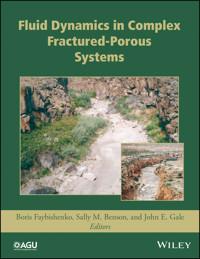
Cover images: Large illustration: Dynamics of fluids in fractured rocks, Box Canyon, adjacent to the Big Lost River, Idaho, in the Eastern Snake River Plain near the city of Arco, Idaho © Boris Faybishenko. Inset illustration: Dry Lake Fluid Flow Path 03-02-14 © Yohann Ropers.
CONTRIBUTORS
Jacob BensabatEnvironmental & Water Resources Engineering Ltd.Haifa, Israel
Sally M. BensonDepartment of Energy Resources Engineering, School of Earth Sciences, Stanford UniversityStanford, California, USA
Eric BoomsmaDepartment of Physics and Astronomy, Purdue UniversityWest Lafayette, Indiana, USA
Sarinya CharoenwongsaColorado School of MinesGolden, Colorado, USA
Inci DemirkanliThe Cadmus Group, Inc.Arlington, Virginia, USA
Christine DoughtyEarth Sciences Division, Lawrence Berkeley National LaboratoryBerkeley, California, USA
Maria Inés DragilaDepartment of Crop and Soil Science, Oregon State UniversityCorvallis, Oregon, USA
Perapon FakcharoenpholColorado School of MinesGolden, Colorado, USA
Boris FaybishenkoLawrence Berkeley National LaboratoryBerkeley, California, USA
R. Allan FreezeSurrey, British Columbia, Canada
John E. GaleFracflow Consultants Inc.St. John’s, Newfoundland, Canada
Junichi GotoNuclear Waste Management Organization of JapanMita, Tokyo, Japan
Hai HuangIdaho National LaboratoryIdaho Falls, Idaho, USA
John A. HudsonImperial CollegeLondon, UK
Da HuoDepartment of Energy Resources Engineering, School of Earth Sciences, Stanford UniversityStanford, Caliofrnia, USA
Iraj JavandelLawrence Berkeley National LaboratoryBerkeley, California, USA
Dan KaplanSavannah River National LaboratoryAiken, South Carolina, USA
Kenzi KarasakiLawrence Berkeley National LaboratoryBerkeley, California, USA
Hossein KazemiColorado School of MinesGolden, Golden, Colorado, USA
Basak KurtogluMarathon Oil CompanyHouston, Texas, USA
Hui-Hai LiuAramco Research CenterHouston, Texas, USA
Siamak Malek-MohammadiBradley UniversityPeoria, Illinois, USA
Fred MolzEnvironmental Engineering and Earth Sciences, Clemson UniversityAnderson, South Carolina, USA
Uri NachshonEnvironmental Hydrology and Microbiology, ZIWR, BIDR, Ben Gurion University of the NegevBeer-Sheva, Israel
Shlomo P. NeumanDepartment of Hydrology and Water Resources, University of ArizonaTucson, Arizona, USA
Auli NiemiDepartment of Earth Sciences, Uppsala UniversityUppsala, Sweden
John R. NimmoU.S. Geological SurveyMenlo Park, California, USA
Celia T. OnishiU.S. Geological SurveyMenlo Park, California, USA
Brian PowellEnvironmental Engineering and Earth Sciences, Clemson UniversityAnderson, South Carolina, USA
Laura J. Pyrak-NolteDepartment of Physics and Astronomy, Department of Earth and Atmospheric Sciences, and School of Civil Engineering, Purdue UniversityWest Lafayette, Indiana, USA
Eunjeong SeokFracflow Consultants Inc.St. John’s, Newfoundland, Canada
Prabhakar SharmaDepartment of Earth Sciences, Uppsala UniversityUppsala, SwedenSchool of Ecology and Environment Studies, Nalanda UniversityRajgir, Nalanda, Bihar, India
Shannon ThompsonUS Nuclear Regulatory Commission, Office of ResearchRockville, Maryland, USA
Chin-Fu TsangEarth Sciences Division, Lawrence Berkeley National LaboratoryBerkeley, California, USA
Michael C. TsennExxonMobil Upstream Research CompanyHouston, Texas, USA
Joseph S. Y. WangLawrence Berkeley National LaboratoryBerkeley, California, USA
Noam WeisbrodEnvironmental Hydrology and Microbiology, ZIWR, BIDR, Ben Gurion University of the NegevBeer-Sheva, Israel
Philip H. WinterfeldDepartment of Petroleum Engineering, Colorado School of MinesGolden, Colorado, USA
Thomas WoodUniversity of Idaho, Center for Advanced Energy StudiesIdaho Falls, Idaho, USA
Yu-Shu WuDepartment of Petroleum Engineering, Colorado School of MinesGolden, Colorado, USA
PREFACE
Prof. Paul A. Witherspoon (1919–2012)
Even after many years of study, predicting fluid flow, heat, and chemical transport in fractured-porous media remains a challenge for scientists and engineers worldwide. This monograph is the third in a Geophysical Monograph Series on fluid and transport dynamics in fractured rock to be published by the American Geophysical Union. The first two monographs followed the Witherspoon’s Symposiums held in Berkeley, California, USA, in 1999 (Geophysical Monograph Series, Vol. 122, 2000; see http://www.agu.org/books/gm/v162/) and 2004 (Geophysical Monograph Series, Vol. 162, 2005; see http://www.agu.org/books/gm/v122/). This monograph draws primarily from the presentations given at Session H071, “Dynamics of Fluids and Transport in Fractured Porous Media,” of the Fall 2012 AGU Meeting, held in San Francisco in December 2012.
The intent of this monograph is to honor the late Dr. Paul A. Witherspoon (1919–2002), for his outstanding, lifelong contribution to the field of hydrology, and his seminal influence on the development of ideas and methodologies for contemporary fractured rock hydrogeology. His work has influenced our approaches to such fundamental and applied challenges as environmental remediation, exploitation of oil, gas, and geothermal resources, disposal of spent nuclear fuel, and geotechnical engineering. In 1957, Paul Witherspoon became Professor of the University of California at Berkeley, and in 1977 he was appointed the first Director of the newly organized Earth Sciences Division (ESD) of Lawrence Berkeley National Laboratory (LBNL).
The monograph addresses many fundamental and applied scientific questions, and in doing so may help many scientists and practitioners bridge gaps in current scientific knowledge. Specifically, the volume begins with a chapter that for the first time introduces complex systems approaches to describe flow and transport in fractured-porous media. The chapter goes on to apply this approach to the analysis of fluid dynamics and transport in fractured-porous media, based on the papers*




