


112,99 €
Mehr erfahren.
- Herausgeber: John Wiley & Sons
- Kategorie: Wissenschaft und neue Technologien
- Serie: ASM Books
- Sprache: Englisch
Leading textbook presenting all aspects of food microbiology
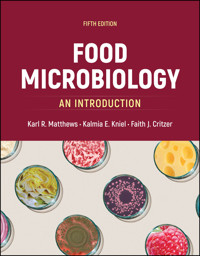
Food Microbiology: An Introduction presents the basics of microorganisms that impact food safety and quality, the roles of beneficial microbes, food safety regulations, and proper practices for safe and healthy foods throughout all aspects of the supply chain. This Fifth Edition has been updated to reflect advances in research and technology and threats to the global food supply while retaining the pedagogy and structure that students and professors appreciate.
Written in a clear and easy-to-understand style, the book is divided into four sections: Part I introduces the fundamentals of food microbiology, including a brief history of the field, the growth processes of food microorganisms, the biology of spores and sporeformers, techniques for enumeration and detection of organisms in food, description of rapid and automated microbial methods, and a new chapter focused on antimicrobial resistance. Part II addresses important regulatory issues and focuses on foodborne pathogenic microorganisms with chapters describing the most common bacterial species that cause foodborne diseases, as well as discussion of parasites, viruses, and prions. Part III explores nonpathogenic microbes important in food, including those responsible for fermentations and food spoilage. Part IV focuses on the control of microorganisms in food, including chemical antimicrobials, biological and physical methods of food preservation, nonthermal processing, and food safety systems.
Food Microbiology: An Introduction also includes updated information on:
- The growing threats of antimicrobial resistance and climate change and their potential impacts on the global food supply
- Use of next-generation sequencing techniques in the identification of microbes in food
- Expanded discussion on sanitizers, disinfectants, and nonthermal processing treatments
- Up-to-date information on the Food Safety Modernization Act, hazard analysis and critical control points, and good manufacturing practices
Food Microbiology: An Introduction is an essential textbook for undergraduate and graduate students in food science, nutrition, and microbiology, providing the knowledge and tools necessary to navigate the complexities of food microbiology in the 21st century.
Sie lesen das E-Book in den Legimi-Apps auf:
Seitenzahl: 1359
Veröffentlichungsjahr: 2024
Ähnliche



















Food Microbiology
An Introduction
Fifth Edition
Karl R. Matthews
Department of Food Science
Rutgers University
New Brunswick, New Jersey
Kalmia E. Kniel
Department of Animal and Food Sciences
University of Delaware
Newark, Delaware
Faith J. Critzer
Department of Food Science and Technology
University of Georgia
Athens, Georgia
Copyright © 2025 American Society for Microbiology. All rights reserved.
Copublication by the American Society for Microbiology and John Wiley & Sons, Inc.
No part of this publication may be reproduced, stored in a retrieval system, or transmitted in any form or by any means electronic, mechanical, photocopying, recording, scanning, or otherwise, except as permitted by law. Advice on how to reuse material from this title is available at http://wiley.com/go/permissions.
The right of Karl R. Matthews, Kalmia E. Kniel, and Faith J. Critzer to be identified as the authors of this work/the editorial material in this work has been asserted in accordance with law.
Limit of Liability/Disclaimer of Warranty
While the publisher and author have used their best efforts in preparing this book, they make no representations or warranties with respect to the accuracy of completeness of the contents of this book and specifically disclaim any implied warranties or merchantability of fitness for a particular purpose. No warranty may be created or extended by sales representatives or written sales materials. The publisher is not providing legal, medical, or other professional services. Any reference herein to any specific commercial products, procedures, or services by trade name, trademark, manufacturer, or otherwise does not constitute or imply endorsement, recommendation, or favored status by the American Society for Microbiology (ASM). The views and opinions of the author(s) expressed in this publication do not necessarily state or reflect those of ASM, and they shall not be used to advertise or endorse any product.
Editorial Correspondence:
ASM Press, 1752 N Street, NW, Washington, DC 20036‐2904, USA
Registered Offices:
John Wiley & Sons, Inc., 111 River Street, Hoboken, NJ 07030, USA
For details of our global editorial offices, customer services, and more information about Wiley products, visit us at www.wiley.com.
Wiley also publishes its books in a variety of electronic formats and by print‐on‐demand.
Some content that appears in standard print versions of this book may not be available in other formats.
Library of Congress Cataloging‐in‐Publication Data Applied for:
Paperback ISBN 9781683674498
Cover Design: WileyCover Images: © Faith J. Critzer, © azure1/Shutterstock, © stocksolutions/Shutterstock, © Amero/Shutterstock, © ValentynVolkov/Getty Images, © Noppawat Tom Charoensinphon/Getty Images, © Tanja Ivanova/Getty Images, © anand purohit/Getty Images, © Peter Dazeley/Getty Images
Preface
THE STUDY of food microbiology is essential to the safety of the global food supply and human health. The global food supply must be safe and of sufficiently high quality to feed the projected nearly 10 billion people by 2050. This book provides insight into the complexity and challenge of this goal. The Fifth Edition has been thoroughly updated and revised to reflect the global nature of the field.
Today’s students are accustomed to visual and digital learning, having access to information virtually anytime and anywhere. Utilizing and recognizing the quality of that information requires critical thinking skills, innovative approaches, and assimilation of information coupled with healthy skepticism. The global audience served by the textbook continues to expand, and as such we have added an even greater breadth of material to serve our audience. New homework problems have been added, recognizing how vital they are as a learning tool.
Capturing the interest and attention of our target audience, undergraduates, is integral to opening the door to the field of food microbiology and from there to countless career opportunities. We have included special box material written by students and international experts, chapter summaries, and a glossary. The book is user‐friendly for instructors too; answers to selected critical thought questions are provided, as well as access to online instructor ancillary materials.
The book is divided into four sections. Instructors and students should be aware that the material in sections in the Fifth Edition may differ from previous editions. Each chapter is self‐contained, facilitating the instructor’s flexibility to present the material in a different order.
The first section of the book covers the foundational material, describing how bacteria grow in food, how the food affects their growth, the control of microbial growth, spores, detection, and microbiological criteria. The material has applications for food microbiology laboratory courses, too. A new chapter on antibiotic resistance is also in this section.
Instructors may choose to use the other three sections in virtually any order. The foodborne pathogenic bacteria are presented in alphabetical order in Section II. Parasites, viruses, and prions are also discussed in this section. Prions are not bacteria, molds, parasites, or viruses; in fact, they are not microbes at all. However, they are a major biological concern to the public and food safety experts. Greater emphasis has been given to foodborne illness outbreaks occurring outside of the United States, and the chapter on regulatory issues discusses international regulations.
Section III contains chapters on beneficial microbes, spoilage organisms, and lactic acid bacteria and yeast fermentations. Molds are covered both as spoilage organisms and as potential toxin producers. Indicator microorganisms and microbiological criteria are covered here, too. Section IV covers the chemical, biological, physical, and non‐thermal processing methods of controlling foodborne microbes and closes by examining industrial and regulatory strategies for ensuring food safety.
The authors are grateful to the many students who provided perspective on the level and depth of coverage and contributed photographs that enhanced this edition. Special thanks go to Kendall Pasuit, Xin Luo, Rawan Raad, and Blanca Ruiz‐Llacsahuanga for development of tables and figures for this edition.
We thank the team at ASM Press for facilitating completion of the book. The enthusiasm and guidance of Megan Angelini were essential to keeping us on track to complete this edition.
We hope that Food Microbiology: An Introduction, Fifth Edition, makes the subject come alive and encourages you to explore careers in food microbiology. The food microbiome is complex and offers a wonderful playground for food microbiologists. Enjoy your adventure.
Karl R. Matthews
Kalmia E. Kniel
Faith J. Critzer
About the Authors
KARL R. MATTHEWS is Professor of Microbial Food Safety at Rutgers University. Dr. Matthews has earned an international reputation for his work on the microbial safety of fresh fruits and vegetables. This includes demonstrating the internal localization of bacteria during growth of leafy greens. He also demonstrated the efficacy of water antimicrobials for processing of leafy greens and fresh‐cut fruits during retail preparation. Dr. Matthews has been active in research on photodynamic inactivation of foodborne pathogens using the natural photosensitizer curcumin and on antimicrobial resistance of foodborne bacteria.
Author’s Statement
My interest in microbiology was sparked one summer when I was working on a dairy farm. I regularly drank raw milk, but one time after doing so I became extremely ill (I won’t go into the messy details). I became intrigued by microorganisms associated with milk and the disease bovine mastitis. These beginnings led me to an exciting career in food microbiology, where every day seems to bring a new challenge to be addressed. I have traveled throughout the world conducting workshops and addressing issues associated with food safety. Serving as a Fulbright Scholar and a Fulbright Specialist provided the opportunities to live in countries for an extended period to enjoy the culture and cuisine of those countries and make many lasting friends.
KALMIA E. KNIEL is Professor of Microbial Food Safety in the Department of Animal and Food Sciences at the University of Delaware. She received her Ph.D. from Virginia Tech in Food Science and Technology. Her doctoral research focused on protozoan parasites. After that, she was a postdoctoral microbiologist at the USDA Agricultural Research Service’s Animal Parasitic Diseases Laboratory. She is now nationally recognized as a leading expert in transmission of viruses, protozoa, and bacteria in the preharvest environment. Dr. Kniel has been active in researching the mechanisms behind the survival and inactivation of norovirus, hepatitis A virus, and other enteric viruses prevalent in our water and foods. She is an active advocate for teaching food safety at all levels and has been involved with elementary and secondary education. At the University of Delaware, she teaches courses on foodborne outbreak investigations and the basics of food science, food safety, and food security from farm to fork.
Author’s Statement
I received my first microscope when I was 10, and I was hooked. It was fascinating then as it is now, looking into those little lenses, and observing life at the microscopic level. Serving as a teaching assistant for a pathogenic bacteriology laboratory course changed my life. I relished working with the students, challenging them with fecal unknowns and mock sputum samples. The best part was seeing their reaction as they identified an unknown bacterium and observed growth on their petri plates. It’s that level of excitement from students of all ages that I love. Working with students in my laboratory and in the classroom is an honor. We all share a great curiosity for science on various levels. I believe that food microbiology is the greatest science, as it includes basic scientific inquiries with an applied twist. I have been fortunate to work with a myriad of amazing people, and with them at my side I look forward to the challenges of every day.
FAITH J. CRITZER is Professor of Food Microbiology in the Department of Food Science and Technology at the University of Georgia. She received her Ph.D. from the University of Tennessee in Food Science where she developed a love for the field of food microbiology and how her work in food safety could improve public health. Her research is focused on identifying food safety risks tied to the production and packing of fresh fruits and vegetables, as well as identification of and education on risk mitigation strategies. She enjoys mentoring graduate and undergraduate scientists, with the most recent work from her lab group focusing on Listeria control in the packinghouse; preharvest agricultural water treatment in order to inactivate bacterial foodborne pathogens; and validation of antimicrobials in postharvest water using industry‐relevant conditions. At the University of Georgia, she teaches coursework in food microbiology, food safety, and how microorganisms in food and water have shaped history.
Author’s Statement
I was learning about on‐farm food safety since I was 12 years old, helping on my family’s grade‐A dairy farm. I didn’t know it at the time, but my career would be focused on simple principles like conducting cleaning and sanitation on farms, barriers that may impact the efficacy of food safety programs, and best approaches for controlling hazards (although my focus has shifted to fruit and vegetable farms now). I find so much joy in helping others learn new concepts and apply them to situations. I also have learned so much through the interactions I’ve had with students and other industry professionals I’ve had the pleasure of working with over the years. I am so fortunate to have a team of wonderful colleagues, students, mentors, and collaborators who also delight in trying to advance science and apply it in practical settings to improve the safety and quality of foods.
About the Companion Website
This book is accompanied by a companion website.
www.wiley.com/go/Matthews
This website contains:
Tables and Figures from the book
IBASICS OF FOOD MICROBIOLOGY
1 The Trajectory of Food Microbiology
2 Microbial Growth, Survival, and Death in Foods
3 Spores and Their Significance
4 Detection and Enumeration of Microbes in Food
5 Rapid and Automated Microbial Methods
6 Antimicrobial Resistance
1The Trajectory of Food Microbiology
Introduction
The Beginning?
Food Microbiology, Past and Present
What’s Next
Summary
Suggested reading
Questions for critical thought
Learning Objectives
The information in this chapter will enable the student to:
increase awareness of the antiquity of microbial life and the newness of food microbiology as a scientific field
appreciate how fundamental discoveries in microbiology still influence the practice of food microbiology
understand the origins of food microbiology and thus anticipate its forward path
INTRODUCTION
The field of food microbiology has gained increased prominence as the result of global complexity of the food supply and consumer desire for new foods. Food microbiology is a subdivision of microbiology encompassing the study of microbes that grow in food and how food environments influence microbes. Keeping pace with other subdivisions of microbiology, food microbiology has progressed considerably in many ways; genetic and immunological probes have replaced older biochemical tests and reduced testing time from days to minutes. In other ways, food microbiology is still near the beginning. Louis Pasteur would find his pipettes in a modern laboratory. Julius Richard Petri would find his plates (albeit plastic rather than glass). Hans Christian Gram would find all the reagents required for his stain. However, food microbiologists are moving beyond studying only the microbes that we can see under the microscope and grow on agar media in petri dishes. Advanced approaches are being used to study food‐associated microbes that are difficult to culture (Box 1.1).
This chapter’s discussion of microbes per se sets the stage for a historical review of food microbiology. The bulk of the discussion in this chapter, and indeed in most of this book, concerns bacteria. Viruses, parasites, and prions are covered but to a lesser extent. This chapter ends with some thoughts about future developments in the field.
Box 1.1Preparing for the future
Membership in professional societies is a great way to advance professionally, even as a student (who benefits from reduced membership fees and is eligible for a variety of scholarships). Professional societies provide continuing education and employment services to their members, provide expertise to those making laws and public policies, have annual meetings for presentation of the latest science, and publish books and journals. The three main societies for food microbiologists are listed below. Applications for membership can be obtained from their websites. The American Society for Microbiology (ASM) (https://asm.org/) is the largest single life science membership organization in the world, with more than 36,000 members globally. It covers all facets of microbiology from microbial pathogenesis to clinical and public health to antimicrobial agents to food microbiology, and it publishes many scholarly journals. The Institute of Food Technologists (IFT) (https://www.ift.org/) devotes itself to all areas of food science by discipline (food microbiology, food chemistry, and food engineering), as well as by commodity (cereals, fruits and vegetables, and seafood) and by processing (refrigerated foods). The IFT is a nonprofit scientific society with more than 12,000 members across over 90 countries working in food science, food technology, and related professions in industry, academia, and government. The IFT publishes two journals, sponsors a variety of short courses, and contributes to public policy and opinion at national, state, and local levels. The International Association for Food Protection (IAFP) (https://www.foodprotection.org/) is the only professional society devoted exclusively to food safety microbiology. IAFP is dedicated to the education and service of its members, as well as industry personnel. Members keep informed of the latest scientific, technical, and practical developments in food safety and sanitation. IAFP publishes two scientific journals, Food Protection Trends and Journal of Food Protection.
THE BEGINNING?
Let there be no doubt about it: the microbes were here first. It is a microbial world. If the earth came into being at 12:01 a.m. of a 24‐hour day, microbes would arrive at dawn and remain the only living things until well after dusk. Around 9 p.m., larger animals would emerge, and a few seconds before midnight, humans would appear. The microbes were here first, they cohabit the planet with us, and they will be here after humans are gone. Life is not sterile. Microbes can never be (nor should they be) conquered, once and for all. The food microbiologist can only create foods that microbes do not “like,” manipulate the growth of microbes that are in food, inactivate them, or exclude them by physical barriers.
Bacteria live in airless bogs, thermal vents, boiling geysers, us, and foods. We are lucky that they are here, for microbes form the foundation of the biosphere. We could not exist without microbes, but they would do just fine without us. Photosynthetic bacteria fix carbon into usable forms and make much of our oxygen. Rhizobium bacteria fix air’s elemental nitrogen into ammonia that can be used for a variety of life processes. Degradative enzymes allow ruminants to digest cellulose. Microbes recycle the dead into basic components that can be used again and again. Microbes in our intestines aid in digestion, produce vitamins, and prevent colonization by pathogens. For the most part, microbes are our friends.
FOOD MICROBIOLOGY, PAST AND PRESENT
From the dawn of civilization until about 10,000 years ago, humans were hunter‐gatherers. Humans were lucky to have enough. There was neither surplus nor a settled place to store it. Preservation was not an issue. With the shift to agricultural societies, storage, spoilage, and preservation became important challenges. The first preservation methods were undoubtedly accidental. Sun‐dried, salted, or frozen foods did not spoil. In the classic “turning lemons into lemonade” style, early humans learned that “spoiled” milk could be acceptable or even desirable if viewed as “fermented.” Fermenting food became an organized activity around 8000 B.C.E. (Table 1.1). Breweries and bakeries sprang up long before the idea of yeast was conceived.
Humans remained ignorant of microbes for thousands of years. In 1665, Robert Hooke published Micrographia, the first illustrated book on microscopy that detailed the structure of Mucor, a microscopic fungus. In 1676, Antonie van Leeuwenhoek used a crude microscope of Hooke’s design to see small living things in pond water. Microbiology was born!
Table 1.1Significant events in the history of food microbiologya
Decade
Event
∼8000 B.C.E.
Fermentation of food becomes an organized activity.
1670 C.E.
Hooke and van Leeuwenhoek observe microscopic fungi and bacteria; microbiology is born.
1760
Spallanzani’s experiments with boiled beef strike a blow against spontaneous generation.
1800
Nicolas Appert invents the canning process. Amazingly, this is still a mainstay of food processing 200 years later.
1810
Peter Durand patents the tin can, making Appert’s life much easier.
1850
Appert and Raymond Chevallier‐Appert are issued a patent for steam sterilization (retort). The use of steam under pressure increases process temperatures, decreases process times, and radically improves the quality of canned food. Louis Pasteur demonstrates that living organisms cause lactic and alcoholic fermentations.
1860
Pasteur disproves spontaneous generation. Life can come only from other life. Joseph Lister develops the concept of antiseptic practice. Persuading surgeons to wash their hands saves thousands of lives.
1880
Robert Koch postulates bacteria as causative agents of disease. To this day, Koch’s postulates remain the “gold standard” for proving that bacteria cause disease. Hans Christian Gram invents the Gram stain. Julius Richard Petri invents the petri dish. Petri worked in Koch’s laboratory, where the usefulness of agar was also discovered. A. A. Gartner isolates
Salmonella enterica
serovar Enteritidis from a foodborne illness outbreak. A century later, salmonellae are still the leading cause of death among people consuming foodborne microbes.
1890
Pasteurization of milk begins in the United States.
1900
The Food and Drug Act is passed in response to Upton Sinclair’s exposé of the meat industry in
The Jungle
.
1920
The U.S. Public Health Commission publishes methods to prevent botulism. Alexander Fleming discovers antibiotics. Less than 100 years later, multiple antibiotic‐resistant pathogens threaten to cause possible epidemics. Clarence Birdseye introduces frozen foods to the retail marketplace.
1930
G. M. Dack confirms that
Staphylococcus aureus
makes toxin. Home refrigerators are widely introduced. The Food, Drug, and Cosmetic Act strengthens regulation over foods. Viruses are visualized for the first time.
1940
The first freeze‐dried food is developed. The supermarket replaces assorted shops as the place to buy food.
1950
James Watson and Francis Crick discover the structure of DNA. Rosalind Franklin plays a large but uncredited role. Research on food irradiation begins.
1960
C. Duncan and D. Strong demonstrate that perfringens food poisoning is caused by a toxin. The role of fungal toxins is discovered when “turkey X” disease breaks out in poultry.
1970
S. Cohen discovers genetic recombination in bacteria. Larry McKay reports the presence of plasmids in Gram‐positive bacteria. Good Manufacturing Practices are introduced for low‐acid foods. Invention of monoclonal antibodies lays the foundation for mass‐produced antibody‐based tests.
1980
The first recognized outbreak of listeriosis occurs.
Escherichia coli
O157:H7 is first recognized as a pathogen. The first genetic probe for detection of
Salmonella
is developed. PCR (the polymerase chain reaction) is invented. Prions are discovered.
1990
Irradiation is approved for pathogen control in meat and poultry. The mad cow disease crisis hits the United Kingdom. HACCP is required by the U.S. Department of Agriculture.
2000
Irradiation is approved for shell eggs. Regulatory concerns about bioterroristic contamination of food lead to new laws on facility registration, product traceability, and prenotification of imports. The first report of mad cow disease in the United States is made. Irradiation is approved for fresh iceberg lettuce and fresh spinach. USDA indicates high pressure processing can be used for treatment of meat, poultry, and processed egg products without prior approval. Food Safety Modernization Act provides preventative controls for human food and preventative controls for food for animals.
2010s
Whole‐genome sequencing (WGS) is used in epidemiology of foodborne illness outbreaks. Food companies use WGS to track bacterial pathogens linked to food and processing environment. Bacteriophage approved for control of various foodborne pathogens (
Listeria monocytogenes
, Shiga toxin‐producing
Escherichia coli
).
2024s
You are here.
a Compiled from various sources.
Nonetheless, it took another 200 years to prove that microbes exist and cause fermentative processes. In the mid‐1700s, Lazzaro Spallanzani showed that boiled meat placed in a sealed container did not spoil. Advocates of spontaneous generation, however, argued that air is needed for life and that the air was sealed out. It took another 100 years for Louis Pasteur’s elegant “swan‐necked flask” experiment to replicate Spallanzani’s experiment in a way that allowed access to air but not to microbes. Napoleon, needing to feed his troops as they traveled across Europe, offered a prize to anyone who could preserve food. Nicolas Appert (Figure 1.1) won this prize when he discovered that foods would not spoil if they were heated in sealed containers, i.e., were canned. Thus, canning was invented without any knowledge of microbiology. Indeed, it was not until the 1900s that mathematical bases for canning processes were developed.
Figure 1.1 Illustration of Nicolas Appert from Les Artisans Illustres by Edouard Foucaud (1841).
Robert Koch was a giant of microbiology. In the late 1800s, he established criteria for proving that a bacterium caused a disease. To satisfy “Koch’s postulates,” one had to (i) isolate the suspected bacterium in pure culture from the diseased animal, (ii) expose a healthy animal to the bacterium and make it sick, and (iii) reisolate the bacterium from the newly infected animal.
This approach was so brilliant that it is still used today to prove that a disease has a microbial origin. Microbiology remains based on the study of single bacterial species in pure culture. Unfortunately, most microbes cannot be cultured and exist in nature as community members, not in pure culture. Two other innovations from Koch’s laboratory are still with us. Julius Richard Petri, an assistant in Koch’s laboratory, invented the petri dish as a minor modification of an existing gelatin‐based plating method that had been developed by Koch. Workers in the Koch laboratory were often frustrated by the gelatin used in the plating method, since gelatin would not solidify when the temperature was too warm and was dissolved by certain organisms (that produced enzymes that degrade gelatin). Walter Hesse, a physician who had joined the Koch laboratory to study infectious bacteria in the air, shared this frustration with his wife, Fanny. Frau Hesse had been using agar to thicken jams and jellies for years and suggested that they try agar in the laboratory. You know the rest of the story.
The first half of the 20th century was marked by the discovery of the “traditional” foodborne pathogens. Salmonella species came from warm‐blooded animals. Clostridium botulinum became a problem with improperly canned foods. Staphylococcus aureus became associated with poor hygiene, Bacillus cereus contaminated starchy foods, and other food‐organism combinations became associated with certain illnesses. Viruses were first crystallized and associated with disease in the 1930s and are a major cause of foodborne illness. However, many of the viruses responsible for foodborne illnesses remain understudied compared to bacteria. In the middle of the 20th century, biology made a great leap forward: James Watson and Francis Crick discovered the structure of DNA (Figure 1.2). This gave birth to the era of molecular genetics. This has led to a better understanding of how microbes cause illness, revolutionary genetic and antibody‐based detection methods, genetic “fingerprints” as epidemiological tools, and the ability to genetically alter fermentation organisms to improve their industrial characteristics. Indeed, these tools of molecular biology have since become very important to the field of food microbiology.
The movement away from massive end product testing to safety by design also started in this era. A suite of approaches including “Good Agricultural Practices” provide growers with procedures that enhance microbial safety of crops in the field, “Good Manufacturing Practices” provide manufacturers with procedures that should yield safe products, and “Hazard Analysis Critical Control Point” (HACCP) plans codified these into a safety assurance system. Government regulatory agencies across the globe continue to reassess and refine procedures that enhance safety of the food supply. In the United States the Food Safety Modernization Act champions a Hazard Analysis Risked‐based Preventative Controls (HARPC) system for improving the safety of the food supply. Food irradiation is approved as a “kill” step in the processing of raw poultry, meat, spinach, and iceberg lettuce. Risk assessment provides the basis for more sophisticated regulatory approaches based on the end result (fewer sick people) rather than dictating processes that give fewer microbes.
Figure 1.2 The discovery of DNA’s double helix marked a quantum leap in the history of microbiology.
Credit: National Human Genome Research Institute, National Institutes of Health.
Box 1.2The path to studying food microbiology
Kendall Pasuit
Rutgers, The State University of New Jersey, New Brunswick, NJ
Food has always been my greatest passion. From learning the ins and outs of culinary arts to observing the chemical, microbiological, and sensory profiles of foods, I have immersed myself in the world of food for nearly a decade. At thirteen, I chose to attend the culinary arts program at a technical high school to further my knowledge about food. This program answered many of my fundamental culinary questions: “What is an emulsion?”, “Why are vegetables blanched and shocked?”, and, perhaps most influential to my interests, “How can the contamination of foods be avoided?”. The field of food microbiology became an area of increasing interest during my junior year of high school, when I was chosen as the Sanitation Manager of the culinary program during the height of the COVID‐19 pandemic. This position pushed me to learn more and sparked an interest in food microbial safety.
While I enjoyed culinary arts and my time working in the restaurant industry thoroughly, I still had numerous questions regarding the specifics of food. I entered college entirely sure about a future in food science, declaring my major as soon as I could and enrolling in seminars about particular areas of the field in order to narrow my focus. At first, the world of food science seemed endless and intimidating, with so many different specialties that I could study. However, I took a first‐year seminar titled “Food Microbes: What and Where Are They?” taught by Dr. Matthews during my first semester at Rutgers University. This seminar solidified that I was specifically drawn to food microbiology by raising and answering a variety of questions regarding the microbial safety of foods around the world. During the following semester, I took an Honors seminar titled “Feeding the World” that helped further focus my interest areas, as it introduced me to the benefits and limitations of controlled environment agriculture.
As a current sophomore at Rutgers, I entered the academic year seeking deeper knowledge in both food microbiology and controlled environment agriculture. The perfect opportunity to do this arose in the form of a semester‐long literature review regarding antibiotic‐resistant bacteria in microgreens grown in controlled environments. Dr. Matthews coordinated this experience, making it a perfect link between the freshman seminar that sparked my interest in microbiology and my increasingly specific area of focus. Collecting research papers and literature analyses for my own literature review opened my eyes to facets of food microbiology of which I previously had very little knowledge, most significantly the risk factors for antibiotic‐resistant gene spread. Along with enhancing my interest in the field, this project revealed the importance of global awareness regarding microbiological risks and antimicrobial resistance in foods. Going forward, I plan to do my part in spreading this awareness, especially through presenting my future research.
I look forward to delving deeper into the vast world of food microbiology as I continue with my undergraduate education. Learning even a small amount of information regarding microbial safety in high school motivated me to raise and answer more questions about the field. It is my belief that everyone, not just those seeking a future as a microbiologist, can benefit considerably from a basic understanding of food microbes and the practices utilized to reduce them. This fundamental knowledge might just spark a greater interest in the extensive and fascinating area of food microbiology.




