


63,99 €
Mehr erfahren.
- Herausgeber: John Wiley & Sons
- Kategorie: Wissenschaft und neue Technologien
- Serie: Essential Forensic Science
- Sprache: Englisch
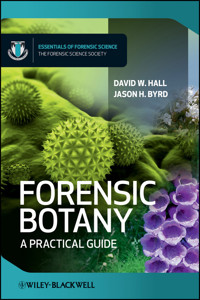
FORENSIC BOTANY
A PRACTICAL GUIDE
Forensic Botany: A Practical Guide is an accessible introduction to the way in which botanical evidence is identified, collected and analysed in criminal cases. This form of evidence is becoming increasingly important in forensic investigation. This book is intended to show how useful simple collection methods and standard plant analysis can be in the course of such investigations. It is written in a clear and accessible manner to enhance the understanding of the subject for the non-specialist.
Clearly structured throughout, this book combines well known collection techniques in a field oriented format that can be used for casework. Various methods that allow easy collection, transportation, and preservation of evidence are detailed throughout the book.
This book is written for those who have no formal background working with plants. It can be used as a practical guide for students taking forensic science courses, law enforcement training, legal courses, and as a template for plant collection at any scene where plants occur and where rules or laws are involved. Veterinarians, various environmental agencies and anthropologists are examples of disciplines that are more recently in need of plant evidence.
The format of the book is designed to present the reader with all the information needed to conduct a botanical analysis of a crime scene; to highlight the forensic significance of the botanical evidence that may be present; how to collect that evidence in the correct manner and preserve and store that evidence appropriately- also shows how to conduct a laboratory analysis of the plants.
- An accessible practical guide to the collection, analysis and presentation of botanical evidence within forensic investigation.
- Aimed at the non-specialist looking for an introduction to the field.
- Written in a clear and logical manner; what is it? Where can you find help? How can you use plant evidence? Why is this kind of plant important? Where to look for evidence; evidence collection made easy; evidence preservation; evidence transportation; chain of custody.
- Includes evidence collection data sheet and a laboratory analysis data sheet for use in the field.
- Includes key chapters on microscopy analysis of plant evidence and on DNA collection, use and relative costs.
- Numerous relevant case studies included to show forensic botany in practice and how to present botanical evidence in court.
Sie lesen das E-Book in den Legimi-Apps auf:
Seitenzahl: 331
Veröffentlichungsjahr: 2012
Ähnliche



















Contents
Cover
Title Page
Copyright
List of contributors
Series Foreword
Prologue: The Begining
Chapter 1: Introduction to Forensic Botany
Botanical Evidence in Legal Investigations
Legal Plant Definition
Botanical Evidence in Legal Investigations
Alibis
Timing
Gravesite Growth
Stomach Contents
Summary
Chapter 2: Plants as Evidence
Types of Plants
Nonplant Groups Traditionally Studied by Botanists
Plant Habitats and Associations
Plant Characteristics/Plant Morphology
Basic Plant Characteristics for the Forensic Investigator
Habit
Plant Dispersal
Chapter 3: Evidence Collection and Analysis
Initial Crime Scene Notation
Where to Search for Evidence
Storage
Documentation of Botanical Evidence
How to have Botanical Evidence Analysed
Where to Find a Botanist
Types of Cases
Evidence Analysis
Laboratory Report
Transportation of Botanical Evidence
Evidence Retention and Disposition
Step-wise Method for the Collection of Botanical Evidence
Appendix 3.1
Crime scene data
Habitat documentation
Scene location
Collection information needed for each botanical sample
Appendix 3.2
Botany field data sheet
Appendix 3.3
Botany laboratory examination data format
Appendix 3.4
Evidence log
Chapter 4: Expert Evidence
The Common Law
The United States Experience
The Decision in Frye v. United States
The Codified Federal Rules of Evidence
The Decision in Daubert v. Merrill Dow
The Scientific Method
The “Pure Opinion” Rule
The United Kingdom Experience
The Criminal Procedure Rules 2010, s.33
The Law Commission Consultation Paper No. 190
Chapter 5: Use and Guidelines for Plant DNA Analyses in Forensics
Introduction
Types of Samples and Collection for DNA Analyses
Uses of Genetic Data
Genotyping Methods
Finding a Laboratory for Analysis
Case Studies
Conclusions
References
Chapter 6: A Primer on Forensic Microscopy
Microscopes and Microscopic Botanical Structures Relevant to Forensic Botany
The Importance of Reference Collections in Microscopic Analysis
Preparation and Documentation of Specimen Evidence for the Microscopic Examination
References
Chapter 7: Plant Anatomy
The Lindbergh Case
Further Reading
Chapter 8: Palynology, Pollen, and Spores, Partners in Crime: What, Why, and How
Terminology
What are Pollen and Spores?
Where are they Found and How do they Travel?
What does Pollen Look Like?
The Use of Pollen for Non-Forensic Work
The Use of Pollen in the Forensic Setting
When should Pollen Samples be Collected?
How to Collect and Store Pollen Samples
How Many Samples to Collect?
Who can Collect Pollen Samples and where can an Analyst be Found?
Costs and Turnaround Times
Case Examples
Summary
References
Chapter 9: Algae in Forensic Investigations
Finding an Algal Botanist and Identifying Algae
Algal Diversity
Application of Algal Evidence in Forensic Investigations
Collection and Processing of Algal Evidence in Forensic Investigations
Acknowledgements
References
Chapter 10: Case Studies in Forensic Botany
Placing People or Objects at Scenes
Determining Time of Death
Color Plates
Index
This edition first published 2012 © 2012 by John Wiley & Sons, Ltd
Wiley-Blackwell is an imprint of John Wiley & Sons, formed by the merger of Wiley's global Scientific, Technical and Medical business with Blackwell Publishing.
Registered office: John Wiley & Sons, Ltd, The Atrium, Southern Gate, Chichester, West Sussex, PO19 8SQ, UK
Editorial offices: 9600 Garsington Road, Oxford, OX4 2DQ, UK
The Atrium, Southern Gate, Chichester, West Sussex, PO19 8SQ, UK
111 River Street, Hoboken, NJ 07030-5774, USA
For details of our global editorial offices, for customer services and for information about how to apply for permission to reuse the copyright material in this book please see our website at www.wiley.com/wiley-blackwell.
The right of the author to be identified as the author of this work has been asserted in accordance with the UK Copyright, Designs and Patents Act 1988.
All rights reserved. No part of this publication may be reproduced, stored in a retrieval system, or transmitted, in any form or by any means, electronic, mechanical, photocopying, recording or otherwise, except as permitted by the UK Copyright, Designs and Patents Act 1988, without the prior permission of the publisher.
Designations used by companies to distinguish their products are often claimed as trademarks. All brand names and product names used in this book are trade names, service marks, trademarks or registered trademarks of their respective owners. The publisher is not associated with any product or vendor mentioned in this book. This publication is designed to provide accurate and authoritative information in regard to the subject matter covered. It is sold on the understanding that the publisher is not engaged in rendering professional services. If professional advice or other expert assistance is required, the services of a competent professional should be sought.
Library of Congress Cataloging-in-Publication Data
Hall, David W. (David Walter), 1940-
Forensic botany: a practical guide / David W. Hall and Jason Byrd.
p. cm.
Includes bibliographical references and index.
ISBN 978-0-470-66409-4 (cloth) – ISBN 978-0-470-66123-9 (paper)
1. Forensic botany–Handbooks, manuals, etc. I. Byrd, Jason H. II. Title.
QK46.5.F67H25 2012
363.25'62–dc23
2011048941
A catalogue record for this book is available from the British Library.
Wiley also publishes its books in a variety of electronic formats. Some content that appears in print may not be available in electronic books.
Contributors
Dr David W. Hall
David W. Hall Consultant Inc.
3666 NW. 13th Place
Gainesville, FL 32605
USA
Dr Jason H. Byrd
Associate Director
William R. Maples Center for Forensic Medicine
College of Medicine
University of Florida
PO Box 147100
FL 32610-0275
USA
Dr Matthew A. Gitzendanner
University of Florida
Department of Biology
PO Box 118526
Gainesville, FL 32611-8526
USA
Dr Christopher R. Hardy
Director of the James Parks Herbarium
Millersville University
Millersville, PA 17551
USA
Dr Richard Old
XID Services, Inc.
PO Box 272
Pullman, WA. 99163
USA
Bernard A. Raum, JD, MFS
University of Florida
PO Box 1149
Newberry
Florida 32669
Dr Anna Sandiford
Forensic Science & Research Ltd
PO Box 17-317
Greenlane Auckland 1546
NEW ZEALAND
Dr William Stern
Department of Biological Sciences
Florida International University
3000 NE 151st Street, MSB 357
North Miami, FL 33181
USA
Dr John R. Wallace
Department of Biology
Millersville University
PO Box 1002
1 South George Street
Millersville, PA 17551
USA
Series Foreword
Essentials of Forensic Science
The world of forensic science is changing at a very fast pace. This is in terms of the provision of forensic science services, the development of technologies and knowledge and the interpretation of analytical and other data as it is applied within forensic practice. Practising forensic scientists are constantly striving to deliver the very best for the judicial process and as such need a reliable and robust knowledge base within their diverse disciplines. It is hoped that this book series will provide a resource by which such knowledge can be underpinned for both students and practitioners of forensic science alike.
The Forensic Science Society is the professional body for forensic practitioners in the United Kingdom. The Society was founded in 1959 and gained professional body status in 2006. The Society is committed to the development of the forensic sciences in all of its many facets, and in particular to the delivery of highly professional and worthwhile publications within these disciplines through ventures such as this book series.
Dr Niamh Nic DaéidReader in Forensic Science, University of Strathlcyde,Glasgow, Scotland, UKUK Series Editor
Prologue: The Begining
How does one become a forensic botanist? In the late 1960s and early 1970s the senior author of this book was employed as a plant identification specialist by the University of Florida, eventually becoming the Director of the Plant Identification and Information Services. To be able to help with a plant problem, identification of the plant is an important first step. A plant's name is the key that opens the door to all the known information about any particular plant. Is it poisonous to humans or livestock? Can it be eaten? How big will it grow? Where should it be planted? Is it a weed? How fast will it grow? Is it native? After identification the plant samples were often sent to other experts to determine the disease affecting it or the insects eating it. If the plant was cultivated, horticultural experts were frequently needed to determine the type of hybrid and the care needed for best growth. Pest control, including diseases and/or insects, for cultivated ornamental plants was a constant request. Even more vital is the control of weeds in crops. Weeds in crops often must be controlled when still seedlings or just as they grow out of the seedling stage. If not controlled during this early growth, the crop may be lost due to the lack of effective control procedures for the mature weed in that particular crop.
At the beginning, approximately 3000 plant samples were identified during a year. Almost 20 years later, the requests totaled approximately 8000 identifications per year, one for every 15 minutes of a working year. Samples coming into the office were mailed or actually carried by someone. The size of the pile of boxes, envelopes, bags, and plants varied from about a foot to several feet per day. Difficulties in obtaining adequate samples coupled with years of identification experience led to a skill at identifying bits and pieces of plants. Sometimes the bits and pieces of the samples were all that were available. The fragments could be from physicians or veterinarians who were faced with a person or an animal having eaten it, or a piece of the plant left in a wound. Agricultural weed samples were frequently seedlings. Homeowners would generally grab a single leaf. Tightly wrapped plant samples sent via mail in the Gulf Coastal Plain states of the USA can arrive after a few days of humid, hot conditions as green goo. In an effort to be of help, each sample was carefully examined for any characteristic that could lead to identification. This effort was rewarding both for the information the senior author gained and for the help it provided those sending the sample. Forensics was not a part of the job description.
Law enforcement in the 1960s and early 1970s had very few cases involving plants as evidence, or, perhaps, few cases where they recognized that plant evidence was present. When faced with such evidence the normal course of events was to contact the local county agent or a nearby forester. The United States has a system, initially to aid agriculture, that features an agricultural specialist in each county. Additionally, companies engaged in forestry are spread throughout the USA and the world. During that time county agents and foresters had limited to good skills at identification for the plants with which they usually dealt. Realizing their limitations, these few initial cases were referred to the Plant Identification and Information Service. At first the law enforcement cases totaled about three or four per year and most were concerned with civil matters. As the load increased so did the number of criminal cases. Oddly, for a period of time in the early years, many cases were concerned with attempting to find the crime scene for sexual assaults where the victim had survived, walked away, found help, and could not remember where they had been attacked. Case loads, both civil and criminal, have recently increased.
In 1986 Dr William Maples, a noted forensic anthropologist, who had requested help on several occasions, asked if the senior author was interested in joining the American Academy of Forensic Sciences. On being admitted to the Academy in 1987 and attending the first meeting, an amazingly wide range of disciplines and expertise was found to be available. At first the senior author was the only botanist in the Academy. Realizing that forensic botany was little utilized, he started giving lectures. In 1988 Dr Maples and the senior author tried, without luck, to get a course segment dealing with forensic anthropology, botany, dentistry, and entomology placed into the curriculum of the University of Florida College of Law. In 1991 forensic botany was permitted in a trial class lecture series in the College of Law. A symposium, Forensic Botany: Plants and Perpetrators, was organized for the American Institute of Biological Sciences Annual Meeting in 1988. While popular with local law enforcement and the press, his fellow biological scientists were much less than enthusiastic.
Also in the 1980s, Dr Michael Olexa, a Ph.D. plant pathologist and lawyer, was on a University of Florida sponsored circuit lecturing to help biologists give testimony in legal cases. Dr Olexa asked for help providing forensic botany presentations to the same groups. Lectures at the 1988 annual meetings of the Entomological Society of America and the Rocky Mountain Conference of Entomologists provided introductions to several entomologists who were doing research to help determine time since death using insect succession. Dr Lamar Meek of Louisiana State University was actively engaged in forensic entomology and provided introductions to other biologists who had an interest in forensics. These contacts encouraged further involvement.
In 1993 and in succeeding years, Dr Wayne Lord, an entomologist and FBI agent, provided an opportunity to lecture on botanical evidence and provide field exercises during a one-week training session for FBI agents and other law enforcement personnel. The course, Detection and Recovery of Human Remains, was conducted at the FBI National Academy at Quantico, Virginia. The enthusiastic level of interest from the agents was encouraging. This unique complex is connected by enclosed walkways and tunnels, leaving one to understand how some rodents feel. Other activities are always underway at the Academy so that, after the first startled response, kidnappings, arrests, bank robberies, car chases, gun shots, etc., seemed almost normal. Field sites were set up to show common types of plant evidence. Lectures emphasized the uses of this evidence. The senior author learned a great deal about surface remains and burial sites from his fellow lecturers. This particular course was discontinued several years ago, but those that attended still remember the lectures and continue to ask questions. This FBI course has inspired other institutions to offer similar training.
Training through courses for interested parties is crucial for the advancement of forensic botany. A three- to five-day Bugs, Bones, and Botany short course has been offered since 1999. Lectures and talks, while informative and entertaining, do not provide the level of information needed to process a scene. However, these lecture presentations show how plant evidence can be helpful with the aid of a professional. Botanists scattered around the world have been involved in a case or two, but only a few have worked on several to many cases. Except for biologists who work with DNA, most botanists, with the exception of two others, who have worked on forensic cases, have not been interested in joining the Academy of Forensic Sciences or any other forensic organization. To date no standards for training or expertise have been established for professional certification.
Chapter 1
Introduction to Forensic Botany
David W. Hall, Ph.D.
Forensic botany is the study of plants and how they can relate to law and legal matters. Botany, while widely known as a science, has few professionally trained botanists. In proportion to the number of students trained in most other scientific disciplines, botanists are but a tiny fraction of the total number of individuals working in the field of botany. Many people who teach botany at two- and four-year colleges have perhaps taken only a course or two, and that is likely only because botanical training is typically included in a basic science curricula at the undergraduate level. Some college courses are combined zoology/botany courses, and as a result many college graduates have only portions of a full botanical course and never an entire course. Often, members of various professional plant societies (native plants, garden clubs, and nature organizations), environmental agency employees, and industry workers do not have any formal botanical education. With this low level of academic exposure it is no wonder that so few individuals understand the importance of plants, especially in criminal investigations.
Lesen Sie weiter in der vollständigen Ausgabe!
Lesen Sie weiter in der vollständigen Ausgabe!
Lesen Sie weiter in der vollständigen Ausgabe!
Lesen Sie weiter in der vollständigen Ausgabe!
Lesen Sie weiter in der vollständigen Ausgabe!
Lesen Sie weiter in der vollständigen Ausgabe!
Lesen Sie weiter in der vollständigen Ausgabe!
Lesen Sie weiter in der vollständigen Ausgabe!
Lesen Sie weiter in der vollständigen Ausgabe!
Lesen Sie weiter in der vollständigen Ausgabe!
Lesen Sie weiter in der vollständigen Ausgabe!




