


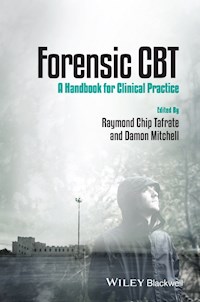
Forensic CBT E-Book
44,99 €
Mehr erfahren.
- Herausgeber: John Wiley & Sons
- Kategorie: Fachliteratur
- Sprache: Englisch
Forensic CBT: A Handbook for Clinical Practice is an edited collection that represents the first authoritative resource on the utilization of CBT strategies and techniques for offender clients.
- Features contributions from leaders of the major schools of CBT on the treatment of antisocial personality patterns as well as anger, interpersonal violence, substance abuse, and sexual aggression
- Addresses modified CBT approaches for female, juvenile, and culturally diverse forensic populations
- Covers emerging areas of forensic practices, including the integration of motivational interviewing and strength-based approaches
- Includes an assortment of worksheets, handouts, and exercises for practitioners to use with their clients
Sie lesen das E-Book in den Legimi-Apps auf:
Seitenzahl: 1156
Veröffentlichungsjahr: 2013
Ähnliche




















Contents
Contributors
About the Editors and Contributors
Preface
Organization of the Present Volume
Labels and Language
In Gratitude
1 Introduction
The Complexities of Clinical Work in Forensic Contexts
CBT, Criminology, and Offender Thinking Targets
References
Suggestions for Further Learning
Part I: Criminal Behavior and Antisocial Patterns
Section 1: Traditional and Next Generation CBT Models
2 Traditional Cognitive-Behavioral Therapy Models for Antisocial Patterns
Antisocial Patterns: Changes in Terminology and Diagnosis
Setting the Stage for Treatment
Applying Traditional CBT Models to Antisocial Patients
Summary and Conclusions
References
Suggestions for Further Learning
Appendix 2.A Intermediate Beliefs Worksheet
Appendix 2.B Modifying Automatic Thoughts Worksheet
Appendix 2.C Completed Modifying Automatic Thoughts Worksheet
Appendix 2.D Choice Review Worksheet
3 ACT for the Incarcerated
Overview of the Approach
Setting the Agenda: An Encouraging Stance and the Emergence of Choice
Psychological Inflexibility: Six Core Processes
ACT Therapy Sessions for Prison Inmates
Moving from Excitement Seeking to Lasting Values: Vince’s Story
Concluding Remarks: Recognizing Relevant Processes
References
Suggestions for Further Learning
Appendix 3.A Handout: The Kid in the Hole
Appendix 3.B Values Worksheet
Appendix 3.C Handout: What Have You Learned From Your Life So Far?
Appendix 3.D Internal Barriers: Things Inside Me That Make It Hard To Live My Values
4 Schema Therapy for Aggressive Offenders with Personality Disorders
Schema Therapy Conceptual Model
Clinical Practice
Pitfalls and Recommendations
References
Suggestions for Further Learning
Section 2: Criminal Thinking Models
5 An Overview of Strategies for the Assessment and Treatment of Criminal Thinking
Overview
Assessment
Overview of Intervention Principles
Specific Intervention Strategies and Change Techniques
Importance of Homework
Length of Intervention: How Much Treatment Effort is Necessary for Changing Outcomes?
Retention Strategies
Summary
References
Suggestions for Further Learning
Appendix 5.A Change Techniques for Cognitive Immaturity
Appendix 5.B Change Techniques for Egocentrism
Appendix 5.C Change Techniques for Control
6 Applying CBT to the Criminal Thought Process
Overview of Criminal Thought Process
Assessment: Step-by-Step Interpretation of the PICTS
Intervention
Individual Versus Group Intervention
Conclusion
References
Suggestions for Further Learning
Appendix 6.A Change Plan
Appendix 6.B Excerpt from the Lifestyle Issues Client Treatment Manual
Appendix 6.C Single Pill Exercise
7 Training Community Corrections Officers in Cognitive-Behavioral Intervention Strategies
Background
The Development of the Strategic Training Initiative in Community Supervision
Teaching Cognitive-Behavioral Interventions
The Challenge of Integrating Cognitive-Behavioral Techniques into Offender Supervision
Conclusion
Authors’ Note and Acknowledgements
References
Appendix 7.A Behavior Sequence Worksheet
Part II: CBT Interventions for Common Criminal Justice Problem Areas
Section: 1 Two Perspectives on the Treatment of Anger
8 Anger Management for Offenders
Characteristics of Anger
Does Anger Management Work?
Some General Remarks
The Anger Episode Model
Using the Model to Guide Interventions
Unexplored Interventions
Group Work
Conclusion
References
Suggestions for Further Learning
9 Contextual Anger Regulation Therapy (CART)
Theoretical and Empirical Foundations
CART for “Anger Management” and Interpersonal Violence
CART: Program Goals and Treatment Modules
Frequent Questions about Using Acceptance-Based Approaches with Offenders
Suggested Modifications for Group Therapy
Outcome Research
Summary and Concluding Remarks
Authors’ Note
References
Suggestions for Further Learning
Appendix 9.A Introduction to Mindfulness Exercise
Appendix 9.B Mindfulness of the Breath Exercise
Section 2: Two Perspectives on the Treatment of Intimate Partner Violence
10 CBT for Perpetrators of Intimate Partner Violence
The Instigating-Impelling-(Dis)Inhibiting Model of IPV (I3 Theory)
Pre-Treatment Assessment According to I3 Theory
I3 Theory-Informed CBT Treatment for IPV Offenders
Summary
References
Suggestions for Further Learning
Appendix 10.A Motivating Change
Appendix 10.B Motivating Change
Appendix 10.C Understanding Patterns of Conflict
Appendix 10.D Understanding Patterns of Conflict
Appendix 10.E Cognitive Restructuring
Appendix 10.F Relationship Building
Appendix 10.G Relationship Building
Appendix 10.H Problem-Solving
Appendix 10.I Problem-Solving
11 A Couples-Based Violence Reduction Approach to Curbing Intimate Partner Assault
Brief Review of Traditional Approaches
Rationale for a Couples Approach
Brief Review of Couples-Based Treatments
Rationale for the Violence Reduction Program
Components of The Violence Reduction Program
References
Suggestions for Further Learning
Appendix 11.A Values Assessment Exercise
Appendix 11.B Couple Arguments Scale
Appendix 11.C Marital Problem-Solving Worksheets Guidelines
Section 3: Two Perspectives on the Treatment of Addictions
12 An Integrated REBT-Based Approach to the Treatment of Addicted Offenders
Conceptualizing Motivation for Addicted Offenders
An Integrated, Six-Pronged Approach
Individual Versus Group Work
Professional Burnout, the Internist Model, and Zen Caring
Conclusion
References
Suggestions for Further Learning
Appendix 12.A Doing an ABC for an Addictive or Avoidant Behavior
13 Social and Community Responsibility Therapy (SCRT)
The Cognitive-Behavioral Map
Addressing Recidivism and Relapse (R&R) in Correctional Treatment
Practitioner Tools for Helping Judicial Clients Change
Strategies for Increasing Social and Community Responsibility with AOD-Involved Judicial Clients
Larry’s Story Revisited
Concluding Remarks
References
Suggestions for Further Learning
Appendix 13.A Cognitive Assessment Guide
Section 4: Two Perspectives on the Treatment of Sexual Aggression
14 Balancing Clients’ Strengths and Deficits in Sexual Offender Treatment
Introduction
Overview of the Rockwood Psychological Services (RPS) Approach
Critical Aspects of Treatment Delivery
Group Versus Individual Treatment
Are Sex Offender Treatment Programs Effective?
Conclusions
References
Suggestions for Further Learning
15 Recidivism Risk Reduction Therapy (3RT)
Introduction
Overview of the 3RT Model
Pre-Treatment Phase
Treatment Phase
Post-Treatment Phase
Treatment Completion
Summary
References
Suggestions for Further Learning
Appendix 15.A Sample Relapse Prevention Outline
Part III: Tailoring CBT to Special Forensic Populations
16 Advancing the Use of CBT with Justice-Involved Women
CBT as an Evidence-Based Practice
Using CBT with Justice-Involved Women
The Promise of a Gendered Approach to CBT
Advancing the Use of CBT with Justice-Involved Women
Bridging: Where Context and Content Meet
Changing the Culture of Criminal Justice Organizations to be More Responsive to Women
Final Remarks
References
Suggestions for Further Learning
Appendix 16.A Reactions by Justice-Involved Women to Frequently Experienced Situations and Circumstances: Treatment Implications and Suggested Interventions
17 CBT with Juvenile Offenders
Overview: Treatment Versus Punishment
Challenges in Implementing Juvenile Forensic Programs
Assessing Treatment Needs
Overview of Evidence-Based Programs for Juvenile Offenders
Summary/Conclusions
References
Suggestions for Further Learning
Appendix 17.A Trauma History Checklist and Interview
Appendix 17.B Ten-Week ART Curriculum
Appendix 17.C The ART Hassle Log
Appendix 17.D TAME (Teen Anger Management) Protocol
18 Culturally Responsive CBT in Forensic Settings
Indigenous Over-Representation in the Criminal Justice System
Social Disadvantage
Cultural Determinants of Offending
Key Considerations in Making Forensic CBT More Culturally Responsive
Conclusion
Acknowledgment
References
Suggestions for Further Learning
Part IV: Emerging Ideas for Practice
19 Session-by-Session Assessment of Client Participation and Progress
Measurement of Participation and Progress
A Session-by-Session Assessment Approach
Case Examples
Summary
Author’s Note
References
Suggestions for Further Learning
Appendix 19.A A Blank Clinical Session Notes Document
Appendix 19.B Clinical Session Notes for William Kidd’s Initial Treatment Session
Appendix 19.C Clinical Session Notes for William Kidd’s Subsequent Treatment Session
Appendix 19.D Individual Treatment Summary Report for William Kidd
Summary
Appendix 19.E Group Treatment Summary Report for William Kidd
20 Integrating Motivational Interviewing with Forensic CBT
Countering the “Righting Reflex”
The Four Processes of MI
MI and Forensic CBT: Sequential and Stylistic Integration
Final Comments: MI, CBT, and RNR
References
Suggestions for Further Learning
Appendix 20.A MI-Related Materials and Resources
21 Integrating Strength-Based Practice with Forensic CBT
Introduction
The Good Lives Model
How Can a Strengths-Based Approach Complement Forensic CBT?
Clinical Application: Suggestions for Integrating Strengths-Based Work into Forensic CBT
Worksheets and Exercises
Case Study: Sam the Gang Member
Conclusion
References
Suggestions for Further Learning
Appendix 21.A The GLM Mapping Table
Appendix 21.B The GLM Analysis Table
22 Treating Depression and PTSD Behind Bars
The Need for Treating Depression and PTSD in Incarcerated Clients
The Intrinsic Association Between Depression and PTSD
Treating Incarcerated Clients Poses Unique Challenges
The Interaction Schemas Approach
The Treatment Plan
Assessment and Intervention: A Case Vignette
Suggested Modified Methods in Group Sessions
Conclusions
References
Suggestions for Further Learning
Part V: Conclusions
23 Forensic CBT
Five Recommendations for Treating Justice-Involved Clients
Five Topics in Need of More Attention
Topic 1: Trauma history
Concluding Remarks
References
Index
This edition first published 2014© 2014 John Wiley & Sons, Ltd. except for:Chapter 7 © Public Safety Canada 2014Figure 13.1 Copyright © K. W. Wanberg & H. B. Milkman, 1998, 2006, 2008; K. W. Wanberg, H.B. Milkman, & D. Timken, 2005Figure 13.2 Copyright © 2006, 2008 K. W. Wanberg & H. B. MilkmanFigure 13.3 Copyright © 2006, 2008 K. W. Wanberg & H. B. MilkmanFigure 13.4 Copyright © 2006, 2008 K. W. Wanberg & H. B. Milkman; K. W. Wanberg, H.B. Milkman, & D. Timken, 2005Figure 13.5 Copyright © 2006, 2008 K. W. Wanberg & H. B. Milkman
Registered OfficeJohn Wiley & Sons, Ltd, The Atrium, Southern Gate, Chichester, West Sussex, PO19 8SQ, UK
Editorial Offices350 Main Street, Malden, MA 02148-5020, USA9600 Garsington Road, Oxford, OX4 2DQ, UKThe Atrium, Southern Gate, Chichester, West Sussex, PO19 8SQ, UK
For details of our global editorial offices, for customer services, and for information about how to apply for permission to reuse the copyright material in this book please see our website at www.wiley.com/wiley-blackwell.
The right of Raymond Chip Tafrate and Damon Mitchell to be identified as the authors of the editorial material in this work has been asserted in accordance with the UK Copyright, Designs and Patents Act 1988.
All rights reserved. No part of this publication may be reproduced, stored in a retrieval system, or transmitted, in any form or by any means, electronic, mechanical, photocopying, recording or otherwise, except as permitted by the UK Copyright, Designs and Patents Act 1988, without the prior permission of the publisher.
Wiley also publishes its books in a variety of electronic formats. Some content that appears in print may not be available in electronic books.
Designations used by companies to distinguish their products are often claimed as trademarks. All brand names and product names used in this book are trade names, service marks, trademarks or registered trademarks of their respective owners. The publisher is not associated with any product or vendor mentioned in this book.
Limit of Liability/Disclaimer of Warranty: While the publisher and author(s) have used their best efforts in preparing this book, they make no representations or warranties with respect to the accuracy or completeness of the contents of this book and specifically disclaim any implied warranties of merchantability or fitness for a particular purpose. It is sold on the understanding that the publisher is not engaged in rendering professional services and neither the publisher nor the author shall be liable for damages arising herefrom. If professional advice or other expert assistance is required, the services of a competent professional should be sought.
Library of Congress Cataloging-in-Publication Data
Forensic CBT : a handbook for clinical practice / edited by Raymond Chip Tafrate & Damon Mitchell. pages cm Includes bibliographical references and index.
ISBN 978-1-119-95329-6 (cloth) – ISBN 978-1-119-95328-9 (pbk.) 1. Forensic sciences. 2. Cognitive therapy. 3. Criminal psychology. I. Tafrate, Raymond Chip. II. Mitchell, Damon. HV8073.F559467 2013 365′.6672–dc23
2013014730
A catalogue record for this book is available from the British Library.
Cover image: © Andrea Zanchi / iStockphoto; Man in raincoat © Cavan Images / GettyCover design by Cyan Design
…for it had ever been my opinion, that no man was past the hour of amendment, every heart lying open to the shafts of reproof, if the archer could but take a proper aim.
Oliver Goldsmith, The Vicar of Wakefield, 1766
This book is dedicated to those practitioners who routinely work with some of society’s most marginalized members. All too often, their efforts to alleviate human suffering and enhance safety in the communities in which we all live go unacknowledged.
Contributors
Jai Amrod, PhD
Algoa Correctional Center, Jefferson City, Missouri, USAArnoud Arntz, PhD
Department of Clinical Psychological Science, University of Maastricht, Maastricht, The NetherlandsMaastricht Community Mental Health Center, Maastricht, The NetherlandsDavid P. Bernstein, PhDForensic Psychiatric Centre “de Rooyse Wissel,” Venray, The NetherlandsDepartment of Clinical Psychological Science, University of Maastricht, Maastricht, The NetherlandsExpertise Centre Forensic Psychiatry (EFP), Utrecht, The NetherlandsF. Michler Bishop, PhD, CASDepartment of Psychology, SUNY College at Old Westbury, Old Westbury, New York, USAAlcohol and Substance Abuse Services, Albert Ellis Institute, New York, New York, USAJames Bonta, PhDPublic Safety Canada, Ottawa, Ontario, CanadaAlison M. Byers, PsyDDiversified Search, Inc., Philadelphia, Pennsylvania, USAChristmas Covell, PhDPrivate Practice, Tacoma, Washington, USACory A. Crane, PhDResearch Institute on Addictions, University at Buffalo, Buffalo, New York, USAAndrew Day, MSc, DClinPsyThe Forensic Psychology Centre, Deakin University, Victoria, AustraliaRaymond DiGiuseppe, PhDDepartment of Psychology, St John’s University, Queens, New York, USAAlbert Ellis Institute, New York, New York, USAChristopher I. Eckhardt, PhDDepartment of Psychological Sciences, Purdue University, West Lafayette, Indiana, USAEva Feindler, PhDDepartment of Psychology, Long Island University, Brookville, New York, USAClare-Ann Fortune, PhD, PGDipClinPsycSchool of Psychology, Victoria University of Wellington, Wellington, New ZealandArthur (Art) Freeman, PhDDepartment of Psychology, Midwestern University, Downers Grove, Illinois, USAFrank L. Gardner, PhD, ABPPDepartment of Advanced Studies in Psychology, Kean University, Union, New Jersey, USASteven C. Hayes, PhDDepartment of Psychology, University of Nevada, Reno, Nevada, USAKrista M. Holman, MADepartment of Psychology, Central Michigan University, Mt Pleasant, Michigan, USAHoward Kassinove, PhD, ABPPDepartment of Psychology, Institute for the Study and Treatment of Anger and Aggression, Hofstra University, Hempstead, New York, USAMarije Keulen-de Vos, MScForensic Psychiatric Centre “de Rooyse Wissel,” Venray, The NetherlandsDepartment of Clinical Psychological Science, University of Maastricht, Maastricht, The NetherlandsErica King, MSWOrbis Partners, Inc., Ottawa, Ontario, CanadaMuskie School of Public Service, University of Southern Maine, Portland, Maine, USADaryl G. Kroner, PhDDepartment of Criminology and Criminal Justice, Southern Illinois University, Carbondale, Illinois, USAJennifer D. Luther, BSCenter for Criminal Justice Research, Corrections Institute, University of Cincinnati, Cincinnati, Ohio, USAWilliam L. Marshall, OC, FRSC, PhDDepartment of Psychology, Queen’s University, Kingston, Ontario, CanadaRockwood Psychological Services, Kingston, Ontario, CanadaKimberly Maurelli, MADepartment of Psychology, Central Michigan University, Mt Pleasant, Michigan, USAHarvey B. Milkman, PhDDepartment of Psychology, Metropolitan State University of Denver, Denver, Colorado, USADamon Mitchell, PhDDepartment of Criminology and Criminal Justice, Central Connecticut State University, New Britain, Connecticut, USAZella E. Moore, PsyDDepartment of Psychology, Manhattan College, Bronx, New York, USARobert D. Morgan, PhDDepartment of Psychology, Texas Tech University, Lubbock, Texas, USARaymond W. Novaco, PhD.Department of Psychology and Social Behavior, University of California, Irvine, Irvine, California, USAMatt D. O’Brien, MSc, MA, C Psych AssocRockwood Psychological Services, Kingston, Ontario, CanadaGeorge F. Ronan, PhD, ABPPUniversity of St. Francis, Joliet, Illinois, USAContract Psychologist, Kane County Diagnostic Center, Batavia, Illinois, USADixon Correctional Center, Dixon, Illinois, USATanya Rugge, PhDPublic Safety Canada Ottawa, Ontario, CanadaLori Seeler, PsyDUniversity of St. Francis, Joliet, Illinois, USAContract Psychologist, Kane County Diagnostic Center, Batavia, Illinois, USADixon Correctional Center, Dixon, Illinois, USADavid J. Simourd, PhDAlgonquin Correctional Evaluation Services, Kingston, Ontario, CanadaJoel G. Sprunger, BADepartment of Psychological Sciences, Purdue University, West Lafayette, Indiana, USAKey Sun, PhD, MSWDepartment of Law and Justice, Central Washington University, Ellensburg, Washington, USARaymond Chip Tafrate, PhDDepartment of Criminology and Criminal Justice, Central Connecticut State University, New Britain, Connecticut, USAMichael J. Toohey, MADepartment of Criminology and Criminal Justice, Central Connecticut State University, New Britain, Connecticut, USADepartment of Psychology, Hofstra University, Hempstead, New York, USAMarilyn Van Dieten, PhDOrbis Partners Inc., Ottawa, Ontario, CanadaGlenn D. Walters, PhDDepartment of Criminal Justice, Kutztown University, Kutztown, Pennsylvania, USAKenneth W. Wanberg, ThD, PhDCenter for Addictions Research and Evaluation (CARE),Arvada, Colorado, USATony Ward, PhD, PGDipClinPsycSchool of Psychology, Victoria University of Wellington, Wellington, New ZealandJennifer Wheeler, PhDPacific Evaluation, Consultation, and Treatment Services, PLLC, Seattle, Washington, USA
About the Editors and Contributors
Jai Amrod, PhD, is a licensed psychologist who, for more than 25 years, has provided therapy for inmates incarcerated by the Missouri Department of Corrections. His therapeutic work has involved functional contextual and compassion interventions, with a primary focus on Acceptance and Commitment Therapy. His current writing interests include barriers that professionals face that stymie therapeutic change, and critical cinema and ambiguity.Arnoud Arntz, PhD, is professor of Clinical Psychology and Experimental Psychopathology at the University of Maastricht, The Netherlands. His main research interests lie in the fields of anxiety and personality disorders, both applied and fundamental. Professor Arntz is scientific director of the Research Center of Experimental Psychopathology of Maastricht University and of the Dutch-Flemish Graduate Research School for PhD training. He also practices as a psychotherapist at the Community Mental Health Center of Maastricht, where he mainly treats patients with personality disorders. Together with Marcel van den Hout, he is editor of the Journal of Behavior Therapy and Experimental Psychiatry.David P. Bernstein, PhD, is Professor of Forensic Psychotherapy, an endowed chair sponsored by Maastricht University and Forensic Psychiatric Center “de Rooyse Wissel.” He received his doctoral degree in Clinical Psychology from New York University in 1990, and joined the faculty of Maastricht University in 2004, where he serves as Chair of the Forensic Psychology Section. His main research areas are personality disorders, psychological trauma, and forensic issues. He is an internationally known expert on Schema Therapy, an integrative therapy for personality disorders. His current research focuses on developing more effective treatments for forensic patients with personality disorders.F. Michler Bishop, PhD, CAS, is Director of Alcohol and Substance Abuse Services at the Albert Ellis Institute in New York City, and author of Managing Addictions: Cognitive, Emotive and Behavioral Techniques. He advocates for an integrative, goal-focused approach to the treatment of addictions, incorporating a variety of evidence-based treatment options. As one of the founders of SMART Recovery®, he was instrumental in the development of its Four-Point Program. He has conducted numerous workshops on CBT, REBT and SMART Recovery in the United States and internationally.James Bonta, PhD, received his PhD in Clinical Psychology in 1979 and began his career as a psychologist at a maximum security remand centre. In 1990, he joined Public Safety Canada, where he is currently Director of Corrections Research. He is a Fellow of the Canadian Psychological Association and recipient of the Criminal Justice Section’s Career Contribution Award for 2009. His interests are in the areas of risk assessment and offender rehabilitation. He coauthored with the late D. A. Andrews The Psychology of Criminal Conduct (now in its 5th edition). He is also a coauthor of the various Level of Service risk/need instruments that have been translated into six languages and used by correctional systems throughout the world.Alison M. Byers, PsyD, received her BA from Georgetown University, a Master’s Degree in Criminology from Cambridge University, England, and her doctorate in Clinical Psychology from Long Island University’s CW Post. Alison trained as a family therapist at Philadelphia Child Guidance Center. She is a consultant with Diversified Search, Inc., in Philadelphia. Her areas of expertise include juvenile rehabilitation, family violence, and trauma.Christmas Covell, PhD, received her doctorate in clinical psychology from the University of Nebraska-Lincoln, specializing in forensic psychology. Her work has focused on performance of psycho-legal evaluations, as well as treatment of individuals with sexual behavior problems across a variety of institutional and community settings. Dr Covell is a licensed psychologist in private practice, and presently provides forensic evaluation, clinical consultation, and treatment services in the state of Washington.Cory A. Crane, PhD, completed graduate training in clinical psychology at Purdue University and a predoctoral internship in clinical psychology at the Yale University School of Medicine in the Forensic Drug Diversion program, a branch of the Division of Substance Abuse. He is currently an NIAAA postdoctoral fellow with the Research Institute on Addictions, University at Buffalo, SUNY. His primary research interests focus on the influence of cognitive moderators on the relationship between acute alcohol intoxication and event-level occurrences of interpersonal violence.Andrew Day, MSc, DClinPsy, is Professor in Forensic Psychology and Director of the Forensic Psychology Centre at Deakin University. He has a clinical background, previously working as a clinical and forensic psychologist in both the United Kingdom and Australia and is particularly interested in the application of psychological thought and practice to the correctional setting. Professor Day is a member of the Australian Psychological Society’s Colleges of Clinical and Forensic Psychology. His current research interests center around the development of therapeutic regimes within prison settings, effective practice with offenders from Aboriginal and Torres Strait Islander cultural backgrounds in Australia, and the role that anger plays in aggressive and violent behavior.Raymond DiGiuseppe, PhD, is a Professor and Chair of the Psychology Department at St John’s University in New York City and Director of Professional Training at the Albert Ellis Institute. He is past-president (2006–07) of the Association for Behavioral and Cognitive Therapies, and President-Elect of the Division of Psychotherapy of the American Psychological Association. He serves as Co-Editor of theJournal of Rational-Emotive & Cognitive Behavior Therapies. Dr DiGiuseppe has contributed to the scientific literature with six books, more than 120 chapters and articles, and hundreds of conference presentations. He has studied anger problems and coauthored theAnger Disorders Scale and theAnger Regulation and Expression Scale.Christopher I. Eckhardt, PhD, is an associate professor of psychological sciences at Purdue University, West Lafayette, Indiana. He completed his BA at the University of Michigan and received his PhD in Clinical Psychology from Hofstra University. His research program is supported by federal and foundation funding and examines the affective and social information-processing correlates of interpersonal violence, the effects of alcohol use on these processes, and how risk factor research using I3 theory may inform cognitive-behavioral interventions for partner abusive men.Eva Feindler, PhD, is a professor and the Director of the Long Island University doctoral program in Clinical Psychology. She received her undergraduate degree from Mount Holyoke College and her graduate degrees from West Virginia University. She has authored books (Adolescent Anger Control: Cognitive-Behavioral Strategies; Handbook of Adolescent Behavior Therapy; Assessment of Family Violence; Comparative Treatments of Anger Disorders), numerous articles on parent and child anger, its assessment and treatment, and has conducted professional workshops in the United States and internationally. She is featured on a training video (Research Press) which presents the components of Aggression Replacement Training. She was recently appointed as the co-chair of the Board of Directors for the International Center for Aggression Replacement Training.Clare-Ann Fortune, PhD, PGDipClinPsyc, is a lecturer in Clinical Forensic Psychology in the School of Psychology, Victoria University of Wellington, New Zealand. Dr Fortune teaches in the Forensic Psychology and Clinical Psychology programs at Victoria University. Dr Fortune’s research interests focus on treatment access and outcomes for youth offenders. She has published papers on rehabilitation and young people who have engaged in sexually abusive behaviors. Dr Fortune has also worked as a Clinical Psychologist specializing in youth forensic mental health, substance use, risk and rehabilitation.Arthur (Art) Freeman, PhD, is Professor of Psychology and Executive Program Director of the Clinical Psychology programs in the Department of Behavioral Medicine at Midwestern University, Downers Grove, Illinois, and Glendale, Arizona. He is a Diplomate and Distinguished Founding Fellow of the Academy of Cognitive Therapy, and was, for 13 years, the Founding Chair of the Department of Psychology at the Philadelphia College of Osteopathic Medicine. In addition to 100 plus book chapters, reviews, and journal articles, he has published over 75 professional books and serves on the editorial boards of several US and international journals. Dr Freeman is a past president of both the Association for Behavioral and Cognitive Therapies and the International Association for Cognitive Psychotherapy.Frank L. Gardner, PhD, ABPP, is Professor and Director of the PsyD Program in School and Clinical Psychology at Kean University in Union, New Jersey. He earned his PhD in Clinical and School Psychology from Hofstra University, and is board certified in clinical psychology by the American Board of Professional Psychology. With over 30 years of experience as a practicing clinical psychologist, Frank’s specialties include the evidence-based psychological treatment of anger and violence, mood disorders, anxiety disorders, and interventions for performance enhancement. In addition, he is co-developer of the Mindfulness-Acceptance-Commitment (MAC) approach to performance enhancement, and is the founding Editor-in-Chief of the Journal of Clinical Sport Psychology.Steven C. Hayes, PhD, is Nevada Foundation Professor at the Department of Psychology at the University of Nevada. An author of 35 books and over 500 scientific articles, his career has focused on an analysis of the nature of human language and cognition and the application of this to the understanding and alleviation of human suffering. Dr Hayes has been President of several scientific and professional societies, including the Association for Behavioral and Cognitive Therapies and the Association for Contextual Behavioral Science. His work has been recognized by awards such as the Lifetime Achievement Award from the Association for Behavioral and Cognitive Therapies.Krista M. Holman, MA, is a doctoral candidate in clinical psychology at Central Michigan University. Her clinical and research interests focus on work with forensic and veteran populations, with an emphasis on violence reduction and substance abuse treatment.Howard Kassinove, PhD, ABPP, is director of the Hofstra University Institute for the Study and Treatment of Anger and Aggression. He is a Fellow of the American Psychological Association and the Association for Psychological Science. Board certified in Clinical Psychology, and Cognitive and Behavioral Psychology, he has more than 75 publications and 125 presentations to his credit. Professor Kassinove frequently lectures on anger disorders around the world. In addition to editingAnger Disorders: Definition, Diagnosis and Treatment, he coauthoredAnger Management: The Complete Treatment Guidebook for Practitioners andAnger Management for Everyone: Seven Proven Ways to Control Anger and Live a Happier Life.Marije Keulen-de Vos, PhD, is a researcher at Forensic Psychiatric Centre “de Rooyse Wissel.” She completed her master’s degree in mental health science in 2005 at the University of Maastricht (The Netherlands) and is currently finishing up her PhD research, which she started in 2008. Her research focuses on forensic treatment, especially on schema therapy, schema modes, and personality disorders. Since 2008, she also has an honorary appointment at Maastricht University’s Faculty of Psychology and Neuroscience.Erica King, MSW, works with jurisdictions in the United States and Canada to evaluate correctional programs and policies, deliver training and technical assistance, and design organizational and workforce development strategies around the implementation of evidence-based practices and gender-responsive principles. Ms King is a Policy Associate of the University of Southern Maine’s Muskie School of Public Service, and a Senior Associate with Orbis Partners, Inc. She is the coauthor of the chapter “Connecting to the community: A case study in women’s resettlement needs and experiences” in the book Working with Women Offenders in the Community.Daryl G. Kroner, PhD (Carleton University), joined the Department of Criminology and Criminal Justice at Southern Illinois University Carbondale in 2008. Prior to this appointment, he was employed as a correctional psychologist from 1986 to 2008. Current research interests include risk assessment, measurement of intervention outcomes, interventions among offenders with mental illness, and criminal desistance.Jennifer D. Luther, BS, is a Research Associate with the University of Cincinnati Corrections Institute. As a developer, author, and trainer of evidence-based curricula, she works to implement these approaches in jurisdictions across the country. Having served in the field of corrections for 20 years, she has facilitated a variety of cognitive-behavioral therapeutic groups throughout the continuum of criminal justice programming. Ms Luther was trained through the Motivational Interviewing Network of Trainers (MINT) and inducted as a network member. She is passionate about evidence-based programming, and our individual and collective ability to effect positive change.William L. Marshall, OC, FRSC, PhD, is Director of Rockwood Psychological Services and Emeritus Professor at Queen’s University. He has been engaged in treatment and research with sexual offenders for 44 years and has over 380 publications including 20 books. Bill has been, or still is, on the editorial boards of 17 international journals. In 2006 Bill was made an Officer of the Order of Canada, the highest honor a Canadian citizen can receive.Kimberly Maurelli, MA, is a doctoral candidate in clinical psychology at Central Michigan University. She is completing her predoctoral internship at the Federal Correctional Institution in Fort Worth, Texas. Her research and clinical interests include problem-solving, substance abuse, and anger control treatments for correctional populations.Harvey B. Milkman, PhD, is Professor, Department of Psychology, Metropolitan State University of Denver. He received his baccalaureate from City College of New York and his doctorate from Michigan State University. In 1985–86 he was recipient of a Fulbright-Hays Lectureship award at the National University of Malaysia. From September 1992 to June 2002 he was Director of Project Self-Discovery: Artistic Alternatives for At-Risk Youth, a national demonstration model funded by The Center for Substance Abuse Prevention. He has authored numerous articles, chapters, and books on causes, consequences, prevention and treatment choices for substance abuse, behavioral addictions, and criminal conduct.Damon Mitchell, PhD, is a licensed psychologist and Professor in the Department of Criminology and Criminal Justice at Central Connecticut State University. His research interests are in the areas of criminal thinking, sexual aggression, and substance abuse. He frequently consults with state criminal justice organizations and engages in the evaluation of criminal justice programs.Zella E. Moore, PsyD, is an Associate Professor of Psychology at Manhattan College in New York. She received her PsyD in Clinical Psychology from La Salle University. From a clinical perspective, Zella has worked extensively with individuals with depressive disorders, anxiety disorders, and schizoaffective disorder, yet specializes in the treatment of anger dyscontrol and its behavioral manifestations. Zella is also co-developer of the Mindfulness-Acceptance-Commitment (MAC) approach for enhancing human performance, and is the founding Senior Associate Editor of the Journal of Clinical Sport Psychology. Finally, Zella is most dedicated to teaching and mentoring undergraduate psychology students at Manhattan College.Robert D. Morgan, PhD, is the John G. Skelton, Jr. Regents Endowed Professor in Psychology at Texas Tech University. His research interests are in correctional mental health treatment, forensic mental health assessment, and professional development and training issues.Raymond W. Novaco, PhD, is Professor of Psychology and Social Behavior at the University of California, Irvine. He has extensive expertise on the assessment and treatment of anger with a variety of clinical populations, including those with a history of violence. He received the Best Contribution Award in 1978 from the International Society for Research on Aggression for his book, Anger Control: The Development and Evaluation of an Experimental Treatment, the Distinguished Contributions to Psychology Award in 2000 from the California Psychological Association, and, in 2009, the Academic Award from the Division of Forensic Psychology of the British Psychological Society.Matt D. O’Brien, MSc, MA, C Psych Assoc, is the Clinical Director of the prison-based Rockwood Programs and Clinical Advisor to St Lawrence Youth Association, which provides treatment for juvenile offenders. Matt previously worked for Her Majesty’s Prison Service for 10 years and has been at Rockwood for 7 years. He has written a number of book chapters and journal articles and is a coauthor of a book describing Rockwood’s programs.George F. Ronan, PhD, ABPP, is a professor in the department of psychology at Central Michigan University. His research interests focus on problem-solving, scoring story narratives, and the application of clinical psychology within criminal justice settings.Tanya Rugge, PhD, is a Senior Research Advisor in the Corrections and Criminal Justice Research Unit at Public Safety Canada. Over the years she has interviewed numerous offenders and victims, conducted risk assessments, worked clinically with female offenders and conducted research on recidivism, high-risk offenders, young offenders, Aboriginal corrections, and evaluated several restorative justice programs as well as community supervision practices. She has been involved with the Strategic Training Initiative in Community Supervision since its inception in 2006.Lori Seeler, PsyD, received her doctorate in clinical psychology from Midwestern University in Downers Grove, Illinois. She is an adjunct professor at the University of St. Francis, and conducts forensic evaluations for the Kane County Diagnostic Center. She recently accepted a position at the Dixon Correctional Center in Dixon, Illinois.David J. Simourd, PhD, obtained his PhD in Psychology with a specialization in correctional/forensic psychology from Carleton University in Ottawa Canada in 1992. Since then he has provided psychological assessment and treatment services to justice-involved clients in prison, mental health, and community settings. In addition to clinical interests, Dr Simourd has engaged in scientific research on the topic of offender assessment and treatment and has shared his clinical and research knowledge by way of publishing articles and book chapters and consulting to a variety of correctional organizations throughout North America, Asia, and the Caribbean.Joel G. Sprunger, BA, is a graduate student in the doctoral program in clinical psychology at Purdue University, West Lafayette, Indiana. He received his BA from Purdue University at the Indiana University-Purdue University Fort Wayne campus. His current research interests include the examination of risk factors for interpersonal violence (IPV), particularly the impelling and disinhibiting processes through which these factors impact IPV likelihood, as well as how these variables may inform treatment/prevention efforts.Key Sun, PhD, MSW, is a Professor of Law and Justice at Central Washington University. His academic training and research experience involve three interrelated areas: psychology, criminal justice, and social work. His publications have appeared in psychological and criminal justice journals and textbooks.Raymond Chip Tafrate, PhD, is a licensed psychologist and Professor and Chairperson of the Criminology and Criminal Justice Department at Central Connecticut State University. He frequently consults with state criminal justice organizations in the development of cognitive-behavioral programs for adolescents and adults with difficult-to-change problems such as alcohol and drug dependence, intimate partner violence, anger, and persistent criminal behavior. He is also a member of the Motivational Interviewing Network of Trainers, a Fellow and Supervisor of the Albert Ellis Institute, and the co-chairperson of the criminal justice special interest group of the Association for Behavioral and Cognitive Therapies. His most recent books are Anger Management for Everyone, Understanding Anger Disorders, and the Anger Regulation and Expression Scale.Michael J. Toohey, MA, is an Instructor of Criminology and Criminal Justice at Central Connecticut State University, and a PhD candidate in Clinical Psychology at Hofstra University. Specializing in anger management, he has coauthored several publications and lectured on techniques of cognitive-behavior therapy in the United States and Romania. Michael is an approved supervisor in Rational Emotive Behavior Therapy at the Albert Ellis Institute in New York.Marilyn Van Dieten, PhD, is a senior partner with Orbis Partners Inc. and has devoted her career toward the implementation of evidence-based programs with criminal justice, homeless, and healthcare clients. She received the Maud Booth Award from the Volunteers of America at the American Correctional Association in 2003, and the Brian Riley Award from the International Community Corrections Association in 2006. Dr Van Dieten has authored or coauthored the following programs: CALM (Controlling Anger and Learning to Manage It), Counter-Point, Community Transition, and Moving On. She is currently working with the National Institute of Corrections and the National Resource Center on Justice Involved Women to enhance outcomes with women in corrections.Glenn D. Walters, PhD, is an associate professor in the Department of Criminal Justice at Kutztown University in Pennsylvania. His research interests include the creation of a psychological theory of criminal behavior, assessment and intervention with criminal thought processes, and developmental patterns leading to crime. He has published more than 200 articles and book chapters and is the author of 17 books, including The Criminal Lifestyle, Crime in a Psychological Context: From Career Criminals to Criminal Careers, and Drugs, Crime, and their Relationships: Theory, Research, Practice, and Policy.Kenneth W. Wanberg, ThD, PhD, is a licensed psychologist, director of the Center for Addictions Research and Evaluation, in Arvada, Colorado, and a consultant and trainer with numerous criminal justice agencies. He has been doing research for over 45 years in the areas of criminal conduct and substance abuse focusing on multivariate studies identifying different patterns and dimensions of substance use and addictive behaviors in adolescent and adult clinical and offender populations. He and his associates have developed reliable and valid instruments measuring multiple problem dimensions and conditions related to substance use and abuse. Dr Wanberg is author and coauthor of numerous research articles and 13 books addressing the treatment of juvenile and adult substance abusing offenders.Tony Ward, PhD, DipClinPsyc, is Professor of Clinical Psychology and Clinical Director at Victoria University of Wellington, New Zealand. He has published over 325 chapters, articles, and books, mostly on forensic and correctional psychology. His most recent book, coauthored with Richard Laws, is Desistance from Sex Offending: Alternatives to Throwing Away the Keys. Professor Ward’s research interests include offender rehabilitation, ethical issues in forensic and correctional practice, evolutionary approaches to crime, and cognition in offenders.Jennifer Wheeler, PhD, maintains a private practice in clinical and forensic psychology in Seattle, Washington. She received her doctorate in Clinical Psychology from the University of Washington, where she specialized in human sexuality and forensic psychology, including the evaluation and treatment of sexual offense behavior. She has worked in a variety of institution-based programs in Washington State, including prison-based, civil commitment, and psychiatric facilities for adult and juvenile populations. She has published numerous articles and chapters on a variety of psychology topics, including forensic psychology, sexual behavior, and couples therapy.
Preface
The origins of this book began with a simple observation from our work as consultants to criminal justice agencies and programs: Among practitioners there existed a high level of interest in cognitive-behavioral therapy (CBT), but a relative scarcity of CBT resources in the forensic arena. We wondered why we were unable to find an authoritative and comprehensive source of expert guidance, clinical wisdom, and inspiration for practitioners working with one of the most complex and challenging clinical populations. Where was the manual outlining the cognitive targets? Where was the handbook containing user-friendly forms and worksheets to be used with justice-involved clients? How does CBT in prisons or community corrections differ from interventions typically delivered in mental health settings? What does forensic CBT actually look like?
We hypothesized that one of the reasons for this scarcity of practical resources was an unfortunate disconnection between the psychology and criminology literatures that has developed over the last half century. For example, a rich empirical literature on offender attitudes exists that primarily focuses on thinking patterns as variables that predict program behaviors and recidivism, with much less attention dedicated to treatment issues. In contrast, a plethora of CBT programs from psychology emphasize methods and strategies for altering thinking and behavior but tend to highlight patterns central to anxiety and depression rather than antisocial patterns. It is interesting to note that the cognitive revolution in criminology predates the Ellis and Beck models but has never fully bloomed into a broad array of empirically supported treatment programs.
In an effort to bridge the gap between those psychologists working from traditional CBT mental health backgrounds and those from criminology, we organized a panel titled CBT for Criminal Justice Populations: Lessons Learned from the United States and Canada for the 2010 World Congress of Behavioral and Cognitive Therapies, in which the presenters discussed their application of one or more of the existing CBT models to the problems of forensic clients. Over coffee later, we informally discussed the need for a forensic CBT handbook, and through an act of serendipity, were approached by an editor from Wiley later that day who had noticed our panel in the catalogue and asked if we might be interested in putting such a volume together.
As the book began to take shape, scholarly presentations and informal discussions about how to apply CBT to justice-involved clients continued at professional meetings of the Association for Behavioral and Cognitive Therapies and Canadian Psychological Association. The ideas and treatment models presented at those meetings comprise some of the chapters of this volume. In addition, we reached out to leading forensic researchers and treatment experts from around the world and were pleasantly surprised at their overwhelmingly positive response and willingness to contribute to this book.
Our primary goal in assembling this text is to create an authoritative and comprehensive resource on the use of CBT for a wide variety of justice-involved clients. The development of the content was guided by two objectives. The first was to present a diverse array of models within the CBT umbrella rather than a single CBT approach. For example, how might forensic treatment look from a traditional CBT perspective as compared with an acceptance-based or schema-focused approach? In order to accomplish this first objective, contributions were solicited from leading experts in the major schools of CBT. The second goal was to present the material in a manner that would be useful to practitioners. Toward this end, contributors were provided with an outline of specific practical clinical concerns to discuss and reviews of research were generally relegated to brief subsections of chapters. The inclusion of worksheets, exercises, and other clinical materials was encouraged.
Organization of the Present Volume
This book is divided into five parts. The first presents six approaches to the treatment of antisocial patterns. Such a considerable portion of the book is devoted to this single clinical construct because it is a day-to-day pressing concern for practitioners who work in forensic settings, but one about which practical information to guide treatment is lacking. Practitioners working in more traditional environments will also encounter individuals with antisocial patterns and will find the material in this part of the book useful for conceptualizing and treating such cases. Although the authors in Part I are considering antisocial patterns from their unique approaches, all were asked to discuss a core set of topics: (i) setting the treatment agenda and enhancing motivation; (ii) identifying and conceptualizing relevant thinking targets and/or core beliefs; (iii) strategies for disputing, challenging, accepting, and/or defusing problematic thoughts or beliefs; and (iv) strategies for reinforcing new thinking and behavior patterns with exposure, in session activities and/or homework. Chapter 2 tackles the antisocial pattern from a traditional CBT perspective, conceptualizing treatment from the point of view of cognitive therapy (CT) and rational emotive behavior therapy (REBT). Chapter 3 presents an acceptance and commitment therapy (ACT) group intervention developed for use with incarcerated populations. In contrast, Chapter 4 describes conceptualization and individual treatment from a schema-focused model. Chapters 5, 6, and 7 discuss treatment from the perspective of criminal thinking models, which are informed by the Risk-Need-Responsivity (RNR) model as well as traditional cognitive and social learning principles. The approaches in Chapters 5 and 6 are both based on the use of empirically supported criminal thinking instruments as a means of identifying treatment targets. The training of probation officers in the use of CBT techniques, detailed in the Chapter 7, underscores the interest of criminal justice agencies in CBT and the dissemination of CBT into forensic case management practices.
Part II concerns the treatment of four problem areas that are commonly targeted by the courts for mandated treatment and for which clients rarely seek help voluntarily: (i) anger, (ii) interpersonal violence (IPV), (iii) addictions, and (iv) sexual aggression. The goal in constructing this section was to obtain two unique CBT approaches for each problem area. Contributors were asked to include discussion of the same core set of topics mentioned earlier (e.g., setting the agenda, identifying relevant thinking targets). Chapters 8 and 9 present two approaches to the treatment of pathological anger. The anger episode model presented in Chapter 8 is rooted in traditional CBT, while the contextual anger regulation model presented in Chapter 9 is aligned with an acceptance-based approach. Chapters 10 and 11 offer two alternatives to the Duluth model, which has dominated IPV treatment. A new theory of IPV, Instigating-Impelling-Inhibiting (I3), and an accompanying treatment model, are the subject of Chapter 10, while Chapter 11 presents the violence reduction program, which is a couples-based approach rooted in the General Aggression Model. Two approaches to the treatment of substance abuse are the focus of Chapters 12 and 13. A six-pronged REBT-based approach is provided in Chapter 12, while an eclectic approach that incorporates treatment of criminal behavior and problem substance use with an emphasis on building empathy and social responsibility is described in Chapter 13. Chapters 14 and 15 both concern CBT for sex offenders but with different emphases. The Rockwood model presented in Chapter 14 integrates a strengths-based perspective into sex offender treatment, while the Recidivism Risk Reduction Therapy (3RT) presented in Chapter 15 integrates the RNR model.
Part III is devoted to the use of modified CBT strategies for female, juvenile, and culturally diverse forensic populations. Chapter 16 highlights the differential needs of justice-involved women and discusses how to conduct gender-responsive treatment. Chapter 17 provides an overview of an array of evidence-based CBT programs for juvenile offenders and at-risk youths, including programs that emphasize family involvement. Chapter 18 considers the impact of cultural differences on treatment delivery and responsivity. The treatment of offenders who identify from Indigenous cultural backgrounds in Australia is used to highlight the importance of integrating cultural perspectives into CBT practice.
The chapters in Part IV are intended to highlight potentially useful but underdeveloped areas of practice and emerging trends. Chapter 19 presents an efficient and clinically practical method for conducting ongoing assessment and documenting treatment progress. Chapters 20 and 21 provide overviews of two treatment models that have permeated forensic practice over the past 10 years: motivational interviewing (Chapter 20) and the good lives model, a strengths-based approach (Chapter 21). Both chapters emphasize strategies for integrating their respective models into CBT. Treating prisoners suffering from depression and post-traumatic stress disorder using a new schema-based model, centered on schemas related to interactions with others, as opposed to the self, is presented in Chapter 22. Part V consists of the final chapter, which presents five recommendations for applying CBT to justice-involved clients that were distilled from the rich clinical chapters preceding it, and also discusses directions for the evolution of forensic CBT.
Labels and Language
There are many terms used to describe individuals who receive services in criminal justice settings: offender, probationer, parolee, prisoner, justice-involved client, court mandated client, inmate, and patient to name just a few. Similarly, many terms are used to describe professionals who deliver those services: counselor, therapist, clinician, practitioner, case manager, etc. Often the setting where treatment is delivered or the preference of the provider will dictate the terminology that emerges. Readers will find an array of terms used throughout this book. Authors were asked to be consistent through their chapters in the terminology they chose, but were free to use the terms they thought fit best with their own work and settings.
In Gratitude
Bringing together the various authors and perspectives presented in this volume was a large undertaking. Our burden was eased by the willingness of a great many talented psychologists, researchers, and professionals from around the world who shared their clinical expertise. We are thankful for the considerable time and effort they spent preparing their chapters and their cooperation and responsiveness to our editorial feedback. Through this experience we have gained many new colleagues and our understanding of forensic practice has been vastly enriched.
We would also like to express our gratitude to Andrew Peart, our acquisitions editor at Wiley, for getting this book off the ground. He achieved a wonderful balance of being on top of the details while also being easy-going and flexible. We appreciated his enthusiasm and support throughout this project. We would also like to thank Olivia Evans, Robert Hine, Mahabunnisa Mohamed, Gnanambigai Jayakumar and the rest of the production team at Wiley for helping to shape this book into its final form.
Much thanks to Nicole Grimaldi, our graduate assistant, for her invaluable assistance in handling many of the details required to bring a project like this to completion. Additionally, Karolina Waldzinska, our undergraduate assistant, provided her expertise in formatting many of the figures in this volume. We would also like to acknowledge the support from our colleagues in the Department of Criminology and Criminal Justice at Central Connecticut State University (CCSU). We are especially appreciative of the support of Dean Susan Pease for fostering an atmosphere at CCSU where scholarly work such as this can be conducted.
Both of us would like to thank our families for their support and patience throughout the years of development of this book. Many late nights and weekends were devoted to this project and we are grateful for their encouragement along the way.
Finally, we would like to thank our colleagues at the following agencies and programs: the State of Connecticut Court Support Services Division, the State of Connecticut Department of Correction, Community Solutions Inc., the Connection, Inc., and Wheeler Clinic. Our consulting experiences with these agencies and programs have shaped our thinking and spurred our interest in developing this book. Our hope is that the following chapters will be useful to forensic practitioners, and by extension, of benefit to their clients and the safety of the public.
Raymond Chip TafrateDamon MitchellJuly 2013
1
Introduction
Critical Issues and Challenges Facing Forensic CBT Practitioners
Damon Mitchell, David J. Simourd, and Raymond Chip Tafrate
Although the scientific conundrums of one generation are often made obsolete by the technological advances of the next, the area of forensic treatment may be an exception. The problem is not a lack of knowledge regarding the components of effective treatment: Instead, the problem is one of their dissemination into practice. Scholars have noted that quackery marks the correctional treatment landscape (Gendreau, Smith, & Theriault, 2009; Latessa, Cullen, & Gendreau, 2002) with nonscientific and “commonsense” theories of criminal behavior (e.g., offenders lack discipline; offenders need to get back to nature) leading to subsequent programs (e.g., boot camps; wilderness adventure) that do not reduce recidivism. Perhaps worse, a variety of bizarre forensic “interventions” that escape scientific evaluation altogether pop up (e.g., dog sled racing; aura focus therapy; see Gendreau et al., 2009, for a list) and make forensic treatment appear similar to the patent medicines of the nineteenth century that claimed to cure a variety of ills but were often no more than opium dissolved in alcohol.
Lesen Sie weiter in der vollständigen Ausgabe!
Lesen Sie weiter in der vollständigen Ausgabe!
Lesen Sie weiter in der vollständigen Ausgabe!
Lesen Sie weiter in der vollständigen Ausgabe!
Lesen Sie weiter in der vollständigen Ausgabe!
Lesen Sie weiter in der vollständigen Ausgabe!
Lesen Sie weiter in der vollständigen Ausgabe!
Lesen Sie weiter in der vollständigen Ausgabe!
Lesen Sie weiter in der vollständigen Ausgabe!
Lesen Sie weiter in der vollständigen Ausgabe!
Lesen Sie weiter in der vollständigen Ausgabe!
Lesen Sie weiter in der vollständigen Ausgabe!
Lesen Sie weiter in der vollständigen Ausgabe!
Lesen Sie weiter in der vollständigen Ausgabe!
Lesen Sie weiter in der vollständigen Ausgabe!
Lesen Sie weiter in der vollständigen Ausgabe!
Lesen Sie weiter in der vollständigen Ausgabe!
Lesen Sie weiter in der vollständigen Ausgabe!
Lesen Sie weiter in der vollständigen Ausgabe!
Lesen Sie weiter in der vollständigen Ausgabe!
Lesen Sie weiter in der vollständigen Ausgabe!
Lesen Sie weiter in der vollständigen Ausgabe!
Lesen Sie weiter in der vollständigen Ausgabe!
Lesen Sie weiter in der vollständigen Ausgabe!
Lesen Sie weiter in der vollständigen Ausgabe!
Lesen Sie weiter in der vollständigen Ausgabe!
Lesen Sie weiter in der vollständigen Ausgabe!
Lesen Sie weiter in der vollständigen Ausgabe!
Lesen Sie weiter in der vollständigen Ausgabe!
Lesen Sie weiter in der vollständigen Ausgabe!
Lesen Sie weiter in der vollständigen Ausgabe!
Lesen Sie weiter in der vollständigen Ausgabe!
Lesen Sie weiter in der vollständigen Ausgabe!
Lesen Sie weiter in der vollständigen Ausgabe!




