


1,49 €
Mehr erfahren.
- Herausgeber: Blagoy Kiroff
- Kategorie: Geisteswissenschaft
- Sprache: Englisch
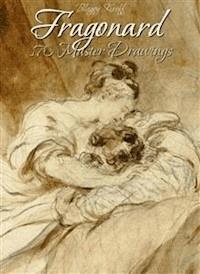
Jean-Honoré Fragonard was a French painter and printmaker whose late Rococo manner was distinguished by remarkable facility, exuberance, and hedonism. Among his most popular works are genre paintings conveying an atmosphere of intimacy and veiled erotic. Fragonard has been bracketed with Watteau as one of the two great poetic painters of the 18th century in France. A prodigiously active artist, he produced more than 550 paintings, several thousand drawings, and 35 etchings. His style, based primarily on that of Rubens, was rapid, vigorous, and fluent, never tight or fussy like that of so many of his contemporaries. Although the greater part of his active life was passed during the Neoclassical period, he continued to paint in a Rococo idiom until shortly before the French Revolution.
Das E-Book können Sie in Legimi-Apps oder einer beliebigen App lesen, die das folgende Format unterstützen:
Veröffentlichungsjahr: 2015
Ähnliche
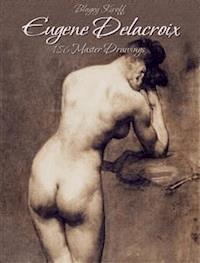
Fragonard:
170 Master Drawings
By Blagoy Kiroff
––––––––
First Edition
*****
Fragonard: 170 Master Drawings
*****
Copyright © 2015 Blagoy Kiroff
Table of Contents
Title Page
Copyright Page
Foreword
Drawings and Prints
Foreword
Jean-Honoré Fragonard (1732 – 1806) was a French painter and printmaker whose late Rococo manner was distinguished by remarkable facility, exuberance, and hedonism. Among his most popular works are genre paintings conveying an atmosphere of intimacy and veiled erotic. Fragonard has been bracketed with Watteau as one of the two great poetic painters of the unpoetical 18th century in France. A prodigiously active artist, he produced more than 550 paintings, several thousand drawings, and 35 etchings. His style, based primarily on that of Rubens, was rapid, vigorous, and fluent, never tight or fussy like that of so many of his contemporaries. Although the greater part of his active life was passed during the Neoclassical period, he continued to paint in a Rococo idiom until shortly before the French Revolution. Only five paintings by Fragonard are dated, but the chronology of the rest can be fairly accurately established from other sources such as engravings, documents, etc.
Fragonard was born at Grasse, Alpes-Maritimes, the son of François Fragonard and Françoise Petit. He was articled to a Paris notary when his father's circumstances became strained through unsuccessful speculations, but showed such talent and inclination for art that he was taken at the age of eighteen to François Boucher, who, recognizing the youth's rare gifts but disinclined to waste his time with one so inexperienced, sent him to Chardin's atelier. Fragonard studied for six months under the great luminist, then returned more fully equipped to Boucher, whose style he soon acquired so completely that the master entrusted him with the execution of replicas of his paintings.
Though not yet a pupil of the Academy, Fragonard gained the Prix de Rome in 1752 with a painting of "Jeroboam Sacrificing to the Golden Calf".While at Rome, Fragonard contracted a friendship with a fellow painter, Hubert Robert. In 1760, they toured Italy together, executing numerous sketches of local scenery. It was in these romantic gardens, with their fountains, grottos, temples and terraces, that Fragonard conceived the dreams which he was subsequently to render in his art. He also learned to admire the masters of the Dutch and Flemish schools, imitating their loose and vigorous brushstrokes. Added to this influence was the deep impression made upon his mind by the florid sumptuousness of Giovanni Battista Tiepolo, whose works he had an opportunity to study in Venice before he returned to Paris in 1761.
In 1765 his "Coresus et Callirhoe" secured his admission to the Academy. It was made the subject of a pompous eulogy by Diderot, and was bought by the king, who had it reproduced at the Gobelins factory. Hitherto Fragonard had hesitated between religious, classic and other subjects; but now the demand of the wealthy art patrons of Louis XV's pleasure-loving and licentious court turned him definitely towards those scenes of love and voluptuousness with which his name will ever be associated, and which are only made acceptable by the tender beauty of his color and the virtuosity of his facile brushwork and his decorations for the apartments of Mme du Barry and the dancer Madeleine Guimard.
A lukewarm response to these series of ambitious works induced Fragonard to abandon Rococo and to experiment with Neoclassicism. He married Marie-Anne Gérard, herself a painter of miniatures, and had a daughter, Rosalie, who became one of his favourite models. In October 1773, he again went to Italy with Pierre-Jacques Onézyme Bergeret de Grancourt and his son. In September 1774, he returned through Vienna, Prague, Dresden, Frankfurt and Strasbourg.
Back in Paris Marguerite Gérard, his wife's 14-year-old sister, became his pupil and assistant in 1778. In 1780, he had a son, Alexandre, who became a talented painter and sculptor. The French Revolution deprived Fragonard of his private patrons: they were either guillotined or exiled. The neglected painter deemed it prudent to leave Paris in 1790 and found shelter in the house of his cousin Maubert at Grasse, which he decorated with the series of decorative panels known as the Les progrès de l'amour dans le cœur d'une jeune fille.
Jean-Honoré Fragonard returned to Paris early in the nineteenth century, where he died in 1806, almost completely forgotten.
Lesen Sie weiter in der vollständigen Ausgabe!




