


22,79 €
Mehr erfahren.
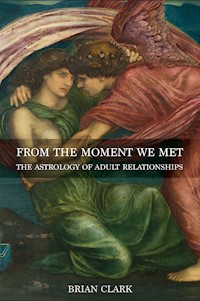
Relationship astrology – synastry – is not just an exploration of compatibility and possibility; it calls us to honour the mystery and soul of our attachments – not for what we want them to be, but for how they truly are.By its very nature, relationship is inevitable. Embedded in every human being is an instinct to respond and attach, to embrace the desire and urge to relate. As an integral human pattern, relationship is an aspect of every individual's future, shaped by the familial, ancestral and cultural atmosphere of the times in which they live; consequently, relationship is a central motif woven into each individual horoscope.When two souls form a relationship with one another, so do their horoscopes. The quest to understand the heart of relationship inspires this volume. From the Moment We Met offers a guide through the labyrinth of astrological symbols and images towards a clearer understanding and acceptance of your adult relationships.
Das E-Book können Sie in Legimi-Apps oder einer beliebigen App lesen, die das folgende Format unterstützen:
Veröffentlichungsjahr: 2020
Ähnliche
















1Praise for The Family Legacy and Vocation
Brian Clark is renowned for his research and insight in this field. He is an experienced teacher and counsellor as well as a gifted communicator. We in Australia are fortunate to have had the benefit of his influence and inspiration for many years. The Family Legacy does not disappoint.
– Cate Whelan, The FAA Journal
For newcomers to astrology and intermediate students, The Family Legacy is an excellent doorway to learning about astrology and making leaps in personal growth. For advanced students, professionals, and teachers, you won’t find a better reference on the astrology of family. The Family Legacy would make a great ‘recommended reading’ for any astrology class. This one is bound to be a classic and deserves a prominent place on any astrologer’s ‘favourite books’ shelf.
– Chris Lorenz, Dell Horoscope
Here in southern Oregon, we talk of guides on the world-class rivers and rapids. Brian Clark is in that category: a very skilled guide for the interior terrain that ties us together with those in our blood lineage and the others with whom we are close.
– Mary Plumb, The Mountain Astrologer
When writers make their writing live, they have done all they possibly can. Vocation is fully alive; I can offer no higher praise or recommendation.
– Roderick Kidston, The FAA Journal
Brian Clark writes beautifully. His long experience as a teacher, practitioner, and student of the esoteric arts shines through the book. I would thoroughly recommend it for astrology students, for astrologers just beginning to engage with client work, and for experienced practitioners. I have certainly found that reading Vocation has provided me with some new, useful insights into my own wayward and diverse vocational journey.
– Anne Whitaker, The Mountain Astrologer
3
FROM THE MOMENT WE MET
The Astrology of Adult Relationships
BRIAN CLARK
Acknowledgements
I am forever grateful for the opportunities I have been given to pursue my vocational course as an astrological counsellor and educator throughout my adult life. This path has interconnected with so many outstanding and distinctive individuals who I have had the honour of working with as clients, colleagues and students. My deep appreciation to all the students who have participated in our classes on Relationship Astrology and the clients who have willingly shared their relational anecdotes, their heartbreaks and their joys, as well as their beliefs and desires about relationship. These interactions have contributed valuably to my understanding.
I have been privileged to work with many colleagues who, over the course of planning classes, seminars or tours together, have become treasured colleagues. Verena Bachmann, Demetra George, Peter O’Connor, Tracey Potter, Melanie Reinhart, Anne Shotter and Mary Symes: my deep appreciation that our paths crossed. Over so many years I also have been blessed to have been encouraged and sponsored by many colleagues who have promoted and organized many wonderful educational adventures. My thanks for making me feel so special: Barbara Brackley, Narelle Macnamara, Clare Martin and Evelyn Roberts. My sincere appreciation to my Federation of Australian Astrologers (FAA) colleagues and co-workers for all your support and encouragement throughout the years.
I have been well supported by friends and colleagues who have read, proofread and assisted me to present the manuscript. My thanks to all those who have lent a hand; in particular Mary Symes and Barb Thorp for their much appreciated comments. Thanks to Frank Clifford for encouraging me to write and publish and Liliane Liou for making that possible.
And, to Glennys, my thankfulness for the fullness of our relationship,
Brian Clark Stanley, Tasmania
TABLE OF CONTENTS
– PREFACE –
SOUL AND RELATIONSHIP
Relationship is essential to the soul, at the very heart of existence, and its labyrinthine path leads us into the mysteries of life itself. By its very nature, relationship is inevitable; it supports and contains each person throughout the stages of their life, while at other times may avert or be in opposition to their development. Embedded in every human being is an instinct to respond and attach, including the urge, desire and anticipation to relate. As an integral human pattern, relationship is an aspect of every individual’s future, shaped by the familial, ancestral and cultural atmosphere of the times in which they live.
Relationship begins before birth, in the womb of the mother. Symbiotic, deeply felt and on the whole an unremembered passage, gestation is a primal image of intimacy and relationship. During gestation we experience the inescapable processes of dependency, bonding and attachment. At birth we inhale our first breath, initiating the unavoidable experience of separation through individuation, another integral aspect of human relating. Vulnerable, unable to survive independently, the newborn greets its caretaker – prospectively not only its first relationship, but also first love and first partner – while simultaneously experiencing its first separation.
These first independent moments are significant to relational patterning and commemorated astrologically by the Ascendant, the image of birth, and its polarity the Descendant. From earliest times, the soul has been associated with the breath of life and imagined as entering the body at birth through the first inhalation. Soul, as the breath of life, animates the natal chart, which becomes an ideal locus for contemplating soul and relationship as well as the mysteries of attachment and separation, intimacy and individuality.
From this experience we move forward into a variety of familial and extra-familial relationships. From birth through to childhood and adolescence, we forge sibling, parental and peer relationships, and it is these experiences that significantly inform and shape the 8path towards our adult relationships. My previous book The Family Legacy1 focused on the astrology of our formative relationships and their impact on later adult attachments and partnerships. The Family Legacy serves as a prelude to this volume which focuses on adult relationships.
This book has organically grown out of the classes Glennys Lawton and I developed for our four-year teaching program Astro*Synthesis. Relationship patterns were explored in our first- and second-year classes as well as in an advanced unit called Synastry. Three student booklets prepared for those modules, called Intimate Others: The Astrology of the 7th and 8th Houses; Soul Mates: The Houses of Relationship; and Synastry: An Astrological Anatomy of Relationship, became the starting point for this book.2 In addition, some of the interpretations such as Venus and Mars in the signs have been adapted from my report writer Kindred Spirits.3
Beneath the western examples and experiences in this book lies the archetypal nature of relationship which can be studied in all languages and all societies. Being a universal language, astrological images are cross-cultural; therefore, when using astrological symbols to understand individual, familial and social patterns, these images can have resonance across all cultures.
Relationship in and of itself is archetypal; that is, the experience of relating is common to the human condition. In addition, there are archetypal roles characterized by mythological gods and goddesses. While their names and narratives differ across traditions and civilizations, the spirit of each is similar, e.g. the spirit of archetypes such as ‘king’, ‘queen’, ‘husband’, ‘wife’, ‘lover’, etc., remains the same. Being archetypal, it is only their clothing, characteristics and interests that vary across cultures. Their essence is the same. From an astrological perspective this essence is expressed through the planetary archetypes, uniquely disseminated through their signs, houses and aspects in each horoscope.
On some level all planetary archetypes are concerned with love and relationship, yet three in particular can be identified for their strong association with love: the Moon, Venus and Neptune. The Moon is first love, mother love, and is indicative of early attachment, while Neptune is cosmic, universal love. Venus is identified with adult love and relationship, and her sign of Libra has become an enduring symbol for the qualities of union and partnership.9
Each individual is born into a generation that has its own versions, values, attitudes and experiences of relationship. I was born with Neptune in Libra (1942–57), the war and post-war generation when seeds of idealism about love and relationship were implanted in the collective soul. Enormous change has taken place in the attitudes towards relationships, marriage and sexuality throughout my generation’s lifetime. Uranus moved into Libra in 1968, and Pluto entered Libra in 1971. Those in my generation were still adolescents or in their twenties when the ‘relationship revolution’ began. Relationship institutions, traditions and boundaries were torn down; for instance, no-fault divorce laws in the US saw the divorce rate soar. The transformation of relationship attitudes and customs happened across the board, including women’s liberation, gay rights and open marriages.
When Uranus entered Libra my parents were shocked at my generation’s rejection of traditional marriage and our preference for living together or remaining uncommitted, rather than feeling obligated to marry. But by the time Uranus left Libra in 1975, some of my parents’ friends were divorced and living unmarried with new partners. The three outer planets in Libra in the last half of the twentieth century altered the cultural approach to relationship, setting in motion new patterns and possibilities, so much so that it is often difficult for younger generations to imagine the conventional approaches that existed prior to this in the middle of the twentieth century.
Even so the archetypal innate processes of relating have not changed – e.g. attachment, separation, intimacy, individuality, dependence and independence. The essence remains the same but has adapted to grow with the times. The archetypal roles of the gods and goddesses have not changed; while they are ever engaged in relationship, it is their roles that have been updated to contemporary versions.
Throughout the book I share case examples to illustrate various aspects of relationship astrology, not simply to demonstrate techniques, but also to show countless archetypal possibilities. Some case studies I was already familiar with, having used these as teaching examples over the years. Others captured my interest and attention. My intention was to let the narratives reveal the astrology, rather than use the case studies to legitimize astrological techniques. 10While the patterns of our relationships are not necessarily mapped out by the horoscope in literal ways, astrology offers insights and revelations when we openly participate with its symbols.
Astrology proposes a unique perspective into honouring the voice of the soul. A person’s horoscope is created for the time of birth coincident not only with the soul’s ‘breath of life’, but also with a person’s first attachment–separation dynamics. Relationship patterns are innate to the human soul and at birth the relational template and tendencies are impressed upon the psyche and reflected in the horoscope.
Soulful relationships are experienced throughout the course of our lives and we are blessed when we find our soulmates. It does not guarantee that these relationships are trouble-free; in fact it is often the opposite, but the soul feels connected, at home and in the eternity of the moment when in the presence of a soulmate. As the ancients knew, the soul has its own reasons. Astrology assists us in reflecting upon these reasons.
– INTRODUCTION –
AN ASTROLOGICAL OVERVIEW OF RELATIONSHIP
When two souls form relationship with one another, so do their horoscopes.
Comparing the astrology between two individuals for compatibility is familiar to most people, even part and parcel of everyday life. In some ways astrology is the oldest typology of relationships. A common complaint is the incompatibility between Sun signs; for instance, a person who has the Sun in Taurus may feel their Aries friend walks too fast, while an Aquarian might not understand why their Cancer colleague is so emotional. Can a Sagittarian really understand why their Pisces partner would rather stay in bed than go out for an early morning jog?
Yet there’s much more to chart compatibility than Sun signs. When working with two horoscopes, the amount of astrological information increases exponentially, as each individual’s planets has a prospective interchange with their partner’s planets. Therefore I have tried to present an approach to all the possible information in a sequential and in-depth way. Each practitioner will have their own personal style for this analysis, stressing some techniques that others may not. Like all professions and procedures there are variants and dissimilarities from which you will forge your own understanding and practice.
Throughout the book I concentrate on adult relationships; however, you can modify the astrological concepts to match a myriad of other partnerships. Different aspects of the horoscope are emphasized for distinct relationships such as parent–child, sibling–sibling, lovers, friends, marriage or business partners. As there are differing customs, conventions and codes of conduct for diverse relationships, the analysis needs to be tailored to suit the particular type of relationship, while keeping in mind that each and every relationship is inherently unique within itself.
The following is a synopsis of what we will develop throughout the book, beginning with Part 1 where we will concentrate on relationship themes and considerations in the natal charts.12
Relationship Themes in the Natal Charts
The first step in relationship astrology is to study the natal chart of each individual, concentrating on the interconnecting patterns and possibilities. This includes being mindful of what the horoscope reveals about their family relationships, the parental marriage, the family atmosphere and the sibling system. We begin looking at the planets through the eyes of relationship, becoming accustomed to how they function in the sphere of relationship. Then we will focus mythologically on the gods of relationship and their symbolic presence in our horoscopes. As we are focusing on adult relationships we will concentrate on the planetary archetypes of Venus and Mars, as well as the terrain of the 7th and 8th houses. As friendship is another important adult bond we will open the door to the 11th house to amplify our connection to friends.
One of the seminal moments in any relationship is when each one crosses paths with the other. How does each one come to be at the same crossroads at the same time? This is a question that relationship astrology contemplates through its use of the angles and axes of the horoscope, astronomical circles that intersect with the ecliptic to bring two forces into the same plane at the same time. Therefore we will look at the Nodal axis as well as the Vertex–Anti-Vertex angle in this context of intersecting paths.
Temperament plays a significant role in relating; therefore we will consider ways to analyse each partner’s temperament and the function it performs in the partnership. Since the horoscope is a vivid indicator of what the individual may attract to them by means of relationship, we also need to be aware of not only what is developed, but also what is lacking in the horoscope.
Synastry
In Part 2 we introduce synastry, the area of astrological analysis of two or more charts in the context of their relationship. Derived from ancient Greek, synastry suggests being together with the stars, recognizing the archetypal nature of relationship in the human experience. Synastry conjures up the image of a celestial guidebook to relating.
Synastry acknowledges the forces of human attraction, the synchrony of meeting, compatibilities and difficulties as well as the development of the relationship over time. It is a profound astrological 13tool for the amplification and exploration of relationships, a valuable guide in helping us to better understand relationships in general as well as the specifics of a given relationship. Some of the goals of synastry are to:
Address specific questions and concerns in the relationshipConsider each individual’s style, attitude and approach to relationshipDelineate the core issues within the relationshipExplore the areas of potential conflict and compatibilityHonour the authenticity of each individual and the relationship that is createdReveal the patterns, purpose and nature of the relationshipReview critical and transitional times in the relationshipSynastry is about the study of more than one horoscope; therefore, the amount of detail and data that can be generated increases substantially. It is helpful to follow some steps and guidelines when analysing the relationship of two or more individuals. We will study each stage in synastry which develops the process of studying two horoscopes at the same time.
Chart Comparison
Chart comparison attempts to see how one individual’s horoscope impacts on the other. This can be done in a variety of ways. One way to begin this process is to ascertain what is lacking in each horoscope and whether the other is fulfilling this lack. And if so, are the partners aware of this? What has the individual imported into their relationship experience? From a relationship point of view we are considering how one partner may be compensating for the other’s lack, as well as exploring dynamics that the partners may be unaware of. Certain areas of the horoscope are more prone to projection, transference or distortion by one partner; therefore, by examining both horoscopes we are looking at how individuals impact one other, as well as areas of each horoscope that are susceptible to projection, compensation and idealization.
A technique highlighted by Stephen Arroyo in his book Relationships and Life Cycles is to place one partner’s planets and angles over the other’s horoscope, and vice versa. Using computer 14software, two bi-wheels can be created; each has their partner’s planets on the outside of their chart. This gives us a visual image of the impact that the partner is making on the energy field and atmosphere of the other.
The Aspect Grid
One of the most dynamic techniques in chart comparison involves analysing the interaspects between each chart. Here it is necessary to understand the nature of each planet and how that affects the other, especially when there is a major aspect. Each planet in one chart is compared to each planet in the other to determine the most dominant and powerful aspects between the two charts.
The Composite and other Charts
When the two charts are thoroughly analysed, another chart can be created by combining the two charts. This is known as the composite or the Davison relationship chart. Each one attempts to delineate the energies of the relationship or the two individuals as one entity or system. Other charts which are also important, such as the marriage and/or meeting charts, will also be examined. Transits and progressions are important at the time of meeting, as they symbolize the founding energies of the relationship.
Each partnership will move through time; therefore, it is important to be aware of the transits and progressions that envision the evolution of the relationship. Not only transits and progressions to the natal charts are considered, but also to the composite chart. When considering relationship we are faced with stories and images of two individuals from two different family backgrounds, each having experienced their own unique life events. The time before they met is invested with memories, emotions, traumas, opinions, sentiments and experiences which infiltrate the relationship’s present and future. The past that each one brings into the relationship is highly subjective and personal, yet is often unknown to the other. These influences will be present in the transitions the partners share together.
We will end with a reflection on the steps we’ve taken to understand the anatomy of relationship.
PART I
THE NATAL CHARTS
Possibilities and Potentialities of Relationship
Relationship astrology is not just a project about compatibility and possibility; it calls us to honour the mystery and soul of our attachments, not for what we want them to be, but for how they truly are.
Brian Clark16
– CHAPTER 1 –
ARCHETYPES AND ATTACHMENT
Planets in Partnership
We start our exploration of adult relationships by reflecting on planetary archetypes in the context of adult attachment and relationship. The Family Legacy serves as a prelude to this book since it explores the astrology of family relationships which lays the groundwork for our adult ones. Yet, whether in childhood or adulthood, the patterns in the natal horoscope are always the same, although moderated through transits and progressions. What changes as we age is the consciousness we apply to these signatures, the development and experience of the self, as well as our own maturation.
Each planetary archetype has its own constant signification; it is the application of the planet’s meaning that varies. The planetary archetypes are the gods of astrology. When they enter the arena of human relationship we become their surrogates: the divine force becoming entwined with the human life story. Before they were gods of astrology, they were alive in the Greek myths, and to a large extent the deity’s character and personality were bequeathed to the planets.
The Inner Planets
Of all the planets in the horoscope, the five inner planets are the most individualized, characteristic of our personal needs, virtues, intelligence, values and desires. They also personify family members. For instance, the Sun characterizes the father; the Moon, mother; Venus, sister; while Mars represents the brother figure. When these planets are in relationship sectors or strongly aspected, the bond to this family member or their archetypal image may be highlighted. These planets serve as archetypal personifications of familial roles; for example, the Sun might suggest a paternal pattern in the context of a relationship; the Moon, a maternal one. Patterns associated with these planets are first evident in familial relations through childhood and adolescence before they emerge once again in adult interactions.18
These planets are strongly shaped and influenced by the social and outer planets through dynamic aspects and transits. However, they are also reactive to and have an effect on planets in others’ horoscopes. When attachment occurs or an intimate relationship develops, the planetary archetypes become more receptive and vulnerable to their partner’s planetary temperament. How an urge, represented by each planet, seeks to be fulfilled through relationship is personal; however, since each planet symbolizes an archetypal orientation it has its own sphere of interest and attraction. In amplifying and reflecting on this sphere, insight into our relationship patterns and preferences is revealed.
With the exception of Mercury, the inner planets are also characterized by their gender; therefore, the Sun and Mars represent patterns in the ancestral and cultural past carried by males, while the Moon and Venus signify females in general, but also the patterns carried by women in the family. On a psychological level the inner planets are also characterized and differentiated by their masculine and feminine traits. Since the human psyche contains both, masculine and feminine characteristics feature in men and women. While masculine qualities are encouraged in men and feminine attributes are supported in women, each individual has their own temperamental mixture of these qualities.
In relationship astrology it has often been proposed that for a woman the Sun and Mars represent her inner masculine figure or animus; therefore, the condition of these planets will be strongly indicative of male partners. The Sun will be descriptive of the first relationship with father while Mars will be symbolic of what she desires in a man as a partner or peer. Similarly, the Moon and Venus for a man have been deemed the inner feminine qualities or the anima, which will be activated through relationship. His Moon is indicative of his first love, mother, while Venus will illustrate his feminine ideal perceived through the women he is attracted to.
To some extent this line of thinking is beneficial in relationship analysis due to familial and cultural traditions; however, all four planets are also archetypal and transcend gender descriptions. Therefore it is sensible not to be too fixed about assigning traits by gender. Even so, it is wise to recognize that the Sun and Mars for a woman, and the Moon and Venus for a man, become more available and conscious through relationships. Both the Sun–19Moon and Venus–Mars are natural pairs. They not only represent the masculine–feminine polarity but other dualities such as light and dark, assertion and passivity, confrontation and compromise, overt and covert. While they appear as opposites, they pair naturally and therefore are strongly attracted to one another beyond gender classifications. This dynamic also operates in homosexual relationships, due to the affinity of these archetypes.
In the context of early relationships the Moon and Sun play an important role that reflects their connection to mother, father and family members. But in an adult context Venus and Mars are referred to as the planets of relationship. Venus is the urge to be valued, loved and desired, while the impulse of Mars is to desire and chase what is wanted. Therefore, in relationship astrology, when analysing adult attachments and intimate relationships, Venus and Mars stand out. Their signatures by sign, house and aspect, as well as their interaspects to the partner’s chart, are primary; therefore we will study these planets separately. But for now we will turn to looking at each planet through the lens of relating.
The Sun
The heart has become the icon for emotive feelings, affection and love. It is often used to express tender feelings but as a symbol it reminds us of the enduring connection between the heart and love. As the ruler of the heart, the Sun is fundamental to the growth of a heartfelt relationship. It is central to the development of self-love and approval, a vital prerequisite for a healthy and equal adult relationship. Self-esteem develops through feeling loved and cherished in familial and early relationships, encouraging a healthy sense of self-worth. But when the solar archetype is underdeveloped it may veer towards egotism and self-centredness, which are divisive in adult relationships. In these cases the Sun seeks acknowledgment and gratitude from the mate rather than being able to offer praise and appreciation to their partner. Therefore, one of the Sun’s central roles in relationship is to shine its light on the other through encouragement, support and recognition of their talents. In turn this provides a greater sense of achievement and personal satisfaction for the solar individual.
As the Sun seeks to be self-expressive and creative it is important that relationship not only supports the individual’s aspirations and 20ambitions, but fosters their growth. In relationship, the Sun needs to feel it is being encouraged to do what it genuinely wants to do, no matter how arduous or seemingly impossible. It wants to be partnered in courage and creativeness. Since the Sun represents unique creativity, individuality and expression, it needs its partner to recognize and be aware of its importance. Depending on the nature of the charts and relationship, the mutual creativity of the couple may be utilized through common projects and work. A mythic image of the Sun is the Hero, and the course of the Sun through the zodiac is akin to the heroic journey. In relationship the Sun represents the need to encourage and support the heroic nature.
The Sun also symbolizes vitality and when this archetypal aspect of the individual is supported by their partner they feel more energized and alive. The Sun is acknowledgement, admiration and applause, and when these are felt in relationship the Sun is aglow, warming the individual and the relationship. In relationship astrology the Sun is challenged to become the centre of someone else’s world by letting go of their own self-centredness and need for recognition or desire to be the leader or the one in charge. An active and warm-hearted relationship involves a system with two Suns.
By tradition, the Sun has always personified father; therefore, when the Sun is highlighted in relationship astrology it would be important to consider the father’s attitudes to relating, familial patterns and images. Those who are confident and convincing or powerful and influential reflect the light of the Sun.
The Moon
When the archetype of the Moon is highlighted, the themes of care, dependency, security and belonging are systemic to the relationship. The Moon in the natal chart represents our personal needs. From birth and through childhood we are dependent on others to meet our needs; however, as we mature, we can provide for some of these ourselves. Yet we always remain dependent on others for certain needs, such as companionship, support, learning and love. Therefore the Moon is indicative of how comfortable we feel when providing for both our own needs and the needs of others. For instance, contrast a Moon in Aries with a Moon in Cancer to reflect on how these needs might be expressed in a relationship.21
Since dependency implies being reliant on others, it is often equated with vulnerability. However, vulnerability is not weakness, unless we use the word in the context of having a soft spot for someone. Dependency softens the boundaries between two people, creating a cooperative which is mutually beneficial. In childhood this relationship is not equal; therefore, we trust that others will fulfil our needs. If this trust was violated or abused, then the lunar propensity to bond may be compromised in adult life. Since the Moon is habitual by nature, the same pattern may unintentionally be repeated. In adult relationships we are the parent to our inner child and need to protect its vulnerability and secure a safe place for it in our relationships. Aspects to the Moon will be very revealing in exploring the individual’s needs and potential patterns of emotional trust.
The lunar need to belong is strong. Its inclination in relationship is to feel attached and bonded to the other and to the relationship; therefore, each partner’s attachment style or their capacity for closeness will be confronted in an intimate relationship.4 The Moon is also suggestive of our habits, living style and emotional moods, all of which become evident as a relationship becomes more intimate or the couple spends more time together. The Moon reflects an individual’s comfort zone, living style and habitual patterns such as eating, sleeping and relaxing. While a Moon in Sagittarius may crave a hot curry, jump out of bed early and enjoy backpacking through a jungle, this might not be well matched with their partner’s Moon in Taurus needs.
Traditionally the Moon is embodied by mother; therefore, if the Moon is highlighted in the relationship analysis it is important to address the mother’s relational legacy, the ancestral patterns in relationship as well as the mother’s ease of affection and level of emotional closeness. Since the Moon is cyclical it is often associated with individuals who are inconstant or wavering; in other words, emotional and moody. In a relationship context it is important to recognize the moods and phases of the Moon by acknowledging without judgement the authenticity of feeling. The Moon brings the full range of emotion into any relationship and the lunar signatures will help to address the emotional spectrum in each individual and the relationship.22
Mercury
One of the most common complaints I hear from couples concerns the lack of communication in their relationship, or the feeling of being unheard or misunderstood. A simple suggestion turns into a heated argument or an observation is experienced as a criticism. Mercury’s portfolio in the astrological pantheon is Minister of Communication. His sphere of influence is language, exchanging ideas, consulting on projects, communicating and listening: key aspects of the Mercurial nature highlighted in close relationships.
While Mercury is generally associated with verbal or written communication, he is also the trickster archetype so what is said or written may not be genuine. Communication in relationship is complicated by the influence of the unconscious. Unexpressed feelings, resentments and reservations may be conveyed by body language, changes in behaviour, disassociation or detachment which clog the access to direct discussion. The natal chart assists in confirming the natural modes of communicating while chart comparison will detail how this is activated in relationship. Familial patterns of communicating are brought into adult relationships, and it is in the intimacy of a mature relationship where the taboos and directives about what can be said, stated and shared are confronted.
Mercury’s penchant for mobility, freedom of expression and portability needs to be honoured in relationship. Once this is acknowledged and experienced, the Mercurial journey moves from communication to communion. With practice, the facility for the two sides of Mercury to flow together is developed: as one talks, the other listens; or as one expresses, the other analyses. This close association develops empathy and understanding which are revealed through the language the couple uses when conversing. Over time this evolves into the couple’s own dialect. Humour, wit and absurdity are also part of this dialogue. The Mercurial ability to laugh at life and not take it all so seriously is a positive side of the trickster that lightens and enlivens a relationship.
Mercury’s duality, association with both the day and night world, and his access to both heaven and the underworld plays an important function in relationship. In an intimate relationship Mercury’s role as the psychopomp or guide into the underworld becomes apparent. When Eros is awoken, Mercury finds many channels of expression through diaries, love letters, innuendo, arguments, fantasies, sweet 23talk. Intimacy requires Mercury to be faithful to the relationship; private words and thoughts need to be contained within the sanctity of the relationship.
Traditionally, Mercury is associated with learned types, either teachers or students, or others who live by their wits; therefore, relationship is a venue for this sense of curiosity. Mercury also has the urge to learn and be educated; therefore, when an attachment is made, the relationship becomes Mercury’s campus. Mercury’s association with the sibling archetype brings the images of companion, mate and fellow traveller into his relationships.
Venus
In our examination of adult relationship Venus is paramount, as the archetype suggests the urge for love, union, connection and relationship. While the Moon is also the bonding instinct, it is representative of dependent and familial attachments, whereas Venus suggests more independent and equal relationships often forged outside the family’s comfort zone. It denotes our personal values, tastes, likes and dislikes, as well as what we find pleasurable and beautiful. Therefore, underlying our passions, attractions and connections are our personal tastes, pleasures and values. While Venus is about the urge for a loving relationship, it also signifies the experience of self-love and self-worth.
Venus embodies the power to attract. In Greek myth the goddess had a magic girdle which when worn attracted the lover of her choice. In a vignette in The Iliad, the goddess Hera borrows Venus’s magic girdle in order to seduce her husband Zeus after he has lost interest in their relationship. Venus is this magnetic quality which renders her irresistible. While fashion, style, adornment and taste go through collective trends, Venus is personal. One’s tastes, pleasures and passions are highly subjective, for what one finds beautiful and alluring, another may not. Venus is the core of our own individual ideals and esteem.
Not only lovers fall under the goddess’s spell: artists, singers, fashion and entertainment personnel, curators of museums and managers of bars, those enjoying festivities, gaming and other pleasures are also entranced by Venus. In other words, the inhabitants of Venus’s domain are drawn to beauty, creativity, art, sensuality and pleasure, but it is also in her domain where love, sexuality and 24relationship are located. However, this domain is often fraught with other features of love and relationship, such as vanity, passion, jealousy and triangles.
The nature of Venus in each horoscope will reveal personal tastes, but will also reflect our attitude towards love and relationships, whether sexually intimate, emotionally close or friendly companionship. It is how we warmly respond to the other and the soulful quality that attracts us to someone else. Venus is our mode of expressing affection and the way in which we in turn receive it. Ultimately, it is the qualities we hold dear in ourselves and how we resonate to these qualities in others. Venus is the anima who connects us to the heart of adult relationship as well as the muse who draws us to the beauty in the world, not only in others but especially in ourselves.
Mars
A vital masculine energy, Mars is often connected with the warrior archetype, evident since the early Babylonians associated their god of war Nergal with the red planet. This theme enters relationship astrology with Mars being representative of conflict, rivalry, competition and confrontation in human interactions. As an archetype Mars is also brave and courageous; hence relational images of heroes fighting for those they love or struggling against all odds to woo and win the one they desire. Representing motivation, desire and excitement, physically and emotionally, Mars is the archetype that inflames our passions. It increases our body temperature and produces rashes or flushes when we are physically attracted to someone. Instinctually, when we are possessed by Mars we are in heat and out of control.
When the warrior spirit possesses an individual they can stride fearlessly into battle, but when Martian desire arises, they can be disarmed and captivated. Mars’s fiery energy is tamed through love. Mars’s archetypal range covers a wide spectrum of emotion, from primitive urges for survival to the erotic urge to connect with beauty and pleasure, making him the ideal mate for Venus.
In the natal chart Mars is not only a barometer for what we desire or yearn for, but also for how we pursue our goals and go after what we want. In relationships it represents our pursuit of those we love, how we express our yearnings, as well as how we control 25our desires and passions, including anger. Through our emotional responses, Mars helps us consider whether our desires are able to be channelled or are blocked or impeded. When Mars is blocked it can be introjected, that is turned back on itself through self-blame or self-injury. In relationship a blocked Mars may explode in rage or separate from the conflict, severing the connection. Therefore in relationship analysis Mars is not only important as an indicator of passion and desire, but also as a gauge for the healthy expression of conflict and disagreements.
Mars traditionally has been linked to soldiers and athletes; those using knives such as surgeons, butchers and doctors; tradespeople; police; and individuals who are bold and brash. The Martian population is identified as strongly masculine. Along with the Sun, Mars is the animus in relationships, but unlike the Sun it is more instinctual, primitive and sexual. Mars’s horoscopic nature involves the expression of potency and power, and, in relationship, desires and passions.
The Social Planets – Jupiter and Saturn
Jupiter and Saturn are thematic of the social strata of our lives and participation in systems outside our own family and culture. Together, their cycle is twenty years, a ‘score’ marking out the course of our lives through social customs, rituals and passages of the life cycle. In terms of relationship they are concerned with beliefs and traditions about marriage, divorce, sexuality, etc. Jupiter suggests the moral principles and ethics that we believe in, while Saturn represents the established traditions and laws that enforce these beliefs. Although seemingly opposite in their viewpoint they are a natural pair and together over the course of two decades they attempt to align the laws with what is deemed to be ‘right’.
When Jupiter or Saturn enters one of the houses associated with intimacy, such as the 7th or 8th house, or when they aspect an inner planet, especially Venus or Mars, these archetypes are present in adult relationships. For instance, when a major aspect occurs between Jupiter and Venus or Mars, we are drawn to consider the philosophy and moral attitude underpinning the spectre of relationship and how that might liberate or inhibit relating. When Saturn is in aspect to Venus or Mars, we might reflect on the rules and regulations that either contain or obstruct relating.26
Therefore we can regard Jupiter and Saturn as being both collective and personal ways of thinking about relationships. When Jupiter or Saturn is in a sign of relationship, such as Libra or Scorpio, we are alerted to the social climate in terms of relational patterns; however, we are also aware that individuals with planets in these relational signs will be undergoing a revision and analysis of their own relating patterns. It is also of interest to note that Saturn is exalted in the relationship sign of Libra. Are relationships a test, a trial or a reward?
Jupiter
Jupiter influences personal relationships when occupying a house connected to relating or by aspect to an inner planet, especially Venus or Mars. When this occurs the archetype impacts relationships in many ways. Cross-cultural relationships are indicative of Jupiter; therefore the partner’s beliefs and philosophies are leitmotifs. Jupiter’s influence attracts foreign relationships or those beyond our social and familial background. The borders that Jupiter crosses are social, racial, cultural, economic, educational and religious; therefore a Jupiterian relationship is one that is intermixed, whether that is the intermingling of faith, social status or nationality. The motive underlying this highlights the attraction to what is foreign and the urge to learn and grow beyond the confines of the everyday and traditional. However, cross-cultural relationships can also crisscross boundaries inappropriately, such as the line between a teacher and student, or be fraught with moral and ethical dilemmas.
What the archetype seeks through relating is freedom and adventure. In a natal chart a strongly placed Jupiter may describe a traveller, explorer or freedom fighter, aspects of a personality which will need to be supported in relationship. There is also an inclination to be open and optimistic towards intimacy; however, while the individual’s positivity is an attractive asset, it is often balanced by a difficulty in accepting the challenging and negative times in relationship. Jupiter seeks personal growth through its interactions because the need for education and self-awareness is strong. Generosity in relating is admirable, but this can also be used as a defence mechanism against intimacy by always giving or being in control, so the person does not need to feel in debt or vulnerable to the other.27
Jupiter’s process includes the search for the divine and when transferred onto relationship this could become the search for the ideal other. Certainly this brings the issues of idealism, expectation, spiritual values and philosophical beliefs to the forefront of a relationship. It also suggests that when this archetype’s presence is strong in relationship, the erotic and creative attributes of the relationship may be more focused on shared philosophical and spiritual ways of being.
Saturn
Saturn is often representative of control, authority, obstacles and difficulties, but in relationship these can also be what keeps the couple bound together or what has been likened to the ‘glue in the relationship’.5 Saturn is commitment and maturity, as well as the intention to work and be responsible, all important attitudes in relationship. It also rules the process of ageing and longevity and together these qualities act as an adhesive for couples to work through difficulties and obstacles towards an enduring relationship. On a positive note the archetype embraces loyalty, steadfastness and tradition, having the potential to be reliable in relationship. However, Saturn can also be experienced as paternal and patronizing, even negative and controlling. In these cases relationships may endure through fear, domination and manipulation. In the natal chart Saturn represents self-control and personal responsibility. When an individual feels powerless or out of control, they may seek to manage and have power over others, bringing an authoritative and oppressive atmosphere to the relationship.
On the other hand Saturn helps to build authority and boundaries, and can be where we feel supported to be more responsible, serious and accomplished. Therefore in terms of relating, Saturn matures and develops through relationship. Saturn brings its fears to relating, often focused on not measuring up or not being good enough, which intensifies the dread of rejection and abandonment. Adulthood interactions often echo childhood neglect or lack of love and affection, which can undermine a relationship when not adequately addressed. Therefore Saturn confronts and reworks the issues of self-worth, autonomy and personal values in adult relationships. One way to sidestep being dependent or reawakening 28the pain of relationship is to be self-reliant, too busy or unavailable, all of which are Saturn’s defences.
Saturn is strongly affiliated with work and achievement, and in the sphere of relationship this can translate to issues around status, ambition, money or time spent at work rather than shared time in relationship. Saturn rules Capricorn and is exalted in Libra so it excels in these areas, just not at the same time. Saturn addresses the juxtaposition of hierarchy and equality, so it is important to distinguish this boundary in relationship by agreeing on who has responsibility for what, as well as identifying the roles and expectations of each partner. The pattern of work versus relationship is thematic of this archetype, and when Saturn is in high focus in relationship astrology it is important that these themes be addressed.
Saturn is not identified as being demonstrative of love and affection, at least not publicly. This is a private matter. Rules and regulations about the display of love and affection are shaped in the family environs and met again in adult relationship where we have the opportunity to find our authentic way of showing tenderness. Standards of perfection and ways of being are challenged in adult relationships; therefore, with time, the rules, standards and routines in relationship mature in the individual and their relationships.
The Healing Potential of Relationship – Chiron
Chiron, while not classified as a planet, has taken an important position in the astrological pantheon since it was discovered on 1 November 1977. Since then it has had many reclassifications as a minor planet, asteroid and comet, and eventually found its place when it was once again grouped with other astrological wanderers known as the Centaurs. Considered transitory to our solar system, the Centaurs are small planets generally located between Jupiter and Neptune. As boundary crossers, they traverse the orbits of the giant planets. Like their mythological counterparts they were seen as outsiders, renegades and disorderly.
However, Chiron was one of the exceptions to the band of rowdy Centaurs fathered by Centaurus, the grandson of Ares. His lineage as the son of Philyra and Cronus meant he was half-brother to the three Olympian gods, Zeus, Poseidon and Hades, who by the modern era in astrology had all been named as planets. Chiron’s demeanour was antithetical to the other Centaurs as he 29was wise, just and kind, but like the other Centaurs he was socially marginal and not part of the mainstream. Being half-human and half-horse, his divinity is compromised by his physical nature personifying the pain of incarnation, the suffering of the human condition and the angst of being marginal. His body must die before his divinity can be released, unlike immortals whose shape is eternal. Therefore in human relationships Chiron recognizes the inevitability of human suffering and pain as well as the shared experience of being human. Within each relationship the divine stirs and is experienced through the power of love, the pleasure of sexual passion and the sacredness of intimacy. Yet, for humans, pain and suffering is inevitable and Chiron addresses this profound mixture in each relationship. When prominent in an astrological relationship analysis it invites participation with the human yet soulful feelings of pain and suffering, so often rejected and feared by the human part of ourselves.
Chiron
Known popularly as the archetype of the wounded healer, Chiron is the paradoxical encounter with wounding and healing. The wound is the source of healing as it contains its own healing balm. In a psychological way of thinking, acknowledgement and acceptance of the wound quickens the healing process. In relationship astrology, Chiron suggests that wounds are reopened through the process of relating and intimacy.
Chiron is not a planetary archetype associated directly with relationship. His influence is felt when placed in an important house associated with relating or when Chiron is in aspect to an inner planet, especially Venus or Mars. When this occurs the astrologer will be alert to relationship themes which may manifest in many ways. We can begin to reflect on some themes in the context of Chiron’s orbit. It spends its least time in the relational signs of Libra and Scorpio, remaining only 1–2 years in Libra and 1½–3 years in Scorpio; therefore these will represent more personal or cultural shifts in understanding relationships rather than the sweeping changes shown with the outer planets.
As discussed, a common Chironic theme is being marginal, outside the system or feeling disenfranchised. In relationship astrology this might suggest being involved in a non-traditional 30relationship, one that is outside the norm or atypical of the familial or cultural system of the individual. Perhaps the beloved is wounded or suffers in a way that is unfamiliar to others. Since Chiron represents this curious amalgam of wounding and healing, it may be through relationship or the partner that the wound is restored to health as a result of acceptance and understanding.
The Chironic wound of lacking worth, value or acceptance may be reawakened in relationship through feeling undervalued and marginalized by others. Ironically, partners can be agents of wounding but they may also be the angels of healing, as it is through their behaviour that difficult wounds are resurrected for conscious recognition and release. We may also be an agent of accidental wounding and through this awareness a more trusting and conscious relationship can be developed. In recognizing, honouring and accepting the scars in others as well as in ourselves we are able to become more intimate, creating a deeper soul connection. Chiron guides us to be gentle and patient with the vulnerabilities and limitations of one other, which changes our perceptions of these qualities, now able to be recognized as strengths and soulful virtues.
Chiron’s philosophy teaches that our own pain is what makes us adept at healing others. In the wisdom of our own wounds we learn to recognize the pain and plight of others and develop compassion and understanding for what they suffer. Ironically, while we may not be able to fully accept and honour our own wounds, we can do that for others. This private paradox comes alive in relationship where we can do for our loved ones what we often are unable to do for ourselves.
Generational Differences and Trends in Relationship – Uranus, Neptune and Pluto
Having been discovered in the modern era, the next group of planets was not part of the ancient history of astrology. Symbolically their nature is not restrained by human concepts, laws, limits or morality. The outer planets reach beyond the human experience; hence they have often been referred to as transpersonal, collective, numinous, divine and supernatural. They are not instinctual to human perception; they have often been likened to a spiritual or suprapersonal dimension, akin to Carl Jung’s notion of the collective 31unconscious. By nature they bring something into the human experience that has not been conceptualized, planned, experienced, imagined or deeply felt before; perhaps this is why these planets suggest awakening, liberation, imagination, initiation and, always, change.
What takes place when the planets of change aspect the planets of exchange? When an outer planet has an effect on relationship, it suggests something unconventional, out of the ordinary or statistically on the outermost limits of the bell curve. The outer planets exert their influence on a private relationship when in aspect to an inner planet, especially Venus or Mars, or when placed in a house of relationship or intimacy. When the outer planets traverse through the 7th or 8th signs of Libra or Scorpio they influence the collective attitudes and ideas about adult relationship, intimacy and sexuality. Each of the outer planets traversed this segment of the zodiac from 1942–95, inevitably altering the human landscape of equal and adult relationship. These astrological epochs of enormous transformation in relationship are listed below in Universal Time (GMT):
28 Sep 1968 to 20 May 1969
24 Jun 1969 to 21 Nov 1974
1 May 1975 to 8 Sep 1975
21 Nov 1974 to 1 May 1975
8 Sep 1975 to 17 Feb 1981
20 Mar 1981 to 16 Nov 1981
NeptuneNeptune has a cycle of 165 years. Since the orbit is spherical, it will average nearly 14 years in each sign (generally 13½ –14 years in each sign).3 Oct 1942 to 17 Apr 1943
2 Aug 1943 to 24 Dec 1955
12 Mar 1956 to 19 Oct 1956
15 June 1957 to 6 Aug 1957
24 Dec 1955 to 12 Mar 1956
19 Oct 1956 to 15 Jun 1957
6 Aug 1957 to 4 Jan 1970
3 May 1970 to 6 Nov 197032
PlutoSimilar to Chiron, Pluto’s orbit is elliptical. Its cycle of 248 years is not evenly spread throughout the zodiac, spending 12–13 years in Libra and 11–12 years in Scorpio, as compared to 29–30 years in Aries and 31–32 years in Taurus.5 Oct 1971 to 17 Apr 1972
30 Jul 1972 to 5 Nov 1983
18 May 1984 to 28 Aug 1984
Transiting Pluto conjunct Neptune for the Neptune in Libra generation occurred during their late twenties
5 Nov 1983 to 18 May 1984
28 Aug 1984 to 17 Jan 1995
21 Apr 1995 to 10 Nov 1995
Transiting Pluto conjunct Neptune for the Neptune in Scorpio generation occurred during their mid to later twenties
Because of the slow movement of the outer planets through the signs, individuals born within a few years of one another will have the outer planets in proximity.
Uranus
This planet is the archetype of the unexpected so it is wise to suggest that we don’t know what Uranus will bring into the relationship other than change, upheaval and a radical departure from what has been known before. Uranus is a circuit-breaker, altering the current between being connected and disconnected. An image I often use for a Uranus transit is: if the plug is in the socket, you pull it out; if it is unplugged, you reconnect it. Therefore it brings excitement, but also a high level of anxiety into relationships as it agitates what is known and certain. By nature it is anticipatory, which is both exhilarating and frightening, and can manifest as restlessness and worry.
One of the main themes of Uranus in relationship astrology is the fluctuation between autonomy and familiarity, often referred to as the freedom–closeness or approach–avoidant dilemma. This is especially apparent when Uranus is in aspect to the Moon or Venus, because then the planets of attachment are aligned with the archetype of detachment. This centres on the Uranian need for 33space and distance, and in relationship this might mean keeping the partner at arm’s length to obtain the breathing space needed. In turn this ignites the fear of abandonment and being left behind which is often affiliated with the archetype. On the surface it may appear as if there are commitment issues; in truth, it may be an underlying need for liberty and autonomy. When freedom is available within the context of relationship the individual is more prone to be available or present.
Therefore the theme of individuality versus togetherness is highlighted. Space within the relationship, a room of one’s own and being together while apart are common sentiments of a Uranian relationship. This can often lead to an ‘open’ relationship where there is a mutual understanding of being in a relationship without borders, or relationships that are open-ended rather than closed. Often friendship and companionship are more important than intimacy, echoing the classic break-up line of ‘let’s be friends’. Therefore when Uranus is in aspect to planets of intimacy, or in a house of relating in the horoscope, there is a strong indication that this pattern may emerge.
Because of Uranus’s nature there is often a sudden engagement or break-up in relationship. While it looks as if the engagement comes from out of the blue or the divorce is unexpected, signs and symptoms have existed for some time. Uranus brings this pattern along with its far-reaching insight and intuition to relationship. When this archetype enters relationship a seat belt is necessary as it will be both exciting and undulating. A Uranian relationship is never dull.
Neptune
In relationship astrology, Neptune is often thought of as either magic or tragic: the bliss of falling in love or the agony of unrequited love. Neptune symbolizes the diffusion and dissolution of boundaries; in relationship astrology the archetype promotes symbiosis and merger and its influence ranges from enchantment to deception, from confusion to inspiration. When unleashed between two lovers it is like a hallucinogen, altering their perception of themselves and the other. A veil descends and the couple find themselves captivated; that is, captive to the hypnotic power of the archetype. Neptune is akin to the divine madness often associated 34with falling in love. Plato emphasized that love brings us close to the divine; therefore it touches the eternal aspect of our soul.
Falling in love suggests the descent into the under or other world or the unconscious. And Neptune is one of the rulers of the subterranean worlds. When in houses, or is aspect to planets, associated with relating Neptune brings its archetypal flavour to bear on relationship. One of the common themes is its propensity to encourage sacrifice and surrender in relationship, often referred to as the saviour–victim pattern. This suggests the continual cycle of rescue; forgiving the partner when they promise never to do it again, rescuing them when they do, and forgiving them one more time. An endless cycle peaks with anticipation and hope, and crashes with disappointment and despair. Due to its boundlessness, Neptune encourages enmeshment where two partners can become so entangled in the lives of each other that they no longer know what they personally want or desire. Therefore the ability to be independent, separate or to leave is impaired.




