


24,99 €
Mehr erfahren.
- Herausgeber: John Wiley & Sons
- Kategorie: Wissenschaft und neue Technologien
- Sprache: Englisch
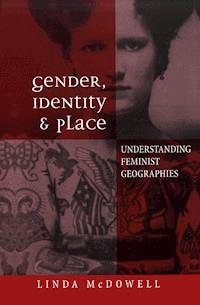
Feminist approaches within the social sciences have expanded enormously since the 1960s. In addition, in recent years, geographic perspectives have become increasingly significant as feminist recognition of the differences between women, their diverse experiences in different parts of the world and the importance of location in the social construction of knowledge has placed varied geographies at the centre of contemporary feminist and postmodern debates.
Gender, Identity and Place is an accessible and clearly written introduction to the wide field of issues that have been addressed by geographers and feminist scholars. It combines the careful definition and discussion of key concepts and theoretical approaches with a wealth of empirical detail from a wide-ranging selection of case studies and other empirical research. It is organized on the basis of spatial scale, examining the relationships between gender and place from the body to the nation, although the links between different spatial scales are also emphasized. The conceptual division and spatial separation between the public and private spheres and their association with men and women respectively has been a crucial part of the social construction of gendered differences and its establishment, maintenance and reshaping from industrial urbanization to the end of the millennium is a central linking theme in the eight substantive chapters. The book concludes with an assessment of the possibilities of doing feminist research.
It will be essential reading for students in geography, feminist theory, women's studies, anthropology and sociology.
Sie lesen das E-Book in den Legimi-Apps auf:
Seitenzahl: 604
Veröffentlichungsjahr: 2013
Ähnliche
















Gender, Identity and Place
Understanding Feminist Geographies
Linda McDowell
Polity Press
Copyright © Linda McDowell 1999
The right of Linda McDowell to be identified as author of this work has been asserted in accordance with the Copyright, Designs and Patents Act 1988.
First published in 1999 by Polity Press in association with Blackwell Publishers Ltd.
Reprinted 2004
Editorial office:
Polity Press
65 Bridge Street
Cambridge CB2 1UR, UK
Marketing and production:
Blackwell Publishers Ltd
108 Cowley Road
Oxford OX4 1JF, UK
All rights reserved. Except for the quotation of short passages for the purposes of criticism and review, no part of this publication may be reproduced, stored in a retrieval system, or transmitted, in any form or by any means, electronic, mechanical, photocopying, recording or otherwise, without the prior permission of the publisher.
Except in the United States of America, this book is sold subject to the condition that it shall not, by way of trade or otherwise, be lent, re-sold, hired out, or otherwise circulated without the publisher’s prior consent in any form of binding or cover other than that in which it is published and without a similar condition including this condition being imposed on the subsequent purchaser.
ISBN 978-0-7456-6779-9 (Multi-user ebook)
A CIP catalogue record for this book is available from the British Library.
Typeset in 10½ on 12 pt Erhardt
by Ace Filmsetting Ltd, Frome, Somerset
Printed and bound in Great Britain by Marston Book Services Limited, Oxford
This book is printed on acid-free paper.
For Olive Morgan Leigh, my mother
Contents
List of Plates
List of Figures and Tables
Preface and Acknowledgements
1 Introduction: Place and Gender
2 In and Out of Place: Bodies and Embodiment
3 Home, Place and Identity
4 Community, City and Locality
5 Work/Workplaces
6 In Public: the Street and Spaces of Pleasure
7 Gendering the Nation-State
8 Displacements
9 Postscript: Reflections on the Dilemmas of Feminist Research
References
Index
Plates
2.1 Urban art: depicting the male body
2.2 The Tattooed Woman
2.3 A celebration of birth: an urban mural
3.1 Rosie the Riveter: a familiar image of a woman worker in the Second World War
4.1 Gay Pride flags in the Castro District, San Francisco
4.2 The Women’s Restaurant, on the edges of the Castro District, San Francisco
6.1 Contemporary shopping spaces: Brent Cross, North London
7.1 The Broadgate Venus, London
8.1 Diasporic Chinese women in the US
Credits
Plate 2.2: The Tattooed Woman, original postcard c.1920, colouring Al Barna, © Quantity Postcards, Tilt Works, San Francisco, California.
Plate 3.1: Rosie the Riveter, World War II poster, c.1942, the National Archives/Corbis.
All other plates are photographs by the author.
Figures and Tables
Figure
5.1 Women’s pay as a percentage of men’s pay, Great Britain, 1996
Tables
3.1 Share of employed women working in private household service by racial-ethnic group 1900–1980, USA
9.1 Extensive data for a regional geography of gender
9.2 Contrasting claims of research methods
9.3 A comparison of conventional and feminist research methods
Preface and Acknowledgements
Some years ago, before feminist work in geography was as well-established as it is now, I was asked in a job interview ‘what is all this stuff about women and geography?’ While a questioner might not be so offensive nowadays, it is still a common experience to be asked by all sorts of people ‘what has gender to do with geography?’
This book is an attempt to provide an answer to that question. My aim is to outline some of the main connections between geographical perspectives and feminist approaches and to illustrate them with empirical work that I have read and enjoyed over the last few years. The emphases reflect, as is common in texts like this one, my own interests and some of the work I have been involved in. I work on gender issues in contemporary Britain in the main, and to a lesser extent in other ‘advanced’ societies. I am also an urban and social geographer, interested in the changing nature of work in global cities and so the examples that I draw on reflect this emphasis. I have tried to be eclectic, but there is still not enough in the pages that follow about, for example, gender relations in ‘Third World’ nations or about ecofeminist approaches and campaigns. One of the delights but also frustrations of our subject is its vast encompassing range and no one can be an expert across all its subfields. So this book will not provide you with everything you may want to know about geography and gender, but I hope it will prove an interesting and enjoyable place to start and will lead you to explore what is, in my view, some of the most exciting scholarship in our discipline at present. I have introduced the ‘classics’ and some recent work and I hope that the case studies will prove a stimulus to all those geographers thinking about doing feminist research.
Although my name is on the cover, a book like this one is the result of the development of feminist networks that link geographers in many countries. One of the great pleasures of my academic work has been participation in these networks and the academic enthusiasms and many friendships that I have made thereby. It’s hard to mention all the people who have made such a difference, and perhaps invidious to single out a few, but I should like to mention and to thank in particular Gillian Rose whose astute comments on the first draft were just the right mixture of friendly support and scholarly criticism, Doreen Massey with whom I worked for several years and whose energy and enthusiasm have always inspired me to greater efforts, Joni Seager, both for her personal generosity and the example of her work, Sophie Bowlby, Jo Foord, Susan Hanson, Jane Lewis, Suzanne Mackenzie and Janice Monk who have been there from the start, Michelle Lowe for a long friendship, Jo Sharp for more recent pleasures of collaboration and five amazing feminists and graduate students with whom it is my pleasure to work at present: Dorothy Forbes, Flora Gathorne-Hardy, Rebecca Klahr, Paula Meth and Bronwen Parry.
An earlier version of chapter 9 was published in the Journal of Geography in Higher Education (1997) as ‘Women/gender/feminisms’, I should like to thank the editors and publisher for permission to reprint parts of it.
The author and publishers also wish to thank the following for permission to use copyright material:
Black Rose Books for a table from T. Amott and J. Matthaei, Race, Gender and Work: A Multicultural Economic History of Women in the US (1991), p. 325, table 10.3;
Routledge for tables from S. Reinharz, ‘Experimental analysis: a contribution to feminist research’, in G. Bowles and R. Duelli-Klein (eds), Theories of Women’s Studies (Routledge and Kegan Paul, 1983), p. 168, table 11.1, and pp. 170–2, table 11.4, and material from J. Fiske, Reading the Popular (1992), p. 57;
Royal Geographical Society for a table from J. G. Townsend, ‘Towards a regional geography of gender’, Geographical Journal, 157 (1991), pp. 26–7, table 1;
University of California Press for excerpts from C. Enloe, Bananas, Beaches, and Bases: Making Feminist Sense of International Politics (1989), pp. xi-xii, 16, 17, 95, 97, 184, 189–90, 190–1. Copyright © 1989 Cynthia Enloe.
Every effort has been made to trace the copyright holders but if any have been inadvertently overlooked the publishers will be pleased to make the necessary arrangement at the first opportunity.
1
Introduction: Place and Gender
The place of gender
How is gender linked to geography? Do men and women live different lives in different parts of the world? And if gendered attributes are socially constructed, then how does femininity and masculinity vary over time and space? What range of variation is there in the social relations between women and men? Are men usually centre-stage and women confined to the margins in all societies? What have geographers had to say about these issues?
These are the sorts of questions I want to examine in this book. They are issues that seem to have become important in a wide range of disciplines in the social sciences and humanities, where there has been a remarkable flowering in recent years of discussions and debates conducted in pre-eminently geographical terms. In all sorts of disciplines, scholars are writing about migration and travel, borders and boundaries, place and non-place in a literal and metaphorical sense. These debates reflect the huge disruptions and transformations in the links between specific peoples and particular places that have taken place in recent decades. Vast migrations of people and of money – labour and capital in the more abstract language of the social sciences – are a consequence of the increasingly global scale of those sets of social relations and connections that tie places together in the modern world. And these migrations have displaced and disrupted the lives of millions of people. Nationalist movements, wars, famines, as well as the development of transnational capital and global corporations have resulted in the enforced movement of many peoples, while hundreds of thousands of others have voluntarily, and usually temporarily, set off across vast geographic distances, travelling for pleasure and to broaden the mind.
Both types of movement have radically changed the relationships between individual and group identity, everyday life, and territory or place. It is becoming commonplace for increasing numbers of people to leave ‘home’: some to settle and make their lives far from where they were born, too many others to become ‘placeless’, ‘dis-placed’ peoples of the world, condemned to the limbo of not belonging, whether to a nation with a national territorial base, to a class or to a region. For many of the women involved in these journeys, movement has been associated with proletarianization, as local and multinational capital draws them in increasing numbers into the waged labour forces of the new international division of labour. The global reach of capital means that women in Korea, Kampuchea and Katmandu may end up working for the same corporation as women in Western Europe.
For some of these women, their travel may not involve vast geographical movement; it may involve only local travel or indeed no physical travel at all. Instead, the displacement experienced is the result of changing economic, social and cultural circumstances, as women enter factories or the homes of the elite as domestic workers, and as they are connected to other times and places through the penetration and cultural dominance of Western forms of information technology and popular culture. Whether the movement is physical or not, it is almost always associated with the renegotiation of gender divisions. These renegotiations are the subject of the chapters that follow.
Before turning to the ways in which these changes have been theorized and investigated at a whole range of spatial scales and at different sites in the home, the workplace and in public places, I want to look at how these huge material changes have affected our understanding of the links between place and identity.
Space, place and ‘the local’
It is often assumed that the net result of the increasing scale of global interconnections and movement is a decline in the significance of ‘the local’ – in the amount of time people spend in a restricted geographical area, in the number of friends and family in the environs, and in the control that might be exercised at the local level, whether over political decisions and actions or the economic consequences of the actions of capital. The corollary is assumed to be the end of a sense of local attachment, of belonging to a place with all its local idiosyncrasies and cultural forms. While some of the former features are certainly apparent for some people for some of the time in certain parts of the world – most notably, of course, for affluent Western males – for many people in the world, everyday life continues to take place within a restricted locale. Even for the most mobile – an international financier is perhaps the most extreme example – a large part of daily activities, both at work and at home, must inevitably be within a finite area. The global money trader may be moving money around the world at a fantastic speed, but he himself (and it usually is a he) is sitting in front of a screen in Hong Kong, London, New York or some other financial centre, and in the evening, more often than not, these traders presumably go home to somewhere within daily travelling distance of their office, rather than to the international airport to jet off to another part of the world.
Lesen Sie weiter in der vollständigen Ausgabe!
Lesen Sie weiter in der vollständigen Ausgabe!
Lesen Sie weiter in der vollständigen Ausgabe!
Lesen Sie weiter in der vollständigen Ausgabe!
Lesen Sie weiter in der vollständigen Ausgabe!
Lesen Sie weiter in der vollständigen Ausgabe!
Lesen Sie weiter in der vollständigen Ausgabe!
Lesen Sie weiter in der vollständigen Ausgabe!
Lesen Sie weiter in der vollständigen Ausgabe!
Lesen Sie weiter in der vollständigen Ausgabe!




