


20,99 €
Mehr erfahren.
- Herausgeber: John Wiley & Sons
- Kategorie: Wissenschaft und neue Technologien
- Serie: Antipode Book Series
- Sprache: Englisch
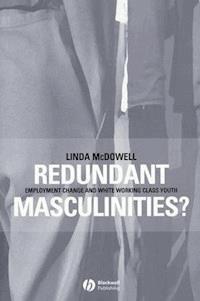
Redundant Masculinities? investigates the links between the so-called 'crisis of masculinity' and contemporary changes in the labour market through the lives of young working class men. * Allows the voices of poorly-educated young men to be heard. * Looks at how the labour market is changing. * Emphasises the social construction of gender and racial identities. * Dispels popular myths about the crisis in masculinity.
Sie lesen das E-Book in den Legimi-Apps auf:
Seitenzahl: 569
Veröffentlichungsjahr: 2011
Ähnliche

















Contents
Plates
Tables
Preface
1 Introduction: Young, White, Male and Working Class
Theorizing Gender, Ethnicity and Class: Difference and Inequality
The Argument, Chapter by Chapter
2 The Rise of Poor Work: Employment Restructuring and Changing Class and Gender Identities
The Attributes of Service-sector Employment
New Debates about Identity and Employment
Conclusions
3 The Contemporary Crisis of Masculinity: It's Hard to Be(come) a Man
Contemporary Representations 1: Young Men in Policy Discourses - the Yob, Vandal and Hooligan
Contemporary Representations 2: Young Men at School - Anti-hero or Problem?
Contemporary Representations 3: Racist Discourses - Black Masculinity and White Envy
Contemporary Representations 4: Working Class Youth as Redundant Workers
Conclusions: Youth and the 'Crisis of Masculinity'
4 Living on the Edge: Marginal Lives in Cambridge and Sheffield
Two Cities: Manufacturing Employment Versus ‘Servicing’ Work
Two Schools and Two Estates
Doing the Research: Prior Assumptions, Positionality and Ethics
On the Verge of Manhood: Versions of Masculinity at School
Deconstructing Binaries: Whiteness and ‘Otherness’?
A Gendered Job Market?
5 Leaving School: Pathways to Employment and Further Education
Making Choices: The Diversity of Post-school Transitions
Masculinity at Work: Everyday Working Lives and Attitudes
Conclusions
6 Actively Seeking Employment: Committed Workers and Reluctant Learners
Committed Workers 1: Masculine Work and Training – Steve, Wayne and Damian
Committed Workers 2: Getting a Job is what Matters – Richard and Darren
Committed Workers 3: Reluctant Learners – Daniel, Kurt and Greg
7 Uncertain Transitions: Accidental and Incidental Workers, the Excluded, and Escape Attempts
Accidental Workers: Gareth, Shaun and Matthew
The Incidental Worker
The Excluded – John and Vince
Escape Attempts
8 Performing Identity: Protest and Domestic Masculinities
Masculine Street Performance: The Lads’ Night out
Sexual and Domestic Attitudes
Life in the Neighbourhood: Local Reputations and Perceived threats from ‘Others’
Conclusions
9 Conclusions: What Is to Be Done about Boys?
Class and Gender Matters
The Working Poor/Poor Work
Policy Considerations
Conclusions
Postscript: Two Years Later
Appendix 1 Research Methodology
Participating in the Research
Appendix 2: The Participants
Cambridge Ten
Sheffield Fourteen
Notes
Bibliography
Index
ANTIPODE BOOK SERIES
General Editor:
Noel Castree, Reader in Geography, University of Manchester, UK Like its parent journal, the Antipode Book series reflects distinctive new developments in radical geography. It publishes books in a variety of formats – from reference books to works of broad explication to titles that develop and extend the scholarly research base – but the commitment is always the same: to contribute to the praxis of a new and more just society.
Published
Space, Place and the New Labour Internationalism
Jane Wills and Peter Waterman
Redundant Masculinities? Employment Change and White Working
Class Youth
Linda McDowell
Forthcoming
Spaces of Neoliberalism
Neil Brenner
David Harvey: A Critical Reader
Edited by Noel Castree and Derek Gregory
© 2003 by Linda McDowell
350 Main Street, Maiden, MA 02148–5020, USA
108 Cowley Road, Oxford OX4 1JF, UK
550 Swanston Street, Carlton, Victoria 3053, Australia
The right of Linda McDowell to be identified as the Author of this Work has been asserted in accordance with the UK Copyright, Designs, and Patents Act 1988.
All rights reserved. No part of this publication may be reproduced, stored in a retrieval system, or transmitted, in any form or by any means, electronic, mechanical, photocopying, recording or otherwise, except as permitted by the UK Copyright, Designs, and Patents Act 1988, without the prior permission of the publisher.
First published 2003 by Blackwell Publishing Ltd
Library of Congress Cataloging-in-Publication Data
McDowell, Linda, 1949–
Redundant masculinities?: employment change and white working class youth/Linda McDowell.
p. cm. – (Antipode book series; 2)
ISBN 1-4051-0585-2 (hardback: alk. paper) – ISBN 1-4051-0586-0 (pbk.: alk. paper) 1. Young men–Employment–United States. 2. White men–Employment–United States. 3. Minorities–Employment–United States. 4. High school dropouts–Employment–United States. 5. White men–United States–Psychology. 6. Masculinity–United States. I. Title. II. Series.
HD6273.M396 2003
305.242'0973-dc21
2002152560
For further information on Blackwell Publishing, visit our website: http://www.blackwellpublishing.com
Plates
3.1 Yobs, lads and hooligans
3.2 Boys as failures
4.1 Popular images of Sheffield and Cambridge
4.2 Sheffield Steelmen: statue in Meadowhall Shopping Centre
4.3 Peripheral housing estates in Sheffield
4.4 Peripheral housing estates in Cambridge
Tables
4.1Average gross annual pay of full-time adult employees4.2Part-time and casual employment undertaken by final-year school students4.3Post-school aspirations and plans for the year 1999-20005.1Post-school transitions in Cambridge5.2Post-school transitions in Sheffield9.1The employment and housing position of the remaining 18 young menPreface
Boys will be boys. (World-wide proverb)
For many years now, I have written, worked and organized around issues of gender inequality. One of my strongest beliefs is in the necessity for equal opportunities policies, and for a long time I took it for granted that women should be the main beneficiaries. This belief was strengthened not only by statistical surveys and historical analyses but in part by my own experiences as I grew up in the late 1950s and 1960s, going to university in 1968 as the new left but also second wave feminism were influential social movements. When I became a university teacher in the 1970s, I found an academy dominated by men. My earlier life, before entering the labour market, however, had not totally resonated with my practical knowledge of men’s superiority. As a girl I had grown up with only sisters as siblings and a strong mother who made most of the day-to-day decisions. I had attended an all-girls school and all-women’s college. As a consequence, manhood and masculinity was a mystery to me in almost all practical senses. The ideas and values about masculinity that I internalized as a girl were from novels and music rather than ‘real life’ in the mid-1960s when gender relations were far more dichotomous than they are now. All that was on offer to girls and young women was the wholesome ‘I want to be Bobbie’s girl’ or a version of rebellion to girlfriends of the ‘leader of the pack’. In those years there seemed to be few opportunities for autonomy for girls: autonomy was a correlate of youthful masculinity. Boys and young men were the dominant sex, whether in the workplace or in other arenas.
At the start of the twenty-first century, this widespread taken for granted assumption of masculine superiority has been challenged as a ‘problem with boys’ has been identified. In 1999, the then Labour Home Secretary Jack Straw was reported as saying that one of the major social problems facing Britain was the behaviour of young men. By that time I was the mother of a teenage son, and Straw’s statement had some resonance with my experiences. As my son went through his secondary school years between 1992 and 1999, it had become clear to me that the discourse of female disadvantage was unrecognizable to him and his peers. In his school it was the girls who were tough, independent and successful and the boys who were failing in growing numbers. Between the ages of 16 and 18, while many of the young women in his peer group achieved good results in school-leaving exams, too many of his male friends lost their commitment to academic success and left school to look for work in a local labour market increasingly dominated by low-paid service-sector jobs. This same pattern was evident across the country and a worrying problem about growing numbers of young men, apparently failing at school and increasingly troublesome in public spaces – on street corners and on the football terraces – began to be widely debated.
My son and his friends are becoming men as transformations in society, and particularly in the economy, are reducing the options of many young men, especially those who are least successful at school. Achieving adult independence and a decent standard of living through their labour market participation – the correlate of masculinity – seems increasingly problematic for working class young men. At the same time, by a sad irony and a seemingly wilful misunderstanding of the consequences of manufacturing decline and economic restructuring, waged work has become valorized as the route to adulthood and its virtue is enshrined in the so-called New Deal policies of New Labour: workfare by another name.
This book brings these two issues together: the transformation of work in advanced industrial societies and the ‘problem of boys’. It unites my long-term research interests in social and economic restructuring and feminist theory and scholarship with my personal life as a mother of a son. It has been perhaps the most personal, the most difficult but also the most enjoyable book I have written so far. Many people – too numerous to name – have helped me in its production. I should like to acknowledge, however, the particular help of a small number of them. Thanks, as always, to Chris, Hugh and Sarah McDowell: the mainstays of my household. Sarah and Patrick Kilkelly, a frequent visitor, have shared with me their experiences of bottom-end jobs during their ‘gap’ year. Hugh and Sarah and also Kelsey Boast deserve thanks for transcribing most of the interviews and for their astute criticisms of my interviewing style: I think I improved over the year’s fieldwork thanks to you all. The Joseph Rown-tree Foundation funded the fieldwork under their Youth Programme and I gratefully acknowledge its support as well as that of the steering group, especially Bob Coles, Rob MacDonald, Peter Jackson and Tessa Mitchell. Jo Casebourne was an excellent assistant and minute-taker at these meetings. Thanks too to colleagues in the Geography Departments at Cambridge University, LSE and UCL where I began and finished this work and to all those in other departments and in other places who commented on talks I have given based on this work. At the LSE, in particular, the seminars on young people run by the Gender Institute were a useful stimulus to this work, as were the many conversations about working with children and young people that I had with Ginny Morrow on the train to Kings Cross. Thanks too to Ann Phoenix, now at the Open University, for numerous, often rushed but always useful, conversations at conferences and meetings in various places and to Paula Meth, now at Sheffield Hallam University, for all those drinks at the Station Bar.
My tutorial students at UCL over the last two years and Tara Duncan, a graduate student working with me, probably heard more than enough about this research but always offered cheerful and astute criticism: so thanks to you all too. I am enormously grateful to the heads, the year 11 teachers and the secretarial staff of Fenland Community College and Park Edge School. I cannot name you, as I promised anonymity for the participants, but you know who you are and how much I owe to your co-operation in the middle of a busy school year. My greatest thanks, of course, must go to 24 young men, 10 in Cambridge and 14 in Sheffield, most of whom were prepared to talk to me not just once but three times in 1999–2000. I hope that you might read this book and find something of interest in the ways in which I have represented your lives as you left school and became workers.
Some of the chapters draw on earlier versions of my published papers, revised to varying degrees here. I should like to acknowledge the permission of the journal editors and publishers to reprint, in revised versions, parts of ‘Learning to Serve? Young men’s labour market aspirations in an era of economic restructuring’, Gender, Place and Culture, 7 (2000), 389416; ‘Masculine discourses and dissonances: Strutting ‘‘lads’’, protest masculinity and domestic respectability’, Environment and Planning D: Society and Space, 20 (2002), 97–119; and ‘Transitions to work: Masculine identities, youth inequality and labour market change’, Gender Place and Culture, 9 (2002), 39–59 (http://www.tandf.co.uk).
1
Introduction: Young, White, Male and Working Class
There is a virtual invisibility of the voices and concerns of adolescents and young adults in academic debates.
(Signs editorial 1998: 575)
This book is a study of gender as a social, cultural and economic force but also of individual young men and their lives in particular places. It is about ‘the way particular men created their manhood within the limits of their time and place’ (Rotundo 1993: x) and about meaning, power and the construction of identity at a particularly significant moment in the lives of young men: as they finish compulsory schooling and start to think about their future working lives. As Connell (1994: 14) has argued, ‘masculinities and femininities are actively constructed, not simply received’. Similarly, people are not just at the mercy of the social and economic transformations that have restructured the labour markets of British towns and cities in the last two decades or so. While these transformations may have affected the life chances of individuals, often for the worse, and changed the set of opportunities that are open to young people at the beginning their working lives, individuals and social groups are also agents in their own construction and in their responses to altered circumstances. My aim is to challenge the too-common assumptions in the media and also in social policy that working class young men, adversely affected by economic change, are idlers, layabouts or ‘yobs’. I want to show instead the often admirable efforts made by many young men on the verge of adulthood, and with few educational or social advantages, to acquire and hold down a job and to construct lives imbued with the values of domestic respectability, while negotiating the complex and often contradictory expectations associated with working class masculinity.
In the chapters that follow, the interrelationships between different forms of social inequalities and the ways in which they are lived out in local areas in different towns are investigated through the lens of a year in the lives of 24 young men who finished their compulsory schooling in the summer of 1999. For young people leaving school this is the beginning of a period of transition in their lives as they decide on their next steps. It is also a key moment when inequalities between young people begin to become particularly significant. Despite the huge class inequalities that are evident in the British school system (Adonis and Pollard 1998; Mortimore and Whitty 1997; Rutter 1979; Sparkes and Glennester 2002), until the age of 16, all children, theoretically at least, must attend full-time education and all of them sit the same set of school-leaving examinations. At 16, however, while most young people remain in the educational sector, a minority of young people, predominantly from working class families, leave school and begin to search for work. Twenty-five years ago, when Paul Willis (1977) investigated the lives of a group of young men living in a Midlands town, a majority of 16 year olds left school as soon as they could. In 1977, less than 25 per cent of the age group continued their full-time education, whereas at the end of the century, almost two-thirds of all 16 year olds stayed in full-time education, and many others were involved in some form of training. What was once the start of a transition into the labour market for most young people has now become exceptional, as the majority stay in full-time education and strive to attain the credentials that are increasingly important in gaining access to well-paid and permanent employment.
Lesen Sie weiter in der vollständigen Ausgabe!
Lesen Sie weiter in der vollständigen Ausgabe!
Lesen Sie weiter in der vollständigen Ausgabe!
Lesen Sie weiter in der vollständigen Ausgabe!
Lesen Sie weiter in der vollständigen Ausgabe!
Lesen Sie weiter in der vollständigen Ausgabe!
Lesen Sie weiter in der vollständigen Ausgabe!
Lesen Sie weiter in der vollständigen Ausgabe!
Lesen Sie weiter in der vollständigen Ausgabe!
Lesen Sie weiter in der vollständigen Ausgabe!
Lesen Sie weiter in der vollständigen Ausgabe!
Lesen Sie weiter in der vollständigen Ausgabe!
Lesen Sie weiter in der vollständigen Ausgabe!
Lesen Sie weiter in der vollständigen Ausgabe!




