


Genetic and Evolutionary Computation E-Book
107,99 €
Mehr erfahren.
- Herausgeber: John Wiley & Sons
- Kategorie: Fachliteratur
- Sprache: Englisch
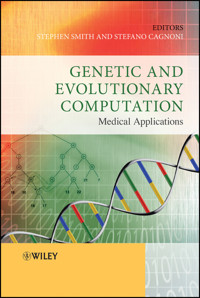
Genetic and Evolutionary Computation: Medical Applications provides an overview of the range of GEC techniques being applied to medicine and healthcare in a context that is relevant not only for existing GEC practitioners but also those from other disciplines, particularly health professionals. There is rapidly increasing interest in applying evolutionary computation to problems in medicine, but to date no text that introduces evolutionary computation in a medical context. By explaining the basic introductory theory, typical application areas and detailed implementation in one coherent volume, this book will appeal to a wide audience from software developers to medical scientists. Centred around a set of nine case studies on the application of GEC to different areas of medicine, the book offers an overview of applications of GEC to medicine, describes applications in which GEC is used to analyse medical images and data sets, derive advanced models, and suggest diagnoses and treatments, finally providing hints about possible future advancements of genetic and evolutionary computation in medicine. * Explores the rapidly growing area of genetic and evolutionary computation in context of its viable and exciting payoffs in the field of medical applications. * Explains the underlying theory, typical applications and detailed implementation. * Includes general sections about the applications of GEC to medicine and their expected future developments, as well as specific sections on applications of GEC to medical imaging, analysis of medical data sets, advanced modelling, diagnosis and treatment. * Features a wide range of tables, illustrations diagrams and photographs.
Sie lesen das E-Book in den Legimi-Apps auf:
Seitenzahl: 342
Veröffentlichungsjahr: 2011
Ähnliche




















Contents
About the Editors
List of Contributors
1 Introduction
2 Evolutionary Computation: A Brief Overview
2.1 Introduction
2.2 Evolutionary Computation Paradigms
2.3 Conclusions
3 A Review of Medical Applications of Genetic and Evolutionary Computation
3.1 Medical Imaging and Signal Processing
3.2 Data Mining Medical Data and Patient Records
3.3 Clinical Expert Systems and Knowledge-based Systems
3.4 Modelling and Simulation of Medical Processes
3.5 Clinical Diagnosis and Therapy
4 Applications of GEC in Medical Imaging
4.1 Evolutionary Deformable Models for Medical Image Segmentation: A Genetic Algorithm Approach to Optimizing Learned, Intuitive, and Localized Medial-based Shape Deformation
4.1.1 Introduction
4.1.2 Methods
4.1.3 Results
4.1.4 Conclusions
4.2 Feature Selection for the Classification of Microcalcifications in Digital Mammograms using Genetic Algorithms, Sequential Search and Class Separability
4.2.1 Introduction
4.2.2 Methodology
4.2.3 Experiments and Results
4.2.4 Conclusions and Future Work
4.3 Hybrid Detection of Features within the Retinal Fundus using a Genetic Algorithm
4.3.1 Introduction
4.3.2 Acquisition and Processing of Retinal Fundus Images
4.3.3 Previous Work
4.3.4 Implementation
5 New Analysis of Medical Data Sets using GEC
5.1 Analysis and Classification of Mammography Reports using Maximum Variation Sampling
5.1.1 Introduction
5.1.2 Background
5.1.3 Related Works
5.1.4 Maximum Variation Sampling
5.1.5 Data
5.1.6 Tests
5.1.7 Results & Discussion
5.1.8 Summary
Acknowledgments
5.2 An Interactive Search for Rules in Medical Data using Multiobjective Evolutionary Algorithms
5.2.1 Medical Data Mining
5.2.2 Measures for Evaluating the Rules Quality
5.2.3 Evolutionary Approaches in Rules Mining
5.2.4 An Interactive Multiobjective Evolutionary Algorithm for Rules Mining
5.2.5 Experiments in Medical Rules Mining
5.2.6 Conclusions
5.3 Genetic Programming for Exploring Medical Data using Visual Spaces
5.3.1 Introduction
5.3.2 Visual Spaces
5.3.3 Experimental Settings
5.3.4 Medical Examples
5.3.5 Future Directions
6 Advanced Modelling, Diagnosis and Treatment using GEC
6.1 Objective Assessment of Visuo-spatial Ability using Implicit Context Representation Cartesian Genetic Programming
6.1.1 Introduction
6.1.2 Evaluation of Visuo-spatial Ability
6.1.3 Implicit Context Representation CGP
6.1.4 Methodology
6.1.5 Results
6.1.6 Conclusions
6.2 Towards an Alternative to Magnetic Resonance Imaging for Vocal Tract Shape Measurement using the Principles of Evolution
6.2.1 Introduction
6.2.2 Oral Tract Shape Evolution
6.2.3 Recording the Target Vowels
6.2.4 Evolving Oral Tract Shapes
6.2.5 Results
6.2.6 Conclusions
6.3 How Genetic Algorithms can Improve Pacemaker Efficiency
6.3.1 Introduction
6.3.2 Modeling of the Electrical Activity of the Heart
6.3.3 The Optimization Principles
6.3.4 A Simplified Test Case for a Pacemaker Optimization
6.3.5 Conclusion
7 The Future for Genetic and Evolutionary Computation in Medicine: Opportunities, Challenges and Rewards
7.1 Opportunities
7.2 Challenges
7.3 Rewards
7.4 The Future for Genetic and Evolutionary Computation in Medicine
Appendix: Introductory Books and Useful Links
Index
This edition first published 2011
© 2011 John Wiley & Sons, Ltd
Chapter 5.3 2011 © the Crown in right of Canada
Registered office
John Wiley & Sons Ltd, The Atrium, Southern Gate, Chichester, West Sussex, PO19 8SQ, United Kingdom
For details of our global editorial offices, for customer services and for information about how to apply for permission to reuse the copyright material in this book please see our website at www.wiley.com.
The right of the author to be identified as the author of this work has been asserted in accordance with the Copyright, Designs and Patents Act 1988.
All rights reserved. No part of this publication may be reproduced, stored in a retrieval system, or transmitted, in any form or by any means, electronic, mechanical, photocopying, recording or otherwise, except as permitted by the UK Copyright, Designs and Patents Act 1988, without the prior permission of the publisher.
Wiley also publishes its books in a variety of electronic formats. Some content that appears in print may not be available in electronic books.
Designations used by companies to distinguish their products are often claimed as trademarks. All brand names and product names used in this book are trade names, service marks, trademarks or registered trademarks of their respective owners. The publisher is not associated with any product or vendor mentioned in this book. This publication is designed to provide accurate and authoritative information in regard to the subject matter covered. It is sold on the understanding that the publisher is not engaged in rendering professional services. If professional advice or other expert assistance is required, the services of a competent professional should be sought.
Library of Congress Cataloguing-in-Publication Data
Genetic and evolutionary computation : medical applications / edited by Stephen L. Smith, Stefano Cagnoni.
p. ; cm.Includes index.ISBN 978-0-470-74813-8 (cloth)1. Medicine–Data processing.2. Genetic programming (Computer science)3. Evolutionary programming (Computer science) I. Smith, Stephen L., 1962–II. Cagnoni, Stefano, 1961–[DNLM: 1. Computational Biology–methods. 2. Models, Genetic. 3. Algorithms.4. Evolution, Molecular. QU 26.5]R858.G457 2010610.285–dc222010025421
About the Editors
Stephen L. Smith received a BSc in Computer Science and then an MSc and PhD in Electronic Engineering from the University of Kent, UK. He is currently a senior lecturer in the Department of Electronics at the University of York, UK.
Stephen’s main research interests are in developing novel representations of evolutionary algorithms, particularly with application to problems in medicine. His work is currently centred on the diagnosis of neurological dysfunction and analysis of mammograms. The former is currently undergoing clinical trials and being registered for a patent.
Stephen was program chair for the Euromicro Workshop on Medical Informatics, program chair and local organizer for the Sixth International Workshop on Information Processing in Cells and Tissues (IPCAT), and guest editor for the subsequent special issue of BioSystems journal. Most recently he was tutorial chair for the IEEE Congress on Evolutionary Computation (CEC) in 2009. Stephen is Associate Editor for Genetic Programming and Evolvable Machines journal, the Journal of Artificial Evolution and Applications, and a member of the editorial board for the International Journal of Computers in Healthcare . Along with Stefano Cagnoni, Stephen co-founded the annual GECCO Workshop on Medical Applications of Genetic and Evolutionary Computation which is now in its seventh year.
Stefano Cagnoni graduated in Electronic Engineering at the University of Florence in 1988 where he was a PhD student and a post-doc until 1997. In 1994 he was a visiting scientist at the Whitaker College Biomedical Imaging and Computation Laboratory at the Massachusetts Institute of Technology. Since 1997 he has been with the University of Parma, where he has been Associate Professor since 2004.
Stefano’s main basic research interests concern soft computing, with particular regard to evolutionary computation and computer vision. As concerns applied research, the main topics of his research are the application of the above-mentioned techniques to problems in computer vision, pattern recognition and robotics. Recent research grants regard: co-management of a project funded by Italian Railway Network Society (RFI) aimed at developing an automatic inspection system for train pantographs; a ‘Marie Curie’ grant, for a four-year research training project in Medical Imaging using Bio-Inspired and Soft Computing; a grant from ‘Compagnia di S. Paolo’ on ‘Bioinformatic and experimental dissection of the signalling pathways underlying dendritic spine function’.
Stefano was Editor-in-chief of the Journal of Artificial Evolution and Applications from 2007 to 2009 and has been chairman of EvoIASP since 1999 (an event dedicated to evolutionary computation for image analysis and signal processing). Stefano is also a co-editor of special issues of journals dedicated to Evolutionary Computation for Image Analysis and Signal Processing and has been a reviewer for international journals and a member of the committees of several conferences. He is a member of the Advisory Board of Perada, the UE Coordination Action on Pervasive Adaptation and has recently been awarded the ‘Evostar 2009 Award’, in recognition of his most outstanding contribution to Evolutionary Computation.
List of Contributors
Editors
Stephen L. SmithDepartment of Electronics, University of York, York, UK
Stefano CagnoniDipartimento di Ingegneria dell’Informazione, Universita` degli Studi di Parma, Parma, Italy
Contributors
Linda El AlaouiDépartement de Mathématiques, Institut Galilée, Villetaneuse, France
Barbara G. BeckermanOak Ridge National Laboratory, Oak Ridge, USA
Vitoantonio BevilacquaDepartment of Electrical and Electronics, Polytechnic of Bari, Bari, Italy e.B.I.S. s.r.l. (electronic Business In Security), Spin-Off of Polytechnic of Bari, Bari, Italy
Alan J. BartonNational Research Council Canada, Ottawa, Ontario, Canada
Stefano CagnoniDipartimento di Ingegneria dell’Informazione, Universita` degli Studi di Parma, Parma, Italy
Simona Cambò,Department of Electrical and Electronics, Polytechnic of Bari, Bari, Italy
Lucia CarielloDepartment of Electrical and Electronics, Polytechnic of Bari, Bari, Italy e.B.I.S. s.r.l. (electronic Business In Security), Spin-Off of Polytechnic of Bari, Bari, Italy
Santiago E. Conant-PablosCentro de Computación Inteligente y Robótica, Tecnológico de Monterrey, Monterrey, México
Crispin CooperDepartment of Electronics, University of York, York, UK
Domenico DalenoDepartment of Electrical and Electronics, Polytechnic of Bari, Bari, Italy e.B.I.S. s.r.l. (electronic Business In Security), Spin-Off of Polytechnic of Bari, Bari, Italy
Laurent DumasLaboratoire Jacques-Louis Lions, Université Pierre et Marie Curie, Paris, France
Ghassan HamarnehMedical Image Analysis Lab, Simon Fraser University, Burnaby, Canada
Rolando R. Herná ndez-Cisneros,Centro de Computación Inteligente y Robótica, Tecnológico de Monterrey, Monterrey, México
David M. HowardDepartment of Electronics, University of York, York, UK
Michael A. LonesDepartment of Electronics, University of York, York, UK
D. LungeanuFaculty of Mathematics and Informatics, West University Of Timisoara, Timis¸, Romania
Giuseppe MastronardiDepartment of Electrical and Electronics, Polytechnic of Bari, Bari, Italy e.B.I.S. s.r.l. (electronic Business In Security), Spin-Off of Polytechnic of Bari, Bari, Italy
Chris McIntoshMedical Image Analysis Lab, Simon Fraser University, Burnaby, Canada
Robert OrchardNational Research Council Canada, Ottawa, Ontario, Canada
Robert M. PattonOak Ridge National Laboratory, Oak Ridge, USA
Thomas E. PotokOak Ridge National Laboratory, Oak Ridge, USA
Hugo Terashima-Mar´ınCentro de Computación Inteligente y Robótica, Tecnológico de Monterrey, Monterrey, México
Andy M. TyrrellDepartment of Electronics, University of York, York, UK
Stephen L. SmithDepartment of Electronics, University of York, York, UK
Julio J. Valdé sNational Research Council Canada, Ottawa, Ontario, Canada
Leonardo VanneschiDipartimento di Informatica, Sistemistica e Comunicazione, Universita` di Milano- Bicocca, Milan, Italy
Daniela ZaharieFaculty of Mathematics and Informatics, West University Of Timisoara, Timis¸, Romania
Flavia ZamfiracheFaculty of Mathematics and Informatics, West University Of Timisoara, Timis¸, Romania
1
Introduction
Genetic and evolutionary computation (GEC) is now attracting considerable interest, since the first algorithms were developed some 30 years ago. Although often regarded as a theoretical pursuit, research and development of a wide range of real-world applications of GEC has long been evident at conferences and in the scientific literature. Medicine and healthcare is no exception and the challenge, and worthy aim, has motivated many to apply GEC to a wide range of clinical problems.
The aim of this book is to provide an overview of the range of GEC techniques being applied to medicine and healthcare, in a context that is supportive not only for existing GEC practitioners, but also for those from other disciplines, particularly health professionals. This encompasses doctors, consultants and other clinicians, as well as those who act in a technical role in the health industry, such as medical physicists, technicians and those who have an interest in learning more with a view to implementing systems or just understanding them better. Consequently, a concise introduction to genetic and evolutionary computation is required, and this has been provided in Chapter 2 for those readers who are not familiar with the more common paradigms of GEC.
It was also felt important that an overview of recent work should be reported as concisely and fully as practically possible, and this has been provided in Chapter 3. The problem with any review is that, despite the best efforts of the author, it is outdated, incomplete and unbalanced as soon as it has been published. It is also impossible to know which papers are going to be of future significance, for the individual or community as a whole, regardless of the subject, author or source of publication. There is also the risk that the review becomes too cumbersome to maintain the reader’s interest, comprising an endless list of summaries with little structure or context. For these reasons, this review has adopted two guiding principles. Firstly, it is limited to the last five years of publications, as it is felt that this will encompass very recent approaches and yet previous work of merit will have been refined, extended or combined with other techniques and reported in more recent publications. Secondly, no distinction has been made on the grounds of source of publication, whether it is a journal, conference or workshop presentation. It is anticipated, however, that all papers will have been peer reviewed to provide some level of confidence in the work presented. The overriding aim of the review is to stimulate thought on how techniques investigated to date may be used to the reader’s advantage.
The main component of this book is a set of nine case examples on the application of GEC to different areas of medicine, which have been grouped into three chapters covering medical imaging, the analysis of medical data sets, and medical modelling, diagnosis and treatment. This is by no means a representative selection, but one that conveys the breadth of techniques employed. The source of these contributions has been the Genetic and Evolutionary Computation Conference (GECCO) Workshop on Medical Applications of Genetic and Evolutionary Computation (MedGEC), which has been part of GECCO since 2005. The Workshop has provided a valuable venue for reporting work, often in early stages of development, but which has then matured to be published in GEC journals – notable examples are special issues in the journal Genetic Programming and Evolvable Machines and the Journal of Artificial Evolution and Applications.
The final chapter of this book will then consider the future of medical applications of GEC, the opportunities, challenges and rewards that practitioners face.
2
Evolutionary Computation: A Brief Overview
Stefano Cagnoni1 and Leonardo Vanneschi2
1 Dipartimento di Ingegneria dell’Informazione, Università degli Studi di Parma, Parma, Italy
2Dipartimento di Informatica, Sistemistica e Comunicazione, Università di Milano-Bicocca, Milan, Italy
2.1 Introduction
Virtually every event occurring in everybody’s life is subject to chance. It is always amazing to realize how much our life could have been different, had not some apparently trivial and purely accidental events happened at specific moments. The feeling of being ‘in the hands of Fate’, and the way humans have dealt with this, have had a strong impact on the course of human history and civilization.
The rational nature of humans and the self-consciousness of their ability to be more and more the master of their own future has turned mankind’s attitude towards chance from the primitive populations’ passive acceptance, to the attempt to make forecasts based on the study of the stars or other natural phenomena, to the illuministic rejection of any influence of chance on human life, to the present, rational/scientific approach by which chance is seen as a component of the dynamics of life which is to be studied, biased and possibly exploited to mankind’s advantage. In this regard, nature has often offered brilliant examples about how chance can be turned into a constructive process, essential for the survival of living beings.
Lesen Sie weiter in der vollständigen Ausgabe!
Lesen Sie weiter in der vollständigen Ausgabe!
Lesen Sie weiter in der vollständigen Ausgabe!
Lesen Sie weiter in der vollständigen Ausgabe!
Lesen Sie weiter in der vollständigen Ausgabe!
Lesen Sie weiter in der vollständigen Ausgabe!
Lesen Sie weiter in der vollständigen Ausgabe!
Lesen Sie weiter in der vollständigen Ausgabe!
Lesen Sie weiter in der vollständigen Ausgabe!
Lesen Sie weiter in der vollständigen Ausgabe!
Lesen Sie weiter in der vollständigen Ausgabe!
Lesen Sie weiter in der vollständigen Ausgabe!
Lesen Sie weiter in der vollständigen Ausgabe!
Lesen Sie weiter in der vollständigen Ausgabe!
Lesen Sie weiter in der vollständigen Ausgabe!
Lesen Sie weiter in der vollständigen Ausgabe!




