


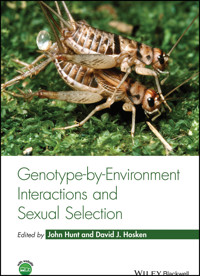
Genotype-by-Environment Interactions and Sexual Selection E-Book
95,99 €
Mehr erfahren.
- Herausgeber: John Wiley & Sons
- Kategorie: Wissenschaft und neue Technologien
- Sprache: Englisch
Sexual selection is recognized as being responsible for some of the most extravagant morphologies and behaviors in the natural world, as well as a driver of some of the most rapid evolution. While Charles Darwin’s theory is now a fundamental component of modern evolutionary biology, the impact of genotype-by-environment interactions on sexual selection has thus far received little attention.
This book represents the first comprehensive analysis of the role genotype-by-environment interactions play in sexual selection and the potential implications that they have for the evolutionary process. The Editors have identified 13 topics that currently define the field and shed light on the impacts of these interactions on sexual selection. This includes key topics, such as resolving the lek paradox and how genotype-by-environmental interactions can compromise the honesty of sexual signals. The volume also outlines key questions that remain unanswered and provides a comprehensive guide to analyzing genotype-by-environment interactions.
The mix of theory, empirical studies, and practical instructions from world leading experts make this book a particularly potent and definitive guide on the topic. It will be of interest to evolutionary biologists, spanning from genomicists to behaviorists.
“This is a very timely book, covering a topic that should change the way we think about sexual selection. The contributors are all leaders and the topics should provide guidance to many PhD projects in the years to come. GEI is increasingly shown to be important, and it seems likely that it is critical in species where sexual selection is operating. This book is likely to help revitalize the study of sexual selection.” Professor Allen Moore, The University of Georgia
“GEIs fascinate evolutionary biologists, but the unique consequences for sexually selected traits have been neglected - until now. This multi-authored book comprehensively explains key theoretical concepts, handles practical ‘how to’ issues and uses classic case studies to illustrate the value of studying GEIs. It is a must read for everyone interested in sexual selection.” Professor Michael Jennions, The Australian National University
Sie lesen das E-Book in den Legimi-Apps auf:
Seitenzahl: 776
Veröffentlichungsjahr: 2014
Ähnliche




















Table of Contents
Dedication
Title Page
Copyright
List of Contributors
Preface
About the Companion Website
Part I: Introduction and Theoretical Concepts
Chapter 1: Genotype-by-Environment Interactions and Sexual Selection: Female Choice in a Complex World
1.1 Introduction
1.2 Classical female choice
1.3 The instability of “good genes” when male quality is a complex trait
1.4 Discussion
Acknowledgments
References
Chapter 2: GEIs when Information Transfer is Uncertain or Incomplete
2.1 Introduction
2.2 Lewontin's “very annoying conclusions”
2.3 Ignorance, uncertainty, and information
2.4 Information and fitness
2.5 Bayesian Statistical Decision Theory
2.6 Discrimination and selection: the signal detection perspective
2.7 Search, discrimination, and mate choice by female pied flycatchers
2.8 Optimal search and the marginal value of additional information
2.9 Biological signaling theory
2.10 GEIs in condition, signals, and preferences
2.11 Conclusions
References
Chapter 3: Local Adaptation and the Evolution of Female Choice
3.1 Introduction
3.2 The Jekyll and Hyde nature of GEIs
3.3 The model
3.4 Less local adaptation,
more
female choice!
3.5 Can we generalize?
3.6 GEIs often maintain costly choice in a suitably variable world
3.7 Insights from the model
3.8 Prospects for empirical work
3.9 Prospects for theoretical work
3.10 Conclusions
References
Chapter 4: Genotype-by-Environment Interactions when the Social Environment Contains Genes
4.1 Introduction
4.2 Modeling genotype-by-social environment interactions
4.3 Measuring genotype by social environment interactions
4.4 Empirical evidence for genotype by social environment interactions
4.5 Future directions
Acknowledgments
References
Part II: Practical Issues for Measuring GEIs
Chapter 5: Quantifying Genotype-by-Environment Interactions in Laboratory Systems
5.1 Introduction
5.2 Two perspectives on phenotypic plasticity
5.3 Breeding designs to detect and estimate G × E
5.4 Statistical methodologies
5.5 Worked examples
5.6 Recommendations
Acknowledgments
References
Chapter 6: Influence of the Environment on the Genetic Architecture of Traits Involved in Sexual Selection within Wild Populations
6.1 Introduction
6.2 Application of sexual selection theory to wild populations
6.3 Methods for examining GEI in wild populations
6.4 Worked examples of the analysis methods
6.5 Summary
References
Chapter 7: From Genotype × Environment to Transcriptome × Environment: Identifying and Understanding Environmental Influences in the Gene Expression Underlying Sexually Selected Traits
7.1 Introduction
7.2 Gene expression variation allows a static genome to respond to varying environments
7.3 From GEIs to TEIs in sexually selected traits
7.4 Can we safely ignore the genomic basis of phenotypes?
7.5 The first step is identifying the transcriptomic basis of sexually selected traits
7.6 A note on gene expression and sexually selected behavior
7.7 The next step is to understand how gene expression responds to environmental influences
7.8 A few notes on technology and experimental design
7.9 Conclusion
Acknowledgments
References
Part III: Empirical Studies on GEIs and Sexual Selection
Chapter 8: Phenotypic Plasticity and Genotype × Environment Interactions in Animal Communication
8.1 Introduction
8.2 Natural history and acoustic communication
8.3 Quantitative genetics of song and preference
8.4 On the role of GEI in natural populations
8.5 Are male songs reliable signals?
8.6 Prognosis
Acknowledgments
References
Chapter 9: The Use of Inbreeding to Assess the Genetic Component of Condition Underlying GEIs in Sexual Traits
9.1 Introduction
9.2 Sexual traits and genetic condition
9.3 Studies of environmental variation
9.4 Studies of genetic variation
9.5 The use of inbreeding to infer the genetics of condition-dependent traits
9.6 Designing inbreeding experiments
9.7 Methods
9.8 Results
9.9 Discussion
9.10 Concluding remarks
Acknowledgments
References
Chapter 10: Genotype-by-Environment Interactions and Reliable Signaling of Male Quality in Bank Voles
10.1 Introduction
10.2 The bank vole
10.3 GEIs on male dominance in the bank vole
10.4 Suggestions to reconcile the disruption of the signal-preference covariance
10.5 Summary
References
Chapter 11: Sexual Selection and Genotype-by-Environment Interactions in Drosophila Cuticular Hydrocarbons
11.1 Introduction
11.2 Abiotic environments
11.3 Biotic environments
11.4 Consequences of GEI and environmental variation in
Drosophila
CHCs and directions for future research
Acknowledgments
References
Chapter 12: Genotype-by-Environment Interactions and Sexual Selection in Guppies
12.1 Introduction
12.2 Plasticity, GEI, and the guppy system
12.3 Summary and future directions
Acknowledgments
References
Chapter 13: Signal Reliability, Sex-Specific Genotype-by-Environment Interactions in Cuticular Hydrocarbon Expression, and the Maintenance of Polyandry through Chemosensory Self-Referencing in Decorated Crickets, Gryllodes sigillatus
13.1 Introduction
13.2 Sexual selection and polyandry in
Gryllodes sigillatus
13.3 Cuticular hydrocarbons in
G. sigillatus
13.4 Chemosensory self-referencing and the preference for novel males
13.5 Sex-specific GEIs and the reliability of chemosensory self-referencing
13.6 Conclusion
Acknowledgments
References
Conclusions and Final Thoughts
Acknowledgments
References
Index
End User License Agreement
Pages
xiii
xiv
xv
xvi
xvii
xviii
xix
3
4
5
6
7
8
9
10
11
12
13
14
15
16
17
18
241
242
243
244
245
246
247
248
249
250
251
252
253
254
255
256
257
258
259
260
261
262
263
264
265
266
267
268
269
270
271
272
273
274
275
276
277
278
279
280
281
282
283
284
285
286
287
288
289
290
291
292
293
294
295
296
297
298
299
300
301
302
303
304
305
306
307
308
309
310
311
312
313
314
315
316
317
318
319
320
321
322
323
324
325
326
327
328
329
330
19
20
21
22
23
24
25
26
27
28
29
30
31
32
33
34
35
36
37
38
39
40
41
42
43
44
45
46
47
48
49
50
51
52
53
54
55
56
57
58
59
60
61
62
63
64
65
66
67
68
69
70
71
72
73
74
75
76
77
78
79
80
81
82
83
84
85
86
87
88
89
90
91
92
93
94
95
96
97
101
102
103
104
105
106
107
108
109
110
111
112
113
114
115
116
117
118
119
120
121
122
123
124
125
126
127
128
129
130
131
132
133
134
135
136
137
138
139
140
141
142
143
144
145
146
147
148
149
150
151
152
153
154
155
156
157
158
159
160
161
162
163
164
165
166
167
168
169
170
171
172
173
174
175
176
177
178
179
180
181
182
183
184
185
186
187
188
191
192
193
194
195
196
197
198
199
200
201
202
203
204
205
206
207
208
209
210
211
212
213
214
215
216
217
218
219
220
221
222
223
224
225
226
227
228
229
230
231
232
233
234
235
236
237
238
239
240
331
332
333
334
335
336
337
338
Guide
Cover
Table of Contents
Preface
Part I: Introduction and Theoretical Concepts
Begin Reading
List of Illustrations
Figure 1.1
Figure 1.2
Figure 1.3
Figure 2.1
Figure 2.2
Figure 3.1
Figure 3.2
Figure 4.1
Figure 4.2
Figure 4.3
Figure 4.4
Figure 5.1
Figure 5.2
Figure 6.1
Figure 7.1
Figure 7.2
Figure 8.1
Figure 8.2
Figure 8.3
Figure 10.1
Figure 10.2
Figure 10.3
Figure 11.1
Figure 11.2
Figure 12.1
Figure 12.2
Figure 12.3
Figure 12.4
Figure 12.5
Figure 13.1
Figure 13.2
Figure 13.3
Figure 13.4
Figure 13.5
Figure 13.6
Figure 13.7
List of Tables
Table 4.1
Table 4.2
Table 4.3
Table 4.4
Table 4.5
Table 5.1
Table 5.2
Table 5.3
Table 5.4
Table 9.1
Table 13.1
Dedication – To our teachers at the Zoology Department, University of Western Australia.
Genotype-by-Environment Interactions and Sexual Selection: Female Choice in a Complex World
Edited by
John Hunt and David Hosken
Centre for Ecology & ConservationUniversity of Exeter, Cornwall Campus, UK
This edition first published 2014 © 2014 by John Wiley & Sons, Ltd
Registered office: John Wiley & Sons, Ltd, The Atrium, Southern Gate, Chichester, West Sussex,
PO19 8SQ, UK
Editorial offices: 9600 Garsington Road, Oxford, OX4 2DQ, UK
The Atrium, Southern Gate, Chichester, West Sussex, PO19 8SQ, UK
111 River Street, Hoboken, NJ 07030-5774, USA
For details of our global editorial offices, for customer services and for information about how to apply for permission to reuse the copyright material in this book please see our website at www.wiley.com/wiley-blackwell.
The right of the author to be identified as the author of this work has been asserted in accordance with the UK Copyright, Designs and Patents Act 1988.
All rights reserved. No part of this publication may be reproduced, stored in a retrieval system, or transmitted, in any form or by any means, electronic, mechanical, photocopying, recording or otherwise, except as permitted by the UK Copyright, Designs and Patents Act 1988, without the prior permission of the publisher.
Designations used by companies to distinguish their products are often claimed as trademarks. All brand names and product names used in this book are trade names, service marks, trademarks or registered trademarks of their respective owners. The publisher is not associated with any product or vendor mentioned in this book.
Limit of Liability/Disclaimer of Warranty: While the publisher and author(s) have used their best efforts in preparing this book, they make no representations or warranties with respect to the accuracy or completeness of the contents of this book and specifically disclaim any implied warranties of merchantability or fitness for a particular purpose. It is sold on the understanding that the publisher is not engaged in rendering professional services and neither the publisher nor the author shall be liable for damages arising herefrom. If professional advice or other expert assistance is required, the services of a competent professional should be sought.
Library of Congress Cataloging-in-Publication Data
Genotype-by-environment interactions and sexual selection / edited by John Hunt and David Hosken.
pages cm
Includes bibliographical references and index.
ISBN 978-0-470-67179-5 (cloth)
1. Sexual selection in animals. 2. Genotype-environment interaction. I. Hunt, John, 1974- II. Hosken, David J.
QL761.G46 2014
591.56′2--dc23
2014015268
A catalogue record for this book is available from the British Library.
Wiley also publishes its books in a variety of electronic formats. Some content that appears in print may not be available in electronic books.
Cover image: A female (top) and male (bottom) decorated cricket (Gryllodes sigillatus) mating.
Photograph courtesy of David Funk.
List of Contributors
Lawrence Bellamy
, Department of Genetics, Evolution and Environment, University College, UK. E-mail:
Kevin Fowler
, Department of Genetics, Evolution and Environment, University College London, UK. E-mail:
Thomas Getty
, Department of Zoology & Kellogg Biological Station, Michigan State University, USA. E-mail:
Michael D. Greenfield
, Institut de recherche sur la biologie de l'insecte, CNRS UMR 7261, Université François Rabelais de Tours, France. E-mail:
Luke Holman
, Centre of Excellence in Biological Interactions, Division of Ecology, Evolution & Genetics, Research School of Biology, Australian National University, Australia. E-mail:
David Hosken
, Centre for Ecology and Conservation, College of Life and Environmental Sciences, University of Exeter, UK. E-mail:
John Hunt
, Centre for Ecology and Conservation, College of Life and Environmental Sciences, University of Exeter, UK. E-mail:
Fiona C. Ingleby
, Centre for Ecology and Conservation, College of Life and Environmental Sciences, University of Exeter, UK. E-mail:
Hanna Kokko
, Centre of Excellence in Biological Interactions, Division of Ecology, Evolution & Genetics, Research School of Biology, Australian National University, Australia. E-mail:
Gita R. Kolluru
, Biological Sciences Department, California Polytechnic State University, USA. E-mail:
Esa Koskela
, Department of Biological and Environmental Science, University of Jyväskylä, Finland. E-mail:
Judith E. Mank
, Department of Genetics, Evolution and Environment, University College London, UK. E-mail:
Tapio Mappes
, Department of Biological and Environmental Science, University of Jyväskylä, Finland. E-mail:
Suzanne C. Mills
, Department of Biological and Environmental Science, University of Jyväskylä, Finland and Laboratoire d'Excellence “CORAIL”, USR 3278, CRIOBE, CNRS-EPHE-UPVD, France. E-mail:
Mikael Mokkonen
, Department of Biological and Environmental Science, University of Jyväskylä, Finland and Department of Biological Sciences, Simon Fraser University, Canada. E-mail:
Jennifer C. Perry
, Department of Zoology, Edward Grey Institute, University of Oxford, UK. E-mail:
Andrew Pomiankowski
, Department of Genetics, Evolution and Environment, University College London, UK and CoMPLEX, University College London, UK. E-mail:
Anna Qvarnström
, Animal Ecology/Department of Ecology and Evolution, Uppsala University, Sweden. E-mail:
Matthew R. Robinson
,
Queensland Brain Institute, University of Queensland, St. Lucia, Brisbane, Australia. E-mail:
Derek A. Roff
, Department of Biology, University of California, USA. E-mail:
Nick J. Royle
, Centre for Ecology and Conservation, College of Life and Environmental Sciences, University of Exeter, UK. E-mail:
Scott K. Sakaluk
, Behaviour, Ecology, Evolution & Systematics Section, School of Biological Sciences, Illinois State University, USA. E-mail:
Michael J. Wade
, Department of Biology, Indiana University, USA. E-mail:
Carie Weddle
, Behaviour, Ecology, Evolution & Systematics Section, School of Biological Sciences, Illinois State University, USA. E-mail:
Alastair J. Wilson
, Centre for Ecology and Conservation, College of Life and Environmental Sciences, University of Exeter, UK. E-mail:
Jason B. Wolf
, Department of Biology and Biochemistry, University of Bath, UK. E-mail:
Preface
Much of the early history of evolutionary genetics was focused on understanding the relative contribution of genes and the environment to observed levels of phenotypic variation. Chief in this pursuit was Ronald A. Fisher who, amongst his many achievements, developed a statistical framework for partitioning these sources of phenotypic variance in a population. Underlying this framework was the idea that genetic and environmental sources of phenotypic variance in a population could be summed as long as they act independently, providing a simple method to statistically partition the relative effects of these sources of variation in phenotype. This logic is easy to follow if (as Fisher believed) the environment has negligible effects on phenotype and is distributed at random across individuals (and genotypes) in the population. Other researchers at the time (led most notably by Lancelot T. Hogben), however, argued that this framework under-estimated the importance of the environment and also missed a third and important source of phenotypic variation: that which arises from the combination of a particular genetic constitution with a particular kind of environment. Nowadays, we refer to this differential response of genotypes to environmental variation as genotype-by-environment interactions (GEIs) and know that this source of phenotypic variance is almost ubiquitous in most animal and plant populations.
Unfortunately, most researchers in the early part of the twentieth century viewed GEIs as an annoying departure from Fisher's additive framework. This view was particularly evident in agricultural genetics where the presence of GEIs often meant that a good genotype (or crop variety) in one environment may perform poorly in another environment. In such instances, the predictive power of genotypes across environments is greatly reduced, which has obvious consequences for the efficiency of selective breeding programs. It was not until the mid-1980s, however, that the explicit role of GEIs in the evolutionary process was considered. GEIs are now known to play a key role in a number of different evolutionary processes including the maintenance of genetic variation, driving population divergence and speciation, as well as directing the evolutionary response of phenotypes to changing environments.
Over the last decade or so, researchers have started examining the more specific role of GEIs in sexual selection. There is little question that females preferentially mate with some males in the population but exactly why females are choosing these males is more debatable. “Good genes” models of sexual selection have featured prominently in this debate and assume that females prefer males of high genetic quality to gain genetic benefits for their offspring via enhanced viability. The problem with this logic, however, is that a female can only assess a male's phenotype not his genotype. In an ideal world where a male's phenotype maps perfectly onto his genotype, preferentially mating with a male of high genetic quality should be relatively easy for a female to achieve: choose the male with the most elaborate sexual trait or most vigorous sexual display that reliably reflects his underlying genetic quality. However, if the expression of these sexual traits or displays is heavily influenced by GEIs and males disperse freely between environments, the genotype-phenotype map will be considerable weakened making it difficult (if not impossible) for females to assess male genetic quality based on these traits. The operation of sexual selection will be further complicated if GEIs also exist for female mate choice, as appears the case for the few systems where this has been examined. Collectively, this suggests that “good genes” arguments are likely to be overly simplistic when GEIs are present and may go some way to explaining why their effects (although taxonomically widespread) appear to be relatively minor.
Although there is currently an explosion of theoretical and empirical research on the role of GEIs in sexual selection, no single volume has attempted to compile this work or highlight the key findings in this area. Our goal was therefore to produce a volume that provides a clear overview of the importance of GEIs to sexual selection. As many of the leading researchers working on this topic have contributed to this volume, we hope that it will serve as both a primer on the role of GEIs in sexual selection and a guide to help direct future research. We believe this book will be of broad interest to established researchers working on sexual selection, as well as undergraduate and postgraduate students starting their research careers.
We have divided the book into three main sections that we believe cover the key developments on the role of GEIs in sexual selection. Part 1 lays the theoretical foundations outlining the importance of GEIs for sexual selection. Mike Wade (Chapter 1) starts with a general overview of the many problems with “good-genes” models of sexual selection when male genetic quality is correctly viewed as a complex trait that is influenced by GEIs, interactions between genes, as well genes provided by the social environment. Next, Thomas Getty (Chapter 2) examines the role of uncertainty and incomplete information transfer using a simple optimality model that focusses on female choosiness when searching for mates is costly and males of different genotypes are only partially discriminable (due to crossover GEIs and dispersal between environments). Following a similar theme, Luke Holman and Hanna Kokko (Chapter 3) use a genetically explicit individual-based simulation to examine how dispersal, signal reliability and spatial variation affect the evolution of female mate choice for locally adapted genes. Importantly, this simulation does not vary the form of GEIs (whether there is crossover or no crossover) directly. Rather dispersal is varied across a continuous distribution of environments with locally varying phenotypic optima so that dispersing individuals experience weaker correspondence between environmental conditions at their natal and their breeding sites the further they disperse. They then extend this logic to ask how spatial variation creates differences in local adaptation, and whether female choice can persist when females encounter males from diverse natal environments. Finally, building on some of the key ideas introduced by Mike Wade (Chapter 1), Jason Wolf, Nick Royle, and John Hunt (Chapter 4) use a series of quantitative genetic models to examine how genotype by social environment interactions (GSEIs) influence the operation of sexual selection, when the social environment contains genes. They also provide a guide to measuring GSEIs, as well as an overview of empirical studies measuring this process within the context of sexual selection.
A necessary (and critical) first step for empiricists examining the role of GEIs in sexual selection is to formally demonstrate their existence and quantify their strength. Section 2 therefore provides an overview of the experimental and statistical approaches that can be used to quantify GEIs. Derek Roff and Alastair Wilson (Chapter 5) start by providing an overview of the breeding and statistical methods used to estimate GEIs in laboratory studies where the pedigree structure of the organism being studied is under the control of the experimenter. Matthew Robinson and Anna Qvarnström (Chapter 6) then extend this framework by providing an overview of the numerous of statistical approaches that can be used to quantify GEIs in natural populations when pedigree structure is not controlled by the experimenter. Finally, Jennifer Perry and Judith Mank (Chapter 7) review the application of gene expression approaches to understanding GEIs in sexually selected traits. They place particular emphasis on recent transcriptomic methods and outline some of the methodological concerns with this approach, as well as ways to optimize experimental designs to detect transcriptome by environment interactions (TEIs).
In Part 3 we provide an overview of empirical studies examining the role of GEIs in sexual selection. To start, Michael Greenfield (Chapter 8) provides an overview of his research on GEIs and sexual selection in the lesser waxmoth (Achroia grisella). This chapter represents the culmination of over a decade worth of empirical research on the topic and therefore represents one of the best studied systems on how GEIs influence the operation of sexual selection. Next Lawrence Bellamy, Kevin Fowler, and Andrew Pomiankowski (Chapter 9) discuss the potential use of inbreeding to assess GEIs in sexual traits. Inbreeding offers a moderately simple but powerful way to alter the genetic quality of individuals and demonstrating inbreeding by environment interactions (IEIs) is therefore functionally equivalent to GEIs. Reviewing the literature, they then show that sexual traits show clear inbreeding depression but this does not appear any greater than for nonsexual traits and there is little evidence suggesting that inbreeding reveals GEIs. This undoubtedly reflects the current lack of empirical tests. Suzanne Mills, Mikael Mokkonen, Esa Koskela, and Tapio Mappes (Chapter 10) provide an overview of their research on GEIs and signal reliability in bank voles (Myodes glareolus). A variety of male signals exhibit GEIs in this species, challenging signal reliability, and potentially disrupting the covariance between male signal and female preference. Mills and colleagues discuss a number of mechanisms that may help mitigate these problems, including parallel reaction norms for male signal and female preference, assortative dispersal and sexual antagonism. Fiona Ingleby, David Hosken, and John Hunt (Chapter 11) provide an overview of plasticity and GEIs for cuticular hydrocarbons (CHCs) expression in Drosophila – a chemical signal that is known to be under strong sexual selection in many Drosophila species. They cover the diversity of biotic and abiotic environments influencing CHC expression in Drosophila, as well as providing a summary of studies demonstrating GEIs within the context of sexual selection and the likely consequences for CHC evolution in this important genus. Gita Kolluru (Chapter 12) reviews the evidence for GEIs in the sexual traits of guppies (Peocilia reticulata). Although there is considerable evidence to suggest that male sexual traits in guppies exhibit substantial genetic variation and plastic responses to the environment, and individuals frequently encounter varying environmental conditions, surprisingly few studies have convincingly demonstrate GEIs for sexual traits in this species. To conclude this section, Scott Sakaluk, Carie Weddle, and John Hunt (Chapter 13) examine the role that GEIs and signal reliability play in chemosensory self-referencing and the maintenance of polyandry in decorated crickets, Gryllodes sigillatus. Female crickets in this species mark their male partner with CHCs during mating and use this signal to avoid re-mating with them in favor of a novel male. Thus, there is strong selection for CHCs to reliably signal individual identity in females and the lack of substantial GEIs facilitates this process. No such signaling constraints are likely to exist for males, where strong GEIs for CHCs exist.
Finally, this volume would not have been possible without the help and guidance of our friends, colleagues and mentors. We would like to thank our teachers at the Department of Zoology (University of Western Australia) for sparking our early interest in evolutionary biology, especially sexual selection and genetics. We also thank our friends and colleagues (Rob Brooks, Steve Chenoweth, Mark Blows, Michael Jennions, Luc Bussiere, Jason Wolf, Sasha Dall, Mike Wade, Allen Moore, and Alastair Wilson) for many insightful discussions over the years that have shaped the way we think about GEIs and their consequences for the operation of sexual selection. We are greatly indebted to all of the chapter authors for their excellent contributions and for providing critical feedback on other book chapters. Their hard work and willingness to accommodate changes to their own chapters made the publication of this book a much less painful task. Last but not least, we thank our families for their continued support and patience.
John Hunt and David HoskenCornwall, United Kingdom, October 2013
About the Companion Website
This book is accompanied by a companion website:
www.wiley.com/go/hunt/genotype
This website includes:
Powerpoints of all figures from the book for downloading
PDFs of tables from the book
Part I
Introduction and Theoretical Concepts
Chapter 1Genotype-by-Environment Interactions and Sexual Selection: Female Choice in a Complex World
Michael J. Wade
Department of Biology, Indiana University, USA
1.1 Introduction
“When the males and females of any animal have the same general habits of life, but differ in structure, colour, or ornament, such differences have been mainly caused by sexual selection” (Darwin, 1859, p. 89). Female choice of mates and male–male reproductive competition were the two mechanisms causing sexual selection proposed by Darwin. Darwin proposed male–male reproductive competition as an explanation for the evolution of male-limited structures, like antlers, horns, fangs, and claws, which function in reproductive combat among males. But, he proposed female mate choice as the explanation for the evolution of exaggerated male traits, which have no apparent function in reproductive competition like plumage, color, and ornamentation. Darwinian sexual selection accounted for two patterns in nature: (1) males and females of the same species differ from one another; and, (2) males of closely related species tend to be much more different from one another in structure and behavior than the females.
In an insightful elaboration of Darwin's theory, Fisher (1930) gave formal expression to the “run-away” process of sexual selection, wherein the existence of a female mating preference by itself favors the evolutionary exaggeration of the favored male trait. When females differ from one another in mate preference and males vary from one another in the preferred trait, then males with the most extreme trait values have more mates as a result of satisfying the mating preferences of more females. Sons of these males inherit the father's more extreme trait value and their daughters inherit their mothers' preferences, making them more selective (Lande, 1981). It is this positive feedback between the female mating preference and the male preferred trait that results in run-away sexual selection, where the male trait mean is dragged off its natural selection optimum through its mating advantage.
Bateman (1948) found empirically that the variance in male relative fitness was greater than that of females owing to the variance among males in mate numbers. Wade (1979; 1995) derived the formal relationship between the variance in male relative fitness and that of females, generalizing Bateman's inference from observations. This finding is important because selecting for a gene in one sex but against it in the other averages to a fairly small change in a gene's frequency (Shuster & Wade, 2003). And, such weak selection is a poor candidate for the selective force behind the large differences in morphology and behavior between males of closely related species. However, when the strength of selection on males is several times that acting on females, sex-limited divergence among closely related species is to be expected.
The modern view of female choice, which emphasizes “good genes” and “sexual conflict,” differs somewhat from that of Fisher and Bateman. In a complex world, one with genotype-by-environment interactions (G × E) and gene-by-gene interactions (G × G or epistasis), it is very difficult for a female to choose her mates in order to obtain “good genes.” With G × E and G × G, a gene's effect on fitness is context-dependent; a gene can be good for fitness in one context but a bad for it in another. Furthermore, recent genomic studies of the determinants of feather quality, an often discussed target of female mate choice in birds, find that the quality of a male's feathers depends more on the genes in his neighbors' genomes than it does on the genes in his own (Biscarini et al., 2010). That is, the social environment of other males contains genes that affect feather quality. Such genetic indirect effects are often represented as G × EG to emphasize the notion that “the environment contains genes.” And, G × EG in evolutionary theory behaves somewhat like a hybrid of the concepts G × E and G × G. In the context of female mate choice, it is important to recognize not only that G × EG plays a role in competitive interactions, including competition for mates, but also why it responds poorly or not at all to individual selection. In this chapter, I will discuss the difficulty in obtaining good genes by female choice in a complex world, where male traits are affect by G × E, G × G and G × EG. First, however, I want to resurrect the history behind “good genes” theory in order that the arguments in its favor are clear.
1.2 Classical female choice
What do females gain by choosing mates? In their influential paper on female mate choice, Hamilton and Zuk (1982) answered in this way:
Whether mate choice could be based mainly on genetic quality of the potential mate has been a puzzle to evolutionary biologists…females of many species act as if they are choosing males for their genes; thus “good genes” versions of sexual selection have been frequently, albeit tentatively, suggested.
They went further, specifying how a female should select a mate:
The methods used should have much in common with those of a physician checking eligibility for life insurance. Following this metaphor, the choosing animal should unclothe the subject, weigh, listen, observe vital capacity, and take blood, urine, and fecal samples. General good health and freedom from parasites are often strikingly indicated in plumage and fur, particularly when these are bright rather than dull or cryptic.
Since that time, “good genes” has become one of the predominant answers to the question of why do females chose mates. Under this view, certain male traits are a signal, indicating whether or not a male possesses a compliment of genes good for offspring survival. A potential problem with the good genes theory is that such genes will fix in a population rather rapidly, because they enjoy a two-fold fitness advantage. First, they have the advantage that attends increasing survival and, second, they have a fertility advantage stemming from female mating preferences. MacKay (2010) argues that such genes are rapidly fixed, just as genes with a comparable two-fold disadvantage are rapidly removed from populations, leaving only those genes with antagonistic effects on viability and fertility segregating in a population. Once fixed, there is no genetic variance among males and, hence, no force maintaining female choice. There is little or no point in females choosing when there is nothing thereby to be gained.
Hamilton and Zuk (1982) addressed this secondary problem by presenting evidence of an association across taxa between the incidence of blood parasites and features of male courtship displays. They argued that the evidence was consistent with the hypothesis that hosts and their parasites exhibited “co-adaptational cycles,” wherein the most fit host genotype changed overtime owing to selective pressures exerted by adapting parasites. (Similar arguments play a role in theories for the evolution and maintenance of sexual reproduction: e.g., Lively & Dybdahl, 2000.) This adaptive cycling maintains genetic variation for parasite resistance in the host population, for the fittest genotype in one generation diminishes in fitness in future generations as it becomes common and, thus, the target for parasite adaptation. In this circumstance, genetic variation for host resistance to parasites always exists in a population. As long as this variation tends to be associated with male plumage, fur or elements of the courtship display, females can scrutinize males for “characters whose full expression is dependent on health and vigor,” choosing those males whose parasite resistance genes will improve offspring fitness. This is different from Fisher's run-away process where the preferred male traits are arbitrary and under stabilizing selection for an intermediate mean value; it is the female's preference for them that imbues high values of them with positive directional selection for increased health and vigor. Under the good genes theory, the preferred male traits themselves are “truthful signals” of male condition and the underlying genes. (In defense of Fisher's run-away, it has been argued that, even if a male trait initially signaled underlying good genes, the evolution of the exaggerated female mating preference will so distort the male trait's fitness that its mean will run-away well beyond the optimum trait value for natural selection: Lande, 1981; Shuster & Wade, 2003. As a result, a male trait initially indicating genes good for survival will come to indicate genes poor for survival, but good for attracting mates.)
Using red jungle fowl, Zuk et al. (1990, p. 235) experimentally tested the good gene's hypothesis that “Male ornaments are thus facultative among individuals within a species, providing reliable indicators of a potential mate's health, and therefore his resistant genotype.” They tested the hypothesis by quantifying feather quality on control and parasitized male and, subsequently, testing their attractiveness to females. They found that parasites diminished male feather quality and, concomitantly, male attractiveness to females. Zuk et al. (1990, p. 240–241) concluded that,
If ornaments are indeed truthful signals of male condition, and in particular of heritable genetic resistance to disease, then they should be reliable indicators of their bearer's having suffered (or thrown off) the effects of infection. Our results suggest that male ornaments signal male ability to cope with parasites, and that female choice functions to select males who can cope with parasites. Male ornaments thus do not appear to be arbitrary indicators of attractiveness.
1.3 The instability of “good genes” when male quality is a complex trait
Complex traits are those whose genetic variation is affected by interaction with the environment (G × E), interaction with other genes (G × G), or interaction with other genotypes (G × EG). Each of type of interaction can influence the effect of a gene on fitness and so that the effect of an allele can change from positive to negative or vice versa. These types of interactions have largely been ignored in sexual selection theory, and especially in good genes theory. One of the primary reasons that interactions have not been considered lies with the influential argument put forward in the classic monograph, Adaptation and Natural Selection by Williams (1966, p. 56):
Obviously it is unrealistic to believe that a gene actually exists in its own world with no complications other than abstract selection coefficients and mutation rates. The unity of the genotype and the functional subordination of the individual genes to each other and to their surroundings would seem, at first sight, to invalidate the one-locus model of natural selection. Actually these considerations do not bear on the basic postulates of the theory.
No matter how functionally dependent a gene may be, and no matter how complicated its interactions with other genes and environmental factors, it must always be true that a given gene substitution will have an arithmetic mean effect on fitness in any population. One allele can always be regarded as having a certain selection coefficient relative to another at the same locus at any given point in time. Such coefficients are numbers that can be treated algebraically, and conclusions inferred from one locus can be iterated over all loci. Adaptation can thus be attributed to the effect of selection acting independently at each locus.
In short, Williams is asserting that the interactions affecting the genetic basis of complex traits have no consequences for evolutionary genetic theory. From this perspective, it is clear that a gene can be good, bad or neutral for fitness and that, despite the complexity of interaction, each gene can be evaluated on its own merit without regard to other genes or environmental factors.
Williams' view is only approximately correct, however, and then only for very large, randomly mating populations (Figure 1.1; see also Goodnight, 1988). The significance of gene interactions in regard to single gene effects in small populations is rarely mentioned in behavioral evolutionary discussion of sexual selection. An insightful, diagrammatic exposition by Goodnight can be found at https://blog.uvm.edu/cgoodnig/2013/07/31/drift-and-epistasis-the-odd-effects-of-small-population-sizes/. Williams' view is not at all correct when there are interactions in genetically subdivided metapopulations, where the advocated global “averaging” is a poor reflection of the local context. One could hope that Williams' view would apply within demes so that allelic effects would be locally invariant and unchanging over evolutionary time. However, this depends upon the relevant epistatic context becoming fixed locally. At present, we have little direct evidence that that is the case but a growing body of evidence indicating that it is not the case (Huang et al., 2012; Swarup et al., 2012). Differently put, if genomic studies reveal “extensive epistasis for olfactory behaviour, sleep and waking activity” in model organisms (Swarup et al., 2012), it is reasonable to expect comparable levels of epistasis in other behaviors in other organisms.
Fig. 1.1 A schematic illustration contrasting a genetically subdivided metapopulation (left) with a large, randomly mating and mixing, panmictic population (right). The small circles (left) represent component demes of the metapopulation, which differ in size and local environment (shading). The circles with the dotted circumferences suggest local extinctions. The dotted arrows between demes are migration or gene flow, while the heavier arrows show colonization events. It is the variation in environmental (G × E), genetic (G × G), and social (indirect genetic effects) contexts among demes in a metapopulation that causes the effect of a gene on fitness to vary from deme to deme, causing significant local heterogeneity in its evolutionary trajectory. In a large, panmictic population (right), the simple averaging over context as advocated by Williams (1966; see text) reduces variation in a gene's effect on fitness and thus limits its evolutionary trajectory.
The error in William's heuristic is that interactions, by definition, change gene effects. Change in the magnitude of gene effects changes the calculus of the fitness costs to a female of choosing as well as the fitness benefits accruing to her offspring. Change in the sign of a gene's effect is worse for it can convert a “good gene” in one context into a “bad gene” in another. With G × E, G × G, or G × EG interactions, what a female sees in one generation at the time of mate choice may not be indicative of what her offspring get, because context changes from one generation to the next. Thus, adaptive female choice in a world made complex by interactions requires a female not only to recognize good genes in potential mates but also to recognize and transmit context to her offspring.
In the following sections, I will explain how each kind of context introduces variation or instability into the effect of a gene on an individual's genotypic value using simple population genetic theory.
1.3.1 Additive effects of genes on genotypic value
This is the foundational model, which is insensitive to interactions and conforms in every respect to the Williams view. When the phenotypic effect of a gene is independent of the alleles present at all other loci, independent of the environments experienced by the individuals bearing those genes, and independent of the neighbors with which a bearer interacts, it is considered a gene with a wholly additive effect. In a wholly additive world of the sort described by Williams (1966), the total phenotypic value of the individual can be calculated as the sum of the independent contributions of its component genes. And, the heritable differences among individuals can be attributed to the additive genetic variance. However, as Falconer and Mackay (1996, p. 128) have emphasized, “the existence of additive variance is not an indication that any of the genes act additively.”
For evolution in a purely additive, two-allele, single gene model, fitnesses are assigned to genotypes (AA, Aa, and aa) by first establishing a scale of variation. The scale is the difference in phenotype or fitness between the two homozygotes (AA − aa); the heterozygote lies at the mid-point between them. Often, a constant, such as 1, is added to the fitness of each genotype to obtain, (1 − s) aa, (1) Aa, and (1 + s) AA. (A completely equivalent scaling is (1) aa, (1 + s) Aa, and (1 + 2s) AA.) The “effect” of an A allele on fitness is s, the selection coefficient, and is equal to half the difference between the alternative homozygotes. If the frequency of the A allele is p, this gives the familiar expression for gene frequency change, ΔpA = spq/W, where W is the genotypic mean fitness, which is a simple function of the gene frequency (1 + 2sp). Interactions violate the assumptions of this model and change the evolutionary dynamic equation, ΔpA, by changing the effects of alleles.
1.3.2 Genotype-by-environment interaction
For a set of genotypes, G × E is a violation of the additivity assumption discussed in the section above. G × E is defined as change in the magnitude or order of a gene's phenotypic effect with change in the environment. Changes in magnitude of effect result in change in the rate of evolution in different environments. Changes in the order of effects result in a change in the direction of evolution, that is, changes sign of ΔpB, in different environments.
In Figure 1.2/Plate 1, I have depicted an idealized additive genetic norm of reaction to environmental variation in temperature (upper graph) and a norm of reaction characteristic of G × E (lower graph). This is an example of so-called “crossing-type” G × E, which is believed to play a role in the maintenance of polymorphism and in the evolution of adaptive plasticity (see Hughes et al., 2002 for a recent review). In the upper graph, no matter what the temperature, there is a “best genotype” that produces the largest phenotypic value. However, it is also clear from Figure 1.2/Plate 1 (lower graph) that with G × E there is no “best” genotype; the genotype with the highest value at 25°C is the homozygote, BB, while the genotype with the highest value at 31°C is the opposite homozygote, bb. It is also clear in the lower graph that within the two environments (25° and 31°), alleles at the B-locus act additively. What is the effect of a gene when genotypic values change in rank with a change in the environment?
Fig. 1.2 A schematic illustration of the norms of reaction of three genotypes for a gene with an additive effect across a series of thermal environments (upper graph) and for a gene with G × E (lower graph). With G × E, the effect of the B gene changes with temperature while in the additive case it does not. This variation in gene effect with temperature can be averaged over in a large panmictic population to obtain a unitary selection coefficient (see Figure 1.1, right panel). However, in a metapopulation with temperature changing from deme to deme and larger phenotypic values favored, the selection coefficient of the B gene will be positive in demes with colder micro-climates and negative in demes with hotter micro-climates. This variation in sign of the selection coefficient causes variation from one deme to another in the direction of gene frequency change, so that the B allele increases in frequency in some demes but decreases in frequency in others. That is, with G × E, the B allele is a “good gene” in some localities but a “bad gene” in others, complicating the problem of female mate choice for “good genes.”
Let the frequency of each of the three environments equal f25, f28, and f31, respectively, where the sum equals 1. Also assume that a large phenotypic value is favored in all environments. The overall effect of an allele on phenotypic value is equal to its average effect across the three environments. (Because all three genotypes intersect at the same point at 28°C, neither allele has an effect in this environment.) With the values give in the Figure 1.2/Plate 1 (lower graph), the effect of a B allele equals +0.25(f25—f31) and the effect of the b allele equals −0.25(f25—f31). Whether the B allele is a gene of major or minor effect depends upon the relative frequencies of the 25°C and 31°C environments, that is, on the predominant environmental context. When the frequencies of the two environments are very different, B is a gene of major effect. In contrast, when the two environments occur equally often, B has no effect at all and is neutral with respect to our fitness assumption. Whenever f25 exceeds f31, B is a “good gene,” but whenever f31 exceeds f25, it is a “bad gene.” Spatial and temporal variation in the frequencies of the thermal environment like that modeled earlier can introduce instability into the definition of a gene's effect. There are many, more complex patterns of environmental variation that may characterize situations in natural populations. Furthermore, organisms at different life stages might well respond differently to such variation. The problem for a mate-choosing female under the good genes hypothesis is to get it right for her offspring despite these complexities.
From the perspective of female mate choice, we also need to consider the likely possibility that the environmental frequencies are functions of time, changing from generation to generation. If larger phenotypic value means higher fitness, then a female choosing a mate in the 25°C environment for his “good” B gene is dooming her brood if instead they develop in a 31°C environment where B is a “bad gene.” If a female could choose both good genes and the appropriate offspring context, part of the problem posed by G × E would be resolved. However, the fitness cost of choosing is likely to be greater if females need both to assess males and to assess the pattern of environmental change. Female mate choice as an adaptation depends upon the ratio of fitness costs of choice to the female relative to the fitness gains of her progeny; a changing environment changes this calculus. If the 25°C environment is more common than the 31°C environment at the time a female choses a mate, but the two environments become more equitable in frequency during the life of her offspring, the female's perceived fitness gain may well diminish though her fitness costs, already incurred, remain the same.
The Hamilton–Zuk solution for maintaining variance in male good genes was based on a temporal version of this G × E model. If we replaced the x-axis in our G × E Figure 1.2/Plate 1 (lower graph) with parasite genotypes, we would see that some host genotypes at the B-locus are more resistant (i.e., better adapted) to certain parasite genotypes than they are to others. Reversing the y and x axes illustrates that some parasite genotypes are better adapted to exploit some host genotypes than they are to others. That is, both the host and the pathogen have G × E, where the E is associated with genotypes in the other species. The genes in one individual that affect the phenotype of another are referred to as genes with indirect genetic effects. The Hamilton–Zuk model therefore is a model of interspecific indirect genetic effects. An important feature of such indirect genetic effects is that, because the environment contains genes, the environment can evolve and, in some metapopulations, this permits local co-evolution of genotype and environment. In a large panmictic population, there cannot be co-evolution between genotype and environment because, by virtue of averaging, the necessary variation in environmental context is lacking.
Adaptive change in the frequency of parasite genotypes under the Hamilton–Zuk hypothesis has effects just like those discussed for changing the frequencies of temperature environments. A host gene, say B, is a gene of major positive effect when rare, because it has few adapted parasites. The effects of the host gene diminish as it becomes more common and, concomitantly, the population of hosts bearing B alleles is a larger target for the adapting parasite. Eventually, the B allele becomes a bad gene because the parasite environment has adapted to it. The effect of a B allele for our hypothetical model equals +0.25(Pnon-A—PA), where PA is the frequency of parasitic genotypes adapted to BB hosts and Pnon-A is the frequency of parasitic genotypes not adapted to them. It is clear that the Hamilton–Zuk model maintains heritable variation at the B locus through a cyclically changing (adapting) parasitic environment. Specifically, when B is rare, PA is small and Pnon-A is large, and B is a “good gene,” by virtue of its parasite resistance. Conversely, when B is common, PA is large and Pnon-A is small, and B is a “bad gene,” by virtue of its parasite vulnerability. However, it is less clear that the careful balance of fitness costs and benefits to female choice can be maintained in the face of such a mechanism, because the gain to offspring fitness from a “good gene” diminishes throughout its evolutionary trajectory from rare to common. Unfortunately, rare male mating advantage, where the rare are always favored by mating females, has a controversial history owing to equivocal evidence outside of laboratory studies of mutant fruit flies.
I find it difficult to understand how models based on this type of underlying genetics can drive male trait exaggeration as a symbol of male health. Even if the expression of exaggerated male characters is limited by parasite infection, selection in males on the genes for the exaggeration of the male trait must be an indirect effect of the frequency-dependent selection on the male immune system genes used to resist the parasite. That is, a locus for exaggeration of the male trait must be linked to or associated with the locus affording parasite resistance. The condition where the main effect of one locus depends upon the heterozygote at another locus is called dominance-by-additive epistasis (Wade, 2002). Here the larger main effects at one locus occur when the frequency of heterozygotes at the other locus is higher.
1.3.3 Gene-by-gene interaction
For a set of genotypes, G × G is another type of violation of the additivity assumption. G × G is defined as change in the magnitude or order of a gene's phenotypic effect with change in the genetic background at another locus in the genome. Just like G × E, changes in magnitude of effect result in change in the rate of evolution in different environments. Changes in the order of effects result in a change in the direction of evolution, that is, changes in sign of ΔpA, in different genetic backgrounds. The similarities between G × E and G × G in evolutionary genetic theory have been emphasized by referring to the genotypic interactions with the former as interactions with the “external” environment and with the latter as interactions with the “internal” environment (e.g., Gimelfarb, 1994).
There are many kinds of G × G interactions (Wade, 2001; 2002) and the “crossing type” interaction identical to our G × E figure is called additive-by-additive epistasis. If the three temperatures on the x-axis are replaced with three genotypes at the A locus, AA, Aa, and aa, then we have a graph of additive-by-additive G × G between alternative alleles of the B and A loci. On the AA genetic background, the B allele is a “good gene,” but on the aa background it is a “bad allele.” When the two genotypes occur equally often, B has no effect at all and is neutral with respect to fitness. For this type of interaction, the formal effect of a B allele (Wade, 2001; 2002) equals +0.25(GAA—Gaa). When a female selects a mate, B is a good gene when her genotype and that of her mate are both AA. If she is aa__ and he is AABB, her offspring gain nothing from her choice of a high value AABB male, since alleles at the B locus are neutral on the Aa background and all offspring would be Aa heterozygotes. Whereas, an AABB male provides “good genes” to the offspring of AA females, an aabb male provides “good genes” to the offspring of aa females. Thus, AA and aa females should favor alternative male B-locus homozygotes when mating.
The “good genes” model of female mate choice depends critically upon Williams' hypothesis of gene independence because otherwise the effect of a gene on a male's phenotype is not necessarily the same, even in sign, of its effect on his offspring. With epistasis, the genic effects necessary for the model to work are unstable and change with genetic background. Hamilton and Zuk (1982) and Zuk et al. (1990) argued that, when females choose mates for “good genes,” they are basing their choice on male traits that accurately reflect a male's genetic basis for disease resistance. Molecular genomic studies in humans have revealed that the genetic basis for disease resistance is commonly epistasis. For example, Moore (2003, p. 73) reviews the evidence and concludes that “…epistasis is a ubiquitous component of the genetic architecture of common human diseases and that complex interactions are more important than the independent main effects of any one susceptibility gene.” Much earlier, Wright (1968, p. 425) had argued similarly with respect to fitness that “selective value as a character usually imposes interaction effects of the most extreme sort.” The problem that epistasis for disease resistance poses for choosy females is that their offspring inherit genes and not gene combinations.
Recently, sexual conflict has been put forward as a likely basis for female choice of mates (Gavrilets et al., 2001; Arnquist & Rowe, 2005; Andersson & Simmons, 2006). Sexual conflict occurs when a gene is good for male fitness but deleterious to female fitness (Rice, 1992); such genes are also referred to as sexually antagonistic genes (Figure 1.3). This version of the “good genes” theory is referred to as the “sexy son hypothesis” because the harm the genes may do to daughters is outweighed by the good they do for sons (Weatherhead & Robertson, 1979). Although a distinction is often drawn between intra-locus and inter-locus sexual conflict, whenever the effect of a gene on fitness changes sign with genetic background, it is epistasis as can be seen in Figure 1.3. The problem for choosy females remains that their sons and their grand-offspring inherit genes from their mates but not gene combinations.
Fig. 1.3 Sexually antagonistic genes, like the one depicted here, are examples of additive-by-additive epistasis or “crossing type” G × G. Such genes play a role in versions of the “sexy son hypothesis,” wherein females choose mates to gain “good genes” for their sons, despite the fact that they are “bad genes” for their daughters. See text for discussion.
1.3.4 Indirect genetic effects sensu quantitative genetics
The term “indirect effects” has different and somewhat confusing meanings in the mate choice literature and in the quantitative genetics literature. In the mate choice literature, the terms direct and indirect refer to the receiver of the fitness benefits of mate choice. If a female enjoys an increased number of her offspring, for example, by avoiding sexually transmitted parasites or by acquiring reproductive resources from a male, these are considered “direct effects” of her mate choice. If, as a result of a female's mate choice, the quality or viability of her offspring or her grand-offspring is enhanced, these are considered the “indirect effects” of female mate choice.
In quantitative genetics, direct and indirect effects refer to the individual whose phenotype is affected by a gene vis a vis the location of the gene. A gene in an individual that affects its own phenotype or its own fitness is a gene with a direct effect. Indirect genetic effects are those effects on an individual's phenotype that arise in the genotypes of other individuals, which can be either conspecifics or hetero-specifics (as in the parasite examples above). The earlier quotation from Williams (1966) refers to the selection coefficient, the direct effect of a gene on fitness. The “good genes” hypothesis of female mate choice assumes that females can recognize genes affecting viability in males and use this as the criterion of mate choice to obtain viability-enhancing genes for the fitness benefit of their offspring. Thus, the “good” in the classic “good genes” hypothesis refers to a gene's “direct effect” on fitness sensu quantitative genetics but it is an “indirect effect” in the mate choice literature, because the benefit of mate choice accrues to the offspring and not to the choosing female. In this section, I use the term “indirect effect” with its quantitative genetic meaning.
An additive indirect effect of a genotype in one individual on its neighbour's phenotype is measured in a manner similar to an additive direct effect. The primary difference is that the phenotype is measured in the neighbours and not in the individuals themselves. So, for genotypes AA and aa, one would measure the mean phenotypic values of their neighbours, say PAA and Paa, respectively, and the indirect effect of the A allele would equal (PAA − Paa)/2. Consider cannibalism as a type of genetic individual behaviour with effects on the viability phenotype of others. To measure the indirect effect of alternative alleles at a “cannibalism” locus, one would have to set up arenas that offered potential victims to different genotypes of cannibals. The indirect effect of a cannibalism gene would be estimated from the mean inviability of its victims. Genes that influence social behaviours, whether positive (like altruism) or negative (like cannibalism), are indirect effect genes. The direct and indirect effects of genes do not need to differ in sign. The only general survey to date (Biscarini et al., 2010) found only 2–3% of genes with both




