


12,99 €
Mehr erfahren.
- Herausgeber: John Wiley & Sons
- Kategorie: Fachliteratur
- Sprache: Englisch
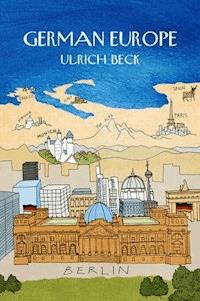
The euro crisis is tearing Europe apart. But the heart of the matter is that, as the crisis unfolds, the basic rules of European democracy are being subverted or turned into their opposite, bypassing parliaments, governments and EU institutions. Multilateralism is turning into unilateralism, equality into hegemony, sovereignty into the dependency and recognition into disrespect for the dignity of other nations. Even France, which long dominated European integration, must submit to Berlin’s strictures now that it must fear for its international credit rating.
How did this happen? The anticipation of the European catastrophe has already fundamentally changed the European landscape of power. It is giving birth to a political monster: a German Europe.
Germany did not seek this leadership position - rather, it is a perfect illustration of the law of unintended consequences. The invention and implementation of the euro was the price demanded by France in order to pin Germany down to a European Monetary Union in the context of German unification. It was a quid pro quo for binding a united Germany into a more integrated Europe in which France would continue to play the leading role. But the precise opposite has happened. Economically the euro turned out to be very good for Germany, and with the euro crisis Chancellor Angela Merkel became the informal Queen of Europe.
The new grammar of power reflects the difference between creditor and debtor countries; it is not a military but an economic logic. Its ideological foundation is ‘German euro nationalism’ - that is, an extended European version of the Deutschmark nationalism that underpinned German identity after the Second World War. In this way the German model of stability is being surreptitiously elevated into the guiding idea for Europe.
The Europe we have now will not be able to survive in the risk-laden storms of the globalized world. The EU has to be more than a grim marriage sustained by the fear of the chaos that would be caused by its breakdown. It has to be built on something more positive: a vision of rebuilding Europe bottom-up, creating a Europe of the citizen. There is no better way to reinvigorate Europe than through the coming together of ordinary Europeans acting on their own behalf.
Sie lesen das E-Book in den Legimi-Apps auf:
Seitenzahl: 136
Veröffentlichungsjahr: 2013
Ähnliche








Table of Contents
Cover
Dedication
Title page
Copyright page
Preface
Acknowledgements
Introduction
1 How the Euro Crisis is both Tearing Europe Apart and Uniting It
How German austerity policies are dividing Europe – the governments are for it, the peoples are against
The achievements of the European Union
The blindness of economics
European domestic politics: the national concept of politics is outmoded
The EU crisis is not a debt crisis
2 Europe’s New Power Coordinates: The Path to a German Europe
Europe under threat and the crisis of politics
The new landscape of European power
‘Merkiavelli’: hesitation as a means of coercion
3 A Social Contract for Europe
More freedom through more Europe
More social security through more Europe
More democracy through more Europe
The question of power: who will enforce the social contract?
A European spring?
For Elisabeth
First published in German as Deutsches Europa © Suhrkamp Verlag Berlin 2012
This English edition © Polity Press, 2013
Polity Press
65 Bridge Street
Cambridge CB2 1UR, UK
Polity Press
350 Main Street
Malden, MA 02148, USA
All rights reserved. Except for the quotation of short passages for the purpose of criticism and review, no part of this publication may be reproduced, stored in a retrieval system, or transmitted, in any form or by any means, electronic, mechanical, photocopying, recording or otherwise, without the prior permission of the publisher.
ISBN-13: 978-0-7456-6539-9
ISBN-13: 978-0-7456-6952-6 (Multi-user ebook)
ISBN-13: 978-0-7456-6953-3 (Single-user ebook)
A catalogue record for this book is available from the British Library.
The publisher has used its best endeavours to ensure that the URLs for external websites referred to in this book are correct and active at the time of going to press. However, the publisher has no responsibility for the websites and can make no guarantee that a site will remain live or that the content is or will remain appropriate.
Every effort has been made to trace all copyright holders, but if any have been inadvertently overlooked the publisher will be pleased to include any necessary credits in any subsequent reprint or edition.
For further information on Polity, visit our website: www.politybooks.com
Preface
Will the Greeks have returned to the drachma or the Germans to the D-Mark by the time readers pick up this book? Or will they simply laugh the idea out of court because the crisis will have long since been overcome and Europe will have emerged from it strengthened? The fact that we even ask such questions and that we seem to be stumbling around in a fog of uncertainty tells us a lot about the elusive state of affairs in Europe and the risk involved in attempting to capture it in words.
Everyone knows what that risk is but to utter it is to violate a taboo. The fact is that Europe has become German. Nobody intended this to happen, but, in the light of the possible collapse of the euro, Germany has ‘slipped’ into the role of the decisive political power in Europe. Timothy Garton Ash summed up the situation in February 2012. ‘In 1953 the novelist Thomas Mann appealed to an audience of students in Hamburg to strive for “not a German Europe but a European Germany”. This stirring pledge was endlessly repeated at the time of German unification. Today we have a variation that few foresaw: a European Germany in a German Europe.’1
How could this come to pass? What might its consequences be? What threats does the future hold? What are its attractions? These are the questions I propose to address in this essay.
At the present time, public debate on the subject is dominated almost exclusively by its implications for the economy. There is an irony here when we recall how the crisis took the economists by surprise. The problem created by a purely economic analysis is that it overlooks the fact that the crisis is not purely a matter of the economy (and of thinking about the economy) but is also one of society and politics and our prevailing ways of thinking about them. It is not that I am venturing onto the alien terrain of economics but that economics has lost sight of the society it is analysing.
My intention in this essay is to put forward a new interpretation of the crisis. I should like to try to get to the bottom of the announcements in the daily press or on TV and to set them in a broader context. The reading I offer is based on my theory of the risk society. The vision of a modernity that has gone out of control as I have presented it in a number of books is one I shall develop further here with reference to the crisis of Europe and the euro.
There is a widespread view that what we need to overcome this crisis is more Europe. But we find less and less assent to the idea of ‘more Europe’ among the people of the member states. Given this situation, is it even possible to conceive of the completion of a European political union? Of a common taxation system and a common economic and social policy? Or is it not the reality that the preoccupation with a political union has obscured the crucial question, that of a European society, for so long that we have ended up leaving the most important factor out of the reckoning altogether? That factor is the sovereign people, the citizens of Europe. So let us put society back in. What needs to be done in the midst of this financial crisis is to shed light on the power shifts in Europe and to delineate the new landscape of power. That is the goal of this essay.
Ulrich BeckAugust 2012
Note
1 Timothy Garton Ash, ‘Angela Merkel needs all the help she can get’, The Guardian (8 February 2012); available at www.guardian.co.uk/commentisfree/2012/feb/08/angela-merkel-all-help-can-get?INTCMP=SRCH (accessed September 2012).
Acknowledgements
I dedicate this little book to Elisabeth, my beloved wife, also known as Professor Beck-Gernsheim, for discussing its intellectual architecture with me sentence by sentence, and for her unpretentious sensibility to the way that words and sentences have a life of their own. Without John Thompson, my great colleague and dear friend, this book would never have been written. His power of inspiration made me do it. Rodney Livingstone, who loves and lives German and English literature, gave his imagination as a present and reinvented my argument for the English-speaking world, lending it a classical note, the aesthetics of truth.
Nevertheless, all that is wrong or missing is, of course, my responsibility entirely.
Introduction
Europe: To Be or Not to Be: The Decision Facing Germany
‘Today the German Bundestag will decide the fate of Greece.’ That was the announcement I heard on the radio at the end of February 2012. That was the day of decision on the second rescue package, which was tied to additional austerity measures as well as to the condition that Greece should accept a further loss of control over its own budget. ‘Of course’, I heard a voice in me saying, ‘that’s the way it is.’ The other voice in me asked – incredulously – how was that possible? What does it mean for one democratic state to decide the destiny of another democratic state? I understand that the Greeks need German taxpayers’ money, but the proposed cuts amount to an assault on the autonomy of the Greek nation.
What I found irritating at the time was not simply the substance of the announcement but also the fact that it was accepted in Germany as if it were the most natural thing in the world. Just listen to it again. The German parliament – not the Greek parliament – will decide the fate of Greece. How can that statement have any meaning at all?
Let us perform a small thought-experiment. Let’s assume that the Germans were to hold a referendum on whether the Greeks should leave the euro now (i.e., the summer of 2012). The probable result would be ‘Bye-bye, Acropolis’.1 Let us assume further that the Greeks were to hold a referendum on the same question. The probable result would be a clear majority in favour of retaining the euro (with roughly 85 per cent in favour, according to opinion polls of May 2012).2
How are we to go about resolving disagreements between national democracies? Which democracy should prevail? By what right? With what democratic legitimation? Or is the coercive might of the economy to play the key role? Should the withholding of credit be the ultimate decisive factor? Or should Greece, the original home of democracy, be shorn of its right to democratic self-determination because of its debt burden? What sort of country, what sort of world, what sort of crisis are we living in, if we can stand by and watch one democracy emasculated by another without its provoking any feeling of outrage? Moreover, the assertion that ‘the German Bundestag will decide the fate of Greece’ understates the situation. It is Europe that is at stake here. The statement ‘Today it is Germany that will decide on the existence or non-existence of Europe’ sums up the intellectual and political dilemma.
The European Union has twenty-seven member states, governments and parliaments; it has its own Parliament, a Commission, a Court, a High Representative for Foreign Affairs, a Commission President, a Council President, etc., etc. But, thanks to its economic might, Germany has been catapulted by the financial crisis and the crisis of the euro into the position of the undisputed great power in Europe as a whole. After the Second World War and the Holocaust, Germany lay in ruins both morally and physically. Now, after barely seventy years, it has advanced from the status of eager pupil to that of schoolmaster of Europe. In the Germans’; conception of themselves the word ‘power’ is still a dirty word, one that they like to replace with the word ‘responsibility’. National interests are discreetly concealed behind such grandiose terms as ‘Europe’, ‘peace’, ‘collaboration’ or ‘economic stability’. To utter the words ‘a German Europe’ is to break a taboo. To say that ‘Germany will assume the “Führung” [leadership] of Europe’ would be even more offensive.3 We could say, however, that Germany assumes ‘responsibility’ for Europe.
But the European crisis is coming to a head, and Germany finds itself faced with a historic decision. It must attempt either to revive the vision of a political Europe in the teeth of every obstacle or to stick with a policy of muddling through and of using hesitation as a means of coercion – until the euro do us part. Germany has become too powerful to be able to afford the luxury of indecision.
The fact that the moment of decision is now upon us is rarely stated in so many words in the German media. But it is frequently referred to in the commentaries of foreign observers. Here for instance is the view of Eugenio Scalfari, the Italian journalist and writer: ‘If Germany continues to pursue a financial policy that leads to a collapse of the euro, then the Germans would be responsible for the collapse of the European project. That would be its fourth crime after the two world wars and the Holocaust. Germany must now accept its responsibility for Europe.’4
No one should be in the least doubt. In a German Europe, Germany would be made to bear the responsibility for the failure of the euro and the EU.
Notes
1 ‘Akropolis Adieu!’ This was the title of an article in Der Spiegel (14 May 2012).
2 See ‘Griechische Spargegner führen in Umfrage zur Wahl’, Zeit online (25 May 2012), www.zeit.de/politik/ausland/2012-05/griechenland-wahl-syriza (accessed August 2012).
3 One could use the English word ‘leadership’ even in German, whereas the German word ‘Führung’ is still contaminated by its association with Hitler, Der Führer, and the National Socialists.
4 Birgit Schönau, ‘Das wäre die vierte Schuld’, interview with Eugenio Scalfari, Die Zeit (15 March 2012), 7.
1
How the Euro Crisis is both Tearing Europe Apart and Uniting It
How German austerity policies are dividing Europe – the governments are for it, the peoples are against
In contrast to earlier empires, which traced their origins back to myths and heroic victories, the European Union was born out of the agony of war and as a response to the horrors of the Holocaust. Today it is the financial crisis and the crisis of the euro that has revealed to Europeans that they do not live in Germany, France or Italy, etc., but in Europe. And, to the extent that state bankruptcy, economic crisis and the decline of the labour market coincide with expectations heightened by the expansion of education, the crisis generation is discovering that its fate too is European.
Almost one European in four under the age of twenty-five is unemployed and many more are trying to survive on short-term contracts. In Ireland and Italy around one-third of those under twenty-five are jobless, according to official figures, while in Greece and Spain youth unemployment was running at 53 per cent in June 2012. In Great Britain youth unemployment has risen from 15 to 22 per cent since the onset of the credit crunch in 2008. In Tottenham, where the riots broke out in 2011, there are fifty-seven jobseekers for every vacancy.1
Wherever the new vulnerable educated class, the so-called precariat, erects its tents and raises its voice in protest, what it calls for is social justice – and its demands are put forward forcefully but also non-violently in Spain and Portugal, as well as in Tunisia, Egypt and Israel. The Facebook generation then carries this protest further, with the support of a majority of the population in the different countries. Europe and its youth are united in fury about a policy that spends unimaginable sums of money on rescuing banks while squandering the future of the young generation.
The crisis and the various programmes to save the euro reveal the contours of a different Europe, a divided continent, furrowed by new rift valleys and crisscrossed by new frontiers. One of these new rift valleys runs between the nations of the north and south, between creditor and debtor nations. Another runs between the members of the eurozone, who are compelled to take action, and the members of the EU who did not join the euro and who now have to look on without being consulted as key decisions are taken about the future of the union. A third rift has opened up during elections in the debtor nations, a rift that will have enduring political repercussions. This is the fact that governments vote for austerity measures, while peoples vote against them. What it reveals is the structural divide between a European project that has been devised and administered from above, by political and economic elites, and the resistance that wells up from below. Ordinary voters reject as highly unjust the demand that they should swallow medicine that may well prove lethal. Resistance is building not just in Athens but also throughout Europe as a whole to a policy aimed at overcoming the crisis by redistributing wealth from bottom to top in accordance with the principle of state socialism for the banks and the affluent, neo-liberalism for the middle classes and the poor. What will the rescuers do if the people they claim they want to rescue say they do not want to be rescued? At any rate, not by the methods proposed by their own governments, who tell them that there is no alternative?
It is a further paradox that we are experiencing an unprecedented wave of passionate debates and power struggles – only to find that we are all worse off in the end. The Germans are up in arms because ‘German money [is being] thrown away on the bankrupt Greeks’, as the inflammatory headline in the tabloid newspaper Bild expressed it. Focus




