


Global Cheesemaking Technology E-Book
189,99 €
Mehr erfahren.
- Herausgeber: John Wiley & Sons
- Kategorie: Fachliteratur
- Sprache: Englisch
Global Cheesemaking Technology: Cheese Quality and Characteristics reviews cheesemaking practices, and describes cheeses and the processes from which they are manufactured. In addition, the book examines new areas to stimulate further research in addition to the already established knowledge on the scientific principles on cheesemaking.
Part I provides an account on the history of cheese, factors influencing the physicochemical properties, flavour development and sensory characteristics, microbial ecology and cheese safety, traceability and authentication of cheeses with protected labels, and traditional wooden equipment used for cheesemaking, while an overview of the cheesemaking process is also presented.
Part II describes 100 global cheeses from 17 countries, divided into 13 categories. The cheeses described are well-known types produced in large quantities worldwide, together with some important locally produced, in order to stimulate scientific interest in these cheese varieties. Each category is presented in a separate chapter with relevant research on each cheese and extensive referencing to facilitate further reading.
Sie lesen das E-Book in den Legimi-Apps auf:
Seitenzahl: 1161
Veröffentlichungsjahr: 2017
Ähnliche




















Table of Contents
Title Page
Copyright
Dedication
List of Contributors
Preface
Part I
Chapter 1: The History of Cheese
1.1 Introduction
1.2 Origins of Cheese
1.3 Cheese in Antiquity
1.4 Cheese in the Middle Ages and Renaissance
1.5 Cheese in the Modern Era
References
Chapter 2: From Micelle to Melt: The Influence of Calcium on Physico-chemical Properties of Cheese
2.1 Introduction
2.2 Calcium Equilibrium in Bovine Milk
2.3 Calcium Equilibrium in Cheese
2.4 The Influence of Calcium on Cheese Rheology and Functionality
2.5 Conclusions
References
Chapter 3: Cheese Flavour Development and Sensory Characteristics
3.1 Introduction
3.2 Biochemical Pathways Involved in Cheese Flavour
3.3 Sensory Methods
3.4 Data Analysis, Chemometrics and Preference Mapping
3.5 Conclusion
References
Chapter 4: Cheese Microbial Ecology and Safety
4.1 Introduction
4.2 Source of Microorganisms in Cheese
4.3 Factors Influencing the Growth of Microorganisms in Cheese
4.4 Cheese Microbiota
4.5 Cheese Pathogens
4.6 Other Risks of Microbial Origin
4.7 Growth and Survival of Bacterial Pathogens in Cheese
4.8 Procedures to Improve Cheese Safety
4.9 Conclusions and Future Trends
References
Chapter 5: Cheeses with Protected Land- and Tradition-Related Labels: Traceability and Authentication
5.1 Introduction: Protected Land- and Tradition-Related Labels
5.2 Traceability
5.3 Authentication: What Should Be Authenticated?
5.4 Innovation, Modern Technologies and Traditional Cheeses
5.5 Conclusions
Acknowledgements
References
Chapter 6: An Overview of the Cheesemaking Process
6.1 Introduction
6.2 Milk Types and Composition
6.3 Raw Milk Quality for Cheesemaking
6.4 Additives in Cheese Milk
6.5 Milk Standardisation
6.6 Treatments of Raw Milk for Cheesemaking
6.7 Acidification
6.8 Coagulation
6.9 Post-Coagulation Processes
6.10 Control of Cheesemaking Steps
6.11 Cheese Maturation
6.12 Adjunct Cultures and Acceleration of the Maturation Process
6.13 Packaging
6.14 Main Cheese Categories
References
Chapter 7: Traditional Wooden Equipment Used for Cheesemaking and Their Effect on Quality
7.1 Introduction to Traditional Cheeses
7.2 Traditional Equipment
7.3 Biofilms of Wooden Vats
7.4 Wooden Shelves
7.5 Legislation Concerning Wood in Contact with Milk or Cheeses
7.6 Cleaning Systems
7.7 Safety Assessment
7.8 Conclusions
References
Part II
Introduction
Cheeses from Argentina
Cheeses from Cyprus
Cheeses from Denmark
Cheeses from France
Cheeses from Germany
Cheeses from Greece
Cheeses from Italy
Cheeses from Malta
Cheeses from the Netherlands
Cheeses from Portugal
Cheeses from Serbia
Cheeses from Slovakia
Cheeses from Spain
Cheeses from Sweden
Cheeses from Switzerland
Cheeses from Turkey
Cheeses from the United Kingdom
Chapter 1: Extra-Hard Cheeses
1.1 Parmigiano Reggiano PDO – Italy
1.2 Reggianito Cheese – Argentina
Acknowledgements
1.3 Sbrinz PDO – Switzerland
References
Chapter 2: Hard Cheeses
2.1 Allgäu Mountain Cheese – Germany
2.2 Asiago PDO – Italy
2.3 Berner Alpkäse PDO and Berner Hobelkäse PDO – Switzerland
2.4 Cantal PDO – France
2.5 Cheddar – United Kingdom
2.6 Cheshire – United Kingdom
2.7 Fiore Sardo PDO – Italy
2.8 Graviera Kritis PDO – Greece
2.9 Idiazabal PDO – Spain
2.10 Kefalograviera PDO – Greece
2.11 Kefalotyri – Greece
2.12 Le Gruyère PDO – Switzerland
2.13 Ossau Iraty PDO – France
2.14 Tête de Moine PDO, Fromage de Bellelay – Switzerland
2.15 Tulum Cheese –Turkey
2.16 Västerbottensost – Sweden
2.17 Würchwitzer Mite Cheese – Germany
References
Chapter 3: Semi-hard Cheeses
3.1 Appenzeller® – Switzerland
3.2 Arzúa-Ulloa PDO – Spain
3.3 Castelmagno PDO – Italy
3.4 Comté PDO – France
3.5 Flaouna Cheese – Cyprus
3.7 Havarti – Denmark
3.8 Herrgård – Sweden
3.9 Mahón-Menorca PDO – Spain
3.10 Majorero PDO – Spain
3.11 Manchego PDO – Spain
3.12 Murcia al Vino PDO – Spain
3.13 Präst – Sweden
3.14 Raclette du Valais PDO – Switzerland
3.15 Raclette Suisse®-Switzerland
3.16 San Simón da Costa PDO-Spain
3.17 Svecia PGI– Sweden
3.18 Serpa – Portugal
3.19 Sombor Cheese – Serbia
3.20 Tuma Persa PDO – Italy
References
Chapter 4: Soft Cheeses (with Rennet)
4.1 Afuega΄l Pitu PDO – Spain
4.2 Anevato PDO – Greece
4.3 Bryndza – Slovakia
4.4 Cremoso – Argentina
Acknowledgements
4.5 Galotyri PDO – Greece
4.6 Kopanisti PDO – Greece
4.7 Maltese Ġbejna – Malta
4.8 Serra da Estrela PDO – Portugal
4.9 Torta del Casar PDO – Spain
References
Chapter 5: Dutch-Type Cheeses
5.1 Edam Cheese – The Netherlands
5.2 Gouda – The Netherlands
5.3 Hollandse Geitenkaas (Dutch Goat’s Cheese) PGI – The Netherlands
References
Chapter 6: Swiss-Type Cheeses (Propionic Acid Cheeses)
6.1 Allgäu Emmental PDO – Germany
6.2 Emmentaler PDO – Switzerland
6.3 Grevé – Sweden
6.4 Maasdammer – The Netherlands
6.5 Pategrás Cheese – Argentina
Acknowledgements
References
Chapter 7: White-Brined Cheeses
7.1 Batzos PDO – Greece
7.2 Beyaz Peynir – Turkey
7.3 Feta PDO – Greece
7.4 Halitzia – Cyprus
7.5 Halloumi – Cyprus
7.6 Mihalıç – Turkey
7.7 Sjenica – Serbia
7.8 Urfa – Turkey
References
Chapter 8: Pasta-Filata Cheeses
8.1 Caciocavallo Podolico PDO – Italy
8.2 Kachkaval (Kačkavalj) – Serbia
8.3 Kashar (Kaşar Peyniri) – Turkey
8.4 Kasseri PDO – Greece
8.5 Mozzarella di Bufala Campana PDO – Italy
8.6 Parenica – Slovakia
8.7 Provolone Valpadana PDO – Italy
8.8 Ragusano PDO – Italy
8.9 Vastedda della Valle del Belìce PDO – Italy
References
Chapter 9: Mould Surface-Ripened Cheeses
9.1 Altenburger Goat Cheese PDO – Germany
9.2 Camembert de Normandie PDO – France
References
Chapter 10: Bacterial Surface-Ripened (Smear) Cheeses
10.1 Danbo – Denmark
10.1.1 Introduction
10.3 Esrom PGI – Denmark
10.4 Hohenheim Trappisten – Germany
10.5 Maroilles PDO – France
10.6 Reblochon PDO – France
10.7 Vacherin Mont-d'Or PDO
–
Switzerland
References
Chapter 11: Blue-Veined Cheeses
11.1 Cabrales PDO – Spain
11.2 Danablu PGI – Denmark
11.3 Fourme d’Ambert PDO – France
11.5 Gamonedo PDO – Spain
11.6 Roquefort PDO – France
11.7 Stilton PDO – United Kingdom
References
Chapter 12: Acid-Coagulated Cheeses
12.1 Acid Curd (Harzer) – Germany
12.2 Crottin de Chavignol PDO – France
12.3 Quark – Germany
12.4 Robiola di Roccaverano PDO – Italy
References
Chapter 13: Whey Cheeses (Heat Coagulated)
13.1 Anari – Cyprus
13.2 Anthotyros – Greece
13.3 Manouri PDO – Greece
13.4 Mesost and Messmör – Sweden
References
Index
End User License Agreement
Pages
c1
iii
iv
v
xxv
xxvi
xxvii
xxviii
xxix
1
3
4
5
6
7
8
9
10
11
12
13
14
15
16
17
18
19
20
21
22
23
24
25
26
27
28
29
30
31
32
33
34
35
36
37
38
39
40
41
42
43
44
45
46
47
48
49
50
51
52
53
54
55
56
57
58
59
60
61
62
63
64
65
66
67
68
69
70
71
72
73
74
75
76
77
78
79
80
81
82
83
84
85
86
87
88
89
90
91
92
93
94
95
96
97
98
99
100
101
102
103
104
105
106
107
108
109
110
111
112
113
114
115
116
117
118
119
120
121
122
123
124
125
126
127
128
129
130
131
132
133
134
136
137
138
139
140
141
142
143
144
145
146
147
148
149
150
151
152
153
154
155
156
157
158
159
160
161
162
163
164
165
166
167
168
169
170
171
172
173
174
176
177
178
179
180
181
182
183
184
185
186
187
188
189
190
191
192
193
194
173
174
195
196
197
198
199
200
201
202
203
204
205
206
207
208
209
210
211
212
213
214
215
216
217
218
219
220
221
222
223
224
225
226
227
228
229
230
231
232
233
234
235
236
237
238
239
240
241
242
243
244
245
246
247
248
249
250
251
252
253
254
255
256
257
258
259
260
261
262
263
264
265
266
267
268
269
270
271
272
273
274
275
276
277
278
279
280
281
282
283
284
285
286
287
288
289
290
291
292
293
294
295
296
297
298
299
300
301
302
303
304
305
306
307
308
309
310
311
312
313
314
315
316
317
318
319
320
321
322
323
324
325
326
327
328
329
330
331
332
333
334
335
336
337
338
339
340
341
342
343
344
345
346
347
348
349
350
351
352
353
354
355
356
357
358
359
360
361
362
363
364
365
366
367
368
369
370
371
372
373
374
375
376
377
378
379
380
381
382
383
384
385
386
387
388
389
390
391
392
393
394
395
396
397
398
399
400
401
402
403
404
405
406
407
408
409
410
411
412
413
414
415
416
417
418
419
420
421
422
423
424
425
426
427
428
429
430
431
432
433
434
435
436
437
438
439
440
441
442
443
444
445
446
447
448
449
450
451
452
453
454
455
456
457
458
459
460
461
E1
Guide
Cover
Table of Contents
Preface
Part
Begin Reading
List of Tables
Chapter 2: From Micelle to Melt: The Influence of Calcium on Physico-chemical Properties of Cheese
Table 2.1 Mineral composition of bovine milk (Gaucheron, 2005).
Chapter 3: Cheese Flavour Development and Sensory Characteristics
Table 3.1 Approximate fatty acid distribution and level in bovine milk fat.
Table 3.2 Important amino acids involved in amino acid metabolism in cheese and the potential aromatic compounds.
Chapter 4: Cheese Microbial Ecology and Safety
Table 4.1 Data on foodborne outbreaks in the European Union in 2013 and dairy foods implicated in some of these outbreaks (EFSA-ECDC, 2015).
Table 4.2 Data on selected food poisoning alerts involving foodborne pathogens in dairy products generated by RASFF in 2015 (EC, 2016).
Chapter 5: Cheeses with Protected Land- and Tradition-Related Labels: Traceability and Authentication
Table 5.1 Cheeses bearing Protected Land- and Tradition-related Labels (PLTL) from Europe and some other countries.
a
Table 5.2 Some currently developed DNA methodologies to authenticate the milk used in cheese manufacture.
Table 5.3 Some methodologies to authenticate the geographical location of cheese or milk used for cheese manufacture.
Table 5.4 Some methodologies to authenticate animal management and feeding system in cheese, or in the milk used for cheese manufacture.
Table 5.5 Some methodologies to authenticate cheesemaking technologies in cheese.
Chapter 6: An Overview of the Cheesemaking Process
Table 6.1 Types of starter cultures and species of lactic acid bacteria used in some cheeses.
a
Table 6.2 Methods for accelerating the maturation of cheese.
Table 6.3 Cheese varieties in which adjunct cultures are commonly used.
Table 6.4 Classification of cheeses according to the moisture content and the ripening microorganisms.
Table 6.5 Classification of cheese according to moisture content, scalding temperature and ripening microfloras.
Table 6.6 Classification of cheeses which is used in the current book.
Global Cheesemaking Technology
Cheese Quality and Characteristics
Edited by
Photis Papademas
Department of Agricultural Sciences, Biotechnology and Food Science, Cyprus University of Technology, Cyprus
Thomas Bintsis
11 Parmenionos, 50200 Ptolemaida, Greece
This edition first published 2018
© 2018 John Wiley & Sons, Ltd
All rights reserved. No part of this publication may be reproduced, stored in a retrieval system, or transmitted, in any form or by any means, electronic, mechanical, photocopying, recording or otherwise, except as permitted by law. Advice on how to obtain permission to reuse material from this title is available at http://www.wiley.com/go/permissions.
The right of Photis Papademas and Thomas Bintsis to be identified as the author of this work has been asserted in accordance with law.
Registered Offices
John Wiley & Sons, Inc., 111 River Street, Hoboken, NJ 07030, USA
John Wiley & Sons Ltd, The Atrium, Southern Gate, Chichester, West Sussex, PO19 8SQ, UK
Editorial Office
The Atrium, Southern Gate, Chichester, West Sussex, PO19 8SQ, UK
For details of our global editorial offices, customer services, and more information about Wiley products visit us at www.wiley.com.
Wiley also publishes its books in a variety of electronic formats and by print-on-demand. Some content that appears in standard print versions of this book may not be available in other formats.
Limit of Liability/Disclaimer of Warranty
The publisher and the authors make no representations or warranties with respect to the accuracy or completeness of the contents of this work and specifically disclaim all warranties, including without limitation any implied warranties of fitness for a particular purpose. This work is sold with the understanding that the publisher is not engaged in rendering professional services. The advice and strategies contained herein may not be suitable for every situation. In view of ongoing research, equipment modifications, changes in governmental regulations, and the constant flow of information relating to the use of experimental reagents, equipment, and devices, the reader is urged to review and evaluate the information provided in the package insert or instructions for each chemical, piece of equipment, reagent, or device for, among other things, any changes in the instructions or indication of usage and for added warnings and precautions. The fact that an organization or website is referred to in this work as a citation and/or potential source of further information does not mean that the author or the publisher endorses the information the organization or website may provide or recommendations it may make. Further, readers should be aware that websites listed in this work may have changed or disappeared between when this works was written and when it is read. No warranty may be created or extended by any promotional statements for this work. Neither the publisher nor the author shall be liable for any damages arising here from.
Library of Congress Cataloging-in-Publication Data
9781119046158
Cover Design: Wiley
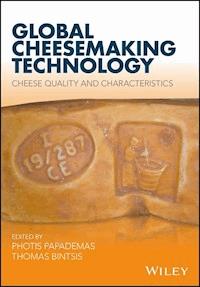
Cover Image: The cover photo is of Ragusano PDO cheese. For more details see Part II Section 8.8. Courtesy of Photis Papademas
This book is dedicated to our families and to a great teacher, the late Dr R.K. Robinson.
List of Contributors
Noelia Aldai
Food Technology and Biochemistry and Molecular Biology
Faculty of Pharmacy – University of the
Basque Country/EHU, Vitoria-Gasteiz
Spain
Efstathios Alichanidis
Department of Food Science and
Technology, School of Agriculture
Aristotle University of Thessaloniki
Thessaloniki
Greece
Ylva Ardö
Department of Food Science
University of Copenhagen, Frederiksberg
Denmark
Everaldo Attard
Division of Rural Sciences and Food
Systems, Institute of Earth Systems
University of Malta
Malta
Luiz Javier R. Barron
Food Technology and Biochemistry and Molecular Biology
Faculty of Pharmacy – University of the
Basque Country/EHU, Vitoria-Gasteiz
Spain
Carina V. Bergamini
Facultad de Ingeniería Química
(Universidad Nacional del Litoral)
Santa Fe
Argentina
and
Instituto de Lactología Industrial (Universidad
Nacional del Litoral – Consejo Nacional de
Investigaciones Científicas y Técnicas)
Santa Fe
Argentina
Françoise Berthier
Unité de Recherches en Technologie et
Analyses Laitières Rue de Versailles
France
Thomas Bintsis
11 Parmenionos
50200 Ptolemaida
Greece
Margherita Caccamo
CoRFiLaC
Ragusa
Italy
Stefania Carpino
CoRFiLaC – Consorzio Ricerca Filiera
Lattiero Casearia, Ragusa
Italy
Darren R. Cooke
School of Food and Nutritional Sciences
University College Cork, Cork
Ireland
Eva-Maria Düsterhöft
NIZO Food Research
The Netherlands
Wim Engels
NIZO Food Research
The Netherlands
Elisabeth Eugster-Meier
Bern University of Applied Sciences
School of Agricultural, Forest and Food Sciences HAFL
Zollikofen, Switzerland
Marie-Therese Fröhlich-Wyder
Agroscope, Research Division Food Microbial Systems
Federal Department of Economic Affairs
Education and Research EAER
Bern, Switzerland
Anthony Grupetta
Veterinary Regulations Directorate, Marsa
Malta
Katja Hartmann
Anton Paar GmbH
Germany
Karol Herian
Slovak Dairy Research Institute
Slovakia
Thom Huppertz
NIZO Food Research
The Netherlands
Erica R. Hynes
Facultad de Ingeniería Química
(Universidad Nacional del Litoral)
Santa Fe
Argentina
and
Instituto de Lactología Industrial
(Universidad Nacional del Litoral – Consejo Nacional de
Investigaciones Científicas y Técnicas)
Santa Fe
Argentina
Ernst Jakob
Agroscope, Institute for Food Sciences IFS
Federal Department of Economic Affairs
Education and Research EAER, Bern
Switzerland
Paul Jelen
Department of Agricultural, Food and
Nutritional Science, University of Alberta
Canada
Kimon-Andreas G. Karatzas
Department of Food and Nutrition Sciences
The University of Reading
United Kingdom
Kieran Kilcawley
Teagasc Food Research Centre
Moorepark, Fermoy, Co. Cork
Ireland
Paul S. Kindstedt
Department of Nutrition and Food Sciences
University of Vermont
United States
Giuseppe Licitra
Department of Agriculture, Nutrition and
Environment
University of Catania, Catania
Italy
Sylvie Lortal
INRA, Agrocampus Ouest, Science et
Technologie du lait et de l'oeuf
Rennes
France
F. Xavier Malcata
Laboratory of Engineering of
Processes, Environment Biotechnology and Energy (LEPABE)
Portugal
and
Department of Chemical Engineering
University of Porto
Portugal
Paul L.H. McSweeney
School of Food and Nutritional Sciences
University College Cork, Cork
Ireland
Jelena Miocinovic
Department of Food Microbiology, Faculty
of Agriculture, University of Belgrade
Serbia
Maria Belén López Morales
Food Science and Technology Department
International Excellence Campus for Higher
Education and Research ‘Campus Mare
Nostrum’, Veterinary Faculty
University of Murcia
Spain
Maurice O'Sullivan
School of Food and Nutritional Sciences
University College Cork, Cork
Ireland
Barbaros Özer
Ankara University
Faculty of Agriculture
Department of Dairy Technology
Ankara, Turkey
Photis Papademas
Department of Agricultural Sciences
Biotechnology and Food Science
Cyprus University of Technology, Limassol
Cyprus
Maria Cristina Perotti
Facultad de Ingeniería Química
(Universidad Nacional del Litoral)
Santa Fe
Argentina
and
Instituto de Lactología Industrial
(Universidad Nacional del Litoral – Consejo Nacional de
Investigaciones Científicas y Técnicas)
Santa Fe
Argentina
Antonia Picon
Department of Food Technology
National Institute of Agricultural and
Food Research and Technology (INIA)
Madrid
Spain
Zorica Radulovic
Department of Food Microbiology, Faculty
of Agriculture, University of Belgrade
Serbia
Mertxe de Renobales
Biochemistry and Molecular Biology
Faculty of Pharmacy – University of the
Basque Country/EHU, Vitoria-Gasteiz
Spain
Tânia G. Tavares
Laboratory of Engineering of
Processes, Environment Biotechnology and Energy (LEPABE)
Portugal
and
REQUIMTE/Department of Chemical
Sciences
Faculty of Pharmacy
University of Porto
Portugal
İrem Uzunsoy
Bülent Ecevit University Caycuma
Vocational High School
Department of Food Technology
Zonguldak
Turkey
Florence Valence
INRA, Agrocampus Ouest, Science et
Technologie du lait et de l'oeuf
Rennes
France
Mailo Virto
Biochemistry and Molecular Biology
Faculty of Pharmacy – University of the
Basque Country/EHU, Vitoria-Gasteiz
Spain
Daniel Wechsler
Agroscope, Institute for Food Sciences IFS
Federal Department of Economic Affairs
Education and Research EAER, Bern
Switzerland
Preface
The history of cheese goes back to the Neolithic era, parallel to the origins of livestock domestication and dairying, and since then, more than 1000 cheese varieties have evolved. Although cheese is industrially produced in large quantities with a high degree of automation and totally controlled processes, the techniques are very similar to those produced with the traditional methods. Based on the same principles and following basic steps, cheesemakers blend science with ‘art’, producing a great variety of cheeses.
It is not clear whether cheesemaking is a simple or a complicated process. What is well known is that the impact of a number of different factors in each cheesemaking step is critical, and this is the main reason for the great variability in the characteristics of the final cheese. Thus, the regulation of each factor is vital for producing a cheese with the specific quality characteristics of its variety.
The purpose of this book is to describe (1) the manufacturing process of the most significant cheeses of the world and (2) the quality characteristics of the corresponding individual cheese. In addition, attention is paid to the scientific justification of the development of the final cheese characteristics, and the study of the impact of critical parameters on the development of cheese flavour and texture throughout maturation.
In Part I of the book, some fundamental topics are discussed in order to give a background for a better understanding of cheesemaking and the factors affecting cheese quality. Thus, the history of cheese is presented in Chapter 1; the behaviour of calcium in cheesemilk, during manufacture and during ripening and its impact on the rheological and functional properties of cheese in Chapter 2; cheese flavour development and sensory characteristics in Chapter 3; cheese microbial ecology and safety in Chapter 4; cheese with protected land- and tradition-related labels, traceability and authentication in Chapter 5; an overview of the cheesemaking process in Chapter 6 and traditional wooden equipment used for cheesemaking and their effect on quality in Chapter 7.
In Part II, the cheesemaking processes and the quality and sensory characteristics of 100 cheeses are described. Most of the cheeses presented are traditional products (50 of them with the PDO-Protected Designation of Origin designation). Experts on cheese science and technology gave a comprehensive description of cheese varieties that are important for their country. The cheeses are divided into 13 categories, and each is presented in a separate chapter. Relevant research on each cheese and extensive references to facilitate further studies and stimulate further research on specific aspects of cheesemaking are included.
We wish to express our sincere gratitude to all 43 contributors; for their high professionalism and cooperation.
Photis Papademas and Thomas Bintsis
Part I
Chapter 1The History of Cheese
Paul S. Kindstedt
Department of Nutrition and Food Sciences,, University of Vermont, US
1.1 Introduction
The International Dairy Federation estimated that global cheese production in 2015 totalled approximately 23 million tonnes (IDF, 2016). This production was spread across six continents and included cheese made mainly from cow (20.7 million tonnes) milk. The remainder is composed of cheese from other species (buffalo, goat and sheep) as well as home-made and farmstead cheeses which do not appear in national statistics. How did this come about? More specifically, where, when and why did cheesemaking begin, how did it spread and evolve, and how did cheese attain such diversity, widespread distribution and prominence in our time? Although our understanding of the history of cheese remains very incomplete, various pieces of this vast puzzle can be fitted together to form a narrative that provides context for global cheesemaking in the twenty-first century.
1.2 Origins of Cheese
Until recently, the origins of cheese have remained mostly shrouded in the impenetrable fog of ancient prehistory. During the past two decades, however, groundbreaking advances in widely ranging fields of research and scholarship have yielded new insights into humanity's earliest experiences with cheese. Indeed, the convergence of multiple trains of research has pushed the likely beginnings of cheesemaking back to the Neolithic, perhaps nearly all the way back to the very origins of livestock domestication and dairying, which provided the context for the emergence of cheese.
Sheep and goats were first domesticated in the upper Euphrates and Tigris River valleys of Southwest Asia, as inferred from the study of archaeological skeletal remains. Advances in techniques to recover, evaluate and statistically analyse skeletal and dental remains for vital diagnostic characteristics such as size, sex and age of the animal at death, along with advances in interpretive frameworks based on ethnographic modelling of management strategies used by semi-nomadic shepherds in Southwest Asia today, have led to breakthroughs in the ability to detect the emergence, and track the spread, of livestock domestication (Vigne, 2011; Vigne & Helmer, 2007). Archaeozoological data clearly demonstrate the occurrence of drastic changes in the slaughtering profiles of sheep and goats, considered indicative of the onset of domestication, around the middle of the 9th millennium BC (Helmer, Gourichon & Vila, 2007; Vigne, 2011; Vigne et al., 2011). Similarly, cattle were also domesticated in the Middle Euphrates basin slightly later, again based on archaeozoological analyses (Vigne, 2011). Furthermore, mitochondrial genetic studies of modern sheep, goats and cattle, along with analyses of mitochondrial DNA extracted from Neolithic skeletal remains, also support the conclusion that the earliest domestication of these livestock occurred in the Fertile Crescent region of Southwest Asia (Bollongino et al., 2012; Bonfiglio et al., 2012; Conolly et al., 2012; Edwards et al., 2007; Hiendleder et al., 2002; Meadows et al., 2007; Naderi et al., 2008). Thus, a considerable body of evidence indicates that goat, sheep and cattle domestication occurred for the first time in the same general region of the upper Fertile Crescent, aptly dubbed the ‘cradle of agriculture’, where the initial domestication of key founder grain crops such as wheat, barley, lentil, pea and chickpea also took place several centuries earlier (Weiss & Zohary, 2011).
It has been widely (though not universally) presumed that domesticated livestock in Southwest Asia were initially raised for their meat, hides and other products resulting from the animals' slaughter, and that the milking of goats, sheep and cattle did not commence until much later, for example, around the 4th millennium bc during the so-called ‘secondary products revolution’ (Sherratt, 1981, 1983). However, current archaeozoological and archaeochemical findings reveal that dairying was practised much earlier. For example, analyses of dental remains testify to the occurrence of sheep and goat slaughtering profiles, as early as the late 9th millennium bc, that are consistent with milk production (Helmer, Gourichon & Vila, 2007). Dairying practices appear to have then spread rapidly beyond their initial areas of origin, such that by the 8th millennium bc, Neolithic migrants from the northern Levantine mainland had transported domestic sheep and goats to Cyprus, where the animals were raised partly for milk production, as inferred from the early culling profiles observed there (Vigne, 2008; Vigne et al., 2011). Around the same period, archaeozoological remains of domestic cattle in the Northern Levant show similar evidence of culling strategies indicative of milking (Vigne & Helmer, 2007), which eventually spread to central and western Anatolia by the 7th millennium bc (Çakirlar, 2012; Evershed et al., 2008). Thus, ample indirect archaeozoological evidence points to dairying being practised almost from the beginning of the Neolithic when livestock were first domesticated. Indeed, it is not unreasonable to postulate that the harvesting of milk for human consumption may have been among the original reasons that inspired Neolithic farmers to domesticate ruminant livestock in the first place (Vigne, 2008; Vigne & Helmer, 2007).
The first direct evidence for dairying in the archaeological record, however, had to wait until the dawn of pottery making, during the 7th millennium bc. Recent advances in analytical techniques to recover lipid residues preserved within the fabric of ancient unglazed pottery sherds, and to identify the lipid sources based on stable carbon isotope (C12 and C13) content, have enabled archaeochemists to reconstruct the contents of many ancient Neolithic pots at the time of their use (Dudd & Evershed, 1998; Mottram et al., 1999). Using this approach, Evershed et al. (2008) demonstrated definitively, and Thissen et al. (2010) corroborated, that milk production occurred as early as the 7th millennium bc in western Anatolia.
This same analytical approach has also made it possible to track the ancient practice of milk production through time and space by analysing pottery remains left behind by migrating Neolithic farmers. For example, a growing body of evidence in the field of archaeoclimatology strongly suggests that a substantial rise in sea level, followed by a major episode of climatic cooling, occurred during the late 7th millennium bc, which in turn precipitated social collapse among Neolithic farmers in Southwest Asia and triggered large-scale migrations out of Southwest Asia into Europe and elsewhere (Clare et al., 2008; Pross et al., 2009; Turney & Brown, 2007; Weninger et al., 2006). Among the evidence for Neolithic migration from Anatolia to Europe around this time are the analyses of potsherds recovered from the Balkan Peninsula that chronicle the spread of dairying as migrating Neolithic farmers transported their pottery-making technology and dairy subsistence strategy with them (Evershed et al., 2008). From there, Neolithic farmers continued their migration into Central, Eastern and Southern Europe by the 6th millennium BC (Craig et al., 2005; Salque et al., 2012; Spangenberg, Jacomet, & Schibler, 2006), the British Isles by the 5th millennium bc (Copley et al., 2003; Copley et al., 2005a, 2005b), and the Western Baltic region, Scandinavia and Finland by the 5th/4th millennium bc (Craig et al., 2011; Cramp et al., 2014; Isaksson & Hallgren, 2012), leaving behind a trail of potsherds containing milk fat residues. Similar analyses have also confirmed the occurrence of dairying as early as the 5th millennium bc in Northern Africa (Dunne et al., 2012), and the 2nd millennium bc in the steppe zone of Central Asia (Outram et al., 2012). Thus, it appears that Neolithic farmers meticulously conserved dairying as a component of their subsistence strategy, even as they migrated vast distances, sometimes under conditions of great environmental stress.
The presence of milk fat residues in ancient potsherds does not necessarily indicate the occurrence of cheesemaking, only that the original pot contained milk in some form at the time of use. However, results from model studies of unglazed potsherds that were exposed to milk products and then buried to simulate conditions of archaeological pottery strongly suggest that the presence of milk fat residues in ancient potsherds constitutes telltale signs of concentrated dairy products such as butter and cheese. For example, unglazed potsherds that were deliberately exposed to liquid full fat milk only absorbed minute levels of milk fat within the pottery fabric, which rapidly degraded to undetectable levels upon burial of the sherds, probably due to microbial breakdown (Copley et al., 2005a; Dudd & Evershed, 1998). Therefore, it seems unlikely that ancient pots that contained only liquid raw milk at the time of use would have retained permanent measurable milk fat residues embedded within the pottery fabric. In contrast, model potsherds that were deliberately dosed with butter and then buried absorbed milk fat into the pottery fabric at 70 times the level observed for liquid milk, and the embedded milk fat underwent much less degradation during burial for up to one year, resulting in the abundant persistence of measurable milk fat residues (Copley et al., 2005a). It is evident, therefore, that concentrated dairy products such as butter and cheese, which contain high levels of milk fat and low levels of water and lactose, are much more likely than liquid milk to transfer abundant milk fat into the fabric of unglazed pottery in a stable form that may persist for immense periods of time under the right conditions; hence, the rationale for the use of milk fat residues as an indicator of concentrated dairy products such as butter or cheese.
Given this context, it is not surprising then, that milk fat residues have also been identified in sherds from Neolithic ceramic sieves recovered from Northeastern and Northwestern Europe, which have been dated to the 6th millennium bc (Salque et al., 2012, 2013). Remnants of Neolithic ceramic sieves have been observed widely in the archaeological material record throughout Central Europe, and similar ceramic sieves from the Bronze Age have been found in Central Italy, the Balkans, and the Indus River region of Pakistan (Barker, 1981; Bogucki, 1984; Gouin, 1997). It has long been suspected that these ancient pottery sieves were used to separate curds from whey during cheesemaking, on the basis of modern peasant ethnography that has documented the widespread use of similar sieves Central Italy, Central Europe, the Balkans and the Middle East (Barker et al., 1991; Gouin, 1997). The findings of Salque et al. (2012, 2013) confirm that Neolithic farmers used such sieves in cheesemaking some 7000 years ago in much the same way as is still practised today in some traditional societies.
In summary, the occurrence of milk fat residues in Neolithic potsherds and sherds, from ceramic sieves in particular, confirms with near certainty that cheesemaking was well under way in Southwest Asia and parts of Europe by the late Neolithic. However, a much earlier origin of cheesemaking, closer to the beginnings of dairying, is also possible. Genetic modelling based on modern human DNA sampling, combined with analyses of DNA recovered from Neolithic human skeletal remains, indicates that humans were universally adult lactose intolerant at the onset of dairying around the 9th millennium bc, due to the ubiquitous downregulation of the lactase enzyme (beta-galactosidase) that occurs after weaning in all mammals (Leonardi et al., 2012). Lacking the lactase production needed to break down lactose in the gut, early Neolithic adults were lactose intolerant, and it took several thousand years from the start of dairying before adult lactase persistence/lactose tolerance became widely established in the human population for the first time in Central Europe, sometime after the 6th millennium bc (Burger et al., 2007; Curry, 2013; Itan et al., 2009; Leonardi et al., 2012). This implies that the earliest harvesting of milk was intended exclusively for young children who were still suckling, to supplement the mothers' milk supply.
However, there is an additional possibility. The processing of milk into lactose-reduced products such as butter, and especially cheese, would have rendered a substantial fraction of the total nutrient portfolio of milk accessible to the Neolithic adult population. Dairying must have provided Neolithic farmers with very strong nutritional advantages for them to conserve milking practices over the many millennia and vast distances of migration that eventually enabled the successful genetic selection for the capacity to express lactase into adulthood. It is not unreasonable to postulate that cheesemaking may have commenced soon after the beginnings of dairying in the early Neolithic, which furnished the new farmers with a powerful nutritional incentive to culturally conserve their dairying practices through the long millennia that ebbed and flowed until adults, too, gained the capacity to benefit directly from consuming milk.
Unfortunately, there is no way to know for certain what Neolithic cheeses were like. Probably they were similar to the simplest cheeses still produced traditionally by semi-nomadic shepherds in Southwest Asia today: fresh, soft, acid coagulated and acid-heat coagulated types, which can be dried in the sun and preserved for later use (Gouin, 1997; Kindstedt, 2012). Alternatively, such types, when heavily salted, lend themselves to packing and preserving in sealed animal skins or clay pots, as is still practised today in Southwest Asia (Kamber, 2008), and which may account for some of the milk fat residues recovered from Neolithic potsherds discussed previously. Whether Neolithic cheesemakers perfected rennet-coagulated cheese is a matter for speculation. The culling of very young male livestock, practised from the beginning of dairying, afforded Neolithic farmers with ample opportunity to observe the milk clotting capacity of animal stomachs. It was only a matter of time before the connection between the clotted contents in the stomachs of the suckling lambs, kids and calves that were routinely culled, and the capacity of the stomach, and its curdled contents, to transform harvested liquid milk into a clotted state, inspired the birth of rennet-coagulated cheese.
From that point on, the basic technologies of acid, acid-heat and especially rennet-coagulated cheesemaking evolved in many different directions as cheesemakers in different places and at different times were confronted with new environmental, ecological, social and economic circumstances that caused them to adapt their practices and equipment to the world in which they found themselves. Great milestones in the circuitous evolution of cheesemaking were marked by the foundational technological advances that we take for granted today, such as the development of techniques and devices for cutting the coagulated mass of milk, for heating the cut mass of curd and whey and for separating whey from curds and applying pressure to the drained mass of curd, all of which facilitated the expulsion of whey from curds; the mastering of salt application levels and techniques; and the commandeering of local natural microenvironments for cheese storage and ripening. Taken collectively, these simple yet profound technical advances elegantly enabled cheesemakers to select for chemical characteristics and microbial populations in their cheeses that rendered positive outcomes that would otherwise be impossible (Kindstedt, 2014). The end result over the course of millennia has been the evolution of the major cheese families, each made up of seemingly endless variations on the family theme.
1.3 Cheese in Antiquity
It was not until several thousand years after start of cheesemaking, however, that descriptive information about cheeses and their manufacture began to be written down as humanity's first civilizations dawned. The earliest known examples of proto-writing, dating from the late 4th millennium bc, come from Uruk, the first great city-state of the Sumerian civilization of Southern Mesopotamia. These proto-cuneiform clay tablets represent the antecedents of humanity's first written language, and among the tablets recovered at Uruk are numerous administrative records that tabulate annual production figures for dairy products, primarily cheese and butteroil (ghee), produced from the milk of state-controlled herds of cattle and flocks of goats and sheep (Englund, 1991, 1995a; Green, 1980). The administrative complexity reflected in these clay records is astonishing and indicates that dairying and dairy processing had become very sophisticated. At the centre of Uruk's economic and political system stood two soaring temples dedicated to Inanna and An, the patron deities of Uruk whose cultic practices demanded a constant supply of agricultural products, including cheese and butter. These cultic practices not only underpinned the religious ideology of Uruk but also formed the basis of its centrally administered redistributive economy (Kindstedt, 2012).
The Inanna mythology of Uruk, and the Inanna-Demuzi cult that it inspired, institutionalised the routine cultic sacrifices of cheese and butter, which were subsequently replicated in various other Sumerian city-states during the 3rd millennium bc. Indeed, more than a thousand years after the initial rise of Uruk, sophisticated administrative oversight of cheese and butteroil production continued to be practised in Sumer, as is evident from abundant cuneiform records recovered from the massive city-state of Ur around the end of the 3rd millennium bc (Englund, 1995b; Gomi 1980). Other written accounts from Ur record the details of daily sacrifices of cheese and butter to Inanna and Ningal (Inanna's mythological mother), always in equal amounts ranging from about 29 to 54 litres of cheese and butteroil per day (Figulla, 1953). This strong linkage between cheese and religious expression is repeatedly observed in the Hittite, Greek and Roman civilizations that followed Sumer, the consequence of powerful currents of cultural influence that flowed northwards and westwards out of Mesopotamia from the Bronze Age forward (Kindstedt, 2012; McCormick, 2012).
Mesopotamia, however, was evidently not the only region where cheese was used as an element of religious expression during the 3rd millennium bc. Craig et al. (2015) uncovered striking evidence of the use of processed dairy products, most likely probably cheese, in religious practices in the vicinity of the Stonehenge megalithic complex in England, dating to around 2500 bc. Their findings, which were based on the identification of milk fat residues embedded in pottery sherds recovered at the site, raise intriguing questions as to whether these religious practices at Stonehenge originated independently of similar concurrent practices in Southern Mesopotamia (approximately 5000 km to the southeast of England), or whether they derived from a common pre-existing religious system that Neolithic migrants from the Levant and Anatolia brought with them to England and Southern Mesopotamia following the great migrations of the 7th millennium bc. Although direct evidence of the use of cheese in religious observances extending back to the 7th millennium bc is lacking, it is interesting to note that ceramic barrel-shaped vessels, believed to be butter churns, have been recovered from a 7th millennium bc Neolithic site in southwest Anatolia that seems to have been a cultic shrine; the churns may have been used for cultic ceremonies (Morris, 2014). Thus, a link between dairy products and religious practices in the early Neolithic seems possible. Unfortunately, detailed analyses of lipid residues in pottery sherds recovered from Neolithic Near East religious sites, which may help to elucidate this mystery, have yet to be reported. Returning to Southern Mesopotamia, a particularly noteworthy feature of Sumerian cuneiform literature from the standpoint of cheese history are modifiers that appear along with the term for cheese, which provide the first descriptive information about cheese in antiquity, and which indicate that cheeses were beginning to diversify. Modifiers that have been translated with reasonable certainty include terms for small and large cheese, herb-flavoured cheese, cheese with cereal grains added, milled or grated cheese, rich cheese, fresh cheese, sharp cheese, white cheese, stinking cheese, and dung cheese (Bottéro, 1985; Stol, 1993). None of these terms provide definitive insight into whether rennet-coagulated cheesemaking was practised in Sumer; however, a few terms have been noted among Sumerian cuneiform texts that could possibly be translated as animal rennet and plant rennet (Stol, 1993).
The first definitive evidence for rennet and rennet-coagulated cheesemaking does not appear in the archaeological record until the rise of the Hittite civilization in Anatolia during the late Bronze Age. Anatolia and Southern Mesopotamia maintained extensive trade networks and cultural exchanges during the Bronze Age; thus, the Hittites were profoundly influenced by Sumerian civilization. For example, they adapted the technique of cuneiform writing to the Hittite language and assimilated many Sumerian cultural features such as architectural forms and religious practices, including the use of cheese in various sacrificial rites (Kindstedt, 2012). Cuneiform texts from the mid-2nd millennia bc reveal that the Hittites performed sacrificial rites involving not only cheese but also rennet, suggesting that rennet had attained a revered status (Güterbock, 1968; Hoffner, 1995, 1998). Other Hittite texts clearly indicate that rennet-coagulated cheesemaking was firmly established in Hittite Anatolia by this time (Wainwright, 1959). Hittite modifiers for cheese that have been translated include terms for small cheese, large cheese, crumbled or grated cheese, scoured or finished cheese, and aged soldier cheese (Carter, 1985; Hoffner, 1966). The latter term suggests that the Hittites used cheese as a military ration, a practice that future armies and navies of Western civilization would often repeat, down to the present.
The Hittite Civilization collapsed around 1200 bc during a period of catastrophic upheaval throughout the Eastern Mediterranean that also triggered an abrupt end to the Greek Mycenaean Civilization, whom Homer referred to as the Achaeans. The cultural legacies of the Mycenaean, Hittite and Sumerian civilizations lived on, however, and helped shape the rise of classical Greek civilization a few hundred years later. The Greek world would come to embrace cheese in daily life and elevate its status to new heights in trade and gastronomic appreciation.
Cheese that the Greeks called ‘fresh cheese’ was a regular feature of the opson, or relish that accompanied the sitos, or main course of the Greek meal, which consisted of bread and cereal porridge (Neils, 2008; Wycherley, 1956). Fresh cheese mixed with honey also served as the filling for the beloved flaky cheesecake pastries known as plakous or plakounta. Fresh cheese probably was a simple rennet-coagulated, uncooked, unpressed or lightly pressed, surface-salted or brine-salted, rennet-coagulated type produced from sheep or goats milk, or blends of the two, much like the fresh white cheeses still produced throughout the Aegean and Eastern Mediterranean regions (Kamber, 2008). The term ‘fresh cheese’ in Greek literature also refers to the district of the Athens marketplace where cheese was bought and sold, and since every Greek polis (city-state) had a marketplace in the city-centre (agora), each also probably had its own fresh cheese district.
Beyond being common elements of the basic daily Greek meal, cheese and cheesecakes were enjoyed by the aristocracy during the symposium, or drinking party, which was the premier form of entertainment among the upper aristocratic classes (Grandjouan, Markson & Rotroff, 1989; Noussia, 2001). Exceptional local cheeses sometimes became items of maritime commerce, and some cheeses that acquired stellar reputations became identified by their place of origin, such as those from the islands of Cythnos and Chios in the Aegean Sea (Berlin, 1997; Casson, 1954; Migeotte, 2009). Many of the imported cheeses in Athens were probably variants of basic fresh cheese that, when stored and ripened in ceramic jars containing brine, were transformed into the flavourful Feta-type white brined cheeses that became ubiquitous throughout the Aegean and Balkan regions and have remained so to this day (Anifantakis & Moatsou, 2006; Kamber, 2008). Other imported cheeses that were highly esteemed in Athens came from the heavily Greek colonised island of Sicily, where hard, dry cheeses were crafted that were long-lasting yet flavourful enough to serve as condiments in cooking when grated. Sicilian grating cheeses probably consisted of small rennet-coagulated, uncooked, unpressed or lightly pressed, surface-salted sheep and goats milk cheeses similar to those produced in Sardinia and the Southern Italian peninsula today (Kindstedt, 2012). The use of such cheeses in cooking became so popular throughout the Greeks world that Archestratos, a renowned fourth-century BC chef and cookbook writer from Sicily, complained about the overuse of cheese sauces in cooked dishes of the time (Rapp, 1955). Thus, besides serving as a staple of peasant subsistence, cheese in the Greek world became a gourmet luxury food and a flavourful ingredient that added coveted gastronomic variety to an increasingly sophisticated food culture.
The Romans greatly admired Greek culture, and the Greek love of hard, dry pecorino grating cheeses captivated the Romans from the beginning. Indeed, the process began with Etruscans, forerunners of the Romans, whose aristocratic warriors left behind cheese graters, an essential feature of a Homeric feasting ritual that the Etruscans assimilated from the Greeks, in their seventh-century bc tombs (Ridgway, 1997; Sherratt, 2004). By the time of the Roman Empire, the bronze or iron cheese grater had become a standard utensil in the Roman kitchen. The Romans officially recognised two classes of cheese for tax purposes: caseus mollis, or soft cheese, and caseus aridus, or dry cheese. According to the first-century ad Roman agricultural writer Columella, both cheeses were made from sheep and/or goats milk by a common rennet-coagulated, uncooked, lightly pressed, surfaced-salted make procedure, but to produce the dry version, the salting and pressing steps were repeated, and the pressing pressure was increased (Forster & Heffner, 1954).
Conspicuously absent from Columella's instructional manual on cheesemaking, however, is any mention of one of the most ancient and beloved of cheeses of the Central Italian peninsula, the acid-heat-coagulated (Ricotta) types. The making of whole milk Ricotta seems to have dominated cheese production on the Italian peninsula during the 2nd millennium bc, as inferred from the abundant occurrence of ceramic devices referred to as ‘milk boilers’ in the archaeological record. Milk boilers, which were produced according to two different designs, were used throughout much of the Italian peninsula during the 2nd millennium bc to prevent heated milk from frothing and boiling over (Potter, 1979; Trump, 1965). Similar devices are still used today by shepherds in the Italian Apennines for the making of traditional Ricotta cheese (Barker, 1981; Barker et al., 1991). Milk boilers disappeared from the Italian archaeological record during the first millennium bc, however, which coincided with the rise of hard pecorino grating cheeses, suggesting that a shift from the making of whole milk Ricotta to whey Ricotta (which is less prone to frothing and boiling over, obviating the need for milk boilers) may have taken place in conjunction with the rise in hard pecorino grating cheese production (Kindstedt, 2012).
The Roman love affair with hard pecorino grating cheeses had not only culinary implications but also military implications as well. The vastness of the Roman Empire, with some 16,000 km of frontier to protect against the ‘barbarians’ beyond, presented daunting logistical challenges for Roman military planners that had to feed, clothe and otherwise provision a permanent force of nearly half a million soldiers to guard the Empire. To address these needs, Roman forts were endowed with agricultural lands that were used to produce wheat and to raise sheep and pigs for the provisioning of the legions (Bezeczky, 1996; Davies, 1971). Cheese was a basic ration of the Roman military, and the frequent occurrence of perforated heavy-duty ceramic press moulds in the archaeological material records from Roman forts throughout Europe indicate that the making of hard pecorino grating cheese often took place on site, perhaps by the soldiers themselves during times of peace (Davies, 1971; Niblett, Manning & Saunders, 2006). The widespread introduction of Roman cheesemaking technology to Europe north of the Alps left its mark on the future of European cheesemaking, particularly that of the conquering Anglo-Saxons in England, as discussed later.
The Romans were not the first to introduce cheesemaking to Europe north of the Alps, however. On the contrary, they frequently encountered vibrant cheesemaking activities among the Celtic peoples that they conquered, and many cheeses from the provinces to the north came to be imported to Rome, where they attained stellar reputations. Particularly noteworthy were the alpine cheeses that were made all along the arc of the Alps, and the cheeses from the Massif Central of France (Kindstedt, 2012). Thus, the Neolithic migration of dairy farmers from Southwest Asia to Central Europe that occurred thousands of years earlier ultimately gave rise to a very sophisticated and widely dispersed cheesemaking culture in Central Europe by the time of the Roman invasions.
1.4 Cheese in the Middle Ages and Renaissance
Virtually all aspects of medieval life in Europe were profoundly shaped by the two ubiquitous institutions that collectively formed the scaffolding for much of the economic, social, intellectual and spiritual infrastructure of medieval society: the manor and the Benedictine monastery. Cheesemaking in the Middle Ages was no exception. The manor and the monastery were fertile centres of cheesemaking activity, and the great proliferation of new varieties of cheese that came of age during this period is a testimony to the powerful influence that these institutions exercised over cheesemakers.




