


54,99 €
Mehr erfahren.
- Herausgeber: John Wiley & Sons
- Kategorie: Wissenschaft und neue Technologien
- Sprache: Englisch
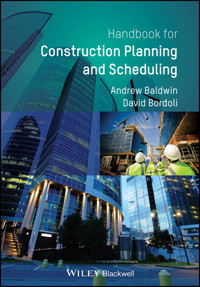
The authoritative industry guide on good practice for planning and scheduling in construction
This handbook acts as a guide to good practice, a text to accompany learning and a reference document for those needing information on background, best practice, and methods for practical application.
A Handbook for Construction Planning & Scheduling presents the key issues of planning and programming in scheduling in a clear, concise and practical way. The book divides into four main sections: Planning and Scheduling within the Construction Context; Planning and Scheduling Techniques and Practices; Planning and Scheduling Methods; Delay and Forensic Analysis. The authors include both basic concepts and updates on current topics demanding close attention from the construction industry, including planning for sustainability, waste, health and safety and Building Information Modelling (BIM).
The book is especially useful for early career practitioners - engineers, quantity surveyors, construction managers, project managers - who may already have a basic grounding in civil engineering, building and general construction but lack extensive planning and scheduling experience. Students will find the website helpful with worked examples of the methods and calculations for typical construction projects plus other directed learning material.
This authoritative industry guide on good practice for planning and scheduling in construction is written in a direct, informative style with a clear presentation enabling easy access of the relevant information with a companion website providing additional resources and learning support material.
- the authoritative industry guide on construction planning and scheduling
- direct informative writing style and clear presentation enables easy access of the relevant information
- companion website provides additional learning material.
Sie lesen das E-Book in den Legimi-Apps auf:
Seitenzahl: 752
Veröffentlichungsjahr: 2014
Ähnliche



















CONTENTS
Cover
Title page
Copyright page
Notes on Contributors
Foreword
Preface
Acknowledgements
Section I: Planning and Scheduling within the Construction Context
Chapter 1: An Introduction to Planning and Scheduling
A brief history of planning and scheduling
Planning
Who plans?
Planning, programming and scheduling
The cost and benefits of planning
Types of plans
An activity of the mind
Planning for construction
The planning process in the project cycle
How is the planning process affected by procurement?
The context of construction project planning
Procurement and the performance of the UK construction industry
What do construction planners do?
Construction planning practice: a summary
Key Points
Chapter 2: Managing Construction Projects
Project management body of knowledge (PMBOK)
Simultaneous management
Lean construction
A theory of construction as production by projects
Collaborative working
Morris’ perspective
Summary
Key Points
Section II: Planning and Scheduling Techniques and Practices
Chapter 3: Planning and Scheduling Techniques
To-do lists
Bar charts
Flow diagrams
Network analysis
Activity-on-arrow networks
Precedence diagrams
Linked bar charts
Space diagrams
Line of balance
ADePT
4D CAD
Key Points
Chapter 4: Planning and Scheduling Practices
Schedule design and structure
Work Breakdown Structure
Pre-tender planning, pre-contract planning, contract planning
Activities: selection, sequencing and duration
Float and contingency
Monitoring progress and managing the time model
Resources and cost optimisation
Method statements
Site layout plans
Site waste management plans
Contractors’ cash flow
Uncertainty and risk
Key Points
Section III: Planning and Scheduling Methods
Chapter 5: Critical Chain Project Management
Background
How does CCPM differ from accepted best practice in project management?
Establishing the critical chain
Monitoring and controlling the critical chain
A critical review of CCPM
Key Points
Chapter 6: Earned Value Analysis
Terminology and definitions
The basis of the EVA
Earned value analysis calculations and their interpretation
Earned value management systems
Problems and pitfalls of EVA and how to overcome them
Key Points
Chapter 7: Last Planner®
Background
The development of Last Planner®
Principles of the Last Planner System® (LPS)
Implementing the Last Planner System® (LPS)
Improving production performance
Benefits of the Last Planner® System
Barriers to the adoption of Last Planner®
Key Points
Chapter 8: ADePT–Planning, Managing and Controlling the Design Process
Background
A new way of working
Practical implementation
Summary
Key Points
Chapter 9: Building Information Modelling (BIM)
What is building information modelling (BIM)?
BIM is not new
Why now?
BIM maturity levels
The development of 4D CAD
Virtual construction
How will BIM change construction planning and scheduling?
BIM and the law
Key Points
Chapter 10: Planning for Sustainability with BREEAM
Background
The need for sustainable construction
Drivers of sustainable construction
BREEAM
BREEAM sections
Industry response to BREEAM
Case study analysis
Individual perceptions of sustainability and BREEAM
Key Points
Chapter 11: Planning for Waste Management
Background
Construction waste causes and origins
On-site waste management practices
On-site waste management techniques
Site Waste Management Plan (SWMP) requirements
How the research was undertaken
Research results
Discussion
Key challenges associated with implementing SWMPs
Key Points
Chapter 12: Planning for Safety, Health and Environment
Background
SHE management model: An overview
Planning
Risk control measures
Developing the SHE plan
Key Points
Section IV: Delay and Forensic Analysis
Chapter 13: Delays
Delay and disruption: Definitions
Delays
Categories of delay
Types of delay
Prospective versus retrospective delay and other concepts
Key Points
Chapter 14: Factual Information
The As-Planned schedule
Correcting the As-Planned schedule
As-built/progress records
As-built schedule
Key Points
Chapter 15: Protocols and Methods of Analysis
The Society of Construction Law Delay and Disruption Protocol
AACEI recommended practice no. 29R-03 – Forensic schedule analysis
Methods of analysis
Key Points
Chapter 16: Disruption
Definitions and background
Methods of analysis
Indices and statistics
Key Points
Chapter 17: Other Issues
Out-of-Sequence progress
Omissions
Calendars
Weather
Concurrent delay
Pacing
Mitigation
Acceleration
Employer/contractor/subcontractor schedules
Key Points
Appendix 1: BIM Case Study
Introduction
Building the model
The tendering process
Modelling the building process: Planning, scheduling and visualisation
Appendix 2: The Shepherd Way and Collaborative Planning
Collaborative Planning
Collaborative behaviours
The Collaborative Planning Process
Programme planning
Forward planning
Weekly Planning
The Daily Huddle
Focused improvement
Appendix 3: Building Information Modelling (BIM) and English Law
The BIM Protocol
The Information Manager
Conclusion
Glossary
References
Advertisements
Index
Access the Companion Website
Downloadable additional content
Eula
List of Tables
Chapter 01
Table 1.1 CIOB code of practice for project management for construction and development: stages and key actions.
Table 1.2 RIBA Plan of Work 2013, Stages 0–3.
Table 1.3 RIBA Plan of Work 2013, Stages 4–7.
Table 1.4 The process protocol map – Overall framework.
Table 1.5 The planning process of the construction client.
Table 1.6 The planning process of the construction contractor.
Table 1.7 Characteristics of different procurement options.
Table 1.8 A list of documents commonly produced by the planner as part of the tender team.
Table 1.9 Domain specific knowledge required by planners.
Chapter 02
Table 2.1 The theories of PM approach.
Table 2.2 Deficiencies in the assumption and theory of traditional project management theory (Howell and Koskela, 2000).
Table 2.3 Integrated TFV view on production (Koskela, 2000).
Table 2.4 A new theoretical foundation of project management (Koskela and Howell, 2002b).
Table 2.5 Overview of schools of thought in construction management.
Chapter 03
Table 3.1 A critical examination chart for reviewing construction activities (what, where, when, who, how).
Chapter 04
Table 4.1 A checklist of items to be considered when designing the schedule.
Table 4.2 A checklist of items to be included in the site visit report.
Table 4.3 Typical production data relating to breaking out concrete.
Table 4.4 Different types of constraints.
Table 4.5 Typical reporting requirements to the client.
Table 4.6 Information relating to intervening events that should be recorded.
Table 4.7 Types of method statement and their purpose (Cooke and Williams, 2009).
Table 4.8 A sample method statement.
Table 4.9 Responsibilities of the principal contractor under CDM 2007.
Table 4.10 The contents of the planning method statement –
Low density
(CIOB, 2011).
Table 4.11 Contents of the planning method statement –
Medium density
(these are
additional contents
to those listed for low density) (CIOB, 2011).
Table 4.12 Contents of the planning method statement –
High density
(these are
additional contents
to those listed for low medium) (CIOB, 2011).
Table 4.13 Typical payment terms.
Table 4.14 A range of cost estimates for a project.
Table 4.15 The outcomes of qualitative and quantitative risk analysis (Project Management Institute, 2004).
Table 4.16 Strategies for managing risk or taking advantage of opportunity (see PMBOK Guide, 2004).
Chapter 06
Table 6.1 EVA example – The analysis of the items of work at the end of month 6.
Chapter 08
Table 8.1 Information for managing the design process – Key construction information milestones achieved and milestones at risk.
Chapter 09
Table 9.1 Some of the potential advantages of BIM to the construction client, architect/designer and contractor.
Table 9.2 The three phases of virtual prototyping implementation.
Table 9.3 Requirements for the modelling of a precast high-rise residential building.
Chapter 10
Table 10.1 BREEAM section and weightings.
Table 10.2 BREEAM credits and CO
2
index.
Chapter 11
Table 11.1 Construction waste causes and origins.
Chapter 12
Table 12.1 SHE six-stage approach.
Table 12.2 Design hazard identification and risk assessment.
Table 12.3 Typical contents of a SHE plan.
Chapter 15
Table 15.1 Methods of analysis and the required factual material 1.
Table 15.2 AACEI RP taxonomy and nomenclature hierarchy.
Table 15.3 Common names for methods of analysis.
Table 15.4 Methods of analysis and the required factual material 2.
Chapter 16
Table 16.1 Causes of disruption and loss of efficiency.
Table 16.2 MCAA, labour estimating manual (Appendix B).
Chapter 17
Table 17.1 Planned, progress and rescheduled activity data.
List of Illustrations
Chapter 01
Figure 1.1 The life-cycle of a project – six frameworks.
Figure 1.2 The project planning required for a project (CIOB, 2010).
Figure 1.3 Extract from the Process Protocol Map.
Figure 1.4 How to select a procurement route (CIOB, 2010).
Figure 1.5 The planning hierarchy on a construction project.
Figure 1.6 The basis of a typical PFI arrangement (Brook, 2008).
Chapter 02
Figure 2.1 The Project Management Processes (adapted from PMI, 2004).
Figure 2.2 The concept of the plan–do–check–act cycle (adapted from PMI, 2004).
Figure 2.3 Last Planner and Critical Chain combined (Winch, 2002).
Chapter 03
Figure 3.1 The urgent/important matrix.
Figure 3.2 A simple flow chart.
Figure 3.3 An example of an Activity-on-Arrow network diagram.
Figure 3.4 An example of a precedence diagram.
Figure 3.5 Drawing an activity-on-arrow network.
Figure 3.6 Drawing a precedence diagram.
Figure 3.7 Principles of a linked bar chart diagram (From Cooke and Williams, 2009).
Figure 3.8 An example from a time chainage chart.
Figure 3.9 An example of a multiple activity chart.
Figure 3.10 An LOB diagram for the completion of 30 houses.
Figure 3.11 A simple network diagram for the construction of each house.
Figure 3.12 An example of an objective diagram.
Figure 3.13 An example of a data flow diagram.
Figure 3.14 The structure of the detailed design process model.
Figure 3.15 An extract from the detailed design process model.
Figure 3.16 An example of the information links between 20 design tasks.
Figure 3.17 A revised matrix diagram.
Chapter 04
Figure 4.1 Five levels of schedule reporting.
Figure 4.2 An example of a functional WBS.
Figure 4.3 The links between the levels of reporting and the WBS (Adapted from CIOB, 2012).
Figure 4.4 The sequencing of construction operations (Adapted from Cooke and Williams, 2009).
Figure 4.5 An example of linked activities.
Figure 4.6 Activities scheduled at the earliest start dates.
Figure 4.7 Total float.
Figure 4.8 Total float fully utilised (activities at latest start dates).
Figure 4.9 Free float.
Figure 4.10 Interfering float.
Figure 4.11 Total float, free float and interfering float.
Figure 4.12 Activities at earliest dates: free float and interfering float.
Figure 4.13 Independent float.
Figure 4.14 Precedence network using start-to-start and finish-to-finish dependencies.
Figure 4.15 Linked bar chart using start-to-start and finish-to-finish dependencies.
Figure 4.16 Linked bar chart with activity X designated ‘intermittent’.
Figure 4.17 Intermittent float in a split activity.
Figure 4.18 Terminal float.
Figure 4.19 Contingency – adding an allowance to each activity.
Figure 4.20 Contingency – as an end allowance.
Figure 4.21 Progress recorded on a simple bar chart schedule.
Figure 4.22 The planned progress monitoring method.
Figure 4.23 Resource analysis: (a) resource aggregation, (b) resource smoothing and (b) resource levelling.
Figure 4.24 The relationship between the duration of an activity and the direct cost of an activity.
Figure 4.25 Optimum total project cost.
Figure 4.26 The contractor’s cash flow for a construction project.
Figure 4.27 Monte Carlo simulation – the probability of project completion.
Chapter 05
Figure 5.1 The critical chain project buffer. (a) Critical path activities with original duration. (b) Critical path activities with best estimate duration. (c) Revised critical path with the project buffer.
Chapter 06
Figure 6.1 Planned value curve and budget at completion.
Figure 6.2 Planned value and actual cost at the time of review.
Figure 6.3 Planned value, actual cost and earned value at the time of review.
Figure 6.4 Planned value, actual cost and earned value curves for a different project.
Figure 6.5 Forecast completion date and budget at completion.
Figure 6.6 EVA example – the time schedule for the work with added budget data.
Figure 6.7 EVA example – the schedule updated to show progress after 6 months.
Chapter 07
Figure 7.1 A traditional ‘push’ planning system.
Figure 7.2 Last Planner® is a ‘pull’-based system.
Figure 7.3 The LPS overview flow chart.
Figure 7.4 The Promise Cycle.
Chapter 08
Figure 8.1 The ADePT methodology.
Figure 8.2 The production of an integrated design and construction schedule.
Figure 8.3 Typical reports for reporting design production.
Chapter 09
Figure 9.1 BIM maturity levels.
Figure 9.2 Manual/CAD-based 4D modelling process.
Figure 9.3 Four-dimensional tool/BIM-based 4D modelling process.
Chapter 11
Figure 11.1 Construction waste origins.
Figure 11.2 Waste production and potential waste minimisation across project stages.
Figure 11.3 The implementation challenges of SWMPs.
Figure 11.4 Potential amendments to SWMPs.
Chapter 12
Figure 12.1 The SHE-MM.
Figure 12.2 An example of a PMO SHE management process showing activity phases.
Chapter 13
Figure 13.1 Date delay modelling.
Figure 13.2 Total delay modelling.
Figure 13.3 Extended delay modelling.
Figure 13.4 Additional delay modelling.
Figure 13.5 Progress delay modelling.
Figure 13.6 Sequence delay modelling.
Figure 13.7 Fragnet modelling.
Chapter 14
Figure 14.1 (a) Unlinked activity does not affect project completion. (b) Knock-on effect of dependency links.
Figure 14.2 As-built bar chart schedule.
Chapter 15
Figure 15.1 An example of a scatter diagram.
Figure 15.2 The impacted as-planned method.
Figure 15.3 The time impact analysis method.
Figure 15.4 The collapsedas-built method.
Chapter 16
Figure 16.1 An example of a measured mile calculation.
Figure 16.2 Leonard curve – civil and architectural projects.
Figure 16.3 Leonard curve – mechanical and electrical work.
Figure 16.4 Ibbs curve.
Figure 16.5 Ibbs curve – timing of change.
Chapter 17
Figure 17.1 Reanalysis using progress override.
Figure 17.2 Reanalysis using retained logic.
Figure 17.3 Retained logic resulting in an extended completion date.
Figure 17.4 Adjusted logic schedule.
Figure 17.5 Planned schedule with progress on 21 February.
Figure 17.6 Reanalysed schedule piling staring at 17:00 on Friday, 26 February.
Figure 17.7 Detail of start and finish of piling.
Figure 17.8 Concurrent delay: first in line.
Figure 17.9 Concurrent delay: dominant cause.
Figure 17.10 Concurrent delay: apportionment.
Appendix 01
Figure A1.1 A schematic diagram of the design team.
Appendix 02
Figure A2.1 The Shepherd Collaborative Planning Process.
Guide
Cover
Table of Contents
Begin Reading
Pages
iii
iv
xiv
xv
xvi
xvii
xviii
xix
xx
xxi
1
3
4
5
6
7
8
9
10
11
12
13
14
15
16
17
18
19
20
21
22
23
24
25
26
27
28
29
30
31
32
33
34
35
36
37
38
39
40
41
42
43
44
45
46
47
48
49
50
51
52
53
54
55
56
57
58
59
60
61
62
63
64
65
66
67
68
69
70
71
72
73
74
75
76
77
78
79
80
81
82
83
84
85
86
87
88
89
90
91
92
93
94
95
96
97
98
99
100
101
102
103
104
105
106
107
108
109
110
111
112
113
114
115
116
117
118
119
120
121
122
123
124
125
126
127
128
129
130
131
132
133
134
135
136
137
138
139
140
141
142
143
144
145
146
147
149
150
151
152
153
154
155
156
157
158
159
160
161
162
163
164
165
166
167
168
169
170
171
172
173
174
175
176
177
178
179
180
181
182
183
184
185
186
187
188
189
190
191
192
193
194
195
196
197
198
199
200
201
202
203
204
205
206
207
208
209
210
211
212
213
214
215
216
217
218
219
220
221
222
223
224
225
226
227
228
229
231
232
233
234
235
236
237
238
239
240
241
242
243
244
245
246
247
248
249
250
251
252
253
254
255
256
257
258
259
260
261
262
263
264
265
266
267
268
269
270
271
272
273
274
275
276
277
278
279
280
281
282
283
284
285
286
287
288
289
290
291
292
293
294
295
296
297
298
299
300
301
302
303
304
305
306
307
308
309
310
311
312
313
314
315
316
317
318
319
320
321
322
323
324
325
326
327
328
329
330
331
332
333
334
335
337
338
339
340
341
342
343
344
345
346
347
348
349
350
351
352
353
354
355
356
357
358
359
360
361
362
363
364
365
366
367
368
369
370
371
372
373
374
375
376
377
378
379
380
381
382
383
384
385
386
387
388
389
390
391
392
393
394
395
396
397
398
399
400
401
402
403
404
405
406
407
408
409
xxii
ii
A Handbook for Construction Planning and Scheduling
Andrew Baldwin
and
David Bordoli
This edition first published 2014© 2014 by John Wiley & Sons, Ltd
Registered OfficeJohn Wiley & Sons, Ltd, The Atrium, Southern Gate, Chichester, West Sussex, PO19 8SQ, UK
Editorial Offices9600 Garsington Road, Oxford, OX4 2DQ, UKThe Atrium, Southern Gate, Chichester, West Sussex, PO19 8SQ, UK
For details of our global editorial offices, for customer services and for information about how to apply for permission to reuse the copyright material in this book please see our website at www.wiley.com/wiley-blackwell.
The right of the author to be identified as the author of this work has been asserted in accordance with the UK Copyright, Designs and Patents Act 1988.
All rights reserved. No part of this publication may be reproduced, stored in a retrieval system, or transmitted, in any form or by any means, electronic, mechanical, photocopying, recording or otherwise, except as permitted by the UK Copyright, Designs and Patents Act 1988, without the prior permission of the publisher.
Designations used by companies to distinguish their products are often claimed as trademarks. All brand names and product names used in this book are trade names, service marks, trademarks or registered trademarks of their respective owners. The publisher is not associated with any product or vendor mentioned in this book. This publication is designed to provide accurate and authoritative information in regard to the subject matter covered. It is sold on the understanding that the publisher is not engaged in rendering professional services. If professional advice or other expert assistance is required, the services of a competent professional should be sought.
Library of Congress Cataloging-in-Publication Data
Baldwin, Andrew, 1950–A handbook for construction planning and scheduling / Andrew Baldwin, David Bordoli.pages cmIncludes bibliographical references and index.ISBN 978-0-470-67032-3 (paperback)1. Building–Superintendence. 2. Production scheduling. I. Bordoli, David. II. Title.TH438.4.B35 2014624.068′4–dc23
2013043938
A catalogue record for this book is available from the British Library.
Wiley also publishes its books in a variety of electronic formats. Some content that appears in print may not be available in electronic books.
Cover image courtesy of ShutterstockCover design by Andrew Magee Design Ltd
Notes on Contributors
Simon Austin BSc, PhD, CEng, MICESimon Austin is Professor of Structural Engineering in the School of Civil and Building Engineering at Loughborough University. Prior to this, he worked for Scott Wilson Kirkpatrick & Partners and Tarmac Construction. He has undertaken industry-focused research for over 30 years into the design process, integrated working, value management, structural materials and their design. The latter includes the behaviour and design of structural elements, sprayed, cast and, most recently, 3D printed concretes. Most of this research has been funded by the EPSRC with collaboration from industry and the findings disseminated in over 200 publications. A strong believer in extending academic research into practice, Simon has served on various BSi and CEN standardisation committees and is a consultant member of two trade associations. In 2001, he co-founded Adept Management, a management consultancy specialising in design, development and engineering management. The company works with many large construction clients, designers and contractors, particularly helping in planning and process improvement.
Andrew Baldwin PhD, MSc, BSc (Hons), FICE, Eur IngAndrew Baldwin is an Emeritus Professor of Loughborough University where he was previously Professor of Construction Management in the School of Civil and Building Engineering. His background is Civil Engineering, and he worked extensively in the UK construction industry on major capital projects before embarking on an academic career. These capital projects included major roadworks, offshore engineering projects and major flood defence systems where he gained extensive planning and scheduling experience. His research interests have focused on construction planning, information modelling, process improvement and the development of new ways of working for both design and construction. He has worked in the United Kingdom, Hong Kong and mainland China. His last research management position at Loughborough University was as Director of the Innovative Manufacturing and Construction Research Centre (IMCRC), a major research centre which comprised some 50 academic staff engaged on a range of innovative research projects. He is currently a Co-Director of the National Centre for International Research of Low-Carbon and Green Buildings at Chongqing University, China.
David Bordoli BSc, MSc, FCIOB, MAPM, ACIArbDavid Bordoli is an extremely experienced planning professional who began his career as a planning engineer with construction contractors following graduating in Construction Engineering in 1978. His first appointment as an expert witness was in 1989, where he used innovative network techniques to analyse project delays. In 1994 he returned to academic studies where he first met Professor Andrew Baldwin with whom he subsequently authored a number of articles and papers including ‘A methodology for assessing construction project delays’ which developed the analysis technique now known as ‘Time Impact Analysis’.In 2001 David left general contracting to work as a consultant, providing contractual advice, preparing time delay claims, reports for adjudications, arbitrations and litigation, and undertaking expert witness appointments in delay and disruption disputes in construction and engineering. In 2012 he was appointed a Director of Driver Consult and has recently spent most of his time working on overseas projects, particularly in South Africa.
Sam Ewuosho BSc (Hons)Sam Ewuosho inherited an interest in engineering from his father who gained a BEng in Mechanical Engineering. However, a brief period with a local architectural firm at age 16 led him to undertake an undergraduate programme in Construction Management at the School of Civil and Building Engineering at Loughborough University. This programme included construction site experience with a leading UK construction organisation and a period of study in Hong Kong where he studied international real estate and was part of research task force that sought ways to transform a valuable but disused coastal stretch of the Hong Kong Special Authority region. He graduated from Loughborough in 2012 with a First Class Honours degree and is currently undergoing professional development with an international financial services and consulting organisation.
Alistair Gibb PhD, BSc, CEng, MICE, MCIOBAlistair Gibb is the European Construction Institute (ECI) Royal Academy of Engineering Chair of Complex Project Management. He leads the ECI, a pan-European, evidence-based organisation, providing pragmatic, industry-focused evidence through research collaboration between industry and academia. The ECI, based at Loughborough, provides a knowledge network, with processes and programmes for disseminating, assessing and managing knowledge. Alistair joined Loughborough University in 1993, following a career in engineering and project management with John Laing, Taylor Woodrow and Sir Robert McAlpine. He leads Loughborough’s Construction Health and Safety Research Unit, working closely with the Health and Safety Executive (HSE) and industrialists, maintaining a leading role in UK, European and international networks in health and safety.
Sarah-Jane Holmes BSc (Hons)Since graduating from Loughborough University with a degree in Architectural Engineering and Design Management, Sarah-Jane Holmes has undertaken the role as an Environmental Advisor for a major contractor, Keepmoat Ltd. Her current role within the Environmental Team focuses on the implementation of the environmental management system, policies and procedures throughout a range of new-build and refurbishment projects. In particular, this focuses on waste management, more specifically site waste management plans, and broader environmental compliance issues on-site, through the creation and delivery of best practice guidance, environmental training and on-site auditing. Currently, she is working towards chartered membership of the Chartered Institute of Building (CIOB) and full IEMA membership of the Institute of Environmental Management & Assessment IEMA.
Baiyi Li PhD, BSc (Hons)Baiyi Li graduated from Chongqing Jianzhu University (Chongqing University), China, in 1999. After a period of working in the local construction industry, he decided to secure a postgraduate degree. He completed his PhD at Loughborough University, UK, in 2008 under the supervision of Professor Simon Austin and Professor Tony Thorpe. In this research, a generic preconstruction planning process model with a method to support the management of preconstruction planning was developed and validated. With extensive construction experience, Baiyi Li is recognised as a leading expert in innovative construction planning techniques and their use on large capital projects including commercial centres, airport and new town development.
Mohamed Osmani BA (Hons), Dip Arch, MSc, RIBA, HEAMohamed Osmani is a Senior Lecturer in Architecture and Sustainable Construction at Loughborough University. He teaches on undergraduate programmes and postgraduate courses in the areas of architecture, sustainable building design and construction and CAD modelling and rendering. He has more than 10 years industrial experience as an architect and over 15 years as an academic. Mohamed has developed a significant portfolio of research projects and has been a member of numerous committees and task groups including the CIRIA Sustainability Advisory Panel, House of Lords Waste Enquiry, the UK Green Building Council Vision for Sustainable Built Environment, the Office of Government Commerce Construction and Refurbishment: Building a Future and the British Standards Institution (BSI).
Stacy Sinclair BA (Hons), MSc, RIBA, SCL, AS, DRBF, DBFStacy Sinclair, a solicitor at Fenwick Elliott LLP, advises on a broad range of construction and engineering issues. Before qualifying as a solicitor, Stacy practised as an architect, principally designing large-scale projects such as stadiums, hospitals and education buildings both in the United Kingdom and the United States. Stacy has a particular interest in Building Information Management (BIM) and its impact on the construction industry and regularly writes for Building Magazine and the RIBA Journal. She is the co-editor of the Dictionary of Construction Terms and is also a lecturer and oral examiner on the RIBA Part III postgraduate course at a number of universities.
Foreword
This is an excellent publication that will be welcomed by both practitioners and students.
Although the subject of planning and scheduling is a ‘mature’ academic subject and the basics well established, as with all aspects of construction practice, the requirements of the construction client and demands of the industry continually require a re-assessment of current practice.
This publication is timely. It reviews current practice, returning to the basics of the topics and reiterating the fundamentals. It then examines current planning and scheduling methods including the new methods of working that are emerging to meet the demands of both contractors and design managers. It also considers Building Information Management, (BIM) and its impact on planning and scheduling. Other additional topics relate to the need for sustainable construction and planning to meet the requirements of health and safety.
Regrettably the construction industry still regularly fails to meet the targets for the completion of projects on time and at cost. Section IV by David Bordoli is an excellent summary of how delay and disruption may be assessed both from the perspective of assessing the impact of delays and seeking compensation.
Andrew Baldwin and David Bordoli have a wealth of experience that is founded in management thinking and industry based. This means that the text focuses on the requirements of practitioners. The style of the text ensures that the detail required by the reader is easily accessible. The book may therefore be either a supporting text for an academic course or the reference book for the construction planner in industry. In addition to the knowledge of the main authors it includes contributions from a number of colleagues within the School of Civil and Building Engineering at Loughborough University, one of the leading universities in the United Kingdom.
I strongly recommend it to you.
Professor Li Baizhan
Director, National Centre for International Research of Low-carbon and Green BuildingsChongqing University, ChongqingP.R. China
Lesen Sie weiter in der vollständigen Ausgabe!
Lesen Sie weiter in der vollständigen Ausgabe!
Lesen Sie weiter in der vollständigen Ausgabe!
Lesen Sie weiter in der vollständigen Ausgabe!
Lesen Sie weiter in der vollständigen Ausgabe!
Lesen Sie weiter in der vollständigen Ausgabe!
Lesen Sie weiter in der vollständigen Ausgabe!
Lesen Sie weiter in der vollständigen Ausgabe!
Lesen Sie weiter in der vollständigen Ausgabe!
Lesen Sie weiter in der vollständigen Ausgabe!
Lesen Sie weiter in der vollständigen Ausgabe!
Lesen Sie weiter in der vollständigen Ausgabe!
Lesen Sie weiter in der vollständigen Ausgabe!
Lesen Sie weiter in der vollständigen Ausgabe!
Lesen Sie weiter in der vollständigen Ausgabe!
Lesen Sie weiter in der vollständigen Ausgabe!
Lesen Sie weiter in der vollständigen Ausgabe!
Lesen Sie weiter in der vollständigen Ausgabe!
Lesen Sie weiter in der vollständigen Ausgabe!
Lesen Sie weiter in der vollständigen Ausgabe!
Lesen Sie weiter in der vollständigen Ausgabe!
Lesen Sie weiter in der vollständigen Ausgabe!
Lesen Sie weiter in der vollständigen Ausgabe!
Lesen Sie weiter in der vollständigen Ausgabe!
Lesen Sie weiter in der vollständigen Ausgabe!
Lesen Sie weiter in der vollständigen Ausgabe!
Lesen Sie weiter in der vollständigen Ausgabe!
Lesen Sie weiter in der vollständigen Ausgabe!
Lesen Sie weiter in der vollständigen Ausgabe!
Lesen Sie weiter in der vollständigen Ausgabe!
Lesen Sie weiter in der vollständigen Ausgabe!
Lesen Sie weiter in der vollständigen Ausgabe!
Lesen Sie weiter in der vollständigen Ausgabe!




