


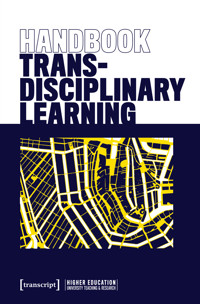
Handbook Transdisciplinary Learning E-Book
0,00 €
Mehr erfahren.
- Herausgeber: transcript Verlag
- Kategorie: Bildung
- Serie: Hochschulbildung: Lehre und Forschung
- Sprache: Englisch
What is transdisciplinarity – and what are its methods? How does a living lab work? What is the purpose of citizen science, student-organized teaching and cooperative education? This handbook unpacks key terms and concepts to describe the range of transdisciplinary learning in the context of academic education. Transdisciplinary learning turns out to be a comprehensive innovation process in response to the major global challenges such as climate change, urbanization or migration. A reference work for students, lecturers, scientists, and anyone wanting to understand the profound changes in higher education.
Das E-Book können Sie in Legimi-Apps oder einer beliebigen App lesen, die das folgende Format unterstützen:
Seitenzahl: 744
Veröffentlichungsjahr: 2023
Ähnliche




















Editorial
The German term Hochschulbildung refers to teaching and learning at a broad range of research and art institutions in tertiary education. Within this sector, Hochschulbildung builds bridges between professional and social efforts on the one hand and scientific endeavours on the other. Its manifestations are shaped by social, cultural, ecological, economic, and political dynamics (e.g. internationalisation and globalization). However, it is itself also a driving force of changing living conditions (e.g., digitality, mediality, and networking).
A key feature of Hochschulbildung is its interconnection with research. The curriculum and teaching practices at the university should align with the most recent research findings and the scientific discourse. As part of the education system, Hochschulbildung contributes significantly to shaping individual and collective relationships to the world.
Teaching and studying should prepare for professional practice and promote real-work capabilities as well as participation in public life. Hochschulbildung ultimately aims at proficiency, employability, and citizenship. To this end, it becomes crucial to enhance subject-specific teaching by interdisciplinary and transdisciplinary forms of cooperation.
This series offers a forum for the transformation of higher education in the context of institutional and organisational development. We invite our authors and readers to exchange views about influencing factors, diagnoses and designs of teaching & learning in the 21st century.
The series is edited by Tobias Schmohl and Johannes Wildt.
Thorsten Philipp is a political scientist and lecturer for sustainability and political communication at various universities. As a member of the presidential staff at Technische Universität Berlin, his task is to promote transdisciplinary learning at the interface between science and society. His research focuses on the intersection of sustainably theories and pop music.
Tobias Schmohl is a full professor of higher education research at Technische Hochschule Ostwestfalen-Lippe in Germany. He advocates for university teaching that bridges professional/social efforts and scientific pursuits, fostering transdisciplinary skills, real-world abilities, and civic engagement.
Thorsten Philipp, Tobias Schmohl (eds.)
Handbook Transdisciplinary Learning
All Internet links in this publication were last verified on 2 May 2023.
Double-blind peer review: In order to ensure their quality, all book chapters were subjected to a review process with double-blind peer reviews. The reviewers are listed on p. 423.
Bibliographic information published by the German National Library
The German National Library lists this publication in the German National Bibliography; detailed bibliographic data are available in the Internet at http://dnb.d-nb.de/en
This work is licensed under the Creative Commons Attribution-ShareAlike 4.0 (BY-SA) which means that the text may be remixed, build upon and be distributed, provided credit is given to the author and that copies or adaptations of the work are released under the same or similar license. Creative Commons license terms for re-use do not apply to any content (such as graphs, figures, photos, excerpts, etc.) not original to the Open Access publication and further permission may be required from the rights holder. The obligation to research and clear permission lies solely with the party re-using the material.
First published in 2023 by transcript Verlag, Bielefeld
© Thorsten Philipp, Tobias Schmohl (eds.)
Cover layout:Maria Arndt, Bielefeld Inside cover: Trampolinhuset – Københavns flygtningemedborgerhus Proofread: Joan Dale Lacehttps://doi.org/10.14361/9783839463475 Print-ISBN: 978-3-8376-6347-1 PDF-ISBN: 978-3-8394-6347-5 EPUB-ISBN: 978-3-7328-6347-1 ISSN of series: 2749-7623 eISSN of series: 2749-7631
Content
Preface
Embracing the Rhizome: Transdisciplinary Learning for Innovative Problem Solving
Thorsten Philipp and Tobias Schmohl
Boundary Work
Ulli Vilsmaier and Julie Thompson Klein
Case Study
Stefanie Meyer, Katja Brundiers, Marlene Mader, and Annika Weiser
Citizen Science
Melanie Jaeger-Erben, Frank Becker, Baiba Prūse, Jimlea Nadezhda Mendoza, Jutta Gutberlet, and Eliana Rodrigues
Cooperative Education
Wendy Coones, Thies Johannsen, and Thorsten Philipp *
Critical Thinking
Philip Barth and Jonas Pfister
Data Literacy
Valentin Unger, Michael Beck, and Vera Husfeldt
Design Thinking
Sadaf Taimur, Daniela Peukert, and BinBin Pearce
Education for Sustainable Development
Michael Brennan and Lyda Patricia Sabogal-Paz
Embodied Learning
Lucy Allen, Susanne Pratt, Bem Le Hunte, Jacqueline Melvold, Barbara Doran, Giedre Kligyte, and Katie Ross
Engaged Learning
Alexander Chmelka, Mary Griffith, and Hendrik Weiner
Entrepreneurship Education
Ewald Mittelstädt, Olena Mykolenko, and Claudia Wiepcke *
Experiment
Christina West, Bernd Böttger, and Wing Shing Tang
Fab Lab
Bonny Brandenburger, Gameli Adzaho, Manon Mostert - van der Sar, Maximilian Voigt, and Peter Troxler *.
Feedback Literacy
Jennifer Schluer, Olivia Rütti-Joy, and Valentin Unger
Global Citizenship Education
Heidi Grobbauer and Mary Whalen *
Hackathon
Sonia Massari, Sara Roversi, Steven Finn, Chhavi Jatwani, Alessandro Fusco, Erika Solimeo, Alessio Cavicchi, and Matteo Vignoli
Indigenous Knowledge
Bem Le Hunte, Tyson Yunkaporta, Jacqueline Melvold, Monique Potts, Katie Ross, and Lucy Allen
Interdisciplinarity
Julie Thompson Klein and Thorsten Philipp *
Internship
Ewald Terhart and Ulrike Weyland
Knowledge Transfer
Alhassan Yakubu Alhassan and Alexander Ruser
Learning in Transformation
Isa Jahnke and Johannes Wildt
Living Lab
Julia Backhaus, Stefan Böschen, Stefan John, Andrea Altepost, Frederik Cloppenburg, Frances Fahy, Julia Gäckle, Thomas Gries, Christoph Heckwolf, Kaisa Matschoss, Joost Meyer, Daniel Münderlein, Marco Schmitt, Alexander Sonntag, Axel Timpe, and Gabriele Gramelsberger
Mode 2
Ines Langemeyer and Eike Zimpelmann
Participatory Action Research
Loni Hensler, Gerardo Alatorre Frenk, and Juliana Merçon
Performative Knowledge
Karen van den Berg and Stephan Schmidt-Wulffen
Personal Sustainability
Oliver Parodi, Christine Wamsler, and Marc Dusseldorp
Real-World Lab
Oliver Parodi, Anja Steglich, and Jonas Bylund
Research Integrity
Marie Alavi and Tobias Schmohl
Research-Based Education
Tibor Koltay and László Z. Karvalics
Science Communication
Konstantin S. Kiprijanov and Marina Joubert
Science Shop
Martine Legris and Frank Becker
Scientific Knowledge
Hildrun Walter and Kerstin Kremer
Scrum
Maren Heibges, Katharina Jungnickel, and Markus A. Feufel
Storytelling
Juliette Cortes Arevalo, Kathryn Adamson, Emanuele Fantini, Laura Verbrugge, and Roland Postma
Student-Organized Teaching
Judith Bönisch, Frank Becker, Laurenz Blömer, Sanjeet Raj Pandey, Baiba Prūse, and Johannes Vollbehr
Transdisciplinarity
Ulli Vilsmaier, Juliana Merçon, and Esther Meyer
Transformative Learning
Sadaf Taimur and Katie Ross
Authors
Reviewers
* Authors contributed equally
Boundaries do not sit still. Karen Barad
Preface
The fluidity of borders that feminist theorist Karen Barad discusses is both an opportunity and a risk. It contains liberation, renegotiation, and redistribution, as well as disorientation, confusion, and conflict. The dynamism applies to research and education as well. As we continue to navigate the ever-evolving learning sciences landscape, the need to create a community of professionals and students devoted to transdisciplinary learning grows. Hence, the Handbook of Transdisciplinary Learning aims to engage and inspire students, researchers, educators, and practitioners who seek a deeper understanding of the intricate connections that tie multiple disciplines in higher education.
Our publication retains the structural foundation of its 2021 German-language predecessor Handbuch Transdisziplinäre Didaktik,while incorporating new concepts, international expertise, postcolonial criticism, and in general a much broader perspective of the discussion’s global dimension. Comprised of 37 entries, the Handbook unpacks key concepts to describe the broad panorama of transdisciplinary learning in the context of academic education. It examines the etymological origins, historical trajectories, disciplinary influences, inherent challenges, the criticisms it has provoked, and its consequences for academic education. By examining these terms through the lens of a historical-etymological “sense horizon” (Gadamer), our idea was to trace the evolution of ideas while simultaneously fostering critical dialogue and debate.
Recognizing that the pursuit of transdisciplinary learning is inherently dynamic and multifaceted, our compendium presents each entry as a point of convergence and interaction between diverse threads of thought. The Handbook seeks to provide a comprehensive understanding of transdisciplinary practices and their impact on participative learning, as well as innovative methods of information dissemination, while departing from conventional modes of scientific communication and bibliography. Although all titles of the chapters are formulated in the singular, they are in fact concealing an infinite number of divergent practices, educational attempts, and ways of thinking.
Despite all efforts to provide as comprehensive a perspective as possible on the complex dispute, we acknowledge our own limitations as editors with a predominantly Western perspective on knowledge and knowledge production in developing this publication. Grappling with issues of global applicability, colonial and neocolonial thought structures, and the cross-cultural applicability of Western concepts – such as citizen science and science shop – our Handbook may nonetheless serve as a first step toward engaging in a larger, global conversation about learning and overcoming barriers that have long impeded the expansion and exchange of ideas.
As a collaborative effort involving 113 authors and 39 scientific reviewers, the creation of this volume has been an exercise in critical thinking, concentrated analysis, and vigorous debate. We hope that this work will serve as a springboard for additional research, discussion, and development in the field of transdisciplinary learning, and that it will inspire others to join us in our pursuit of a more inclusive, interconnected approach to higher education.
As editors, we owe sincere gratitude to all contributors to this volume, who, despite the unusual concept, the tight schedule, and the unique requirements of the double-blind review procedure, took on the challenge of delving into the discussion of transdisciplinary learning based on a key concept. Numerous other experts provided the project with their professional and collaborative guidance. We particularly appreciate the reviewers’ contributions to quality control during the review process. We also express our gratitude to the entire crew at transcript Publishing for their dedicated work on this Handbook and their willingness to consider our suggestions, which helped the book take its own particular, unconventional turns. Our special appreciation goes to Joan Dale Lace for her careful copyediting.
Our book received support within the framework of the Berlin University Alliance and was co-financed by funds from the Excellence Strategy of the German Federal and State Governments. Our thanks are extended to Anika Rehder and her team at TU Berlin for their valuable support. Further funds were provided from the Alliance of European Universities of Technology ENHANCE. We owe gratitude to Paul Forberger, Sibylle Groth, and Ulrike Hillemann-Delaney at TU Berlin for their dedication. Additional support was provided by Stifterverband, Randstad Foundation and the Foundation of the OWL University of Applied Sciences and Arts, Germany. We express our thanks to Hanna Daum, Andreas Bolder, Stephanie Wulfert, Sven Hinrichsen, and Jürgen Krahl for their commitment.
Finally, our particular gratitude goes to our collaborators, Johanna Falkenhagen, Nicole Hahn, and Nina Schmulius, who managed the administration of this project with the utmost accuracy, combining perseverance, enthusiasm, and meticulous care. Due to their dedicated efforts in editing and background research, it was possible to conclude this project within only 16 months. We were privileged to draw from so many resources that we would never have dared to dream of.
Berlin and Lemgo, March 2023
Thorsten Philipp and Tobias Schmohl
Embracing the Rhizome: Transdisciplinary Learning for Innovative Problem Solving
Thorsten Philipp and Tobias Schmohl
Trampoline House in Copenhagen, a hub that assists migrants and asylum seekers by providing shelter within the Danish asylum system, recently adopted the metaphor of a castle to describe its work and conditions: Kassel Castle, physically marked by a simple chalk circle at the international art exhibition documenta fifteen, was an impenetrable prison, a chain of invisible shackles and intangible politics. Inside, however, there was a hive of activity: in a theater workshop, rejected asylum seekers and young refugees penned skits about their personal experiences with the migration regime. The contestants also served as models for a fashion show by designer Dady de Maximo Mwicira-Mitali. A massage workshop led by and involving displaced people serviced the seemingly utopian practice of “massaging” the asylum system – to make it softer, more tranquil, and less stressful. The castle acted as a jail and a bulwark against an oppressive government. The guiding principles of a creative production of knowledge and practice of mutual learning became justice and freedom.
Trampoline House’s artworks are featured on the endpapers of our book, not for aesthetic reasons, but rather to honor their subversive concept: Knowledge created through the arts influences society and serves as an example of the transformative power of transdisciplinary education (Kaiza 2022, 205; documenta fifteen 2022) – and in doing so, it is beneficial for sciences and educational systems as a whole. With techniques that cross traditional disciplinary lines and incorporate information from several fields, learners are given the ability to engage in critical thought and creative problem-solving.
The artistic attempt to produce knowledge resources beyond, against, and across disciplines coincides with another development: Science journalist Max Kozlov (2023) recently revealed that the number of scientific and technological research papers published has increased significantly over the past few decades. However, the disruptiveness of these papers, their impact on the status quo, has decreased, as measured by the degree to which they deviate from previous research. Recent research is less likely to cause major upheaval compared to research conducted at the end of the 20th century. Such an observation raises questions about the current state of academic research and its capacity to generate innovative solutions and acknowledge responsibility. In pursuit of novel insights and transformative knowledge, it also highlights the need for a transdisciplinary approach that challenges conventional wisdom, integrates diverse perspectives, and pushes the boundaries of established disciplines.
The purpose of this Handbook is to address this need by advocating for and demonstrating the potential of transdisciplinary learning in higher education, thereby fostering an environment that encourages the production of disruptive and transformative research. It aims to introduce transdisciplinary learning with a focus on the fundamental values of liberty and justice. By providing guidelines and strategies for implementing this educational approach, the Handbook seeks to contribute to an education culture in which both students and researchers contribute meaningfully to addressing the pressing global challenges of the present day. Transdisciplinary learning emerges as a promising means for enhancing innovation and transformative knowledge in the context of academic research’s diminishing disruptiveness. It offers the potential to revitalize academia and address complex, real-world problems requiring a multifaceted approach by transcending the limitations of traditional disciplines and integrating a variety of perspectives.
Transdisciplinary learning presupposes a systemic change in various ways, particularly in basic teaching attitudes and understanding of didactics. Teachers must be willing to (1) reduce their control if they want to allow a free (inter)play of creative forces. Transdisciplinary work requires a commitment to (2) activate participation and co-creation on the threshold. As a consequence of acknowledging the plurality of knowledge paths, it is essential to (3) embrace failures, setbacks, and detours of students, learners, and teachers. Transdisciplinary practices will also change given structures in universities and contribute to (4) dismantling hierarchies and extending collective responsibility. (5) Reflective practices must be established, respected, and defended. Finally, given the plurality of actors involved, transdisciplinary practices require sound and systematic (6) feedback literacy to ensure that lessons are learned from cooperation with the practical sphere and adequate measures are taken to meet future educational challenges.
With this predisposition, our Handbook enhances a search process that was already gaining momentum, when modern life and cognition models were increasingly criticized. Gilles Deleuze and Félix Guattari, both disturbed by all attempts to dismember and categorize the world by linear and dichotomous patterns, identified the mental figure of the tree that blocked all access to the real world. The tree is a “taproot, with its pivotal spine and surrounding leaves” (Deleuze and Guattari 2013, 3), an organizational model of the trunk and secondary branches, of supporting order and derivatives, of dichotomous, structured categories and subordinate hierarchical ramifications, was debunked as an epistemic model of increasing fragmentation, hybridization, and volatility: “We’re tired of trees. We should stop believing in trees, roots, and radicles. They’ve made us suffer too much. All of arborescent culture is founded on them, from biology to linguistics” (Deleuze and Guattari 2013, 15). For Deleuze and Guattari, the tree had to be replaced by the “tufted root”, a system of small, branching braids whose inconspicuous nodes form non-hierarchical nexuses to each other and are not subject to any categorical or binary order: “Nothing is beautiful or loving or political aside from underground stems and aerial roots, adventitious growths, and rhizomes. Amsterdam, a city entirely without roots, a rhizome-city with its stem-canals, where utility connects with the greatest folly in relation to a commercial war machine.” (Deleuze and Guattari 2013, 15)
Thinking in contexts and networks, along with the utopian ideal of the rhizomatic city of Amsterdam, whose stylized canal plan illustrates the cover of our Handbook, have far-reaching implications. Science is no longer a hierarchical, dichotomous, or tree-like order to distribute and stabilize privileges, power, and status. It is rather a cooperative-egalitarian network-based process in which a variety of knowledge resources, educational biographies, and knowledge potentials gain their form. Seen from this perspective, transdisciplinarity (Vilsmaier, Merçon, and Meyer) is not a unidirectional integration of “non-disciplinary” or “non-scientific” knowledge into research and learning. Terms of negation, which aim at denying eligibility and qualification, are unsuitable for this discourse. Rather, it is about research alliances of diverse but equal actors and about overcoming the rifts between university and society. Learning in transformation (Jahnke and Wildt), experimentation (West, Böttger, and Tang), and working responsibly toward global citizenship (Grobbauer and Whalen) are defining syntagms of change.
The distinctive plural nature of transdisciplinary education equips students with the framework required to differentiate between diverse knowledge-based resources, evaluate their applicability to specific challenges, and devise strategies for integrating these diverse sources into their academic pursuits and research. boundary work (Vilsmaier and Thompson Klein), originally coined for analytical purposes to address the problem of differences, has been adapted for boundary-crossing and boundary-spanning research to support collaboration in heterogeneous teams. It is not only about the particular characteristics of knowledge fields, but about the participants’ specific features, their ability to elaborate on different objectives, roles, and tasks in collaborative processes. Critical thinking (Barth and Pfister) is one of the most central skills in transformational dynamics. Though its roots lie in philosophy, it has significant metacognitive features, including the use of techniques for overcoming cognitive biases and navigating a variety of knowledge sources.
Whereas interdisciplinarity (Thompson Klein and Philipp) employs a variety of disciplines to tackle a specific issue, but still holds them constrained within disciplinary boundaries, transdisciplinary learning transcends the boundaries of traditional disciplines and promotes the integration of knowledge from multiple fields such as practical or bodily experiences. This holistic approach to education fosters students’ critical and creative thinking, allowing them to apply their skills and knowledge in real-world contexts (Bammer 2015). Transdisciplinary learning acknowledges the multifaceted nature of action and problems, which frequently exist independently, without any mutual relation. The current era necessitates integrative approaches that unite disparate elements to create holistic solutions (Stokols et al. 2008). However, it remains challenging to capture the essence of transdisciplinary learning within the confines of existing disciplines in higher education, highlighting the need for continued research and development of new educational paradigms (Klein 2010).
Transdisciplinary learning promotes a “new production of knowledge” (Gibbons et al. 1994) by promoting experimental and transformative research designs. It actively seeks to integrate a vast array of knowledge resources, such as professional, everyday, and implicit knowledge from various sectors, including politics, civil society, business, and culture (Nowotny et al. 2001). By doing so, transdisciplinary learning calls for a science system that operates in Mode 2 (Langemeyer and Zimpelmann). The distinction between two modes of knowledge production sparked an international discussion in the 1990s that focused its attention on the application of research and science in modern society. With this shift, the institutionally protected sphere of research and teaching, known as Mode 1 and established at universities and colleges, eroded. Knowledge became usable for concrete, problem-oriented solution of social challenges – often in cooperation with new partners from the societal sphere. The new production of knowledge addresses knowledge resources that are cultivated in unexpected and conflictive spheres, as the discussions around indigenous knowledge (Le Hunte, Yunkaporta, Melvold, Potts, Ross, and Allen), embodied learning (Allen, Pratt, Le Hunte, Melvold, Doran, Kligyte, and Ross), and performative knowledge (van den Berg and Schmidt-Wulffen) show. By encouraging collaboration and inclusiveness, this type of learning advances the cause of justice, as it ensures that diverse perspectives are acknowledged and valued in the pursuit of knowledge.
Attempts to achieve participative learning encompass collective practices such as citizen science (Jaeger-Erben, Becker, Prūse, Mendoza, Gutberlet, and Rodrigues), do-it-yourself cultures,and fab labs (Brandenburger, Adzaho, Mostert-van der Sar, Voigt, and Troxler). Cooperative education (Coones, Johannsen, and Philipp), a particular form of transdisciplinary learning, combines academic coursework with practical work experience, enabling students to apply their knowledge in business and administration settings. In fact, most study programs in higher education today provide opportunities to integrate practical experience, often in the professional field students strive for: internships (Terhart and Weyland).Yet they are frequently not recognized as a valuable method of transdisciplinary learning, and educational quality can only be achieved if there is a mutual connection between the learning experiences in the classroom and in the practical field. The preparation before, the support during, and the reflection after an internship ensure a qualitative integration of diverse knowledge into students’ academic learning journey.
Feedback literacy (Schluer, Rütti-Joy, and Unger), with its high relevance for all areas of life, has long since been addressed by numerous disciplines. Nonetheless, feedback is still frequently thought of in the context of education as a one-way information flow from teacher to student. The modern, socio-constructivist paradigm, in contrast, emphasizes the shared obligations of all participants in the feedback process. Feedback is therefore viewed as a dialogic exchange that is influenced by personal, interpersonal, and environmental aspects. Learners must have the attitudes and skills necessary to seek out, comprehend, and apply feedback to their learning in order to take part in these exchanges.
The digital world and its currencies are likewise impacted by the necessary growth of competencies: data literacy (Unger, Beck, and Husfeldt) encompasses the various knowledge components required for sensitive handling of data or decisions made on the basis of data, and it enables students to collect, process, evaluate, and apply data thoughtfully. On the other hand, storytelling (Cortes Arevalo, Adamson, Fantini, Verbrugge, and Postma) ensures the pivotal capability of human problem-solving: describing experiences or expressing ideas through language and images supports transformative co-creative learning by tapping into personal and experiential knowledge. Transdisciplinary learning, in addition, can be implemented as a form of research-based education (Koltay and Karvalics) that integrates research activities into the learning process. Participatory action research (Alatorre Frenk, Hensler, and Merçon), a collaborative approach to research that incorporates stakeholders in the research process, promotes co-learning and empowerment. Instead of conforming to dichotomous, tree-like structures that distribute and stabilize privileges, authority, hierarchies, and status, transdisciplinary learning promotes a collaborative environment that supports a plurality of knowledge resources, educational biographies, and knowledge potentials (Nowotny et al. 2003).
It is not surprising that the main topic of today’s debates is societal transformation, as transdisciplinary learning is fundamentally about societal change for a fair future for all. The educational goal ties transdisciplinary learning to education for sustainable development (Brennan and Sabogal-Paz) to empower people and communities with the knowledge, abilities, and attitudes required to contribute to a livable future. This emphasis highlights an additional key issue that is sometimes overlooked: societal development cannot occur without the transformation of people’s values, beliefs, worldviews, and corresponding inner traits and capacities. The objective is to promote students’ knowledge of their underlying motivations and highlight their personal sustainability (Parodi, Wamsler, and Dusseldorp). Inevitably, learning is no longer a solitary or private activity: engaged learning (Chmelka, Griffith, and Weiner), a term that emerged from service learning, is today a general postulate to encompass pedagogical strategies and to allow students to gain knowledge through meaningful community engagement. From this angle, students are both engaged citizens and, at the same time – far from the logics of the capitalist market and its exploitation goals – entrepreneurs (Mittelstädt, Mykolenko, and Wiepcke). Therefore, the educational objective across all subject areas, not just economics, may be to promote entrepreneurial action, spirit, or behavior.
As a distinct approach within the realm of higher education, transdisciplinary learning emphasizes the significance of successful communication between the academic community and various societal sectors, including politics, civil society, culture, and business. Through the involvement of a broad variety of stakeholders, science communication (Kiprijanov and Joubert) as a dialogue-focused and participation-oriented activity, plays a crucial part in the exchange of knowledge and research. A wide range of techniques has been established by higher education and research institutions throughout the world as well as other training providers in order to foster the knowledge and abilities required for planning and implementing open discussion and participatory scientific communication.
In a time when knowledge production increasingly transgresses national boundaries, knowledge transfer (Alhassan and Ruser) is a practical issue of paramount significance, although the very concept is contested within academic environments of research, teaching, and learning. Substantial learning opportunities in terms of transdisciplinarity can further be explored in Living labs (Backhaus, Böschen, John, Altepost, Cloppenburg, Fahy, Gäckle, Gries, Heckwolf, Matschoss, Meyer, Münderlein, Schmitt, Sonntag, Timpe, and Gramelsberger)andreal-world labs (Parodi, Steglich, and Bylund): integrated research and innovation processes between university and local stakeholders in a public-private-people partnership. Research no longer takes place in closed labs: society itself is the new “laboratory” (Krohn 1994) to develop sustainable solutions. Although the research on these practices has grown in importance over recent years, the involvement of students often remains poor. Most labs are research rather than education oriented. The task is to open the lab culture as a learning arena for students.
The plentiful practical experiences and a lack of reflection on its educational dimension also characterize science shops (Legris and Becker),institutionalized by several European universities during the 1980s. Their central goal is to provide participatory research support in response to industry or civil society concerns, particularly with regard to environmental conflicts, urban development, consumption, or sustainable innovation. However, here again, their ability to contribute to transdisciplinary education depends on their degree of student involvement. A similar reform phenomenon, student-organized teaching (Bönisch, Becker, Blömer, Raj Pandey, Prūse, and Vollbehr) offers a major opportunity to experience transdisciplinarity individually on any chosen topics. The idea is easy: Any student can set up a project workshop with other colleagues or stakeholders. This approach permits studying without any professors or research assistants, with guidance provided only by a student tutor.
The panorama of transdisciplinary learning is even broader than these institutionalized programs and also covers uncountable creative practices. Typically, scrum(Heibges, Jungnickel, and Feufel) can be used as an agile, playful project management framework that emphasizes iterative progress, collaboration, and adaptability in order to efficiently achieve project goals. Design thinking(Taimur, Peukert, and Pearce) is also frequently employed as it emphasizes empathy, experimentation, and iteration to create solutions. Hackathons and challenge-based learning (Massari, Roversi, Finn, Solimeo, Jatwani, Fusco, Solimeno, Cavicchi and Vignoli), short-term events, in which obstacles must be overcome in a collective, often tech-based strategy, are an increasingly popular way to bridge the gap between academic research and practical applications. Transdisciplinary potential can also be attributed to case studies (Meyer, Brundiers, Mader, and Weiser): they aim at helping students to find a better understanding of identified problems, by investigating their origins, extent, and dynamics in the specific context and by deriving transferable knowledge for similar and future problems.
Transdisciplinary action, by all these practices, takes place in a “Third Space” (Soja 2007) where practitioners, educators, curriculum developers, and other stakeholders work together to create learning scenarios. It is closely related to learner-centered, research-driven teaching strategies that adhere to constructivist principles, prioritize active learning, and support the growth of higher-order thinking skills – strategies aim to produce scientific knowledge (Walter and Kremer) by methodically observing, testing, and analyzing social phenomena. Transdisciplinary research may be open to accusations of solutionism or to being branded as tendentious commissioned research due to its emphasis on quick, usable solutions to problems. Thus, in order to conduct and report this particular form of research in accordance with ethical principles and professional scientific standards, it requires its own reflection and discourse within the framework of research integrity (Alavi and Schmohl).
Transdisciplinary learning, as our overview shows, involves a focus on practical challenges, knowledge integration, normative components, and collaboration among many stakeholders. Although transdisciplinary learning does not create a new field, it enriches existing ones. In conclusion, the contributions to this Handbook underline the importance of higher education as an environment for the personal development of both students and instructors. The primary objective of academic education is not preparation for the labor market, but the participants’ personal development. The promise of comprehensive education applies to everyone. Universities are not neutral spaces, but rather sites of contentious debate. With its ability to house the rhizomatic diversity of knowledge resources, it serves as an agonistic arena (Mouffe 2013) of the various forms of cooperation that societies create in response to complex problems. By encouraging a collaborative and equitable transdisciplinary approach to learning, this Handbook is a contribution to setting the stage for conflict, passion, and difference across, beyond, and away from disciplines.
References
Bammer, Gabriele. 2015. Enhancing research collaborations: Three key management challenges. Research Policy 44 (5): 875–87.
Deleuze, Gilles, and Félix Guattari. 2013. Rhizome. In A thousand plateaus: Capitalism and schizophrenia, 1–27. London: Bloomsbury.
documenta fifteen, ed. 2022. Trampoline House. Available from https://documenta-fifteen.de/en/lumbung-members-artists/trampoline-house.
Gibbons, Michael, Helga Nowotny, Simon Schwartman, Peter Scott, and Martin Trow. 1994. The new production of knowledge: The dynamics of science and research in contemporary societies. London: Sage.
Kaiza, Aino-Kaisa. 2022. documenta fifteen handbook. Berlin: Hatje Cantz.
Klein, Julie Thompson. 2010. Creating interdisciplinary campus cultures: A model for strength and sustainability. Hoboken, NJ: Wiley.
Kozlov, Max. 2023. “Disruptive” science has declined — and no one knows why. Available from https://www.nature.com/articles/d41586-022-04577-5.
Krohn, Wolfgang. 1994. Society as a laboratory: The social risks of experimental research. Science and Public Policy 21 (3), 173–83.
Mouffe, Chantal. 2013. Agonistics: Thinking the world politically. London: Verso.
Nowotny, Helga, Peter Scott, and Michael Gibbons. 2001. Re-thinking science: Knowledge and the public in an age of uncertainty. Cambridge: Polity Press.
Nowotny, Helga, Peter Scott, and Michael Gibbons. 2003. Introduction: “Mode 2” revisited: The new production of knowledge. Minerva 41 (3), 179–94.
Soja, Edward W. 2007. Thirdspace: Journeys to Los Angeles and other real-and-imagined places. Malden, MA: Blackwell.
Stokols, Daniel, Satveer Misra, Richard P. Moser, Kimberly L. Hall, and Brian K. Taylor. 2008. The ecology of team science: Understanding contextual influences on transdisciplinary collaboration. American Journal of Preventive Medicine 35 (2 Suppl.), 96–115.
Boundary Work
Ulli Vilsmaier and Julie Thompson Klein
Definition
The term boundary work is conventionally traced in science studies to Thomas Gieryn’s (1983) demarcation of science from non-science. He described boundary work as creation, relocation, and strengthening of boundaries between science and other forms of knowledge such as religion in 19th-century Britain. He aligned it with the “attribution of selected characteristics to the institution of science (i.e. to its practitioners, methods, stock of knowledge, values and work organization) for purposes of constructing a social boundary that distinguishes some intellectual activities as non-science” (1983, 7–82). For Gieryn, boundary work explores the interrelation of boundary construction and social identity and belonging to a community. With his analysis, Gieryn highlighted how boundary work can be enacted as ideological means to expand and monopolize authority through distinction and separation. Originally applied for analytical purposes, it was subsequently adapted for research spanning and crossing disciplinary and professional boundaries. Donald Fisher proposed a more generic definition: “Boundary work is defined as those acts and structures that create, maintain and break down the boundaries between knowledge units” (1993, 13–14). It encompasses claims, activities as well as institutional structures (Klein 2021). Langley et al. define boundary work as a “purposeful individual and collective effort to influence the social, symbolic, material and temporal boundaries, demarcations and distinctions affecting groups, occupations and organizations” (2019, 704). They consider boundary work a practice that clarifies differences and enables connections. The authors further distinguish actions that aim at creating, maintaining, blurring, or transforming boundaries.
Other scholars followed, broadening the concept to include applications to inter- and transdisciplinary research. In transdisciplinary research and learning, boundary work further addresses not only characteristics of knowledge fields but also sectors of society, including positionality of all participants to elaborate on different objectives, roles, and tasks through negotiation of ethical-political challenges in collaborative processes. In classifying the concept, Peter Mollinga (2010) identified three types of boundary work: (1) development of appropriate concepts of bordering, which allow us to address the multidimensionality of research; (2) configuration of adequate boundary objects as instruments and methods, through which incomplete and insecure knowledge, non-linearity, and diverging interests can be approached; and (3) creation of boundary situations where concepts, instruments, and methods can be explored in a profitable manner.
In addition, neighboring concepts relate to different dimensions and types of boundary work. Paulo Freire (1996), for example, aligned the concept with emancipatory and liberating pedagogy. He consideres “limit acts”, drawing on Vieira Pinto (1960), as practices that expand perception and understanding of an existential situation people are experiencing and people are because they are “in a situation, … rooted in temporal–spatial conditions which mark them and which they also mark” (1996, 90). Limit acts are provoked by being challenged and reflect upon a situation. According to Freire, working on boundaries is where transformation happens. Sahr and Wardenga (2005) also locate this idea of boundaries playing a central role in understanding and appropriating the world in the origins of Geography as subject. According to Kant (cited in Hard 1993), Geography is the pre-exercise in knowledge about the world (German: Kenntnisder Welt) and a precondition of an understanding of the world (German: Welterkenntnis). It is in this formation of worldviews that the political character of boundaries brings itself to the fore. The common drawing of geographical boundaries that is anchored in polarities and an Aristotelian logic, however, is distinct to the boundary work this chapter highlights. Here, boundary work is introduced as a praxis of differentiating that brings forth connections while working in inter- and transdisciplinary research and higher education. A generic definition of boundary work consists of multiple practices related to differentiating, mediating, and negotiating different ways of knowing, acting, and being, thereby opening up conditions for joint thinking and collaboration or closing down options for co-work due to epistemological or value-based reasons. Boundary work is the praxis of making differences visible, utterable, and tangible to confirm, reinforce, transgress, transcend, or transform boundaries.
Background
Boundaries are a universal category. They are at the bottom of any formation of identity and social order. This generalization applies to the experience of the self brought to bear in forming standpoints and positionalities in the sense of locating ourselves in the world and belonging to it. Heintel et al. (2018, 1) consider boundaries, boundary demarcation, and transgression deeply internalized abstractions and actions. Nevertheless, as fundamental as the category of the boundary is, its character and constitution remain elusive. Whether boundaries are given, or processually brought forth, is the stuff big theories are made of (Vilsmaier 2018). Post-structuralist considerations have particularly informed theoretical discussion in recent decades, and shown that the ambivalence of the core concept of boundary defies clear definition. Redepenning draws attention to this ambivalence when emphasizing “boundaries are somewhat confusing [as] they limit ‘something’ and at the same time give us the instruction to overcome the limits of that ‘something’” (2005, 168, own translation, italics in the original). Boundaries therefore always imply transgression. According to Cassirer (1994), boundaries can only be thought of as networks of relationships and processes that connect aspects of perception, expression, and action. Thus, bordering and ordering can be considered complementary categories (Sahr and Wardenga 2005). Every process involves acts of positioning and relationing that demarcate and transgress boundaries. While the concept of difference focuses on the one and the other, the concept of bounding shifts attention to a third process. Compared to the concept of border demarcation, bounding does not only describe demarcation but also the emergence and reconfiguration of boundaries. With his concept of Third Space, Bhabha (2004) introduces a topography that emerges from bounding and enables mediation of differences. Thereby, difference is considered a dynamic, or more precisely a diastatic, category that only comes into being in processes of differentiation (Vilsmaier 2018).
Boundaries are also at the bottom of the landscape of modern science. Disciplines only exist against the background of other disciplines they separate from. In this act of separation, Hamberger (2004) sees a transdisciplinary momentum in any discipline and Bhabha (2006) considers boundaries between disciplines as barriers to transverse or transcend when entering interdisciplinary inquiries, and at the same time “liminal forms of definition”. The ambiguity of boundaries is apparent within inter- and transdisciplinary research, teaching, and learning. Boundaries between disciplines or specialized fields of knowledge structure institutionalizing distinctions as while multiple forces drive us to transgress them. We draw our professional identities from limited fields that allow us to develop a standpoint, while at the same time seeking to transcend them. Often, the impossibility of fully grasping a phenomenon from different disciplinary perspectives drives us towards boundaries.
Yet becoming aware of boundaries prompts acting upon them (Freire 1996). What matters most here is different dimensions of reference from which we attend to boundary work. This imperative is central to boundary-spanning and boundary-crossing research, allowing us to understand underlying conceptions of boundaries. Of added significance, it is crucial to consider whether boundaries are conceived as stabilizing or narrowing entities from the perspective of differentiation or from a performative conception of boundaries. The distinction pertains whether one strives towards fixating the separating elements (A and B, such as two different disciplines) as a basis of creating connections, or whether commonalities, differences, overlaps, and intersections bring forth C that not only includes but also modifies A and B. The focus is therefore on either objects or entities (e.g. disciplines) or subjects or people (e.g. researcher). If phenomena or problems require alteration of historically developed processes of ordering, of a shift or even demolishing of boundaries, this added caveat also requires attention to institutional practices and professional identities. When critiqued, what is known, customary, established, or unquestioned can hence shatter or weaken a supposedly sound terrain, or conversely be vindicated and open up to transgressing boundaries (Vilsmaier 2018).
Debate and criticism
Despite the popularity of inter- and transdisciplinarity and neighboring boundary-spanning and boundary-crossing forms of research, boundary work still receives little to no systematic attention. Transdisciplinary forms of research and learning are often more celebrated than they are founded epistemologically and conducted methodologically. Thus, they are not only vulnerable to attack but also prone to fail to transgress boundaries, integrate knowledge, or unfold transformative potential. A solid understanding of the kind of boundary spanning or crossing in research, teaching, and learning is key for conducting boundary work that enables mutual understanding of existing boundaries and also whether and how to work productively on these.
A recent book placing boundary work at the heart of inter- and transdisciplinarity brought together prior and new recognition of its centrality while extending implications (Klein 2021). Boundaries have a dual function: they demarcate different forms of expertise but are permeable and contingent as well, leading to both difference – in images of turf and territory – and interaction – in biological images of cross-fertilization. The two underlying metaphors, though, do not constitute a dichotomy. They operate simultaneously in the composite concept of an ecology of spatializing practices, illustrated by the evolving nature of disciplines as well as enclaves of trading zones and communities of practice. Thus, boundary work entails navigating and negotiating existing divisions as well as catalyzing new enclaves, while also bridging sectors of the academy, government, industry, and communities. Updated descriptions of disciplines also acknowledge their porous nature. Openness to change, however, is uneven, and lack of familiarity with inter- and transdisciplinarity limits prospects for transformational change. Michael Foucault (1995) stipulated boundaries that prescribe social order, and dualisms of normality and deviance, as well as belonging and not-belonging. In that sense, a boundary classifies, categorizes, sorts, segments, and normalizes. It also includes and excludes, privileges and de-privileges. Yet boundary remains uncrossed. Moreover, boundaries are contested and their authority is disputed. The boundary rhetoric of both inter- and transdisciplinarity, then, is complex: it “compasses acts of spanning, crossing, and bridging; processes of interacting, integrating, and collaborating; strategies of brokering, mediating, and negotiating; operations of demarcating, constructing, and refiguring; new relations of interdependence and convergence; and outcomes of breaching, transgressing, and transforming” (Klein 2021, 22–23).
Methods of boundary work support systematic approaches to elaborate on differences while differentiating and thereby layingthe ground for integration (Vilsmaier 2018). The term method encompasses different types of proceedings. Methods of boundary work serve multiple purposes, ranging from creating conditions for shared thinking and acting by creating understanding for one’s own and others’ standpoint and positionality, support problem framing and mutual learning, and, depending on the types of research, theoretical or methodical integration or product development. They often deploy a related concept highlighted in this chapter: boundary objects. According to Star and Griesemer, who introduced the concept in 1989 in the field of Science and Technology Studies, boundary objects “are both adaptable to different viewpoints and robust enough to maintain identity across them” (1989, 387). Boundary objects can mediate between different social worlds: “They have different meanings in different social worlds but their structure is common enough to more than one world to make them recognizable means of translation” (Star and Griesemer 1989, 393). The authors distinguish between repositories, ideal types, coincident boundaries, and standardized forms. Bergmann et al. broadened the meaning of boundary objects for practices of integration in transdisciplinary research. The concept is applied to all sorts of “interfaces where actors from different fields, such as science, politics and business, meet and communicate” (2012, 105). Deployed as integration methods, different entities play out as boundary objects, such as artifacts, products, abstract ideas, common research goals, illuminating examples, or publications (Bergmann et al. 2012).
In methods of boundary work, boundary objects first and foremost serve the elaboration of differences. Peukert (2022) experimented with design prototyping as boundary work, using prototypes as boundary objects in transdisciplinary research. The dual characteristic of process character and object status could be identified as a particular quality of prototyping. Working with highly diverse research participants in a case study in rural Romania, language of form of prototypes and common abilities in constructing and modifying these turned out to be a powerful way of navigating differences and unequal means of conceptual expressions (Peukert et al. 2020).
Conceptual work is an elementary form of boundary work in transdisciplinary research. The more heterogeneous a research team, the more likely that the same concepts carry different meanings in different social worlds. Boundary concepts are key means of making connections. They are semantic anchors for developing coherent research frameworks and meaningful results that exhibit communicative, epistemic, and ethical–political dimensions. Conceptual work aims at creating mutual understanding for different semantics and roles of concepts in a research field, as well as negotiating the use of concepts. However, the process is often not explicitly placed within research processes, leading to difficulties (Hoffmann et al. 2017). Many technical terms are used in everyday language and mutual understanding is often presumed, but without exploring their meaning (Bergmann et al. 2012). These tendencies can become obstacles showing the paradoxical nature of such concepts. Quotidian usage of terms can be made productive for communication, but semantic differences are too easily glossed over (ibid. 2012). Conceptual work, however, is by no means limited to academic clarification of meanings. It has a significant political dimension where disciplinary or, more generally, scientific hegemonies and inequalities in conceptual abilities may easily play out. Here, conceptual work as boundary work has the potential to create visibility not only for different semantics of terms but also for differences amongst collaborators. In that sense, conceptual work can be defined “as the collaborative process of clarifying the meaning and use of concepts across disciplines and epistemic cultures, developing mutual understanding and balancing power inequalities amongst participants in order to support knowledge co-creation” (Juarez-Bourke and Vilsmaier 2020, 25).
Current forms of implementation in higher education
Boundary work draws on difference. In higher education, it is particularly useful when guiding students from different study fields. Multi-, inter-, and transdisciplinary classrooms present great opportunities for boundary work. Experiencing, exploring, and systematically approaching different perspectives and ways of acting upon a given problem, boundary work equips students with abilities and techniques to elaborate on and integrate different knowledges or practices. In research on environmental science education, Fortuin (2015) further distinguishes boundary-crossing skills from inter- and transdisciplinary cognitive skills and reflexive skills. Boundary-crossing skills should equip students to (1) be aware of different disciplinary, cultural, theoretical, and practical perspectives; (2) acknowledge the values of using these perspectives in addressing complex problems, and (3) use various disciplinary perspectives and connect them, to collaborate, negotiate, make decisions in intercultural settings, and deal with complexity and uncertainty (Fortuin 2015, 133).
To illustrate: in a student-driven transdisciplinary research module, conducted over several years in a Master’s program of sustainability science, different forms of boundary work were applied to train students in boundary work on three levels (Vilsmaier and Lang 2015). (1) On the personal level,students explore and elaborate their professional profiles and identities related to their study fields. This kind of boundary work departs from the perception of others’ professional characteristics. For instance, a sociologist provides a description of his or her imaginary of a sustainable chemist and vice versa, thereby laying bare often glossed over assumptions, supporting reflection and building self-awareness of the student’s specialization. The process aims to uncover assumed positions from which a research or study subject is approached. Thereby, not only abstract systems of knowledge. Individual configurations of the same unfold, helping visualize researchers’ positionality with regard to their situatedness within knowledge fields, paradigms, and personal situated accounts that inform study and research (Rose 1997). Within transdisciplinary research and learning, this procedure also takes on cultural and social situatedness while taking values and norms into consideration (Rosendahl et al. 2015). Boundary work allows for visualizing situated relations of researchers or learners with each other (Klein 2010). (2) On the level of knowledge fields, students explore their study fields by developing topographies of knowledge fields with regard to core topics, dominant theories, and common methods. Based on individual maps, student teams elaborate on commonalities while exploring differences. As a result, a map of the student team is developed that provides insights into the team’s expertise, abilities, and perspectives. Already at this stage an interdisciplinary in-between space shapes and serves as a starting point for collaborative research. (3) On the level of societal domains, boundary work includes elaboration of differences with regard to roles, responsibilities, interest, and objectives in a transdisciplinary team. At this level, students enter the constitution of a transdisciplinary in-between space that emerges from difference (for more details see Vilsmaier and Lang 2015).
Didactical approaches that prepare students to deal with the complexity they will face conducting transdisciplinary research must pay particular attention to a literacy of difference – supporting students in reflecting on their own positionality and in developing an attitude of openness for mutual learning.
References
Bergmann, Matthias, Thomas Jahn, Tobias Knobloch, Wolfgang Krohn, Christian Pohl, and Engelbert Schramm. 2012. Methods for transdisciplinary research: A primer for practice. Frankfurt am Main: Campus.
Bhabha, Homi K. 2004. The location of culture. New York: Routledge.
Bhabha, Homi. 2006. Boundaries. Differences. Passages. Available from: https://de.scribd.com/document/590010987/Bhabha-Homi-Boundaries-Differences-Passages#.
Cassirer, Ernst. 1994. Philosophie der symbolischen Formen. Erster Teil: Die Sprache. Darmstadt: Wissenschaftliche Buchgesellschaft.
Fisher, Donald. 1993. Fundamental development of the social sciences: Rockefeller philanthropy and the United States Social Science Research Council. Ann Abor, MI: University of Michigan Press.
Fortuin, Karen P. J. 2015. Heuristic principles to teach and learn boundary crossing skills in environmental science education. Wageningen: Wageningen University.
Foucault, Michael. 1995. Discipline and punish: The birth of the prison (Alan Sheridan, trans.). New York: Vintage Books.
Freire, Paulo. 1996. Pedagogy of the oppressed. London: Penguin.
Gieryn, Thomas F. 1983. Boundary-work and the demarcation of science from non-science: Strains and interests in professional ideologies of scientists. American Sociological Review 48 (6): 781–95.
Hamberger, Erich. 2004. Transdisciplinarity: A scientific essential. Annals New York Academy of Science 1028 (1): 487–96.
Hard, Gerhard. 1993. Kants “Physische Geographie”, wieder gelesen. In Grenzüberschreitung. Wandlungen der Geisteshaltung, dargestellt an Beispielen der Geographie und Wissenschaftstheorie, Theologie, Religions- und Erziehungswissenschaften, Philosophie, Musikwissenschaften und Liturgie. ed. Heyno Kattenstedt, 51–72. Bochum: Brockmeyer.
Heintel, Martin, Robert Musil, Markus Stupphannn, and Norbert Weixlbaumer. 2018. Grenzen – eine Einführung. In Grenzen. Theoretische, konzeptionelle und praxisbezogene Fragestellungen zu Grenzen und deren Überschreitungen, eds. Martin Heintel, Robert Musil and Norbert Weixlbaumer, 1–18. Wiesbaden: Springer VS.
Hoffmann, Sabine, Christian Pohl, and Janet G. Hering. 2017. Methods and procedures of transdisciplinary knowledge integration: Empirical insights from four thematic synthesis processes. Ecology and Society 22 (1): 27.
Juarez-Bourke, Sadhbh, and Ulli Vilsmaier. 2020. The semantics of transformation: Conceptual work for inter- and transdisciplinary research based on Paulo Freire’s approach to literacy. Journal für Entwicklungspolitik XXXVI (3): 19–43.
Klein, Julie Thompson. 2010. Creating interdisciplinary campus cultures: A model for strength and sustainability. San Francisco: Jossey-Bass.
Klein, Julie Thompson. 2021. Beyond Interdisciplinarity: Boundary work, communication and collaboration. New York: Oxford University Press.
Kleinschmidt, Christoph. 2011. Einleitung: Formen und Funktionen von Grenzen. Anstöße zu einer interdisziplinären Grenzforschung. In Topographien der Grenze. Verortungen einer kulturellen, politischen und ästhetischen Kategorie, eds. Christoph Kleinschmidt and Christine Hewel, 9–24. Würzburg: Königshausen & Neumann.
Langley, Ann, Kasia Lindberg, Bjorn Erik Mork, Davide Nicolini, Elena Raviola, and Lars Walter. 2019. Boundary work among groups, occupations and organizations: From cartography to process. Academy of Management Annals, 13 (2): 704-736.
Mollinga, Peter. 2010. Boundary work and the complexity of natural resources management. Crop Science 50(S1): 1–9.
Peukert, Daniela. 2022. Design methods for collaborative knowledge production in inter- and transdisciplinary research. Lüneburg: Leuphana University. Available at https://pub-data.leuphana.de/frontdoor/index/index/docId/1228.
Peukert, Daniela, David P. M. Lahm, Andra I. Horcea-Milcu, and Daniel J. Lang. 2020. Facilitating collaborative processes in transdisciplinary research using design prototyping. Journal of Design Research 18 (5–6): 294–326.
Redepenning, Marc. 2005. Über die Unvermeidlichkeit von Grenzziehung. Berichte zur deutschen Landeskunde 79 (2–3): 167–77.
Rose, Gillian. 1997. Situating knowledges: Positionality, reflexivities and other tactics. Progress in Human Geography 21 (3): 305–20.
Rosendahl, Judith, Matheus A. Zanella, Stephan Rist, and Jes Weigelt. 2015. Scientists’ situated knowledge: Strong objectivity in transdisciplinarity. Futures65: 17–27.
Sahr, Wolf-Dietrich, and Ute Wardenga. 2005. Grenzgänge – Ein Vorwort über Grenzen und ihre (Be-) Deutungen in der Geographie. Berichte zur deutschen Landeskunde 79 (2–3): 157–66.
Star, Susan Leigh, and James R. Griesemer. 1989. Institutional ecology, “translations” and boundary objects: Amateurs and professionals in Berkley’s Museum of Vertebrate Zoology, 1907–39. Social Studies of Science 19 (3): 387–420.
Vieira Pinto, Alvaro. 1960. Consciência e realidade nacional. Vol. 2. Rio de Janeiro: Instituto Superior de Estudios Brasileiros.
Vilsmaier, Ulli. 2018. Grenzarbeit in integrativer und grenzüberschreitender Forschung. In Grenzen. Theoretische, konzeptionelle und praxisbezogene Fragestellungen zu Grenzen und deren Überschreitungen, eds. Martin Heintel, Robert Musil and Norbert Weixlbaumer, 113–34. Wiesbaden: Springer VS.
Vilsmaier, Ulli, and Daniel J. Lang. 2015. Making a difference by marking the difference: Constituting in-between spaces for sustainability learning. Current Opinion in Environmental Sustainability16: 51–55.
Case Study
Stefanie Meyer, Katja Brundiers, Marlene Mader, and Annika Weiser
Definition
The term case has its etymological roots in the Latin casus and literally stands for “a fall”, being understood as an “accident” in terms of “a chance, occasion, opportunity” (Harper 2022). Thus, a case study refers to the investigation of a specific event, for example a product, people, or organization, or processes such as policymaking, decision-making, and transformation. It illustrates a rich and multi-layered picture of the selected phenomenon and its setting, which is often characterized by complex circumstances. The aim of a case study is first to gain a better understanding of the phenomenon by investigating and revealing its mechanisms and origins in its specific context, and then to derive lessons learned, which may be transferable to other and future cases. Cases can be real phenomena, fictitious inquiries, or circumstances drawn from the literature. Considering the versatility of case studies, they are applied in many disciplines in research and teaching at higher educational institutes.
Yin (2018) provides general guidelines on planning, preparing, and executing case studies, and sharing results from case study research, which can be adjusted and applied to various disciplines. In general, designing a case study offers choices along several variables: scope (e.g. depth, breadth, and boundedness), function (e.g. theory-testing versus action-oriented problem-solving), and outcome (e.g. theoretical practical insights, lessons learned, policy options), as well as format (e.g. single versus multiple case studies). Single cases may contribute to either confirming or challenging a theory, or to represent a unique or extreme phenomenon, which can be a fictitious inquiry or circumstance drawn from the literature. Single cases require careful investigation to avoid misrepresentation. In contrast, using multiple cases in conjunction with quantitative research approaches allow for cross-case comparison and potential replication of research approaches, holding the possibility of providing findings that are more robust and generalizable or transferable to other cases (Adler et al. 2018; Stake 2013, 39–41). Both single and multiple case studies should use multiple sources of information to integrate knowledge from the case study with scientific and other pertinent societal discourses. While some disciplines rely on qualitative sources of evidence, such as interviews, observations, documentation (Yin 2018, 111–13), multidisciplinary approaches to complex problem-solving call for mixed-method data collection that integrates qualitative and quantitative resources, such as systems dynamics modeling and formative scenario analysis (Scholz and Tietje 2002).
Transdisciplinary case study research explores socially relevant problems in collaboration with scholars from different disciplines and practitioners from various sectors (Bergmann et al. 2012). To facilitate the collaborative studymode, a transdisciplinary case study typically contains three main phases: (1) joint problem-framing, (2) co-production of knowledge, and (3) integration and application of knowledge (Bergmann et al. 2012; Brundiers and Wiek 2013; Lang et al. 2012).
In sustainability studies, transdisciplinary case studies evolved from conducting research on sustainability problems, resulting in deeper analysis and description of the problem, to studies that also investigate solutions to these sustainability problems. This solutions-oriented research may focus on developing solutions, studying their actual implementation, or evaluating the effects of implemented solutions. In either process, researchers, students, and practitioners can select different degrees of collaboration and co-production of knowledge, ranging from informing and consulting each other to collaborating with potential implementers (e.g. policymakers or NGOs) and affected actors (Lang and Wiek 2022; Lang et al. 2012; Stauffacher et al. 2006). In higher education teaching, transdisciplinary case study approaches offer students opportunities to learn how to methodically approach complex action-oriented problem-solving processes in a collaborative format (Brundiers and Wiek 2013).
Background
The general case study method was first applied at the beginning of the 1900s in qualitative case study research in social and anthropology studies (Platt 1992). Since then, different strands evolved in parallel (Table 1). Various disciplines embraced the problem-centered case study approach, including law, business, and management, as well as educational sciences. Those studies were rather single-case-based, descriptive, and qualitative in nature and were considered as a special form of experimental, statistical, or comparative methods. At the same time, case studies were introduced as a teaching demonstration tool in disciplines such as business, law, and medicine (McNair and Hersum 1954). In these disciplines case studies are continuously used to derive and evaluate knowledge about individuals, groups, and organizations and related social and political phenomena (Carter and Unklesbay 1989).
In the 1950s, systems dynamics offered a new modeling approach for simulating the behavior of real-life social systems (Forrester 1971). Drawing on the advancement in systems thinking and complex real-world problem-solving through Checkland’s (1972) soft systems methodology and Meadows’ (1999) system-influencing leverage points, it became possible to understand how phenomena change through time and how to direct future developments. Since the 1980s, knowledge on the design of the case study approach and on its process has been solidified (Merriam 1998; Ragin and Becker 1992; Stake 1995; Yin 1981) and case studies were increasingly used in many more disciplines, such as planning sciences, and decision-making and risk research. This fostered the incorporation of scenario planning as a quantitative source of evidence into the environmental case study approach (Gomm et al. 2000). In the mid-1980s, environmental problem-solving emerged as a goal of education, research, and application; the transdisciplinary case study approach was developed at the Eidgenössische Technische Hochschule (ETH) in Zurich (Müller-Herold and Neuenschwander 1992). Since then, universities have adjusted case-based learning courses, providing real-world learning opportunities for students to identify the interdependencies and complexities of (research) problems and striving to integrate pertinent academic disciplines. In the 1990s, the case study approach became more collaborative as more methods and approaches for transdisciplinary collaboration were developed (Scholz et al. 2006), and as participatory action research had advanced in education, combining theory, research, and practice towards a problem-based methodology focusing on theories of action (Carr and Kemmis 1986).
In the 2000s, case studies evolved towards an integration of various types of methods and were used not only to describe and observe phenomena, but also to analyze how to change, fix, and improve contemporary situations. As sustainability science emerged as a research field, solutions- and action-oriented case study approaches were applied in various sustainability-related contexts such as disaster recovery, bioenergy, and precautionary purchasing, vulnerability assessment, or water resource management (Wiek et al. 2012). The concept of sustainability science influenced the learning situations at universities (Stauffacher et al. 2006) and spaces were created to shift the focus from the disciplinary perspective to the inter- and transdisciplinary collaboration of science and practice.
The complex challenges facing societies in the 21st century, such as the climate emergency, increasing urbanization, rising inequalities, and loss of biodiversity (IPCC 2022) expand the focus of case study analysis for transformational change towards advanced participatory research settings and stakeholder involvement as well as capacity-building and better generalization of single and multiple cases (Caniglia et al. 2021; Lang and Wiek 2022; Wiek et al. 2012).
Table 1. Developments in the history of case studies and educational innovations
Case studies (~1900)
Transdisciplinary research (~1990)
Sustainability Science
(~2000)
Learning that is…
– individual
– problem-centered
– context-related
– collaborative and participatory
– social and participatory
– problem- and solution-oriented
– competency-based
– centered on real-world issues
An epistemology that is…
– descriptive and exploratory
– integrative
– transformational
The investigated phenomenon is…
– mostly a single case
– often defined as monodisciplinary
– complex
– requiring inter- and transdisciplinary approaches
– complex and difficult to define
– requiring transdisciplinary approaches
Applications of case studies…
– in research or teaching
– that combine research and teaching
– that integrate research, teaching and goal of social transformation




