


9,59 €
Mehr erfahren.
- Herausgeber: Luath Press
- Kategorie: Poesie und Drama
- Sprache: Englisch
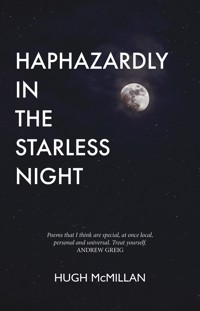
Taking in the years of the pandemic, McMillan's poetry takes us on a trip through his life and imagination, his hopes, observations and dreams. It's never less than an interesting journey. He is an accessible, humorous and tender writer. He is one of Scotland's best.
Das E-Book können Sie in Legimi-Apps oder einer beliebigen App lesen, die das folgende Format unterstützen:
Seitenzahl: 68
Veröffentlichungsjahr: 2021
Ähnliche

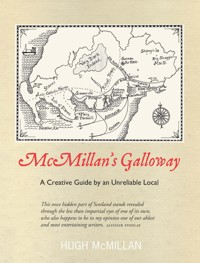












HUGH McMILLAN is a poet from Penpont in Dumfries and Galloway. He has written five full collections of poetry and has read in events and poetry festivals worldwide. His pamphlet Postcards from the Hedge was a winner of the Callum Macdonald Prize in 2009, a prize he won again for Sheepenned in 2017; as part of that prize, he became Michael Marks Poet in Residence for the Harvard Summer School in Napflio, Greece. He was also a winner of the Smith Doorstep Poetry Prize and the Cardiff International Poetry Competition. Devorgilla’s Bridge was shortlisted for the Michael Marks Award and in 2015 was shortlisted for the Basil Bunting Poetry Award. In 2014 Hugh was awarded the first literature commission by the Wigtown Book Festival to create a work inspired by John Mactaggart’s The Scottish Gallovidian Encyclopaedia (1824); McMillan’s Galloway was published in limited edition in 2014 and in a revised edition from Luath in 2015.
His selected poems Not Actually Being in Dumfries were published by Luath Press in 2015 and this was followed by Heliopolis and The Conversation of Sheep by Luath in 2018.
He has featured in many anthologies, and three times in the Scottish Poetry Library’s online selection Best Scottish Poems of the year. His poems have also been chosen three times to feature on National Poetry Day postcards, the latest in 2016. In 2020 he was chosen as one of four ‘Poetry Champions’ for Scotland by the Scottish Poetry Library, to seek out and commission new work. Recently he was given the role as editor of ‘Best Scottish Poems’ for 2021.”
By the same author:
Tramontana, Dog and Bone, 1990
Horridge, Chapman, 1995
Aphrodite’s Anorak, Peterloo Poets, 1996
Strange Bamboo, Shoestring, 2007
Postcards from the Hedge, Roncadora Press, 2009
Devorgilla’s Bridge, Roncadora Press, 2010
Cairn, Roncadora Press, 2011
Thin Slice of Moon, Roncadora Press, 2012
McMillan’s Galloway, privately printed, 2015
Not Actually being in Dumfries, Luath Press, 2015
McMillan’s Galloway: A Creative Guide by an Unreliable Local, Luath Press, 2017
Sheepenned, Roncadora Press, 2017
Heliopolis, Luath Press, 2018
The Conversation of Sheep, Luath Press, 2018
Whit If?, Luath Press, 2021
First published 2021
ISBN: 978-1-80425-000-6
The author’s right to be identified as author of this book under the Copyright, Designs and Patents Act 1988 has been asserted.
Typeset in 10.5 point Sabon by Lapiz
© Hugh McMillan 2021
Contents
WRAITHS
The Nature of Art
The Wishbone
My Father at the Bakers
The Wait
Benches of Wigtown
George Catlin and the Moon-Eyes
Glayva
The Cart Track
Autumn in Scotland
The Language of the Sun
It Was That Time of Night, John
A Picture of the Vessel Agnes, Near Dockfoot
The Trip up North I Never Went on with Tim Propp
Ring of Water
Hoard
The Poet
Going
The Alexandria Quartet
Twelve Roads
At Sea
The Queen of Bohemia’s Allegorical Garden
Marguerite D’Écosse
The Museum of Memory
Christmas at the Hair Boutique the Day after the Election that Plunged Britain into Gloom
Scottish Poet Killed while Trying to say the Right Thing about Burns
SALE
PORTENTS
Jasmine at a Maths Exam
Lydia Just Before her Life Changes
A Curlew Cries
Burntisland Sept 6th
Watching Andy Goldsworthy Being Collected in a Taxi
The World of Poetry
Baggage
The Supply Teacher’s Last Lesson
Another Push Towards Carlisle
Confession
On the Last Day of my Life
A Castle that Might be Stirling
Reunion
Procession
Dream
Here and There
Getting There
Storm Glass
Your Day in the Sun
That is the Way that Time Works
With their Violins
Ghosts of the Scaur
Chronicles of Rain
A Breath
A Casual Conversation
Two Men Below a Bad Weather Forecast
Public Safety Advice Oan the Brent-New Pestilence 1348
Bounty
Two Worlds
PESTES
Flattening the Curve
The Ballad of Bessie Bell and Mary Gray
Three Days in May
It’s not Sunday it’s Tuesday
Book in the Grass
Keep Smiling Through
All This Time
Caravan
Positioning Three Words in a Poem
Sources
The Cyanometer
The New Old Age
Next Year
Carol
Birthday 2021
Poem on a bus ticket
The Path below the Linden Tree
A Thursday Morning in May
Nigel and Kenny
Couple, New Cumnock
Advice to the Makars Wigtown 2019
t reynolds
Licht
Sunday
A Break in the Weather
From Here to the Sea
Relocation Relocation
Showers may clear away from the Dalmuir area this afternoon
Crossing the Spheres
Long View
Carbonation
Holy Lemon You
I am No Mariner
Are We There Yet?
Acknowledgements
Wraiths
The Nature of Art
Art was always a thing in our house
or artiness: we were thought of
as bohemians,
had the qualifications:
poverty, scandal, a frisson of madness.
My father, stuck in rage and guilt,
wrote a short story about a soldier
in a desert stuck in rage and guilt
and painted birds that could not fly.
My sister drew a landscape
she walked into.
I wrote a poem about snow
that never fell, filled gaps like that
with empty words.
My mother tore a photograph
of the mv Columba from a brochure
or the People’s Friend,
stuck it on the wall
with sellotape that yellowed
as the years passed,
wished she was there.
The Wishbone
On the windowsill,
its white paint old
and flaking,
was a wishbone,
a pewter pot beside it
that my mother said
was from home.
Moss mould was
on the edges of glass
and on the outside
the perpetual dark
of weeds gone wild.
There was a wishbone
on the windowsill,
it was huge like a dinosaur’s,
yellow and stained
with the ghost of blood.
A pterodactyl bone,
a pagan bone,
the fundament of a roc.
It was there for years
while round it the house
fell apart. It’s still there
in a shelf of my mind.
No one did.
No one dared really.
My Father at the Bakers
On the veranda
is a bony old man
who but for
the kombolói
reminds me
of my father.
He has a thin
moustache
and baggy shorts
and his right
foot is agitating
at the marble
as if
pumping some
accelerator
that would have
him in a wish
at the top
of that mountain
concealed now
in cloud
and haze.
If he were here
I would ask him
if he preferred
mountains
to coastlines,
you are supposed
to be one
or the other
I would say.
So many questions
and still
a language barrier.
It’s a fantasy
thinking of him
like this,
I can’t have seen
him old.
Perhaps
in my mind
he has
aged with me
though this too
is a fruitless
train of thought
because one
of the few facts
I know
is that he’s
dust.
We’ll just sit here
for a moment
his doppelgänger
and I
and stare
at a middle
distance
populated
this hot
and sultry
morning
by the living
the imagined
and the dead.
The Wait
Kippers catapult me back
to Victorian hotels with huge
rain-slashed vistas,
brittle toast and butter knobs,
sugar lumps like granite,
paintings of mouldering birds
on thick wallpaper.
I remember every kipper
but not so much the people,
though they certainly comprised
a bald man in a sports jacket,
decrepit car rusting outside,
and his wife, whose homeland
was hidden, like her,
in sad cloud
beyond the bay windows.
What did we even do
except order kippers
and stare silently at the sea?
I suppose we were waiting always
for the weather to clear.
Benches of Wigtown
A new bench is here today
in full throated sunshine
that turns silt channels
into unearthly lanes of light.
This is an ancient site
and graves and harbours
lie under shifting moss
picked over by ragged sheep
and shrill swooping birds.
‘Rest your Butt’ it advises
on a plaque, where the names
of the dead jostle with those
who clubbed together to buy
the seat. It is wide enough
to rest all their butts
as they sit for a few years
to recall the clever dead,
the brash living.
At a few hundred paces
either way older benches
are swallowed in ivy
and wild rose, they are melting
into the language of landscape




