



5,49 €
Mehr erfahren.
- Herausgeber: WriteLife Publishing
- Kategorie: Ratgeber
- Sprache: Englisch
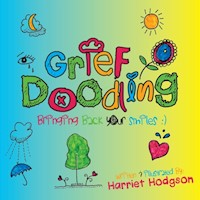
"Will I survive?" "Will I ever be happy again?"
Questions that Harriet Hodgson asked herself after she was left to raise her twin grandchildren while grieving for four family members, including her daughter.
Harriet reminds us that we are not alone in our grief and, though losses may define our lives, they will not destroy them.
Das E-Book können Sie in Legimi-Apps oder einer beliebigen App lesen, die das folgende Format unterstützen:
Veröffentlichungsjahr: 2012
Ähnliche



















Copyright ©2012 by Harriet Hodgson
All rights reserved. No part of this book may be reproduced or transmitted in any form or by any means, electronic or mechanical, including photocopying, recording, or by any information storage and retrieval system, without permission in writing from publisher.
Published by WriteLife
(an imprint of Boutique of Quality Books Publishing Company)
www.writelife.com
in cooperation with
Grief Illustrated Press
PO Box 4600
Omaha, NE 68104
www.centering.org
Printed in the United States of America
Cover design by
Jay Highum, Rochester, Minnesota, USA
Cover Photograph © People Images, “Rain? Who Cares?!”
ISBN 978-1-60808-056-4 (p)
ISBN 978-1-60808-115-8 (e)
First Edition
TABLE OF CONTENTS
MAKING THE MOST OF THIS BOOK
PREFACE
1. LIFE’S NEW ROLES
2. THE IMPACT OF ONE LOSS AND MANY
3. WEAVING YOUR SAFETY NET
4. UNFORESEEN CHALLENGES
5. TAPPING YOUR INNER STRENGTH
6. SELF-CARE STEPS
7. AFFIRMING YOURSELF
8. THE HAPPINESS CHOICE
9. A NEW NORMAL, A NEW LIFE
APPENDIX A: RESOURCES
APPENDIX B: MY NEW LIFE PLAN
ABOUT THE AUTHOR
ALSO BY HARRIET HODGSON
MAKING THE MOST OF THIS BOOK
The reading time for this book is about two and a half hours. You may read the chapters in any order. Where you begin depends on where you are in your grief journey. Before you start, grab a highlighter or colored pen to mark key points. Look for points that will help you create your personal happiness plan.
Think of this book as a happiness guide and the recovery tips as signposts. Like all signposts, you may follow them, ignore them, or return to them later. The choices you make depend on your needs, which change from day to day and, in the throes of early grief, from hour to hour. These suggestions will help you plan the new life that awaits you.
• Read the headings before you start a chapter.
• Highlight the points that “speak” to you.
• Use these points to start your new life plan on the blank page in the Appendix.
• Revise the plan as you go along.
• Read some of the books and articles cited in the resource list.
• Join a grief support group.
• Bring the book to support group meetings and discuss some of the topics it contains.
• Join a reliable online grief community.
• Set one or two new goals.
• Give a copy of Happy Again! to a bereaved relative or friend.
• Find something to be happy about each day.
PREFACE
“You look good,” my friend said. We had met unexpectedly in the grocery store and stopped to chat. I was glad to see her because she is one of the few people who understand what I’ve been through. Despite the loss of her husband and two children, she is upbeat about life.
“Well, I uh . . . had my hair streaked,” I replied.
“No, it’s not that,” she answered, studying me closely. “It’s your face. You look happy – happier than I’ve seen you look in years.” I am happy and have worked hard to get to this place in life.
In 2007 my daughter, father-in-law, brother, and former son-in-law died within nine months. My daughter and father-in-law died the same weekend. When I saw their photos on the same page of the newspaper my body shook with sobs. I have good coping skills and put them to use. But I would start to feel better and then another loved one would die. Though I’ve faced many life challenges, multiple losses were the worst, and life had never seemed so bleak. Looking in the mirror, I saw a sad, defeated woman, a woman totally without hope.
My daughter died in February from the injuries she received in a car crash. Our former son-in-law moved in with our twin grandchildren to care for them until they graduated from high school. Things were going pretty well until he died in November from the injuries he received in another car crash. It was unbelievable.
The twin’s father was alive when the ambulance brought him to the hospital emergency room. He died about an hour later. Family members were numb with shock. We had just left the hospital and were standing on the sidewalk, when I turned to the twins and said, “You’re coming home with us.”
The instant I voiced these words, five little words, I knew life had changed forever. The twins moved a few feet away from me to talk, but I could hear bits of conversation. As usual, my grandson was protective of his sister. “Going home with grandma and grandpa makes sense,” he soothed. “We’ve been having Sunday dinner with them for years and know the house.”
His comment brought back happy and painful memories. On a balmy Sunday evening, as my daughter was backing out of our driveway, she stuck her head out of the driver’s window and said, “I just made out a will. You and Dad are listed as guardians. Is this okay?”
“Sure,” we called, never dreaming we would have to act on this clause. My daughter waved, the twins waved, and off they went. Now we were GRGs (grandparents raising grandchildren) and responsible for two stunned, devastated, vulnerable teenagers. Life had given us a new mission and it was sacred. Our pledge then and now: Helen, we will not fail you.
As days became weeks, weeks became months, and months became years, our admiration for the twins grew. Clearly, their parents had done an excellent job of preparing them for life. The twins were wary when they first moved in with us at age 15 ½, but they gradually learned to trust us and think of our home as theirs. Somehow, and I’m not quite sure how, we became a family.
In the early and middle stages of grief, when my feelings were raw, two questions haunted me: Will I survive this? Will I ever be happy again? You have probably asked yourself the same questions. Grief can’t be rushed and finding the answers will take months. In my case, answering the questions took four years and lots of grief work.
Life has many unforeseen challenges. Thankfully, it has unforeseen joys as well. Both of the twins graduated from high school with honors. The man our daughter planned to marry, a kind, caring, and brilliant person, stayed in touch with the twins and attended their graduation. He took a marvelous photo of the kids and we used it for a Christmas card. Every time I looked at the photo I cried. The question was, why? Finally, I realized the cause of my tears. For the first time, I saw hope in the twin’s eyes.
Today, my grandson is attending a state university and is thinking of becoming a physician like his grandfather and great grandfather. My granddaughter is attending a small private college, majoring in public relations and art. She hasn’t narrowed down her career choice yet, but is working on it. When the kids come home from college and walk in the door, they are smiling, eager, and excited about their lives.
The friend I met in the grocery store is right; I am happy. How did I find happiness? What steps did I take? Which ones worked best? The chapter titles are a chronology of my grief journey. Along the way, I realized life had given me a choice. I could choose to be happy or choose to exist. Of course, I chose happiness, and you can too.
Though you can’t control life or death, you can control your responses to them. You are probably more resilient than you think and can “write” a good ending to your sad story. After all the sorrow, after all the tears, after all the pain, after all the worries, after all the challenges, happiness is a worthy goal. This book will help you reach it. You can be happy again!
1.
LIFE’S NEW ROLES
Life roles fall into two groups, new and established. The death of your loved one added a new role – mourner – to your list. You dreaded this role and now it has come to you. Worse, people are uncomfortable with the role, indeed, they are impatient, and expect you to recover in three months or so. Nobody can recover from loss in such a short time.
As I discovered, the mourner role has many painful sub-roles. For example, I wrote my daughter’s obituary, my father-in-law’s obituary (with input from relatives), and comments for our minister to read at our daughter’s memorial service. Sitting at the computer, with tears running down my face, one sentence flashed in my mind again and again: I can’t believe I’m doing this.
Hundreds of people came to our daughter’s memorial service. The crowd was so large that many weren’t able to sign the guest book. It didn’t seem right to have a service for our daughter and not have a service for my father-in-law. But dad had asked us not to have a service and we honored his request. However, we showed his photo and noted his passing. Family members decided to hold a family memorial for him at a later date.
My husband and I had to find photos of our daughter for the photo presentation at the start of the service. We also had to choose a photo for cover of the service program. Years ago, our entire family, my husband and I, our two daughters, and the twins, went to the Isle of Man, the original home of the Hodgson family. We were fortunate to find a photo of our daughter and her children standing next to the Manx flag. The photo brought back many happy memories.
At our daughter’s graveside, I spoke about the trip to the Isle of Man and how much it had meant to her. Three legs joined together in the middle are the symbol of the Isle and they represent the strength of the human spirit. The slogan explains the symbol: Whichever way you throw me, I will stand. In other words, we can triumph over life’s adversities. Looking at the twins, I said, “This family loves you. This family cares for you. This family will stand.”
MOURNER
Grieving for a loved one affects everything you do. The shock of loss may linger for a long time. You may dream about your loved one or have hallucinations. Many mourners become anxious and tense. It’s hard to function when you have these feelings. Unpleasant images and memories may haunt you and, worse, you may fall into the “what if ” trap.
In some cultures, mourners wear a special color or armband to tell others they are grieving. Many times I wished I had a lapel button that said, “Mourning. Please be kind.” It would help others understand why I was confused, slow, short-tempered, or weeping. The symptoms of grief didn’t shake my resolve. I had to be strong for my grandchildren and strong for myself.
Bob Deits, author of Life After Loss: A Practical Guide to Renewing Your Life After Experiencing Major Loss, thinks some key facts about mourning can actually be a foundation for recovery. Here are his facts, with some additional comments.
1.You can’t avoid grief. The only way to deal with it is to accept the pain, or as Deits puts it, “go through it.”
2.Though grief is a universal experience, your grief is the worst. You feel this way whether you have had one loss or several.
3.Grieving for a loved one is hard, exhausting work and there’s lots of work to do. Just thinking about the work that awaits you is exhausting.
4.You can’t accomplish your grief work without help from others. One friend can make all the difference. Several friends are an army of support.
“Learning to work with grief in these ways may feel strange and uncomfortable,” Deits continues. “These ideas may represent a whole new way for you to think about grief.” Grief takes time and taking the time you need is one of the best things you can do for yourself.
WIDOW/WIDOWER




