


5,49 €
Mehr erfahren.
- Herausgeber: WriteLife Publishing
- Kategorie: Ratgeber
- Sprache: Englisch
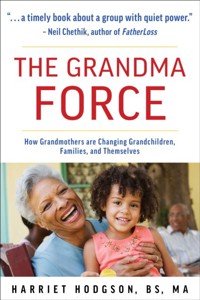
Becoming the grandmother of twins changed Harriet Hodgson and altered her life course.
According to Hodgson, we live in a fast-paced, complex time, a time when too many grandchildren are victims of bullying, internet scams, and sexual abuse. Hodgson believes that grandmothers are needed today more than any other time in history. "Grandmas can't be passive," she declares. "Every grandma has the power to protect and guide her grandchildren and needs to tap this power."
This narrative weaves Hodgson's personal story with research findings and is packed with ideas for helping grandchildren. "The Grandma Force is about the power of love and the power of one," Hodgson says. "One-by-one, grandmas are standing up for grandchildren and creating a hopeful future for them."
Das E-Book können Sie in Legimi-Apps oder einer beliebigen App lesen, die das folgende Format unterstützen:
Veröffentlichungsjahr: 2019
Ähnliche










The Grandma Force
How Grandmothers are Changing Grandchildren, Families, and Themselves
Copyright © 2019 by Harriet Hodgson. All rights reserved.
No part of this publication may be reproduced, stored in a retrieval system, or transmitted in any form or by any means, electronic, digital, mechanical, photocopying, recording, scanning, or otherwise, except for inclusion in a review or as permitted under Sections 107 and 108 of the United States Copyright Act, without either prior written permission of the Publisher, or authorization through payment of the appropriate per-copy fee to the Copyright Clearance Center.
The information in this book is not intended to serve as a replacement for professional medical, family, or counseling advice. Any use of the information in this book is at the reader’s sole discretion. The author and publisher disclaim any and all liability arising directly or indirectly from the use or application of the information in this book. A health care professional should be consulted regarding your specific situation. While every effort has been made to ensure that the information in this book is the most current, new research findings may invalidate some data.
Published in the United States by WriteLife Publishing (an imprint of Boutique of Quality Books Publishing Company, Inc.)
www.writelife.com
Printed in the United States of America.
Library of Congress Control Number: 2019940375
978-1-60808-218-6 (p)
978-1-60808-219-3 (e)
Book design by Robin Krauss, www.bookformatters.com
Cover design by Rebecca Lown, https://www.rebeccalowndesign.com/
Author photo by Haley Earley, Independent Photographer
First editor: Olivia Swenson
Second editor: Caleb Guard
Praise for Harriet Hodgson and The Grandma Force
“Harriet Hodson is a force. Don’t miss this timely book about a group with quiet power.”
— Neil Chethik author of FatherLoss and Executive Director of the Carnegie Center
“In this book, seasoned writer, researcher, and speaker Harriet Hodgson provides inspiration and wise direction to grandmothers of all ages. With a wide variety of valuable ideas from creating a mission statement to becoming a better communicator to taking care of yourself and becoming an advocate for those you love, you will be reminded that wise, dedicated grandmas not only leave an important legacy but can change the world.”
— Linda Eyre, New York Times Best Selling Author of Grandmothering
“I dare say, I’ve read most every book on grandparenting. The Grandma Force is my dream come true book for today’s grandmother. Harriet Hodgson has done a masterful job sharing her personal grandparent wisdom, plus she speaks from her hard-earned experience raising her twin grandchildren after the tragic deaths of their parents. What makes this book such a delight to read is how the author beautifully gathered insights and wisdom from the best experts and resources and wrapped them up into one “must read” book for grandparents. If you are an experienced or veteran grandparent, The Grandma Force has something for you.”
— Christine Crosby, Editorial Director for GRAND magazine
“The Grandma Force is the most comprehensive book on grandparenting I’ve ever read. Harriet has researched and referenced every aspect of the grandma relationship and written an inspiring guide for grandmas who want to build a loving, lifelong bond with their grandchildren. Grandmas at every stage will benefit from this book!
— Donne Davis, Found/Director of www.thegagasisterhood.com
“Harriet Hodgson really hit the nail on the head about writing your grandma mission statement. I find it very useful to remember and it is great to review this periodically and update it. The section on self-care is also very helpful because grandmothers, mothers, and women in general tend to push their own needs to the back burner. The Grandma Force helps us remember that by taking care of ourselves we can be the best grandmother we can be.
— Christine Wasilewski
To the grandmothers of the world,
who shape children’s lives,
care for families,
share talents and skills,
improve communities,
and give endless love.
The world is better because of you.
CONTENTS
About This Book
Preface
Chapter 1: The Contemporary Grandma
Grandma at a Crossroads
Mothers in the 1940s
Life During World War II
Then and Now
Caring for the Next Generation
Sharing Generational Skills
Chapter 2: New Grandma, a Life-Changing Role
Writing a Mission Statement
What Are You Called?
Some Life Changes
Wishes for Your Grandchild
Grandma Can Say No
Helping with Education
Joining a Support Group
Online Support
Chapter 3: Writing Your Grandma Script
Script Components
Personal Goals
Avoiding the Perfectionist Trap
I’m a Role Model!
Ditching Grandma Guilt
Chapter 4: Types of Grandmas
Formal Grandma
Fun-Seeking Grandma
Grandmas Raising Grandkids (GRG)
Wise Grandma
Long-Distance Grandma
Working Grandma
The Nanny Granny
Other Types of Grandmas
Chapter 5: Part of the Family
Learning to be a Grandma
Family Identity and Values
Their Rules and Yours
Cell Phone Rules
Sharing Chores
Who’s in Charge?
Keeper of Stories and History
Chapter 6: Building a Loving Relationship
Attachment Bonding
Qualities of a Good Grandma
Your Personality
A Loving Relationship
Gifts Greater Than Money
Special Needs Grandchild
Belongingness
Chapter 7: Communication, Your Best Tool
Body Language Basics
Voice Quality, Pitch, and Tone
Fostering Communication
Updating Communication
Internet Safety
Email from Grandma
Humor as Communication
Chapter 8: At-Home Activities for Grandkids
Reading Aloud, Your First Choice
Successful Sleepovers
Cooking Together
Grandchild’s Interests
Art as Personal Expression
Cursive Writing Practice
Chapter 9: Out-and-About Activities for Grandkids
Walking and Fitness
Going to a Park or Health Club
Magical Museums
Day Trips and Longer Trips
Grandkid’s Camp
National Grandparents Day
Chapter 10: Relationships Change with Time
Physical Growth
Emotional Growth
Service Learning
Supporting a Grandchild’s Dreams
Adult-to-Adult Relationship
Chapter 11: Becoming an Activist and Advocate
Taking the Proactive Route
Examples of Activism
Working with Organizations
Advocacy
Let’s Be Civil
The Grandmother Project
Persistence and Professionalism Count
Chapter 12: Taking Care of Me
Essential Medical Tests
Hearing Loss
Enough Sleep
Healthy Eating and Food Preparation
Physical Activity
The Power of Quiet
The Art of Self-Kindness
Religion and Spirituality
Self-Care List
Chapter 13: Holding on and Letting Go
Time of Gracious Harvesting
I’m Holding On To . . .
I’m Letting Go Of . . .
The Right Timing
Acceptance Is Soul Work
Grandmas Are Wisdomkeepers
Chapter 14: Conclusion
Bibliography
About the Author
Other Grandparenting Books by Harriet Hodgson
Index
ABOUT THIS BOOK
The Grandma Force is an informal, global, multi-cultural network of grandmothers working singly and together to better the lives of grandchildren.
The purpose of this book is to make you aware of your talents, strengths, and knowledge, and to spur action. One person can make a difference, and that person is you. Each chapter emphasizes how important you are to your family and grandchild. This book has many helpful features that make reading easier and faster.
• First, it’s written in a conversational style.
• The sub-topics of each chapter are listed on the beginning page.
• Bold headings help you track the sub-topics in each chapter.
• Real-life stories are blended with applicable research findings.
• Key points are highlighted within the text.
• Research resources are listed at the end of each chapter.
• Each chapter contains information you can use.
We are living in a complex, conflicted, scary time in history. Waiting for things to improve can be risky, so many grandmas have become proactive, and their voices are being heard. Every grandma has talents, education, and wisdom to share. These traits add up to power. You have the power to make a difference. Use your power for the good of your grandchild and other grandchildren in the community. Life has given you one of its greatest gifts—the sheer joy of being a grandma. Welcome to the Grandma Force!
PREFACE
I’m crazy about kids and always wanted to be a mother and grandmother. In 1992 my elder daughter, Helen, gave birth to fraternal twins. Excited as I was, the grandma role wasn’t an instant fit, and I adapted to it gradually. Your experience may be like mine. Each grandma creates the role for herself, in her own time, and in her own way. The Grandma Force is based on my experience as a grandmother and guardian—a challenging, rewarding, hopeful journey that led me in new directions.
Becoming a grandma changed me.
When I became a grandma, my husband John and I lived in Stillwater, Minnesota, a historic river town founded in 1837. We loved Stillwater, but it was an hour-and-a-half drive to our daughter’s home in Rochester, Minnesota. Long-distance grandparenting wasn’t our choice, and all we could do was make the best of it. We saw the twins every two months or so and were always astonished at how much they had grown. How could this be?
A former teacher, I was pretty good about remembering kids’ birthdays and holidays and choosing age-appropriate activities. I thought I was a keen observer too. From afar, Helen’s family looked like a happy one, but the reality turned out to be different. Helen and her husband were having marital problems and divorced when the twins were about five years old. We provided emotional support for Helen and helped her move twice. Finally, she settled in Kasson, Minnesota, a rural town close to Rochester.
We had moved back to Rochester by then and John, a specialist in internal, preventive, and aviation medicine, returned to work at Mayo Clinic. Our lives settled into a routine. John was busy practicing medicine, and I was busy with writing projects. At the suggestion of a friend, Helen asked if she and the twins could come for dinner every Sunday so we could have more time together. It was an old-fashioned idea, and one that worked for us. Sunday dinners became special.
One summer evening as Helen was backing out of our driveway, she stuck her head out of the car window and called, “I forgot to tell you I made a will. You’re listed as the twins’ guardians. Is that okay?”
We said yes, waved goodbye, and didn’t think any more about it. Who wanted to think about sad things on a glorious evening? The air smelled like mowed grass. Nearly Wild roses, a special variety with floppy petals, bloomed in the front garden. The sun was starting to go down and it would be dark soon. Nothing would happen to Helen, and life would be normal.
Helen’s planning proved to be providential.
On a snowy Friday night in February of 2007, Helen died from the injuries she received in a car crash. Two days later, on the same weekend, my father-in-law (Pampa) succumbed to pneumonia. When I saw Helen’s and Pampa’s photos on the obituary page of the newspaper, I sobbed uncontrollably. Friends visited us and offered words of comfort. Still, life was dark, and became darker two months later when my brother, and only sibling, died of a heart attack. In November, the twins’ father died from injuries he received in another car crash.
Four successive deaths were too much sorrow and too much pain.
Death wasn’t new to me. My parents had died, relatives had died, friends had died, pets had died. I thought past grief experiences would help me cope with new grief. They only helped a little. The death of a child is like no other; I never felt such sorrow. Did I have the strength to grieve for multiple losses and raise teenagers? Unsure as I was, I was determined to find the strength I needed. The twins needed my love and support. I wouldn’t fail Helen and I wouldn’t fail myself.
The court followed the wording of Helen’s will and appointed us as the twins’ guardians and financial conservators. John and I divided our duties along traditional lines. I took care of home and school; he took care of finances and documents. We shepherded the twins through high school and they graduated with honors. We helped with college searches in a gentle, nonthreatening way. When the twins were college students, I sent them care packages. Of all the goodies I sent, my granddaughter liked the homemade orange biscotti with chocolate chips best.
Seven years passed. During this time the twins became “our kids” and we became a grandfamily—a term created by AARP. Now I look back at this time of life with a sense of pride. We loved being grandparents then and still love being grandparents.
If you’ve been a grandma for several years, you know the joy it brings. If you’re new at this grandma stuff, you are starting an amazing journey. Becoming a grandma opens a floodgate of memories. You may remember your child playing in the sandbox, feeding the dog from the table (a no-no), having noisy sleepovers with friends, learning to drive (and the first dent in the car), and dressing up for the prom. Memories like these made you realize, yet again, that time passes quickly. You anticipated and maybe vowed to make the most of the time you have with your grandkids.
Before I became a grandma, I thought motherhood was the starring role of life. I delivered two beautiful, healthy daughters and dreamed of bright futures for them. I treasured childhood markers, such as Helen taking her first steps holding onto the handle of a small wagon filled with colored blocks. Decades later, I can feel the joy of that moment and remember the tears that filled my eyes. I remember going over to Helen, hugging her, and saying, “You’re walking!” This was an achievement for her and a change for us.
Irish poet John O’Donohue calls changes like these “thresholds.” In in his book To Bless the Space Between Us, O’Donohue says life’s changes make us ask about the threshold we’re standing on now. Thresholds aren’t simple boundaries; they are frontiers that divide different territories, rhythms, and atmospheres. Real frontiers can’t be crossed “without the heart being passionately engaged and woken up.” These words made me think about becoming a grandma.
The role was tentative at first, and I tried to understand how it fit into family dynamics and how to do it. What if I blew it? As the months passed, my confidence grew. I loved the twins fiercely and still love them fiercely. Although it’s been years since the twins lived with us, people ask what became of them and wait eagerly for my reply. Unlike some grandparenting stories, ours has a happy ending, and I enjoy sharing how my grandson is going to medical school and my granddaughter is an independent photographer. When I talk about the twins, I always credit them for their success.
After the twins moved out of the house, John and I experienced the empty nest syndrome again. Only this time, it was worse. The house was quiet—too quiet—and I missed the twins’ energy, conversation, and laughter. I remembered the time I asked my granddaughter to tell her brother dinner was ready. He was sitting at the desk in his bedroom at the top of the stairs. Instead of standing at the bottom of the stairs and calling her brother, she called him on her cell phone. “I can’t believe you used a cell phone!” I exclaimed. My granddaughter burst out laughing.
I didn’t understand the impact grandparenting had on me until I passed several thresholds. Today I see life more clearly. The family picture that began with a few brush strokes is colorful, vibrant, and complete. Others must see this picture because I’m constantly asked, “What would the twins have done without you?” I can’t answer this question. All I can say is that being a grandma is the best thing I’ve ever done.
CHAPTER 1
The Contemporary Grandma
Grandma at a Crossroads
Mothers in the 1940s
Life During World War II
Then and Now
Caring for the Next Generation
Sharing Generational Skills
Grandparents used to be considered old, tired, and worn out. No more. Today’s grandparents enjoy better health, stay physically active, volunteer in their communities, pursue new interests, and have longer lives. The American Grandparents Association (AGA) shared statistics of today’s grandparents that paint a different picture than the stereotype: 33 percent of grandparents have been married twice, 15 percent have demonstrated for a cause, and 10 percent have tattoos.1 Grandparents are even getting younger: the average age of a grandma is forty-eight, not old by modern standards.2
Grandma at a Crossroads
In earlier decades, the mother of the family stayed home and took care of the children while the father worked outside the home. Today, both parents may work and, consequently, need reliable help for children. Grandma or Grandpa is often that helper, the one who changes diapers, fixes meals, drives kids to school, and reads to children. A grandparent is the one to call when a grandchild is ill. Grandparents may also contribute financially to the family.
For these reasons and more, grandparents are the foundation of the family—a support system, protective shield, calming influence, and source of love. Whether you are ready for these changes or not, today’s grandparents are at a crossroads. Each grandparent can choose how their role as grandma or grandpa will be defined as they recognize their responsibilities and validate them in ways that empower all generations.
As a grandmother, I’d like to focus this book on grandmas. Whether you’re a new or experienced grandma, the grandma role is always evolving. You need to decide what kind of grandma you want to be. You can be a quiet, uninvolved grandma, stay home and pursue your interests. Or you can be a proactive grandma, one who stands up for her beliefs, her beloved grandchild, helps the family, and works to improve the community. The choice is yours.
Let’s take a brief look at yesterday’s mothers and grandmas and how they lived, the challenges they faced, and how they responded to these challenges. I’ll be sharing some of my own experiences and encourage you to think of your experiences. When I compare my life with my mother’s life, I’m astonished at what she was able to accomplish with a limited education (she never graduated from high school), no funds, and no transportation. At the time, families had one car, if they had a car at all. We had one car, but my mother didn’t know how to drive. Though she took driving lessons for a while, she stopped after she hit the front porch of our house.
My mother inspired me as a child and continues to inspire me. You may have similar feelings about your mother and grandmother. Looking at the roles women filled in the past may clarify your idea of the kind of grandma you want to be. This history may also give you perspective on the challenges you face as a grandma.
Mothers in the 1940s
Letters and phone calls were the main forms of communication when I was little. In Great Neck, a village on Long Island where my family lived (and it’s still called a village), mail was delivered twice a day, once in the morning and again in the afternoon. We always looked forward to the mailman walking up our front steps. Double deliveries are unheard of today, and mail has become a rare form of communication. A thank-you note is even more rare.
My mother and her younger sister talked on the phone daily. Oddly, if my mother called her sister it was a local call, but if my aunt called my mother, it was a long-distance call. The clever Clifton sisters devised a plan. When my aunt wanted to talk to my mother, she dialed our phone number, let it ring three times, and hung up immediately. This was my mother’s signal to call her back, and they talked on the phone for hours. They were very close and phone calls helped them maintain this relationship. People still rely on cell phones for communication today, though now the phones travel with them, and texting has often replaced conversation.
At the time, mothers were expected to stay home and manage the household. Certainly, there was lots of work to be done. Mother spent hours in the kitchen and wore an apron when she prepared meals. Since there were no mixes or meal kits, everything was made from scratch. Orange juice wasn’t fresh or frozen, it was squeezed from oranges. My mother squeezed a bag of oranges every morning. A milk truck delivered milk and left it in an insulated box by the back door. Bread and other baked goods were delivered by a bakery truck.
Although Mom loved to bake and was an excellent baker, she bought cupcakes from the truck because it saved time. There were six in a box: two with vanilla frosting, two with chocolate, and two with strawberry. I loved them all.
Plates were smaller then, which reduced the serving sizes. Like all the families on the block, we had an ice box. Every few days an ice truck delivered a block of ice to our house. Graduating from an ice box to an electric refrigerator was a big deal, and my parents were excited about it. If I recall, a blue water pitcher came with the refrigerator. Plastic food storage bags hadn’t been invented yet. Leftovers were wrapped in wax paper or stored in glass refrigerator dishes. These glass containers have made a comeback as people worried about the dangers of plastics, and I’ve seen them in discount stores and online.
There were no home electric dishwashers, and dishes were washed and dried by hand. What a concept!
Mothers had weekday clothes and good clothes, often called Sunday clothes. To save her good clothes, a mother wore a “house dress” while she cleaned. My mother had three house dresses, and they were all ugly. Socks with holes in them weren’t thrown away. Instead, they were repaired with a darning egg (a large wooden egg with a handle), needle, and thread. Mom taught me how to darn socks. First, I covered the hole with perpendicular strands of thread, a task that required patience and concentration. Then I wove in a second set of threads perpendicular to the first. Darning socks was tedious work.
A mother who knew how to use a treadle-powered or electric sewing machine bought sewing patterns and made her own clothes and clothes for the family. Choosing sewing patterns could take hours. My mother acquired a used table-type sewing machine and made one dress for me. Considering it was her first effort, the dress fit well, and I wore it. I guess Mom didn’t like sewing because she never made anything else. She closed the lid of the sewing machine table and it stayed closed. Today, old sewing patterns have become collectibles and are available online. I still have patterns from my home sewing days.
Entertainment was simple then—listening to the radio, playing cards, playing board games, reading magazines and books, going to the movies, gardening, and doing craft projects. My brother and I caught every episode of “Captain Midnight,” “Jack Armstrong” and “The Shadow” on the radio. We were thrilled when the mailman delivered our genuine Captain Midnight decoder rings and looked forward to using them with the next program. It was a disappointing experience. After following the instructions and deciphering the code, which took longer than I thought, the message was “Tune in tomorrow,” or something boring like that.
Black-and-white television was in its infancy, and few families had a set. My father sold industrial finishes to factories. One factory made television sets, and Dad was able to buy a set at a discount. We watched Phil Spitalny and his All-Girl Orchestra and stayed up late watching live theater productions. Long after my mother, brother, and I had gone to bed, Dad would stay up late and watch boxing matches.
Believe it or not, conversation was a form of entertainment.
On summer evenings, folks in my neighborhood sat on their front porches, watched the fireflies come out, and told stories until it was time for bed. I caught fireflies in a jar. When I wasn’t catching fireflies, I sat on our tiny porch with my parents and waited for the Good Humor man, who drove an ice cream truck around neighborhoods. The driver rang a set of windshield bells to let people know he was coming. Occasionally we bought ice cream from the truck, but most of the time we didn’t because it was pricey.
Laundry was a labor-intensive task, and mothers usually did it on Monday. We had a wringer washing machine, a beast of an appliance with an open tub and wringer on top. Laundry was fed into the wringer to remove excess water. I was upstairs when my mother called, “Harriet, come here.” Something about her voice alerted me. I ran down to the basement and discovered my mother’s arm was caught in the wringer up to her elbow. Following her instructions, which Mom gave in an amazingly calm voice, I reversed the wringer and freed her arm. Thankfully, my mother wasn’t severely injured, but the memory of this experience still makes me shudder.
Although clothes dryers were invented in 1930, they weren’t readily available, and laundry was dried on a clothesline. Our clothesline ran from the back corner of the house, over the yard, to the corner of the garage. A canvas clothespin bag hung from the clothesline and stayed there in rain, sleet, and snow. Modesty existed back then, and my mother dried panties and bras in a pillow case so neighbors wouldn’t see her “unmentionables.” Modesty seems to have disappeared and nothing is unmentionable today.
Life During World War II
All family members—parents, children, grandparents, cousins, aunts, and uncles—were affected by World War II rationing.
The US government had three national programs: victory gardens, food canning, and knitting for the troops. Our victory garden was in an open field at the top of a hill. Some families marked off their plots with metal stakes and rope. People grew what they needed most: carrots, onions, potatoes, lettuce, cabbage, cucumbers, zucchini, and tomatoes. As the plants grew and matured, the field was transformed into a living quilt of produce. Tending a victory garden wasn’t just a necessity; it was a social experience. Neighbors weeded and watered while they swapped stories about food rationing, the shortage of gas, and war developments.
One story was about a German submarine surfacing in Long Island Sound. I didn’t know if the story was true. Decades later, I learned there were spies on Long Island.3 Some German men who lived in the US returned to Germany for spy training that included creating explosives, building timers, and writing in code. After training, they returned to the states in a U-boat, which ran aground several times. They finally disembarked on a beach at the end of Long Island. The spies were dressed in German uniforms and had plans to blow up factories to slow war production. The bumbling spies were caught by a Coast Guard soldier.
Schools had air raid drills. I remember a drill at Lakeville Elementary School when I crouched by the furnace with my hands over my head. The teacher told me it was a fire drill, but I knew it wasn’t. Air raids and spies were constantly on my mind. My brother assembled World War II plane models and hung them from his bedroom ceiling. When we played outside we usually played war, and I was always a Japanese soldier.
One evening I noticed ink spots on the bottom corner of the newspaper. I asked my mother if the different spots could be a code for enemy spies. She was shocked. Until that moment, I don’t think my mother realized how aware I was of the war. Despite her assurances of no spies and no code, I continued to worry.
Sugar was in short supply and rationed. My husband still has his ration book, now a family artifact. I have my mother’s cookbook, The Victory Cook Book: Wartime Edition, which contains substitutes for rationed ingredients and recipes for inexpensive wartime meals. Although I’ve never made the recipes, I read the book to get a sense of history. The chapter titled “How to Feed a Family of Five on $15 a Week” contains menus with lots of vegetables and little meat. Prune Whip, a gloppy brown dessert, was one of my mother’s favorite recipes. When I sampled the dessert I grimaced, yet the courteous members of the bridge club complimented her on it.




