


7,99 €
Niedrigster Preis in 30 Tagen: 7,99 €
Niedrigster Preis in 30 Tagen: 7,99 €
Mehr erfahren.
- Herausgeber: WriteLife Publishing
- Kategorie: Gesellschafts- und Liebesromane
- Sprache: Englisch
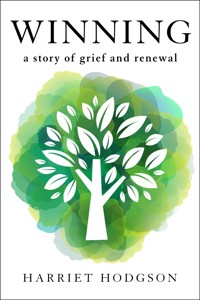
Harriet Hodgson is well-acquainted with grief. She is a bereaved mother, daughter, sister, daughter-in-law, wife, and friend.
After so many losses, she decided "Death will be the loser; life will be the winner. I will make it so."
Winning is all about healing - a story of love with surprise laughter, useful tips, personal growth, and a path for creating a new life. Winning can help you embrace the life that is waiting for you.
Das E-Book können Sie in Legimi-Apps oder einer beliebigen App lesen, die das folgende Format unterstützen:
Veröffentlichungsjahr: 2023
Ähnliche


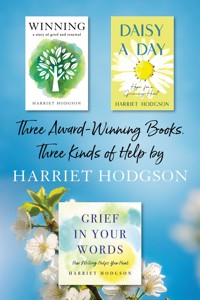






Winning: A Story of Grief and Renewal
© 2023 by Harriet Hodgson. All rights reserved.
No part of this book may be reproduced or transmitted in any form or by any means, electronic or mechanical, including photocopying, recording or by any information and storage retrieval system, without permission from the publisher.
The information in this book is not intended to serve as a replacement for professional medical advice or counseling. Any use of the information in this book is at the reader’s sole discretion. The author and publisher disclaim any and all liability rising directly or indirectly from the use or application of information in this book. A medical/health care professional should be consulted regarding your specific situation. While every effort has been made to ensure the information in this book is the most current, new research findings may invalidate some data.
Published in the United States by WriteLife Publishing
(an imprint of Boutique of Quality Books Publishing, Inc.)
Library of Congress Number: 2023939762
978-1-60808-291-9 (p)
978-1-60808-292-6 (e)
Book design by Robin Krauss, www.bookformatters.com
Cover design by Rebecca Lown, www.rebeccalowndesign.com
First Editor: Andrea Vande Vorde
Second Editor: Allison Itterly
Praise for Winning
and Author Harriet Hodgson
“Winning: A Story of Grief and Renewal by Harriet Hodgson is a beautifully written memoir of her life with her deceased husband and daughter. Harriet packs a lot of great information, tools, and resources in less than 200 pages. I highly recommend Winning for anyone who has experienced loss.”
– David Roberts, LMSW, bereaved parent and co-author of When the Psychology Professor Met the Minister.
“Winning by Harriet Hodgson is engaging and descriptive—she brings you into her life as she lived it. Harriet has done an excellent job of telling how important it is not to bandage grief but live through it. She has done a superb job on this book. We are walking with her on the journey. Well done.”
– Mary and Darwyn Tri, co-leaders of The Compassionate Friends, Rochester, MN chapter.
“Winning is a remarkable book, beautifully written about grief and renewal from grief. The book captivates the reader and draws them into thinking about their own grief issues. The author describes the different types of grief in detail. Her own grief includes losing a daughter in a car accident, adopting and raising her daughter’s twin grandchildren, and seven years of caring for her physician husband after a dissecting aneurysm left him without the use of his legs. Hodgson has been described as a National Treasure for the remarkable person that she is. Winning is a gem.”
– David E. Dines, MD, Emeritus Professor of Medicine, Mayo Clinic, Rochester, MN.
“Harriet Hodgson’s Winning: A Story of Grief and Renewal is her best masterpiece. I am in awe of a woman, eighty-plus years young, who has suffered so many tragedies, has given so much back to her family and to the grieving community. Winning is a legacy to Harriet’s family, with lovely memories of her beloved husband John, her parents, her beloved daughter, and other family members. The book is a raw, honest, and inspiring grief journey filled with hope and resilience. For anyone who has experienced any loss, [it is ]chock full of resources, tips, and Harriet’s unwavering wisdom. As Harriet states, “Many of life’s questions have no answers.” For over forty years of sharing grief knowledge, “I need to accept the things I couldn’t change.” Winning is a beautiful complication of Harriet at her best.”
– Judy Lipson, author Celebration of Sisters: It is Never Too Late to Grieve. Keynote speaker, The Bereaved Parents of the USA National Conference 2023.
“Harriet Hodgson has the gift of good grieving. In this heartfelt and helpful book, she shares her unique story of multiple family losses. She also shows how one can thrive while bereaved. Harriet is a keen, creative, compassionate guide.”
– Neil Chethik, author of Father Loss: How Sons of All Ages Come to Terms with the Deaths of Their Dads.
“Once you start Winning you can’t put it down. It is honest and riveting. The way Hodgson ties scientific information with her experience is amazing. I think every school of nursing and every school of psychiatric nursing should have this book.”
– Ruth Kahn, PhD, Emeritus Director of Nursing Education, National Institutes of Health.
“Winning by Harriet Hodgson is a true story about specific ways to deal with grief. Each type of grief can leave deep emotional scars. They can be healed by actively facing grief and pain. Harriet discusses ways to bring about a real-life renewal.”
– George Allen, MD, Emeritus Mayo Clinic staff physician, Rochester, MN.
“Having lost our daughter to health complications at the age of 50 in 2020, I wasn’t sure I needed to read another book on death and dying. But I found Harriet Hodgson’s new book, Winning, to be very helpful since parents never really stop grieving the loss of a child. Hodgson writes a very personal and informal book about dealing with the deaths of several close family members in a short span of time. . . . The reader can always find something that strikes a chord that will invite thought and conversation. She is open about her struggle to find new meaning and activities (like doodling) in her own life after years of being a caregiver. Hodgson’s experience during COVID was interesting to me since our daughter’s death occurred in the early days of COVID when we were isolated in our apartment for several weeks. . . . In Winning, readers will feel they have found a comforting friend they can relate to rather than a lecturer.”
– Alan Dollerschell, Retired Coordinator, Rochester Community and Technical College Library.
“This is a book you need to read. In clear, no-nonsense prose we explore Harriet Hodgson’s staggering encounters with the challenges of grief. We experience her clear-eyed decisions and active responses. If you’re experiencing overwhelming sorrow after the loss of someone near and dear, this book just might help you.”
– B. Beery, PhD, Curriculum Director, retired, Rochester, MN Public Schools.
“Extremely well-written, this is not some abstract theoretical treatise but the stuff of actual lived experience. It is this which gives Winning added authority and validity. You are honest about yourself, and your wisdom is tinged with a personal truth. I wish you great success with this honest, life-affirming book.”
– Michael York, Actor, Author, and Narrator
This one is for my beloved John: a devoted husband, father, grandfather, great-grandfather, and physician.
Death will be the loser. Life will be the winner. I will make it so.
Table of Contents
Foreword
Preface
Chapter 1: Looking Grief in the Face
Chapter 2: Grief Brain: How Do You Lose an Egg?
Chapter 3: Types of Grief
Chapter 4: The Only Person on the Planet: COVID Days 55
Chapter 5: Fixing Holes in My Support Hammock
Chapter 6: Caring for You, Caring for Me
Chapter 7: Renewal Is an Inside Job
Chapter 8: Breaking Out of the Grief Bubble
Chapter 9: Making Good Things from Grief
Bibliography
Acknowledgments
More Healing Books by Harriet Hodgson
About the Author
Foreword
Winning by Harriet Hodgson took me by surprise. After working with grieving people for over 13 years there is a certain sameness in what even the most skilled writers have to say. Winning is an exception.
Harriet has been processing severe grief for a long time and she is generous in sharing her personal story.
She has survived the death of both her daughter and then later her daughter’s husband, which led her to lovingly raise her fraternal twin grandchildren. Then, after many years of a loving and devoted marriage, she became first a caregiver to her beloved husband, and then his widow. These are only some of the deaths Harriet has experienced.
The author of more than 44 books, her style is both beautiful, easy to understand, and relate to. Harriet interweaves her personal story with practical actions to take and ways to change patterns of thought. There are no platitudes here. Instead, her words are genuinely helpful.
The topics she discusses in Winning are wide-ranging, everything from anticipatory grief, to loneliness, to grief brain, to grief heart, to permission to laugh, to forming a new relationship with deceased loved ones, and so much more. Her stories (some of them funny) and grief research will touch your mind and heart.
At the beginning, Harriet writes, “Death will be the loser. Life will be the winner. I will make it so.” Then she delivers the many pathways that even someone as doubtful as I am, can understand and follow. Choosing life and joy while grieving can seem impossible.
Winning makes this not only possible, but probable.
– Jan Warner, Author of Grief Day by Day: Simple Practices and Daily Guidance for Living with Loss, www.Facebook.com/GriefSpeaksOut,www.griefdaybyday.com.
Preface
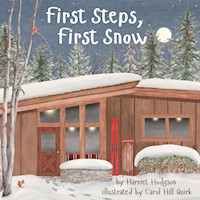
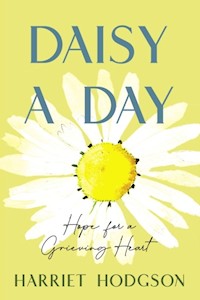
I’ve been a freelancer for forty-four years. In 2022 I had two books published: Daisy a Day: Hope for a Grieving Heart, a concise, helpful, and hopeful resource for the bereaved, and First Steps, First Snow, a children’s picture book based on a true experience.
“Well, that’s it,” I muttered to myself. “Forty-four books are enough. I’m eighty-seven years old. Maybe it’s time to retire.”
But the idea of retiring was so upsetting that I gave myself a pep talk. The talk didn’t quell my doubts. What would I do if I retired? What would I do week after week? Month after month? Year after year?
I have the type of mind that needs to be busy. Really busy. Heck, I even write in my sleep. I frame sentences, review structure, consider word choices, and see words on paper, all while snoring. Then I awaken suddenly, turn on the computer, type the sentences, and save the document. To my chagrin, I’m often writing at four in the morning, and this affects the rest of the day. Everything seems a little “off.”
There’s not much going on at the crack of dawn. The moon is still out, sometimes full, sometimes half, sometimes a “fingernail,” as my mother-in-law called it. Stars are fading, and as night becomes day, the sky turns from inky black to the color of gray flannel. Train tracks are close to my building, and I can hear the whistle: rhythmic blasts to warn drivers and pedestrians. The whistle is a lonely, yet comforting, sound that tells me others are awake.
I live in Rochester, Minnesota, home base of Mayo Clinic. A block away is Methodist Hospital, which is part of Mayo. From my living room window, I can see the helicopter landing pad, the orange windsock, and green signal lights. Most of the time, Mayo One lands there, but I also see helicopters from other medical centers. I use binoculars to see the logos on the planes.
A helicopter that comes from the east between my building and a Mayo Clinic building makes me nervous. It gets so close that I feel like I could hand the pilot a cup of coffee. Though the flight path is safe, the helicopter flies too close for comfort and I start to worry. But I have seen many safe helicopter landings in good weather and bad.
A small park across the street is filled with historic oak trees. The trees were there when Rochester was founded in 1854. Season after season, day after day, thousands of crows come to the park to sleep. So many crows land on the trees that no leaves are visible. The trees become black silhouettes. In the early morning, I hear crows cawing at each other and watch them swarm into the sky and head for farms outside the city.
As interesting as these events are, they don’t keep me from writing. Writing is my passion; writing is my life.
I thought I’d made peace with retirement until I received an email from the editor of a grief website. The editor said he didn’t know anyone else who had experienced so much tragedy and raised twin grandchildren while grieving. He thought I should write a memoir.
What an idea. What a challenge.
Writing is hard work, and despite years of experience and a track record as an author, the idea of writing a memoir was daunting. Besides, I knew many people who started memoirs and never finished them. My mother-in-law was one of those people. She struggled with the first chapter for months and became so tangled in a web of names and dates and events that she quit writing. I didn’t need to repeat her experience.
Yet the idea of a memoir was appealing. Years ago, I wrote a history of Rochester, and it sold well. In fact, it went back to press three times. Chapter topics included agriculture, education, healthcare, and technology. Instead of a chronological approach, I used a topical approach. For example, the technology chapter was titled, “Computers Amidst the Corn Rows.” The topical approach worked before, so maybe it could work again.
The editor’s email made my mind race. I could tell my grief story, the challenges I faced, and the healing steps I took. It would be an honest, heartfelt story. Each chapter would focus on a grief issue and healing steps that would help others. I brainstormed a list of possible book titles and read them aloud. Which sounded good? Which sounded awful? Soon my mind was going in circles.
As I had done many times before, I let my subconscious deal with the problem. My subconscious had never failed me. If I was patient, a title would eventually surface. One day, while I was making the bed, the title flashed in my mind: Winning. The one-word title was strong, upbeat, and easy to remember.
The title idea transported me back in time, and I thought about my daughter’s death. A week after she died, I sat down at the computer and poured out my grief in words. I remembered tears streaming down my face. I remembered the decision I’d made that day—a decision that altered my outlook, my healing path, and my life. These simple words became my mantra.
Death will be the loser. Life will be the winner. I will make it so.
Yes, I’ve suffered multiple losses and learned from each one. Grief forced me to grow as a person, have more compassion, and develop resilience. My deceased loved ones would want me to be happy. Winning sounded like a happy, strong title. On a whim, I sent it to the editor, and he replied quickly.
“I love it!”
I cheered when I read this. If the title was good enough for him, it was good enough for me. The more I thought about Winning, the more I liked it. Once I had the title, the words came so quickly I could barely keep up with them. Evidently, I’d been storing ideas for years.
This book has a dual purpose:
The first purpose is to help you create a healing path.
The second purpose is to help you believe in the future.
Hope is the theme of this book, and it’s part of every chapter. While I was writing Winning, I pictured a white candle of hope with a flickering yellow flame. As I struggled with grief, however, my imaginary flame sputtered and almost went out. Yet the spark was still evident and waiting to flare. That spark kept me going.
Winning is a story about coping with multiple losses, living with them, believing in a future, and creating a new life. Each chapter includes tips for coping with grief. If you’re at the start of your journey, or you have been grieving for a long time, my story may be helpful. At the end, I hope you believe you’re capable of winning and will think of yourself as a winner.
Instead of merely surviving grief, you have the power to thrive and create a rewarding future—the future you deserve.
Chapter 1
Looking Grief in the Face
Grief is a strange place—one I didn’t want to visit. I’d experienced grief before, and each loss wounded me. I’m sorry to say this, but I was all too familiar with emergency phone calls, newspaper obituaries, grief rituals, memorial services, and all the paperwork that went with them. I wasn’t proud of this knowledge.
In his book Life After Loss, Bob Deits says nobody wants to be good at grief.1 That “nobody” includes me. Yet time and again, I looked grief in the face, and it wasn’t a pleasant experience. Grief was nasty, but I learned to live with it. As the years passed, grief seeped into my soul.
When I shared my story with others, however, the reaction was always disbelief. “Hollywood would never accept your story. It’s too emotional,” my friend said. She was right. Sometimes I hardly believed my own story. But grieving people need to tell their stories and say their loved ones’ names.
Telling my story helped me heal. Though I said my loved ones’ names and told stories about them, I didn’t see the big picture of my grief. Grieving for multiple losses was like assembling a puzzle. I had some of the pieces, not all, and wasn’t sure how they fit together. Did I have all the pieces I needed?
Grief experts think it’s helpful to make a grief timeline. I’m a visual learner, so I followed this advice. I drew a line through the center of a piece of paper, and I wrote the names of deceased loved ones and friends above the line. Below the line, I wrote the dates of their deaths. The timeline included the death of Timmy, our black cocker spaniel, who died when I was in fifth grade.
If I didn’t know the date of death, I made an educated guess. My timeline showed a grief cluster in 2007. Four family members died in a row: my daughter, my father-in-law, my brother, and my daughter’s husband. No wonder I think of 2007 as the year of death.
Experiencing Multiple Losses
My daughter and father-in-law died on the same weekend in February. When I saw their photos in the obituary page of the newspaper, and the family name printed twice, I sobbed and sobbed. I wondered if I would ever stop crying. It was like a punch to the gut. I took the punch with my eyes wide open and kept them open. For if I looked aside, even for a few minutes, things could get worse. My troubled life could become more troubled. I didn’t need that and kept telling myself, “I will get through this.”
The death of a child is like no other. When my oldest daughter, Helen, died in a tragic car accident, leaving behind her husband and twin children, my husband John and I were overcome with grief. We cried for hours, stopped for an hour or so, and cried again. I cried so much that I was almost cried out. The sun was setting, and there was an orange glow in the western sky. I looked at the white birch trees in the side yard and watched the sky darken.
“It’s time for dinner,” I announced. “What would you like?”
“I don’t want anything,” John replied.
“Well, you need to eat something,” I reasoned. “How about scrambled eggs?”
“Okay,” he agreed. “But I don’t want a lot.”
I scrambled an egg for each of us and fixed some fresh fruit. We ate at the kitchen table in front of a bay window that overlooked the yard. Sitting at the table with John was always interesting. Herds of deer ran by. (Yes, herds roamed our neighborhood.) A variety of birds came to feed on our berry bushes. Stray mallards walked across the back lawn. We even saw a flock of pheasants.
Eating at the kitchen table was like having front-row seats at nature’s show. We didn’t look for wildlife that day. Grief was the only thing we saw, and we ate in silence. This was upsetting because we always had news to share. When I cleared the plates, the eggs were gone but the fruit remained. All we could eat was an egg.
I served coffee after “dinner,” such as it was. John drank all of his coffee. I only had a few sips of mine. If I drank anymore, I thought I’d barf.
The family deaths kept coming, and my father-in-law was next. My daughter died on Friday and Dad died on Sunday of the same weekend. Dad was the patriarch of the family, and his death affected all family members. There were so many things I would miss about Dad: his intelligence, his wisdom, his humor, and his stories. Dad told stories about his childhood, his years in Lima, Peru, his medical practice, and his family. What concerned me the most after his death was the fact that the main source of our family history was gone.
Just as I was beginning to feel better, another loved one would die. Like the lyrics of a country song, I took a few steps forward and a few steps back. Life pulled me in opposite directions so hard that I thought I’d snap. This was exhausting. Life was exhausting. I didn’t know myself anymore.
My emotions jumped around like crickets on a summer night. A jump here, a jump there. Many emotions were opposites: exhaustion and energy, pessimism and optimism, despair and hope, to name a few. Dealing with these feelings was painful.
My brother, and only sibling, was the third family member to die in 2007. He died about eight weeks after Helen died. My brother was five years older than me. We had been estranged for several years, and I never knew why. I continued to send him birthday cards but never heard from him. Then, out of the blue, my brother called me one day. He had cancer and wondered if John could help him get an appointment at Mayo Clinic in Jacksonville.
John helped my brother get an appointment, and he underwent a series of cancer treatments. We thought my brother would live. Sadly, after he completed treatment, my brother had a heart attack in the night and died.
Grief Sparks Childhood Memories
My brother’s death brought back a lot of memories we shared in childhood. World War II was raging at the time, and my brother and I would play war games. I was always the enemy, while my brother was always the hero. He put model plane kits together and hung the models from his bedroom ceiling. He studied flashcards of enemy aircraft. Each card had a black silhouette of a plane on it, perfect for quick identification.
Radio was our main source of family entertainment. For months, my parents saved money to buy a radio. The radio was nothing like today’s modern radios. It was about five feet tall, made of mahogany with wooden legs, a large dial, and a cloth-covered soundbox. The radio had a place of honor in our living room, and we gathered around it.
I loved listening to the radio, so much that I scratched my name on the front with a pencil, pressing as hard as I could. Of course, this damaged the finish, but my parents never said a word. They’d bought one radio and couldn’t afford to buy another. Even though I continued to listen to programs, I felt ashamed every time I sat by the radio. I didn’t understand why I had felt compelled to scratch my name on the front of it.
My brother and I used to listen to The Shadow and Captain Midnight. The lead-in to The Shadow program was dramatic. The announcer described a mysterious scenario in a compelling voice (which I can still hear), asked if listeners knew about it, and ended with: “The Shadow knows.” The announcer’s voice scared me.
We were excited when our Captain Midnight decoder rings arrived in the mail. (I think the rings cost twenty-five cents each.) After we decoded the first message, “Tune in next week,” we weren’t as excited. What a disappointment. Even though I lost all interest in my decoder ring, I still listened to the programs.




