


0,49 €
Niedrigster Preis in 30 Tagen: 2,49 €
Niedrigster Preis in 30 Tagen: 2,49 €
Mehr erfahren.
- Herausgeber: Booksell-Verlag
- Kategorie: Gesellschafts- und Liebesromane
- Sprache: Englisch
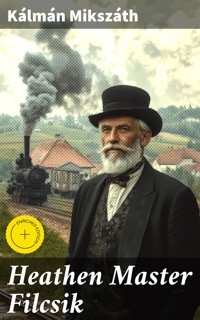
In "Heathen Master Filcsik," K√°lm√°n Miksz√°th crafts a rich tapestry of cultural commentary set against the backdrop of late 19th century Hungary. This satirical novel employs a distinctive blend of humor and social criticism, revealing the complexities of faith, morality, and the human condition through the life of its protagonist, Master Filcsik. With Miksz√°th's signature wit, the narrative examines the tensions between traditional beliefs and the encroaching modernity of his time, all while showcasing his mastery of vivid characterizations and lyrical prose. K√°lm√°n Miksz√°th, a prominent Hungarian author and journalist, drew inspiration from the folklore and social dynamics of his native land. His deeply rooted understanding of rural life and the tensions between different societal classes infuses "Heathen Master Filcsik" with authenticity and depth. Miksz√°th's keen observations of the human spirit and social customs resonate throughout the novel, capturing the zeitgeist of an era grappling with change and uncertainty. This engaging work is highly recommended for readers who appreciate incisive humor intertwined with profound philosophical questions. "Heathen Master Filcsik" stands as a testament to Miksz√°th's literary prowess, inviting readers to explore the intricacies of faith and human folly in a way that remains relevant today. In this enriched edition, we have carefully created added value for your reading experience: - A succinct Introduction situates the work's timeless appeal and themes. - The Synopsis outlines the central plot, highlighting key developments without spoiling critical twists. - A detailed Historical Context immerses you in the era's events and influences that shaped the writing. - A thorough Analysis dissects symbols, motifs, and character arcs to unearth underlying meanings. - Reflection questions prompt you to engage personally with the work's messages, connecting them to modern life. - Hand‐picked Memorable Quotes shine a spotlight on moments of literary brilliance. - Interactive footnotes clarify unusual references, historical allusions, and archaic phrases for an effortless, more informed read.
Das E-Book können Sie in Legimi-Apps oder einer beliebigen App lesen, die das folgende Format unterstützen:
Veröffentlichungsjahr: 2020
Ähnliche
















Heathen Master Filcsik
Table of Contents
Introduction
A proudly self-reliant village craftsman finds his skepticism chafing against the expectations of a community that locates virtue in shared rituals and inherited belief.
Heathen Master Filcsik is a short story by the Hungarian writer Kálmán Mikszáth, a leading figure of late nineteenth-century realism whose work often turns a keen, ironic eye on rural society. Set in the everyday world of village life, it belongs to the tradition of regional narratives that examine how custom, class, and belief shape communal bonds. Emerging from the cultural milieu of the Austro-Hungarian era, the piece speaks in the measured, observant tones characteristic of its time, yet it avoids mere ethnographic detail in favor of sharply drawn human drama.
The premise is straightforward and potent: a respected “master” becomes known for views that neighbors deem irreverent, and the label of “heathen” begins to do its subtle work. Mikszáth invites readers into the rhythms of a community—its work, its feasts, its habits of talk—where a reputation can shift the balance of belonging. The experience is one of quiet tension rather than spectacle: a story told with lightness of touch, wry humor, and patient observation, leading us through encounters, glances, and whispered judgments without relying on melodrama or moralizing.
Themes gather around the friction between private conscience and public conformity. Mikszáth examines how faith can function as social glue and social test at once, asking what happens when a person’s conduct refuses easy classification. The tale explores the power of naming—how calling someone a heathen codifies suspicion—and the small mechanisms by which communities define virtue, deviance, and forgiveness. Tradition is not mocked so much as weighed, and the narrative pays attention to the gray spaces between belief and unbelief, piety and performance, resolve and loneliness.
Stylistically, the story exemplifies Mikszáth’s humane irony: a voice that smiles without sneering, attentive to quirks of character and the revealing detail. The prose favors brief, telling scenes, allowing posture, gesture, and rumor to carry meaning more forcefully than argument. While the setting is local, the tone is cosmopolitan in its sympathy, suggesting a writer who trusts readers to infer motives and measure silences. Humor rises from understatement and from the incongruities of village theater—where honor, pride, and practical need are constantly negotiating their share of the stage.
For contemporary readers, the story’s questions feel immediate: How do labels harden into identities? Where is the boundary between civic cohesion and coercive sameness? What do communities owe dissenters, and what do dissenters owe their neighbors? Without prescribing answers, Mikszáth illuminates the emotional costs of social judgment and the delicate art of living with difference. The narrative appeals both to the heart—through the small griefs and small generosities of ordinary people—and to the mind, by revealing how moral narratives are constructed, circulated, and resisted.




