


61,99 €
Mehr erfahren.
- Herausgeber: John Wiley & Sons
- Kategorie: Wissenschaft und neue Technologien
- Sprache: Englisch
Water based heating systems are efficient, flexible, versatile and offer many advantages over other heating systems. These advantages (fast response, good controllability, efficient zonal heating and largely silent operation) all require that initial design, installation, commissioning and maintenance be carried out to a high standard by competent engineers.
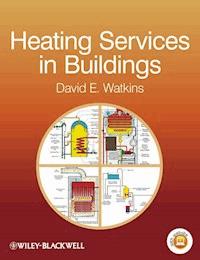
Heating Services in Buildings provides the reader with a detailed and thorough understanding of the principles and elements of heating buildings using modern water based heating systems. A key theme of the book is that there is little difference, in the approach to the design and engineering, between domestic and commercial installations. The author’s detailed but highly practical approach to the subject ensures there is sufficient information for students from both a craft background and those with more academic backgrounds to understand the material. This approach is complemented by straightforward, easy-to-use diagrams.
Heating Services in Buildings supports a range of educational courses, including degree level building services engineering; NVQ Level 4 Higher Professional Diploma in Building Services Engineering; City & Guilds supplementary heating course and the Heating Design and Installation Course accredited by the European Registration Scheme (ERS).
Sie lesen das E-Book in den Legimi-Apps auf:
Seitenzahl: 1070
Veröffentlichungsjahr: 2011
Ähnliche



















Table of Contents
Cover
Title page
Copyright page
Preface
1 Introduction to Heating Services
2 Wet Heating Systems
TEMPERATURE AND PRESSURE
CIRCULATION
PIPING DISTRIBUTION ARRANGEMENT
ONE OR SINGLE PIPE SYSTEM
TWO PIPE SYSTEM
MICRO BORE PIPING SYSTEM
TWO PIPE RADIAL SYSTEM
HYBRID (MIXED) SYSTEMS
OPEN VENTED HEATING SYSTEMS
FEED AND EXPANSION (F&E) CISTERN
OPEN VENT PIPE AND COLD FEED AND EXPANSION PIPE
INTRODUCTION TO AND HISTORY OF SEALED HEATING SYSTEMS
SEALED HEATING SYSTEMS
EXPANSION VESSELS
AIR SEPARATION
SYSTEM CHARGING
SIZING THE EXPANSION VESSEL
GRAVITY CIRCULATION HEATING SYSTEMS
EXPLANATION OF GRAVITY CIRCULATION
3 Materials
PIPING MATERIALS FOR HEATING APPLICATIONS
LIGHT GAUGE COPPER TUBE
CURRENT EUROPEAN BRITISH STANDARD – COPPER TUBE
COATED COPPER TUBE
FORMING BENDS IN COPPER TUBE
JOINTING COPPER TUBE
PROPRIETARY MADE PIPE FITTINGS
MECHANICAL COMPRESSION TYPE FITTINGS
CAPILLARY TYPE FITTINGS
FLAME-FREE JOINTS
PUSH FIT RING SEAL JOINTS
CRIMPED OR PRESSED COPPER JOINTS
STAINLESS STEEL TUBE
STAINLESS STEEL IDENTIFICATION
LIGHT GAUGE STAINLESS STEEL TUBE
STEEL PIPE
LOW CARBON MILD STEEL TUBE
FORMING BENDS IN STEEL TUBE
JOINTS FOR LOW CARBON MILD STEEL TUBE
MECHANICAL TYPE JOINTS FOR STEEL TUBE
MALLEABLE IRON
PLASTICS
CROSS-LINKED POLYETHYLENE (PEX)
POLYBUTYLENE (PB)
JOINTING PEX AND PB TUBES
VALVES
STOPCOCK PATTERN STOPVALVE
GATEVALVES
BUTTERFLY VALVES
DIAPHRAGM VALVE
PLUG VALVES AND COCKS
NON-RETURN AND CHECK VALVES
NON-RETURN VALVES
CHECK VALVES
DOUBLE CHECK VALVE
NON-VERIFIABLE DISCONNECTOR VALVE
REDUCED PRESSURE ZONE (RPZ) VALVE
VACUUM BREAKING VALVE
FLOATVALVES
GLOBE VALVES
4 Heat and Heat Transfer
HEAT
TEMPERATURE
SPECIFIC HEAT CAPACITY
LATENT HEAT
SENSIBLE HEAT
HEAT TRANSFER
CONDUCTION
CONVECTION
RADIATION
HUMIDITY
5 Heat Emitters
PRESSED STEEL PANEL RADIATORS
CONVECTOR RADIATOR
LOW SURFACE TEMPERATURE (LST) RADIATORS
CAST IRON PANEL RADIATORS
COLUMN RADIATORS
ALUMINIUM RADIATORS
NATURAL CONVECTORS
FLOOR TRENCH CONVECTOR
FAN, OR FORCED CONVECTORS
SKIRTING HEATING
RADIANT PANELS
EMBEDDED RADIANT PANELS
RADIATOR FIXING AND SHELVES
EXAMPLES OF CONVECTION STAINING
RADIATOR ENCLOSURES
RADIATOR CONNECTIONS
ROOM HEIGHT EFFECT
LOCATION OF HEAT EMITTERS
RADIATOR ACCESSORIES
DESIGNER RADIATORS AND TOWEL RAILS
6 Underfloor Heating
OPERATING PRINCIPLES
UFH PIPING MATERIALS
PIPING ARRANGEMENTS
TRANSITING PIPEWORK
FLOOR STRUCTURES AND FINISHES
FLOOR FINISHES
ASSESSMENT OF FLOOR HEAT EMISSION
UNDERFLOOR HEATING COMPONENTS
UFH WATER TEMPERATURE CONTROL
SYSTEM TESTING AND COMMISSIONING
7 Heat Requirements of Buildings
INTERNAL DESIGN TEMPERATURES
EXTERNAL TEMPERATURE (BASE DESIGN TEMPERATURE)
THERMAL PROPERTIES OF BUILDINGS
‘U’ VALUES (THERMAL TRANSMITTANCE COEFFICIENT)
AIR INFILTRATION
HEAT GAINS
BUILDING TIME-LAG
HEAT LOSS CALCULATIONS
WORKED ENGINEERING HEAT LOSS CALCULATION
EXPLANATION OF EXAMPLE CALCULATION
BOILER SIZING
CUBE X NUMBER METHOD
8 Heat Emitter Selection and Sizing
MEAN WATER TEMPERATURE AND DELTA T
CONDENSING BOILER SYSTEMS MODE
CORRECTION FACTORS
EXAMPLE OF CORRECTION FACTOR USE
SIZING AND SELECTION PROCEDURE FOR HEAT EMITTERS
HEATING SURFACE
9 Pipe Sizing
FLOW OF HEAT IN PIPES
VELOCITY
FRICTIONAL RESISTANCE
INDEX PIPE CIRCUIT
PIPE SIZING DATA
PIPE SIZING PROCEDURE
SIMPLER PIPE SIZING EXAMPLE
BOILER BYPASS FLOW ALLOWANCE
APPROXIMATION OF PIPE SIZES
OTHER PIPING ARRANGEMENTS
10 Electricity
HISTORY AND NATURE OF ELECTRICITY
DEFINITIONS OF ELECTRICAL TERMS
ELECTRICAL GENERATION, SUPPLY AND DISTRIBUTION
DIRECT CURRENT (DC)
CABLE IDENTIFICATION COLOURS
VOLTAGE DEFINITIONS
BUILDING WIRING CIRCUITS
CONSUMER UNIT
RING CIRCUITS
SPUR POINTS
LIGHTING RADIAL CIRCUITS
IMMERSION HEATER WIRING
EARTHING
11 Controls, Components and Control Systems
CONTROLS FOR SAFETY
SYSTEM SAFETY RELIEF VALVES
CONTROLS FOR COMFORT AND ENERGY EFFICIENCY
BASIC SYSTEM OF THERMOSTAT CONTROLLING PUMP
ROOM THERMOSTATS
ROOM THERMOSTAT LOCATION
MIXING CONVECTORS AND RADIATORS
TEMPERATURE SENSING VALVE
CYLINDER THERMOSTAT ARRANGED FOR DOMESTIC HOT WATER PRIORITY
CYLINDER THERMOSTATS
CURRENT CONTROL SCHEMES
ZONE CONTROL BY TWO-PORT MOTORISED VALVE
MOTORISED VALVES
SELECTIVE DIVERTER CONTROL BY THREE-WAY MOTORISED VALVE
SHARED FLOW BY THREE-WAY MOTORISED VALVE
WEATHER COMPENSATING CONTROL SYSTEM
TWIN-PUMP CONTROL SCHEMES
WIRELESS CONTROLS
THERMOSTATIC FROST PROTECTION
AUTOMATIC SPACE TEMPERATURE REDUCTION
AUTOMATIC BYPASS VALVE
THERMOSTATIC RADIATOR VALVES (TRVs)
12 Oil Firing
OIL
OIL BURNER FUELS
EXPLANATION OF CHARACTERISTICS
OIL STORAGE
OIL STORAGE TANKS
BUNDED OIL CATCHMENT AREAS
STORAGE TANK LOCATION
OIL HANDLING AND DISTRIBUTION
OIL FIRE VALVE
DOMESTIC OIL FIRED HEATING FIRE VALVES
OIL FILTERS AND STRAINERS
OIL LINE PIPE SIZING
OIL PRE-HEATING
CENTRAL OIL STORAGE
OIL BURNERS
PRESSURE JET OIL BURNER
ROTARY CUP BURNER
ROTARY VAPORISING OIL BURNERS
ROTARY VAPORISING DYNAFLAME BURNER
CONSTANT LEVEL CONTROL UNIT
13 Natural Gas Firing
GAS
NATURAL GAS
ODOUR
TOXICITY
CALORIFIC VALUE
RELATIVE DENSITY
COMBUSTION AIR
WOBBE NUMBER
BURNING VELOCITY
GAS MODULUS
SUPPLY PRESSURE
OTHER GASES
GAS SUPPLY AND DISTRIBUTION
GAS METERS
METER COMPARTMENT
GAS BOOSTING
GAS SUPPLY PIPEWORK
DOMESTIC PIPE SIZING
FLOW OF GAS IN PIPES
GAS BURNERS
NATURAL DRAUGHT BURNERS
GAS SAFETY SOLENOID SHUT-OFF VALVE
THERMOCOUPLE ASSEMBLY
BOILER THERMOSTAT AND MAIN GAS SOLENOID CONTROL VALVE
MAIN BURNER GAS PRESSURE GOVERNOR/REGULATOR
MULTIFUNCTIONAL GAS CONTROL VALVE
IGNITION METHODS
FAN-ASSISTED NATURAL DRAUGHT BURNERS
FORCED DRAUGHT GAS BURNER
PULSE COMBUSTION FURNACE
14 Liquefied Petroleum Gas Firing (LPG)
PROPERTIES OF LIQUEFIED PETROLEUM GAS
EXPLANATION OF PROPERTIES
LIQUEFIED PETROLEUM GAS STORAGE
CYLINDER INSTALLATIONS
BULK LPG STORAGE INSTALLATION
STATIC ELECTRICITY
FIRE PROTECTION
LPG STORAGE LOCATION
LPG DISTRIBUTION SYSTEMS
DISTRIBUTION PIPING MATERIALS
LPG GAS BURNERS
15 Alternative Fuels and Energy
WOOD BURNING
ELECTRICAL ENERGY
ELECTRIC HEAT GENERATORS
NEW ALTERNATIVE FUELS, ENERGIES AND SYSTEMS
SOLAR HEATING
COMBINED HEAT AND POWER (CHP)
MICRO-COMBINED HEAT AND POWER
BIOFUELS
BIOMASS
BIOMASS BOILERS
BIO-OIL
BIOGAS
HEAT PUMPS
HEAT PUMP REFRIGERANT
HEAT PUMP TYPES AND APPLICATIONS
AIR SOURCE
AIR-TO-AIR HEAT PUMPS
AIR-TO-WATER HEAT PUMPS
WATER SOURCE
WATER-TO-AIR AND WATER-TO-WATER HEAT PUMPS
GROUND SOURCE HEAT PUMPS
SOLAR ENERGY HEAT PUMPS
COEFFICIENT OF PERFORMANCE (COP)
HEAT RECOVERY
16 Combustion, Flues and Chimneys
AIR
COMBUSTION AND COMBUSTION REACTION
INCOMPLETE COMBUSTION
CARBON MONOXIDE (CO)
EFFECTS OF CARBON MONOXIDE POISONING
CARBON MONOXIDE DETECTORS
INCORRECT BURNER PRESSURES
FLAME IMPINGEMENT
PRODUCT OF COMBUSTION STANDARDS
NITROGEN OXIDE
NOx
FLUES AND CHIMNEYS
DESIGN PERFORMANCE FACTORS
DRAUGHT
COMBUSTION AND VENTILATION AIR
TEMPERATURE DIFFERENTIAL
FLUE OR CHIMNEY HEIGHT
COMBUSTION STACK EFFECT
ADVERSE PERFORMANCE FACTORS
FLUE AND CHIMNEY TERMINATIONS AND TERMINALS
DRAUGHT DIVERTERS, BREAKS AND STABILISERS
THERMAL INVERSION
FLUE PRINCIPLES, CONSTRUCTION AND MATERIALS
USE AND LINING OF EXISTING MASONRY CHIMNEYS
BALANCED FLUES
ROOM SEALED APPLIANCES
BALANCED FLUE TERMINATIONS
FLUE BOOSTING
FLUES FOR HIGH-RISE BUILDINGS
SE-DUCT AND ‘U’ DUCT FLUE SYSTEMS
FLUE DILUTION
ASSESSMENT OF CONVENTIONAL FLUE PIPE SIZES
CONDENSATION WITHIN FLUES
PSYCHROMETRICS
CONDENSING BOILERS
SEDBUK
DEVELOPMENT OF CONDENSING BOILERS
CONDENSING HEATING SYSTEMS
PLUMING
CONDENSATE DRAIN
BOILER EFFICIENCY
17 Combustion Efficiency Testing
BURNER EFFICIENCY
COMBUSTION EFFICIENCY TESTING
FLUE GAS TEMPERATURE
DEW POINT TEMPERATURE
CARBON DIOXIDE (CO2) CONTENT
SMOKE TEST
FLUE DRAUGHT TEST
NITROGEN OXIDES (NOx)
ELECTRONIC FLUE GAS ANALYSERS
18 Circulating Pumps
CENTRIFUGAL ACTION
CENTRIFUGAL PUMPS
CIRCULATING PUMPS
DOMESTIC INLINE CIRCULATORS
PUMP SELECTION
FIXED OR VARIABLE PERFORMANCE PUMPS
PUMP EFFECTS
PUMP POSITION
CIRCULATING PUMPS FOR SEALED HEATING SYSTEMS
CAVITATION
EFFECTS OF CAVITATION
PUMP ARRANGEMENTS
ELECTRIC MOTORS
INDEX OF PROTECTION (IP RATING)
METHODS OF STARTING ELECTRIC MOTORS
ANCILLARY EQUIPMENT FOR PUMPS
NOISE AND VIBRATION
19 Domestic Hot Water
CHOICE OF DOMESTIC HOT WATER SYSTEM
ASSESSMENT OF DOMESTIC HOT WATER STORAGE
RECOVERY TIME
DOMESTIC HOT WATER TEMPERATURE
DOMESTIC HOT WATER STORAGE VESSELS
DIRECT DOMESTIC HOT WATER SYSTEMS
INDIRECT DOMESTIC HOT WATER SYSTEMS
SINGLE FEED INDIRECT DOMESTIC HOT WATER SYSTEMS
UNVENTED DOMESTIC HOT WATER
PRINCIPLES OF UNVENTED DOMESTIC HOT WATER STORAGE SYSTEMS
DISCHARGE PIPES FROM SAFETY DEVICES
SUMMARY OF CONTROLS FOR UVDHWSS
UNVENTED DOMESTIC HOT WATER STORAGE VESSEL WITH INTERNAL EXPANSION CHAMBER
NON-STORAGE UNVENTED DOMESTIC HOT WATER SYSTEMS
DOMESTIC HOT WATER CYLINDER WITH TWIN HEAT EXCHANGERS
STRATIFICATION
BOILER LOADING/ELECTRICAL POWER FOR DOMESTIC HOT WATER
ELECTRIC IMMERSION HEATERS
COMBINATION BOILERS FOR HEATING AND DOMESTIC HOT WATER
20 Solar Energy for Water Heating
SOLAR ENERGY
SOLAR RADIATION INTENSITY
SOLAR THERMAL SYSTEMS
SOLAR THERMAL ENERGY FOR SPACE HEATING
SOLAR THERMAL ENERGY FOR HEATING SWIMMING POOLS
SOLAR ENERGY HEAT SOURCE FOR HEAT PUMPS
SOLAR THERMAL ENERGY FOR RAISING DOMESTIC HOT WATER TEMPERATURE
DIRECT SOLAR DOMESTIC HOT WATER SYSTEMS
INDIRECT SOLAR DOMESTIC HOT WATER SYSTEMS
SOLAR HEATED THERMAL STORE
FROST PROTECTION
DRAIN-BACK SOLAR HEATING SYSTEMS
SOLAR COLLECTOR PANELS
SOLAR COLLECTOR PANEL LOCATION
SOLAR COLLECTOR PANEL FIXING
SOLAR COLLECTOR PANEL SIZING
SOLAR HEATING CONTROL SCHEMES
21 Water Treatment
WATER SUPPLY
WATER TREATMENT
HARDNESS OF WATER
CLASSIFICATION OF HARDNESS
EFFECT OF HARD WATER
BASE EXCHANGE SOFTENING
INSTALLATION OF BASE EXCHANGE WATER SOFTENER
ELECTROLYTIC ACTION
DEZINCIFICATION
BLACK IRON OXIDE
HYDROGEN GAS
BACTERIAL ACTIVITY
OXIDIC CORROSION
OTHER FORMS OF CORROSION
ALUMINIUM HEAT EMITTERS
pH VALUE (POTENTIAL HYDROGEN)
CORROSION INHIBITION
APPLICATION OF THE INHIBITOR (NEW SYSTEMS)
APPLICATION OF THE INHIBITOR (EXISTING SYSTEMS)
NON-DOMESTIC HEATING SYSTEMS
SACRIFICIAL ANODES
SCALE REDUCERS/WATER CONDITIONERS
22 District Heating
THE DISTRICT HEATING SYSTEM
THE HEAT-GENERATING STATION
DISTRIBUTION HEATING MAINS
DISTRIBUTION PIPE MATERIALS AND INSTALLATION
HEAT METERS AND CONSUMER CONNECTIONS
23 Expansion of Pipework
COEFFICIENT OF LINEAR EXPANSION
CALCULATING EXPANSION
PROVISION FOR EXPANSION AND EXPANSION JOINTS
EXPANSION LOOPS
EXPANSION BELLOWS/COMPENSATORS
CYCLIC LIFE
BELLOWS APPLICATION
FORCES ON ANCHORS AND GUIDES
ANCHORS AND GUIDES
HINGED ANGULAR BELLOWS
ARTICULATED BELLOWS
GIMBAL EXPANSION BELLOWS
PACKED GLAND SLIDING EXPANSION JOINT
FLEXIBLE RUBBER EXPANSION JOINTS
24 Regulations, Standards, Codes and Guides
BUILDING REGULATIONS
WATER REGULATIONS
THE GAS SAFETY (INSTALLATION AND USE) REGULATIONS
BRITISH STANDARDS
COMPETENT PERSONS SCHEMES
PROFESSIONAL BODIES
25 Testing and System Commissioning
TESTING FOR SOUNDNESS
TESTING MEDIUM
TESTING METALLIC PIPING SYSTEMS
TESTING THERMOPLASTIC PIPING SYSTEMS
TESTING SYSTEMS COMPRISING MIXED RIGID AND ELASTOMERIC PIPING MATERIALS
PRE-COMMISSIONING ACTIVITIES
COMMISSIONING THE HEAT RAISING PLANT
COMMISSIONING THE CIRCULATORY SYSTEM
OPERATING AND MAINTENANCE REQUIREMENTS
26 Operating Costs and Whole Life Costing
CALORIFIC VALUE
SYSTEM EFFICIENCY
HEATING LOAD
HEATING SEASON/OPERATING PERIOD
DEGREE-DAYS
ANNUAL ENERGY CONSUMED
ANNUAL FUEL UTILISATION
ANNUAL AUXILIARIES RUNNING COSTS
WHOLE LIFE COSTING
Appendices
APPENDIX 1 COMPARATIVE TABLE OF SHEET METAL GAUGES
APPENDIX 2 TEMPERATURE COMPARISON AT ATMOSPHERIC PRESSURE
APPENDIX 3 MESH/MICRON RATING
APPENDIX 4 COPPER TUBE BS EN1057 (INTRODUCED 15/8/96, FORMERLY BS2871)
APPENDIX 5 DIMENSIONAL TOLERANCES OF LOW CARBON MILD STEEL TUBE CONFORMING TO BS EN10255, 2004. FORMERLY BS1387
APPENDIX 6 HYDROSTATIC DATA
APPENDIX 7 COMPOSITION OF COPPER ALLOYS (COMMON)
APPENDIX 8 COMPOSITION OF SOFT SOLDERS
APPENDIX 9 SI PREFIXES
APPENDIX 10 LIGHT GAUGE STAINLESS STEEL TUBE AUSTENITIC TYPE 304 OR 316 (BS EN10312)
APPENDIX 11 ELEMENTS AND CHEMICAL SYMBOLS
APPENDIX 12 BEAUFORT WIND SCALE
APPENDIX 13 COMPARISON OF BSP AND NPT THREADS
APPENDIX 14 PROPERTIES OF WATER
APPENDIX 15 TEMPERATURE CONVERSIONS
APPENDIX 16 METRIC CONVERSION FACTORS
APPENDIX 17 PRESSURE CONVERSION
APPENDIX 18 HEAT FLOW CONVERSION
APPENDIX 19 APPROXIMATE VISCOSITY CONVERSION
APPENDIX 20 VISCOSITY–TEMPERATURE RELATIONSHIP
APPENDIX 21 ALTITUDE AND PRESSURE CORRECTIONS
Index
This edition first published 2011 © 2011 by John Wiley & Sons.
Wiley-Blackwell is an imprint of John Wiley & Sons, formed by the merger of Wiley’s global Scientific, Technical and Medical business with Blackwell Publishing.
Registered office: John Wiley & Sons, Ltd, The Atrium, Southern Gate, Chichester, West Sussex, PO19 8SQ, UK
Editorial offices: 9600 Garsington Road, Oxford, OX4 2DQ, UK
The Atrium, Southern Gate, Chichester, West Sussex, PO19 8SQ, UK
2121 State Avenue, Ames, Iowa 50014-8300, USA
For details of our global editorial offices, for customer services and for information about how to apply for permission to reuse the copyright material in this book please see our website at www.wiley.com/wiley-blackwell.
The right of the author to be identified as the author of this work has been asserted in accordance with the UK Copyright, Designs and Patents Act 1988.
All rights reserved. No part of this publication may be reproduced, stored in a retrieval system, or transmitted, in any form or by any means, electronic, mechanical, photocopying, recording or otherwise, except as permitted by the UK Copyright, Designs and Patents Act 1988, without the prior permission of the publisher.
Designations used by companies to distinguish their products are often claimed as trademarks. All brand names and product names used in this book are trade names, service marks, trademarks or registered trademarks of their respective owners. The publisher is not associated with any product or vendor mentioned in this book. This publication is designed to provide accurate and authoritative information in regard to the subject matter covered. It is sold on the understanding that the publisher is not engaged in rendering professional services. If professional advice or other expert assistance is required, the services of a competent professional should be sought.
Library of Congress Cataloging-in-Publication Data
Watkins, David E.
Heating services in buildings : design, installation, commissioning & maintenance / by David E Watkins.
p. cm.
Includes bibliographical references and index.
ISBN 978-0-470-65603-7 (pbk. : alk. paper) 1. Heating. I. Title.
TH7121.W37 2011
697–dc22
2010051098
A catalogue record for this book is available from the British Library.
This book is published in the following electronic formats: ePDF 9781119971658; ePub 9781119971665; Mobi 9781119971672
Preface
There have been a number of books written on the subject of heating over the years, which would fill a sizable section of any notable library if collected together.
On examining the more recent of these books, that is those published over the last twenty years, it was found that they could be categorised as belonging to one of three groups. These are books written for the DIY market which are of little use to any student who is serious about studying to become a qualified heating professional. Alternatively, there are a number of books aimed at the craft level student concentrating only on the practical aspects of the subject. The third category of technical books, of which there are fewer available, has been written for the qualified professional engineer that assumes the student has previously obtained the basic engineering knowledge that is required to advance to a higher level of their education.
This observation becomes apparent when looking for a suitable technical book to support the NVQ Level 4 Higher Professional Diploma in Building Services Engineering and other design based engineering courses.
The search found that no single book was available to support these courses and the student would have to purchase a large number of publications to cover the subject to the extent required. This would also result in the student incurring a high financial cost to obtain copies of these publications.
The answer to this situation was to produce a number of supporting handout papers that expanded upon the course lectures that eventually developed over the years into a sizable set of notes when bound together.
During the course of developing these supporting notes, the subject of heating buildings, both for domestic residential properties and commercial buildings, has changed enormously, particularly with regard to the need to conserve energy, develop alternative forms of energy and provide controls that are suitable for the system’s needs.
This requirement has manifested itself in the form of increased mandatory regulations and improved technology that has been developed to meet these compulsory regulations and conservation targets.
It was that necessity to incorporate explanations and detailed information on these changes that led to the set of supporting notes being developed into the basis of this book.
The aim of this work is to provide in a text and illustrative form a complete guide from basic principles to an advanced level to all the elements that combine to impart the engineering knowledge required on the subject of hydronic heating systems.
The book has been arranged to present the subject matter in a logical order that builds on each preceding chapter and culminates to provide the complete informative material. The book also demonstrates that there is little difference between domestic and commercial heating systems in the approach to the engineering and design of the systems, but makes mention where there is a difference.
This book has been developed over many years from the collection of handout notes to its present volume, where it originally supported a City & Guilds supplementary heating course, which further developed to support the heating design and installation course accredited by the European Registration Scheme (ERS) and other similar academic courses presently run today.
It is also intended that this volume will support Unit 11, ‘Space heating technology and design’, which is a module contained in the NVQ Level 4 Higher Professional Diploma in Building Services Engineering.
The book is aimed at both craft level plumbing students qualified to NVQ Level 3 standard aspiring to bridge the educational gap to an engineering career, plus school leavers with the necessary academic ‘A’ level qualifications and employed in a building services engineering consultancy.
Although this volume has been produced to support the NVQ Level 4 course and similar design/engineering courses, it is hoped that it will be of equal interest and use to anyone concerned with the design and installation of hydronic heating systems.
This book has resisted the inclusion of over explaining or illustrating elements in order to provide the information in an affordable manner to all those concerned. This gives the lecturer the opportunity to expand upon each subject and provide further examples in the classroom.
It is also correct to acknowledge that a work of this type has only been possible due to the encouragement and assistance of many other people, most notably Mr David Bantock, whose original set of notes I inherited when I started as a part-time lecturer delivering the course, and who has been instrumental in his encouragement during its development. Also my wife, Jenny Watkins, for proofreading and endless patience, and the many students who encouraged its eventual publication.
Special acknowledgement should also be mentioned for permission to reproduce Figure 5.23, Room Height Temperature Gradients, from Elsevier Publishing, which is based on a similar illustration in their book entitled Faber & Kell’s Heating & Air-conditioning of Buildings. Also, for permission granted by Baxi Heating to reproduce Figure 15.8, Illustration of a Micro-Combined Heat and Power Generating Unit and M H Mear Co. Ltd for permission to reproduce Figure 7.3, of a Mear’s Slide Rule Heating Calculator.
David E. Watkins
1
Introduction to Heating Services
The broad term ‘central heating’ is used to describe many types and forms of heating, and some usage is totally misleading and inaccurate, through ignorance of the subject. This chapter is a basic introduction to the mechanics of central heating, which is discussed in greater detail in the following chapters.
If we examine the term, it implies a system where heat is produced from a central source and distributed around the whole building. The method of heat generation and distribution may vary with the type of heating system employed.
Central heating is sometimes referred to as space heating. To be understood fully, this must be described by its type or system arrangement, and may be categorised as being either full, part or background heating.
Full central heating may be defined as being a system of heating from a central source where all the normally habitable or used rooms/spaces are heated to achieve guaranteed temperatures under certain conditions. By today’s standards, all heating systems installed in residential dwellings and most commercial buildings should conform to this category, unless there are acceptable reasons for not doing so.
Partial central heating is the term applied where only part of the building is to be heated, but even then the rooms or spaces that are heated should still have guaranteed temperatures under stated conditions. This form of central heating would be a rare occurrence for a residential dwelling but not so uncommon for some commercial buildings, especially where part of the building complex is not normally occupied.
The term ‘background heating’ is used to describe a form of central heating whereby lower than normal or standard recommended temperatures are aimed at for the type of building involved. The term is sometimes used to refer to heating systems installed in buildings where the room temperatures are not guaranteed. This form of heating is unacceptable by today’s standards on both environmental and efficiency grounds.
It should be noted that, unless otherwise specified, full central heating should normally be designed to current regulations and standards and installed in a professional manner. In some instances, usually due to a specific use or financial reasons, the client may only require or specify partial heating to be installed, sometimes with the request that safeguards are included to allow the system to be extended at a later date to achieve full central heating.
Background heating, where lower than normal or recommended temperatures are aimed at, should only be used when specifically requested by the client for some reason. Even then, agreed temperatures should be incorporated into the design and guaranteed before any installation work commences. Under no circumstances should any heating system be installed without first agreeing specific room temperatures to be achieved when certain conditions exist. These conditions are discussed in Chapter 2.
Having understood the extent of the heating system and its classification, be it full, part or background heating, heating systems may be further divided under the headings of ‘wet’ or ‘dry’ systems. The terms wet or dry refer to the medium used to convey the heat from its source of generation to its point of use. Wet systems may be further classified by the piping circulation arrangement, with dry systems being divided into warm air and electric heating.
Figure 1.1 indicates the broad classifications of heating systems.
Figure 1.1 Heating system categories
Heating systems can be sub-divided even further, but this will be explained in Chapter 21.
Wet Heating Systems
All wet types of heating systems employ a liquid as a medium to convey the heat from its source of generation. It is then distributed around the system to each heat emitter, where it transfers part of that heat through the heating surface of the heat emitters. Finally, the liquid is returned to the source of generation for the process to cycle continuously. The source of heat is commonly referred to as a boiler.
In all domestic heating systems, and most heating systems for other types of buildings, water is chosen as the medium for conveying the heat due to its low cost and being readily available. However, water does have the disadvantages of a low boiling point and high freezing point; it can also be corrosive to metallic materials and has a limited heat carrying capacity. The corrosive nature of the water can be reduced by water treatment, which is discussed later in this volume.
The temperature limitations and heat carrying capacity of water will have to be accepted unless we change the atmospheric conditions of the system, or we can change the liquid. Liquids known as ‘thermal fluids’ are available and have been used successfully on larger commercial type heating installations. They possess different properties to water, such as being less aggressive to common materials, having higher boiling points and lower freezing points, a greater heat carrying capacity than water and, in some cases, a lower viscosity. The merits of thermal fluids are much superior to those of water but are generally discounted for all domestic heating systems owing to their higher capital cost and not being readily available. They are also rarely used on larger commercial systems for the same reasons, but when conditions are right they can be considered attractive. The difficulty of availability can cause problems when replacement fluid is required immediately, following any emergency maintenance work. Thermal fluids have been used for domestic applications on limited occasions in countries that experience much lower temperatures than in the UK, as the lower freezing point of the fluid can be an important advantage when sub-zero ambient temperatures are experienced for prolonged periods with the heating system in a non-operating mode. They have also been employed as the heat carrying medium for some solar heating systems.
The purpose of the water used in heating systems differs from that used in domestic hot and cold water installations. In those systems, water is the end product or consumable item and after it has been used, it is discharged to waste. The water employed in a heating system is a non-consumable substance. It is the medium used to carry the heat required and, after it has transferred some of the heat, it is returned to the boiler to be re-used over and over again.
Dry Heating Systems (Warm Air)
Warm-air dry-type heating systems differ from wet-type heating systems insofar as the fluid employed is not only the medium used to convey the heat, but is also the end product. As the name implies, air is the fluid used to carry the heat from its source of generation, a warm air heater. It is then distributed, usually through a network of ducting, where it is arranged to enter directly into the room under controlled conditions to displace the cooler air. Finally, a mixture of the two is partly returned to the warm air heater for the process to be repeated.
Warm-air heating systems are generally disliked by many occupants of dwellings that have such systems installed, but this is usually because the systems are either not designed correctly, not installed correctly or are, in many cases, incomplete. This is mainly down to ignorance of the fundamental principles of warm air heating, which, if given the respect deserved, can be a very good form of heating. This work exclusively concentrates on wet-type heating systems since it is aimed at students and engineers in the plumbing industry.
Dry Heating Systems (Electricity)
Electrical heating systems may technically be classified as dry systems, but they do not employ a medium as they generate their heat at the point of use. For this reason, electrical heating systems are not included in this book, with the exception of heating systems that use electricity as the source of power to heat the water. Here they are classified as being wet or hydronic heating systems.
Supplementary Heating
This is a term applied to describe heating appliances, either fixed or portable, that are used to supplement the central heating system – either during extreme cold spells when the outside air temperature falls well below the base design temperature, or during the heating-off season in spring or autumn, when the outside temperature drops to below that considered comfortable.
Examples of such heating appliances include:
Radiant electric fires, portable and fixedOil filled radiatorsOil room heatersLPG room heatersGas firesOpen solid fuel fires.The list is not intended to be exhaustive, but meant to serve as a general representative selection of supplementary heating appliances.
2
Wet Heating Systems
Wet heating systems, commonly referred to as hydronic heating systems because they use a liquid as a medium, nearly always employ water as the medium to convey the heat from its source of generation, a boiler. This is rather a misnomer, as a boiler must be designed to avoid boiling the water, but is probably a leftover term from the days of raising steam. The heated water is circulated around the system, transferring part of its heat, and returns back to the boiler for the process to be repeated.
Lesen Sie weiter in der vollständigen Ausgabe!
Lesen Sie weiter in der vollständigen Ausgabe!
Lesen Sie weiter in der vollständigen Ausgabe!
Lesen Sie weiter in der vollständigen Ausgabe!
Lesen Sie weiter in der vollständigen Ausgabe!
Lesen Sie weiter in der vollständigen Ausgabe!
Lesen Sie weiter in der vollständigen Ausgabe!
Lesen Sie weiter in der vollständigen Ausgabe!
Lesen Sie weiter in der vollständigen Ausgabe!
Lesen Sie weiter in der vollständigen Ausgabe!
Lesen Sie weiter in der vollständigen Ausgabe!
Lesen Sie weiter in der vollständigen Ausgabe!
Lesen Sie weiter in der vollständigen Ausgabe!
Lesen Sie weiter in der vollständigen Ausgabe!
Lesen Sie weiter in der vollständigen Ausgabe!
Lesen Sie weiter in der vollständigen Ausgabe!
Lesen Sie weiter in der vollständigen Ausgabe!
Lesen Sie weiter in der vollständigen Ausgabe!
Lesen Sie weiter in der vollständigen Ausgabe!
Lesen Sie weiter in der vollständigen Ausgabe!
Lesen Sie weiter in der vollständigen Ausgabe!
Lesen Sie weiter in der vollständigen Ausgabe!
Lesen Sie weiter in der vollständigen Ausgabe!
Lesen Sie weiter in der vollständigen Ausgabe!
Lesen Sie weiter in der vollständigen Ausgabe!
Lesen Sie weiter in der vollständigen Ausgabe!




