


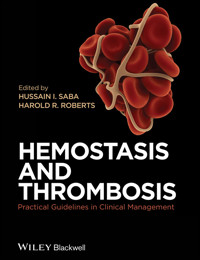
Hemostasis and Thrombosis E-Book
81,99 €
Mehr erfahren.
- Herausgeber: John Wiley & Sons
- Kategorie: Fachliteratur
- Sprache: Englisch
Hemostasis and Thrombosis: Practical Guidelines in Clinical Management
Edited by
Hussain I Saba MD, PhD
Professor of Medicine
Director of Hematology/Hemophilia/Hemostasis & Thrombosis Center
USF College of Medicine
Professor Emeritus
Department of Malignant Hematology
Moffitt Cancer Center and Research Institute
Tampa, FL, USA
Harold R Roberts MD
Emeritus Professor of Medicine and Pathology
Division of Hematology / Oncology
University of North Carolina
Chapel Hill, NC, USA
Hemostasis and thrombosis is a hugely important, changing and complex area that impacts many other medical specialties, affecting at least 10 million people in the United States alone. It is vital for physicians to recognize abnormalities of hemostasis and thrombosis and to be able to address these problems in their patients.
Hemostasis and Thrombosis: Practical Guidelines in Clinical Managementcovers all aspects of the practical
management of commonly encountered thrombotic and bleeding disorders, with emphasis on clinical diagnosis, treatment, and day-to-day management. The most clinically relevant material from the literature has been carefully compiled, along with:
- Discussions of new and upcoming diagnostic and therapeutic modalities
- Practical clinical advice for all those dealing with coagulation, hemostasis and thrombosis
Written by world leading specialists contributing their expertise in succinct text and focusing on the latest clinical guidance, Hemostasis and Thrombosis: Practical Guidelines in Clinical Management will benefit hematologists in training and in practice working in the fields of coagulation, hemostasis and thrombosis.
Titles of related interest
Practical Hemostasis and Thrombosis, 2nd Edition
Key, ISBN 9781405184601
Hemophilia and Hemostasis: A Case-Based Approach to Management, 2nd Edition
Ma, ISBN 9780470659762
Quality in Laboratory Hemostasis and Thrombosis, 2nd Edition
Kitchen, ISBN 9780470671191
Sie lesen das E-Book in den Legimi-Apps auf:
Seitenzahl: 588
Veröffentlichungsjahr: 2014
Ähnliche




















Table of Contents
Title page
Copyright page
Contributors
Preface
Acknowledgments
CHAPTER 1: Theories of Blood Coagulation: Basic Concepts and Recent Updates
Historical background
Cell-based model of coagulation
Clinical assays
Summary
CHAPTER 2: Vascular Endothelium, Influence on Hemostasis: Past and Present
Introduction
Function of endothelial cells
Antiplatelet factors
Anticoagulant factors
Fibrinolytic factors
Contribution of endothelium in hemostasis
Contribution of endothelium in thrombosis
Endothelial cell dysfunction: pathophysiology and biology
CHAPTER 3: Coagulation Testing: Basic and Advanced Clinical Laboratory Tests
Introduction
Blood sampling for diagnosis of hemostatic disorders
Screening for bleeding disorders
Specific blood coagulation factor analyses for diagnosis of bleeding disorders
Screening for thrombotic disorders
Synthetic peptide chromogenic substrates for hemostatic assays
Global assays
The fibrinolytic system
CHAPTER 4: Factor VIII Deficiency or Hemophilia A: Clinical Bleeding and Management
Introduction
Clinical manifestations of hemophilia A
Management of hemophilia A
CHAPTER 5: Factor IX Deficiency or Hemophilia B: Clinical Manifestations and Management
Introduction
Genetics and molecular biology of factor IX deficiency
Clinical manifestations of hemophilia B
Carrier detection and prenatal diagnosis
Laboratory findings
Differential diagnosis
Inhibitors to factor IX
Specific treatment of factor IX deficiency
Therapies in development
CHAPTER 6: Factor XI Deficiency or Hemophilia C
History
Factor XI structure and function
Congenital factor XI deficiency: inheritance pattern
Other congenital and acquired causes of factor XI deficiency
Clinical presentation
Laboratory diagnosis
Treatment
Factor XI and thrombosis
CHAPTER 7: Factor VIII and IX Inhibitors in Hemophilia
Introduction
Definition of inhibitors
Laboratory diagnosis of inhibitors in hemophilia
Kinetics of factor VIII inactivation
Factor VIII gene and inhibitor characteristics
Factor IX gene and inhibitor characteristics
Risk factors for inhibitor development
Management of patients with factor VIII and factor IX inhibitors
Immune tolerance induction for the eradication of inhibitors
Conclusion
CHAPTER 8: Treatment Options for Acquired Hemophilia
Introduction
Epidemiology
Etiology
Clinical presentation
Laboratory diagnosis
Treatment options for acquired hemophilia
Relapse
New approaches to the management of factor VIII autoantibodies
CHAPTER 9: Factor XII Deficiency or Hageman Factor Deficiency
Introduction
Factor XII structure
Regulation of factor XII expression
Role of factor XII in hemostasis and thrombosis
Role in inflammation
Summary
CHAPTER 10: Inherited Combined Factor Deficiency States
Introduction
Combined inherited factor V and factor VIII deficiency
Vitamin K-dependent clotting factor deficiency
Inheritance of multiple single-factor deficiencies
CHAPTER 11: Acute and Chronic Immune Thrombocytopenia: Biology, Diagnosis, and Management
Introduction
Primary ITP in adults
ITP in children
Treatment of ITP in emergency
ITP in pregnancy
CHAPTER 12: Disseminated Intravascular Coagulation: Diagnosis and Management
Introduction
Etiology
Pathophysiology
Diagnosis
Clinical consequences
Treatment modalities and evolving therapeutics
Evolving therapeutics
CHAPTER 13: Mechanisms of Fibrinolysis and Basic Principles of Management
Biochemical process of fibrinolysis and its regulation
Plasminogen and plasmin
Plasminogen activators
Modulators of fibrinolysis
Cell surface “fibrinolytic” receptors
Pathologic fibrinolysis
Thrombolytic therapy
CHAPTER 14: Post-thrombotic Syndrome
Definition and diagnosis of post-thrombotic syndrome
Incidence
Pathophysiology
Risk factors for post-thrombotic syndrome
Socioeconomic impact
Therapeutic management of post-thrombotic syndrome
CHAPTER 15: Von Willebrand Disease: Clinical Aspects and Practical Management
The von Willebrand factor and its laboratory measurement
Classification of von Willebrand disease
Clinical manifestations
Diagnosis of von Willebrand disease
Management of patients with von Willebrand disease
Conclusions
Acknowledgments
CHAPTER 16: Platelets in Hemostasis: Inherited and Acquired Qualitative Disorders
Thrombopoiesis
Platelet structure
Platelet physiology
Evaluation of platelet disorders
Disorders of platelets
Inherited platelet disorders
Acquired platelet disorders
Summary
CHAPTER 17: Contributions of Platelet Polyphosphate to Hemostasis and Thrombosis
Introduction
Platelet polyP
PolyP and the contact pathway of blood clotting
Acceleration of thrombin generation by polyP
Effects of polyP on fibrin clot structure and fibrinolysis
Platelet polyP and the role of factor XI in normal hemostasis
PolyP in thrombosis and inflammation
PolyP as a potential drug target
Conclusions and future directions
Acknowledgments
CHAPTER 18: Thrombotic Microangiopathy: Biology, Diagnosis, and Management
History and pathophysiology
Diagnosis
Treatment: thrombotic thrombocytopenic purpura
Treatment: hemolytic uremic syndrome
Thrombotic thrombocytopenic purpura in pregnancy
CHAPTER 19: Hemostasis and Aging
Introduction
Clinical definition of aging
Interactions of aging and hemostasis
Conclusions
CHAPTER 20: Hemostatic Problems in Chronic and Acute Liver Disease
Introduction
Laboratory tests of hemostasis in patients with liver disease
The concept of rebalanced hemostasis in liver disease
Bleeding in liver disease
Thrombosis in liver disease
Conclusion
CHAPTER 21: Cancer and Thrombosis
Introduction
Prevention of venous thromboembolism in cancer patients
Treatment of cancer-associated thrombosis
CHAPTER 22: An Update on Low-Molecular-Weight Heparins
Introduction
Available low-molecular-weight heparins
Approved clinical use of low-molecular-weight heparins
Generic low-molecular-weight heparins
Ultra-low-molecular-weight heparins
Synthetic heparin derivatives
Other related agents
Neutralization of low-molecular-weight heparin and fondaparinux
Contamination of low-molecular-weight heparin
Additional clinical investigation of low-molecular-weight heparin
Low-molecular-weight heparin in special patient populations
Low-molecular-weight heparins in elderly patients
Low-molecular-weight heparins in patients with inflammatory bowel disease
Monitoring of low-molecular-weight heparins: prophylactic and therapeutic dosages
Newer anticoagulants and low-molecular-weight heparin
Conclusion
Supplemental Images
Index
This edition first published 2014 © 2014 by John Wiley & Sons, Ltd.
Registered office: John Wiley & Sons, Ltd, The Atrium, Southern Gate, Chichester, West Sussex, PO19 8SQ, UK
Editorial offices: 9600 Garsington Road, Oxford, OX4 2DQ, UK
The Atrium, Southern Gate, Chichester, West Sussex, PO19 8SQ, UK
111 River Street, Hoboken, NJ 07030-5774, USA
For details of our global editorial offices, for customer services and for information about how to apply for permission to reuse the copyright material in this book please see our website at www.wiley.com/wiley-blackwell
The right of the author to be identified as the author of this work has been asserted in accordance with the UK Copyright, Designs and Patents Act 1988.
All rights reserved. No part of this publication may be reproduced, stored in a retrieval system, or transmitted, in any form or by any means, electronic, mechanical, photocopying, recording or otherwise, except as permitted by the UK Copyright, Designs and Patents Act 1988, without the prior permission of the publisher.
Designations used by companies to distinguish their products are often claimed as trademarks. All brand names and product names used in this book are trade names, service marks, trademarks or registered trademarks of their respective owners. The publisher is not associated with any product or vendor mentioned in this book. It is sold on the understanding that the publisher is not engaged in rendering professional services. If professional advice or other expert assistance is required, the services of a competent professional should be sought.
The contents of this work are intended to further general scientific research, understanding, and discussion only and are not intended and should not be relied upon as recommending or promoting a specific method, diagnosis, or treatment by health science practitioners for any particular patient. The publisher and the author make no representations or warranties with respect to the accuracy or completeness of the contents of this work and specifically disclaim all warranties, including without limitation any implied warranties of fitness for a particular purpose. In view of ongoing research, equipment modifications, changes in governmental regulations, and the constant flow of information relating to the use of medicines, equipment, and devices, the reader is urged to review and evaluate the information provided in the package insert or instructions for each medicine, equipment, or device for, among other things, any changes in the instructions or indication of usage and for added warnings and precautions. Readers should consult with a specialist where appropriate. The fact that an organization or Website is referred to in this work as a citation and/or a potential source of further information does not mean that the author or the publisher endorses the information the organization or Website may provide or recommendations it may make. Further, readers should be aware that Internet Websites listed in this work may have changed or disappeared between when this work was written and when it is read. No warranty may be created or extended by any promotional statements for this work. Neither the publisher nor the author shall be liable for any damages arising herefrom.
Library of Congress Cataloging-in-Publication Data
Hemostasis and thrombosis (Saba)
Hemostasis and thrombosis : practical guidelines in clinical management / edited by Hussain I. Saba, Harold R. Roberts.
p. ; cm.
Includes bibliographical references and index.
ISBN 978-0-470-67050-7 (pbk.)
I. Saba, Hussain I., editor of compilation. II. Roberts, H. R. (Harold Ross), editor of compilation. III. Title.
[DNLM: 1. Blood Coagulation Disorders–therapy. 2. Hemostatic Disorders–therapy. 3. Thrombosis–therapy. WH 322]
RC647.C55
616.1'57–dc23
2013042714
A catalogue record for this book is available from the British Library.
Wiley also publishes its books in a variety of electronic formats. Some content that appears in print may not be available in electronic books.
Cover image: iStock photo. File #16045826 © Eraxion
Cover design by Meaden Creative
Contributors
Louis Aledort MD, MACP
The Mary Weinfeld Professor of Clinical Research in Hemophilia
Division of Hematology and Medical Oncology
The Tisch Cancer Institute
Mount Sinai School of Medicine
New York, NY, USA
Noman Ashraf MD
Assistant Professor
Department of Hematology/Oncology
University of South Florida/James A. Haley VA Hospital
Tampa, FL, USA
Lodovico Balducci MD
Professor of Oncologic Sciences
H. Lee Moffit Cancer Center & Research Institute
Tampa, FL, USA
Charles E. Bane Jr. DVM
Department of Pathology, Microbiology, and Immunology
Vanderbilt University
Nashville, TN, USA
Margareta Blombäck MD, PhD
Professor Emeritus
Department of Molecular Medicine and Surgery
Division of Clinical Chemistry and Blood Coagulation
Karolinska Institutet
Stockholm, Sweden
Giancarlo Castaman MD
Consultant Hematologist
Department of Cell Therapy and Hematology
Hemophilia and Thrombosis Center
San Bortolo Hospital
Vicenza, Italy
Meera Chitlur MD
Associate Professor of Pediatrics and Director of Hemophilia/Hemostasis Clinic
Wayne State University
Children's Hospital of Michigan
Detroit, MI, USA
Samir Dalia MD
Fellow in Hematology and Oncology
H. Lee Moffitt Cancer & Research Center
University of South Florida
Tampa, FL, USA
Stephanie J. Davis, MD
Resident
Department of Internal Medicine
University of North Carolina Hospitals
Chapel Hill, NC, USA
Benjamin Djulbegovic MD, PhD
Distinguished Professor
University of South Florida & H. Lee Moffitt Cancer Center & Research Institute
Tampa, FL, USA
Nils Egberg MD, PhD
Associate Professor
Department of Molecular Medicine and Surgery
Division of Clinical Chemistry and Blood Coagulation
Karolinska Institutet
Stockholm, Sweden
Jawed Fareed PhD
Professor of Pathology & Pharmacology
Hemostasis & Thrombosis Research Laboratories
Loyola University Chicago
Maywood, IL, USA
Massimo Franchini, MD
Director
Department of Transfusion Medicine and Hematology
C. Poma Hospital
Mantova, Italy
David Gailani MD
Professor of Pathology, Microbiology and Immunology
Division of Hematology/Oncology
Vanderbilt University
Nashville, TN, USA
Jean-Philippe Galanaud MD
Assistant Professor of Vascular Medicine
Clinical Investigation Centre and Department of Internal Medicine
Montpellier University Hospital
Montpellier, France
David Green MD, PhD
Professor Emeritus of Medicine
Feinberg School of Medicine
Northwestern University
Chicago, IL, USA
Maureane Hoffman MD, PhD
Professor of Pathology
Duke University Medical Center
Durham, NC, USA
Debra Hoppensteadt PhD
Professor of Pathology and Pharmacology
Loyola University Medical Center
Maywood, IL, USA
Walter P. Jeske PhD
Professor of Thoracic and Cadiovascular Surgery
Loyola University Medical Center
Maywood, IL, USA
Susan R. Kahn MD, MSc, FRCPC
Professor of Medicine
Division of Internal Medicine
Lady Davis Institute, Jewish General Hospital
Department of Medicine
McGill University
Montreal, QC, Canada
Raj S. Kasthuri MD
Associate Professor
Department of Medicine
Division of Hematology/Oncology
University of North Carolina at Chapel Hill
Chapel Hill, NC, USA
Craig M. Kessler MD, MACP
Professor of Medicine and Pathology
Director, Division of Coagulation
Division of Hematology and Oncology
Lombardi Comprehensive Cancer Center
Georgetown University Medical Center
Washington, DC, USA
Asma Latif MD
Clinical Fellow
Division of Hematology and Medical Oncology
The Tisch Cancer Institute
Mount Sinai School of Medicine
New York, NY, USA
Agnes Y. Y. Lee MD, MSc, FRCPC
Medical Director, Thrombosis Program
Associate Professor of Medicine Division of Hematology
University of British Columbia
British Columbia Cancer Agency
Vancouver, BC, Canada
Ton Lisman PhD
Associate Professor
Section of Hepatobiliary Surgery and Liver Transplantation
Department of Surgery
University Medical Center Groningen
University of Groningen
Groningen, The Netherlands
Rustem I. Litvinov MD, PhD, DrSci
Senior Research Investigator
Department of Cell and Developmental Biology
University of Pennsylvania Perelman School of Medicine
Philadelphia, PA, USA
Jeanne M. Lusher MD
Distinguished Professor of Pediatrics and Marion I Barnhart Chair in Hemostasis Research
Wayne State University
Children's Hospital of Michigan
Detroit, MI, USA
Pier Mannuccio Mannucci MD
Scientific Director
IRCCS Cà Granda Foundation
Maggiore Policlinico Hospital
Milan, Italy
Paul E. Monahan MD
Associate Professor
Department of Pediatrics
Division of Hematology/Oncology
University of North Carolina at Chapel Hill
Chapel Hill, NC, USA
Dougald M. Monroe, PhD
Professor
University of North Carolina at Chapel Hill
School of Medicine
Division of Hematology/Oncology
Chapel Hill, NC, USA
James H. Morrissey PhD
Professor
Department of Biochemistry
University of Illinois at Urbana-Champaign
Urbana, IL, USA
Anne T. Neff MD
Associate Professor
Department of Medicine Division of Hematology/Oncology
Vanderbilt University
Nashville, TN, USA
Erica A. Peterson MD, MSc
Fellow, Thrombosis Program
Division of Hematology
University of British Columbia and Vancouver Coastal Health
Vancouver, BC, Canada
Robert J. Porte MD, PhD
Professor of Surgery
Section of Hepatobiliairy Surgery and Liver Transplantation
Department of Surgery
University Medical Center Groningen
University of Groningen
Groningen, The Netherlands
Francesco Rodeghiero MD
Director
Department of Cell Therapy and Hematology
San Bortolo Hospital
Vicenza, Italy
Sabiha R. Saba MD
Associate Professor
Department of Pathology and Cell Biology
USF College of Medicine
Tampa, FL, USA
Alvin H. Schmaier MD
Robert W Kellemeyer Professor of Hematology/Oncology
Division of Hematology and Oncology
Department of Medicine
Case Western Reserve University
Cleveland, OH, USA
Anjali A. Sharathkumar MD, MS
Assistant Professor
Director, Hemophilia and Thrombophilia Program
Northwestern University Feinberg School of Medicine
Chicago, IL, USA
Evi X. Stavrou MD
Assistant Professor
Division of Hematology and Oncology
Department of Medicine
Case Western Reserve University
Cleveland, OH, USA
Alberto Tosetto MD
Consultant Hematologist
Department of Cell Therapy and Hematology
Hemophilia and Thrombosis Center
San Bortolo Hospital
Vicenza, Italy
John W. Weisel PhD
Professor
Department of Cell & Developmental Biology
University of Pennsylvania PerelmanSchool of Medicine
Philadelphia, PA, USA
Preface
Since the discovery and early concept of hemostasis and thrombosis, there has been a progressive and remarkable change in the ongoing availability of knowledge in this area. The available knowledge has become extensive and dynamic. The information has led to the understanding of the formation of the steps involved in blood clotting reactions. Advances and understanding in the management of bleeding diseases has led to safe management of diseases such as hemophilia, von Willebrand Disease (VWD) and other hemophoid disorders; appropriate management of inhibitors has been achieved. Alterations in hemostasis and thrombosis have been investigated in the pathogenesis of liver disease as well as cancer. The important influence of platelet polyphosphates on hemostasis and thrombosis has also been explored. Significant advances have been made in the proper use of anticoagulation agents. Critical knowledge also led to advances in the area of disseminated intravascular coagulation (DIC) as well. This book presented here, Hemostasis and Thrombosis: Practical Guidelines in Clinical Management, represents the current understanding of important European and American academics on the subject.
Hussain I. Saba
Tampa, Florida, USA
Acknowledgments
First of all, I thank Almighty God who gave me the strength and wisdom to complete this book.
I wish to acknowledge my gratitude and sincere appreciation to Dr. Harold R. Roberts at UNC Chapel Hill, NC, my friend, advisor, and colleague, for his support in the completion of this book. Our long-term academic association has offered me the opportunity to learn not only some of the principles of scientific research but also, simultaneously, the value of critical thinking. I am also in debt to him for many conversations pertaining not only to science but also to the broad aspect of human life and the human condition. From these discussions it has become apparent, to me at least, that science cannot encompass the real world and part of reality lies also in the realm of metaphysics. The realization has, perhaps, influenced both of us more than we know. I would like to acknowledge Sabiha R. Saba, Hasan I. Zeya and John C. Herrion for their support of my pursuit of knowledge in the area of hematology and hematological research.
My sincere thanks to Genevieve Morelli for her kind support on this project. Her organizational skills and efforts in contacting, proofing, and coordinating the work of the authors, editors, and publisher of this work have been remarkable and appreciated.
I would also like to thank Rukhsana Azam and Monique Johnson for the help and support I received in the development and publication of this book.
Hussain I. Saba
Tampa, Florida, USA
CHAPTER 1
Theories of Blood Coagulation: Basic Concepts and Recent Updates
Dougald M. Monroe1 and Maureane Hoffman2
1 University of North Carolina at Chapel Hill, School of Medicine, Division of Hematology/Oncology, Chapel Hill, NC, USA
2 Duke University, Department of Pathology, Durham VA Medical Center, Durham, NC, USA
Historical background
Any mechanistic description of blood coagulation should account for a number of simple observations about the blood coagulation process. Blood that is circulating inside the body tends not to clot. However, blood that escapes from the vasculature does clot. This suggests that there is a material outside blood that is necessary for the clotting process. This point was emphasized by the study of Foà and Pellacani who showed that “tissue juice” (filtered saline extract of brain), when injected into the circulation of a rabbit, could cause intravascular thrombus formation [1]. This result was further clarified by Macfarlane and Biggs who showed that blood had all the factors needed to clot (intrinsic factors) but that this process was slow and that clotting was accelerated by the addition of tissue extracts (extrinsic factors) [2].
A clotted mass of blood was called a thrombus. When this thrombus was washed, a material, thrombin, could be eluted that would immediately clot fresh blood. It was further shown that there existed in blood an inactive agent, prothrombin, which could be converted to active thrombin. The agent responsible for this conversion was called thromboplastin (or thrombokinase). Attempts to discover the nature of thromboplastin led to much of our current mechanistic understanding of coagulation.
In 1875, Zahn made the important observation that bleeding from a blood vessel was blocked by a white (not red) thrombus [3]. Bizzozero and Hayem, working separately, studied a colorless corpuscle in blood called a thrombocyte or platelet [4,5]. This cell could be shown to be associated with fibrin and was postulated to be a major component of the white thrombus [4]. It was therefore suggested that there was a platelet thromboplastin that was critical for clotting (in modern usage, platelet procoagulant function is described as such and the term thromboplastin is used to mean the protein tissue factor [TF] which is the coagulation initiator in tissues).
It is known that in some families there is an inherited bleeding tendency (hemophilia). Eagle studied individuals with this disorder and showed that the platelet function in those patients was normal but that there was still a deficiency in prothrombin conversion [6]. This established that there was a plasma component required for clotting in addition to a requirement for platelets. Further studies in patients with different bleeding tendencies established that there are a number of elements that make up the plasma clotting component. Because these factors were discovered by multiple investigators in different parts of the world (and given a different name by each group), a systematic nomenclature was established using Roman numerals [7] (Table 1.1).
Table 1.1 Systematic nomenclature of clotting factors.
Factor*CommentsIFibrinogenIIProthrombinIIILipid, platelet surface, or Thromboplastin (not used)IVCalcium (not used)VVIActivated factor V (not used)VIIVIIIHemophilia A factorIXHemophilia B factorXXIHemophilia C factorXII*Activated forms of the factor are indicated by appending the letter “a” to the name.
While studies on deficient plasmas had established what the important components were, the mechanisms of action and the interactions between these components were not immediately clear. Early coagulation schemes started from the model of prothrombin being converted to thrombin and visualized all of the circulating coagulation proteins as zymogens that were converted during coagulation into active enzymes [8,9]. Once the proteins involved in coagulation were isolated and their structure and functions were studied, it became clear that coagulation function was organized around a mechanism of an active enzyme being paired with a cofactor [10]. In the absence of the cofactor, the enzyme has limited activity; typically a cofactor will accelerate the activity of a coagulation enzyme as much as 1000-fold [11]. Thus, each step in coagulation is regulated at two levels: 1) activation of the zymogen to an active enzyme and 2) the presence of (and sometimes activation of) the requisite cofactor. Since some cofactors, such as thromboplastin (tissue factor) and thrombomodulin, are integral membrane proteins, the functions of these complexes can be limited to cells and tissues that express the protein (Table 1.2).
Table 1.2 Composition and physiologic location of coagulation complexes.
The coagulation factors show only weak activity in solution, and binding to an appropriate cell surface accelerates their activity up to 1000-fold. This surface binding is dependent on calcium and, therefore, blood can be anticoagulated by the addition of chelating agents such as citrate or EDTA that bind calcium [12]. This chelation does not alter protein properties and can be readily reversed by reintroduction of calcium in excess of the chelating agents. Clinical assays use plasma prepared from blood chelated with citrate to analyze clotting factor function by addition of an appropriate activator and calcium and measuring the time to clot formation.
Localization of the coagulation reactions to a desired surface represents a powerful mechanism for limiting coagulation to surfaces at the site of injury. One component of coagulation factor binding to cells is the phospholipid composition of the outer leaflet of the cell membrane. Phospholipids with acidic head groups, phosphatidic acid (PA) and phosphatidylserine (PS), promote binding of coagulation factors [13]. In addition, phosphatidylserine acts as an allosteric regulator of function and accounts for the ability of PS-containing membranes to enhance coagulation factor activity [14]. While generic phospholipid surfaces can support coagulation reactions (and are used in clinical assays), it is clear that cells, in addition to having appropriate lipid surfaces, have regulatory elements that control the coagulation reactions [15,16].
Functional platelets are required as a surface for hemostasis, and patients with low platelet counts (thrombocytopenia) or platelet function defects (thrombocytopathia) such as Bernard–Soulier syndrome or Glanzmann's thrombasthenia have a bleeding tendency. Circulating platelets, like essentially all cells in blood as well as endothelial cells, have outer membranes with low levels of acidic phospholipids. When platelets adhere at a site of injury the composition of their membrane changes such that acidic phospholipids, including phosphatidylserine, are now expressed on the outer surface of the membranes [17]. This change in surface lipid composition, along with changes in platelet surface proteins and release of procoagulant factors from platelet granules, provides a surface that supports robust coagulation.
Cell-based model of coagulation
In a mild injury, the coagulation process starts with hemostatic platelet aggregates which can be found at the ends of transected blood vessels [18]. Early in the process, these aggregates consist of activated (degranulated) platelets packed together. In time, small amounts of fibrin are deposited between the platelets. At longer times more fibrin becomes associated with the platelet masses. This fibrin extends into the tissues and provides stability to the area of injury [18,19].
In hemophilia A or B, the process is somewhat different [20]. Early in the process, the platelets are loosely associated but are not activated. Even at longer times platelets are only poorly activated and fibrin is not seen between the platelets. The result is that the platelet mass is not stabilized. Whereas normal individuals show extensive fibrin extending into the tissues, in hemophilia a thin layer of fibrin can be seen only at the margins of the wound area and does not extend significantly into the tissues [19,20].
These observations of hemostasis suggest that coagulation can be conceived of as a series of overlapping steps: initiation; amplification; and propagation.
Initiation
Blood coagulation is initiated by an injury to a blood vessel; this injury could be a denudement of some of the endothelium or a break in the vessel. In either case, two processes begin immediately. One process is that platelets quickly adhere to the site of injury. This adherence requires von Willebrand factor which binds to both collagen in the exposed subendothelium and the abundant platelet protein glycoprotein Ib. This adherence brings platelets into contact with collagen which, through the platelet collagen receptor glycoprotein VI, activates platelets [21]. This activation causes changes in platelet surface receptors and leads the platelets to degranulate. Degranulation releases a number of stored proteins including a partially activated form of factor V [22].
The second process that begins with a break in the vasculature is that plasma concentrations of coagulation proteins are brought into the area of injury and presented to extravascular cells. Cells surrounding the vasculature tend to be rich in the protein called tissue factor (thromboplastin); the high concentration of tissue factor around blood vessels has been described as contributing to a hemostatic envelope [23]. At least some of the tissue factor already has factor VII bound [24] and factor VII binds tightly to any free tissue factor. On cells this tissue factor-bound factor VII is rapidly converted to factor VIIa. This conversion can be via cellular proteases, by autoactivation by other factor VIIa molecules, or by factor Xa generated by factor VIIa–tissue factor complexes [25,26].
These factor VIIa–tissue factor complexes catalyze two reactions: activation of factor X and activation of factor IX [27]. The factor Xa that is formed can complex with the partially active factor V released from platelets; this factor Xa–Va complex converts at least some prothrombin to thrombin. Formation of factor Xa also starts the process of regulating coagulation. The inhibitor TFPI (tissue factor pathway inhibitor) can bind to factor Xa and factor VIIa to turn off the factor VIIa–tissue factor complex [28,29]. This inhibition requires factor Xa so that the factor VIIa–tissue factor complex is not turned off until some factor Xa has been formed. Factor Xa in a complex with factor Va is protected from the abundant plasma inhibitor antithrombin, but once released from the complex, factor Xa inhibition by antithrombin is rapid with an expected half-life of about 4 minutes.
Amplification
The initial thrombin formed during the initiation phase is probably not sufficient to provide for robust fibrin formation and hemostasis. However, the thrombin formed on the initiating cell can transfer to platelets where the initial hemostatic signal is amplified by activating platelets and cofactors. On the platelet surface, thrombin is relatively protected from inhibition by antithrombin (in plasma, thrombin has a half-life of just over 1 minute). Thrombin can bind to at least two receptors on the platelet surface: glycoprotein Ib and protease-activated receptor (PAR)-1 [30,31]. Thrombin binding to and cleavage of PAR-1 transmits signals that lead to platelet activation (outside-in signals) [32]. This activation results in changes in the surface lipid content with increased exposure on the outer leaflet of acid phospholipids [17]. Activation also leads to inside-out signals that alter the conformation and function of some surface proteins including the fibrin binding protein complex of glycoproteins IIb and IIIa [33]. Activation also results in release of internal stores of a number of components from alpha granules and dense granules. The released components include partially active factor V, fibrinogen, ADP which acts as signal for further platelet activation, and polyphosphates [34,35].
Thrombin bound to glycoprotein Ib can cleave PAR-1 and PAR-4 [36]. This thrombin can also cleave factor VIII, releasing factor VIIIa onto the platelet surface. Factor VIII circulates in a complex with von Willebrand factor [37]; since both thrombin and von Willebrand factor are bound to glycoprotein Ib, it suggests that factor VIII may be presented to thrombin in such a way as to allow for rapid activation. Thrombin on the platelet surface can also fully activate platelet surface factor V, a reaction that is enhanced by platelet-released polyphosphates [35]. Either the partially active factor V released from platelets or plasma-derived factor V can be activated by thrombin. Thrombin activation of platelets is augmented in platelets bound directly to collagen (as opposed to platelets aggregated onto other platelets or onto fibrin) [38]. These platelets, sometimes called COAT platelets, have higher levels of acidic phospholipids as well as significantly increased binding of factors X, IX, VIII, and V [17,39].
The amplification process leads to platelets which are primed to varying degrees for thrombin generation. These platelets have an appropriate lipid surface with activated receptors and activated cofactors bound to the surface.
Propagation
Factor IXa formed during the Initiation phase binds to the platelet surface. Factor IXa is available even in the presence of plasma levels of antithrombin since the half-life of activated factor IXa is about an hour in plasma. Factor IXa can bind either to platelet surface factor VIIIa [40] formed in the amplification phase or to a platelet receptor and be transferred to factor VIIIa [41]. The factor IXa/VIIIa complex activates factor X on the platelet surface. Factor Xa can then move quickly into a complex with factor Va. The resulting factor Xa/Va complex provides the rapid burst of thrombin critical to giving good fibrin structure and providing for a stable clot.
Formation of factor Xa on the platelet surface plays a critical role in regulating the clotting process [42]. The rate of factor X activation determines the rate and amount of thrombin generation. Deficiencies in platelet surface factor Xa generation caused by a lack of or reduction in factor VIII or IX levels (hemophilia A or B, respectively) result in reduced or absent factor Xa and thrombin generation. Therapies to treat hemophilia involve restoring a robust rate of platelet surface factor Xa generation [43]. Factor Xa generation appears to be regulated in part by release of TFPI from platelets, and agents that block TFPI are under consideration as possible therapeutic agents in hemophilia [44].
Thrombin generation on platelets initiates a positive feedback loop through factor XI. Factor XI can be activated on platelets by thrombin [45,46]. This thrombin activation is enhanced by polyphosphates released from platelets [35]. The platelet surface factor XIa can activate factor IX, leading to enhanced factor Xa and thrombin generation. The amount of enhancement from factor XI shows wide variations on platelets from different individuals and may account for some of the variable bleeding associated with factor XI deficiency (hemophilia C) [45].
In some cases, particularly in cases of intravascular injury where there is substantial blood flow across the injured surface, there may be a contribution to the propagation phase from circulating tissue factor [47]. While healthy individuals have little or no circulating tissue factor [48], in some pathologic conditions, such as pancreatic cancer, there are measurable levels of circulating tissue factor in the form of microparticles [49]. If the microparticles also have surface molecules that can associate with platelets or other cells at the site of injury, then tissue factor on these microparticles may contribute to factor X activation and thrombin generation at a site of injury [50].
Very small amounts of thrombin (less than 1 nM or 0.1 U/mL) are required to promote fibrin formation, and much of the thrombin generation occurs after a clot has formed [51]. The thrombin formed binds to fibrin where it can remain active for many hours; the binding of thrombin to fibrin resulted in fibrin being described as antithrombin I [52]. Furthermore, platelet factor Xa/Va complexes appear to be active long after clot formation (hours) and can rapidly generate thrombin when presented with fresh plasma as a substrate [51]. It is likely that the persistence of fibrin-bound thrombin and the prolonged ability to generate thrombin are protective mechanisms to stabilize clots. Disruption of a clot would mean that thrombin is immediately available to cleave fibrinogen and refresh the fibrin clot. Also, new prothrombin present in plasma could be activated to further replenish thrombin stores and provide for clot stability.
Control and localization
Multiple mechanisms exist to prevent a clot from spreading into healthy vasculature. Flow is an important control mechanism and reduced flow is associated with venous thrombosis. Flow removes procoagulant proteins from the area of active thrombin generation, reducing their concentrations below the threshold required to maintain coagulation. Once thrombin, factor Xa, and other procoagulant proteases are removed from the relatively protected area of the clot, they are subject to inhibition by antithrombin, TFPI, and other plasma inhibitors. This inhibition is enhanced by the carbohydrate components of proteoglycans found on endothelial cells [53]. Also, endothelial cells have surface-associated TFPI that promotes rapid inactivation of factor Xa [54].
Platelet activation also represents a control mechanism. Thrombin cleavage of PARs is important for platelet activation, but the final activated state is dependent on signaling through other platelet receptors [55]. Platelets bound to collagen (and that thus signal through glycoprotein IV) have very high levels of procoagulant factors and are associated with enhanced thrombin generation and fibrin formation. Other platelets appear to have less procoagulant activity and have a more structural role in stabilizing the fibrin clot [56]. It appears that growth of a clot may in part be constrained by structural platelets that do not strongly support thrombin generation and, therefore, do not strongly support the positive feedback loop that generates the burst of thrombin.
Platelets support a thrombin-driven positive feedback loop that activates additional platelets, promotes thrombin generation, and leads to fibrin formation. In contrast, thrombin on healthy endothelial cells leads to a negative feedback loop that shuts off further thrombin generation. Endothelial cells express the thrombin-binding protein, thrombomodulin [57]. Thrombin bound to thrombomodulin can no longer cleave fibrinogen; however, thrombin bound to thrombomodulin gains the ability to activate protein C [58]. Activation of protein C is enhanced by another endothelial cell protein called EPCR (endothelial cell protein C receptor) [59].
Activated protein C cleaves and inactivates both factor VIIIa and factor Va in a reaction that is enhanced somewhat by protein S [60]. This inactivation is more efficient on the endothelial cell surface than on platelets and suggests that the protein C pathway localizes thrombin generation rather than strictly shutting it down [61]. One of the sites on factor V that is cleaved by activated protein C is altered by the common factor V Leiden mutation [62]; this mutation is associated with venous thrombosis, suggesting that the negative feedback loop on healthy endothelium is a critical component of maintaining vascular patency.
Clinical assays
Coagulation function is generally measured in clinical assays that incorporate the elements of either the Initiation phase (prothrombin time or PT) or the propagation phase (activated partial thromboplastin time or aPTT). These assays are done on platelet-poor plasma so that the platelet contributions to clotting are not studied. The normal controls of these assays tend to be very reproducible, and the cell-free plasma can be frozen and stored. Other assays integrate the initiation and propagation phases and may include platelet function, such as thrombin generation (thrombogram or calibrated automated thrombography (CAT) [63] or whole blood clotting (thromboelastogram) [64].
The PT assay is done by adding very high levels of thromboplastin (TF) to plasma. Factor VII binds to this TF and is activated. The factor VIIa/TF complex activates factor X and the factor Xa/Va complex generates thrombin which clots the plasma. The endpoint of the assay is the time required for clot formation. Because thromboplastin is generally external to the blood, the assay is sometimes referred to as assaying the extrinsic pathway.
The aPTT assay is done by adding, in the absence of calcium, a negatively charged activator to plasma. The negative charge assembles a complex of high-molecular-weight kininogen and factor XII that converts all of the factor XI in the sample to factor XIa [65]. When recalcified, the factor XIa activates factor IXa which forms a complex with factor VIIIa. This factor IXa/VIIIa complex activates factor Xa which, in complex with factor Va, cleaves prothrombin to thrombin and clots the plasma. The endpoint of the assay is the time required for clot formation. Since all of the protein components are found in plasma, this assay is sometimes referred to as assaying the intrinsic pathway.
Since thrombin generation in the aPTT requires factors IX and VIII, it is used to monitor factor levels during therapy in hemophilia. The assay is very sensitive to the levels of the contact factors, factors XI and XII. However, patients with factor XI deficiency have a variable bleeding diathesis that is not strictly correlated with plasma levels [66]. This may be a function of how factor XI interacts with platelets and would not be assayed by the aPTT. Factor XII deficiency is not associated with any bleeding, nor is the deficiency protective of thrombosis in humans [67]. Bacterial polyphosphates are able to promote factor XII activation and may play a role in coagulation associated with the innate immune response; platelet polyphosphates are shorter than bacterial polyphosphates and do not promote activation of factor XII [35].
Summary
This overview provides a conceptual model of hemostasis as being initiated by injury leading to exposure of collagen and thromboplastin. Platelets adhere and are activated. Coagulation factors are activated, assemble on the platelet surface, and give robust thrombin generation leading to stable clot formation and clot retraction. Subsequent chapters will detail mechanisms of the processes involved in promoting hemostasis. Many of the same players (thromboplastin, platelets, coagulation factors), albeit with slightly different roles, are also involved in pathological coagulation leading to thrombosis or bleeding. Dysregulation resulting in thrombosis and other coagulation abnormalities will also be discussed in subsequent chapters.
References
1. Foà P, Pellacani P. Sul fermento übrinogeno e sullc azioni tossiclie esercitate da aleuni organi freschi. Arch per le sc med 1883;VII:113–65.
2. Macfarlane RG, Biggs R. A thrombin generation test; the application in haemophilia and thrombocytopenia. J Clin Pathol 1953;6:3–8.
3. Zahn F. Untersuchungen über Thrombose: Bildung der Thromben. Virchows Arch Pathol Anat Physiol Klin Med 1875;62:81–124.
4. Bizzozero J. Ueber einen neuen formbestandtheil des blutes und dessen rolle bei der thrombose und der blutgerinnung. Virchows Arch Pathol Anat Physiol Klin Med 1882;90:261–332.
5. Hayem G. Sur le mécanisme de l'arrêt des hémorrhagies. C R Acad Sci 1882;95:18–21.
6. Eagle H. Studies on blood coagulation, IV: the nature of the clotting deficiency in hemophilia. J Gen Physiol 1935;18:813–19.
7. Jackson CM. Recommended nomenclature for blood clotting-zymogens and zymogen activation products of the international committee on thrombosis and hemostasis. Thromb Haemost 1977;38:567–77.
8. Davie E, Ratnoff O. Waterfall sequence for intrinsic blood clotting. Science 1964;145:1310–12.
9. Macfarlane R. An enzyme cascade in the blood coagulation mechanism, and its function as a biochemical amplifier. Nature 1964;202:498–9.
10. Jobin F, Esnouf MP. Studies on the formation of the prothrombin-converting complex. Biochem J 1967;102:666–74.
11. Rosing J, Tans G, Govers-Riemslag JW, et al. The role of phospholipids and factor Va in the prothrombinase complex. J Biol Chem 1980;255:274–83.
12. Pekelharing C. Untersuchen über des Fibrinferment. Amsterdam: J. Müller, 1892.
13. Bull RK, Jevons S, Barton PG. Complexes of prothrombin with calcium ions and phospholipids. J Biol Chem 1972;247:2747–54.
14. Majumder R, Weinreb G, Lentz BR. Efficient thrombin generation requires molecular phosphatidylserine, not a membrane surface. Biochemistry 2005;44:16998–7006.
15. Wood JP, Silveira JR, Maille NM, et al. Prothrombin activation on the activated platelet surface optimizes expression of procoagulant activity. Blood 2011;117:1710–18.
16. Haynes LM, Bouchard BA, Tracy PB, Mann KG. Prothrombin activation by platelet-associated prothrombinase proceeds through the prethrombin-2 pathway via a concerted mechanism. J Biol Chem 2012;287:38647–55.
17. Bevers EM, Comfurius P, Zwaal RF. The nature of the binding for prothrombinase at the platelet surface as revealed by lipolytic enzymes. Eur J Biochem 1982;122:81–5.
18. Wester J, Sixma JJ, Geuze JJ, Heijnen HF. Morphology of the hemostatic plug in human skin wounds: transformation of the plug. Lab Invest 1979;41:182–92.
19. Monroe DM, Hoffman M. The clotting system: a major player in wound healing. Haemophilia 2012;18 Suppl 5:11–16.
20. Sixma JJ, Van den Berg A. The haemostatic plug in haemophilia A: a morphological study of haemostatic plug formation in bleeding time skin wounds of patients with severe haemophilia A. Br J Haematol 1984;58:741–53.
21. Moroi M, Jung SM, Okuma M, Shinmyozu K. A patient with platelets deficient in glycoprotein VI that lack both collagen-induced aggregation and adhesion. J Clin Invest 1989;84:1440–5.
22. Monković DD, Tracy PB. Functional characterization of human platelet-released factor V and its activation by factor Xa and thrombin. J Biol Chem 1990;265:17132–40.
23. Drake TA, Morrissey JH, Edgington TS. Selective cellular expression of tissue factor in human tissues: implications for disorders of hemostasis and thrombosis. Am J Pathol 1989;134:1087–97.
24. Hoffman M, Colina CM, McDonald AG, et al. Tissue factor around dermal vessels has bound factor VII in the absence of injury. J Thromb Haemost 2007;5:1403–8.
25. Bajaj SP, Rapaport SI, Brown SF. Isolation and characterization of human factor VII: activation of factor VII by factor Xa. J Biol Chem 1981;256:253–9.
26. Nakagaki T, Foster DC, Berkner KL, Kisiel W. Initiation of the extrinsic pathway of blood coagulation: evidence for the tissue factor dependent autoactivation of human coagulation factor VII. Biochemistry 1991;30:10819–24.
27. Østerud B, Rapaport SI. Activation of 125I-factor IX and 125I-factor X: effect of tissue factor and factor VII, factor Xa and thrombin. Scand J Haematol 1980;24:213–26.
28. Broze GJ Jr, Warren LA, Novotny WF, et al. The lipoprotein-associated coagulation inhibitor that inhibits the factor VII-tissue factor complex also inhibits factor Xa: insight into its possible mechanism of action. Blood 1988;71:335–43.
29. Rao LV, Rapaport SI. Studies of a mechanism inhibiting the initiation of the extrinsic pathway of coagulation. Blood 1987;69:645–51.
30. Jamieson GA, Okumura T, Hasitz M. Structure and function of platelet glycocalicin. Thromb Haemost 1980;42:1673–8.
31. Vu TK, Hung DT, Wheaton VI, Coughlin SR. Molecular cloning of a functional thrombin receptor reveals a novel proteolytic mechanism of receptor activation. Cell 1991;64:1057–68.
32. Kahn ML, Nakanishi-Matsui M, Shapiro MJ, et al. Protease-activated receptors 1 and 4 mediate activation of human platelets by thrombin. J Clin Invest 1999;103:879–87.
33. Coller BS, Peerschke EI, Scudder LE, Sullivan CA. A murine monoclonal antibody that completely blocks the binding of fibrinogen to platelets produces a thrombasthenic-like state in normal platelets and binds to glycoproteins IIb and/or IIIa. J Clin Invest 1983;72:325–38.
34. Maynard DM, Heijnen HFG, Horne MK, et al. Proteomic analysis of platelet alpha-granules using mass spectrometry. J Thromb Haemost 2007;5:1945–55.
35. Morrissey JH, Choi SH, Smith SA. Polyphosphate: an ancient molecule that links platelets, coagulation, and inflammation. Blood 2012;119:5972–9.
36. De Candia E, Hall SW, Rutella S, et al. Binding of thrombin to glycoprotein Ib accelerates the hydrolysis of PAR-1 on intact platelets. J Biol Chem 2001;276:4692–8.
37. Owen WG, Wagner RH. Antihemophilic factor: separation of an active fragment following dissociation by salts or detergents. Thromb Diath Haemorrh 1972;27:502–15.
38. Heemskerk JW, Vuist WM, Feijge MA, et al. Collagen but not fibrinogen surfaces induce bleb formation, exposure of phosphatidylserine, and procoagulant activity of adherent platelets: evidence for regulation by protein tyrosine kinase-dependent Ca2+ responses. Blood 1997;90:2615–25.
39. Alberio L, Safa O, Clemetson KJ, et al. Surface expression and functional characterization of alpha-granule factor V in human platelets: effects of ionophore A23187, thrombin, collagen, and convulxin. Blood 2000;95:1694–702.
40. Van Dieijen G, Van Rijn JL, Govers-Riemslag JW, et al. Assembly of the intrinsic factor X activating complex–interactions between factor IXa, factor VIIIa and phospholipid. Thromb Haemost 1985;53:396–400.
41. Ahmad SS, Rawala-Sheikh R, Walsh PN. Comparative interactions of factor IX and factor IXa with human platelets. J Biol Chem 1989;264:3244–51.
42. Hoffman M, Monroe DM, Oliver JA, Roberts HR. Factors IXa and Xa play distinct roles in tissue factor-dependent initiation of coagulation. Blood 1995;86:1794–801.
43. Monroe DM, Hoffman M, Oliver JA, Roberts HR. A possible mechanism of action of activated factor VII independent of tissue factor. Blood Coagul Fibrinolysis 1998;9 (suppl 1):S15–20.
44. Maroney SA, Cooley BC, Ferrel JP, et al. Absence of hematopoietic tissue factor pathway inhibitor mitigates bleeding in mice with hemophilia. Proc Natl Acad Sci USA 2012;109:3927–31.
45. Oliver JA, Monroe DM, Roberts HR, Hoffman M. Thrombin activates factor XI on activated platelets in the absence of factor XII. Arterioscler Thromb Vasc Biol 1999;19:170–7.
46. Kravtsov DV, Matafonov A, Tucker EI, et al. Factor XI contributes to thrombin generation in the absence of factor XII. Blood 2009;114:452–8.
47. Giesen PL, Rauch U, Bohrmann B, et al. Blood-borne tissue factor: another view of thrombosis. Proc Natl Acad Sci USA 1999;96:2311–15.
48. Butenas S, Bouchard BA, Brummel-Ziedins KE, et al. Tissue factor activity in whole blood. Blood 2005;105:2764–70.
49. Delluc A, Rousseau A, Delluc C, et al. Venous thromboembolism in patients with pancreatic cancer: implications of circulating tissue factor. Blood Coagul Fibrinolysis 2011;22:295–300.
50. Falati S, Liu Q, Gross P, et al. Accumulation of tissue factor into developing thrombi in vivo is dependent upon microparticle P-selectin glycoprotein ligand 1 and platelet P-selectin. J Exp Med 2003;197:1585–98.
51. Orfeo T, Brummel-Ziedins KE, Gissel M, et al. The nature of the stable blood clot procoagulant activities. J Biol Chem 2008;283:9776–86.
52. Seegers WH, Johnson JF, Fell C. An antithrombin reaction to prothrombin activation. Am J Physiol 1954;176:97–103.
53. De Agostini AI, Watkins SC, Slayter HS, et al. Localization of anticoagulantly active heparan sulfate proteoglycans in vascular endothelium: antithrombin binding on cultured endothelial cells and perfused rat aorta. J Cell Biol 1990;111:1293–304.
54. Zhang J, Piro O, Lu L, Broze GJ Jr. Glycosyl phosphatidylinositol anchorage of tissue factor pathway inhibitor. Circulation 2003;108:623–7.
55. Heemskerk JW, Siljander P, Vuist WM, et al. Function of glycoprotein VI and integrin alpha2beta1 in the procoagulant response of single, collagen-adherent platelets. Thromb Haemost 1999;81:782–92.
56. Heemskerk JWM, Mattheij NJA, Cosemans JMEM. Platelet-based coagulation: different populations, different functions. J Thromb Haemost 2013;11:2–16.
57. Esmon NL, Owen WG, Esmon CT. Isolation of a membrane-bound cofactor for thrombin-catalyzed activation of protein C. J Biol Chem 1982;257:859–64.
58. Esmon CT, Esmon NL, Harris KW. Complex formation between thrombin and thrombomodulin inhibits both thrombin-catalyzed fibrin formation and factor V activation. J Biol Chem 1982;257:7944–7.
59. Fukudome K, Esmon CT. Identification, cloning, and regulation of a novel endothelial cell protein C/activated protein C receptor. J Biol Chem 1994;269:26486–91.
60. Dahlbäck B, Villoutreix BO. Molecular recognition in the protein C anticoagulant pathway. J Thromb Haemost 2003;1:1525–34.
61. Oliver JA, Monroe DM, Church FC, et al. Activated protein C cleaves factor Va more efficiently on endothelium than on platelet surfaces. Blood 2002;100:539–46.
62. Bertina RM, Koeleman BP, Koster T, et al. Mutation in blood coagulation factor V associated with resistance to activated protein C. Nature 1994;369:64–7.
63. Hemker HC, Wielders S, Kessels H, Béguin S. Continuous registration of thrombin generation in plasma, its use for the determination of the thrombin potential. Thromb Haemost 1993;70:617–24.
64. Hartert H. Blutgerinnungsstudien mit der Thrombelastographie, einem neuen Untersuchungsverfahren. Klin Wochenschr 1948;26:577–83.
65. Bouma BN, Griffin JH. Human blood coagulation factor XI: purification, properties, and mechanism of activation by activated factor XII. J Biol Chem 1977;252:6432–7.
66. Seligsohn U. Factor XI in haemostasis and thrombosis: past, present and future. Thromb Haemost 2007;98:84–9.
67. Endler G, Marsik C, Jilma B, et al. Evidence of a U-shaped association between factor XII activity and overall survival. J Thromb Haemost 2007;5:1143–8.
CHAPTER 2
Vascular Endothelium, Influence on Hemostasis: Past and Present
Hussain I. Saba1 and Sabiha R. Saba2
1 Hematology/Hemophilia/Hemostasis & Thrombosis Center, USF College of Medicine, Tampa, FL, USA
2 Department of Pathology and Cell Biology, USF College of Medicine, Tampa, FL, USA
Introduction
William Harvey was the first scientist to offer a new radical concept of blood circulation, in the year 1628 [1]. It led to immediate controversy in the medical community at that time, as it contradicted the usually unquestioned teaching of the Greek philosopher, Galen, regarding the theory and concept of blood movement. Galen's theory was based on the ideas that blood was formed in the liver, absorbed by the body, and flowed through the septum of the heart (dividing walls). Although Harvey's contradicting concept was based upon human and animal experiments, his findings were ridiculed and not well accepted. Later in the year 1661, Marcello Malpighi published his discovery of capillaries which then gave unwavering, factual evidence to support Harvey's concept of blood and circulation [2]. By the year 1800, Von Recklinghausen established that blood vessels were not merely a tunnel-like membrane structure similar in shape of cellophane tube, but had primary and important function of maintaining the vascular permeability [3]. Heidenhain (1891) introduced the concept that endothelium possessed an active secretory system [4]. In 1959, Gowans described the interaction between lymphocytes and endothelium at postcapillary venules. By 1959, electron microscopic studies by Palade [5] and the physical studies by Gowans [6] led to the current concept that endothelium is a dynamic heterogeneous disseminated organ which possesses vital secretory, metabolic, and immunologic activities.
In adult human subjects, the total endothelial surface consists of approximately 1–6 × 10¹³ cells, weighing about 1 kg and covering an area of approximately 4–7 × 10³ square meters. Endothelial cells line the blood vessel of every inner human organ, are responsible for regulation of the flow of nutrients, and possess diverse biologically active molecules such as hormones, growth factors, coagulant and anticoagulant proteins, lipid transporting particles (LDL), and metabolites such as nitrous oxide. Protective and receptive endothelium also governs cell and cell matrix interaction. Endothelial cells that make up the lining of the inner surface of blood vessels wall are called vascular endothelial cells. These cells line the entire circulatory system from the heart to the smallest capillaries, and have very distinct and unique functions that are of importance to the vascular biology. Their functions include fluid filtration, such as that seen in the glomeri of the kidney. They maintain vascular tone and are, therefore, involved in the maintenance of blood pressure. The cells are also involved in mediation of hemostatic responses and trafficking of the neutrophil in and out of the lumen of the blood vessel to the tissue space. Endothelial cells are involved in many aspects of vascular biology. These are biologically of paramount importance. Their role has included the development of early and late stages of atherosclerosis. One of the very important functions of endothelial cells is their role in the maintenance of a non-thrombogenic surface apparently due to the presence of heparan sulfate, which works as a cofactor for activating antithrombin, a protease that inactivates several factors in the clotting cascades.
Function of endothelial cells
Endothelial cells are involved in many aspects of vascular biology, and play a role in the development of atherosclerosis. They also function as a selective barrier between blood cells and surrounding tissue, controlling the passage of material and the transit of white cells in and out of the bloodstream. Excessive and prolonged increase in the permeability of the endothelial cells monolayer such as that seen in cases of chronic inflammatory process may lead to accumulation of inflammatory fluid in the tissue space. Endothelial cells are involved in maintaining a nonthrombogenic and thromboresistant surface. This physiologic activity inhibits platelets and other cells from sticking to endothelium and is related to the presence of heparan sulfate on the endothelial surface, which works as a cofactor for activating antithrombin, a protease that inactivates several factors responsible for activating the clotting cascades. Vascular endothelium, because of its strategic location interfering between tissue and blood, is in an ideal situation to modulate and influence functions of various organs. Endothelial cell function includes transport of nutrients and solutes across the endothelium, maintenance of vascular tone and maintenance of the thromboresistant surface, and the activation and inactivation of various vasoactive hormones. Under normal conditions the endothelial cells provide a nonthrombogenic surface which does not allow platelets and other blood cells to adhere and to stick to the surface of endothelium. This nonthrombogenic nature of endothelium is unique for the flow of the blood as well as for the flow of blood cells.
The mechanism of the thromboresistance of endothelium has not been fully understood but is considered to be related to the interaction of anticoagulant, fibrinolytic, and antiplatelet factors. The endothelium confers strong defense mechanisms against these insults by expressing a series of molecules. With successful culture of the endothelial cells, a myriad of molecules have been identified and characterized. The accepted view at this stage is that the main function of endothelial cells is to produce vasoprotective and thromboresistant molecules. Some molecules are constitutively expressed, while others are produced and respond to stimuli. Some are expressed on the interior endothelial surface and others are released. Molecules physiologically important in suppressing platelet activation and platelet vessel wall interaction include prostacyclin (PGI2), nitric oxide (NO), and ecto-adenosine diphosphatase (ADPase). Molecules involved in controlling coagulation include the surface-expressed thrombomodulin (a heparin-like molecule), von Willebrand factor (VWF), protein S, and tissue factor pathway inhibitor (TFPI). Endothelial cells synthesize and secrete tissue plasminogen activator (TPA) and urokinase-type plasminogen activator to promote fibrinolysis. To control TPA activity, the endothelium produces plasminogen activator inhibitor-1 (PAI-1), which serves to neutralize the TPA activity.
Antiplatelet factors
Prostacyclin
Prostacyclin (PGI2) is a multifunctional molecule it is an important inhibitor of platelet activation, aggregation, and secretion [7–10]. It induces vascular smooth muscle relaxation and blocks monocyte endothelial cell interaction. It also reduces lipid accumulation in smooth muscles. Its platelet inhibitory activity is mediated via guanosine nucleotide-binding receptor with subsequent activation of adenylate cyclase and elevation of platelet adenosine monophosphate (cAMP).
cAMP levels will result in inhibition of platelet activation. Its actions on other cells are thought to be mediated by a similar receptor-mediated signal transduction pathway. Prostacyclin is primarily synthesized by vascular endothelial cells and smooth muscle cells. Its synthesis is catalyzed by a series of enzymes. When stimulated by diverse physiologic agonists including thrombin, histamine, and bradykinin, endothelial cell cytosolic phospholipase (PLA-2) is activated. Activated PLA-2 catalyzes the liberation of arachidonic acid (AA) primarily from phosphatidylcholine. The released free AA serves as a substrate for prostaglandin H synthase (PGHS), also known as cyclooxygenase.
PGHS is a bifunctional enzyme with two distinct enzymatic activities. Cyclooxygenase catalyzes the oxygenation of AA from prostaglandin to prostaglandin G2 (PGG2) and peroxidase catalyzes the reduction of PGG2 to prostaglandin H2 (PGH2). PGH2 is a common precursor for the synthesis of prostaglandin, prostacyclin, and thromboxane. In endothelial cells, PGH2 is primarily converted to PGI2 by the specific enzyme PGI2 synthase. PGI2 synthesis is regulated at each enzymatic step. The exact regulatory mechanisms are not entirely clear, but it is generally believed that PGHS is the key step due to autoactivation of this enzyme during catalysis. Several studies have shown that PGI2 synthesis by arterial segments of cultured endothelial cell stimulated with thrombin or histamine has a short duration of activity of 15–30 minutes. Overexpression of PGHS type 1 in an endothelial cell line by retrovirus-mediated transfer of the human PGHS-1 gene is accompanied by a 10- to 100-fold increase in PGI2 synthesis. Two isoforms of PGHS have been identified in human endothelial cells. PGHS-1 is constitutively expressed and its synthesis may be augmented by shear stress, cytokines, and mitogenic factors. PGHS is thought to be primarily responsible for synthesizing the vasoprotective PGI2 under physiologic conditions. Endothelial cells possess type 2 PGHS (PGHS-2) which is expressed in smaller quantities in resting cells but is highly inducible by mitogenic factors and cytokines. The inducible PGHS-2 is present on both inflammatory and neoplastic cells. This PGHS isoform has been considered to be primarily involved in cell inflammation and cell proliferation. However, there is suggestive evidence that PGHS-2 may play an important role in producing vasoprotective PGI2 when the endothelium is under severe stress and cellular PGHS-1 levels are depleted because of autoactivation. Human PGHS-1 and PGHS-2 genes have been mapped to chromosomes 9 and 1 respectively; the structure and promoter activities of both genes have been characterized.
Prostacyclin synthase provides a final enzymatic step for this specific PGI2 synthesis. This enzyme is membrane bound to cytochrome P450 enzymes [11]. Its complementary DNA has recently been cloned [12,13]. One report reveals that this enzyme is inducible and hence may play a role in determining the extent and duration of PGI2 synthesis. Furthermore, PGI2 synthesis, like PGHS-1, is autoactivated during catalysis. It is likely that this enzyme plays a major role in controlling the extent of PGI2 production as well. PGI2 may also be synthesized by a transcellular mechanism [14]. Hence the production of PGI2 is tightly regulated and an alternate synthesis pathway exists to ensure a sufficient PGI2 level for vasoprotection when the vessel is under stress.
Nitric oxide
Nitric oxide (NO) is elaborated as hetero atomic radical production guaranteed through the oxidation of L-arginine and L-citrulline by nitric oxide synthetase. NO is the mediator of vasorelaxation, immunomodulation, cytotoxicity, and neurotransmission [15]. NO also inhibits platelet activation. The role of NO in vasorelaxation was discovered by Furchgott and Zawadzki. [16] These investigators noted that blood vessels depleted of endothelium failed to relax when treated with acetylcholine [16]. They postulated that endothelium elaborates the factor(s) endothelium-dependent relaxing factor (EDRF) which is responsible for acetylcholine-induced vasorelaxation. The major component of EDRF was subsequently found to be nitrous oxide.
Biosynthesis of nitrous oxide is catalyzed by nitric oxide synthase (NOS). NOS converts L-arginine to L-citrulline and NO. NO is diffusible and is thought to be released primarily into the albuminal side where it activates smooth muscle cell guanylate cyclase and increases cytosolic cyclic guanosine monophosphate. NO may also diffuse into the luminal side where it enters into the platelets and inhibits platelet adhesion, activation, and aggregation via activation of guanylate cyclase. Nitrous oxide and prostacyclin act synergistically not only to inhibit platelet adhesion and aggregation, but also to reverse platelet aggregation [17]. The synergistic inhibition of platelet activation by these two molecules has been considered to be of importance in maintaining blood fluidity and controlling thrombus formation. Three isoforms of NOS have been identified and characterized. Vascular endothelium possesses a constitutive NOS (NOS-III), which shares about 50–60% of amino acid sequences identified with neuronal constitutive NOS (NOS-I) and inducible NOS (NOS-II).
Like NOS-I and NOS-II, NOS-III is a bifunctional enzyme containing a reductase domain and an oxygenase domain [5]. Although NOS-III is constitutively expressed in endothelial cells, the enzyme is inactive in resting cells and little NO is synthesized. When endothelial cells are activated by physiologic agonists, elevated cellular calcium binds to calmodulin (CaM) and the Ca2+/CaM complex binds to CAM, binding sites on NOS thereby activating the enzyme. An elevated cytosolic calcium is also pivotal in PGI2 synthesis. PGI2 and NO are produced simultaneously during endothelial cell activation via calcium elevation.
The human NOS-III gene has been mapped to chromosome 7q35-36. Its 5' flanking region lacks canonical TATA or CAAT and is guanine plus cytosine (G+C) rich, consistent with the feature of “housekeeping” gene [18]. However, this gene is regulated at the transcriptional level. It has been shown that high shear stress and lysophosphatidylcholine produced during minimal low density lipoprotein oxidation augment NOS-III transcription [19] and increase NOS-III enzyme activity in endothelial cells. NOS-III levels and activity may, hence, be regulated tightly at multiple steps transcriptionally and post-transcriptionally.
Basal production of PGI2 and nitric oxide in vivo
Normal endothelium probably produces a constant basal level of PGI2, as evidenced by urinary excretion of its metabolite, 2,3-dinor-6-keto-PGF1a [20]. The evidence of basal production of NO is less clear, but inhibitor studies do suggest a basal level of NO production. The stimulating factors responsible for maintaining constitutive PGI2 and NO synthesis are probably multiple, including thrombin, histamine, shear stress, mechanical force, and lipid mediators. It should be noted that the endothelium may be stimulated by shear stress via two separate mechanisms: 1) activations of endothelium with resultant intracellular calcium elevation and, consequently, PLA2 and NOS activation leading to PGI2, and NO synthesis; and 2) inductions of PGHS-1 and NOS-111 transcription. The 5' flanking region of both genes contains putative shear stress response elements. However, binding of nuclear transcription activators to this element to promote PGHS-1 and NOS-III gene expression under controlled shear stress is a major, if not the only, factor responsible for sustained PGI2 and NO synthesis. The levels of PGI2




