


22,99 €
Mehr erfahren.
- Herausgeber: ibidem
- Kategorie: Bildung
- Serie: Soviet and Post-Soviet Politics and Society
- Sprache: Englisch
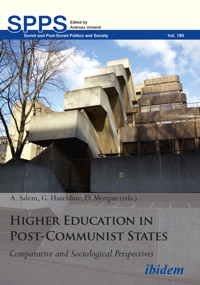
How far have universities in post-Communist states adopted the practices and habits of their branded and consumer-oriented equivalents in the English-speaking world? While not assuming that university education in those states reflects in any mechanistic way the regulated, business-led system long established in places like the US, and now being dramatically realized in countries like Britain, this edited collection identifies some marked shifts in the direction of what might best be described as ‘neoliberalisation’, examining its particularities in local situations where establishment ideologies were, until the early 1990s, deeply alien to all kinds of commercially driven entities. Many of the authors are concerned not only with the linked issues of commercialism, instrumentalism, bureaucracy, and managerialism, framed locally and nationally, but also with the meaning and purpose of universities outside or against their status as efficient gatherers of income. The collection makes specific reference to Lithuania, Hungary, Azerbaijan, Ukraine, Georgia, and Russia, and comprises theoretical as well as empirical studies of diverse but connected subjects, including the marketization of the academy, regional reactions to globalization as expressed in the representational rhetoric of specific curricula, the role and place of civic education, comparisons between educational settings, pedagogies for a critical and ethical consciousness, corporate and state demands and their effects on academic freedom, and the positive potential of new communication technologies. In all these cases, the system of neoliberalism, or rather an uneven process of neoliberalisation, forms a backdrop to the particular issues discussed.
Das E-Book können Sie in Legimi-Apps oder einer beliebigen App lesen, die das folgende Format unterstützen:
Seitenzahl: 399
Veröffentlichungsjahr: 2018
Ähnliche



















ibidem Press, Stuttgart
Table of Contents
The Ends of Higher Education
1. University Education in a Neoliberal Climate
2. Neoliberalising University Education in Post-Communist States
3. The Ends of Higher Education
Financing Higher Education: Policy Transformations in Lithuania
1. Introduction
2. A Review of Changes in the Lithuanian Higher Education System: Factors that Spurred the Need for Higher Education Reform
3. The Higher Education Funding Model: Choices and Alternatives
4. The Neoliberal Model of Higher Education Funding in Post-Communist Lithuania: Distinctive Features and Effects of Its Application
5. Conclusions
Local Global: Global Society and Higher Education in Hungary
1. The Global Contexts of Higher Education
2. Eurocentrism and Cognitive Maps of Global Society in Eastern Europe
3. Higher Education Policies and Ideological Change: Nationalism and a Neoliberal Turn
4. Student Migration and Migration Processes
5. Curriculum Analysis Methodology
6. The Representation of Global Society in Course Descriptions
7. The Representation of Global Knowledge in Compulsory Reading Lists
8. Conclusions
The Role of Civic Education at University: Lessons from Azerbaijan
1. Civic Education at University
2. Looking Back: Reflections 15 Years On
3. Conclusions
Teaching Social Science at Post-Soviet Universities: Challenges for Visiting Lecturers in the Former USSR
1. Introduction and Caveats
2. Higher Social Science Education in the Former USSR
3. Post-Soviet Higher Social Science Education
4. Some Addenda for Future Visiting Lecturers
The Development of Journalism Higher Education in Georgia: from Soviet to European
1. The Soviet System: Traditions and History
2. Changes to the System from the 1990s to 2005
3. Impact of the Bologna Process
4. Recent Developments: 2005–2016
5. Afterword
Dedifferentiation and Ecological Dominance: The Case of Russian Higher Education
1. Introduction
2. Neoliberalism and Education in the West: A Brief History
3. Soviet Russian Higher Education: A Habermasian Distinction
4. Soviet Russian Higher Education: A Systems-Theoretical Perspective
5. Reconceptualising Neoliberalism: Ecological Dominance
6. Continuing Dedifferentiation, Ecological Dominance, and Alienation
7. Neoliberalism: Alienation and Instability
8. Conclusion
Pedagogies, Technologies and Social Formations
1. Introduction
2. The Rule of Money
3. Technologies and Social Formations
4. Pedagogy and Power Relations
5. New Technologies of Communication
6. Productive Doubt and Critical Solidarity
Marketisation as Social Control: Critical Reflections on Post-Soviet Higher Education
1. Introduction
2. The Historical and Theoretical Context
3. The New Market Order and Higher Education
4. A Critical Reflection on the Post-Soviet Transition
5. Conclusion
SPPS Soviet and Post-Soviet Politics and Society
Copyright
For Danny Harvey
The Ends of Higher Education
A. Salem, Gary Hazeldine and David Morgan
1. University Education in a Neoliberal Climate
If we look at the English university system today, what we may see are the results of an all too familiar process: fees for students have greatly increased, with many facing a depressing mix of high debts and low-paid work; more and more academics, employed on casualised or short-term contracts, face economic insecurity;1 the proportion of lecturers to students has almost halved,2 with serious consequences for the quality, type and quantity of academic work; government auditing and managerial surveillance have become entirely standard, producing deep distrust, and fundamentally weakening academic freedom; above all, and this underlies all of the other developments, public subsidy for the universities is in continual decline—most clearly seen in the complete withdrawal of state funds for courses in all but the most business-friendly subjects.3
What has conditioned these developments? Part of an answer lies in the GBP 1000 fees for international students introduced in 1980 under the Thatcher administration. This was an early development of neoliberalising policy towards university education, partly because it suggested that academic study—which as a long history of student protests shows has always allowed some room for self-critique, and thus social critique—can be bought and sold like any other consumer product, and partly because it broke the social-democratic consensus that had held in the UK at large since 1945.4 From being committed to funding universal access to higher education as part of a wider set of social benefits, and by extension to the idea that academic study is worthwhile in itself and necessary for self-development and self-expression, the main parties began to develop ways of making the universities more directly useful to state and economic interests.5 There followed a marked shift of responsibility for funding university education away from the state to students. Over several decades, successive UK governments formed and maintained a policy of cutting back and finally withdrawing grants, while at the same time introducing and then gradually increasing loans and fees; in 2012, of course, the Cameron government greatly increased fees, opening the way for almost all universities to charge well over GBP 9,000 annually for access.6
Unsurprisingly, once university education is rated at a specific monetary value, once it is sold and consumed like any other consumer object, it becomes harder to see it as a learning process (by definition more or less chaotic, unpredictable and uncontainable). Instead students may view their education as speculators looking for investment gains, and/or as consumers with regular expectations of their purchase. Such attitudes are generally encouraged by the universities: what course does not now mention its bearing on career plans, or sport a list of ‘learning outcomes’, as if it were a definitively finished mechanical product capable of delivering predictable and repeatable effects? The attempt to remake students as investors and consumers is also sharply enforced by state bodies like the funding councils and their successors. These require that universities publish ‘key information sets’ about courses to meet the ‘needs’ of prospective students and interested parents, information made up of little more than prices, and performance, and employment and salaries.7 Of course, what is included in and excluded from these data sets makes them as much a matter of prescription as objective statement. They encourage a particular mentality among students and, in an exemplary piece of interpellation in Althusser’s sense, play a role in creating the very student self-image that they claim to describe—one founded on consuming reliable, well-made goods, on speculative buying and, ultimately, on pursuing private wealth and comfort.8
Such tactics are bound up with vested interests, in that through them the neoliberal state may present what it has forced on students—costs, debts, risks, in short economic insecurity9—as a desirable consumer choice and a good investment opportunity. Whether students will buy into this attempt to refashion enforced poverty and insecurity as a choice and an opportunity is an open question, especially when set against what is happening now to so many who, in line with the state’s commitment to neoliberal policies, have been condemned to unemployment, under-employment and workfare.10 What can be said is that the neoliberal project elicits thoughts and actions appropriate to its development, in part by appealing to our sense of being free individuals with our own purposes and agency—in a process that Foucault, with what he calls “technologies of the self”, would have found instantly familiar.11
Such efforts to change attitudes towards being made to pay for undergraduate study are, we should not forget, very much linked with lessening government spending on higher education as a whole, spanning the GBP 100 million cut that occurred under Thatcher just after the 1979 election, all the way to Cameron’s GBP 3 billion cut from 2010 onwards. The long decline of state funds has deeply affected students, as we have seen, but beyond this it has also had clear implications for universities. Above all, starving the universities of state funding has forced them to adopt corporate values, leading to micro-scrutiny and control by executives, market-managers, planners and administrators, and amounting to a Taylorisation of academic work. Now, as Louise Morley notes, “every academic activity is broken down into simpler and more manageable parts”, resulting in “a fragmenting or fracturing” in which complex processes are translated into “empirically identifiable indicators, measures, competencies and outputs”.12 This reduction of complex processes to measurable quantities is of course entirely misleading. Think of the obsessive counting and recounting of ‘contact hours’, which tells you nothing about time spent with students outside the classroom, or the quality of conversation and thinking within it.13 It does, however, say a great deal about the instrumental and classifying impulse that the Marxist philosopher Georg Lukács warned against a long time ago.14
Of course much more could be said, given more space. There is the apparent paradox that while less and less of its expenditure is devoted to funding academia, the state is more and more demanding of academics and universities. This is why Michael Burawoy, in analysing neoliberal policy towards universities, talks about “commodification plus regulation”, and not simply one or the other.15 Or there is the problem that higher education, as it becomes an offshoot of the economy, is not really there for students, but is rather a servant of business, fostering in its charges those qualities most appropriate to the ideal, productive and exploitable worker.
2. Neoliberalising University Education in Post-Communist States
Why begin a book on higher education in post-Communist states with a brief overview of the current state of higher education in England and to a lesser extent the UK?16 Part of the answer involves the fact that we as editors are writing from the context of our own current experiences of UK higher-educational institutions, while also writing with a keen interest in developments in higher education globally and also specifically in the post-Communist context. But we also write with an enthusiasm for comparative sociology, and for what it can teach us about the key similarities and differences between educational institutions and systems in different countries and regions.17 On the one hand, we want to avoid the assumption that higher education in post-Communist countries is, in any simplistic way, on an inevitable one-way journey towards greater Western-style neoliberalisation, regardless of national political interventions, specific histories and cultural differences. However, on the other hand, and supported by many of the chapters in this book, we also want to draw attention to the apparent shifts in this direction, along with the dangers of this process, and also its particular manifestations in the context of countries whose ‘official’ economic and political ideologies defined themselves against a marketised system until the late 1980s and early 1990s.
As has been outlined so far, what has appeared to be an unstoppable shift in higher education policy in the UK—despite strong and sustained protests and occupations by students,18 often supported by staff, unions and the wider public—has led to a number of deeply worrying developments for universities and their staff and students, and there are many signs that these developments are increasingly impacting on, or already fully developed within, the educational policies and experiences of post-Communist universities. Although these significant changes have had a relatively long history in the UK, the impact of a number of recent changes have been acutely felt in a very short space of time. Rising bureaucracy, managerialism, commodification and instrumentalism have had far-reaching consequences within all spheres of UK academic life, and a number of recent and important scholarly works have explored their impact on teaching, research and administrative duties.19 These works also ask what the role of higher education and universities ought to be, who they belong to, whose interests they should serve, and the best ways to achieve this. They provide convincing, and damning, critiques of the ways in which marketisation and privatisation destroy the important public role of HE institutions by valuing them only in terms of economic growth and human capital, and of the ways in which new assessments of ‘quality’ and the broader audit culture fail to capture—or rather end up distorting—what it is they set out to measure. Importantly, these works not only outline what is at stake here, but also set out viable alternatives, and consider the ways in which the wider public, and those of us directly involved in higher education, can contribute to change; they make strong cases for how things might be different, given the political will.20 Many of the chapters in this edited collection have been written by authors who also concern themselves with these issues, both at a national and institutional level, as well as at the wider theoretical level, and they explore the ways in which we can see similar, though often country-specific, manifestations of these economic and political processes in post-Communist states.
3. The Ends of Higher Education
In different ways, all the contributors deal with an unfolding process of transition in formerly Communist nations from one higher education system to another. Since the fall of Communism, higher education has found itself obliged to adapt to a radically different institutional and ideological environment. Previous political and ideological certainties have had to be abandoned, while entirely new sets of institutional values and practices have been adopted in their stead. Previously, universities in the region were pressed into the service of the state, part of a command-and-control apparatus defined by and devoted exclusively to the maintenance and furtherance of its Marxist-Leninist ideological underpinnings. Now, however, almost all of these universities find themselves obliged to incorporate and implement the structures and forms of Western free-market neoliberalism, with all the new ideologies accompanying them.
In practice, higher education has been swiftly commodified, to be regarded and marketed as a more or less luxurious consumer good. In this process any notion of studying for personal enrichment, or of education as a matter of personal and cultural self-fulfilment, has generally been sidelined. Instead the education system has been obliged to present its products in strictly functional, mercantile terms: as a means to the end of realising the career ambitions and professional aspirations of individual students. Of course the same process has been very much in evidence in Western culture, especially though not of course solely in the US and the UK, though in an arguably less traumatic fashion, since in those cases university education has long been treated as any other consumer product.
In former Communist countries, of course, education at all levels was centrally funded and administered by the state, usually resulting in direct subsidies for research and teaching in the case of universities and similar bodies. A dual institutional ethos developed whereby higher education came to be seen as both a universal service, to which all have access, and as a servant of the state—one that helped to maintain and ensure the state’s continued existence through the constant supply of appropriately skilled graduates. Against this background, it is easy to appreciate the dramatic nature of the change which has now taken place. From being cost-free, universal in terms of access, and linked into the certainty and prescriptiveness of graduates’ eventual employment in the public sector, higher education in post-Communist states now increasingly exists and operates within organisations dedicated to the competitive marketing of a readily saleable product. As a result, universities in these countries, alongside the staff who inhabit them, have had to comprehensively reinvent themselves.
These changes raise many questions with regard to the workings of the institutions involved, and to the wider political and historical context in which they operate. How have these institutions adapted to their new market conditions? What have been the tactics and techniques used to manage the transition from being publicly funded cultural establishments, open to all, to commercial organisations offering quasi-professional services only to those willing and able to pay for access, in the hope that their educational attainments may go some way to ensuring their future careers? What tensions and conflicts have risen as a result, and how effectively have these been negotiated? Who or what may be said to be the beneficiaries of this process of transformation—and who or what could be counted among its casualties? What lessons could be drawn from the experience, particularly but not only in countries like Britain, where the overt commercialisation of the universities is proceeding apace?
Such questions are directly addressed by the contributors, who bring the full apparatus of the sociology of education, discourse and empirical analysis, social theory, postcolonial studies and globalisation theory to the examination of diverse local situations. Olga Suprun argues that Lithuania’s 2009 Law on Higher Education and Research has been complicit in the widespread and systematic implementation of a neoliberal model for Lithuanian universities. She considers the broader context which gave rise to this process of change, along with the current, and potential, impacts of the law, particularly in relation to issues of fair access and social equality. A range of alternative models for funding higher education—partially private, mass public and elite—are then explored alongside their main beneficiaries, while the role of different political ideologies in the funding model chosen and in the method of its implementation is spelt out. Notably, Suprun also makes the case for drawing finer distinctions within what she calls the “Anglo-American model”; that is, between a largely under-regulated system in the US and an arguably more egalitarian one in the UK as a whole. Finally, she considers the Constitutional Court’s role in influencing legal reforms in this area, along with politically inflected definitions of what constitutes a ‘good student’ when laying down criteria for grants and fees, concluding with proposals that Lithuanian higher education is faced with a choice: either to fall more in line with the British model or, instead, to apply fair, uniform, reasonable and partial tuition fees.
In their statistical and empirical analysis of courses in social science at four Hungarian universities, Zoltán Ginelli, Attila Melegh, Sabina Csánova, Emese Baranyi and Rudolf Piroch seek to make visible the assumptions contained in specific curricula. Drawing, among others, on Foucault and his ideas about systems of discourse, the authors argue that while these curricula continually give the impression of a global culture and a globalised consciousness in their content and style, what lies unstated behind them is an ideal hierarchy of national economies and cultures, though one that navigates between Eurocentrism and conservative nationalism. There is no block, the authors go on to argue, between such egocentric cultural and political discourses and globalised, neoliberal economics, given how far universities in the country have become instruments of state policy—part of a national and nationalistic effort, that is, to situate Hungary at the top of a mythifying hierarchy of global competitiveness, development and progress.
Drawing on his own experience of teaching at universities in Azerbaijan, Piers von Berg explores the importance of, and potential for, civic education in the academy generally. Von Berg’s case study work on a project for civic education, along with a youth forum that he was prominent in organising, demonstrate the importance, alongside the more traditional professional and academic skills, of personal and social awareness, agency and skills, and of how these might be further developed in British higher education. Using evidence from the case study, von Berg goes on to argue that civic education has a significant and lasting impact on the students involved in such alternative forms of teaching and learning, as illustrated in their future personal development, skills, social awareness and active citizenship.
Andreas Umland outlines what academics from Western Europe and the US may expect when working for the first time at educational establishments in countries like Russia and Ukraine, drawing on and appealing to his own experiences of teaching in the social sciences in those countries over many years. For Umland, much academic work in the region, not least in the social sciences, is marked by its exposure to a lengthy, drawn-out period of transition from one system to another, bearing the traces and after-effects of an education system operating for so long in isolation from global transformations—political, economic, social and cultural—while also being confined to and limited by a widespread intellectual and political culture of authoritarianism. This situation translates itself into a very particular set of circumstances where, for instance, teaching is quite didactic, the students being mute and passive objects of lecturers, institutionalised corruption is a regular feature to the extent that bribery is routinely used to influence grading, and where working conditions for academics are grossly oppressive. At the same time, Umland argues, such circumstances have been accompanied by some signs of change, particularly as academics from different countries help to globalise awareness of a quite different set of technical standards.
Marine Vekua traces changes in journalism studies in Georgia since the collapse of Communism, showing how the discipline has responded to extrinsic factors such as changes in state policy towards higher education as a whole, and the increasing influence of media companies on its structure and forms. In the process, she takes up issues of accreditation and institutional approval, the use of feedback systems for quality control purposes, methodological and technological distinctions in teaching, and working conditions for students and staff, arguing that Georgian universities offering courses in the discipline can be classified into three different types, depending on whether they take their inspiration from curriculum models coming out of Europe, the US or Georgia itself. For Vekua, the Georgian state’s political efforts towards greater integration with Europe, not least its total commitment to the Bologna Process, has generally brought about a considerable improvement in academic training in journalistic practice. The results remain incomplete, however, such that Vekua’s analysis creates a snapshot of a post-Soviet nation very much in the process of transforming its identity, in part by bringing its university system into line with more universal standards.
Joseph Backhouse-Barber attempts to do justice to the complexities of higher education in Russia, by rejecting any simplistic or reductive division between Russian and Western university systems, or between a politically muted Soviet model and a free-thinking post-Soviet one. Informed by Niklas Luhmann and systems theory, and in particular by the notion of dedifferentiation where the autonomy of a system with relation to its environment comes under threat,21 Backhouse-Barber argues that business and state demands threaten the autonomy of the education system in different geographical areas at different times. Drawing also on Jürgen Habermas and aspects of Frankfurt School critical theory, a further argument is that rigid instrumentality and strategic considerations have penetrated to the base of the commonsense habits and predilections of students and staff, that is, their lifeworlds in Habermas’s sense. These views are applied to the analysis not only of the distinctions but also of the continuities between Russia’s higher education system in the Soviet period and in its current state. In the same way, the author establishes correspondences between university systems in Russia and in countries like the UK, particularly in terms of their connection with and uses for neoliberalism, while at the same time drawing some fine distinctions between them. Finally, the main subject of consideration—university education—is used to bring out some of the shared concerns but also the sharp distinctions between systems theory and critical theory.
Robert Ferguson deliberately steps back from any extended analysis of geographical regions or national cultures. Instead he seeks to explore the liberatory potential of education as such, which can, and as Ferguson suggests, must be applied to diverse local situations, particularly but not only within post-Communist universities dealing with the demands of state and business to put education to use. Drawing on Paulo Freire’s ideas about the need to treat teachers and students as equally integral elements in the learning process, Ferguson argues for the centrality of pedagogical work that fosters critical thinking, especially when allied to the power and utility of digital technologies—the full implications of which have not yet been widely internalised. However, while new technology can certainly be an important tool for political improvement and emancipation, Ferguson harbours no illusions about how easily and swiftly it may be used for commercialisation and political control. There is always a choice about its use, however, and it is up to educators working with what is available to them in a particular place at a particular moment to decide what role to play. This applies as much to those working in Western Europe or North America, where the very idea of education as a tool for progressive change has been the subject of sustained attack, as it does to those inhabiting post-Communist states, now undergoing deep changes under the pressures of powerful commercial and institutional forces.
Strongly influenced by the ideas of Isaiah Berlin, Michel Foucault and Herbert Marcuse, Tom Driver explores the impact of commercialisation on Russian universities. Driver first places Russia’s adoption of neoliberal policies since 1991 in a much broader political and historical context of global neoliberal politics and economics, before turning to the issue of reforms in university education in the country, and meditating on, among other things, the meaning of the shift from a publicly funded university system to a market-led and business-oriented one, the similarities and differences in the bureaucratic mechanisms governing academic work before and after 1991, and the implications of such developments for academic freedom and critical thought. What emerges is a new situation structurally and ideologically, albeit one close to the neoliberal regime with which academics in the UK and elsewhere are very familiar, which presents itself as a natural and moral system where students are transfigured as shoppers and consumers, and where universities are not expected to serve any purpose beyond academic training in career advancement. Coupled with performance targets, auditing and surveillance mechanisms—including some that are not dissimilar from the UK’s Research Excellence Framework22—and the reduction of qualitative distinctions to quantitative ones, students’ disconnection and a demoralised educational staff can directly result, while there is little space left for free expression, productive dialogue and participation or—and this is what is most dangerous for Driver—the fostering of critical faculties, very much of the kind described by Ferguson.
1 Noted in Anna Fazackerley, “Why are Many Academics on Short-Term Contracts for Years?”, TheGuardian, 4 February 2013, https://www.theguardian.com/education/2013/feb/04/academic-casual-contracts-higher-education (as of 1 September 2017).
2 As pointed out by Sarah Amsler and Joyce Canaan, “Whither Critical Pedagogy in the Neo-Liberal University Today? Two UK Practitioners’ Reflections on Constraints and Possibilities”, Enhancing Learning in the Social Sciences 1:2 (November 2008): 3.
3 The allusion is to science, technology, engineering and mathematics (STEM).
4 The term ‘neoliberalising’ is used here to suggest that the neoliberal model, while it has certainly globalised itself and strengthened its hold, is not a once-and-for-all development but, as Joyce Canaan and others have argued, a varied and uneven process which brings about resistance to it, and which also opens the door to alternatives. For more on this use of the term see for instance Canaan, “Resisting the English Neoliberalising University: What Critical Pedagogy Can Offer”, Journal of Critical Education Policy Studies 11:2 (March 2013): 19–23, http://www.jceps.com/wp-content/uploads/PDFs/11-2-02.pdf (as of 1 September 2017).
5 Northern Ireland, Wales and especially Scotland do not readily fit into this account, since from the late 1990s onwards these countries gained greater autonomy from the Union, and were able to make undergraduate study either free or much cheaper than it is in England, doubtless due in part to their commitment, within certain limits, to social-democratic governance. This illustrates Canaan’s point that neoliberalism, or ‘neoliberalisation’ as she prefers to call it, is neither irreversible nor inevitable. See Canaan, “Resisting the English Neoliberalising University”: 19–23.
6 There is a great deal of critical writing on this subject. See for example Roger Brown with Helen Carasso, Everything for Sale? The Marketisation of UK Higher Education (London: Routledge, 2013); Stefan Collini, What are Universities For? (London: Penguin, 2012); Stefan Collini, Sold Out, London Review of Books 35:20 (October 2013): 3–12; John Holmwood, A Manifesto for the Public University (London: Bloomsbury Academic, 2011); Fred Inglis, “Economical with the Actualité”, Times Higher Education, 6 October 2011, https://www.timeshighereducation.com/features/economical-with-the-actualit/417654.article (as of 1 September 2017); and Andrew McGettigan, The Great University Gamble: Money, Markets and the Future of Higher Education (London: Pluto, 2013).
7 See for instance https://www.hefcw.ac.uk/policy_areas/learning_and_teaching/information_for_students.aspx (as of 1 September 2017).
8 This is a very particular sort of freedom. In class-divided society, as Adorno notes, “the freedom of individuals is essentially private in nature”: “this freedom consists essentially of acquisitions at the expense of others, in a specific kind of sovereignty in which the freedom of others is always offended against a priori, and which therefore contradicts the meaning of freedom from the outset”. Theodor Adorno, History and Freedom: Lectures 1964–1965, ed. Rolf Tiedemann (Cambridge: Polity, 2006), 179.
9 See for instance Keith Burnett, “We Need to Talk About Free Education”, Times Higher Education, 20 June 2017, https://www.timeshighereducation.com/blog/we-need-talk-about-free-education; Sean Coughlan, “Could Tuition Fees Really Cost £54,000?”, BBC Online, 21 January 2017, http://www.bbc.co.uk/news/education-38651059; Angela Monaghan and Sally Weale, “UK Student Loan Debt Soars to More Than £100bn”, TheGuardian, 15 June 2017, https://www.theguardian.com/money/2017/jun/15/uk-student-loan-debt-soars-to-more-than-100bn (all as of 1 September 2017).
10 Bourdieu is clear that such “generalised precariousness”, far from being a by-product of economic crisis, is the result of acts of political will, not least because it can serve as an effective tool of social control: “Generalised precariousness [...] is the basis of a new form of social discipline generated by job insecurity and the fear of unemployment”. Its victims “are found almost as often among occupations requiring a high level of cultural capital”, one example being “precariously employed teachers, overburdened with marginalised high school or university students who are themselves destined for casual work”. Pierre Bourdieu, Firing Back Against the Tyranny of the Market, Vol. 2, trans. Loïc Wacquant (London: Verso, 2003), 61, 62. For an elaboration of this point see the chapter, “Job Insecurity is Everywhere Now”, in Bourdieu, Acts of Resistance: Against the New Myths of Our Time, trans. Richard Nice (Cambridge: Polity, 2004), especially 85–86.
11 See for instance Michel Foucault, Power: Essential Works of Foucault 1954–1984, Vol. 3, trans. Robert Hurley et al. (London: Penguin, 2002), especially 201–222, 326–348, 403–417. See also Steph Lawler’s insightful analysis in Identity: Sociological Perspectives (Cambridge: Polity, 2008), especially 61–63.
12 Louise Morley, Quality and Power in Higher Education (Maidenhead: SHRE and Open University Press, 2003), 48.
13 As Paul Ashwin notes, “years of research have shown that the hours that students are taught does not directly relate to the quality of what they learn”. Paul Ashwin, “‘Bizarre’ TEF metrics Overlook So Much about Teaching Excellence”, Times Higher Education, 7 June 2016, https://www.timeshighereducation.com/blog/bizarre-tef-metrics-overlook-so-much-about-teaching-excellence (as of 1 September 2017). See also Camille Kandiko Howsen, “TEF: Don’t Equate Contact Hours with Teaching Quality”, The Guardian, 23 November 2016, https://www.theguardian.com/higher-education-network/2016/nov/23/tef-dont-equate-contact-hours-with-teaching-quality (as of 1 September 2017).
14 György Lukács put the same point in a more Marxist fashion, when he wrote that “capitalism promotes quantitative and calculative modes of thought governed by interests in profit, control, measurability and predictability, and thus constitutes science as a tool of its interests”. György Lukács, History and Class Consciousness: Studies in Marxist Dialectics, trans. Rodney Livingstone (London: Merlin, 1990), 10. Similarly, as Douglas Kellner notes, Adorno and Horkheimer argued that “quantitative, abstract modes of thought are ruled by principles of equivalence and substitution whereby dissimilar things become comparable by reduction to abstract quantities which exclude individual quality on principle”. Kellner, Critical Theory, Marxism and Modernity (Cambridge: Polity, 1989), 96.
15 Burawoy is surely right that if “The university as simultaneously participant in and observer of society is dissolving”, and if “the university is losing its capacity to fend off pressures of instrumentalisation”, it is because “These pressures come in two forms—commodification and regulation”. Michael Burawoy, “Deliberative Democracy in a Global Context: A South African Model of Higher Education?”, http://www.isacna.wordpress.com/2010/05/03/deliberative-democracy-in-a-global-context-a-south-african-model-of-higher-education/#more-437 (as of 1 September 2017).
16 This is a particularly pressing question in the context of Brexit and the increasing distancing of the UK from Europe.
17 See for example Patrick Blessinger and John P. Anchan, eds., Democratizing Higher Education: International Comparative Perspectives (New York: Routledge, 2015); and Eleoussa Polyzoi, Michael Fullan and John P. Anchan, Change Forces in Post-Communist Eastern Europe: Education in Transition (New York: Routledge, 2003).
18 For more on the student protests see for example Sean Coughlan, “Students Protest Against Tuition Fees”, BBC Online, 4 November 2015, http://www.bbc.co.uk/news/education-34721681 (as of 1 September 2017); and Paul Lewis et al., “Student Protest over Fees Turns Violent”, The Guardian, 10 November 2010, https://www.theguardian.com/education/2010/nov/10/student-protest-fees-violent (as of 1 September 2017).
19 In particular see Andrew McGettigan, The Great University Gamble: Money, Markets and the Future of Higher Education (London: Pluto, 2013); Stefan Collini, What are Universities For? (London: Penguin, 2012); Stefan Collini, Speaking of Universities (London: Verso, 2017); John Holmwood, A Manifesto for the Public University (London: Bloomsbury, 2011); Michael Bailey and Des Freedman, eds., The Assault on Universities: A Manifesto for Resistance (London: Pluto, 2011); and Derek Sayer, Rank Hypocrisies: The Insult of the REF (London: Sage, 2015).
20 Germany’s U-turn on tuition fees is a case in point. See e.g. Howard Hotson, “Germany’s Great Tuition Fees U-Turn”, Times Higher Education, 13 February 2014, https://www.timeshighereducation.com/features/germanys-great-tuition-fees-u-turn/2011168.article.
21 For an account of this notion as it relates to the analysis of higher education in systems theory more generally, see Frans van Vucht, “Diversity and Differentiation in Higher Education Systems”, paper given at the Centre for Higher Education Trust (CHET) Anniversary Conference, Cape Town, 16 November 2007: 1–22, http://www.universityworldnews.com/filemgmt_data/files/Frans-van-Vucht.pdf.
22 Here we may think of Russia’s Project 5–100, also known as the Russian Academic Excellence Initiative, administered by the Council on Competitive Enhancement of Leading Russian Universities among Global Research and Education Centers. For further detail, see for example Enora Bennetot Pruvot and Thomas Estermann, “Excellence Schemes are Blooming in Europe’s Universities”, European Universities Public Relations and Information Officers (EUPRIO), 2 March 2015, http://www.euprio.eu/excellence-schemes-are-blooming-in-europes-universities/ (as of 1 September 2017). See also their “DEFINE Thematic Report: Funding for Excellence”, European University Association Report, http://www.eua.be/Libraries/publication/DEFINE_Funding_for_Excellence.pdf?sfvrsn=4; and Ellie Bothwell, “Revision of Russia’s Project 5–100 could be ‘Step Backwards’”, Times Higher Education, 17 October 2016, https://www.timeshighereducation.com/news/revision-russias-project-5-100-could-be-step-backwards (as of 1 September 2017).
Financing Higher Education: Policy Transformations in Lithuania
Olga Suprun
1. Introduction
The Lithuanian higher education system has undergone considerable transformation during the period since national independence in 1990. In that period rates of student participation have increased fourfold, while continuing low financial expenditure on educational institutions per student has signalled the pressing need for political action in order to rebalance the system in financial terms, and to resolve its other systemic defects. In order to so readjust the Lithuanian system of higher education finance there were a number of available models of reform to choose from, notwithstanding the prevailing need to ensure equal access to HE for all prospective students. Some other countries have chosen to increase public funding in order to keep higher education free for all, while others have instead opted to introduce tuition fees and have implemented various student loan systems in order to ease the ‘burden’ on the overall state budget which is imposed by their respective HE systems.
On 30 April 2009, the Lithuanian Parliament passed a new Law on Higher Education and Research which embodied the model of higher education reform which had been chosen by the government. This new law was framed in accordance with the rulings of the Constitutional Court of the Republic of Lithuania, which broadly interpreted the meaning of the 3rd part of article No. 41 of the Constitution of the Republic of Lithuania, declaring that “citizens who are good at their studies shall be guaranteed education at State schools of higher education free of charge”.1 As such, the Constitutional Court’s rulings had a decisive influence upon the newly implemented model of higher education reform, since the Court had stated that free education cannot in fact be granted to all students who are ‘good at their studies’, but only to those students who opt to study within specific subject areas which were deemed likely to satisfy future employment demands, as determined by the government. Thus, in effect, the constitutionally sanctified academic criterion of the ‘good student’ became transformed into a political instrument which was utilised by the government in order to restrict the overall budgetary expense of higher education. However, even though the Constitutional Court had so narrowed the meaning of the ‘good student’, and, accordingly, restricted the overall level of entitlement to free HE, there was still sufficient financial and administrative flexibility remaining to enable politicians to reform the Lithuanian HE finance system so as to ensure quality, while ensuring equal access to HE for all qualified prospective students. Unfortunately, it very soon became evident that equal access to higher education was not among the priorities of the country’s political elite.
Since the implementation of the Law on Higher Education and Research, approximately half of the prospective student cohort who have completed secondary education, exceeds the numerical targets for free HE which are set by the government each year. If these ‘surplus students’ wish to study in their home country they are required to pay for their tertiary education at full price, which varies significantly—from about EUR 1,250 to EUR 11,600 per academic year—depending on the study programme and the university in question. Thus, under the terms of the current Lithuanian HE funding policy framework, access to HE for those students who exceed the state-defined numerical quotas per subject area is no longer dependent purely upon their intrinsic academic aptitude or ability. Rather, in practice, access is circumscribed by their ability to pay tuition fees, or by their willingness to risk being indebted to a bank, since, following the reform, the state-owned student loan system has been reorganised into a state-supported commercial bank loan system.
This chapter aims to analyse the current model of Lithuanian Higher Education finance reform against the context of relevant Constitutional Court rulings, and from the perspective of a concern with issues of equity and fair access to HE (at bachelor degree level). The chapter will compare the Lithuanian model against higher education finance models which have been implemented in other countries; it will also seek to recommend possible alternative mechanisms of further HE funding reform within Lithuania, ones which embody an overriding social concern for quality, equity and fair access to HE. The methodology combines a comparative analysis of scientific literature, empirical and statistical analysis, discourse analysis, and the critical analysis of legal documents.
2. A Review of Changes in the Lithuanian Higher Education System: Factors that Spurred the Need for Higher Education Reform
Changes in HEI Networks and Student Numbers
When Lithuania was incorporated into the Soviet Union, there was only one formal university in the country: Vilnius University. At that time the government strictly controlled the practice of higher education, and the numbers of students enrolling. As a result of the ending of Soviet rule, this degree of governmental control has lessened, and this has resulted in a period of spontaneous and chaotic development across the HE sector. Prior to the restoration of independence in 1990, Lithuania already had 12 schools of higher education.2 After the restoration of the country’s independence, the ambition of higher education schools to become free of government control was satisfied by means of enshrining their institutional autonomy in law. The granting of this autonomy, without retaining any direct leverage over this area by the state, has led to the chaotic expansion of the higher education system. Figures provided by the Lithuanian Department of Statistics3 present clear evidence of the pace and scale of the expansion in the number of higher education institutions, and of the expansion in student numbers. Between 1995 and 1996 Lithuania had 15 state universities, with 54,000 students enrolled. According to the available data for 2008–2009, this had increased to 22 universities (15 state universities and 7 private), with 149,000 students enrolled, and 27 colleges (15 state colleges and 12 private), with 61,400 students enrolled. In sum, by 2009 Lithuania had a total of 49 institutions of higher education, with 201,400 students enrolled—which means that, from 1995 to 2009, the number of higher education institutions had significantly increased, while the total number of students enrolled had increased almost four-fold.4 Based on the number of students enrolled, Lithuania has now become one of the most academically intensive countries not only in Europe, but throughout the world (see below).5
Given this rapid increase in the number of higher education institutions, and in overall student numbers, access to higher education as such has, of course, increased—however this has in turn led to a lowering of academic requirements for students, and hence to a devaluation of higher education diplomas, as well as to a decrease in the overall quality of higher education.
Higher Education Funding Changes
With the rapid increase in student numbers, schools of higher education began to experience a shortage of public funding. In terms of annual expenditure on higher educational institutions per student, according to Eurostat data,6 among 27 countries Lithuania was ranked 23rd in this respect. The shortage of funding for higher education was not the only problem. The model of funding being implemented was also faulty: only 30% of the students of any given study programme were fully funded by the state, which led to an expansion in the overall number of study programmes, rather than to any increase in academic quality.
The need for higher education reform within Lithuania has not been determined purely by the shortage of funding. There are other factors which have been identified within preparatory documents relating to reform.7 Amongst these factors are the following: about 70% of graduates do not find work within their chosen profession; only about 12% of scientists in Lithuania are aged under 35 years; PhD graduates who travel abroad rarely return; and the overall citation index for Lithuanian scientists is the lowest amongst the new EU member states. Another factor which motivated the need for reform was undoubtedly that of global economic competition. The preamble to an agreement amongst Lithuanian parliamentary political parties regarding the reform of the science and education system8 asserted that an effective and competitive Lithuanian science and study system would help to ensure competition with the best European and world universities, and moreover that adequate HE provision is an essential precondition for ensuring economic prosperity, and for the maintenance of a high quality of life for the country’s citizens.
Section Summary
The higher education system in Lithuania has undergone considerable transformation since the state re-established its independence in 1990. Drastic increases in the number of schools of higher education, a four-fold increase in rates of student participation, and low expenditure on educational institutions per student, have signalled the need for reform. This would be in order to rebalance what has become an irrationally functioning higher education system, by rectifying its defects, and by ensuring the quality and competitiveness of Lithuanian higher education.
3. The Higher Education Funding Model: Choices and Alternatives
The need for reform was recognised by all Lithuanian political parties,9 by the Lithuanian University Rectors’ Conference, together with the Lithuanian Confederation of Industrialists,10 as well as by national student unions.11 However the question of which model of higher education finance to implement has resulted in widely differing opinions; hence this issue has become an object of sharp political and ideological debate within political and academic circles.
As this debate developed, the trends and challenges emerging within higher education globally came to the fore. It was acknowledged that higher education functions as an important growth factor in terms of the national economy, and that it contributes considerably to the personal well-being of the population and to public welfare.12 The world-wide massification of higher education, as evidenced by statistics, was also recognised,13 as was the fact that in many countries governments were unable to increase higher education funding in line with the increase in the number of participants within their resepective higher education systems. In global terms, participation in HE has increased across the board, from the traditional elite model (<15% of participants), to a mass (15–50%), or even universal (>50%) model (as defined by the M. Throw classification).14
Following the massification of higher education, the Committee of Ministers of the Council of Europe have drawn up recommendations for the governments of member states regarding access to higher education,15 which outline the principles of fair and equal access to HE, as well as addressing the issue of the finance of higher education systems across the European Union. It is recommended that financial support per student should be differentiated according to need, and that fees in general should be reasonable in level, and uniform across the public system. Eventually different countries have implemented higher education funding systems in ways which reflect their respective broader socio-economic policy positions, not always complying with the Council of Europe Recommendations (e.g., Lithuania). Analysing the higher education policies of economically advanced countries, Ben Ansell16 has identified three predominant types of higher education system and funding models: (1) the Anglo-American model—which results in a mass participation, partially privatised, and publicly inexpensive system (as in the United States, United Kingdom and South Korea); (2) the Continental model—which results in an elite, fully public, and inexpensive system (as in Germany or the Netherlands); (3) the Scandinavian model—which results in a mass participation, fully public, but highly expensive system (as in the Scandinavian countries, which have strong social democratic traditions). In his subsequent works, Ansell referred to the Anglo-American model as ‘Partially Private’, the Continental model as ‘Elite’, and the Scandinavian model as ‘Mass Public’.17
Beyond Europe, countries that have followed the path of massification of higher education (i.e. moving from the Elite model to the Mass model) have faced the challenge of how to reform their respective systems of higher education funding, and have experienced a two-sided pressure—that of a growing number of participants within HE against a limited budget. In practice these countries have had two possible choices: (1) to apply the Scandinavian model of Mass Public higher education, which results in higher budgetary expenditure on higher education, mostly at the expense of spending reductions in other areas; or (2) to apply the Anglo-American model of Partially Private higher education, which implies a partial privatisation of higher education and the direct collection of tuition fees from students. The decision as to which of these two funding models to apply—whether HE should be fully financed from the state budget, or whether it should be partially financed by students paying tuition fees, and only partially funded by the state—has been predicated in practice upon wider debates regarding the issue of who it is that benefits most from higher education: whether it is the student, the state, or partly the student and partly the state. It has been the resultant understanding of whom the principal beneficiary of higher education is that determines the eventual selection of a particular higher education funding model.
Who Should Pay for Higher Education and Why?
Personal benefits: that there is a correspondence between personal earning power, and the level of educational attainment, is unequivocally indicated by statistics, both within the United States18 and the United Kingdom,19 and is further attested to by numerous scientific papers.20
Non-personal benefits: the recent massification of higher education across the world has been premised upon claims by social scientists to the effect that higher education contributes to economic growth.21 However, as Alison Wolf has noted, the fact that human capital is of critical importance to modern economies does not necessarily imply that all and any forms of educational ‘input’ will necessarily result in increased economic ‘output’. The relationship between ‘input’ and ‘output’ as regards this area of educational policy is crucially dependent upon the way in which the links between education and economic growth have been measured and analysed.22
Measuring the impact of higher education upon the individual and the country solely by reference to economic indicators would imply a very narrow and pecuniary approach, one which would tend to neglect or overlook those wider personal or social benefits which might accrue from higher education. Thus, according to Andrew Weiss,23




