


Human and Animal Filariases E-Book
160,99 €
Mehr erfahren.
- Herausgeber: Wiley-VCH GmbH
- Kategorie: Wissenschaft und neue Technologien
- Serie: Drug Discovery in Infectious Diseases
- Sprache: Englisch
Human and Animal Filariases
The rational approach to controlling human and animal diseases caused by nematodes
Filariae are a family of parasitic worms which infect animals and humans, causing severe diseases such as elephantiasis (lymphatic filariasis) and river blindness (onchocerciasis) in humans, as well as heartworm disease (dirofilariasis) in dogs and cats. While the human diseases are rarely fatal, the blindness and disfiguration resulting from these infections constitute a severe burden for the affected individuals and to the healthcare systems in many tropical countries. In 2017, the World Health Organization classified several filariases as neglected tropical diseases and announced a new program seeking to eradicate these infections, which has in turn sparked a new push to develop antifilarial drugs.
Considering the current and future import of this topic, Human and Animal Filariases takes a comprehensive look at infections by filarial parasites in humans and in animals. It begins by reviewing the current state of diagnosis and chemotherapy, before addressing the increasing resistance to available antifilarial drugs. This is followed by strategies and approaches for the discovery of novel drugs and finally by looking at alternative and supplementary approaches to combat the parasites, including vector control and vaccination.
Human and Animal Filariases readers will find:
- A comprehensive approach that integrates current chemotherapy with recent advances in antifilarial drug discovery
- Practical information on assay development, target validation, and required drug product profiles
- Insights from global experts from leading academic institutions as well as from pharma and healthcare companies
Human and Animal Filariases is a unique reference for parasitologists, veterinarians, as well as professionals in the pharmaceutical industry and in public health agencies.
Sie lesen das E-Book in den Legimi-Apps auf:
Seitenzahl: 1284
Veröffentlichungsjahr: 2022
Ähnliche




















Table of Contents
Cover
Title Page
Copyright
List of Contributors
Foreword
References
Preface
Part I: Human and Animal Filariae and Their Diseases
1 Breaking the Silos – Obstacles and Opportunities for One Health in Filariases
1.1 Introduction
1.2 Indicators for “One Health” Diseases
1.3 Zoonotic Characteristics of Human and Animal Filariases
1.4 Are Human and Animal Filariases Suitable for a “One Health” Approach?
1.5 Insights into Host–Parasite Interactions: New Therapeutic and Diagnostic Opportunities
1.6 Health Benefits
1.7 Conclusions
Acknowledgment
References
Note
2 Filariae as Organisms
2.1 What's So Special about the Filariae?
2.2 Life Cycles of the Filariae
2.3 Pathology of the Filariases
2.4 Conclusion
Acknowledgment
References
Note
3 Human Filarial Infections: Reflections on the Current Understanding of Their Importance, Pathobiology, and Management
3.1 Introduction
3.2 Historical Aspects
3.3 The Parasites
3.4 The Pathogenesis and Presentation of Human Filarial Infections
3.5 Treatment and Control of Human Filarial Diseases
3.6 General Discussion
Acknowledgments
References
Note
4 Canine Filariasis (Heartworm) – Disease and Current Gaps
4.1 Introduction: Heartworm, Pathogenesis, Pathology, and Disease Presentation
4.2 Current Gaps
References
Note
5 Diagnosis and Assessment of Human Filarial Infections: Current Status and Challenges
5.1 Introduction
5.2 Current Needs and Challenges Related to Different Locations and Situations
5.3 Filarial Infections: Current Approaches to Their Diagnosis
5.4 New Approaches and Research Needed
5.5 General Comments
References
Note
6 Veterinary Diagnosis of Filarial Infection
6.1 Introduction
6.2 Diagnostic Methods
6.3 Immunodiagnostic Methods
6.4 Current Diagnostic Practice
6.5 Conclusions
References
Note
7 Antifilarial Chemotherapy: Current Options for Humans
7.1 Introduction
7.2 Clinical Presentation
7.3 Diagnosis
7.4 History of Anthelmintics Currently Used for MDA in Human Filariases
7.5 Chemotherapy of Human Filariases
7.6 Conclusions
References
Note
8 Antifilarial Chemotherapy: Current Options in Veterinary Medicine
8.1 Introduction
8.2 Chemotherapy of
Dirofilaria immitis
8.3 Chemotherapy of
Dirofilaria repens
8.4 Chemotherapy of Other Filarioidea of Dogs and Cats
8.5 Conclusions
References
Note
9 Heartworm Disease – Intervention and Industry Perspective
1
9.1 Introduction
9.2 Heartworm Biology
9.3 Prevalence
9.4 Disease Control
9.5 Conclusion
Acknowledgment
References
Notes
10 Current Antifilarial Drugs – Mechanisms of Action
10.1 Introduction
10.2 Drugs Used in Onchocerciasis
10.3 Drugs Used in LF
10.4 Drugs Used in Heartworm Disease
10.5 Drugs Used in Other Filariases
10.6 Drug Effects Against Filariae are Species‐ and Host‐Specific
10.7 Mechanisms of Action and Basic Pharmacology of Antifilarial Drugs
10.8 Conclusions and Priorities for Research
Acknowledgments
References
Note
11 Drug Resistance in Filariae
11.1 Introduction
11.2 Diethylcarbamazine
11.3 Macrocyclic Lactones
11.4 Albendazole
11.5 Combination Treatments used for Lymphatic Filariasis
11.6 Other Anthelmintics with Antifilarial Activity
11.7 Doxycycline
11.8 Macrocyclic Lactone Action and Resistance
11.9 ML Resistance in Heartworm
11.10 Detection, Diagnosis, and Monitoring for ML Resistance in Heartworm
11.11 ML Resistance in Human Filariae
11.12 Conclusions and Future Directions
References
Note
12 Elimination and Eradication of Human Filariases
12.1 Introduction
12.2 Definitions of Elimination of Transmission and of Public Health Problem and Eradication
12.3 Elimination of Onchocerciasis
12.4 Elimination of Lymphatic Filariasis
12.5 Framework/Steps toward Elimination of Transmission
12.6 Conclusion
References
Note
Part II: Drug Discovery for Novel Antifilarials
13 Global Economics of Heartworm Disease
13.1 Introduction
13.2 Background and Current Situation
13.3 The Global Economic Cost of Heartworm Disease
13.4 Economic Cost of Heartworm in the United States
13.5 Economic Cost of Heartworm in Key Countries (Australia, Japan, Italy, Spain, and Canada)
13.6 Total Cost of Heartworm in Key Countries
13.7 Conclusions
References
Note
14 Product Profiles for New Drugs Against Human and Animal Filariasis
14.1 Introduction
14.2 Target Product Profile for Human Filariasis
14.3 Target Population/Use Case
14.4 Target Product Profile for Onchocerciasis
14.5 Challenges
14.6 Product Profiles for Animal Health
14.7 Discussion
14.8 Conclusions
References
Note
15 Discovery and Development of New Antifilarial Drugs (
In Vitro
Assays)
15.1 Introduction
Acknowledgments
References
Note
16
In Vivo
Models for the Discovery of New Antifilarial Drugs
16.1 Introduction
16.2 Major Rodent Filariae Life Cycles
16.3 Other Models for Filariae
16.4 Immuno‐Compromised Models
16.5 Models for Human Filariae
16.6 Models for Heartworm
16.7 Conclusions
Acknowledgments
References
Notes
17
In Vivo
Assays – Discovery and Development of New Antifilarial Drugs in Companion Animals
17.1 Introduction
17.2 Requirements, Infrastructure and Safety Measures for Experimental Infections and Mosquito Breeding
17.3 Isolation of
D. immitis
from the Field
17.4 Mosquito Breeding and Production of L3
17.5 Experimental Infection of Dogs and Cats
17.6 Transplantation of Adult Worms
17.7 Field Trials
17.8 Characteristics of Experimental and Natural Infection Models
17.9 Requirements of Authorities (CVM, EMA)
References
Note
18 The Antifilarial Drug Pipeline
18.1 Current Therapies for Control of Filarial Diseases
18.2 Experimental Therapies and Drug Discovery Approaches
18.3 Conclusion
References
Note
Part III: New Frontiers for Control of Antifilarial Diseases
19 The Host–Helminth Interface as a Rich Resource for Novel Drug Targets
19.1 Helminth–Host Interactions
19.2 Filarial Nematodes Release Proteins
19.3 Extracellular Vesicles Contribute to Establishing a Permissive Infection
19.4 MicroRNAs, the New Immunomodulators
19.5 DNA Vaccines
19.6 Conclusion
Acknowledgments
References
Note
20 Functional Genomics of Filariae
20.1 Introduction
20.2 Exploiting Filarial Omics Data
20.3 Gene Silencing and Editing in Filariae
20.4 Conclusions
Acknowledgments
References
Note
21 Development of a Vaccine Against
Onchocerca volvulus
21.1 Onchocerciasis Control Programs, their Limitations, and the Need for Additional Supportive Intervention Tools
21.2 The Use of the Diffusion Chamber Mouse Model to Support the Development of a Vaccine Against
Onchocerca volvulus
Infective Larvae
21.3 Validation of the ONCHO Vaccine in the
Brugiamalayi
‐Gerbil Infection Model
21.4 Proof of Principle that an ONCHO Vaccine Can Work in a Natural Environment of Infection
21.5 Immune Responses in Humans Against the Two
O. volvulus
Lead Vaccine Candidates
21.6 Conclusions and Future Directions
References
Note
22 Vector Control Approaches to Interrupt Transmission of Human Filarial Parasites
22.1 Introduction
22.2 Global Health Policies Toward LF Control
22.3 Role of Vector Control in LF Control Programs
22.4 Arsenal of Mosquito Control Tools for IVM for LF
22.5 Prevention Measures and Mosquito Extermination Approaches
22.6 Opportunities for Mosquito Elimination: Vector Control Achieved as a Collateral Benefit from Other Disease Intervention Campaigns
22.7 Challenges to Mosquito Elimination: Insecticide Resistance
22.8 Alternative and Emerging Approaches to Vector Control for LF
22.9 Vector Control for Onchocerciasis
22.10 Vector Control for Loiasis
22.11 Conclusion
References
Note
23 Vector Control Approaches for Canine Filariasis
23.1 Introduction
23.2 Mosquito Life Cycle and Habitats
23.3 Important D. immitis Vectors
23.4 Dirofilaria immitis in Mosquitoes
23.5 Integrated Mosquito Management (IMM)
23.6 Biological Control Agents
23.7 Future Directions
References
Note
24
Wolbachia
Endosymbionts as Treatment Targets for Filarial Diseases
24.1
Wolbachia
Endosymbionts of Filariae
24.2
Wolbachia
as Targets for Human Filarial Diseases
24.3
Wolbachia
as Targets for
D
.
immitis
Infections of Dogs
24.4 Identification of Anti‐wolbachials with an Improved Profile
24.5 Conclusion
References
Note
Index
End User License Agreement
List of Tables
Chapter 1
Table 1.1 Differences and potential synergies for human and animal filarias...
Table 1.2 Anthelmintics discovered for AH, which were repurposed for HH
Table 1.3 Selected drug targets shared by animal and human pathogenic filar...
Chapter 2
Table 2.1 Selected species of Filarioidea.
Table 2.2 Distinctive characteristics of the microfilariae of human pathoge...
Table 2.3 Filarial pathologies in human health.
Table 2.4 Filarial pathologies in animal health.
Chapter 3
Table 3.1 Human filarial infections.
Table 3.2 Clinical presentations of dermal onchocerciasis.
Table 3.3 Major clinical presentations of ocular onchocerciasis.
Table 3.4 Clinical presentation of lymphatic filariasis (Bancroftian).
Table 3.5 Genital changes in human Bancroftian filariasis.
Table 3.6 Important areas in need of investigation in three major aspects o...
Chapter 4
Table 4.1 This is a temporal list of the Freedom of Information Summaries o...
Chapter 5
Table 5.1 Current approaches for diagnosis and assessment of human filarias...
Table 5.2 Areas of research for improving diagnosis of human filarial infec...
Chapter 6
Table 6.1 Characteristics of microfilariae of veterinary significance.
Chapter 7
Table 7.1 Treatment options and clinical pharmacology of antifilarial drugs...
Chapter 8
Table 8.1 Overview of macrocyclic lactones used in veterinary medicine for
Chapter 9
Table 9.1 Allelic frequency of
mdr1
(del4) mutation in dog breeds worldwide...
Table 9.2 APIs and products approved in the United States for prevention of...
Table 9.3 APIs and products approved in Europe for prevention of heartworm ...
Table 9.4 APIs and products approved in Japan for prevention of heartworm d...
Table 9.5 APIs and products approved in Australia for prevention of heartwo...
Chapter 10
Table 10.1 Mechanism of action of antifilarial drugs.
Chapter 12
Table 12.1 Global MDA for onchocerciasis in 2017.
Table 12.2 Progress and current status of program to eliminate LF in SEAR c...
Chapter 13
Table 13.1 Veterinary spending by category in the United States.
Table 13.2 Economic cost of heartworm calculations summary.
Table 13.3 Pet populations in various heartworm endemic regions.
Chapter 14
Table 14.1 Target product profile for onchocerciasis.
Table 14.2 Target product profile for a heartworm chemotherapeutic preventa...
Table 14.3 Target product profile for an endo‐parasiticide for dogs and cat...
Chapter 15
Table 15.1 Overview of key model
in vitro
screening assays developed for ne...
Table 15.2 EC
50
values for a set of anthelmintic compounds measured with th...
Table 15.3 Summary of model species key points.
Chapter 16
Table 16.1 Activity of drugs in rodent models.
Table 16.2 Transgenic models in rodents.
Chapter 18
Table 18.1 Currently approved therapies.
Table 18.2 Current experimental therapies.
Chapter 19
Table 19.1 E/S proteins of filarial nematodes.
Chapter 20
Table 20.1 Summary of RNAi studies in filarial parasitic nematodes.
Chapter 23
Table 23.1 Filarial parasites of canines and their arthropod vector associa...
Table 23.2 A list of naturally collected mosquitoes throughout the world (e...
Chapter 24
Table 24.1 List of anti‐wolbachial compounds and candidates, their effect a...
List of Illustrations
Chapter 2
Figure 2.1 The disease elephantiasis illustrated by a wooden figurine of the...
Figure 2.2 Examples of microfilariae. (a) Histological preparation of
O. vol
...
Figure 2.3 (A) Sir Patrick Manson's drawing of nocturnal
W. bancrofti
microf...
Figure 2.4 Generalization of the life cycle of an onchocercid pathogen. The ...
Figure 2.5 Life cycle of
Onchocerca volvulus
, a causative agent of subcutane...
Figure 2.6 Life cycle of
Wuchereria bancrofti
, a causative agent of lymphati...
Figure 2.7 Life cycle of
Dirofilaria immitis
, the causative agents of heartw...
Chapter 3
Figure 3.1 Onchocerciasis and lymphatic filariasis. Lymphatic filariasis wit...
Figure 3.2 A
Simulium
sp. blackly, the blood seeking vector of
Onchocerca vo
...
Figure 3.3 The major components in the patho‐biology of onchocerciasis. The ...
Figure 3.4 Components in the pathogenesis of lymphatic filariasis.
Figure 3.5 Loiasis: Blocked vessels in the CNS of a hypermicrofilariaemic ba...
Figure 3.6 Mass Drug Administration (MDA) in the Tanzanian Lymphatic Filaria...
Chapter 4
Figure 4.1
Dirofilaria immitis
infection in a dog, 150 days post‐infection. ...
Figure 4.2
Dirofilaria immitis
infection in a dog, 150 days post‐infection; ...
Figure 4.3 Histology of pulmonary dirofilariasis. The pulmonary arteries are...
Chapter 5
Figure 5.1 Onchocerciasis. (a) Subcutaneous nodules on the head of a Cameroo...
Figure 5.2 Sites in the filarial life cycle where unique molecules might be ...
Chapter 9
Figure 9.1
Dirofilaria immitis
life cycle and chemical intervention periods
....
Figure 9.2
Presence of D. immitis and D. repens infections throughout the wo
...
Figure 9.3
2019 Heartworm Incidence Survey, American Heartworm Society
. Hear...
Figure 9.4
Structure of MLs marketed against heartworm infections
. The macro...
Figure 9.5 Structures of non‐ML heartworm APIs.
Figure 9.6
Local alignment of
mdr
1 wt and mutant
mdr1
del4
.
Mdr1
wt from
Can
...
Figure 9.7
Consequence of mdr1 mutation for drug exposure in the central ner
...
Figure 9.8
Market shares of products based on specific APIs differ across ge
...
Chapter 10
Figure 10.1 Discontinued drugs for onchocerciasis.
Figure 10.2 Ivermectin is an ∼80/20 mixture of the dihydroavermectin isomers...
Figure 10.3 The antibiotic doxycycline.
Figure 10.4 Structure of albendazole.
Figure 10.5 Other macrocyclic lactones for heartworm treatment.
Figure 10.6 The
D. immitis
adulticide melarsomine (injected as the dihydroch...
Figure 10.7 Filaricidal arsenicals and the proposed active metabolite.
Figure 10.8 Additional antibiotics for filaricidal usage.
Figure 10.9 Tylosin A and a semi‐synthetic antibiotic (TylaMac).
Figure 10.10 The semi‐synthetic anthelmintic cyclooctadepsipeptide emodepsid...
Figure 10.11 The potential filaricide auranofin.
Figure 10.12 Additional benzimidazoles under investigation as filaricides.
Chapter 12
Figure 12.1 Conceptual Framework of elimination of onchocerciasis by ivermec...
Figure 12.2 Conceptual Framework of elimination of onchocerciasis by ivermec...
Figure 12.3 Progress toward elimination in evaluated projects (projects with...
Figure 12.4 Progress toward elimination in evaluated projects (projects with...
Figure 12.5 1989–2018 History of Ivermectin Treatment in the Americas.
Map 12.1 Onchocerciasis transmission status in the Americas, and range of en...
Figure 12.6 Steps towards elimination of transmission of lymphatic filariasi...
Figure 12.7 GPELF Progress: MDA status of countries 2018.
Chapter 15
Figure 15.1
Ivermectin concentration–response curve
obtained in the MTA
...
Figure 15.2
Proposed screening flowchart using the MTA for the discovery of
...
Chapter 16
Figure 16.1 Life cycle of
Litomosoides sigmodontis
in its natural host, the ...
Figure 16.2 (a) Life cycle of
Acanthocheilonema
viteae
in its natural host, t...
Chapter 17
Figure 17.1 Example of a mosquito breeding unit and lab for isolation of thi...
Figure 17.2 (a) Mosquito cage. The cardboard box is closed with a mosquito n...
Figure 17.3 Experimental study setup for preventive treatment (a) and for tr...
Figure 17.4 Dissection of heart and pulmonary vessels approximately five mon...
Figure 17.5 Male and female adult worm pairs collected 153 days post‐infecti...
Chapter 22
Figure 22.1 Diagram of the Global Programme to Eliminate Lymphatic Filariasi...
Chapter 23
Figure 23.1 (a) Malpighian tubules of a mosquito. (b)
D. immitis
L
3
larvae i...
Figure 23.2 (a) The head of a female anopheline mosquito with long maxillary...
Figure 23.3 Intervention practices at the veterinary level for canine filari...
Guide
Cover
Table of Contents
Title Page
Copyright
List of Contributors
Foreword
Preface
Begin Reading
Index
End User License Agreement
Pages
ii
iii
iv
ix
x
xi
xii
xiii
xv
xvi
xvii
xix
xx
1
3
4
5
6
7
8
9
10
11
12
13
14
15
17
18
19
20
21
22
23
24
25
26
27
28
29
30
31
32
33
34
35
36
37
38
39
40
41
42
43
44
45
46
47
48
49
50
51
52
53
54
55
56
57
58
59
60
61
62
63
64
65
66
67
68
69
70
71
72
73
75
76
77
78
79
80
81
82
83
84
85
86
87
88
89
90
91
92
93
94
95
96
97
98
99
100
101
102
103
104
105
106
107
108
109
110
111
112
113
114
115
116
117
118
119
120
121
122
123
124
125
126
127
128
129
130
131
132
133
134
135
136
137
138
139
140
141
142
143
144
145
146
147
148
149
150
151
152
153
154
155
156
157
158
159
161
162
163
164
165
166
167
168
169
170
171
172
173
174
175
176
177
178
179
180
181
182
183
184
185
186
187
188
189
191
192
193
194
195
196
197
198
199
200
201
202
203
204
205
206
207
208
209
210
211
212
213
214
215
216
217
218
219
220
221
222
223
224
225
226
227
228
229
230
231
232
233
234
235
236
237
238
239
240
241
242
243
244
245
246
247
248
249
250
251
252
253
257
258
259
260
261
262
263
264
265
266
267
268
269
270
271
272
273
274
275
276
277
278
279
280
281
283
284
285
286
287
288
289
290
291
292
293
294
295
296
297
298
299
300
301
302
303
304
305
307
308
309
310
311
312
313
314
315
316
317
318
319
320
321
322
323
324
325
326
327
328
329
331
332
333
334
335
336
337
338
339
340
341
342
343
345
346
347
348
349
350
351
352
353
354
355
356
357
358
359
360
361
362
363
364
365
367
368
369
370
371
372
373
374
375
376
377
378
379
380
381
382
383
384
385
386
387
388
389
390
391
392
393
394
395
396
397
398
399
400
401
402
403
404
405
406
407
408
409
410
411
412
413
414
415
416
417
418
419
420
421
422
423
424
425
426
427
428
429
430
431
432
433
434
435
436
437
438
439
440
441
442
443
444
445
446
447
448
449
450
451
452
453
454
455
456
457
458
459
460
461
462
463
464
465
466
467
468
469
470
471
472
473
474
475
476
477
478
479
481
482
483
484
485
486
487
488
489
490
491
492
493
495
496
497
498
499
500
501
502
503
504
505
506
507
508
509
510
511
512
513
514
515
517
518
519
520
521
522
523
524
525
526
527
528
529
530
531
532
533
534
535
536
537
538
539
540
541
542
543
544
545
546
547
548
549
550
551
552
553
554
555
556
557
558
559
560
561
562
563
565
566
567
568
569
570
571
572
573
574
575
576
577
578
579
580
581
582
583
584
585
586
587
588
589
590
591
592
593
594
595
596
597
598
599
600
601
602
603
604
605
606
607
608
609
610
611
612
613
614
615
616
617
618
619
620
621
622
623
624
625
626
627
628
629
Titles of the Series “Drug Discovery in Infectious Diseases”
Selzer, P.M. (ed.)
Antiparasitic and Antibacterial Drug Discovery
From Molecular Targets to Drug Candidates
2009
Print ISBN: 978‐3‐527‐32327‐2, also available in digital formats
Becker, K. (ed.)
Apicomplexan Parasites
Molecular Approaches toward Targeted Drug Development
2011
Print ISBN: 978‐3‐527‐32731‐7, also available in digital formats
Caffrey, C.R. (ed.)
Parasitic Helminths
Targets, Screens, Drugs and Vaccines
2012
Print ISBN: 978‐3‐527‐33059‐1, also available in digital formats
Jäger, T., Koch, O., Flohé, L. (eds.)
Trypanosomatid Diseases
Molecular Routes to Drug Discovery
2013
Print ISBN: 978‐3‐527‐33255‐7, also available in digital formats
Doerig, C., Späth, G., Wiese, M.
Protein Phosphorylation in Parasites
Novel Targets for Antiparasitic Intervention
2013
Print‐ISBN: 978‐3‐527‐33235‐9, also available in digital formats
Unden, G., Thines, E., Schüffler, A. (eds)
Host – Pathogen Interaction
Microbial Metabolism, Pathogenicity and Antiinfectives
2016
Print‐ISBN: 978‐3‐527‐33745‐3, also available in digital formats
Müller, S., Cerdan, R., Radulescu, O. (eds.)
Comprehensive Analysis of Parasite Biology
From Metabolism to Drug Discovery
2016
Print‐ISBN: 978‐3‐527‐33904‐4, also available in digital formats
Meng, C. Q., Sluder, A. E. (eds)
Ectoparasites
Drug Discovery Against Moving Targets
2018
Print‐ISBN: 978‐3‐527‐34168‐9, also available in digital formats
Human and Animal Filariases
Landscape, Challenges, and Control
Edited by Ronald Kaminsky and Timothy G. Geary
Series EditorPaul M. Selzer
Editors
Ronald KaminskyParaConsultingAltenstein 1379685 Häg‐EhrsbergGermany
Timothy G. GearyMcGill UniversityInstitute of Parasitology21111 Lakeshore RoadSainte‐Anne‐de‐Bellevue, H9X 3V9 QCCanada
and
Queen's University‐BelfastSchool of Biological SciencesMicrobes & Pathogen Biology19 Chlorine Gardens, Belfast BT9 5DLNorthern Ireland
Series Editor
Paul M. SelzerBoehringer Ingelheim Animal HealthBinger Straße 17355216 Ingelheim am RheinGermany
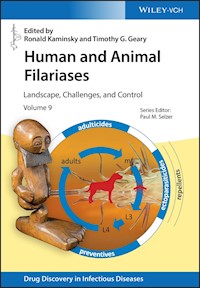
CoverThe human filariae Wuchereria bancrofti, Brugia timori and Brugia malayi are the causative agents of the disease elephantiasis which is illustrated by a wooden figurine of the Basonge people from the Democratic Republic of the Congo (courtesy of P. Mäser, for details see chapter 2). Photo credits Science Museum London, Wellcome Trust collection (wellcomecollection.org; CC BY 4.0); CDC/R.S. Craig (phil.cdc.gov). The graphic sketches the life cycle of the animal pathogenic Dirofilaria immitis and potential chemical intervention periods. D. immitis causes heartworm disease in dogs and other canids. The inner circle represents the life cycle of D. immitis within the mammalian host (dog) and the vector (mosquito). The length of the arrows approximately reflects the development time of each stage. The outer circle shows prevention and treatment options depending on the stage of development of the parasite. Macrocyclic lactones are used as preventive treatment up to 60 days post‐infection against D. immitis L3 and L4 larval stages. Melarsomine, the only registered heartworm adulticide, is efficacious against adult D. immitis, which can be diagnosed around 180 days post‐infection. Ectoparasiticides or repellents can be used to prevent mosquitos from feeding on dogs and cats, reducing the potential for infection (courtesy of S. Noack et al., for details see chapter 9).
All books published by WILEY‐VCH are carefully produced. Nevertheless, authors, editors, and publisher do not warrant the information contained in these books, including this book, to be free of errors. Readers are advised to keep in mind that statements, data, illustrations, procedural details or other items may inadvertently be inaccurate.
Library of Congress Card No.: applied for
British Library Cataloguing‐in‐Publication DataA catalogue record for this book is available from the British Library.
Bibliographic information published by the Deutsche NationalbibliothekThe Deutsche Nationalbibliothek lists this publication in the Deutsche Nationalbibliografie; detailed bibliographic data are available on the Internet at <http://dnb.d-nb.de>.
© 2023 WILEY‐VCH GmbH
All rights reserved (including those of translation into other languages). No part of this book may be reproduced in any form – by photoprinting, microfilm, or any other means – nor transmitted or translated into a machine language without written permission from the publishers. Registered names, trademarks, etc. used in this book, even when not specifically marked as such, are not to be considered unprotected by law.
Print ISBN: 978‐3‐527‐34659‐2ePDF ISBN: 978‐3‐527‐82343‐7ePub ISBN: 978‐3‐527‐82342‐0oBook ISBN: 978‐3‐527‐82341‐3
Cover Design Adam Design, Weinheim, Germany
List of Contributors
David Abraham
Thomas Jefferson University
Sidney Kimmel Medical College
Department of Microbiology and Immunology
Philadelphia, PA 19107
USA
Lyric Bartholomay*
University of Wisconsin‐Madison School of Veterinary Medicine
Department of Pathobiological Sciences
1656 Linden Dr, Madison WI 53706
USA
Boakye A. Boatin*
McGill University Institute of Parasitology
Montreal, Quebec H2X 3V9
Canada
University of Ghana Legon Noguchi Memorial Institute for Medical Research
Lymphatic Filariasis Support Centre for Africa Accra Ghana
5569 Oakwood Drive Stone Mountain, GA 30087
USA
Dwight D. Bowman*
Cornell University
College of Veterinary Medicine Department of Microbiology and Immunology
Ithaca, NY 14853‐6401
USA
Collette Britton*
University of Glasgow
Institute of Biodiversity Animal Health and Comparative Medicine, College of Medical, Veterinary and Life Sciences
Bearsden Road, Glasgow G61 1QH Scotland
UK
Douglas S. Carithers
Boehringer Ingelheim Animal Health
3239 Satellite Blvd, Duluth, GA 30096
USA
Eileen Devaney*
University of Glasgow, Institute of Biodiversity, Animal Health and Comparative Medicine
College of Medical, Veterinary and Life Sciences
Bearsden Road, Glasgow G61 1QH, Scotland
UK
Jason Drake
Global Technical Marketer – Pet Health Parasiticides
Elanco Animal Health
2500 Innovation Way Greenfield, IN 46140
USA
Thomas Duguet
INVENesis Sàrl
Rue de Neuchâtel 15A CH‐2072 St‐Blaise
Switzerland
Christian Epe*
Boehringer Ingelheim Animal Health
Binger Str. 173, 55216 Ingelheim am Rhein
Germany
christian.epe@boehringer‐ingelheim.com
Christopher Evans
University of Georgia College of Veterinary Medicine
Department of Infectious Diseases
Athens, GA 30602
USA
Timothy G. Geary*
McGill University Institute of Parasitology
21111 Lakeshore Road Sainte‐Anne‐de‐Bellevue, H9X 3V9 QC
Canada
Queen's University‐Belfast
School of Biological Sciences, Microbes & Pathogen Biology
19 Chlorine Gardens, Belfast BT9 5DL
Northern Ireland
John O. Gyapong
Vice Chancellor's Office University of Health & Allied Sciences AS
PMB 31 Ho, VH‐0194‐8222 Volta Region
Ghana
John Harrington
Boehringer Ingelheim Animal Health
1730 Olympic Drive, Athens GA 30601
USA
Natalie A. Hawryluk*
Bristol Myers Squibb
Global Health Research & Early Development, 10300 Campus Point Drive, Suite 100
San Diego, CA 92121
USA
Achim Hoerauf
University Hospital Bonn, Institute for Medical Microbiology, Immunology and Parasitology
Venusberg‐Campus 1
Building 63, 53127 Bonn
Germany
Cluster of Excellence of the University of Bonn
Bonn
Germany
German Center for Infection Research (DZIF)
Partner site Bonn‐Cologne
Bonn
Germany
Marc P. Hübner*
University Hospital Bonn, Institute for Medical Microbiology Immunology and Parasitology
Venusberg‐Campus 1, Building 63, 53127 Bonn
Germany
Cluster of Excellence of the University of Bonn
Bonn
Germany
German Center for Infection Research (DZIF) Partner site Bonn‐Cologne
Bonn
Germany
Joseph Kamgno
Epidemiology and Biostatistics
Centre for Research on Filariasis and other Tropical Diseases (CRFilMT)
Street 1.411, Fouda Quarter Yaounde
Cameroon
University of Yaoundé I
Department of Public Health, Faculty of Medicine and Biomedical Sciences
P.O. Box 1364, Yaoundé
Cameroon
Ronald Kaminsky*
ParaConsulting
Altenstein 13, 79685 Häg‐Ehrsberg
Germany
Phillip Kaufman
Texas A&M University
Department of Entomology College Station, TX 77843‐2475
USA
Jennifer Ketzis
Ross University School of Veterinary Medicine, Biomedical Sciences
Basseterre, St. Kitts
West Indies
Darrell Klug*
Darrell Klug Consulting
5 Waldron Ct., Greensboro, NC 27408
USA
Regina Lizundia
Elanco Tiergesundheit AG
Mattenstrasse 24A, 4058 Basel
Switzerland
Alan Long
Boehringer‐Ingelheim
3239 Satellite Blvd NW Duluth, GA 30096
USA
Sara Lustigman*
Lindsley F Kimball Research Institute
New York Blood Center, Laboratory of Molecular Parasitology,
New York, NY 10065
USA
Charles D. Mackenzie*
Neglected Tropical Disease Support Center
Task Force Global Health
330 West Ponce de Leon Avenue, Decatur, GA 30030
USA
Ben Makepeace
University of Liverpool, Institute of Infection & Global Health
Department of Infection Biology
Liverpool L3 5RF
UK
Pascal Mäser*
Swiss Tropical and Public Health Institute
Department of Medical Parasitology and Infection Biology
Kreuzstrasse 2, 4123 Allschwil
Switzerland
University of Basel
Petersplatz 1
Basel
Switzerland
Tanja McKay*
Arkansas State University
Department of Biological Sciences, Jonesboro, AR 72467
USA
Andrew Moorhead*
University of Georgia, College of Veterinary Medicine
Department of Infectious Diseases
Athens, GA 30602
USA
Sandra Noack
Boehringer Ingelheim Animal Health
Binger Str. 173 Ingelheim am Rhein 55216
Germany
Kenneth Pfarr
University Hospital Bonn
Institute for Medical Microbiology, Immunology and Parasitology
Venusberg‐Campus 1, Building 63, 53127 Bonn
Germany
German Center for Infection Research (DZIF)
Partner site Bonn‐Cologne
Bonn
Germany
Nils Pilotte
Smith College
Department of Biological Science
Northampton, MA 01063
USA
Roger Prichard*
McGill University, Institute of Parasitology
21111 Lakeshore Road
Sainte Anne‐de‐Bellevue, H9X3V9
Canada
Kapa D. Ramaiah
12, Bhaktavatsalam Street, Tagore Nagar
Lawspet, Puducherry 605008
India
Frank O. Richards Jr
453 Freedom Parkway
Atlanta, GA 30307
USA
Lucien Rufener*
INVENesis Sàrl
Rue de Neuchâtel 15A CH‐2072 St‐Blaise
Switzerland
Heinz Sager*
Elanco Tiergesundheit AG
Mattenstrasse 24A 4058 Basel
Switzerland
Sandra Schorderet‐Weber*
Consultant Parasitology
Neuchâtel
Switzerland
Paul M. Selzer*
Boehringer Ingelheim Animal Health
Binger Str. 173, Ingelheim am Rhein 55216
Germany
paul.selzer@boehringer‐ingelheim.com
Ashley Souza
Neglected Tropical Diseases Support Center, The Task Force for Global Health
330 West Ponce de Leon Avenue, Decatur, GA 30030
USA
Sabine Specht*
Drugs for Neglected Diseases initiative
15 Chemin Camille‐Vidart, 1202 Geneva
Switzerland
Sofija Todorovic
Arkansas State University
Department of Biological Sciences
Jonesboro, AR 72467
USA
Lucienne Tritten*
University of Zurich Institute of Parasitology
Winterthurerstrasse 266a CH‐8057 Zurich
Switzerland
Swiss Tropical and Public Health Institute
Kreuzstrasse 2
CH-4123 Allschwil
Switzerland
University of Basel
CH-4000 Basel
Switzerland
Alexandre Vernudachi
INVENesis France
Bâtiment 311, Route de Crotelles 37380 Nouzilly
France
William H. White
Elanco Animal Health
Alfred‐Nobel‐Str. 50, 40789 Monheim
Germany
Steven Williams
Smith College
Department of Biological Science
Northampton, MA 01063
USA
Timothy K. Wu
Cornell University, College of Veterinary Medicine
Department of Microbiology and Immunology
Ithaca, NY 14853‐6401
USA
Foreword
While recent global attention has been rightfully focused on viruses (coronaviruses, Ebola, etc.) and bacteria (MSRA, tuberculosis, etc.) as sources of infectious diseases, one should not overlook the continued importance of parasites in human and animal health. The World Health Organization (WHO) reported for 2018 about 228 million cases of malaria worldwide with associated 405 000 deaths [1]. Less known is the impact of human and animal pathogenic filariae which are causing severe disease in both humans and animals. An estimated 180 million humans are infected with filarial parasites resulting in considerable suffering and disability. Filariasis is considered to the second leading cause of disability with DALYs (disability‐adjusted life years) estimated to be 5.549 million [2].
The economic and health impacts of diseases like “river blindness” (onchocerciasis) continue to be dramatic both for the individual [3] and society as a whole [4]. Lymphatic filariasis (LF) is considered to be a “Neglected Tropical Disease” in humans and causes illness and suffering in more than 125 million individuals. The main causative agents of lymphatic filariasis include the mosquito‐borne filarial nematodes Wuchereria bancrofti and Brugia malayi. An estimated 90% of LF cases are caused by W. bancrofti (Bancroftian filariasis). Neglected Tropical Diseases like these still cause severe disease, suffering, and economic loss in affected countries [5].
Treatments and prevention of onchocerciasis and LF generally rely on community‐based approaches using donated drugs such as ivermectin, a compound originally developed in veterinary medicine [6], or diethylcarbamazine [7], an anthelmintic discovered in 1947 that due to side effects in humans can't be used in onchocerciasis‐endemic regions.
In animals, filariae cause heartworm disease in dogs and cats, a widespread and often fatal parasitic infection of pet and feral animals, with canine and feline heartworm being the economically most important filarial infections. The global animal health heartworm market is exceeding US$ 2 billion per year in pet owner spend [8]. With that, it is the most important single disease/parasitic infection market in all of animal health. Prevention and treatment of Dirofilaria immitis, the parasite causing heartworm disease, is the focus of intense research in all major animal health corporations. Given the necessary investment in research, compound libraries, and whole organism‐screening systems, etc., it can be assumed that currently only the top four animal health companies (Zoetis, Boehringer Ingelheim Animal Health, Elanco, and MSD Animal Health) have the resources and financial stamina to truly bring innovation to market. With the cost of biotechnology dropping dramatically, it might be possible, however, that smaller animal health startup companies become active in this field.
Filariae are a prime example for the concept of One Medicine. Different species of these parasites cause illness and often fatal disease in humans and animals and have a grave economic impact for both. Antiparasitic and particularly anthelmintic treatments for human health are often based on animal health compounds and as filariases are “Neglected Tropical Diseases” in humans while of strong economic importance in animal health, research in animal health is often the driving force for new interventions. It is noteworthy that compounds widely used in human health like ivermectin and related macrocyclic lactones, emodepside (which is currently in a clinical trial against onchocerciasis in human health [9, 10]) and others, were discovered in animal health and subsequently tested and used in human health. This is contrary to the usual pattern of active ingredients proven in human health being tested and utilized in animal health and, again, a good example of the benefits of a One Health approach.
One Health is an approach that recognizes that the health of people is deeply connected to the health of animals and our shared environment. One Health is not new, but it has become more important in recent years. This is because many factors have changed interactions between people, animals, plants, and our environment [11]. With growing human populations that expand into wildlife areas previously undisturbed by human settlement and humans living in close contact with domestic and wild animals, opportunities for diseases and parasites to pass between animals and humans increase. With ever‐accelerating climate change and land use, disruptions in environmental conditions can provide new habitats for diseases and parasites and allow them to more easily pass between animals and humans.
Research into filariases in animals and humans as presented in this book is a hallmark of the One Health approach. Parasitic diseases research and treatment in animals have a direct effect on the available treatment and prevention options in humans and with that a large impact on the economic wellbeing of millions of people. That reasoning behind One Health is why organizations like the Bill and Melinda Gates Foundation, the Drugs for neglected Disease Initiative (DnDi), GALVmed, and others support research in parasitic and other infectious diseases.
Last but not least, human and animal health is important not just for tropical areas of the world where human filariae are endemic, but also effectively for the entire world. Economic hardship, inability to generate incomes, or live in certain parts of the world due to parasite populations or endemic diseases lead to suffering and mass migrations which increase economic burdens both for countries where citizens leave and those where they arrive.
Research in infectious diseases and parasites like the comprehensive material presented in this book is paramount for the future of our global society. Without continued pioneering work to understand the prevalence, pathogenesis, economic impact, and treatment and prevention of filariases, the economic impact will only increase and could make entire normally fertile regions around river deltas uninhabitable. The work done for the discovery and development of new heartworm drugs for dogs and cats has a direct positive effect and relationship with the work done on human filarial diseases providing the benefit of One Health for both humans and animals.
The detail and quality of the work in this book from the description of the parasites, detailed chapters on the diseases caused by filariae in humans and animals all the way to current and future chemotherapy followed by an outlook on drug discovery for novel antifilarials and even approaches including genetics, vector control, and potential vaccines will contribute greatly to the understanding of these important parasites and thus will help with treatment, control, and possibly eradication in both animals and humans.
May 2022
Dr. med. vet. Fabian M. Kausche
Trustee at GALVmed;
Chairman of the board at PetMedix, Ltd.;
Member of the board at Pet Flavors, LLC;
Member of the board at Sequent Scientific, Pvt Pty;
Member of the Scientific Advisory Committee at
Rejuvenate Bio, Inc
.
References
1
WHO (2019).
World Malaria Report 2019
. Geneva: World Health Organization
https://www.who.int/publications/i/item/world-malaria-report-2019
(accessed 12 March 2021).
2
Fenwick, A. (2012). The global burden of neglected tropical diseases.
Public Health
126: 233–236.
3
Ubachukwu, P.O. (2006). Socio‐economic impact of onchocerciasis eith particular reference to females and children: a review.
Animal Res. Int.
3 (2): 494–504.
4
https://www.who.int/apoc/onchocerciasis/disease/en/
(accessed 12 March 2021).
5
Taylor, M.J., Hoerauf, A., and Bockarie, M. (2010). Lymphatic filariasis and onchocerciasis.
Lancet
376 (9747): 1175–1185.
6
Ōmura, S. and Crump, A. (2014). Ivermectin: panacea for resource‐poor communities?
Trends Parasitol.
30: 445–455.
7
Hawking, F. (1962). A review of progress in the chemotherapy and control of filariasis since 1955.
Bull. World Health Org.
27: 555–568.
8
Klug and Drake, (2022) Chapter 13: Global economics of heartworm disease, in
Human and Animal Filariases
, (eds. R. Kaminsky and T.G. Geary), Wiley‐VCH, Weinheim, Germany.
9
https://dndi.org/research-development/portfolio/emodepside/
(accessed 12 March 2021).
10
Krücken, J., Holden‐Dye, L., Keiser, J. et al. (2021). Development of emodepside as the first safe, short‐course adulticidal treatment for human onchocerciasis – the fruit of a successful industrial–academic collaboration.
PLOS Pathog.
17: e100968.
11
https://onehealthinitiative.com/
(accessed 12 March 2021).
Preface
Pathogenic filariae affect the wellbeing of hundreds of millions of people and animals. The vector‐borne human filarial parasites cause onchocerciasis (river blindness), lymphatic filariasis (elephantiasis), and loiasis (eyeworm). More than 200 million people live in onchocerciasis‐endemic areas, and about 1.39 billion people are at risk in lymphatic filariasis areas in more than 72 countries. It is estimated that about 380 million dogs and 350 million cats are at risk of being infected with filariae, with canine heartworm as the most prominent filarial disease in dogs. This book aims to provide insights regarding the current landscape, the gaps and challenges, and current and future approaches for control of both human and animal filariases.
The first section of this volume is titled “Human and Animal Filariae and Their Diseases,” providing a comprehensive overview of human and animal filariae and the diseases they cause. Firstly, arguments are presented which foster a “One Health” approach to review human and animal filariases and explore mutual benefits. Furthermore, a strong foundation is laid, based on the biological background, the description of the various diseases and the current gaps, diagnostic possibilities, and treatment options. A thorough assessment of current chemotherapeutic interventions (which are still the mainstay of control) is outlined as well as the importance of drug resistance. A consideration of current elimination and eradication programs for human filariases, and finally, an economic overview particularly of canine heartworm, closes this section.
The section on “Drug Discovery for Novel Antifilarials” starts with a discussion of the similarities and discrepancies in requirements (product profiles) for new antifilarials. Subsequently, various authors outline the state‐of‐the‐art discovery processes for identifying new antifilarial lead compounds. They focus on the current status of in vitro discovery approaches, advantages, and handicaps of available in vivo rodent models, and finally on in vivo assays to explore and monitor the activity of active compounds on target parasites. Finally, the antifilarial drug pipeline, as much as is publicly available, is highlighted. As an area for discovery of new drugs, the host–filariae interface is advanced in particular.
The section on “New Frontiers for Control of Antifilarial Diseases” closes this volume. These contributions show the potential of exploring improved technologies for genomic, transcriptomic, and metabolic approaches for the discovery of novel points of intervention. Furthermore, they outline the major advances and obstacles in vaccine research against the background that an effective antifilarial vaccine has the potential of a breakthrough in control of filariases, particularly of canine heartworm. Alternatively, opportunities and current gaps and challenges of vector control methods are presented. Finally, the potential to therapeutically intervene with the rickettsia‐like endosymbionts Wolbachia as a particular target in most filarial species is presented.
We thank Prof. Paul M. Selzer, the series editor, and many representatives of Wiley for the opportunity to embark on this volume and for their continued guidance and support. We also thank the authors who have generously contributed their time and expertise. The result of all these efforts is a volume that provides a comprehensive view on human and animal filariases for physicians, veterinarians, biologists, public health decision makers, and other interested people in academia and industry.
May 2022
Ronald KaminskyTimothy G. Geary
Part IHuman and Animal Filariae and Their Diseases
1Breaking the Silos – Obstacles and Opportunities for One Health in Filariases
Ronald Kaminsky1,* and Timothy G. Geary2,3,*
1ParaConsulting, Altenstein 13, Häg‐Ehrsberg 79685, Germany
2Institute of Parasitology, McGill University, 21111 Lakeshore Road, Sainte‐Anne‐de‐Bellevue, QC H9X 3V9 Canada
3School of Biological Sciences, Queen's University‐Belfast, 19 Chlorine Gardens, Belfast, BT9 5DL, Northern Ireland
Abstract
Despite major similarities in biology and transmission, human and animal filarial parasites exhibit a number of species‐specific characteristics that prompt the question if a One Health approach is sui for filariases. We elucidate that applying the One Health concept to filariases is not motivated by the pathology of these diseases nor their geographic overlap and only to a minor extent by the zoonotic potential of animal filariases. Instead, the benefits of adopting a One Health view on this disease complex are evident in the areas of drug resistance, the well‐being of humans and their pets, and even more importantly for the discovery of new anthelmintics and research on the basic biology of the host–parasite interface that may lead to entirely novel treatment strategies.
1.1 Introduction
Why should one combine chapters on scientific research and reviews into human and animal filariases in a single book? An obvious reason is that these parasites exhibit a number of biological similarities; the pathogenic filariae belong within the superfamily of Filarioidea and the same family of Onchocercidae [1], and they all cause vector‐borne diseases (meaning that all are adapted to live in two very distinct kinds of hosts, arthropods, and mammals). However, the preferred sites of infection and thus the pathologies they cause are quite different, even within the same host [2, 3], and their respective competent vectors also differ a great deal in biology [4, 5]. In a more pragmatic approach, the present control methods are quite different for human and animal filariases and product profiles differ substantially [6]; however, the currently applied control methods rely to a large extent on the same chemical class, the macrocyclic lactones [7–10]. The common history of chemical control of filariases relates back to the discovery and development of ivermectin, firstly for veterinary purposes but subsequently applied for control of human onchocerciasis and lymphatic filariasis. In addition, it is for good reasons that Satoshi Ōmura and William C. Campbell were awarded the 2015 Nobel Prize in Medicine for that breakthrough innovation. Even now, control programs for human filariases [7] rely on ivermectin (among other drugs), and many veterinary products [9] contain ivermectin or subsequently developed macrocyclic lactones as the active pharmaceutical ingredients.
The One Health approach is currently endorsed by many authorities and has become popular in the scientific public health community [11, 12]. The term “One Health” was first used in 2003 for the valuable consideration of a combined perspective on the emerging severe acute respiratory disease (SARS) [12]. Subsequently, the correlation and deep connections between human and animal health, including wildlife health, and the need for an interdisciplinary and collaborative approach to respond to emerging diseases, were clearly outlined (Wildlife Conservation Society One World‐One Health www.oneworldonehealth.org Sept 2004) [13], although the principles of the One Health concept originated several decades ago as “One Medicine, One World” [11]. The concept has not been applied to the study of parasites as frequently or intensively as might be desired, and, in our experience, veterinarians, physicians, and parasitologists do not always work together to the extent that they could or should, despite the excellent chances for mutual benefit.
1.2 Indicators for “One Health” Diseases
The obvious indicators for a link between research in human and animal diseases are (i) the origin of the pathogen, (ii) shared geographic or microhabitats, and (iii) a zoonotic characteristic of the disease. A number of emerging infections can be traced to animals, including wildlife, such as the pathogenic avian influenza H5N1 or SIV/HIV, associated with changes in human activities [14–16]. More recently, it has been hypothesized that SARS‐CoV‐2 originated from a β‐coronavirus in the sarbecovirus (SARS‐like virus) group that naturally infects bats and pangolins [17–19]. The risk of exposure may rise when the hosts of the same pathogen share common close habitats, such as the distribution of Escherichia coli in cattle grazing next to a lettuce field. Furthermore, at least 60% of human diseases are multi‐host zoonoses [20], including parasitic infections such as leishmaniasis, human African trypanosomiasis, schistosomiasis, soil‐transmitted helminthiasis, and lymphatic filariasis. Many of these diseases have been grouped as “Neglected Zoonotic Diseases” [21].
Table 1.1 Differences and potential synergies for human and animal filariases
Differences
Common/different
Human health
Animal health
Geography
Different
Predominantly tropical, subtropical countries
Heartworm endemic areas in North America, etc.
Financial resources of involved communities
Different
Resource‐limited; most drugs are donated
Heartworm control products are a major component of AH revenue, as well as for veterinary clinics
Treatment schedules
Different
Ideally once/year
Monthly to yearly
Zoonotic potential different for some species
Different
D. repens
;
D. immitis
in human only anecdotal
—
Different
—
No known animal reservoir for
W. bancrofti
Different
—
No animal host confirmed for
O. volvulus
, but related cattle species exist (
O. ochengi
)
Primary life stages targeted for chemotherapy
Different
L1, adult fertility
L3/L4, L1
Vectors
±: overlapping mosquito species, but flies not relevant for heartworm
Mosquitoes/black flies
Mosquitoes
Possible synergies
Zoonotic potential for some species
+
Brugia malayi, Brugia pahangi
Cats
+
Onchocerca lupi
Dogs, cats
+
Dirofilaria repens
Dog
Current drugs
+
Ivermectin, moxidectin, doxycycline, and diethylcarbamazine
Macrocyclic lactones, arsenicals, and doxycycline
Drug targets
+
Table 1.3
Table 1.3
Vaccine targets
+ Common epitopes
O. volvulus
D. immitis
Vector control
± for mosquitoes
For LF
For
D. immitis
Costs
+ low cost of goods
Affordable for public health resources of local communities
Competitive margins for animal health industries
Diagnostics
+ Common protein or nucleic acid technologies
All human filariae
D. immitis
1.3 Zoonotic Characteristics of Human and Animal Filariases
Although eight filariae species have been reported to infect humans [22, 23], the zoonotic potential of filarial parasites appears to be limited. They all rely on insect vectors for transmission, but most of them express a more or less strict host specificity such that each species is confined to a single or few specific definitive and intermediate hosts [12]. The human pathogenic species Brugia malayi and Brugia pahangi can also infect cats, but the epidemiological significance of this alternative host is not known. Nevertheless, they are grouped as lymphatic filariases in the Neglected Zoonotic Diseases list [21], and cats can serve as competent hosts for B. malayi, with reported prevalence reaching as high as 20% in endemic feline populations [24]. Other than Onchocerca volvulus, the cause of onchocerciasis, only one other species in this genus, Onchocerca lupi, can use humans as host, although it is far more commonly found in dogs and cats (Table 1.1). The medical significance of this parasite has only recently been appreciated. O. lupi infection is now also proposed as an emerging zoonosis [25, 26]. Infections of humans with the canine pathogen Dirofilaria immitis occur, but the parasites almost never mature into adult stages and are described mostly as anecdotal, single case reports. However, the usually non‐pathogenic species Dirofilaria repens, with a primary canine host, has higher zoonotic potential than D. immitis. Human infection is usually characterized by subcutaneous nodules, but larva migrans‐like symptoms may also occur and, notably, larvae may reach the eye, becoming visible in the conjunctiva. Some reports have described the presence of microfilariae in humans [27].
1.4 Are Human and Animal Filariases Suitable for a “One Health” Approach?
Applying the One Health concept to filariases is not motivated by common pathological manifestations of these diseases nor their geographic overlap and only to a minor extent by the zoonotic potential of animal filariases (Table 1.1). Instead, the benefits of adopting a One Health view on this disease complex are evident in the areas of pharmacology of antifilarial drugs (including drug discovery and drug resistance), the use of common technology platforms for diagnosis and vaccine control, aspects of vector biology, and implications for the well‐being of humans and their pets. Research on the basic biology of the host–parasite interface that may lead to entirely novel treatment strategies also illustrates the great potential of a One Health approach to filariases.
1.4.1 Pharmacology of Antifilarial Drugs
As reviewed in this volume [7–10], chemotherapy of human and veterinary filariases relies to a significant extent on the use of macrocyclic lactones, in particular the prototype of this class, ivermectin. Although ivermectin has some filariid species‐ and host‐specific effects [28, 29], the drug has microfilaricidal and temporary sterilization effects against human and veterinary filariae. Although microfilaricidal activity may be due to inhibition of secretion of parasite‐derived immunomodulatory factors, a mechanistic explanation of the prolonged but reversible inhibition of fertility caused by the drug remains elusive. In contrast, the activity of ivermectin against L3 and L4 larvae of D. immitis, the basis for its use as a heartworm disease preventative, is not fully duplicated in O. volvulus or LF parasites, for unknown reasons. Although the microfilaricidal effects of diethylcarbamazine are evident against veterinary and human filariae, macrofilaricidal effects are only pronounced in LF parasites. The basis for the discrepancy between the profound pathology associated with killing of microfilariae in onchocerciasis and heartworm infections, but not in LF, is yet unresolved. Thus, although many commonalities are observed for antifilarial chemotherapy in human and veterinary medicine, the differences could provide a basis for comparative studies that may illuminate strategies for safer and more effective interventions.
1.4.2 Drug Resistance
Drug resistance is a well‐known and urgently considered obstacle in animal health, particularly for livestock but also more recently for companion animals. Producers of small ruminants and cattle have experienced the disastrous effects of drug‐resistant gastrointestinal nematodes, even to the point of forced abandonment of sheep farming in some areas with high‐level resistance to all available anthelmintics. This major stressor has resulted in considerable investment in research to understand, monitor, and combat the issue of drug resistance in livestock animals [30]. These methods are now being applied to supplement human STH control programs, as concerns about the development of resistance to albendazole and mebendazole are heightened by the expansion and intensification of mass drug administration programs. In this case, extensive molecular biology work has clearly identified three alleles in a nematode beta‐tubulin gene that cause benzimidazole resistance, and it is possible to monitor for the presence and spread of these alleles in human STH species [31]. Recently, one of these alleles (a change from phenylalanine to tyrosine at residue 167 of the beta‐tubulin gene) has been reported to be present in Ancylostoma caninum (hookworms) in dogs in the United States [32], proving that benzimidazole resistance is a threat in hookworms and encouraging intensified monitoring for this mutation in areas that receive intensive treatment with these drugs for human STH infections.
A similar situation has developed in canine heartworms; recent experiments have proven that macrocyclic lactone‐resistant D. immitis populations have appeared in the United States [33]. These resistant populations can break through previously effective macrocyclic lactone regimens, and microfilariae of these parasites are unaffected by these normally effective drugs. A mixture of genomic and phenotypic assays has conclusively demonstrated that resistant populations are genetically distinct from wild‐type parasites and support the hypothesis that the phenotype of macrocyclic lactone resistance is multigenic. Although genomic analyses have not yet been able to conclusively identify the genes that cause this phenotype, single nucleotide polymorphisms (SNPs) have been found that can identify resistant parasites with high confidence. The phenotype extends to all members of this drug class, but further work is needed to define the quantitative shift in sensitivity and to determine if the extent of resistance is the same for all macrocyclic lactones. At this time, new drugs or drug regiments that are fully effective against resistant parasites have not been identified or confirmed.
Although resistance to macrocyclic lactones has been suspected in human filariases (particularly in O. volvulus; [33]), the lack of a convenient laboratory host for these parasites has greatly limited the opportunity for experimental validation. It is to be hoped that, once the genes responsible for resistance to macrocyclic lactones in D. immitis are identified, research can be initiated to characterize and monitor them in populations of O. volvulus that have been intensively treated with ivermectin.
1.4.3 Antifilarial Drug Discovery
Almost all medicines used in veterinary practice were originally developed for human use, with the notable exception of antiparasitic drugs, many of which were developed for use in animals (Table 1.2). The examples include the majority of drugs used to treat coccidian infections of poultry and, particularly, anthelmintics. Indeed, only one drug used as an anthelmintic in animals was originally discovered in a human‐use screening operation: diethylcarbamazine [10], which was discovered in a program looking for drugs for the treatment of lymphatic filariasis and only later transitioned for use as a heartworm preventative in dogs (now replaced by macrocyclic lactones for this indication).
Table 1.2 Anthelmintics discovered for AH, which were repurposed for HH
Active ingredient
Indication for animal health
Year of market entry
Indication for human health
Thiabendazole
GI nematodes
1964
Derivatives in use (mebendazole, albendazole, and flubendazole)
Albendazole
GI nematodes
1981
Lymphatic filariases GI nematodes Tapeworms (
Taenia
and
Echinococcus
)
Pyrantel
GI nematodes
1970s
GI nematodes
Oxantel
GI nematodes
1970s
GI nematodes
Ivermectin
GI nematodes, heartworm, arthropods
1981
Filariases, mites, lice
Moxidectin
As for ivermectin
1990
Onchocerciasis
Praziquantel
Tapeworms
1975
Schistosomiasis, other trematodes
Triclabendazole
Fasciola
spp.
1983
Fasciola hepatica
All but diethylcarbamazine and doxycycline.
However, relatively little investment was made in the animal health industry to discover new drugs for heartworm infections over the past 20 years. The most important reason for this status was the excellent record of efficacy and safety of the macrocyclic lactones, which greatly reduced the opportunity for new medicines to penetrate an already well‐satisfied market. Furthermore, the necessity to maintain the long heartworm life cycle in dogs to detect efficacy endpoints requires much longer discovery programs than for GI nematodes, for example, and greatly limits the ability of academic researchers to operate in this area (along with animal use regulations that restrict the use of dogs for exploratory research). Finally, the marked consolidation of the animal health industry has led to a significant overall decline in the amount of private resources that can be devoted to the discovery of new drugs for prevention of heartworm disease.
Instead, significant investment has more recently been targeted for the discovery of new anthelmintics with macrofilaricidal activity for human use, especially for onchocerciasis, for which control programs that rely solely on the microfilaricidal action of ivermectin (and now moxidectin) may not achieve the goals of control programs in a cost‐ and time‐effective manner. These efforts have led to the identification of several compounds that are in clinical trials or are candidates for such trials, including the veterinary anthelmintic emodepside, which has antifilarial activity in many animal models, auranofin, imatinib, and several antibiotics with anti‐Wolbachia activity [10, 34, 35]. Although these compounds have known mechanisms of action, their antifilarial activity was discovered in phenotypic and infected animal models. Among them, only emodepside has been reported to have activity against D. immitis[36]. It is also important to recognize that other veterinary anthelmintics, such as monepantel [37] or derquantel [38], may have utility for filariases; further research is needed to support or reject this possibility.
Until recently, it has not been possible to maintain Wuchereria bancrofti,




