


13,99 €
Mehr erfahren.
- Herausgeber: Firefinch Publishing
- Kategorie: Gesellschafts- und Liebesromane
- Sprache: Englisch
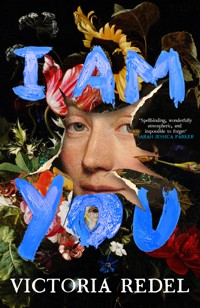
A mesmerising historical novel, I Am You is a meditation on gender, an ode to artistic creation, and an unforgettable love story that reimagines the life of renowned painter Maria van Oosterwijck during the Dutch Golden Age. "Spellbinding, wonderfully atmospheric, and impossible to forget" Sarah Jessica Parker "With echoes of Yael van der Wouden's The Safekeep, I am You is earthy and fleshy and pulsates with suppressed emotions of rage, envy and desire." Elizabeth Fremantle At eight years old, Gerta Pieters is forced to disguise herself as a boy and sent to work for a genteel family. When their daughter Maria sees through Gerta's ruse, she insists Gerta accompany her to Amsterdam and help her enter the elite, male-dominated art world. While Maria rises in the ranks of society as a painting prodigy, Gerta makes herself invaluable in every way: confidante, muse, lover. But as Gerta steps into her own talents, their relationship fractures into a complex web of obsession and rivalry, until the secrets they keep threaten to unravel everything.
Das E-Book können Sie in Legimi-Apps oder einer beliebigen App lesen, die das folgende Format unterstützen:
Veröffentlichungsjahr: 2025
Ähnliche



















PRAISE FOR I AM YOU
‘A stunning accomplishment’
Michael Cunningham, Pulitzer Prize-winning author of Day and The Hours
‘Victoria Redel masterfully evokes the rich period of Golden Age Amsterdam and the centrality of its artists … It is spellbinding, wonderfully atmospheric, and impossible to forget’
Sarah Jessica Parker, SJP Lit
‘A beautiful tale of extraordinary women making their own way in ordinary times’
Book Riot
‘[This] lush, sexy, absorbing novel … brings to life two artists who are inextricably linked in passion and competition’
Melissa Febos, bestselling author of Girlhood
ALSO BY VICTORIA REDEL
Novels
Before Everything
The Border of Truth
Loverboy
Short Fiction
Make Me Do Things
Where the Road Bottoms Out
Poetry
Paradise
Woman Without Umbrella
Swoon
Already the World
I AMYOU
A NOVEL
Victoria Redel
This book is dedicated to the memory of my mother, Natalie Soltanitzky Redel, who brought art and dance into my life.
And for B. V. D., who walked me up the Prinsengracht.
Contents
Book I
One
Two
Three
Four
Five
Six
Seven
Eight
Nine
Ten
Eleven
Twelve
Book II
Thirteen
Fourteen
Fifteen
Sixteen
Seventeen
Eighteen
Nineteen
Twenty
Twenty-One
Acknowledgments
About the Author
In 2019, reading Russell Shorto’s wonderful bookAmsterdam, I came upon the following: “Maria van Oosterwijk was that rare thing: a highly successful woman artist.… The frustration is that so little is known about her life, other than that she started her career in Delft and ended it in Amsterdam. The lack of information may have to do with her sex: as a woman, she was not allowed to join the painters’ guild.” I was intrigued and began poking around for what could be found. Indeed, as I learned about Maria van Oosterwijck and her servant/assistant Geertje Pieters Wyntges, I found that even the scant supposed facts of their lives are contradicted—down to alternative spellings of their names. As a fiction writer, this allowed me enormous freedom imagining the lives of two women painters in the seventeenth-century Dutch Golden Age. This is a novel and not a work of nonfiction, and among the many liberties taken in the course of shaping the narrative, I’ve bent and compressed time, most notably pushing both women’s births forward by more than ten years.
Tis that she, yet a maiden bore a maiden, to wit a maid,
And cast work-cloth, broom, and heart aside.
The Oosterwijck maid was nurtured so quick and so well
That ’tis Oosterwijck’s brush alone her can quell,
Think ye, my witty friend it is a great mistake,
To call Geertje Pieters Geertruyd van Oosterwijck?
Oosterwijck’s teaching has guided her fate,
She is her own print;
Or clearer to state,
She is Oosterwijck’s moon; so give her such shine,
Think what light must be in the Sun to give off a glare so fine.
CONSTANTIJN HUYGENS1679 poem to Willem van Heemskerck
BOOKI
ONE
1653, Voorburg
IWAS SHY OF EIGHT WHENI was put out to work. The family that took me in was in need of a boy and so it was a boy I became. Hair sheared, last name twisted to my first, I was known as Pieter. Pieter Wyntges. My two family names stacked as one.
It was a long time before I was once again Gerta.
I was happy to be Pieter. I fetched and carried, split wood, and rubbed dirty, splintered hands along my woolen pants. I scurried up to the roof to repair tiles. I did my share of slaughter. From the other workers, I learned a fast mouth and was unafraid to use a boy’s bristled tongue.
Given a bed I didn’t have to share with two sisters, my own yellow coverlet embroidered with lilies, sweet and savory cakes, bowls of stewed meat—second helpings without even asking—already my life was much better. Hunger makes a selfish grabber of the sweetest child. And the promise of a child’s belly full will make it easy to turn a daughter to a boy and a rampant liar of even the kindest parent.
A full belly is no small thing. I didn’t for a moment miss the girl I’d been or imagine the woman I might become.
I didn’t cry once for my mother.
NO DOUBT YOU’VE HEARDabout the glorious time we lived in, where every day some porcine gentleman trumpeted great new wealth. But it’s not only the men of wealth. The fishmonger, the boatman, the tile maker, even a family servant like myself, we may not have been the owners of the East India Company, still we laced our wine with cinnamon and nutmeg. We learned to talk with a slick merchant’s tongue and a philosopher’s loft. We were all bestowed with the blessing of those fat years. No doubt the pigs and cattle that roamed the fetid canal streets also heard that they were fatter and luckier pigs and cattle than any before.
Everything wonderful came through our Dutch ports. A crowded harbor of ships arrived with new goods every day. Silk and lace finer than any slipped through our fingers. We’d not known what we’d lacked till we touched gold and purple threads or wiped the sticky juice of a pineapple from our lips. Then it became our standard. Of course, we’ve all of us seen the rare tulips. Even the butcher, the street sweeper felt feverish watching the auctions. A golden age, we were. We, in this rare moment of peace and health, didn’t feel shame to be announced lucky. We remembered war. We remembered plague marks on our doors. And knew they would return.
AT FOURTEENMaria hardly noticed me. Why would she? I was seven, half her years. My days were outside, my nights bunked in a side shed close to the animals, though like the other servant, Anke,I ate meals at the family table. Unlike bossy Anke, who, slowed by a lame hip, busied through the day with more opinion than work, I kept to tasks and had little to say. I mostly spoke with the chickens and the rabbits. I knew to coo and talk a rabbit quiet in my hands. Or, hearing a hen’s roost cackle, knew where to find a warm egg and, before she pecked my fingers sore, knew to give her my own broody growl. People were the mystery, so it was the people I watched.
Maria was the one to notice. Her particular words. The varieties of her laughter. The concentration of her fingers as she skimmed or flicked the board with a paintbrush. The slight purse of her lips while she painted. The hairs that laced her forehead. The determinedswiffof her dress as she entered a room. Her fingers lifting a pale green egg—one I had collected!—from the bowl, turning it slowly, and, with precision, letting it roll on the wood table until it balanced half in, half out of a slice of sunlight. More than once, when she believed herself alone, I watched her waste a fresh egg, cracking it in her hands, pulling the runny yolk like taffy.
“Beautiful,” she said to no one, as it seeped through her fingers and glazed her narrow wrist.
IHELD THE RABBIT TIGHT.Its nose twitched in the crook of my arm. I petted and scratched the bony skull, pulled the long ears till they relaxed down its back.
“Oh, pretty young friend,” I said, “what a warm day.” It wasn’t a lie. Though we’d suffered a first frost, I stood in the open doors of the hutch and tipped my face into the early winter sun. Heat prickled my neck. I’d never lie to a rabbit. Especially one I’ve known since it was a furless kit. I’ve watched others pin a rabbit under a broomstick and, in a single movement, lift it by the hind legs tosnap the neck. It’s certain and fast. But I’ve only to imagine my neck trapped under a stick to know I could never do that. Instead, I eased my right hand to my trousers. “Pretty little lady, you’ll feed us pretty stew,” I sang, keeping the wood mallet loose at my side. I continued singing, “Pretty, pretty, stew,” and the third or fourth time, I yielded a sharp blow to its skull. It’s important that death be swift and easy, or the meat goes stringy. Then, after hanging the rabbit by its hind legs on two nails, with a quick blade I gutted it, saved the head to feed the yard pup, and let the rest bleed out into the bucket. I kept up a chatter. “The pup loves your head, the garden your blood, and we all thank you for the supper stew,” I chanted. Then I flipped the rabbit and, with few cuts, slipped free the skin and sang, “And so will the neck warmed by your fur.”
“Well, Pieter, that’s quite a song.”
I spun, blade and fur in my bloody hands. There was Maria leaning in the door with paper and a stick of charcoal.
“Turn back,” she insisted. “Please, Pieter, turn.”
For a second time, my name! I turned.
“Keep at it. Yes, keep singing, too. But step to the side of the bucket so I can render the bloodstream.”Boy skinning rabbit. Boy sharpening knife. Boy carrying wood.Like that, sketch by sketch, Maria began to claim me.
No longer could I watch her; now she watched me. She sat in the upstairs window, charcoal in hand while I kept at my chores. She set up in the courtyard as I raked and tended the herb garden. Once I woke in the shed and found her squatting close to my pallet. “You were dreaming, Pieter,” she announced. I quickly pulled the coverlet tight, careful to keep the girl-child of me unseen.
I couldn’t imagine why she drew me. I was hardly anyone. When she left her sketchbook open on the table, I snuck over to look. It seemed impossible, how, with a piece of charcoal not much differentfrom what remained in the fireplace, she’d conjured the dense velvety layers of a rose whose scent seemed to rise from the paper. I put my finger to the drawing and was surprised when it came away sooty. I turned the pages. And there, among precise drawings of grapes and vines and flowers, was page after page she’d sketched of my form.
My first inclination was to slam shut the book. Or better still, shear from the sketchbook every drawing of me. To be so ruthlessly observed. With each drawing, she’d come closer to discovering my deceit. I had everything to lose. Day to day, I never gave it a bother. In muggy heat, my ribby chest was bare, same as other boys. What was there to hide? Just the slim cut between my legs. And it had been easy enough to learn to do my business standing. At first I’d fashioned a tin cup and poke spout, but that was bothersome, and soon enough I’d mastered pulling my lips apart and pressing the bit of me so its stream had an arc. I’d learned to taper without a single lingering drip.
My fear aside, what shook me most looking at her drawings was to see my face. How, on a thin piece of vellum, she’d captured the feelings that passed like weather through me. Feelings I recognized only by looking at her sketchbook. The knit scowl of concentration as I rolled out dough. The frustration as my tooth caught and chewed my lip. Or standing before neat rows of stacked split wood, the wind of satisfaction that lifted one corner of my mouth into a crooked smile. And more clearly in her drawing than I could make out in the front room’s mirror was the slight scar on my chin where I’d slipped and cut myself on a roof tile. I ran my finger against the jagged pucker of skin. She’d seen that. She’d looked at my face as closely as I looked for signs of bugs or black spots on leaves or cankers on the stems of climbing roses. I was not any working boy in these drawings. I was myself, Pieter.
Yet, despite my fear, despite not wanting to be closely watched, I craved her attention. That I was frightened and excited all at once unsettled me. That I wanted at the same moment to be invisible and to have her see me unsettled me. Who wouldn’t want to be noticed by Maria? Even if I didn’t believe myself worthy of her notice.
One morning I looked up from paddling the butter churn and said, “Why?”
She was seated on a stool, her book filled with quick drawings of hands, the curve of a neck and shoulders, the weighted stance of feet, all mine. I hadn’t planned on asking the question. I hardly had the right. But it felt crucial somehow and that made me bold. “Why draw me,” I repeated, “when there’s your father, sister, everyone else?”
The scratch of charcoal stopped. The room quiet except for the steady rhythm of my butter paddle. “I don’t know.” She sounded as tentative as me, which made me even more frightened that I’d overstepped. “You’re always in motion. I like that,” she continued. And after more silence added, “I don’t know. You’re so diligent and skilled. I like to look at you.” I felt her gathering to say something more, but Anke waddled into the kitchen scolding that butter shouldn’t take a whole lazy day and I’d best hurry the paddle or I’d find myself scouring floors when the moon rose.
The next day, splitting wood, I tried to hold off from looking up to see if Maria was nearby, but as I hefted the axe I snuck a glance, and seeing her drawing at the garden table, I gave an extra arch to my back. And, at the height of the axe’s swing, I confess, I paused like a statue before stepping in to slam the blade through the log.
BOY FEEDING PIGSor, worse,Boy tossing the family’s wastewas strange business for a woman artist, though that claim—womanartist—was strange enough alone. The rendering of botanicals was permissible woman’s art and, to be certain, Maria was far along in the study of still-life flower painting that she’d begun years before. But what she loved most of all was what was never allowed for a woman. To draw the human body in motion. Why Maria filled sketchbooks with drawings of me was simpler than I understood at that time. In the courtyard, in the kitchen, at the washbasin, on the floor scrubbing, I was the body most available.
IT WAS EARLY EVENING.I was clearing the supper table. Maria’s father, the minister, held my narrow shoulders. “She’s been relieved,” he said. I must have looked confused because he added, “Your mother. She’s gone forward. There’ll be no mourning.” Lifting a hand, he gestured for me to finish stacking the dishes.
Later, I hid in the stalls, straw sheeted over me like a cape. I turned to the back wall; my forehead rasped against raw wood. Insistent sounds ushered from me as if from a trapped animal. It had been brief; that was what the minister said of the fever that had wrestled through her.A good thing, thatwere the final words the minister offered. But to me that brevity said something difficult I didn’t quite understand. That maybe her will was too slight. Or that if I’d been there, I might have wrestled death’s stern hold from her. I cried for that, and then I cried for how little I could remember. In my memory, I saw her fingers dusted with flour. And remembered an extra scallop of butter she’d spooned into my mouth. I remembered a blue bowl on the table and her ragged breaths as she’d gathered shards into her apron after the bowl shattered on the floor. I cried because I couldn’t remember if she’d mended it. Or if there had ever been a new bowl on the table. I tried to recall her face lifted when, after days of damp spitting rain, the sun had finally brokenthrough the steely clouds. Then I cried because though I remembered her dark hair pulled back into a low knot and the angular outline of her face, I couldn’t fill in the rest. I remembered her only in pieces. Hands. The slope of her shoulders. Like the fragments of the broken bowl—I couldn’t fit her together.
And finally, I cried because at best I’d have her as a ribbon of memory. These years later I know that a ribbon of memory, even a tendril, is no small thing. But that day, when at last I’d rubbed away the final smear of tears, I brushed off what bits of straw clung to my shirt, and resolved to toughen like a tree sealing at the site of a severed limb. As I stood and turned, there was Maria in the doorway with her tablet. When I slid past her, I saw a drawing of my boots poking out from a shaggy bulk of straw. The heap she’d sketched was alive with the motion of my grief.
When I learned of my father’s and my little sisters’ deaths just a month later, I felt the ready pounce of Maria all day. With delight she’d no doubt written below a new drawing:Study of an Orphan Boy.I refused to give Maria any of my tears. When sadness rose in my throat, I repeated the minister’s instruction:There’ll be no mourning.I kept about my work and, even if I had little hunger, gladly took a second helping at the family meal.
“HE SAYS ALL HIS FINESTpigment comes from Aleppo,” Maria announced, rushing home breathless, setting stoppered ink on the table by the open window, positioning the bottle as if it alone were a work of art. Without bothering to take off her cloak, she propped against her knee a drawing board with a paper clipped to it. She dipped her pen as if the apothecary had presented her with a vial of liquid gold.
Some weeks it was the apothecary, some weeks the grocer, but whoever claimed a new shipment of pigment, Maria was a twist of skirt, off to that shop, impatient to be the first to buy that which had arrived from a distant shore.
“The consistency of ink from Aleppo is the smoothest he’s ever received,” she called out the window, as if I’d time in my day to care about what the apothecary claimed. I pretended not to notice her as she followed me about the garden with her sketchbook.
“Pieter, not so fast,” she ordered as I hung the freshly washed bedsheets up in the yard.
I tucked myself behind the damp sheets. I didn’t know where Aleppo was, but I hated the happiness the shopkeeper gave Maria with his refined pigments. I hated Aleppo. Hated how she rolled her tongue over thelof it, then slowed to push air over the finalpo. When she called for me to come to one side of the laundry line so that she might catch a leg or arm in motion, I pretended I hadn’t heard.
That night I dreamed of my mother. I’d barely thought of her in the year since her death. Here she was, fixing willow bark tea as she had done to keep our chests clear in the damp winter months or when we were fidgety and couldn’t sleep. In the dream we weren’t in our home, rather in a low boat on an unknown canal. My mother touched my head as I drank the tea. Her touch was gentler and less hurried than any I remembered from those first years. Her voice tenderer too, saying, “Look around. Right here, Gerta. Be her Aleppo.”
IWOKE EARLY AND BEGAN.Like any servant, I was no stranger to the making of dyes for cloth. Just look at the nut-brown of mywork shirt and breeches, and you’d see I didn’t have to go around the world to find rich saturated dyes. I pulverized the rotting hulls of black walnuts, cutting out the nutmeat and soaking the husks in a bucket of water. For two days the bucket heated in the sun. Then I boiled them for three hours, reducing the liquid to a sooty sludge. Straining the liquid through cloth and cooking it a second time, I added a rusty nail yanked from a beam in the shed. Then, I filtered the second boil through a tuft of matted lamb’s wool into a bottle, adding a final drop of thyme oil. Surely she’d recognize that my deep brown rivaled any she’d bought.
I left a neat bottle of walnut ink on her drawing table. Maria said nothing. Did not so much as acknowledge the bottle I’d carefully finished by wrapping a strand of fresh thyme at its throat. I too stayed quiet. And busy. With the added winter preparations, there was no shortage of chores. Still every time I looked up, her pen steadily dipped into my walnut ink. A cart full of apples. The sheep in their stall. The neighbor threshing wheat. Her sister pickling vegetables. And, of course, me.
Soon I left on her desk an ink from alder cones cooked with willow bark and chimney soot. And then one from oak galls soaked and boiled in vinegar. Lampblack, mahogany, pewter—in time I gave Maria darks of every range. I gave her inks of the deepest black and ones as pale as the coat of a newborn fawn. I made purple ink from lichen, and a buttery yellow steeped from marigolds. Each ink was finished with a drop of thyme oil, and around the neck of each small bottle was wrapped a strand of fresh thyme. With each new ink, I shaped a reed pen whose mark had a different thickness. When word arrived of great shipments, Maria no longer bothered to rush to town.
I was polishing copper one morning, all the pitchers and pots arranged on the table, when Maria broke the silence. “In your nextpreparation of ink, I’d prefer more depth in the darkest hue,” she said from her worktable.
I nodded but didn’t look up and bit at the inside of my mouth to keep from smiling.
I labored to sharpen my recipes, to give her consistency in hues. However, let me say, if it’s certainty you desire, the business of ink will make you crazy. Best to learn to make do with what you have and accept error. Once I didn’t have horse piss and used my own, though I knew the acid didn’t have an equal bite. Still, I mixed it with alum and tartar, then added the leaves of buckthorn I’d strained, a pinch of turmeric, and three ounces of realgar, boiled it all twice then twice again hoping for a good rich brown and got at best a sour yellow. It made me remember old stories I’d heard about the dyer’s art, how it relied on the magic of women, and how the presence of even a single boy could make it go afoul. You can imagine I had a good laugh tossing out that weak ink.
It made me proud when artists visited the house—as they frequently did—and I heard their comments. Such brilliance! Such luminosity! Lifting the various bottles to the light, shifting the glass to gauge viscosity, they implored Maria to divulge the name of her remarkable ink maker.
“Beg all you want, but aren’t the best recipes secret?” Maria said as they tried to guess each ink’s exotic origin. Then Maria beckoned me to refill the guests’ tumblers. “Thank you so much, Pieter,” she said with a wink.
MANY ARTISTS VISITEDher father’s house, but they couldn’t disguise that their interest in Maria was ultimately more domestic than artistic. Each praised her skilled hand, her confident and expressive management of ink and paint, then quickly slanted theconversation to the few notable artists who were wives of painters. Pay attention, the men lectured Maria, the good fortune and success these women achieve is bound to their esteemed husbands. Each man gently counseled Maria, as though he had no personal stake in her future and was simply reminding her that without a father or husband in the Guild of Saint Luke, there was meager chance Maria would do much more than hang her still lifes in her own house.
“Just imagine,” Maria said, “how valuable the walls of my home will be one day.”
“This is not a joke, if you hope to be a serious painter,” the men corrected, “and under the proper marital circumstance, that should be possible for you.”
When a gentleman artist had completely exhausted pretending that his only concern was Maria’s best future, he’d describe the wealth of his own workshop, the number of paying apprentices, the various commissions, and avid collectors who’d shown interest in recent paintings.
“I’m delighted to hear of your success,” she’d say in a voice of such refined sincerity that, without question, each man left her father’s house hopeful that he’d convinced Maria of his worth as a husband.
Once the door closed, before the man’s boot had barely cleared the last step, any whiff of sincerity evaporated as Maria stormed through the house impersonating whichever visitor was so scarcely gone that his musk still lingered in the room. This was the moment of each afternoon I waited for.
“In our wedding bed, after you’ve yielded your maidenhood, I’ll instruct you on how I paint the rose, Maria,” she thundered, doddering about, fattened by pillows jammed under her skirt. “And do you bake, Maria? And are you economical, Maria?” She shoveda biscuit in her mouth, flinging crumbs, letting them flake down her chin and spill into her bodice. Then with great buffoonery she patted her stuffed belly, took a swig of beer, and finished her skit with a rope of belches.
“Maria!” Her father laughed despite his practical concern. As strict a man as the minister was, he was a fool for his daughter and could barely pretend to muster severity or moral indignation at Maria’s impressive if immodest performance.
“Maria, you really should consider—” her father began again, but she was quick to cut him off.
“Maria,” she said, mimicking the visitor’s tenor as she wrapped her arms around her father. “It’s a pity your father is only a minister. You have unusual talent, Maria, but not important connections.”
Eventually, having regained his composure, her father kissed the top of Maria’s head and instructed, “If there’s a husband who advances your life, that is not wrong. A prominent name or workshop is a kind of caring. And caring for one another is what makes the greatest wealth in a marriage.”
“I’ll make my own wealth, Father, and happily skip the marriage,” Maria said as she pulled the pillows from under her skirt.
SOME WILL CLAIMthe impetuous woman I describe can’t be the same Maria van Oosterwijck whose every canvas was imbued with the grace of religious commitment. As if they actually believed her still lifes were not paintings of flowers but symbols—every pink carnation a hope for resurrection, every rose a portrait of the Blessed Virgin. And surely that was Christ on each bending blade of wheat! I loved best the merchant hypocrites who commissioned her paintings, requesting sumptuous tables laden with lobsters andgrapes, gleaming silver tureens, and whole sets of fine china—all that luster a celebration of their wealth. Then they required her to add a skull and an hourglass to pretend they struggled between the sin of gluttony and earthly delight. Some will claim the Maria I describe isn’t the Maria of chastity and virtue they recognize, and they’ll drag out the portrait of her made by her dear, droll friend Vaillant and point to the Bible in her lap. Her gray-green eyes brimmed with seemingly reverent tears. There will be mention of how, after her beloved sister died, she nobly took on the costs of her orphan nephew.ThatMaria never made a mockery of others! Or there are men and women who will, with a nod to the recklessness of their own youth, chuckle at how a well-read, earnest daughter such as Maria took to heart our age’s freedoms of thought until she matured into womanly piety. Let it be said, she wasn’t the first young woman who learned that keeping her gaze fixed heavenward and declaring herself resolute to God was one way to avoid life as a broodmare.
“Who really cares, Pieter,” I hear Maria snap. “Let them look at my bunch of violets as proof of my chastity. Let them stomp their polished shoes till they wear holes in each sole. Just as long as they dig into their stuffed purses and hand over gold.”
THEN, LIKE THAT,Maria left home for Leiden to study flower painting. For two years, she’d briefly visit home, then leave again. I did my chores waiting for the next time she’d walk through the door.
I tried to imagine her in Leiden. To imagine the city. But other than what I’d gleaned from our merchants, that the best broadcloth, wool, and serge offered in our shops came from Leiden, it mighthave been as far away as Aleppo. Though I knew Leiden was no great distance from where I woke each morning, at ten years old the farthest I’d traveled was from my home in Delft to Maria’s home in Voorburg. And just as I’d resented Aleppo for the ink Maria cherished, I resented Leiden for her leaving us behind in Voorburg.
With her gone, whatever happened in that house was mostly nothing to remember.
Except for this: I missed being sketched.
Yes, I hadn’t wanted to be her specimen of study. It had confused me to be seen. The wanting of it. And not wanting of it. But with her gone, I yearned to be drawn as I scrubbed the floor, as I pulled feathers from a duck. I longed for the discomfort, that pleasant but curious ache that flashed up my legs when I turned from the sink to find Maria watching. I felt I was less myself when she was not watching me. Without her, chores were chores. My days, simply days.
And it wasn’t just me. The whole house dulled in her absence. We were like an audience waiting for the singer to sweep onto stage and, with a single note, remind us how extraordinary the human voice can be. At first hoping to replace her wit, her brother and sister wrote and performed silly plays about village life, though they soon grew bored of themselves and spent evenings recalling Maria’s more clever impersonations. The minister still held forth at the table, but without Maria to lead her siblings in debate, the challenges were tepid and even the minister seemed less convinced by his own beliefs. We all waited for each letter sent home. They were read over and over until I could recite them, and soon enough I’d hear her colorful stories of Leiden quoted by neighbors and merchants in the shops.
I lined new vials of ink and pens on her desk. Each a prayer that she would return soon.
ONE DAY AT THE FAMILY MEAL,Maria, home on a visit, said, “Pieter, it’s time you learned to wear a skirt. And to speak as a girl does.”
Like that, with a full spoon of pea stew in my hands, the girl of me was revealed. Hadn’t I known it would happen? That all that looking at me meant danger. Still, I was stunned. True, by then my chest had begun to itch, and at night in the dark, I rubbed down the puffy rise of nipples. But the cocky boy I’d become thought I’d outsmart all changes. When rubbing didn’t keep me from growing, I bound my chest, winding one cotton twice tightly, followed by a second thicker bandage so my shirt buttoned flat. On humid days the stiff band across my ribs made a full breath hard to catch while I worked outside. My skin chafed. I worried that if I unbound myself at night, by morning I’d have the swollen udders of a goat. Having washed the family’s clothes and cared for animals in their rut, I knew to expect my own blood. When at eleven my time came, I rinsed the darkened cloths and hid them under linens on the line to dry.
I lifted the spoon to my mouth. My face flushed hot. The sludge of peas thickened in my mouth, impossible to swallow. What would happen now? I’d be tossed from the minister’s house. Without parents, there was nowhere. I had no home. How had I not prepared for this moment? If I choked right there at the table, it’d be best.
I pinched my leg. Hard. What a fool. Of course she’d seen. She’d probably always known. I wanted to stand from the table. To run to the shed. Hide behind the hutches. Bury myself under straw in the sheep pen.
Instead, I kept to the stew, forced down bite after bite. A fly landed on the tablecloth, its filmy wings shuddering. Outside a sharp call-and-response of crows. Carts passed on the road. Theneighbor’s mule whinnied as it did each hour. Fog pressed at the window. It seemed if I listened hard enough, I’d hear the steady threshing of fields on the edge of town. The day was unexceptional; if I was lucky, no one was paying attention.
But Maria continued, “I’ll be going to Utrecht and need a maid. Pieter, you’ll come with me.”
A clump of stew rose back up into my mouth and I coughed. The old servant, Anke, knocked me in the side with her elbow and when I looked up, the minister, his wife, Maria’s brother, her sister, and, of course, Anke, were all staring at me, their spoons held at various heights and fullness.
“Pieter?” the minister said.
I swallowed the wedge of food back down, scraped my spoon along the bottom of the bowl where the dried peas and onions stuck to the ceramic, then slid my finger along the bowl to collect the bits onto my spoon. I didn’t know where I’d go or what I’d eat next; I wasn’t wasting any food. I’d been an idiot to ever let myself become so comfortable as to think any day a drudge.
“Pieter?” he repeated.




