


174,99 €
Mehr erfahren.
- Herausgeber: John Wiley & Sons
- Kategorie: Wissenschaft und neue Technologien
- Serie: Geophysical Monograph Series
- Sprache: Englisch
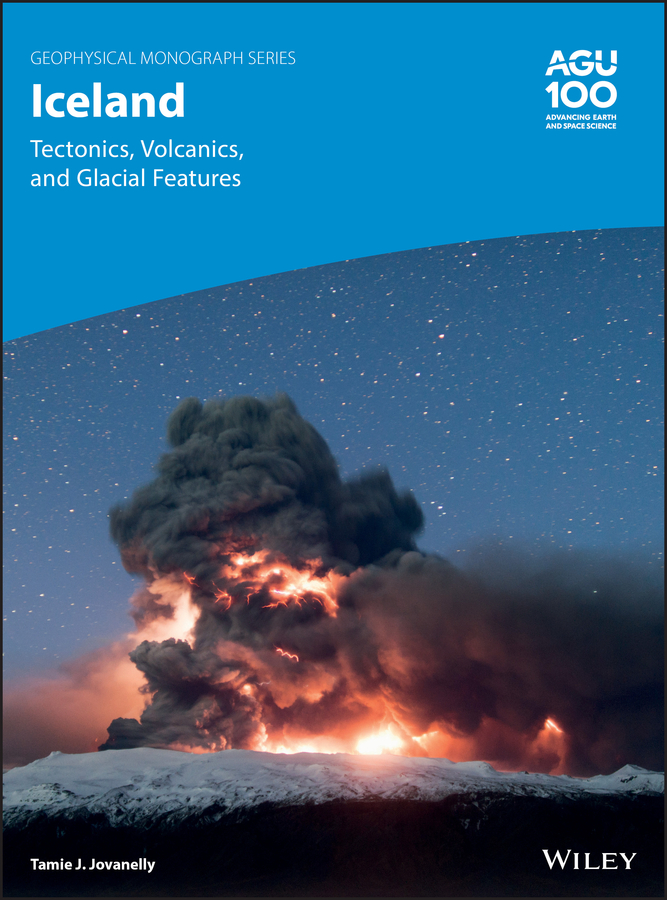
Explore the dramatic forces that have shaped the Icelandic landscape over 30 million years Iceland's formation and ongoing evolution offers a masterclass in geophysical processes. Iceland: Tectonics, Volcanics, and Glacial Features presents a regional guide to the landscape of this unique island. Accessible to academics, students, novice geologists, and tourists alike, chapters reflect the most popular way to explore the island, beginning in the southwest region and ending in the northwest. Volume highlights include: * An overview of Iceland's geologic history * Exploration of the dynamic tectonic setting that has shaped the island * Descriptions of landscape features of active and extinct volcanoes * Discussion of the impact of glaciation in the past and present * Techniques for monitoring geologic hazards * Developments in harnessing geothermal energy The American Geophysical Union promotes discovery in Earth and space science for the benefit of humanity. Its publications disseminate scientific knowledge and provide resources for researchers, students, and professionals. This book was a finalist for the 2021 PROSE Award for Earth Science! Find out more about this book in this short video and a Q&A with the author
Sie lesen das E-Book in den Legimi-Apps auf:
Seitenzahl: 512
Veröffentlichungsjahr: 2020
Ähnliche



















Table of Contents
Cover
PREFACE
Introduction
1 The Geologic Framework of Iceland
Part I: Tectonics
2 Overview of Tectonics in Iceland
2.1. PRESENT TECTONIC SETTING
2.2. BACKGROUND GEOLOGY
3 Tectonics of the Reykjanes Peninsula and Southwestern Region
3.1. KRÝSUVÍK VALLEY AND LAKE KLEIFARVATN
3.2. BLUE LAGOON AND GEOTHERMAL ENERGY
3.3. MID‐ATLANTIC RIDGE AT REYKJANESVITI
3.4. ÞINGVELLIR AND HENGILL
3.5. STÓRI GEYSIR AND GULFOSS
4 Tectonics of the South and Southeastern Regions
4.1. FAULTS AND FAULT COMPLEXES OF THE TERTIARY BASALTS
5 Tectonics of the Northeastern Region
5.1. FLATEYJARSKAGI AND TJÖRNES PENINSULAS
5.2. LAKE MÝVATN AND MÝVATN FIRES
5.3. KRAFLA FIRES
5.4. DETIFOSS, SELFOSS, AND HAFRAGILSFOSS WATERFALLS
6 Tectonics of the Western Region
6.1. SNÆFELLSNES SYNCLINE AND BORGARFJÖRÐUR ANTICLINE
Part II: Volcanics
7 Overview of Volcanics in Iceland
7.1. VOLCANIC SETTING
7.2. VOLCANIC MORPHOLOGY
7.3. SUBGLACIAL ERUPTIONS
7.4. TEPHROCHRONOLOGY
7.5. VOLCANIC REPOSE
7.6. VOLCANIC EXPLOSIVITY INDEX
8 Volcanics of the Reykjanes Peninsula and Southwestern Region
8.1. VOLCANISM OF THE WESTERN VOLCANIC ZONE
8.2. VOLCANISM OF THE REYKJANES PENINSULA
8.3. ESJA MOUNTAIN AND EXTINCT VOLCANIC SYSTEMS (KOLLAFJÖRÐUR AND STARDALUR)
8.4. RAUÐHÓLAR ROOTLESS CONE COMPLEX
8.5. HENGILL AND ÞINGVELLIR
9 Volcanics of the South and Southeastern Regions
9.1. GRÍMSVÖTN AND BÁRÐARBUNGA
9.2. KATLA AND EYJAFJALLAJÖKULL
9.3. ELDGJÁ AND LAKI (SKAFTÁR) FIRES
9.4. DYRHÓLAEY LAVA CAVE
9.5. HEKLA—THE QUEEN
9.6. ÞJÓRSÁRDALUR VALLEY
9.7. SURTSEY VOLCANIC ISLAND
10 Volcanics of the North and Northeastern Regions
10.1. THE DYNÁUFJÖLL MASSIF COMPLEX AND ASKJA
10.2. KRAFLA
10.3. VOLCANIC FEATURES AT MÝVATN
10.4. TINNÁ CENTRAL VOLCANO AND OTHER EXTINCT VOLCANOES IN THE REGION
11 Volcanics of the Western Region
11.1. THE SNÆFELLSJÖKULL VOLCANIC SYSTEM: A JOURNEY TO THE CENTER OF EARTH
11.2. LJÓSUFJÖLL
11.3. HELGRINDUR
11.4. VATNSHELLIR CAVE
Part III: Glacial Features
12 Overview of Glacial Features in Iceland
12.1. GLACIAL SETTING
12.2. MODERN CLIMATE OVERVIEW
12.3. GLACIAL MORPHOLOGY
13 Glacial Features of the Reykjanes Peninsulaand Southwestern Region
13.1. LANGJÖKULL
13.2. HOFSJÖKULL
13.3. KERLINGARFJÖLL
14 Glacial Features of the South and Southeastern Regions
14.1. VATNAJÖKULL
14.2. FJALLSARLÓN, BREIÐÁRLÓN, AND JÖKULSÁRLÓN
14.3. LAKES UNDER THE ICE: GRÍMSVÖTN, KVERJÖKULL, AND BARÐARBUNGA
14.4. MÝRDALSJÖKULL
14.5. EYJAFJALLAJÖKULL
15 Glacial Features of the Northern and Western Regions
15.1. VESTFIRÐIR PENINSULA AND DRANGAJÖKULL
15.2. SKAGI AND TRÖLLASKAGI PENINSULAS AND NORÐURLANDSJÖKLAR
15.3. SNÆSFELLNES PENINSULA AND SNÆFELLSJÖKULL
GLOSSARY
REFERENCES
INDEX
End User License Agreement
List of Tables
Chapter 2
Table 2.1 Geologic timescale and associated major climate events in Iceland
Chapter 4
Table 4.1 Lithology, percentage, and thickness of Icelandic rock types
Chapter 5
Table 5.1 Krafla Fires eruptions (1975–1984)
Chapter 7
Table 7.1 The volcanic explosivity index (VEI)
Chapter 9
Table 9.1 Tephrochronology of Hekla with associated volume, repose period, an...
Table 9.2 Tephrochronology of Katla with associated volume, date, dormancy pe...
Chapter 10
Table 10.1 The eruptive history of Askja with associated volcanic explosivity...
Table 10.2 Askja 1875 column height, dense rock equivalency (DRE), and tephra...
Table 10.3 Eight rifting episodes within the Krafla fissure swarm
Chapter 12
Table 12.1 Denudation rates estimated for Iceland glaciers
Table 12.2 A comparison of deglaciation of major Iceland glaciers 1930 to pre...
Chapter 13
Table 13.1 Langjökull (total area 8100 km
2
) reported glacial surge advances
Chapter 14
Table 14.1 Vatnajökull lobes and their associated surge events by date
Table 14.2 Comparison of the hydraulic parameters of the largest Kverkfjöll j...
List of Illustrations
Chapter 1
Figure 1.1 Tectonic context of Iceland. At present Iceland is divided by the...
Chapter 2
Figure 2.1 Iceland’s volcanic zones, associated plate boundaries, and genera...
Figure 2.2 Growth of ice sheets in comparison to landmass on Iceland over t...
Figure 2.3 Development of a möberg ridge. Strike and dip symbols identify d...
Photo 1 An example of a möberg ridge in southwestern Iceland.
Chapter 3
Figure 3.1 Active volcanic zones on the Reykjanes Peninsula. The main zone b...
Figure 3.2 Bookshelf faulting occurs when rift segments are offset from one ...
Photo 2 An example of a fissure swarm in southwestern Iceland.
Photo 3 Lake Kleifarvatn is the deepest lake in southwestern Iceland and fil...
Photo 4 Grænvatn, near Lake Kleifarvatn, is an example of a maar volcanic er...
Photo 5 The Blue Lagoon geothermal spa is a popular tourist destination for ...
Photo 6 Þingvellir National Park provides a rare example of an exceptionally...
Photo 7 Almannagjá is a dramatic tensional fracture in Þingvellir National P...
Photo 8 Hellisheiđi Geothermal Plant harnesses subsurface steam and water to...
Photo 9 Strokkur (The Churn) erupts every 10 min and has a column height of ...
Photo 10 Gulfoss is one of Europe’s largest waterfalls. This picture depicts...
Chapter 4
Figure 4.1 West to east outcrop section along the south side of Reydarfjördu...
Photo 11 (a) Road to Egilsstađir showing dipping Tertiary Basalt Formation i...
Figure 4.2 An example of a geological cross‐section in eastern Iceland showi...
Chapter 5
Figure 5.1 Crustal accretion, relocation, and propagation of the Icelandic r...
Figure 5.2 Five active fissure belts found in the Northern Volcanic Zone on ...
Photo 12 Rootless cones at Mývatn.
Photo 13 Side profile of a rootless cone at Lake Mývatn.
Photo 14 Strath terraces and knickpoints at Detifoss.
Figure 5.3 A lithological cross‐section at Detifoss.
Chapter 6
Photo 15 The largest peak on the Snæfellsness Peninsula is the stratovolcano...
Figure 6.1 Location map of Snæfellsness Peninsula with associated ages and r...
Figure 6.2 Schematic diagrams of anticline and syncline structures.
Chapter 7
Figure 7.1 Tholeiitic basalt phase diagram showing changes in alkalinity as ...
Figure 7.2 Location map of active and extinct volcanoes on Iceland. Active v...
Figure 7.3 Volcano morphology and time line, with relative sizes, shapes, an...
Figure 7.4 Basic volcano morphology.
Photo 16 Pahoehoe field in front of Skjaldbreiđur Shield Volcano located on ...
Photo 17 An example of an aa lava flow.
Photo 18 An example of a pahoehoe lava flow.
Photo 19 An example of a spatter cone.
Photo 20 The Hekla volcano formed by an elongated fissure eruption found alo...
Photo 21 An example of a rootless cone.
Figure 7.5 Comparison between tindar (top) and tuya (bottom) subglacial stru...
Photo 22 Pillow lava basalts are often covered by moss in southwestern Icela...
Figure 7.6 Hexagonal columnar basalt.
Figure 7.7 Entabular versus colonnade columnar basalt.
Chapter 8
Photo 23 Mount Hengill, southwest Iceland.
Chapter 9
Figure 9.1 Active fissure, volcanic systems, and central volcanoes found in ...
Figure 9.2 Geology of the Hekla region showing distribution of historical la...
Figure 9.3 Directions of ash dispersal from volcanic eruptions at Hekla. Num...
Figure 9.4 The aviation zones shut down (red) or restricted (orange) by the ...
Photo 24 The remnants of a bridge wiped out along the Ring Road (Route 1) by...
Photo 25 The gently sloping Katla volcano in the Eastern Volcanic Zone.
Figure 9.5 Directions of ash dispersal from volcanic eruptions at Katla. Num...
Figure 9.6 Jökulhlaup flooding events since 1612 CE from Katla onto the Mýrd...
Photo 26 Eyjafjallajökull, the stratovolcano in the background, is in close ...
Photo 27 Cross‐sectional view of a crater row.
Photo 28 At present, Dryhólaey is a tombolo connected to the mainland by two...
Figure 9.7 Silica content as compared to repose time and Hekla eruption even...
Figure 9.8 Development and formation of Surtsey volcanic island.
Figure 9.9 Surtsey island cross‐sectional shape and changes over 50 years....
Figure 9.10 Volumetric proportions of materials that influence the evolution...
Chapter 10
Figure 10.1 Comparison between the lateral flow (top and middle panels) and ...
Figure 10.2 Askja crater. Locations B, C, and D are described in section 10....
Photo 29 Askja crater.
Figure 10.3 Askja 1875 ash fall dispersion map with associated thickness of ...
Figure 10.4 Schematic lithological log of volcanic products from the 1874–18...
Photo 30 Landscape view of Krafla.
Figure 10.5 Area of Krafla Fires in proximity to Lake Mývatn.
Photo 31 The 1984 Krafla lava field on top of older, grass‐covered, lava flo...
Figure 10.6 Inflation and deflation model of the geothermal area at Leirbotn...
Photo 32 Cross‐sectional view of the Rauđhólar plug and dike lavas.
Photo 33 Hverfjall crater.
Figure 10.7 Location of Lake Mývatn in relationship to Krafla. Numbers indic...
Photo 34 Skutustađagigar Craters, an Icelandic National Monument, Mývatn....
Photo 35 The church at Reykjahliđ where the lava flows from the Mývatn Fires...
Figure 10.8 Simplified geology of the Tinná central volcano. The domain of t...
Chapter 11
Figure 11.1 Paleo central volcanoes (Setberg I, Ellidi, and Hrappsey) of the...
Figure 11.2 The Langjökull and Þingvellir transform faults are important to ...
Figure 11.3 Geology of the Snæfellsnes Peninsula highlighting three main are...
Photo 36 The stratovolcano Snæfellsjökull.
Figure 11.4 Geology and chronostratigraphy of Snæfellsjökull.
Figure 11.5 Cross‐section and plan view of Vatnshellir Cave system.
Chapter 12
Photo 37 Small birch trees in Iceland at present are similar to the boreal f...
Figure 12.1 Maximum Weichselian ice sheet extent in Iceland as indicated by ...
Figure 12.2 Distribution and areal extent of Iceland’s present ice caps.
Figure 12.3 The extent of Iceland’s ice sheet during the Younger Dryas Stadi...
Figure 12.4 Water phase diagram. The diagram shows that all three phases of ...
Figure 12.5 Transition of unconsolidated snow pack as it turns into glacial ...
Figure 12.6 Depositional and erosional geomorphologic features as glacial ic...
Photo 38 Skeiđarárjökull valley glacier ending on an outwash plain.
Photo 39 A U‐shaped valley on the southern side Vatnajökull.
Photo 40 A glacial fjord on the northern coast of Iceland.
Photo 41 An example of glacial striations (linear structures) that result fr...
Photo 42 A terminal moraine in front of a glacial snout along the southern c...
Photo 43 A glacial till deposit next to a glacial lake on the southern coast...
Photo 44 Skeiđarásandur, an example of the southern sandur plain coastline....
Figure 12.7 Types of crevasses that form on glaciers.
Figure 12.8 Mass balance of an outlet glacier as it moves down gradient.
Figure 12.9 Cross‐section and longitudinal profiles of Hoffellsjökull indica...
Figure 12.10 Geographical distribution of known surge‐type glaciers within V...
Chapter 13
Figure 13.1 Cross‐section of the subglacial topography of Langjökull.
Photo 45 A view of Langjökull from Lake Hvitárvatn.
Figure 13.2 Location of Langjökull with Lake Hvítárvatn and drainage divides...
Figure 13.3 Cross‐section of the subglacial topography of Hofsjökull.
Figure 13.4 Hofsjökull outlet glaciers and ice divides.
Photo 46 Stöng homestead alongside the River Þjórsá fed by the runoff of the...
Chapter 14
Photo 47 Braided river channel of a sandur plain discharging meltwater from ...
Photo 48 Skeiđará Bridge remains near Skaftafell National Park.
Figure 14.1 Details of the Vatnajökull ice cap including location of the Gri...
Photo 49 Jökulsárlón glacial tidal lagoon in front of the main glacier.
Photo 50 Fjallsarlón lagoon discharging into the ocean via a braided river s...
Figure 14.2 Formation of ice cauldron: a depression at the surface of a glac...
Figure 14.3 Discharge relating to jökulhlaups as distributed onto the Skeiđa...
Figure 14.4 Changes in water levels in Lake Grímsvötn.
Figure 14.5 Details of features on Mýrdalsjökull.
Photo 51 Farmstead at the base of Eyjafjallajökull during the 2010 eruption....
Chapter 15
Figure 15.1 Location of Vesfirđir, Snæfellsnes, Skagi, and Trollaskagi Penin...
Figure 15.2 Present ocean current systems around Iceland.
Figure 15.3 Longitudinal profile of a glacial fjord.
Photo 52 Glacial nunatuk Kirkjufell on the Snæfellsnes Peninsula near Grunda...
Figure 15.4 Details and location of Drangajökull ice cap.
Figure 15.5 Fluctuations of the three Drangajökull surge‐type outlet glacier...
Figure 15.6 Snow avalanche (left) and debris flow (right) maps of Vestfirđir...
Figure 15.7 Location of Norđurlandsjöklar.
Photo 53 Marine terraces along the eastern coast of Iceland.
Figure 15.8 Outlet glaciers on Snæsfellsjökull.
Figure 15.9 Glacier variations at Snæfellsjökull from 1930 to 1995.
Figure 15.10 Cumulative variations of the termini of five nonsurge‐type glac...
Guide
Cover
Table of Contents
Begin Reading
Pages
ii
iii
iv
v
ix
1
3
4
5
7
8
9
10
11
12
13
15
16
17
18
19
20
21
22
23
24
25
26
27
28
29
30
31
32
33
34
35
36
37
39
40
41
43
45
46
47
48
49
50
51
52
53
54
55
56
57
58
59
61
62
63
64
65
66
67
68
69
70
71
72
73
74
75
76
77
78
79
80
81
82
83
84
85
87
88
89
90
91
92
93
94
95
96
97
98
99
100
101
102
103
104
105
106
107
108
109
110
111
112
113
115
117
118
119
120
121
122
123
124
125
126
127
128
129
130
131
132
133
134
135
136
137
138
139
140
141
142
143
144
145
146
147
148
149
150
151
152
153
154
155
156
157
158
159
160
161
162
163
164
165
166
167
168
169
170
171
173
174
175
176
177
178
179
180
181
182
183
184
185
186
187
188
189
190
191
192
193
194
195
196
199
200
201
202
203
204
205
206
207
Geophysical Monograph Series
Extreme Events and Natural Hazards: The Complexity Perspective
A. Surjalal Sharma, Armin Bunde, Vijay P. Dimri, and Daniel N. Baker (Eds.)
Auroral Phenomenology and Magnetospheric Processes: Earth and Other Planets
Andreas Keiling, Eric Donovan, Fran Bagenal, and Tomas Karlsson (Eds.)
Climates, Landscapes, and Civilizations
Liviu Giosan, Dorian Q. Fuller, Kathleen Nicoll, Rowan K. Flad, and Peter D. Clift (Eds.)
Dynamics of the Earth’s Radiation Belts and Inner Magnetosphere
Danny Summers, Ian R. Mann, Daniel N. Baker, and Michael Schulz (Eds.)
Lagrangian Modeling of the Atmosphere
John Lin (Ed.)
Modeling the Ionosphere‐Thermosphere
Jospeh D. Huba, Robert W. Schunk, and George V. Khazanov (Eds.)
The Mediterranean Sea: Temporal Variability and Spatial Patterns
Gian Luca Eusebi Borzelli, Miroslav Gacic, Piero Lionello, and Paola Malanotte‐Rizzoli (Eds.)
Future Earth – Advancing Civic Understanding of the Anthropocene
Diana Dalbotten, Gillian Roehrig, and Patrick Hamilton (Eds.)
The Galápagos: A Natural Laboratory for the Earth Sciences
Karen S. Harpp, Eric Mittelstaedt, Noemi d’Ozouville, and David W. Graham (Eds.)
Modeling Atmospheric and Oceanic Flows: Insightsfrom Laboratory Experiments and Numerical Simulations
Thomas von Larcher and Paul D. Williams (Eds.)
Remote Sensing of the Terrestrial Water Cycle
Venkat Lakshmi (Ed.)
Magnetotails in the Solar System
Andreas Keiling, Caitriona Jackman, and Peter Delamere (Eds.)
Hawaiian Volcanoes: From Source to Surface Rebecca
Carey, Valerie Cayol, Michael Poland, and Dominique Weis (Eds.)
Sea Ice: Physics, Mechanics, and Remote Sensing
Mohammed Shokr and Nirmal Sinha (Eds.)
Fluid Dynamics in Complex Fractured‐Porous Systems
Boris Faybishenko, Sally M. Benson, and John E. Gale (Eds.)
Subduction Dynamics: From Mantle Flow to Mega Disasters
Gabriele Morra, David A. Yuen, Scott King, Sang Mook Lee, and Seth Stein (Eds.)
The Early Earth: Accretion and Differentiation
James Badro and Michael Walter (Eds.)
Global Vegetation Dynamics: Concepts and Applications in the MC1 Model
Dominique Bachelet and David Turner (Eds.)
Extreme Events: Observations, Modeling and Economics
Mario Chavez, Michael Ghil, and Jaime Urrutia‐Fucugauchi (Eds.)
Auroral Dynamics and Space Weather
Yongliang Zhang and Larry Paxton (Eds.)
Low‐Frequency Waves in Space Plasmas
Andreas Keiling, Dong‐Hun Lee, and Valery Nakariakov (Eds.)
Deep Earth: Physics and Chemistry of the Lower Mantle and Core
Hidenori Terasaki and Rebecca A. Fischer (Eds.)
Integrated Imaging of the Earth: Theory and Applications
Max Moorkamp, Peter G. Lelievre, Niklas Linde, and Amir Khan (Eds.)
Plate Boundaries and Natural Hazards
Joao Duarte and Wouter Schellart (Eds.)
Ionospheric Space Weather: Longitude and Hemispheric Dependences and Lower Atmosphere Forcing Timothy Fuller‐Rowell,
Endawoke Yizengaw, Patricia H. Doherty, and Sunanda Basu (Eds.)
Terrestrial Water Cycle and Climate Change Natural and Human‐Induced Impacts
Qiuhong Tang and Taikan Oki (Eds.)
Magnetosphere‐Ionosphere Coupling in the Solar System
Charles R. Chappell, Robert W. Schunk, Peter M. Banks, James L. Burch, and Richard M. Thorne (Eds.)
Natural Hazard Uncertainty Assessment: Modeling and Decision Support
Karin Riley, Peter Webley, and Matthew Thompson (Eds.)
Hydrodynamics of Time‐Periodic Groundwater Flow: Diffusion Waves in Porous Media
Joe S. Depner and Todd C. Rasmussen (Auth.)
Active Global Seismology
Ibrahim Cemen and Yucel Yilmaz (Eds.)
Climate Extremes
Simon Wang (Ed.)
Fault Zone Dynamic Processes
Marion Thomas (Ed.)
Flood Damage Survey and Assessment: New Insights from Research and Practice
Daniela Molinari, Scira Menoni, and Francesco Ballio (Eds.)
Water‐Energy‐Food Nexus – Principles and Practices
P. Abdul Salam, Sangam Shrestha, Vishnu Prasad Pandey, and Anil K Anal (Eds.)
Dawn–Dusk Asymmetries in Planetary Plasma Environments
Stein Haaland, Andrei Rounov, and Colin Forsyth (Eds.)
Bioenergy and Land Use Change
Zhangcai Qin, Umakant Mishra, and Astley Hastings (Eds.)
Microstructural Geochronology: Planetary Records Down to Atom Scale
Desmond Moser, Fernando Corfu, James Darling, Steven Reddy, and Kimberly Tait (Eds.)
Global Flood Hazard: Applications in Modeling, Mapping and Forecasting
Guy Schumann, Paul D. Bates, Giuseppe T. Aronica, and Heiko Apel (Eds.)
Pre‐Earthquake Processes: A Multidisciplinary Approach to Earthquake Prediction Studies
Dimitar Ouzounov, Sergey Pulinets, Katsumi Hattori, and Patrick Taylor (Eds.)
Electric Currents in Geospace and Beyond
Andreas Keiling, Octav Marghitu, and Michael Wheatland (Eds.)
Quantifying Uncertainty in Subsurface Systems
Celine Scheidt, Lewis Li, and Jef Caers (Eds.)
Petroleum Engineering
Moshood Sanni (Ed.)
Geological Carbon Storage: Subsurface Seals and Caprock Integrity
Stephanie Vialle, Jonathan Ajo‐Franklin, and J. William Carey (Eds.)
Lithospheric Discontinuities
Huaiyu Yuan and Barbara Romanowicz (Eds.)
Chemostratigraphy Across Major Chronological Eras
Alcides N.Sial, Claudio Gaucher, Muthuvairavasamy Ramkumar, and Valderez Pinto Ferreira (Eds.)
Mathematical Geoenergy:Discovery, Depletion, and Renewal
Paul Pukite, Dennis Coyne, and Daniel Challou (Eds.)
Ore Deposits: Origin, Exploration, and Exploitation
Sophie Decree and Laurence Robb (Eds.)
Kuroshio Current: Physical, Biogeochemical and Ecosystem Dynamics
Takeyoshi Nagai, Hiroaki Saito, Koji Suzuki, and Motomitsu Takahashi (Eds.)
Geomagnetically Induced Currents from the Sun to the Power Grid
Jennifer L. Gannon, Andrei Swidinsky, and Zhonghua Xu (Eds.)
Shale: Subsurface Science and Engineering
Thomas Dewers, Jason Heath, and Marcelo Sánchez (Eds.)
Submarine Landslides: Subaqueous Mass Transport Deposits from Outcrop to Seismic Profiles
Kei Ogata, Andrea Festa, and Gian Andrea Pini (Eds.)
Geophysical Monograph 247
Iceland
Tectonics, Volcanics, and Glacial Features
Tamie J. Jovanelly
This Work is a co-publication of the American Geophysical Union and John Wiley and Sons, Inc.
This Work is a co‐publication between the American Geophysical Union and John Wiley & Sons, Inc.
This edition first published 2020 by John Wiley & Sons, Inc., 111 River Street, Hoboken, NJ 07030, USA and the American Geophysical Union, 2000 Florida Avenue, N.W., Washington, D.C. 20009
© 2020 the American Geophysical Union
All rights reserved. No part of this publication may be reproduced, stored in a retrieval system, or transmitted, in any form or by any means, electronic, mechanical, photocopying, recording, or otherwise, except as permitted by law. Advice on how to obtain permission to reuse material from this title is available at http://www.wiley.com/go/permissions
Published under the aegis of the AGU Publications Committee
Brooks Hanson, Executive Vice President, ScienceCarol Frost, Chair, Publications CommitteeFor details about the American Geophysical Union visit us at www.agu.org.
Wiley Global Headquarters111 River Street, Hoboken, NJ 07030, USA
For details of our global editorial offices, customer services, and more information about Wiley products visit us at www.wiley.com.
Limit of Liability/Disclaimer of WarrantyWhile the publisher and authors have used their best efforts in preparing this work, they make no representations or warranties with respect to the accuracy or completeness of the contents of this work and specifically disclaim all warranties, including without limitation any implied warranties of merchantability or fitness for a particular purpose. No warranty may be created or extended by sales representatives, written sales materials, or promotional statements for this work. The fact that an organization, website, or product is referred to in this work as a citation and/or potential source of further information does not mean that the publisher and authors endorse the information or services the organization, website, or product may provide or recommendations it may make. This work is sold with the understanding that the publisher is not engaged in rendering professional services. The advice and strategies contained herein may not be suitable for your situation. You should consult with a specialist where appropriate. Neither the publisher nor authors shall be liable for any loss of profit or any other commercial damages, including but not limited to special, incidental, consequential, or other damages. Further, readers should be aware that websites listed in this work may have changed or disappeared between when this work was written and when it is read.
Library of Congress Cataloging‐in‐Publication data is available.
Hardback: 9781119427094
Cover Design: WileyCover Image: © Tamie Jovanelly
This book would have never been imagined if it were not for my wonderful husband, Joe(y) Cook, whose dreams and love are as far reaching as an Askja ash cloud. And believe me, that is really far.
PREFACE
My first venture to Iceland was in 2006 when it was still off the radar of most tourists. With the keys to a Toyota Yaris and a series of paper road maps, my older brother Jim and I circled the island in 11 days. Although we were perpetually lost, we had found a pristine landscape with amazing views, incredible geology, and no road signs. I was hooked. Over the course of the next decade I would visit nearly every summer, bringing with me fortunate undergraduate students who could keep up with the hiking, as well as my desire to explore everything about the island—including the sampling of the dreadful rotten shark cuisine. My preparation for teaching Physical Geology and Advanced Geological Field Studies courses in Iceland became the inspiration to write this book.
As a geologist, I hope to not only capture the island’s natural beauty, but also to enhance it through detailed descriptions that link the relationships between structure, process, and time to the island’s evolution. I reviewed innumerable peer‐reviewed scientific papers in order to deliver the reader with the most up‐to‐date research on interesting, and sometimes debated, geological theories regarding an island being split in half due to plate tectonic motion. This text is not just intended for academics, but also for novice geologists who want to understand the magnificent scenery at a deeper level. To encourage this, I provide background introductions and figures that offer information on foundational geological concepts. Additionally, the book has been intentionally organized for travelers to use, by highlighting Iceland’s most popular destinations and putting each region into a contextual perspective. More specifically, the book is organized into three main sections: tectonics (Chapters 2–6), volcanics (Chapters 7–11), and glacial features (Chapters 12–15). The book can be read from cover to cover, or it can be utilized as a travel guide by traversing the island from the capital city Reykjavik counter clockwise. For the latter use, the reader can refer to the introductions to each Part (Chapters 2, 7, 12) followed by chapters organized into four cardinal quadrants describing the southwest (Chapters 3, 8, 13), southeast (Chapters 4, 9, 14), northeast (Chapters 5 and 10), and northwest (Chapters 6, 11, 15). The book provides an index, glossary, and GPS coordinates for most locations for easy reference.
The support I had in writing this book was truly endless. Encouragement came in the form of multiple bouquets of flowers and sugar‐free Red Bulls delivered to my office by husband (Joe Cook), positive reviewer feedback (Dr. Kent Murray and Dr. Sheila Seaman), and advice from colleagues (Dr. Ed Harvey and wife Carol Rogers, and Dr. Mary Anne Holmes). Substantial project contributions came from Nathan Mennen who prepared all the figures for the book, Emily Larrimore who wrote some of the interesting displayed boxes you will find within the text, and Amanda Tomlinson who formatted references and glossary terms. I also need to thank the many Berry College Geology “Home Team” students who traveled with me to Iceland: Mallory Paulk, Maggie Midkiff‐Maddrey, Russell Maddrey, Matthew Bentley, Emma Cook, Emily Larrimore, Carley Carder, Amanda Tomlinson, JT Keiffer, Timothy Wooley, and Andrew Elgin. Undoubtedly, they were the guinea pigs for this book and provided insight into the content it should contain.
I cannot believe how much fun I had writing this book and I want to thank John Wiley & Sons, Inc. Publishers and the American Geophysical Union for providing me with this opportunity. I enjoyed the whole process: manuscript collecting, reading, learning, and the solitude of the writing process. For me, every day was a chance to study more about the country and science that I love so dearly. With that stated, I realize that I am standing on the shoulders of the foundational Icelandic geologists that came before me: Helgi Björnsson, Páll Einarsson, Agust Gudmundsson, Guðrún Larsen, Kristjan Sæmundsson, Oddur Sigurðsson, and Thor Thordarsen. Each of these lifelong explorers have written books and documents that I encourage the reader to look at first hand for more complete understanding. During the 15 months or so that it took to write the manuscript I often reflected back on my Advisor, Dr. Sheri Fritz, at the University of Nebraska‐Lincoln who worked tirelessly on manuscript writing out of a labor of love, or so it seemed. Her commitment to science has always inspired me to work harder.
Introduction
1The Geologic Framework of Iceland
The island of Iceland, with its northern tip just 61 km south of the Arctic Circle, has a long constructive history that started 130 million years ago during the last Pangea cycle. Spreading of new ocean floor at mid‐ocean ridges to separate continents following this breakup and the onset of a large mantle plume (radius about 300 km) beneath Greenland are thought to have led to excessive mantle upwelling [Wolfe et al., 1997; Holbrook et al., 2001; Rickers et al., 2013]. These events coincide with dates of continental flood basalts and mid‐Cretaceous volcanism along the Arctic Mendelev Ridge, Alpha Ridge, and Ellesmere Island [Lawver and Müller, 1994; Johnston and Thorkelsen, 2000; Sigmundsson, 2006]. Uplift accompanying igneous intrusions in northwest Europe, Greenland, and Canada between 64 and 52 million years ago immediately initiated passive volcanic margins, thereby setting the stage for magmatic upwelling and island creation [Saunders et al., 2007].
During the past 60 million years, the overall northwest migration of the North American plate carrying Greenland and the southeast migration of the Eurasia Plate have determined the position of the Iceland hot spot. The process of rifting has separated the two major plates, Eurasia and North America (Figure 1.1), with the Mid‐Atlantic Ridge forming a divergent plate boundary between them. Seafloor spreading is occurring at approximately 2 cm per year, or 20 km per million years [Sella et al., 2002; Geirsson et al., 2006]. Two Icelandic microplates (or blocks, i.e., Hreppar in the south and Tjörnes in the north) have formed at the intersection of (to the west) the Reykjanes and Kolbeinsey ridges and perpendicular transform faults with a (to the east) parallel offset ridge (Figure 1.1) [Einarsson, 2008].
Prior to the current tectonic setting, where the Kolbeinsey and Reykjanes ridges form the spreading centers, the extinct Aegir Ridge to the east, which ran parallel to these systems [Kristjánsson, 1979; Weir et al., 2001; Tronnes, 2002], was important in the initiation of the North Atlantic Ocean during the Eocene (about 56 to 34 million years ago) as rifting and seafloor spreading began separation of Greenland from Norway. At 24 million years ago (Late Oligocene to Early Miocene), as the overall size and temperature of the mantle plume continued to dissipate, the Reykjanes–Kolbeinsey plate boundary was centered over the hot spot (Figure 1.1) [Fitton et al., 1997; Kodaira et al., 1998; Holbrook et al., 2001]. Since then, the main Reykjanes and Kolbeinsey ridges have moved 240 km to the northwest so that the plume is now located under Iceland’s largest ice cap, Vatnajökull. Consequently, this is also where the crust is thickest (~40 km; Sigmundsson, 2006]. The position of the hot spot has been established through a combination of earthquake data [Oskarsson et al., 1985; Einarsson, 1991; Weisenberger, 2010], seismic crustal structure and tomography data [Flòvenz and Gunnarson, 1991; Foulger et al., 2006], and seismic reflection and refraction data [Holbrook et al., 2001].
The plume‐origin hypothesis suggests that volcanism was initiated by ascending mantle‐derived magma from beneath thick continental lithosphere and subsequently from beneath oceanic lithosphere as rifting continued and the ocean basin grew [Sigvaldason, 1974a]. Alternative hypotheses that consider mechanisms for large magma generation include excess magmatism from melting of mantle and/or recycled ocean‐crust material [Foulger, 2006] and a rift model whereby the development of a North Atlantic spreading center is solely reliant on plate‐tectonic mechanisms and not hot‐spot development [Ellis and Stoker, 2014].
Figure 1.1 Tectonic context of Iceland. At present Iceland is divided by the Kolbeinsey Ridge in the north and the Rekjanes Ridge in the south. The yellow circles show the position of the mantle plume from 50 million years ago to present.
[Modified from Fitton et al. [1997]; design credit Nathan Mennen.]
Most of the 350,000 km2 basaltic plateau making up Iceland lies below sea level, with about 30% of the island being above sea level, up to a maximum relief of 2110 m above the ocean surface [Gudmundsson, 2000]. The submarine shelf surrounding the island ranges 50–200 km wide and gently slopes to depths of 400 m [Thordarson and Larsen, 2007].
Part ITectonics
2Overview of Tectonics in Iceland
2.1. PRESENT TECTONIC SETTING
The present tectonic setting of Iceland is driven by the continued spreading of the Mid‐Atlantic Ridge (MAR); specifically, the Kolberinsey Ridge (KR) in the north and the Reykjanes Ridge (RR) in the south (Figure 1.1). These subaerial expressions of the MAR in Iceland are characterized by various seismically and volcanically active centers often referred to as neovolcanic zones [Einarsson, 1991]. Three major neovolcanic zones are recognized where the main processes are normal faulting and volcanic fissuring: North Volcanic Zone, West Volcanic Zone, and East Volcanic Zone (Figure 2.1). These neovolcanic zones are bounded by perpendicular transform faults that connect the RR and KR with a parallel offset ridge axis, with the Mid‐Iceland Belt (MIB) forming a triple junction beneath Vatnajökull [Sigmundsson, 2006].
The island has undergone dynamic change through a series of rift jumps that first began 24 million years ago (Ma) in northern Iceland, which initiated the first rift zone [Harðarson et al., 1997; Hjartarson et al., 2017]. Magmatic upwelling through rift jumping is a prominent process in the evolution of Iceland [Hjartarson et al., 2017]. As described by Mittelstaedt et al. [2008) rift jumps are induced by magmatic heating from an off‐axis hot spot (at present, under Vatnajökull), which results in a change in the location of the ridge axis. The magma produced by the hot spot thins the lithospheric crust thereby initiating new rifting to form a new ridge axis. In Iceland, this process is combined with east and west divergence of two continental plates, resulting in the rift axes becoming less active as they move away (e.g., relocate) from the hot spot intensity. Denk et al. [2011] recognizes unconformities that accompany rift jumps in Iceland by identifying distinct sedimentary horizons containing plant remains between lava formations.
Of these zones, that in the east has been the most active during the past 2–3 million years (Myr). The Eastern Volcanic Zone, and numerous other past rift‐jump structures, were mapped using subaerial lava‐flow bodies (e.g., dipping of Tertiary basalt strata) that could be identified on surface geologic maps through various aged folded basalts (Figure 2.1; Böðvarsson and Walker, 1964; Jóhannesson and Sæmundsson, 2009; Hjartarson et al., 2017]. The South Iceland Seismic Zone, an area characterized by high earthquake activity, accommodates the offset between the East and West Volcanic Zones [Stefánsson et al., 2006; Einarsson, 1991]. The East Volcanic Zone intersects the North Volcanic Zone at the triple junction beneath Vatnajökull, formed by the MIB (Figure 2.1). The North Volcanic Zone connects to the (KR) via the Tjörnes Fracture Zone. Here, the term “fracture zone” describes the zone that connects the parallel off‐set ridge axis to the KR segment of the MAR. Transform plate movement along the Tjörnes Fracture Zone has resulted in another major center of seismicity and deformation. The Snæfellsnes Volcanic Belt reactivated at 2 Ma and is moving to the southeast, whereas the southern part of the East Volcanic Zone is currently propagating to the southwest. The Reykjanes Volcanic Belt in southwest Iceland is the subaerial expression of the RR and connects to the West Volcanic Zone.
2.2. BACKGROUND GEOLOGY
Effusive volcanism during the Tertiary from seafloor spreading in the North Atlantic region began to build up a massive basalt plateau (estimated 350,000 km2) [Sæmundsson, 1979]. Lavas of similar composition have been found in northwest Britain, Faroe Islands, and Greenland, which help confirm plate movement and provide documentation of the scale of this depositional event [Roberts and Hunter, 1979]. The overall age of the island exposed above sea level is geologically young, with the oldest rocks found to the east and west (14–16 Ma; Moorbath et al., 1968; McDougall et al., 1984), whereas rocks in the northern region may be only 12 Ma [Sæmundsson, 1986]. Walker [1960] completed the first published lithological account of the Tertiary units on Iceland. Iceland is divided geologically into three main groups: Tertiary Basalt Formation (Upper Tertiary), Grey Basalt Formation (Upper Pliocene to Lower Pleistocene), Mòberg Formation (Upper Pleistocene), and the Upper Pleistocene and Holocene unconsolidated or poorly lithified beds such as till, glaciofluvial deposits, marine and fluvial sediments, as well as soils (Table 2.1; Gardner, 1885; Walker, 1960; Sæmundsson, 1979]. Due to its abundance (covering about half the total area of Iceland) and its extensive exposure in the east and west, there is even an Icelandic term for the dark basalt, blágrýtismyndun [Sæmundsson, 1979].
Figure 2.1 Iceland’s volcanic zones, associated plate boundaries, and general geologic age of bedrock. KR, Kolbeinsey Ridge; RR, Reykjanes Ridge; EVZ, East Volcanic Zone; WVZ, West Volcanic Zone; NVZ, North Volcanic Zone; SISZ, South Iceland Seismic Zone; MIB, Mid‐Iceland Volcanic Belt; TFZ, Tjörnes Fracture Zone; ÖVB, Öræfi Volcanic Flank; RVB, Reykjanes Volcanic Belt; SVB, Snæfellsnes Volcanic Belt.
[Adapted from Sæmundsson [1979]; design credit Nathan Mennen.]
The Tertiary Basalt Formation is composed mainly of basaltic lava flows (>83%) comprising tholeiite petrology (typical of continental plateau basalts and mid‐ocean ridges), olivine (typical of ocean basins), and porphyritic basalts (representative of intrusive and extrusive processes) (Thórarinsson et al., 1959; Klein and Langmuir, 1987; Shorttle and Maclennan, 2011]. Although dominated by basalt, rhyolitic lavas (8%), andesitic lavas (3%), and interbasaltic beds composed of tephra and sediment (6%) also can be found [Einarsson, 1994]. Over time, vesicles and fractures present in rock can become infilled post‐depositionally with minerals such as quartz, jasper, chalcedony, calcite, and zeolites. Large calcite crystals sometimes found are referred to as “Iceland spar” [Einarsson, 1960]. Other than interbasaltic red‐bed clays, sedimentary rocks (<10% of the Tertiary succession) and fossils are rare (Box 2.1). For example, only 50 genera or species of plants have been documented on the Tjörnes Peninsula [Einarsson, 1994; Thordarson and Höskuldsson, 2014].
Table 2.1 Geologic timescale and associated major climate events in Iceland
Era
Period
Epoch
Age
Stage
Sub‐stage
Formation
Major events
CENOZOIC
Quaternary
Holocene
0–2.5 ka
Late Bog Period (sub‐Atlantic)
Upper Pleistocene Formation
2.5–5 ka
Late Birch Period (sub‐Boreal)
5–7.2 ka
Early Bog Period (Atlantic)
7.2–9.3 ka
Early Birch Period (Boreal)
9.3–10 ka
Pre‐Boreal
Ice Age glaciers melt
Late Pleistocene
10–11 ka
Weichselian
Younger Dryas
Cooling in northern hemisphere; glaciers grow
11–12 ka
Allerød
Warmer climate
12–20 ka
Older Dryas
Icelandic ice sheets quickly retreat
20–110 ka
Eurasian ice sheet at maximum; last glacial stage
Middle Pleistocene
115–130 ka
Eemian
Last interglacial stage
130–300 ka
Saale
Glacial stage
300–700 ka
Early Pleistocene
0.7–2.5 Ma
Plio‐Pleistocene Formation
Start of full‐scale glaciations
Teriatery
Pliocene
2.5–3.3 Ma
Pacific Ocean fauna arrive in Iceland. Bering Strait opens
3.3–7 Ma
Teriatery Basalt Formation
Climate begins to cool
Late Miocene
7–12 Ma
Warm, temperate climate
Middle Miocene
12–18 Ma
Early Miocene
18–25 Ma
Origination of Iceland
Note. ka, thousand years ago; Ma, million years ago. Modified from Thordarson and Höskuldsson [2014]; design credit Nathan Mennen.
Most of the Tertiary landscape‐altering events resulted from fissure eruptions, although the presence of central or shield volcanoes can be spectulated through the numerous feeder dikes that cross cut the basalt piles. Most feeder dikes have north to south orientation, their mean thickness is about 3 m, and widths range from 1 to 10 m [Sæmundsson, 1986]. Textbook examples of dike swarms found in the eastern fjords can make up between 3 and 15% of the rock outcrop. Thordarson [2012] describes the dike swarms as subsurface components of fissure swarms in active volcanic systems, whereby the swarms are linked to localized deposits of andesite–rhyolite lava and tephra marking the location of extinct central volcanoes; 40 extinct volcanic systems have been identified in the Tertiary succession.
Deposition of the Tertiary basalts ended at 2.5 Ma coinciding with the onset of an extensive glacial period [Eiríksson, 2008]. The crustal response to the weight of ice overburden was translated through normal faulting with throws between 10 and 20 m and main fault strikes generally trending N–E or N–SW. The characteristic dip of the Tertiary Basalt Formation is between 5° and 15°, but the direction of dip is variable depending on region (Figure 2.1; Einarsson, 1960; Sigmundssson, 2006). Measurements of Tertiary Basalt Formation dips identify folds in the basalt that relate to the rift‐jump complexes previously described. Conformable boundaries between the Tertiary and Quaternary basalt deposits in Iceland are not obvious [Einarrson, 1994]. Dating of changes in polarity of Earth’s magnetic field, however, have made it possible to delineate Tertiary and Quaternary basalts, as the Quaternary Period spans the present Brunhes normal polarity epoch and the previous Matuyana predominately reversed polarity epoch [Kristjansson and McDougall, 1982]. The top of the penultimate normal polarity epoch, the Gauss, marks the end of the Tertiary Period at approximately 2.6 Ma.
Box 2.1 The Miocene and Pliocene fossils of the Tjörnes Peninsula
Iceland’s oldest rocks date back to 14–16 Ma (during the Middle Miocene), some of which in northern Iceland host a fossil record [Grímsson and Símonarson, 2008]. Iceland is not a particularly fossiliferous locality because only approximately 5% of its bedrock comprises sedimentary rock [Ólafsdóttir and Dowling, 2014]. The majority of sedimentary bedrock is found on the Tjörnes Peninsula, which subsequently has the most extensive fossil record of Iceland. Documenting the fossils of Iceland is important because Iceland’s position between the Arctic and Boreal regions, and its position between North America, Greenland, and Europe/Asia provides insight into the biogeographic and evolutionary history of the fossilized organisms found there, and the climatic history of the region [Grímsson and Símonarson, 2008; Wappler et al., 2014]. The fossiliferous strata have a relative abundance of invertebrates and vegetation, but occurrences of vertebrates are uncommon.
The Tjörnes Formation in northeast Iceland dates back to the Early Pliocene, is 1200 m in thickness, and comprises four lithological units: Kaldakvisl lavas, Tjörnes beds, Höskuldsvík lavas, and the Bredavík Group [Field et al., 2017]. The Tjörnes beds are particularly fossiliferous and are composed primarily of marine sediments with abundant shell and gastropod fossils, interbedded with fluvial and lacustrine sediments, and also lignite deposits, indicating that the area has experienced several sea‐level fluctuations [Thoroddsen,1892]. The Tjörnes beds are the only notable pre‐Quaternary marine deposits in the country, and they include intertidal, littoral, and subtidal strata deposits representing a high‐energy marine depositional system [Field et al., 2017]. In total the Tjörnes beds are 500 m thick and can be separated into three biozones based on the dominant mollusc species: Lower Pliocene Tapes Zone, Upper Pliocene Mactra Zone, and Serripe Zone. Many of the mollusc species found in both the Tapes and Mactra Zones are either extinct in modern times or largely migrated to live in warmer waters than that presently surrounding Iceland.
The Tapes Zone comprises thin lignites alternating with marine deposits rich in molluscs such as Arctica islandica and species of Cardium and Mytilus. These species indicate that the Tapes Zone was deposited in a shallow‐marine environment, alternating with subaerial lignite deposition. The Mactra Zone also comprises fossiliferous marine deposits alternating with subaerial lignites. In this zone the now extinct Mactra species can be found alongside extant species of Glycimeris. The youngest zone, the Serripes, accounts for just over half of the thickness of the Tjörnes beds. The Serripes Zone comprises predominantly marine sediments but unlike the Tapes and Mactra Zones interbedded lignite deposits are very infrequent and very thin, and occur near the top of the zone. Mollusca preferring a cold climate, such as Serripes gronlandicus and species of the genera Neptunea and Macoma, begin appearing in the fossil record pointing this zone, but overall the sea temperature was still higher than it is at present [Thoroddsen, 1892].
The fossil floral record of Iceland dates back to the Middle Miocene, and there is a dramatic difference between older and younger flora characteristics, due to the gradual cooling of Iceland’s climate beginning at 12 Ma. This environmental change caused thermophilus plants (plants that thrive in warmer climatic conditions) to become extinct, and cold tolerant plants to become more dominant [Grímsson and Símonarson, 2008]. Further pollen analysis carried out on the lignite deposits found in the Mactra Zone shows that the region supported coniferous forests in the middle Pliocene. Pollen from fir, spruce, pine, and larch can be found in the Mactra Zone, as well as broadleaf species such as oak, beech, hazel, and holly, along with alder, birch, and willow. These tree species represent a warmer climate during the middle Pliocene than Iceland’s present climate.
Vertebrate fossils are virtually unknown in Iceland’s fossil record. In the 1990s, bones of a small deer were found in a red interbasaltic sandstone bed of the Burstarfell Formation in Vopnafjörður, slightly southeast of the Tjörnes Peninsula. The finds comprised fragmented shoulder and scapula bones, and were of Pliocene age, dated between 3.5 and 3 Ma. This discovery indicates that it was possible Iceland supported assemblages of small herbivorous mammals that were the ancestors of those that became isolated on Iceland when it became an island in the Early to Middle Miocene or Late Oligocene [Grímsson and Símonarson, 2008]. As recently as 2011, the first marine vertebrate fossil was found in a cliff face of the Tjörnes Peninsula. A partial right whale skull was found in the Mactra Zone of the Tjörnes beds. Age estimates on the skull are varying, with the minimum age being 3.4 Ma and the maximum age being 4.63 Ma. This find indicates that the Tjörnes Formation has valuable potential for further discovery of marine vertebrate fossils, which are so rare in the fossil record of Iceland. Further discoveries such as this could also develop understanding of communities and evolution of paleomarine vertebrate organisms at high Arctic latitudes [Field et al., 2017].
There are two notable Plio‐Pleistocene depositional sequences that ultimately make up about 25% of exposed rock at the surface: Grey Basalt (3.0–0.7 Ma) and Móberg Formations (0.7 Ma to 10,000 ka). Although superficially similar in appearance to the Tertiary Basalt, the Grey Basalt is characterized as being lighter in color and coarser in texture [Kjartansson, 1960]. The Móberg Formation is described as a palogonite tuff and breccia that is a result of hydration and alteration processes [Kjartansson, 1960].
In the Pliocene Epoch at about 5 Ma climate began to cool, and by Early Pleistocene times (2.5 Ma) a major ice cap had formed, which by Late Pleistocene times (26 ka) covered the entire island of Iceland, lasting until the present Holocene Interglacial (Figure 2.2). In the Weichselian Glacial stage, between the Eemian and Holocene interglacials, five glacial events took take place [Thordarson and Höskuldsson, 2014], culminating in the Last Glacial Maximum, when ice likely extended well beyond the current shoreline. Early reports of a glacial moraine found 130 km offshore [Ólafsdóttir, 1975; Norðahl et al., 2008] were followed by other geomorphological studies that determined the ice extent was only 10–20 km on the coastal shelf [Hjort et al., 1985]. Regardless of the offshore position of the ice margin, Iceland’s landscape was influenced dominantly by the expansion and retreat of Pleistocene ice sheets. The resulting Pliocene–Quaternary geomorphologic evolution includes features such as the mörberg ridges (Figure 2.3) and tabletop mountains (Photo 1), which dominate the landscape in the neovolcanic zones. Moreover, the substantial meltwaters from Weichselian ice sheets 1 km thick produced abundant fluvial deposits and spectacular erosional landscape features such as canyons.
Figure 2.2 Growth of ice sheets in comparison to landmass on Iceland over the Tertiary and Quaternary Periods.
[Modified from Thordarson and Höskuldsson [2014]; design credit Nathan Mennen.]
Figure 2.3 Development of a möberg ridge. Strike and dip symbols identify depression within the surface of the ice sheet: (a) subglacial eruption forms; (b) pillow lava cone or pillow ridge develops; (c) möberg ridge or cone result post‐eruption.
[Figure modified from Thordarson and Larsen [2007]; design credit Nathan Mennen.]
Photo 1 An example of a möberg ridge in southwestern Iceland.
[Courtesy of Tamie Jovanelly.]




