


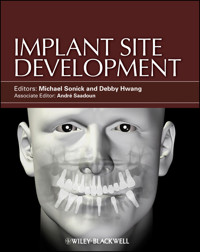
Implant Site Development E-Book
181,99 €
Mehr erfahren.
- Herausgeber: John Wiley & Sons
- Kategorie: Fachliteratur
- Sprache: Englisch
With the desire for dental implant therapy ever escalating, clinicians are faced with the challenge of augmenting deficient natural physiology to provide effective sites for implantation. Implant Site Development helps the clinician decide if, when, and how to create a ridge site amenable to implantation. This practical book offers solutions to many implant site preservation scenarios, discussing different treatment options, timing, a variety of materials and techniques, and their application to the clinical practice. With a unique integrated clinical approach, Implant Site Development covers a range of site development techniques. Highly illustrated, Implant Site Development presents diagrams and clinical photographs to aid with clinical judgment and will prove useful for any dental professional involved in implant therapy, from general practitioners to prosthodontists, but especially surgeons. This literature-based, yet user-friendly, reference will be indispensable to the novice or veteran clinician.
Sie lesen das E-Book in den Legimi-Apps auf:
Seitenzahl: 985
Veröffentlichungsjahr: 2011
Ähnliche




















Table of Contents
Cover
Title page
Copyright page
Dedication
Contributors
Editors
Associate Editor
Contributors
Foreword
Acknowledgments
Chapter 1 Principles of bone biology and regeneration
Introduction
Bone development
Bone cells
Composition of bone
Bone metabolism
Modeling and remodeling
Bone healing
The role of growth factors used in oral bone repair: implications for implant site development
Summary
Acknowledgments
Chapter 2 Bone anatomy
Introduction
CT data set for maxillofacial imaging
Scanning appliances
CT imaging of the maxilla
CT imaging of the mandible
Conclusion
Chapter 3 Treatment philosophy
General tenet #1: resolve what the patient wants with what you want for the patient
General tenet #2: inform patients of the steps involved in and predictability of care
General tenet #3: proceed at a pace and level comfortable for the patient
General tenet #4: treat comprehensively
Implant tenet #1: implants are prosthetically oriented, not anatomically oriented
Implant tenet #2: maximize use of diagnostic tools
Implant tenet #3: complete site development before implant placement
Implant tenet #4: place the greatest number of implants feasible
Implant tenet #5: do not rush the healing period
Implant tenet #6: choose temporization method wisely
Implant tenet #7: do not count on prosthetic manipulation to mask esthetic flaws
Chapter 4 Decision-making algorithm for regeneration of the periodontally compromised tooth: Maintaining these teeth when dental implants provide a compelling alternative treatment option
Introduction
Review of regenerative techniques
Case selection criteria for formulating a decision-making tree (factors associated with successful regenerative outcomes)
Clinical decision tree
Maintenance care: intervals, antibiotics, and plaque control
Complications
Conclusion
Chapter 5 The making of beautiful smiles in perio-implantology
Esthetic implant treatment
Perio-implant interdependence
Implant soft tissue recession
Patient’s biotype
Tridimensional implant position
Conclusion
Chapter 6 CT/CBCT diagnosis and treatment planning concepts for bone grafting applications
Failing maxillary lateral incisor: two case presentations
True 3D planning
Failed apicoectomy: immediate extraction, placement, and restoration
Grafting assessment for the anterior and posterior maxilla
Sinus grafting assessment
Block bone graft assessment
Conclusion
Chapter 7 Implant site development: Socket preservation
Extraction sockets: external dimensional changes
Socket preservation technique
Future approaches
Conclusion
Chapter 8 Implant interactions in orthodontics
Introduction
Orthodontic interactions preparatory to implant placement
Orthodontic interactions after implant placement
Orthodontic implant functional demands
Chapter 9 Guided bone regeneration: Concepts and materials
Guided bone regeneration principles and regulators
Defect type indications
Results of GBR
Effect of complications on the results of GBR
Implant survival in regenerated sites
Materials
Conclusions
Chapter 10 Implant site preparation: Horizontal ridge augmentation using particulate allograft and the principles of guided bone regeneration
History of predictable regenerative therapy
The team approach for a prosthetically driven implant restoration
Guidelines for horizontal ridge augmentation: diagnosis of the site
Common sites for horizontal ridge augmentation
Evidenced-based horizontal ridge reconstruction using GBR principles and the staged approach
Conclusions
Acknowledgments
Chapter 11 Guided bone regeneration: Peri-implantation
Indications
Surgical technique
Conclusions
Chapter 12 Guided bone regeneration: Vertical growth
Distraction osteogenesis
Onlay bone grafting
Scientific documentation of vertical GBR with different grafting materials
Case selection criteria
Description of vertical ridge augmentation surgical procedure
Simultaneous vertical hard and soft tissue augmentation
New perspectives of vertical GBR
Conclusion
Chapter 13 Intraoral bone grafts for dental implants
Introduction
Bone biology
Preoperative evaluation
Preoperative preparation
Bone graft donor sites
Graft recipient site
Implant placement in onlay grafts
Chapter 14 Bone grafting in large bone defects and extreme atrophy situations
Introduction
Historical perspective
Rib
Tibia
Surgical procedure
Calvarium
Iliac crest
Case selection
Surgical procedure
Complications
Implant site
Clinical cases
Acknowledgments
Chapter 15 Sinus elevation: Osteotome-mediated approach
Introduction
Literature review: OMSFE and simultaneous implant placement
Clinical indications
Surgical technique
Preoperative assessment
Flap design/OMSFE procedures
Site preparation for OMSFE and simultaneous implant placement
Postoperative radiograph
Postoperative care
CCE operative protocol
Complications: OMSFE for simultaneous implant placement
Conclusion
Chapter 16 Sinus elevation: Lateral wall approach
Introduction
Preliminary considerations on anatomy
Presurgery study
Surgical considerations in handling the schneiderian membrane
Elevation technique with lateral antrostomy
Clinical characteristics of Mectron-Piezosurgery
Chapter 17 Distraction osteogenesis
Introduction
Techniques available: historical perspective—advantages and limitations
Case studies
Chapter 18 Immediate implant placement: A comprehensive understanding for achieving optimal clinical success
Introduction
Review of immediate implant placement techniques
Review of the literature
Case selection criteria
Surgical protocols
Complications
Conclusion
Chapter 19 Soft tissue augmentation: Pre-, peri-, and postimplantation
Introduction
Basic consideration for esthetic soft tissue augmentation
The microsurgical approach
Surgical techniques for tissue augmentation in the esthetic zone
Conclusion
Chapter 20 Soft tissue enhancement after implant placement
Introduction
Keratinized tissue around dental implants
Introduction to surgical techniques
Surgical techniques: preliminary considerations
Case report #1: apically repositioned partial-thickness flap
Case report #2: extended FGGs at the mandible
Case report #3: extended FGGs at the maxilla
Case report #4: CTGs—the envelope technique
Case report #5: CTGs—modified tunnel technique
Conclusion
Chapter 21 Soft tissue augmentation: Allograft
Indications and timing
Preoperative procedures
Allogenic soft tissue ridge augmentation
Allogenic submucosal soft tissue augmentation
Chapter 22 Soft tissue development with provisional and definitive implant restorations
Introduction
The influence of site preparation and implant placement on sulcular anatomy
Implant-level provisional restorations and soft tissue development
Timing of provisional restorations for optimal soft tissue form
Techniques for implant-level provisional restorations
Surgical indexing
Chairside implant-level provisional restoration
Tooth-supported provisional restoration modified for implant soft tissue development
Capturing the soft tissue form developed with provisional restorations
Definitive abutments and prostheses
Prostheses with gingiva-colored ceramics when soft tissue levels are compromised
Conclusion
Chapter 23 Bioengineering concepts
Introduction
Conclusions
Index
This edition first published 2012 © 2012 by John Wiley & Sons, Ltd.
Wiley-Blackwell is an imprint of John Wiley & Sons, formed by the merger of Wiley’s global Scientific, Technical and Medical business with Blackwell Publishing.
Registered office: John Wiley & Sons Ltd, The Atrium, Southern Gate, Chichester, West Sussex, PO19 8SQ, UK
Editorial offices: 2121 State Avenue, Ames, Iowa 50014-8300, USA
The Atrium, Southern Gate, Chichester, West Sussex, PO19 8SQ, UK
9600 Garsington Road, Oxford, OX4 2DQ, UK
For details of our global editorial offices, for customer services and for information about how to apply for permission to reuse the copyright material in this book please see our website at www.wiley.com/wiley-blackwell.
Authorization to photocopy items for internal or personal use, or the internal or personal use of specific clients, is granted by Blackwell Publishing, provided that the base fee is paid directly to the Copyright Clearance Center, 222 Rosewood Drive, Danvers, MA 01923. For those organizations that have been granted a photocopy license by CCC, a separate system of payments has been arranged. The fee codes for users of the Transactional Reporting Service are ISBN-13: 978-0-8138-2512-0/2012.
Designations used by companies to distinguish their products are often claimed as trademarks. All brand names and product names used in this book are trade names, service marks, trademarks or registered trademarks of their respective owners. The publisher is not associated with any product or vendor mentioned in this book. This publication is designed to provide accurate and authoritative information in regard to the subject matter covered. It is sold on the understanding that the publisher is not engaged in rendering professional services. If professional advice or other expert assistance is required, the services of a competent professional should be sought.
Library of Congress Cataloging-in-Publication Data
Sonick, Michael.
Implant site development / Michael Sonick, Debby Hwang, André P. Saadoun.
p. ; cm.
Includes bibliographical references and index.
ISBN 978-0-8138-2512-0 (hardcover : alk. paper)
I. Hwang, Debby. II. Saadoun, André P. III. Title.
[DNLM: 1. Dental Implantation. 2. Bone Regeneration–physiology. 3. Dental Implants. 4. Esthetics, Dental. 5. Guided Tissue Regeneration, Periodontal. 6. Periodontal Diseases–therapy. WU 640]
617.6'93–dc23
2011037205
A catalogue record for this book is available from the British Library.
Wiley also publishes its books in a variety of electronic formats. Some content that appears in print may not be available in electronic books.
ISBN: 978-0-4709-6318-0 (epdf)
ISBN: 978-0-4709-6319-7 (epub)
ISBN: 978-0-4709-6320-3 (mobi)
Disclaimer
The publisher and the author make no representations or warranties with respect to the accuracy or completeness of the contents of this work and specifically disclaim all warranties, including without limitation warranties of fitness for a particular purpose. No warranty may be created or extended by sales or promotional materials. The advice and strategies contained herein may not be suitable for every situation. This work is sold with the understanding that the publisher is not engaged in rendering legal, accounting, or other professional services. If professional assistance is required, the services of a competent professional person should be sought. Neither the publisher nor the author shall be liable for damages arising herefrom. The fact that an organization or Website is referred to in this work as a citation and/or a potential source of further information does not mean that the author or the publisher endorses the information the organization or Website may provide or recommendations it may make. Further, readers should be aware that Internet Websites listed in this work may have changed or disappeared between when this work was written and when it is read.
Michael Sonick, DMD
To the memory of my father, Jay Sonick, who taught me the value of having integrity in all areas of my life. To my wife, Carole, for her unwavering love and support without whom I would not have completed this book nor enjoyed the capacity for such a happy life. To my children, Becky, Jason, and Jennifer, who are the joy of my life.
Debby Hwang, DMD
To my parents and sister.
Contributors
Editors
Michael Sonick DMDPrivate Practice Fairfield, CT, USA
Debby Hwang DMDPrivate Practice Ann Arbor, MI and Fairfield, CT, USA
Associate Editor
André P. Saadoun DDS, MSDiplomate, American Academy of Periodontology Former Associate Professor, Department of Periodontics University of Southern California Los Angeles, CA, USA Visiting Professor, Department of Periodontics and Implantology Hadassah School of Dental Medicine Jerusalem, Israel
Contributors
Eduardo Anitua MD, DDS, PhDDirector of Anitua’s Dental Research Institute Vitoria, Spain
Michael S. Block DMDPrivate Practice Metairie, LA, USA
Nardy Casap DMD, MDSenior Lecturer and Graduate Program Director Department of Oral and Maxillofacial Surgery Hadassah School of Dental Medicine Hebrew University Jerusalem, Israel
Frank Celenza DDSPrivate Practice New York, NY, USA
Robert A. Faiella DMD, MMScDiplomate, American Board of Periodontology Private Practice Osterville and Duxbury, MA, USA
Stefan Fickl DMD, PhD, Priv.-Doz.Clinical Associate Professor Department of Periodontology Julius-Maximilians-University Würzburg, Germany
Stuart J. Froum DDSClinical Professor and Director of Clinical Research Department of Periodontology and Implant Dentistry New York University, College of Dentistry New York, NY, USA
Scott D. Ganz DMDClinical Assistant Professor, Department of Restorative Dentistry University of Medicine and Dentistry of New Jersey New Jersey Dental School Newark, NJ, USA Prosthodontics, Maxillofacial Prosthetics, and Implant Dentistry Fort Lee, NJ, USA
William V. Giannobile DDS, DMedScNajjar Professor of Dentistry and Director Michigan Center for Oral Health Research School of Dentistry Professor of Biomedical Engineering College of Engineering University of Michigan Ann Arbor, MI, USA
Christopher Haggerty DDS, MDPrivate Practice Kansas City, MO, USA
Markus B. Hürzeler DMD, PhD, Prof. Dr. med. dent.Clinical Associate Professor Department of the Operative Dentistry and Periodontology School of Dental Medicine Albert-Ludwigs-University of Freiburg Freiburg, Germany Private Practice Munich, Germany
Jack T. Krauser DMDPrivate Practice Boca Raton, FL, USA
Robert A. Levine DDSClinical Professor in Postgraduate Periodontics and Implantology Kornberg School of Dentistry Temple University, Philadelphia, PA, USA Private Practice, Pennsylvania Center for Dental Implants and Periodontics Philadelphia, PA, USA
George A. Mandelaris DDS, MSDiplomate, American Board of Periodontology Private Practice, Periodontology and Dental Implant Surgery Park Ridge and Oakbrook Terrace, IL, USA
Craig M. Misch DDS, MDSPrivate Practice in Oral Maxillofacial Surgery and Prosthodontics Sarasota, FL, USA Clinical Associate Professor Periodontology and Implant Dentistry New York University College of Dentistry New York, NY, USA
Gorka Orive PhDAssociate Professor of Pharmacy Head of the Laboratory of Regenerative Medicine at BTI Biotechnology Institute Vitoria, Spain
George Priest DMDDiplomate, American Board of Prosthodontics Private Practice in Prosthodontics Hilton Head Island, SC, USA
Hector F. Rios DDS, PhDAssistant Professor, Division of Periodontology Department of Periodontics and Oral Medicine The University of Michigan, School of Dentistry Ann Arbor, MI, USA
Davide Romeo DDS, PhDResearch Associate Department of Periodontology and Implant Dentistry New York University College of Dentistry New York, NY, USA Private Practice, Milan, Italy
Paul S. Rosen DMD, MSClinical Associate Professor of Periodontics Baltimore College of Dental Surgery University of Maryland Baltimore, MD, USA Private Practice Yardley, PA, USA
Alan L. Rosenfeld DDSDiplomate, American Board of Periodontolology Private Practice in Periodontology and Dental Implant Surgery Park Ridge and Oakbrook Terrace, IL, USA
Yuval Samuni DMD, PhDDepartment of Oral and Maxillofacial Surgery The Barzilai Medical Center Ashkelon, Israel
Avi Schetritt DMDDiplomate, American Board of Periodontology Private Practice Miami, FL, USA
Peter C. Shatz DDS, FICDAssistant Clinical Professor Georgia Health Sciences University Augusta, GA, USA Private Practice Atlanta, GA, USA
Lee H. Silverstein DDS, MS, FACD, FICDAssociate Clinical Professor Department of Periodontology Georgia Health Sciences University Augusta, GA, USA Private Practice Marietta, GA, USA
Christian F.J. Stappert DDS, MS, PhD, Priv.-Doz.Director of Aesthetics and Periodontal Prosthodontics Department of Periodontology and Implant Dentistry New York University College of Dentistry New York, NY, USA
Michael Toffler DDSDiplomate, American Board of Periodontology Private Practice New York, NY, USA
Istvan Urban DMD, MDAdjunct Assistant Professor Advanced Education in Implant Dentistry Loma Linda University Loma Linda, CA, USA Private Practice Budapest, Hungary
Tomaso Vercellotti MD, DDSPrivate Practice Genova, Italy Honorary Professor, Eastman Dental Institute London, England Visiting Professor University of Bologna University of Genova Genova, Italy
Foreword
It is human instinct to strive for rejuvenation. In dentistry, this pursuit is fostering astonishing leaps forward in implant dentistry and bone regeneration. This book introduces and makes clear these recent innovations to all clinicians. It is a decision-making companion, a literate mentor that guides the dentist through treatment planning, therapy, and follow-up. There is no surgical manual as comprehensive, thorough, and clinically slanted, but scientifically sound. Clinical leaders take readers on a photographic journey through cases and facilitate them in answering most fundamental questions regarding patient selection, prosthetic options, ridge augmentation, and implant placement. The collection of experts featured here and the easy-to-digest manner in which they outline clinical procedures will impress all readers. We edge ever closer to restoring to our patients their natural form and function; this text assists us on that mission.
Richard Lazzara, DMD, MScD
Acknowledgments
Michael Sonick and Debby Hwang would like to thank the following people for their steadfast support and general brilliance:
Our unflappable, miracle-working team: Sophia Joyce, Melissa Wahl, and Shelby Allen at Wiley and Janet Hronek at Toppan Best-set Premedia LimitedAll the book authors, who proved themselves to be gifted, accommodating, and graciousThe mentors, teachers, and colleagues who instilled in us the sound knowledge of the scientific rationale that undermines sound clinical judgment, especially Abe Shuster, Tom Van Dyke, Steven Offenbacher, Dennis Tarnow, Kendall Beachum, Richard Lazzara, David Garber, Alan Seel, and William GiannobileOur talented, tolerant restorative colleaguesOur unparalleled staff, especially Patty Bernardos, Liz Correia, Verity Rollins, and Kenisha TaylorChapter 1
Principles of bone biology and regeneration
Hector F. Rios DDS, PhD and William V. Giannobile DDS, DMedSc
Introduction
Bone is a dynamic tissue sensitive to a variety of factors with an inherent capacity that allows the translation of mechanical stimuli into biochemical signals, which therefore enhances its ability to adapt and sustain the physiological needs of the osseous structure. (Bonewald and Johnson, 2008; Burger et al., 1995; Duncan and Turner, 1995; Marotti, 2000; Marotti and Palumbo, 2007) This adaptive potential is the result of tightly regulated and synergistic anabolic and catabolic events that lead to proper metabolic and skeletal structural homeostasis (Turner and Pavalko, 1998). Multiple factors exert an effect in this system (e.g., biochemical, hormonal, cellular, biomechanical) that will collectively determine bone quality (Ammann and Rizzoli, 2003; Ma et al., 2008; Wallach et al., 1993). Clinically, bone quality is perceived as an important feature that dictates the mechanical properties of bone over time. Within the skeleton, such characteristics vary from one area to another and are determined by, among many things, cellular density and connectivity, bone density, bone macro- and microarchitecture, and the proportions of organic and inorganic matrix (Ammann and Rizzoli, 2003; Dalle Carbonare and Giannini, 2004; Ma et al., 2008; O’Brien et al., 2005; Viguet-Carrin et al., 2006). Therefore, the success of implant therapy is influenced by the understanding of the basic biological and physiological principles of bone, as it will aid the surgeon in selecting the appropriate techniques to enhance the peri-implant bone homeostasis.
Thus, the purpose of this chapter is to provide the clinician with foundational knowledge of bone development, composition, metabolism, and regeneration that serves as a primer for implant site development.
Bone Development
During embryogenesis, the skeleton forms by either a direct or indirect ossification process. In the case of the mandible and the maxilla, mesenchymal progenitor cells condensate and undergo direct differentiation into osteoblasts, a process known as intramembranous osteogenesis. In contrast, in the mandibular condyle, the long bones and vertebrae form initially through a cartilage template, which serves as an anlage that is gradually replaced by bone. The cartilage-dependent bone formation and growth process is known as endochondral osteogenesis (Ranly, 2000) (Fig. 1.1).
Fig. 1.1 During intramembranous osteogenesis, an ossification center develops through mesenchymal condensation. As the collagen-rich extracellular matrix develops and matures, osteoprogenitor cells undergo further osteoblastic differentiation. A subpopulation of osteoblasts becomes embedded in the mineralizing matrix and gives rise to the osteocyte lacunocanalicular network. Within the craniofacial complex, most bones develop and grow through this mechanism. Onthe other hand, long bones within the skeleton and the mandibular condyle are initially developed through the formation of a cartilaginous template that mineralizes and is later resorbed by osteoclasts and replaced by bone that is laid down afterward. The endochondral bone growth process leads to the formation of primary and secondary ossification centers that are separated by a cartilaginous structure known as the growth plate. As bone develops and matures through these two processes, structural distinct areas of compact bone and trabecular bone are formed and maintained through similar bone remodeling mechanisms.
Alveolar bone lost as a result of an injury, disease, or trauma undergoes a repair process that is essentially a combination of endochondral and intramembranous complementary osteogenic processes (Rabie et al., 1996; Virolainen et al., 1995). A similar process occurs in most of the bone-related implant site development techniques, where osteoconduction, osteoinduction, and osteogenesis are exploited.
Bone Cells
Within bone, different cellular components can be identified. The distinct cell populations include osteogenic precursor cells, osteoblasts, osteoclasts, osteocytes, and hematopoietic elements of bone marrow. The content of this chapter will focus on the three main functional cells that are ultimately responsible for the proper skeletal homeostasis.
Osteoblasts are ultimately the cells responsible for bone formation. They synthesize the organic matrix components and mediate the mineralization of the matrix (Fig. 1.2). Osteoblasts are located on bone surfaces exhibiting active matrix deposition, and as their bone forming activity nears completion, some osteoblasts further differentiate into osteocytes, while others remain in the periosteal or endosteal surface of bone as lining cells. Bone lining cells are elongated cells that cover a surface of bone tissue and exhibit no synthetic activity (Rodan, 1992).
Lesen Sie weiter in der vollständigen Ausgabe!
Lesen Sie weiter in der vollständigen Ausgabe!
Lesen Sie weiter in der vollständigen Ausgabe!
Lesen Sie weiter in der vollständigen Ausgabe!
Lesen Sie weiter in der vollständigen Ausgabe!
Lesen Sie weiter in der vollständigen Ausgabe!
Lesen Sie weiter in der vollständigen Ausgabe!
Lesen Sie weiter in der vollständigen Ausgabe!
Lesen Sie weiter in der vollständigen Ausgabe!
Lesen Sie weiter in der vollständigen Ausgabe!
Lesen Sie weiter in der vollständigen Ausgabe!
Lesen Sie weiter in der vollständigen Ausgabe!
Lesen Sie weiter in der vollständigen Ausgabe!
Lesen Sie weiter in der vollständigen Ausgabe!
Lesen Sie weiter in der vollständigen Ausgabe!
Lesen Sie weiter in der vollständigen Ausgabe!
Lesen Sie weiter in der vollständigen Ausgabe!
Lesen Sie weiter in der vollständigen Ausgabe!
Lesen Sie weiter in der vollständigen Ausgabe!
Lesen Sie weiter in der vollständigen Ausgabe!
Lesen Sie weiter in der vollständigen Ausgabe!
Lesen Sie weiter in der vollständigen Ausgabe!
Lesen Sie weiter in der vollständigen Ausgabe!




