


Erhalten Sie Zugang zu diesem und mehr als 300000 Büchern ab EUR 5,99 monatlich.
- Herausgeber: Faber Music Limited
- Kategorie: Geisteswissenschaft
- Sprache: Englisch
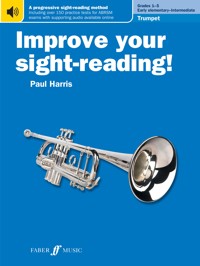
Improve your sight-reading! Guitar Grades 1-3 is designed to help classical guitarists overcome sight reading problems, especially in the context of graded exams. Step by step you build up a complete picture of each piece, firstly through rhythmic and melodic exercises related to specific technical issues, then by studying prepared pieces with associated questions, and finally 'going solo' with a series of meticulously graded sight-reading pieces. Written to support the ABRSM's sight-reading requirements. This is the full eBook edition in fixed-layout format.
Sie lesen das E-Book in den Legimi-Apps auf:
Seitenzahl: 22
Veröffentlichungsjahr: 2020
Das E-Book (TTS) können Sie hören im Abo „Legimi Premium” in Legimi-Apps auf:
Ähnliche










Grades 1–3 Guitar
Improve yoursight-reading!
Paul Harris
Stage 1
Stage 2
Stage 3
Stage 4
Stage 1
Stage 2
Stage 3
Stage 4
Stage 1
Stage 2
Stage 3
Stage 4
Grade 1
C major • A minor •••page 3
F major ••• Right-hand fingerings page 6
G major • E minor •••page 3
• Revision page 12
Grade 2
Ties ••mf•mppage 15
D minor •page 18
Staccato page 21
Revision page 24
Grade 3
D major • 2nd position page 27
Rhythms in • Slurs • Broken chords page 30
Lifted notes • Accents •pppage 33
Revision page 36
The golden rules page 39
Practice chart page 40
Many thanks to Jonathan Whiting for his considerable helpand to Hugh Millington for his specialist guitar advice.
2
Introduction
Being a good sight-reader is so important and it’s not difficult at all!If you work through this book carefully – always making sure that youreally understand each exercise before you play it – you’ll never haveproblems learning new pieces or doing well at sight-reading in exams!
Using the workbook
1 Rhythmic exercises
Make sure you have grasped these fully before you go on to the melodicexercises: it is vital that you really know how the rhythms work. Thereare a number of ways to do the exercises, several of which are outlinedin Stage 1. Try them all out. Can you think of more ways to do them?
2 Melodic exercises
These exercises build upon the rhythms for the Stage, and are usuallyorganised into Sets which progress gradually. If you want to sight-readfluently and accurately, get into the habit of working through eachexercise in the following way before you play it:
• Make sure you understand the rhythm and counting. Clap the exercise through.
• Know the notes you are going to play and the fingering you are goingto use.
• Play the first note, then try to hear the piece through in your head.
3 Prepared pieces
Work your way through the questions first, as these will help you tothink about or ‘prepare’ the piece. Don’t begin playing until you arepretty sure you know exactly how the piece goes.
4 Going solo!
It is now up to you to discover the clues in this series of practice pieces.Give yourself about a minute and do your best to understand the piecebefore you play. Check the rhythms and hand position, and try to hear




