


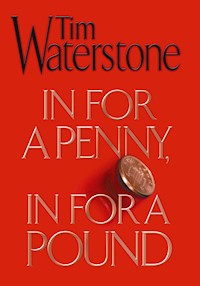
Erhalten Sie Zugang zu diesem und mehr als 300000 Büchern ab EUR 5,99 monatlich.
- Herausgeber: Corvus
- Kategorie: Gesellschafts- und Liebesromane
- Sprache: Englisch
A penniless publisher teetering on the brink... Hugh Emerson runs a glamorous upmarket publishing house. But literature doesn't pay the bills, and now his bestselling author is the subject of a tabloid scandal. Emerson Publishing needs cash, fast. A newspaper dynasty struggling to survive... Ned Macaulay, heir to a newspaper dynasty and Hugh's best friend, steps in to help. But Ned has problems of his own. The family firm is on the brink of bankruptcy, and to save it he must confront his despotic father and outsmart the self-serving sycophants at Waring's bank. Ruthless bankers closing in for the kill... Soon Hugh and Ned are dragged into a cut-throat world of devious investors and muck-raking journalists. It's darker and dirtier than they ever imagined - but if they want to succeed, they know they have to play dirty too. In times like these, once you're in for a penny, you're in for a pound.
Sie lesen das E-Book in den Legimi-Apps auf:
Seitenzahl: 500
Veröffentlichungsjahr: 2010
Das E-Book (TTS) können Sie hören im Abo „Legimi Premium” in Legimi-Apps auf:
Ähnliche



















Copyright
First published in Great Britain in 2010 by Corvus, an imprint of Grove Atlantic Ltd.
Copyright © Tim Waterstone, 2010
All rights reserved.
The moral right of Tim Waterstone to be identified as the author of this work has been asserted in accordance with the Copyright, Designs and Patents Act of 1988.
All rights reserved. No part of this publication may be reproduced, stored in a retrieval system, or transmitted in any form or by any means, electronic, mechanical, photocopying, recording, or otherwise, without the prior permission of both the copyright owner and the above publisher of this book.
This is a work of fiction. All characters, organizations and events portrayed in this novel are either products of the author’s imagination or are used fictitiously.
ISBN: 978-0-857-89137-2
First eBook Edition: January 2010
Corvus
An imprint of Grove Atlantic Ltd
Ormond House
26-27 Boswell Street
London WC1N 3JZ
www.corvus-books.co.uk.
Contents
Cover
Copyright
Part One: 1997
Chapter 1
Chapter 2
Chapter 3
Chapter 4
Part Two: Three Years Later – 2000
Chapter 5
Chapter 6
Chapter 7
Chapter 8
Chapter 9
Chapter 10
Chapter 11
Chapter 12
Part Three: Four Years Later – 2004
Chapter 13
Chapter 14
Chapter 15
Chapter 16
Chapter 17
Chapter 18
Chapter 19
Chapter 20
Postscript: One Year Later – 2005
For Rosie
Part One
1997
1
The Huber Publishers offices were tucked away in a dark, litter-strewn corner of Holborn, at the furthest end of what in its time had been a fashionable arcade. These days it was a desert of boarded-up shop fronts, among which were scattered two or three little newsagents, a charity shop, a bookmaker, and a Chinese restaurant, filthy, tiny, in its window the suspended carcasses of ducks, orange, naked, obscene. Then, beside a chiropodist, was the Huber office.
In Huber’s window, propped up on plastic supports, were faded, dusty copies of their books. These were backed on either side by curled posters of Lenin and photographs of the Jarrow March and a gaudy, vast oil painting of gallant, shiny-booted, rigid-backed Russian soldiers striding out in step, their heroic women, shawled, babies on hips, seeing them off to war. More formally, displayed behind glass, were some Gustav Klucis litho -graphs of the 1920s, with titles like The Strength of Millions of Workers Drawn into the Building of Socialism.
Hugh Emerson stood for a moment admiring the Klucis lithographs, and wished they were better lit. He hesitated, then pushed the door open and walked in. He’d explained to Huber why he was coming, so it was too late to back down. The door had set off a chime, and after a moment Huber himself, a bearded, tall, bulky figure, emerged from the back office. He came across the corridor to Hugh, arms outstretched, the cuffs of his poorly laundered shirt grey and threadbare.
Looking at him, Hugh wondered, not for the first time since he had called him earlier that day, whether Huber actually had any money. If he hadn’t, then this visit was pointless. But four or five years before, when Huber had offered to help finance the fledgling Emerson Publishers list, Huber had showed him his accounts. The books Huber published sold barely a few hundred copies each year, and many of them fewer than that. But he had possessed a goldmine: a contract with the Soviet licensing agency, giving him exclusive translation rights to a great number of Soviet technical and academic journals, all of which had an automatic advance sale to every major library. Perhaps, post the Soviet collapse, he had managed to sustain this with the new Russia.
‘Hugh, dear,’ Huber said, holding Hugh’s proffered hand in both of his, and squeezing it. ‘Hugh, the great white hope of the book world. Come in, and tell me all about it. Tea, please, Phyllis dear,’ he called out to his assistant, by publishing lore his mistress of many years, full bosomed and flushed in her purple jersey and faux pearls. ‘Earl Grey – and our very best biscuits for our distinguished visitor. The fatted calf for Hugh Emerson, Phyllis, if you please.’
His hand on Hugh’s sleeve, Huber guided him into a small office at the very back of the building, plunged into gloom by the rear of the dilapidated Edwardian hotel that abutted it. Books, manuscripts, a fax machine, proofs of technical drawings – there was a clutter about it all that reminded Hugh of his own office in a Camden Town cul de sac. But the Huber version of it was much more feminine. On the windowsill stood a prim little miniature rose in a pink vase, a tiny watering can beside it. The curtains, suburban chintz, were tied at their centre by a neat bow. Huber’s pencils and pens were tidied away into a pewter tankard on the battered, antique walnut desk, and beside this two or three of his pipes stood in their rack; anachronistic to the fashion of mid-1990s Britain, but, Hugh thought, in their Middle European style, somehow part of the Huber persona. Laid carefully parallel to the pipes was a leather pocket case containing his spectacles.
Huber sat Hugh down in what he appeared to consider the best chair, first sweeping off it an Abyssinian cat, white and fluffy, its hairs left embedded in the worn purple velvet of the seat.
‘Well, Hugh, tell me again what’s on your mind,’ Huber said. ‘I feel rather like your headmaster. You’ve spent all your money, and you want some more, and if you don’t get it there’s going to be a nasty scene with your bank manager. You told me, or rather you muttered something I could hardly catch, so I rang that finance man of yours – Joe? – while you were on the way, and he . . . he gave me the gen.’
He speaks in quotes, Hugh thought. ‘Gave me the gen.’ There was an arch, pedantic manner about it, a foreigner in his third or fourth language attempting what he imagined to be the very latest in modish street argot.
Huber sipped his tea, which Phyllis had served in pretty pink porcelain cups and saucers. Chipped, Hugh noticed, as was the walnut desk, but hinting at refined gentility.
‘Well – yes,’ Hugh replied, ‘that’s pretty well what’s happened. Publishing is not easy in the early years, as you well know, when one is building the list. We were going very well, then we made two or three mistakes. And, rather quickly, we found ourselves very illiquid, and with a new bank manager who didn’t like the look of the business.’
Huber kept his cup to his lips, peering at Hugh over the rim. His benign expression had disappeared. ‘How much is your monthly overhead?’
‘We run Emerson on about £90,000 a month. Then we have our production costs to pay as we print the list. Plus authors’ advances, and because we are trying so hard to grow, we need to carry an increasing investment in stock. So we have quite a requirement for cash – all the time.’ He tried to smile in cheery self-confidence, hating the camp pantomime he was obliged to act out. Phyllis came into the room to clear away the tea, Huber gazing pleasantly at her great bottom as she bent to gather the cups on to the tray.
‘Do you have any more money to put in, Hugh? Or a rich aunt, or an adoring godfather, or anybody? Or an adoring wife, if it comes to that? I seem to remember she’s a great star around your firmament, am I right? She’s a barrister? Your age, thirty and a bit, and already earning millions?’
‘Hardly that. She’s a barrister – yes – but of course she’s not earning millions. No, Nicola and I can’t afford to put in more than we already have. We’ve already gone too far, probably.’
‘Your parents?’
‘No, not my parents.’
‘So I’m the end of the line.’
‘Yes – you’re the end of the line.’ Hugh replied too quickly, then flushed at his rudeness.
‘Well, here you are with me, you poor child, at the end of the line. But tell me, Hugh – why should I help you? I offered you a hand when you were first starting out, but you turned me away. Tough titty – wouldn’t you say? Tough titty,’ he repeated, chuckling, delighted with the phrase. ‘Why shouldn’t I just let you go under? One less competitor and all that sort of thing? What’s it to me?’
He shrugged, but then half smiled, and leant across to pat Hugh on the knee. ‘That’s not fair. I’m playing with you, you must think. Perhaps I am. These things happen, and you don’t have to tell me that the early days of a publishing venture are very tough. I found my way through, I’m glad to say, but only just, and that almost entirely due to my connections in the then Soviet Union. But most don’t survive, at least not in independence. You will, perhaps, because you have that sort of cut about you, but it will be touch and go.’
He smiled, reached into his drawer and drew out a cheque book and a receipt pad. He took a pen, then hesitated. ‘The bank has given you just seven days, your Joe told me. So we’ve got a little bit of breathing space with them, if not very much. You owe them £240,000. And this collection agency want their cash tomorrow, I gather from Joe. Insisting on it: £13,000 cash.’
Hugh was appalled that Joe had told Huber so much, humiliated. But left to himself, Hugh would have prevaricated. Joe had simply told the truth, no doubt having in his mind already abandoned Emerson and started interviewing for his next job. ‘Yes,’ he said, grimacing in his embarrassment.
‘They want £13,000, in cash,’ Huber repeated and pretended to wince, ‘by tomorrow morning. You’re not cheap, dear, are you?’
He went to the door, opened it, and called up the passage. ‘Phyllis – how much cash have we got in our secret money-box we don’t worry the tax man about?’
There was a muffled reply.
‘It can’t be. As much as that? Oh yes, of course. There was that little receipt of ours last week. Well, get the key out, poppet, and open it up. This is a stick-up. We are about to be robbed.’
Huber returned to his chair, motioning Hugh to remain where he was. ‘Give the beastly people their money tomorrow, get the proper paperwork and a receipt for it, and keep it all safe. During the early part of next week we’ll transfer into your bank the funds needed to pay off your overdraft – when Joe told me the amount I nearly fell off my chair, I have to tell you – and we’ll help to negotiate another arrangement with my bank, covered by my guarantee. Give Phyllis your account details, and sign a little note for her, agreeing we’ll settle terms between us later next week. And then, Hugh, we’ll need to make our plans for the future. Or otherwise I’m afraid you’ll have to give me back what I’m now advancing to you, and I will leave you to your own devices with your bank.’
Hugh looked like stone, then Huber laughed. ‘But of course it won’t come to that!’ he said, and reached out to shake Hugh’s hand. Hugh rose to his feet, and Huber fussed over him and his raincoat and whether it was still wet and if Hugh should borrow a hat and scarf, then saw him out into the arcade and on his way. He had pushed into Hugh’s inner breast pocket the two thick envelopes of fifty-pound notes. Given the seediness of the Huber offices, the notes were surprisingly crisp and clean.
Two days later they were again in Huber’s office, once more with Phyllis’s chipped porcelain tea cups in their hands. This time the Abyssinian cat was asleep on Huber’s lap, its long white hairs moulting into his crumpled grey flannel trousers.
‘Claus – look, it was very good of you to have done what you did,’ Hugh said, smiling brightly, quick to get to the point. ‘The reason I’m here today is that I’m conscious that we’ve left some ends untied, and we need to clarify where we are.’
Huber nodded, and pulled at his earlobe. ‘That’s right, my dear, we do. Putting it baldly, you’ve got six months’ debt cover at the bank on my guarantee. And you owe me £13,000 cash, on a twenty-day note, that sum not to be taken from the account I’m now guaranteeing. You’re right – we need to discuss how I’m going to get my little cash loan back and how you’re going to deal with all that debt once my guarantee lapses. And what the future holds for Emerson.’
He reached forward and patted Hugh on the knee, patronisingly, too physically familiar. Hugh shifted his position. ‘What do you have in mind?’
Hugh nodded. ‘As far as the cash is concerned, I’m going to have to ask you to extend the note for a further seven days. I’ll ask Nic if we can sell a couple of pictures, and repay the money that way, but I need another week to have the money in my hands.’
Huber shrugged, cocked his head, and smiled pleasantly. ‘Of course,’ he said. ‘And then?’
‘The company’s debt, you mean? That’s my main concern, but I’m planning to come up with a solution within three or four weeks, and then let you off the hook.’ Hugh smiled, he hoped with a convincing show of warmth. ‘Together with an appropriate fee, of course, that goes without saying. Perhaps we should both take professional advice as to what that might be.’
Huber nodded, and watched him, his hooded eyes disquieting. Hugh was sure that Huber was going to push for the guarantee to be converted into an investment into Emerson, at a level that would make the company effectively a joint venture between the pair of them. He was not going to allow that. Emerson Publishers was Hugh’s alone, founded with a great ambition to create one of the foremost literary publishing houses in the country. And he had no intention of sharing that with Huber. He shouldn’t have come to him in the first place. It was momentary panic that had done it, prompted by the call from the collection agency.
Huber suddenly switched his features into a smile, and made a dumb show of offering Hugh some more tea. ‘A fee? I’m not sure I’d know what level of fee to demand of you, Hugh. Besides, we have the arrangement covered, don’t you remember? You signed the little piece of paper Phyllis drafted up for us.’
‘Of course I remember signing the paper. But it said nothing very much – just an acknowledgement of the cash advance and a simple acceptance of the terms of your guarantee.’
‘And those terms were?’
Hugh shrugged. ‘Nothing. Terms to be agreed between the two parties.’
‘Well, that’s splendid. Perhaps I should tell you what those will be. Number one – I shall immediately withdraw that guarantee if we are unable to agree the terms of it; and, number two, in the event of the bank debt not being cleared at the end of two months – eight weeks – I will assume that debt and apply it to the purchase of Emerson shares at one penny each.’
Hugh forced himself to smile. ‘I can’t agree to that, I’m afraid, Claus. I don’t want another investor in Emerson. I want it to stay entirely under my control.’
Huber leant over and patted his knee again, and Hugh let him. He fought to remain calm.
‘Then you shouldn’t have run out of money, you silly boy, should you?’ Huber said. ‘And who knows – perhaps you can stay independent! All you have to do is pay off the debt within two months, and there we are. Plus of course the £13,000 cash, and the interest, and if I do decide on a little fee, that too. And then, thanks to me, this nasty little crisis of yours will be over, and you’ll go on to all the great things you’ve dreamed of, without a backwards glance!’
‘But Claus, there’s no way I can pay the bank off in two months. I’m so grateful to you for what you’ve done, but those terms, by which you buy cheap shares – the shares have a par value of one pound, not one penny – if I had realized that was what you wanted, I would have . . .’
‘Today’s Thursday. Let’s say you have until next Tuesday evening, would that be fair? Let me know by Tuesday evening whether you agree my terms, and then we can both initial one of Phyllis’s little bits of paper and on we go. And if you don’t – and I would quite understand it, Hugh, believe me, I really would – we can forget the whole thing and you can repay me the cash. And – you’re right – my fee. Immediately. There and then on Tuesday evening. And at that moment I’ll tell the bank that the guarantee has lapsed and that they should look to you for the money. Fair’s fair?’
He got to his feet, fussed over whether cat hairs had stuck to Hugh’s trousers, brushed down his coat and, holding his arm as affectionately as before, saw him out into the arcade.
‘I’ll hear from you on Tuesday then!’ Huber called, and Hugh, returning his wave and his smile with an attempt at insouciance, set off on his way, trying to make his stride as jaunty and confident as he could. But inside he was numb.
Hugh looked across at his brother James, and wished that he had not come to see him.
Six years older than Hugh, James was a partner at the grandee advisory investment bank of Waring’s. As far as Hugh could deduce he was these days not only very wealthy, but also, judging by Hugh’s occasional sightings of his name in the financial press, considered to be something of a corporate finance star. Desperate on leaving his unhappy meeting with Claus Huber, Hugh could think of no one else to go to, uncomfortable with his brother as he had always been, so he had telephoned, been snapped at, but had been fitted into James’s diary that very evening. And there he was now, ill prepared and ill at ease, seated before his brother in a quite impossibly grand office for a man of less than forty. It occurred to Hugh that the room might not actually be his, and that he had borrowed it for the occasion in order to overawe him.
‘I always knew that rotten little company of yours would run out of cash,’ James was saying, with satisfaction. ‘Of course it was going to. Hopelessly undercapitalized, poorly structured on the debt side, I’ve seldom seen anything so amateurish in my life. And here we are, and you have run out of cash. Lock, stock and barrel. Even quicker than I thought you would.’
He barked out a laugh, contemptuous and insulting and, with a flick of the hand, pushed the Emerson Publishers accounts back across the table. ‘You publish well, I suppose, or so people tell me, and in that sense you may be surviving, even thriving, how do I know? But as a financial entity, as an investment prospect . . .’
He shook his head, theatrically, and laughed again. ‘You should have come to me for advice in the first place, three or four years ago, when you were setting the thing up. I would have made sure the firm was solidly financed, properly constituted, something that had a future. But now, as you are, in this state of collapse . . .’ He shrugged, and looked at his watch. ‘I’d like to help, regard it as my duty, you’re my brother and all that sort of thing, but you’ve left it too late. In my view you’re a very lucky man that this Claus Huber fellow has put his proposition to you, tough as it may be. You should take his arm off to close it. Get the best you can get from him – anything at all will be entirely out of the goodness of his heart – and be grateful for it.’
‘Let’s see what happens. I don’t think you quite understand the potential . . .’
James snorted with laughter, got to his feet, and shepherded Hugh out of his office. ‘This is the real world here, I’m afraid,’ he said, as the lift doors opened, and he waved Hugh inside. ‘Potential!! We don’t talk about potential here, we talk about what is real and measurable. We don’t deal in fantasies. We deal with facts.’
He nodded a curt farewell to his younger brother and, as the lift doors closed, Hugh could see him already striding off down the corridor, barking an instruction to a woman who jogged in his wake.
Nicola was in Brussels for a day or two, a delegate from her Inner Temple chambers to an international conference on human rights. Hugh was missing her painfully. Suddenly, shock at his situation had begun to overwhelm him again. Not just shock now, but near panic as well, and a sensation that his life had spun out of control. There had been a raw, street indignity to that threatening call, delivered in a thick Glasgow accent, from the man at the collection agency. It had shaken Hugh. He was a courteous, ordered man by temperament, and the anarchy of oral as much as physical aggression rattled him.
His visit to his brother had amused him rather than upset him, for James’s tone was hardly a surprise. But it had increased his sense of loneliness. He had hated coming into an empty house when he arrived home. He and Nicola had both been barely twenty-two when they had converted an increasingly frenzied student relationship at Oxford into the conventional safe haven of the marriage bed. They were childless, but their emotional bond was central to their lives. He missed her so much at that moment that the longing for her was a physical, actual thing.
He went into the sitting room, poured himself a drink at the tray, and gazed at the chess board. He was in the middle of a postal game with his friend, Ned Macaulay. They had been playing chess by postcard and telephone for the best part of a decade. He had received Ned’s new move that morning, and slumped down in an armchair to consider it. He studied the board, then saw his move. He reached in his pocket for his mobile phone, pushing his piece across the board with his other hand. ‘Bishop to h8,’ he said, the moment that Ned came on the line. ‘Check. Get out of that, you prick.’
He heard the phone being banged down and then there was silence for several minutes. Hugh found himself humming some bars from Gershwin’s American in Paris, and felt, for the moment, very much better.
Of all his friends Ned Macaulay was the most reliably congenial. Hugh and Ned had met when they were both seven years old, a pair of terrified first-term boarders at a freezing school in a deserted fold of the South Downs. In their long school shorts and blue blazers and cherry red caps, they had stood together on the gravel, watching their parents’ cars disappearing off down the drive. The two little boys had gazed around them at sodden playing fields, still, thirty or so years on, enclosed by wartime barbed wire. A machine gunner’s concrete pillbox, weather-stained, threatening, part covered in dank ivy, stood in the shrubbery. An unsmiling clergyman headmaster was waiting to take them into the gaunt school buildings. They were both homesick and close to tears, but too reticent and frightened in these surroundings to release them.
Five or six years of that, and then they were parted for a period when Hugh went to an undistinguished private school in Kent, and Ned to Eton. They stayed in touch, and then, went on together to Oxford. These days, both married, they still saw each other at least once a month, and spoke at least once or twice a week. They imagined, both of them, that they would never now lose contact. They quarrelled occasionally, but formulaically, and without malice, and they were integral to each other’s lives.
‘Knight to h3,’ came the reply eventually. ‘And you too.’
‘Hold on,’ Hugh said, went to the board to register Ned’s move, and immediately saw what Ned was trying to lure him into. ‘Fuck,’ he muttered, and went back to his phone. ‘I’ll brood on that one, I think,’ he said.
Ned laughed. ‘Is that it?’
‘Yes. No – can I come round?’
‘Of course you can come round. Now? Tomorrow?’
‘Now, if you don’t mind. I’m on my own. Nic’s in Brussels.’
‘Daisy?’ Hugh could hear him shout, his hand only partially covering the receiver. ‘Hugh’s coming round for supper. Christ – Hugh! For supper. Well – do some more. No – alone. Nicola’s in Brussels. God above,’ he muttered. ‘Seriously dumb. Yes – see you in a moment, Hugh. It’s pork chops and mash and supermarket red.’
For all Ned’s private wealth as a member of the Macaulay newspaper dynasty, and his large Gilston Road house in Chelsea was a mark of that, Hugh found that pork chops and mash, out of the saucepan, was indeed what they were eating. Thank God it’s Daisy cooking tonight, Hugh thought. On more formal evenings Ned greeted his guests in an apron, skillet in hand, and the food he cooked was a fussy production of over- ambitious recipes, for which he required continual and extravagant compliments.
Their baby, Ned and Daisy’s fourth in barely more than six years of marriage, was suckling at Daisy’s breast as she ate with one hand, her arm curled around the baby’s back. A pang of paternal longing went through Hugh as he watched them, but then he realized the indelicacy of what he was doing. He looked away, and reached across for the wine, which was very far from supermarket red, as Hugh had known that it would be.
‘Great kids you’ve got, Ned,’ he said. ‘You should be grateful. You’re very lucky.’
‘Thanks. Yes,’ and he held out his arms wide for another of his daughters – Annabel was it? – to run into as she came into the kitchen sucking her thumb. He leant forward and hugged her, his cheek pressed to her head. Then, letting her go, he got up to clear the plates, with much loud banging and scraping and badinage about this and that with Daisy. He came back to the table with a bowl of fruit, a big pot of coffee, and three cups.
‘Hugh, look, Daisy and I are going to leave the children with the nanny in a moment and walk down to Katie’s. She asked us to look in after supper to meet up with our cousin Caroline, who’s staying the night with her. Come too. You’ll love Caroline, and Katie will be delighted to see you.’
Katie, Ned’s younger sister and an aspiring artist, lived barely five minutes from Ned, in a little attic flat in Park Walk. She and Ned had always been close. She was surprised when Hugh arrived with Ned and Daisy, and kissed him warmly. Then she turned to Ned and goaded him with some New Labour story that had been much in the press that day, with the general election drawing nearer. Peter Mandelson had expressed his deep affection for new-money entrepreneurs. Ned, as was traditional in the Macaulay family, was a soft-centre, one-nation supporter of the Labour Party. Katie, emphatically to the left of that, the family took to be a Marxist. Enjoying that role, she had in her time joined the Socialist Workers’ Party to underline the point.
Hugh talked for a moment or two with Caroline, and then they sat at the kitchen table, laden with the remnants of Katie’s dinner.
Eventually Ned got up from his seat, and squatted beside Hugh, and spoke to him very quietly. ‘Look, let’s go into the other room for a moment. I think I know why you came tonight. Come on through.’
Hugh followed him, miserably embarrassed at his plight. But as they sat down together in Katie’s tiny, wildly untidy study, Ned was so quick to come to the point that Hugh lost his discomfort.
‘What I know about Emerson amounts to this: that in its short life you have done incredibly well on practically no funding. That you were fortunate enough to entice Anna Lavey to come across and join you as an author for your very first list, before she was famous and successful, and that off her you’ve built a really good stable of people and have the reputation of publishing them extremely well. And in time you look set to build something really good. But that you have some quite severe financial problems. My source for that information, as you might suspect, is Christine, who is a great supporter of yours.’ He hesitated. ‘Christine talked to me last night. She told me about your troubles because she wants me to help you.’
Hugh appreciated Ned’s tact, but also his directness. Christine Hoare, an established, elderly literary agent, was Ned’s neighbour, and Hugh was very fond of her. There was an element of mother/protégé son in their friendship. Christine, a heavy socializer and drinker, had gathered Hugh to her like a mother hen.
‘Christine told me that last year the market was tough, you made a publishing mistake or two, or three, or four – everybody does – and you lost control of the cash, which you never had much of in the first place, and that the next thing you knew was that you were nastily over-extended with the bank, and had some short-term debts that you simply couldn’t pay. She also said that the bank had effectively foreclosed on you – right?’
Hugh realized that Ned was rushing the story to save him the humiliation of having to explain it himself. But he was appalled his affairs seemed to be so well known. He thought he had kept them secret. He certainly had from Nicola.
‘So that’s where we are, as far as I understand it,’ Ned was saying. ‘Your first instinct was to turn to that man Claus Huber, who wanted to get a stake in Emerson right from the start. Apparently he has been wildly indiscreet about your meetings with him. He gets you off the immediate hook. You’re so relieved about that that you sign a bit of paper without thinking about it. And now you find that unless you do something pretty quick, not only does he get part possession of Emerson Publishers, but he gets it on the cheap.’
Hugh shrugged. He had intended to describe the situation in much less stark terms. ‘Yes,’ he said. ‘But I feel just about as uncomfortable as I could do coming round here and speaking of . . .’
Ned held up his hand. ‘How much money is actually involved? Give it me straight.’
Hugh was tempted to soften the numbers, but he found himself telling the truth, and in exact detail. Ned listened, and Hugh was aware that he was trying not to wince or do anything that might humiliate him. Ned looked in one of Katie’s drawers, found a pencil and paper and wrote the sums down. He studied them for a couple of minutes, then asked for the details of Hugh’s bank.
There was the sound of the others emerging now from Katie’s kitchen, and Ned glanced over to the door. He got to his feet to join them, but as he did so he stuffed the piece of paper into his pocket and said quietly, ‘I’ll have to talk to my lawyers tomorrow morning. Can it wait until then?’
He paused, gazing at Hugh. ‘Oh, to hell with it – I know I’m not going to change my mind. What I have to suggest is that I take the entire debt off the bank by investing £270,000 into Emerson, immediately, next week. I’ll buy the debt and convert it into equity, for let’s say 20 per cent of the ownership. With the extra £20,000 you can get rid of that cash debt to Huber and also his fee. We’ll make that £7,000, and tell him to get stuffed if he asks for more. OK? And I’ll get my lawyers to square the bank away themselves, so that they’re happy and will do what they’re told. Let’s leave it like that until the morning. I’m sure it will be all right. The investment vehicle will be my Banville Trust, which I wholly own. I might even structure it so that you end up with a reverse holding in Banville. Yes – that’s what I’ll do. I’ll get you 5 per cent or so.’
The other three walked in, and Ned turned to them, smiling. Hugh couldn’t thank him at that point, or later. Ned, bustling away into the night with Daisy, seemed absolutely set to deny him the opportunity of doing so. And he was equally determined when he rang the next morning, to confirm that he had briefed his lawyers, and the deal was on.
Hugh put the telephone down and, for the first time since he was a child, he had to press his hands into his eyes to suppress his tears.
Joe, the finance director, stuck his head around Hugh Emerson’s door. ‘Can you deal with Anna Lavey for me? She’s arriving in a couple of minutes, in a rage because her royalty cheque is six weeks late. And I mean rage. She swore at me on the phone in terms as I haven’t heard since I was in the navy.’
It was only very occasionally that Hugh wondered why he had left a vast publishing empire for the arty uncertainties of owning an under-capitalized literary publishing house located in a dingy Camden cul de sac. This, fleetingly, was one of them.
‘Christ, she’s here,’ Joe said, for Anna had appeared in the tiny cleared space in front of the reception desk. Hugh and she made their usual business, performed to be observed, of hugging and embracing each other. He then led her back to his office, and seated her on the best chair, a bright orange upholstered piece, vaguely Bauhaus in design and conception, which Hugh had bought for £15 the previous weekend in Petticoat Lane market.
He sat on the edge of his desk, smiled at her, and shrugged. ‘Sorry, Anna,’ he said, before she could get her own word in first. ‘I know why you’re here. We’ve been totally out of cash. But I’ve done a very good deal for us, and the problem’s over and, very soon, maybe one more week, at most two, and you’ll have your money. Sorry, sweetheart, but there we are.’
‘Sorry, sweetheart,’ she mimicked, in a painfully accurate imitation of him, but although the smile that followed was anything but warm, there was, to Hugh’s practised ear, a lack of any real savagery in her response. He had got to know her very well over the last three or four years, and knew her moods. ‘You’re a fuck artist, darling,’ she was saying now, ‘you really are, and I’ve no idea why I put up with it. I’m not sure I am going to put up with it. Maybe this is the moment to . . .’
‘Anna. Tell me this. When have I ever let you down before? How many times have I been late with the royalty accounts and payments?’
She waved a hand in dismissal, then brushed down her long peasant-style skirt, as if the squalor of his office had dirtied it.
‘How many times, Anna?’ he pressed, teasingly now, knowing that the crisis had passed.
‘God knows how many times. I’ll ask my agent. Frequently, probably. All I do know is that if you concentrated on me and my books a little more, and the rest of the pretentious twaddle you publish for your intellectual vanity considerably less, then I’d get my money on time, and there’d be more of it – for you as well as me.’
Hugh laughed, and told her of the deal he’d just struck with Ned Macaulay. Anna pretended not to recognize Ned’s name as a member of the famous family of newspaper publishers. Hugh then recounted some colourful and unkindly gossip about a common acquaintance, and they parted on decent enough terms, Anna insisting, however, that she took a post dated cheque with her, including an interest payment for the delay. This gave Hugh only ten days to complete Ned’s subscription into the company and have the money safely in the firm’s account, which would be very tight indeed.
They kissed at the door, and Hugh watched her set off down the street, seizing possession of a taxi from under the nose of an elderly lady bent over a walking stick. Anna was a striking woman, Hugh thought, Jewish to the point of caricature, dark and tall. She radiated intelligence, and flaunted a strong sexual allure, but there was a gauntness about her, an aggression in her carriage and bearing, a rawness in her voice. All that repelled him a little, although there were moments when she could look very beautiful indeed, when her clothes were right, and the light was right, and her face was in repose. With her weekly newspaper column, and her books, and her appearances on radio and television, she was becoming a familiar name and face, but she would have turned heads without her fame simply because she was a physically compelling, proud, charismatic woman.
He turned back into the office, then chatted for a few minutes with an editor he had just, triumphantly, enticed away from Faber & Faber. There was a list of calls he had to return, and he put them into some sort of order, with Anna’s agent last of all. Top of the list was Nicola, who had rung from the airport to say that she was going to work for the rest of the afternoon at home. It suddenly occurred to him, and graphically, that in his elation at the rescue of his company by Ned Macaulay, he wanted nothing more than to join her there, take her clothes off and make love. He grabbed his coat, made some sort of garbled excuse to his assistant, and did just that.
Hugh and Nicola lay in bed, naked under the blanket, their hands left affectionately on each other’s groins. Each gazed up at the paint-clogged cornices of the high ceiling above. Nicola had for months been meaning to summon up the energy to replace the faded rose pink wallpaper, but looking at it now as the early evening light slanted across it she thought how pretty it looked.
Their Notting Hill house, one of dozens in the single unbroken line of a long Victorian terrace, was too big for them, but they’d grown attached to it. They had bought it at the time of their marriage, soon after university, and the size of the place was in anticipation of an immediate clutch of children. But the babies had not arrived. So three bedrooms were left spare, now full of their books and files, the overspill of their individual professional lives. They never talked of moving to somewhere smaller, since to do so would have been an admission of their barrenness, and that was not to be contemplated. Nicola had tested fertile on the single occasion when they had decided to subject themselves to scrutiny, and Hugh too, and they were advised to keep trying and all would in time be well. But nothing had happened. There was now an unspoken agreement that they should not discuss it. So they didn’t. And this was the first of what turned out in their marriage to be a disastrous pattern of issues that they decided not to make more painful by discussing.
Nicola squeezed his hand, and turned on her side to look at him. In a moment they would get up and dress and go down for their supper in the kitchen. But first, both of them relaxed by love, there was her very good news. She told him that she had been selected as the Labour Party candidate for the Henlow constituency in the Thames Valley, barely twenty miles outside London. She hadn’t told him that she was trying for it, let alone that she had reached the shortlist, and he was dumbfounded.
‘I can’t believe it!’ he said, sitting up. ‘Can’t believe it. What absolutely incredible news! Why didn’t you tell me you were standing for it? Why the secret? But I’m delighted for you, sweetheart, absolutely delighted, and very proud too. Henlow!’
‘Yes, I know, Henlow. The Tories have got an enormous majority there of course, but it’s a start, isn’t it? I’m going to give it a really good shot, and see how close I can get, and – who knows – give them a bit of a fright. At least that’s the idea. I’m so excited about it.’
‘But why so late, Nic? With a general election so soon? I’m surprised that the constituency party there hasn’t got itself organized before, aren’t you? Still, I’m not complaining. I’m so proud of you, Nic, I really am.’
She was out of bed now, searching for her clothes, and Hugh got up and stood there with her clasped against him, rejoicing in the comfortable, female fullness of her body. She brushed back her dark hair, looked him in the eyes, kissed him, and laughed. Hugh had a small boy’s enthusiasm, sometimes oddly disproportionate to the situation, but she knew she had done well, and she was proud of her achievement, and Hugh’s reaction was certainly gratifying. She kissed him again, this time loudly on the cheek, and turned to pull on her tights.
‘Why is it so late? Because old Barker, you know, Andy Barker, the LSE lecturer, only decided very recently that he’d had enough, having stood at Henlow with what must have been dispiriting lack of progress in each of the last three general elections. Plus his wife’s ill, I think. And you know why I haven’t told you before. Because I hate to tell you anything before I’ve actually got it resolved. Just like you do, Hugh,’ she added, laughing.
‘I’m surprised you could, actually. What happened at the selection interview? Aren’t you supposed to produce your spouse for vetting?’
‘Wives only, sweetheart, and only in the Conservative Party. To make sure they hold their knives nicely. The British class system, in one of its last manifestations.’
Hugh smiled, and again reached across to hold her hands in his. ‘Well done, Nic. You won’t actually win, I suppose, but I have an odd feeling that it will be the beginning of something very special in your life. That from this . . . other things, great things will spring. God knows what. But that’s how it feels to me.’
He meant nothing much in what he said – perhaps he was only trying to extend the scope of her feat through his appreciation of it. But he remembered his words frequently in later years, and winced at their grotesque accuracy. For it was at her Henlow campaign in the general election, barely two months after her selection as a candidate, that Nicola met Henry Jackson. And this meeting led to more unhappiness and devastation than anyone could possibly have imagined. Until that point, Nicola had been the most loyal and instinctively monogamous of women.
2
Henry Jackson’s assistant had arranged for him to speak at Henlow because he had told her that he would accept engagements in no more than six constituencies during the campaign in addition to his own, and Henlow was both high profile and easy for him to get to. Jackson’s own constituency was one of the most rock solid Labour seats in London, but this time around the Conservatives had put up an excellent young candidate to run against him, and he was privately just a touch uneasy about that. So he was already grumbling that the speaking engagements she was booking for him, at the request of the party campaign organizers, were so far flung that he would be stretched from pillar to post. But Janie Jones lived at Henlow herself, knew the agent there and, to the man’s delight, had booked Jackson for a speech just two days before polling day.
He arrived in his black Rover only a few minutes before he was due to speak, and the agent, fretting, was waiting for him outside the church hall, which was packed out for the occasion. Nicola stood by the stage, greeting people, smiling, working the audience with a shy charm. She surprised and delighted Hugh by the response she was getting. He had been seated beside the agent’s wife at the end of the front row, and was talking with her as pleasantly as he could, but his mind rested entirely on Nicola, and how she was going to cope. Her public speaking skills were, he felt, only just adequate, which was surprising, given her growing experience as a barrister. The intellectual content of her material in these political speeches was always strong and doggedly researched, but she was tight-voiced and monotone in her delivery, and humour was quite outside her range. As it was, Hugh’s stomach tightened in fear each time that Nicola got to her feet. But she was improving as the campaign wore on. She had even dealt sharply and effectively with a heckler who had plagued her from the bar of a working men’s club.
Hugh glanced around, and saw that the hall by this time was past the point of capacity, with some flustered officials trying now to turn back into the street a crush of people pressed up against the rear wall. Henry Jackson was a considerable star. In the previous Labour administration, as a much younger man, he had at one stage been only narrowly manoeuvred out of succeeding Harold Wilson as Prime Minister. He had become since then an iconic figure, probably one of the three or four of the best-known politicians in the country.
Now he was making his way into the hall, and the audience was rising to its feet to greet him. Smiling, reaching out with both arms to press the hands stretched out to him, laughing, charming, he struck Hugh, who had never seen him before in the flesh, as a man of pleasant appearance for his age: tall, scholarly, unfussy as to his attire, effortlessly warm in manner, even-featured and with a great mane of grey hair. Hugh noticed that his teeth were good too, unusual in that generation.
Perhaps, watching Jackson in public performance, so practised in it, one ascribed to him too much, Hugh thought. Some of it was no doubt simply the mesmeric effect of raw male power. It was possible that one was seeing him that night at his absolute peak. But it was an extraordinary performance, and Hugh observed it with fascination. He realized that he was not clapping, and he did so now, as he watched the man, sixty-three or four now, he imagined, step up on to the platform, self-assured, with a pleasing lack of attempt at a vulgar impersonation of youthful athleticism. He first shook hands with Nicola, then kissed her. She had never met Jackson before, Hugh knew, and he saw her first flush, then, as if to cover it, put her hands to her face. It was an uncomfortable, childish gesture, and Hugh stared at her as she drew her hands down, made an awkward smile, then stood aside, as if anxious she should not draw too close to him. Hugh thought she was acting too gauchely with Jackson, too awestruck. He didn’t much like it.
Jackson was sitting now at the table, sipping water, smiling around the room. A colossal Labour Party rosette was pinned to his lapel. He was every inch the professional party politician on the campaign hustings, and Hugh, having read Jackson’s last book, an erudite and critically admired work on the Holy Roman Empire, was surprised to see that he could pull the populist trick off. Now Nicola was on her feet to introduce Jackson, but inaudibly, as the microphone, installed there by the vicar, howled and whistled as soon as she spoke into it. Instead of making a joke of it, as a practised performer would, she blushed again, and ploughed straight on. It was Jackson who saved the moment, getting to his feet and, smiling, tiptoeing up to the microphone while Nicola was struggling to be heard.
This was a home audience for him, Hugh thought, and in a way all this business was wasted on them as they were diehard Labour Party supporters anyway. But Nicola did need a 100 per cent turnout of her Labour vote, and Jackson’s performance that night would certainly assist in that.
Now Jackson made a great business of unplugging the microphone in front of the embarrassed vicar, who had rushed up on to the stage to help, and handing it over to him. It was performed with just sufficient ironic point that he would earn a surge of laughter, yet stopped short of making a fool of the man. It was nicely done, and so now was the way in which, standing at the very front of the stage, without a note in his hand, he wound his audience down through amusement to a gradual, quiet, rapt attention. He began by insulting the sitting member’s record in the House of Commons since his arrival there after the 1970 general election, when he succeeded the previous Conservative member, who had sat since 1935. In Jackson’s version, neither had done anything whatsoever either as parliamentarians or for Henlow itself. As a coup de théâtre he pulled out a scrap of paper from his inside pocket, and read out the dates of the sitting MP’s oral contributions in the House in his twenty-seven years of ‘residence’, as Jackson put it. They amounted to eight, of which seven were grovelling feed questions to his party leader. Jackson read out verbatim the most recent of these, three years before: ‘Would the Prime Minister agree with me and my constituents that the country has never been happier and more optimistic than it is now, and for that it is the Prime Minister’s leadership and vision that we have to thank?’ The entire hall once more shouted out its laughter, Hugh amongst them, and on the stage Nicola too, who seemed to have settled.
Then Jackson turned, faced Nicola, spread his hands towards her and turned back to face the hall. ‘I haven’t had the pleasure of meeting Nicola Haile before,’ he said, ‘but I know of her achievements, and I have heard of her quality from members of the bar of my acquaintance. She is barely more than thirty years old, and yet I can tell you that her professional reputation is extraordinary amongst her peers. She is exactly the sort of candidate that we seek to attract to the Party and, if she wins at Henlow, she will go on to launch a political career that I am convinced will be one of great brilliance. Nicola Haile is going to go very far indeed, and it is my privilege to come down here to you tonight to urge you to do all you can to help her succeed in two days’ time. I urge you – will you – to achieve what has never once been achieved before. To achieve the dream – two dreams in fact, for that’s how it seems to me tonight: to gain a Labour member for Henlow, for the very first time; and, for absolutely the first time, to gain a Member of Parliament for Henlow worthy, truly worthy, of the wonderful people here to be served.’
He smiled, playing self-disparagement now, and raised his hand to the wildly applauding audience, then to Nicola, on her feet now, flushed once more. She came to the front of the stage and thanked Jackson, and thanked the audience, and thanked her agent, and thanked everyone that in the rapture of the moment appeared to come to her mind, with the exception, to Hugh’s relief, of him. She was overdoing it in her excitement, but it didn’t matter. Her reticence was gone, and she was feminine, and vulnerable and appealing. At her most taut she could carry an air of daunting intellectualism, bullying almost in the quiet tenacity of her conversation. Now she was alive, and alight, and at last, for the first time that evening, she looked down to find him, and smiled.
Nicola lost, but only by a little, and it was a very good result for her. She had reduced a Conservative majority of about 15,000 votes in the 1992 election to barely more than 3,000, and that on a very high overall turnout. She made a most gracious and modest speech at the town hall, where the result was announced, and the Conservative victor a bombastic and arrogant one. That was noticed, and many people came up to press her hand and congratulate her, and encourage her to hold her candidacy and stand for the seat again. She handled all this so well, Hugh thought, and although she cried momentarily on the way home to London in the car, they were tears of exhaustion as much as of any real disappointment, and she soon drifted off to sleep.
When they got back to Notting Hill it was almost seven o’clock in the morning, and people were already setting off to work. The Labour Party had won, massively, and they were in power for the first time for eighteen years. Henry Jackson, re-elected in his own constituency by his usual colossal majority, had a heavy day of work ahead of him, in consultation with the new Prime Minister and his cabinet colleagues. But for all that, his thoughts had clearly been with Nicola too, for as she and Hugh stood at their front door, bags at their feet, struggling to find their keys, a messenger arrived. The message was from Jackson, and it congratulated Nicola on her achievement in running the Tories so close, and wished her well.
Nicola hesitated for a moment, as if guiltily, and then showed it to Hugh. ‘Henry’ it was signed, simply that, and a tiny knot of sexual anxiety hit him. But smiling warmly, he handed it back to her.
A few weeks later an invitation arrived for Nicola to attend one of Jackson’s drinks parties at the Home Office, where he had been appointed Home Secretary, as he had served before, in Callaghan’s administration. She and Hugh didn’t discuss the invitation or make any reference to it, both of them anxious for their own reasons not to do so, and she went.
Nicola timed herself to arrive half an hour after the party had started at 6.30, but in her nervousness at the prospect of seeing Jackson again, found herself outside the Home Office exactly on time. She spent fifteen minutes walking up and down some side streets, then counted slowly to 500 before taking her invitation out of her handbag to show the security people, and climbing the staircase to the great reception room on the first floor. When she first entered the room, and took a glass of wine from a tray, she saw no one she knew, just Jackson, who was talking to two women she recognised as broadsheet journalists. Then, to her relief, she saw in the corner an acquaintance of hers and Hugh’s from Oxford, and set off across the room to talk to him. But as she did so she heard Jackson call her name.
He shook her hand, smiling, congratulated her again on her good battle at Henlow, and introduced her. The journalists greeted her without warmth, having had their private confidences with the Home Secretary interrupted before they had succeeded in extracting a decent story out of him. As Jackson gave Nicola his attention each in turn drifted away, one with a pointedly ironic air. Nicola gulped down her glass of wine, too quickly, as always when she was nervous. He enquired about a human rights case shortly to be heard in Brussels at which she was to act as an expert witness, recommended she take some preliminary advice from X, a friend of his in the French judiciary, then spoke of a small private exhibition showing at a dealer’s in the rue d’Orsay, next to the man’s office. It was all pleasantly inconsequential, and after a few minutes there was a hand on his arm, and a whisper in his ear, and, with a rueful smile, he turned away from her and was being led towards a gaggle of trade union officials who had been waiting to speak to him.
There had been no fuss, no drama. Anyone watching them would have suspected nothing. But Nicola knew precisely what had happened. Henry Jackson, thirty and more years her senior, and a married man, had just told her that he was in love with her. She hoped she had told him that she was in love with him.
Jackson glanced across the room at her once more as he stood with the union men, and she met that glance, then turned to leave the party.
Henry had not parted from his wife, since for many years he hadn’t really been with her. It was known amongst their friends, and indeed the press, that the two of them had led separate lives for so long that their marriage was like a phantom. That Alice Jackson was never seen with him in public caused little or no comment. She had for many years worked as a lecturer in Middle English studies at Edinburgh University; a long and sustained career, if erratic and spasmodic at times through illness. She was absorbed in her work still, although now approaching a postponed retirement. For nearly forty years her life had been confined within a tight circle of Scottish academics and professionals. She lived in a small, book-lined, untidy flat in Edinburgh’s handsome New Town. She was there for eleven months of the year, away from it only in July when, in those years she was well enough, she travelled in Greece or Italy with a fellow member of the university, a friend from her schooldays.
Alice and Henry had met one summer at a Cambridge symposium on the island of Crete, when they were both barely in their middle twenties. In the days that followed they embarked upon an affair of coarse and consuming physical passion, and then they had married in rapturous haste in a registry office, with the British consul as the sole guest and witness. It had all been done so fast that they had had no time to decide where they would live, and the university term was shortly to begin. So Alice returned to Edinburgh, and Henry to his garret one-bedroom flat in an alley off Buckingham Gate, convenient for the House of Commons, where he was in his first Parliament as member for the North London constituency he had represented ever since.
After a year or so, with the relationship beginning to wane under the enforced separation, Alice made an attempt to find work in London. But although interviewed spasmodically for junior posts at various colleges within London University she was not successful. And then she became pregnant, with her




