


11,49 €
Mehr erfahren.
- Herausgeber: Atlantic Books
- Kategorie: Sachliteratur, Reportagen, Biografien
- Sprache: Englisch
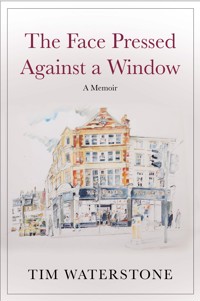
Chosen as one of the Daily Mail's Memoirs of the Year Tim Waterstone is one of Britain's most successful businessmen, having built the Waterstone's empire that started with one small bookshop in 1982. In this charming and evocative memoir, he recalls the childhood experiences that led him to become an entrepreneur and outlines the business philosophy that allowed Waterstone's to dominate the bookselling business throughout the country. Tim explores his formative years in a small town in rural England at the end of the Second World War, and the troubled relationship he had with his father, before moving on to the epiphany he had while studying at Cambridge, which set him on the road to Waterstone's and gave birth to the creative strategy that made him a high street name. Candid and moving, The Face Pressed Against a Window charts the life of one of our most celebrated business leaders.
Das E-Book können Sie in Legimi-Apps oder einer beliebigen App lesen, die das folgende Format unterstützen:
Veröffentlichungsjahr: 2019
Ähnliche


















THE FACE PRESSED AGAINST A WINDOW
ALSO BY TIM WATERSTONE
FictionLilley & ChaseAn Imperfect MarriageA Passage of LivesIn For A Penny In For A Pound
Non-fictionSwimming Against the Stream
The Face PressedAgainst a Window
A Memoir
TIM WATERSTONE
First published in hardback in Great Britain in 2019 by Atlantic Books, an imprint of Atlantic Books Ltd.
Copyright © Tim Waterstone, 2019
The moral right of Tim Waterstone to be identified as the author of this work has been asserted by him in accordance with the Copyright, Designs and Patents Act of 1988.
All rights reserved. No part of this publication may be reproduced, stored in a retrieval system, or transmitted in any form or by any means, electronic, mechanical, photocopying, recording, or otherwise, without the prior permission of both the copyright owner and the above publisher of this book.
Every effort has been made to trace or contact all copyright holders. The publishers will be pleased to make good any omissions or rectify any mistakes brought to their attention at the earliest opportunity.
1 3 5 7 9 10 8 6 4 2
A CIP catalogue record for this book is availablefrom the British Library.
Hardback ISBN: 978-1-78649-630-0
E-book ISBN: 978-1-78649-631-7
Paperback ISBN: 978-1-78649-632-4
Printed in Great Britain.
Atlantic BooksAn Imprint of Atlantic Books LtdOrmond House26–27 Boswell StreetLondon WC1N 3JZ
www.atlantic-books.co.uk
For my children: Richard, Martin, Sylvie, Amanda, Maya, Oliver, Lucy and Daisy, with my undying love, gratitude and admiration.
CONTENTS
Acknowledgements
Prologue
Part OneWhere the Children of My Childhood Played
Part TwoI do, ladies. I do. I ’ave a go.
Epilogue
Miranda Beeching
The Carriage Clock
ACKNOWLEDGEMENTS
So many people have helped me bring this book to life that I hardly know where to start and where to stop. So let me just say this: that without the fervent encouragement of my agent, Jonathan Lloyd at Curtis Brown, I never would have finished it, so difficult did I find certain sections to write.
But support me he did, and I was at last able to put together a working draft, and then, to my delight, Atlantic Books and my old friend and colleague Will Atkinson took up the contract. Then Will and his team immediately gave me a superb insight as to how the whole narrative arc of my life, from childhood through to my old age, could be presented in a manner that I think I was before too reticent and too guarded to attempt.
I am delighted I listened. Will and his ace editor James Nightingale led the way, then the ace Alison Tulett joined the team in support, and the whole manuscript opened up.
I cannot thank too warmly those old Waterstone’s friends and colleagues of mine, such as Paul Baggaley, David McRedmond, John Mitchinson, Martin Latham, Peter French and Kate Gunning, who gave astonishingly generous time to sit down at their laptops and reminisce for us about their Waterstone’s days, which added so much to that part of the book.
Thank you to them. Thank you to everyone. I have been very fortunate indeed.
PROLOGUE
Required: Experienced Booksellers for a new bookshop – Waterstone’s – in Old Brompton Road. Opening in September. The first of many. Our object is to have the best literary bookshops in the land, staffed by the best, happiest, literary booksellers.
This was the advertisement I ran in London’s Evening Standard in July 1982, eight weeks before our very first Waterstone’s store was due to open in South Kensington.
It’s an odd advertisement, looking at it now. It was certainly unorthodox, particularly the ‘happiest’ bit, although the sentiment behind that objective was entirely sincere. But perhaps its very oddness added a positive, intriguing quality to it. Whatever the case, through it I recruited in one fell swoop my first four Waterstone’s staff members, all of them from Hatchards in Piccadilly (then owned by the publishers William Collins, but safely these days within the Waterstone’s family).
Hatchards was at that time, and perhaps still is, the most prestigious literary bookshop in Britain, but it was not one whose owners spent too much time worrying about their staff’s ‘happiness’. Those four recruits came to me because they had not been given a salary increase for three years, which was unbelievably harsh for the time, with annual inflation running so persistently high. How lucky I was.
The telephone rang barely a minute after we had opened on our first day, and Dane Howell, one of these marvellous people, picked up the receiver.
‘Waterstone’s?’ he purred into it.
Ye Gods, I thought. He has just said Waterstone’s. Waterstone’s. I’ve done it. It’s real. I’ve made it. That thought was more than a little premature, given the bumps and terrors that occurred on the long and exhilarating road that lay ahead of us. But at that moment, at the very start of the journey, I felt an immense sense of achievement. From day one, every member of staff knew what I wanted Waterstone’s to do and to be, and they – and all the many thousands of staff who followed them over the years – set happily about doing it with me. And together as a team – as a family – we did it.
I quote, immodestly I know, but there we go, from an article in the Independent, written in early October 1992, ten years later almost to the day. I do so because what the article describes was exactly, exactly, point by point, what we had all set out to do, and then did. I had never met or spoken to the journalist, and – well – it’s good to read all that from another’s pen. One takes enough brickbats in life…
Here it comes again, the annual kerfuffle of the Booker prize. Amid Tuesday night’s celebrations – and acrimony and recriminations – one man will be watching the proceedings with wry disinterest, secure that he has won again, as indeed he has done for the past 10 years.
Neither author, agent nor publisher, the real victor will be a retailer, a businessman. In the decade since the Booker was first televised, Tim Waterstone, 53, founder of 86 bookstores, has done more than anyone to transform literary Britain.
It would be difficult to overstate Mr Waterstone’s impact on the book trade, and publishers tumble over each other in tribute: he has changed the rules, moved the goalposts, revolutionised the industry. He has made book-buying a pleasurable experience, not an obstacle course. He has made high culture stylish. His shops have proved a godsend to publishers specialising in literary fiction – the Fabers, the Seckers, the Picadors. He staffed them with postgrads who had read a volume or two and were more than likely to be writers themselves. He set in motion an Eighties publishing revolution that inspired many other stores to revamp – Dillons, Hatchards, Books Etc – and with the boom in authors’ advances and the emergence of the writer as talk-show star, he somehow made the whole business rather rock ’n’ roll.
Before Mr Waterstone opened his first shop in Old Brompton Road in 1982, you could go into Foyles and be anaesthetised by inefficiency, stunned by confusion; it made the local library look snazzy. Or you could go into WH Smith and find little but bestsellers and gift books. In most cities outside London you couldn’t find philosophy or art or science, because if it didn’t sell by the dump-bin, it wasn’t stocked. Such classics as there were, invariably dusty Penguins, were consigned to a dark outpost beyond Cookery.
But Mr Waterstone opened a shop you could walk around, a shop that stocked 50,000 titles, almost everything you could need. It had a sensible layout, agreeable lighting, a thoughtful kids’ section. Staff didn’t bother you if you read a chapter or two. It organised book readings and signings, a book search service, published a catalogue with its own recommendations and kept cuttings of the reviews. If they had bunged in an espresso bar and a chaise longue, you could practically have lived there…
‘Go the other way’, as the legendary Sam Walton of Walmart put it. ‘Ignore the conventional wisdom. If everybody is doing it one way, there is a good chance that you can find your niche by going in exactly the opposite direction. But be prepared for a lot of folks to wave you down and tell you that you are headed the wrong way.’
And that’s exactly what we did. In our model of literary bookselling of the highest class we travelled at speed in exactly the opposite direction to everybody else. For the book trade during the seventies and early eighties had talked itself into a state of dark gloom and bleak defeatism, particularly on the retail side. The independent booksellers were fast retrenching. And WH Smith, at that time overwhelmingly the market leader, was beginning to retrench from books too, placing increased emphasis on other goods – plastic toys, cheap stationery, fizzy drinks, music – and making a big deal of it to the City, looking for applause at their wisdom thereby.
Passion and independence of mind are what Sam Walton was preaching. But it is the vision that comes first – all else flows from that – and the Waterstone’s vision was absolutely simple and absolutely clear. Surely all the great consumer retail businesses have been built from a picture born and carried in the founder’s head, and this one certainly was. Right from the very start we had a defined picture of what the offer was to be, and who it was to be aimed at, and why it would win. And that is the point – winning. And ‘winning’ for the founding entrepreneur is not at all the making of a fortune. It is the making of the point, the defeating of the sceptics, the victory of the vision, the acting as a disruptive catalyst for a significant cultural and market change. It’s the public projection of a personal vision, and a personal passion to succeed with it.
At Waterstone’s we used not one jot of market research in determining our action plan. We just did it. And in that I would guess that we were typical of most if not all successful entrepreneurial start-ups. These arise perhaps every time from a founder’s sudden, blinding epiphany – a vision of a breakthrough in an area in which he or she has market knowledge and experience. We could not afford market research. But in any case, what market research could have helped us? The fact was that the sort of bookshops we were intending to open was not out there. They were a figment of my imagination. There was nothing tangible, nothing for us there to research. As George Bernard Shaw said, ‘The British people never know what they want until they are given it.’ But we – not the royal ‘we’; we, the staff and I – knew with total clarity what we wanted the Waterstone’s bookshops to be, and we knew they would work. They would certainly appeal to me as a book buyer, so surely there must be a few million other people out there just like me. Why wouldn’t there be?
The timing of our launch, thank goodness, proved to be excellent. The eighties lay ahead and, as the Independent piece says, what happened as the decade rolled out was something of a publishing revolution. The Booker Prize began really to gather pace and publicity saturation, driven particularly by Salman Rushdie and his Midnight’s Children, which won the prize in 1981. There were feisty, cutting-edge new publishing imprints, dozens of them, some tiny, but all of them reaching out, and confidently, into a literary world that had previously lain fallow – and none more so in its heyday than the feminist imprint Virago. There was a chat and a bustle around it all that had not been seen in the book world for a very long time. And Waterstone’s, as we grew and grew and grew, accelerating away from a standing start to open eighty-six large bookshops in our first ten years, was absolutely at the epicentre of that 1980s revolution. We benefited that revolution, and we were benefited by it, and we had no real rival to match us.
Putting this in a general context, entrepreneurs carry a self-confidence that is inviolate, whatever disasters may strike. They have their vision – tunnel vision, perhaps – and they are going to win with it. And all would embrace this simple checklist of the way to run their company’s affairs: How can I inspire? How can I ensure that my dream can best be driven on its way? How can I lead more and manage less? How can I inspire creativity and imagination amongst the whole team? How can I know who our market is, and deliver to them what I know they want? How can I let our people show what they can do? How can I let our people believe that they are capable of anything, that they can reach out, and that they can grow?
‘Where there’s no vision, the people perish,’ says Proverbs 29:18. Well, big corporates don’t really do vision. The entrepreneur does little else. It is the vision that brings the win, the self-belief, the ruthlessness, the ability to ignore setbacks, the ability to lead and to inspire. Entrepreneurs are not really corporate animals at all. Other people’s opinions, bureaucracy, needless, fussy communications bore them, and they have a wafer-thin attention span when time is being wasted. Bill Gates dropped out of Harvard University, for no other reason than that he was bored and impatient to get on with what he considered to be real life. Michael Dell was a dropout from the University of Texas for the same reason.
No one reads Kipling these days, and they are the poorer for it, but everyone is familiar with those great lines from ‘If’, which are inscribed above the door of the players’ changing room at Wimbledon; that lovely juxtaposition of meeting with Triumph and Disaster, and treating those two impostors just the same.
What Kipling encapsulated in ‘If’ was the entrepreneurial life. Having the courage to put all your winnings back on the table and start again; meeting great triumphs and great disasters with calm resolution; risking everything; saving your breath on self-pity; dreaming great dreams.
That is what wins – tenacity, drive, and an almost insane ability to deal with financial stress. Add to that real self-knowledge, together with a certain simplicity and straightforwardness and clarity of mind. If you have it within you to add one extra dimension – a passion, linked to a sense of rightness, an instinct for what really matters, a contempt for duplicity and deception – then you will be, as Kipling puts it, a man. Wholly politically incorrectly in current language, of course, but he was someone of his time, and we all know what he means, and please don’t lose contact with him just on those grounds.
If you can make one heap of all your winnings
And risk it all on one turn of pitch-and-toss,
And lose, and start again at your beginnings
And never breathe a word about your loss…
and
…If you can fill the unforgiving minute
With sixty seconds’ worth of distance run,
Yours is the Earth and everything that’s in it.
And – which is more – you’ll be a man, my son!
Even in the early years when I was trying to prepare myself for my Waterstone’s dream by gaining experience in a conventional business setting, I knew exactly what was missing. The moment I threw over that old life – the corporate life – and went off to try my hand at the new life – freedom – Waterstone’s – I immediately felt comfortable in my own skin. Putting aside the fun years of my youth in India, I had never had that feeling before. I had been pretending to be X or Y – but none of it was me. I had no commitment. Or – much better put – I had no real cause to attach my commitment to. And I felt the most overwhelming need to make my own mark on the world, to fight my own fights, to win my own wars.
And thus, at last, in 1982, when I was forty-three, Waterstone’s came into being and we set off on our adventure. I had no fear of failure or the consequences of that – though I should have done, in practical terms, as I had children to support. Quite simply, by doing this, I found happiness and pride. And a resolution to my life. And the Kiplingesque seeds of all of that – my successes, my failures, my ups, my downs, my triumphs and my disasters – all of these, throughout my life, both personal and professional, were set into my being by the circumstances of my childhood, in which I was the marginally emotionally battered child of a marginally battered lower-middle-class ex-colonial family.
And that is what this book is about.
PART ONE
Where the Children of My Childhood Played
CHAPTER 1
It was the winter of 1942, mid-war, and the country was tired and bombed and scruffy. I was three years old, and a few months earlier my family had moved into our house in Crowborough, in East Sussex.
Finally, after almost two years of itinerant wandering, we had settled down. My father had been enlisted in the Royal Army Service Corps in the early months of the war, and my mother had spent the years since then driving with us all around the country, following his postings.
All of that was such an extraordinary thing to do, and for some reason my mother never seemed to want to talk about it in later years. But what happened was that on the outbreak of the war she moved all of us out of our rented house in Glasgow, packed us into our small car – our luggage, Nanny, my sister Wendy, my brother David, the dog and me (a very small baby, of course) – and set off for England. Her one purpose was to follow my father. At that time he was being moved around continually from one Royal Army Service Corps camp to another. In later years, I asked my older sister why she thought our mother had done that. Wendy said that my mother was convinced that my father would never have been able to cope with army life unless he knew that she was always close by to support him.
So off we went, bridges burnt, now without a home to return to. The five of us, plus the dog, followed my father from camp to camp, up and down the country, from Scotland down to Yeovil, then up to Wales, up again to Lancashire, then down to Reading, across to Kent, back again to Yeovil, month after month after month, one bed-and-breakfast room followed by another. I knew nothing of it, if course, but it must have been an appallingly uncomfortable and prolonged experience. It led eventually to my mother suffering a breakdown, and it came to a halt only when my father was withdrawn from the Corps and posted as a technical instructor at a staff college in Kent, where he remained until the end of the war.
Shortly after my father was appointed to the staff college, he came home on leave, to see the new house. Excited at the prospect of his homecoming, I drew some pictures to give to him.
And so one day my mother called for me and there he was, in his uniform, standing in the hall. My father. Except, of course, he was a complete stranger to me.
I had expected that he would reach down to pick me up, but he made no move to do that. So I handed him my pictures, probably sullenly, as they would have been appalling, and even at that age I would have known it, as I have never been able to draw.
And then I did something that may well have served to change the character of the rest of my childhood, and perhaps thus to shape in part my life.
‘Go away,’ I said. ‘Go away. We were happy without you! Go away.’
He stood there, quite still, staring at me, appalled. So was my mother. So was my sister, aged eleven. So was my brother, aged eight. So, no doubt, was the dog.
I seem to have eradicated from my memory what happened next. I think my mother may have hit me. And who could blame her? In any case, she must have understood the root of this catastrophic insult to my father. With him away for all that time, I had from babyhood frequently slept in my mother’s bed. But now, each time he came home, this stranger, this big uniformed man, would no doubt be with her there, in my place.
My father remained with us then for perhaps ten days, before his leave was over. He spent much of this time in the tool shed, with the door shut behind him. He told us he was making a present for my brother David’s birthday. This turned out to be a sort of wheeled toboggan. It capsized the moment David tried it out on a run down the rough lane that bordered our house, and then each and every time thereafter.
It was a disaster for my father, really. He told us he had been looking forward to making this toboggan for David for weeks, and now it had failed. It was a shame, but this was when I first saw the weakness in him, and it was a shock. My father, in his early forties, took his disappointment like a child: pouting, on the edge of tears, his bottom lip quivering, shouting at my mother, and, most infantile of all, stamping his foot when she tried to turn the situation into a joke. I saw Nanny stare at him when he did this, and then grimace as she turned away.
I think Nanny was not so much shaken by his anger, as contemptuous of his childishness. She had lived with our family since well before the war, no more than a young girl when she joined us, and was perhaps used to this kind of performance from him. But it was new to me, and it both puzzled and frightened me. Men were supposed to be strong and affectionate and gentle and protective. They were like that in stories. Fathers didn’t shout and pout and sulk and quiver their bottom lips over such an inconsequential matter as this.
A few days later his leave was almost over. He was due to return to his barracks the next day. I was in my pyjamas and was just about to go upstairs to bed. I saw him sitting in his chair, reading a newspaper, waiting to be called to his supper.
Suddenly, unexpectedly, a wave of affection for him came over me. I knew I had done wrong in what I had said to him when he had first arrived. My mother had been angry with me, and I understood why. I wanted to make up for it. He was my father. I went over and stood in front of him, reaching out my arms to him. But he shrunk back into his chair and pushed me off with both hands, roughly so. ‘Men don’t kiss,’ he said.
I pulled back, appalled. All I had wanted was for him to reach out to me, and perhaps touch my hands for a moment. I was three years old. That was all I wanted. As young as I was, the snub – the spurning, coarse, insulting rejection of it – hurt. It hurt. And his action seemed to set into being the future pattern of our relationship. For he never once attempted a physically affectionate gesture towards me. Hard to believe no doubt, but true. Not once. I saw other children laughing with their fathers, ragging with them, being picked up, swung about, hugged, pushed on swings, kicking a football, carried on shoulders. I wanted that for us, too. But not once in all the years of my childhood did he as much as touch me. Nor did he express affection for me in any other manner. Not once did he give me praise. Nor, if it comes to that, did he do so in my adulthood. Not once.
I will never understand why all this happened. One can construct reasons, and see if they can be made to fit, but none really suffice. Perhaps my arrival in the world, way too long after my siblings, had been to him an unplanned disaster, worried about money as he was throughout his married life. Maybe there had been a simple mismatch of personality. Maybe he resented the affection that my mother so openly lavished on me. Maybe it was my rejection of him in that appalling incident I had created in our hall.
Maybe this, maybe that. Maybe there is no one clear reason at all. But what I do know, and my siblings knew too, is that this was more than just emotional reticence in him, because in his other relationships within the family – with my mother, my sister, my brother – he was fully emotional. Actually, he was emotional with the three of them to the point of being positively needy. Unhappy, unfulfilled and bullied in his work, as we all in the family bore daily witness to, he was devoid of self-confidence, devoid of interests and intellectual curiosity, and allowed himself to be destroyed by perceived social snubs. In all this he clung to my mother with a desperation that in its vulnerability, in its incompetence, was painful to witness. He clung to my sister, who was at times openly irritated by it. He clung to my brother, though my father was frightened of him.
My mother knew it was her role to hold my father up in his life, and she did so, and, always, always, she held him close. She knew his weakness, she knew his emptiness, and she knew that he was her responsibility, and she never let him down. Well – except perhaps one should say this – she seldom engaged with his awful relationship with me, but sometimes, just sometimes, very quietly, her hands on mine, she would apologise to me for it. But in the final analysis there was no doubt that she knew what the essential role of her life had to be – she was the guardian and the protector and the shield of my father, her husband, from a world with which he was most ill equipped to deal.
So, whatever the reasons for it, he and I spent all those years of ours in mutual, numbed dislike. His weapon of choice – the weapon that no child can weather or combat – was sarcasm. Endless, witless, brutal sarcasm. Worst, devastatingly worst, when it was shouted at me. And it generally was.
I think now that my presence in the house gave him a punchbag on which he could release his dissatisfactions around his own life. Even as a child of ten or eleven, frightened of him as I was, I knew that I was the stronger and the more resilient of the two of us. I knew that he was weak, and that I wasn’t. His treatment of me simply confirmed his weakness. Better to let him bully his way on. I was strong. He was weak.
But there was at least one occasion when his attack on me led me to get up and escape. I was ten. He had started it at the breakfast table – a mocking, merciless rant at me – and I suddenly, impulsively, pushed my plate aside and got up from my chair and fled. I ran out to the garage, seized my bike and rode away as fast as I could, up the lane, through the high street, past the riding stables, past the barber, past the fishmonger, past everything until I was out into the country. I pedalled for miles and miles, through Lewes, nineteen miles away, and on and on still. Reaching the South Downs village of Alfriston, I deliberately put myself in danger by going absolutely full pelt down a precipitous and winding hill, almost with the intent to have a crash and damage myself. And then, resting by the roadside, finally beginning to calm down, I rode the twenty miles or so home to Crowborough.
It was nearly dark when I got there, and I sat down on a bench on the village green, uncertain what to do next. A few minutes later my mother drew up in her car, smiled at me, shook her head ruefully, and made no further comment other than to suggest that I follow her home. I learnt later that she had been driving around for several hours trying to find me.
And so the pattern of my childhood years wound its way on. By the time I was thirteen or fourteen, I had become much more capable of withstanding the buffeting of his attack. By the time I was eighteen, and on the point of leaving home, it had become little more than a distraction, an echo from the past, a painful experience that was there, and it had happened, but something that I could now put aside and forget about. And that is what I did. I put it aside, and resolved to forget about it. But if my resolution superficially succeeded, what had been done had been done.
For the truth is that my father had damaged me, and the damage had stuck. It’s still there. Recently, one of my brother’s daughters sent me a photograph of my father, which she had found amongst my brother’s papers when she was tidying them up after his death. I looked at my father’s face, staring into the camera, and that shock of fear – sharp, sudden fear – hit me all over again. Exactly the fear I had of him in my childhood.
All this had happened, and it was cruel, and it was relentless. And I can recognise the legacies of it in the way I have led my life. One legacy, and it is absurdly trivial, is that I cannot to this day watch a Fred Astaire film without wanting to turn away from it, because Astaire looks so like him. But a second legacy, and this one is anything but trivial, is that I believe that without the trauma of that relationship I would never have broken out and fought the battles that I did fight to create and succeed with Waterstone’s. That wasn’t just for me. It was for my father too. Waterstone’s was a statement of personal confidence and drive and tenacity, a statement that great things can be achieved, a statement that vision matters, that leadership matters, that culture matters, that books matter.
Waterstone’s was me having the last word on him. It was proof of my worth. I needed Waterstone’s. Why else would I have named it after me? Actually – it was named after my father too, if you like. I was hurling bottles at my childhood, which I could neither forgive nor forget. That was why Waterstone’s won. Waterstone’s, pure and simple, was aimed at my father. Well, that’s what a therapist told me a few years ago. And he was right.
*
There was an interesting incident when I was in my thirties. My father called me, and suggested that we might meet that day for a family picnic. I hadn’t seen him for some years, and I don’t think he had telephoned me before ever – and I mean ever – except for those several times over the last years of his life, my mother dead, he remarried, that he had once more run out of money, and needed from me what we both allowed the other to refer to as ‘a small loan’. Though I have to say that on some occasions they were anything but that as far as I was concerned, such were the sums he sometimes requested out of my already uncomfortably stretched family net income. But, whatever, I would then supply the money, I hope graciously, or at least apparently so. And I should mention in passing that none of these loans was ever repaid, and when my father died I found that I alone of his children had been omitted from his will…
But the call on this occasion was not a request for money. Not at all. It seemed to be, and I am sure it was, a reaching out to me. An attempt to build something between us at last.
So we had the picnic, me with my then wife Claire and our two baby daughters, he with his pleasant second wife, an Australian widow. We sat beside each other on the rug. In time, Claire took the children off to play. My father and I talked. Yes – talked. And – yes – he was trying to reach out to me. He really was. And I was quickly aware that his wife, whom I hardly knew, was doing all that she could that afternoon to aid and encourage and prompt him in that. And, looking back now, I applaud her for it.
He couldn’t have known that he was so near to the day of his death. The aneurism that killed him instantaneously those very few days later could not have been foretold. But he was doing just that – he was reaching out to me. And that afternoon I tried to reach out to him. And that was the last time that I saw him alive. And so he never saw Waterstone’s brought into life, for that lay five or six years ahead, and I wish he had.
It was, of course, all way, way too late. Just those very few days later my father lay on the mortuary slab. He was seventy-seven, but in death looked much older.
I sat on the chair beside the slab, and gazed at him. His eyelids had been pulled down like blinds, and they now clung close to the outline of his eyeballs, too close, accentuating them, and unattractively so. The covering lay loose on his body and I leant across him to straighten it, and tidy him.
We were alone, but for a porter down at the far end of the room, sitting on a plastic chair, reading a tabloid newspaper. He seemed to be oblivious to us, or tactfully pretending to be.
I took my father’s hand, and held it for a moment. But it felt wrong, and contrived, and I didn’t welcome the intimacy of it, so I let the hand go, and just stared at him. He was dead. He was gone. I was free of him.
It may seem uncomfortably offhand for me to say this, but the truth was that he had never loved me, and I had never loved him. I would have liked to have loved my father, and perhaps he would have liked to have loved me too, his son. Who knows? But in the ghastly, enforced companionship of this mortuary slab it was we two who were alone together. He was lying there alone with me, of all people. And that is how I remember that scene, and how I felt as I sat there with him.
The porter yawned, stretched, dropped his paper on to his chair, and made his way over to us.
‘All well, sir?’ he said. He looked down at my father and seemed to be struggling to find something to say. ‘Nice-looking old gentleman,’ he murmured at last. ‘Very nice-looking.’
He wasn’t actually, not in the least, but it was a pleasant little compliment. My father was always a carefully groomed man. He would have appreciated it.
CHAPTER 2
Iremember the day so clearly. It was my third birthday, and we were moving our possessions into the house in Crowborough, which my mother had bought, as I learnt in later years, for three thousand, five hundred pounds.
It was the summer of 1942. Petrol was severely rationed, but private motoring had not yet been banned, so we could still use our car. We arrived at our new house in our Vauxhall. This was only five years old, but had run up a huge mileage, as my mother drove us all around the country, following my father’s Royal Army Service Corps postings.
I caught the excitement of my brother and sister when they ran down the path to the front door of our new home, and then the scrabbling around as my mother looked for the key. I tried to keep up with Wendy and David as they ran up and down the stairs to explore the empty rooms, and then raced out into the garden.
The house was one of a group of nine built just a few years earlier by a local developer. They were all of them different, all of them ugly, but all of them with good, generous one-acre gardens. And in my eyes our garden was the best part of it. It ran all the way down to a stream, and we had inherited from the previous owner large vegetable beds and fruit trees, rose beds, a strawberry and raspberry cage, a beech hedge, a tool shed, and a straggly herbaceous border. And, best of all, a formal rectangular pond, with water lilies, tadpoles and frogs and water boatmen, those seemingly weightless little aquatic insects that our gardener a few years later formally identified for me under their scientific name of Corixidae.
We were called back into the house to have tea, which in those wartime years of tight rationing would have been no more than a glass of milk and a slice of bread and dripping, plus, if you were very lucky indeed, a couple of plain biscuits. I imagine my brother and sister had memories of normal family food, pre-war, and longed for it. But I had known no different, and was perfectly content.
Meanwhile, Nanny was busy upstairs with the suitcases, and I ran up to see how she was getting on. As the cases were emptied she was taking them up to the loft to store them away. I stood at the top of the stairs and watched her as she climbed up the fold-down ladder and squeezed through the trapdoor.
Once she was up in the loft Nanny had managed to forget to walk only on the cross-beams, and she had put one foot down on to the plasterboard ceiling. That collapsed, of course, and – well – the picture is forever frozen in my mind: Nanny’s leg sticking through a hole in the ceiling. A skirt pushed up. A stocking top. A plump, bare thigh. A glimpse of knickers. Altogether an astounding sight. I was spellbound. Surely, surely, just three years old, I couldn’t have found it erotic? But the guilty thing is that I think I did. Scarcely credible, I know, but I know that I did.
We five settled into the house, and all was happy and calm and pleasant. As the months went on, Nanny gave me lessons every morning – reading from a picture book, simple arithmetic, forming up of letters. My mother sang as she busied herself at the kitchen sink, her voice, as always, a thin, affected parody of Gertrude Lawrence, who I later discovered was her idea of sophisticated perfection. Wendy would bustle off every morning to a little day school at the other end of the village, girls only, owned and run by a stern lady of advanced years, who dressed and carried herself like an Edwardian Queen Mary. David walked up the hill to a local day school too, grey blazer, grey shorts, his satchel in his hand, his dark and light blue striped cap pulled down over his ears.
The difference in my mother now that we were settled in our own home must have been stark. Much credit to Nanny, really, rather than her, but the house was organised, we children were busy, and my mother was singing. The five of us made a comfortable group together. We were properly housed now, the ceaseless travelling was over, life was ordered, and we were peaceful and content. All was well. My father was away in the army, and I was secure within what was to me our happy nuclear family group.
I knew of nothing else, of course, but life, which for me was the war, seemed to be the greatest of fun. Crowborough lay on the flight path of enemy planes to London, and I could lie on my back in the garden and watch sporadic fighting up in the sky. Fighter planes ducking around each other, chasing each other, puffs of smoke. And, occasionally, the burst of an explosion, and then perhaps a solitary parachute – a beautiful thing, silent, floating, calm and gentle, in extraordinary contrast to the preceding violence.
There was a moment when violence crossed my path rather too close for comfort, although I didn’t at all realise that at the time. I was with my sister in the fields opposite our house in the summer of, I think, 1943, when I would have been just four. Wendy was holding my hand and walking me along a path. As she reached out to open a gate we could first hear and then see a fighter plane heading straight for us, and flying very low indeed. It was German.
My sister grabbed me and pushed me – hurled me – into the brambles by the gate. They were firing at us, but in a moment the plane had flashed past overhead, over the hill and away. I extricated myself from the brambles, screaming and weeping and shouting at Wendy that I would tell on her to Mum. It was a little tough on the poor girl. She knew that German fighter planes on their way home had a habit of firing off their last spare rounds at anything that struck their fancy; Crowborough, being on their route, had experienced this before.
Some months later a German plane crashed to the ground just on the outskirts of the village. We hadn’t seen it come down as it had been in the night, but the word soon spread, and Nanny and I rushed off to where the postman, Nanny’s young admirer, told her it was.
A small crowd was already gathering by the time we got there, and although three or four policemen were holding everyone back they allowed us close enough to look into the smashed and mangled cockpit. Nanny pushed me through people’s legs so that I was at the front. I had hoped to see a dead German pilot, as I am sure we all did, but the body had already been taken away.
The pilot’s parachute, however, was still there in the cockpit, caught up and torn and entangled, but intact. One of the policemen pulled it out, and started to cut it into sections to share amongst the onlookers. Parachute silk was highly prized in those days of clothes rationing. The sections he cut for us all were generous, as an entire parachute represents a considerable square footage of silk.
I went up to claim our piece, and we took it home to my mother. She divided the silk into three, and shared it between Wendy, Nanny and herself, with the intention that each should make themselves something with it – a petticoat, perhaps, or a blouse or scarf.
And all this time my poor brother was sheltering under the piano. The piano, a baby grand, was never used as an instrument, as it was never tuned and anyway no one could play it, but it fitted, just about, in our front room. It had been bought from a junk shop in Tunbridge Wells. To own a piano was part of the minutiae of a family’s social ascent, and my mother kept it polished to the highest of sheens.
David, later in his life an SAS tough, and then some, was the frailest of little boys. He was undersized and perpetually ill – scarlet fever, rheumatic fever, indestructible nettle rash, a brush with polio. He only gathered full robustness, both physically and mentally, when he was perhaps eleven or twelve. In these final couple of years of the war he was nine or ten, and the clamour and aggression of the aerial combat above us terrified him. Whereas I, so much younger, would sit in the garden happily – more than happily – gazing up into the sky to watch the planes fight, and later in the war to watch the flying bombs, the doodlebugs, as they chugged over us to London, poor David was frightened by it all to the point of trauma. So, when it all got too much to bear, he took his blanket and his pillow, made his camp under the piano and refused to emerge.




