


Erhalten Sie Zugang zu diesem und mehr als 300000 Büchern ab EUR 5,99 monatlich.
- Herausgeber: Al Nasher Technical Services
- Kategorie: Gesellschafts- und Liebesromane
- Sprache: Englisch
Born in Jerusalem in the early 1970s and growing up there, the main character in this gripping novel felt all along that something was unsettling that came with being a female living in a society dominated by a patriarchal social order. But, it would take a broken marriage that ended in a bitter divorce experience for her to examine anew her early life experiences and understand them as outcomes largely shaped by male dominance, hence the excellent choice of title. Surely, male dominance is not projected as completely defining or foreclosing choices available to women. If it did, the main character would not have considered divorce, much less acted on it, as she eventually did. But, the patriarchy almost always shaped experiences and outcomes in ways that reflected the influence of the crippling power asymmetries women tended to be confronted with in male- dominated organizations and social structures. Harhash provides a brilliant account of a wide variety of forms of injustice endured by women living in men's shadow. The breadth of her knowledge, as well as her deep intellect, render that account at once striking and unsurprising. She does this very well, often seeking explanations deeply rooted in philosophical discourse on human behavior and the evolution of human thought throughout history. Nor did she fail to highlight, even if only in passing, the variety of ways in which living under an oppressive colonial occupation magnified the ill effects of the power asymmetries associated with the workings of the patriarchal social order.
Sie lesen das E-Book in den Legimi-Apps auf:
Seitenzahl: 200
Veröffentlichungsjahr: 2024
Das E-Book (TTS) können Sie hören im Abo „Legimi Premium” in Legimi-Apps auf:
Ähnliche


















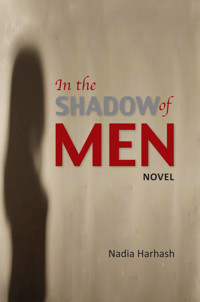
novel
In the Shadow of Men
Nadia Harhash
ISBN: 978-9950-385-95-5
© All rights reserved for the author. Reproduction of this book is not permitted without a written permission of the author.
First Edition: Ramallah, 2023
Disclaimer: The opinions expressed in this book do not necessarily reflect the opinion of Dar Al Nasher
Ramallah, Palestine - Tel: +970 2 2961911
Amman, Jordan - Tel: +962 6 5694861
Amman, Downtown, Bl. 12, Jordan
Tel: +962 6 463 8688 - Fax: +962 6 4657445
To My Children
From You… I am
And to You…. I become
Foreword
THERE IS A SPACE inside us all that is dark and light at the same time. Dark, because it is here that we confront head-on being disconnected from the way we instinctively know we want to be, from the way we know we should be. Light, because within this space, we know our true selves, and when need be, we somehow find the power to push through to actualize that truth.
In the Shadow of Men is a journey from dark to light of author Nadia Harhash. She navigates the physical venues, in Jerusalem, of her childhood, her married family life, and then her emergence as an independent single woman. Her identity markers are female, Arab, Palestinian, and Muslim. She reveals the contours of her interior space, filled with determination forged as a very young girl: How could a four-year-old child travel from her school to her father’s office on her own? she writes. As I grew up, this memory helped me imagine myself as Supergirl.
In that interior space, Harhash found the resolve to change her course and, by doing so, pave a freer one for her four children, three daughters, and a son. I was secretly raising my children to pursue dreams hidden from them by the patriarchy, she writes. I wanted my children to hear a single message from me: Become whom you want to become. At the same time, that interior space is grounded in Harhash’s awareness of her privilege: How do you leave a life filled with glory and money? How do you rebel against a life that most women dream of?
In the starkest of terms, Harhash relates the battle lines she drew with nearly all those surrounding her by initiating what was to become a traumatizing divorce. In an instant, she writes, I became like a contagious disease. Everyone tried to stay far away from me. Divorce became a divorce from society, not just from the man. As if leaving the flock makes the sky smaller, no matter how spacious it seems. It remains a sky controlled by pre-set rules.
It was as if my divorce threatened to break apart all the marriages in society. Suddenly, I became a threat to every man and woman and my own family – both my married and unmarried sisters. I brought disgrace when I asked for a divorce. Women conspired against me, even my mother and my sisters. My husband was backed by an army of men dedicated to serving him and distorting me.
In the thick of this fight, though, she demanded of herself, from deep within, not to become defined by it, even as it marked her with a metaphorical scarlet letter. How could I pretend to raise the next generation with better values when I could not be a good example myself? she wondered, once again with her children at the forefront of her thinking. I wanted them to grow up with enough power that they could be the shapers of their destinies. As a divorced mother, I tried to give each child a brush and allow him to paint whatever he wanted into our life’s portrait.
I sought out Nadia Harhash in late 2018, asking to interview her for the book of Palestinian narratives I was researching, particularly for the chapter I would write on day-to-day Palestinian life in Jerusalem. I contacted her knowing she was a journalist who pulled a few punches in her writing on politics and social trends in her society. During the long afternoon I spent with her in her home in the Beit Hanina neighborhood – during which she introduced me to one of her daughters, her father, and her paternal grandmother – Harhash spoke candidly about her life, including but not limited to her work as a journalist and writer.
She provided what I was seeking, that her words and ideas would not only flesh out her humanity but that they also would enable me to construct a narrative of Palestinian life in Jerusalem that could be accessible and relatable to outsiders who are often exposed, through media and other representations of Palestinians in Jerusalem and elsewhere, to filtering and framing that tend toward political and religious conflict. No – here, as we sat in Harhash’s kitchen on that sunny Saturday afternoon, she shared details of a personal narrative common to people around the world: of growing up and getting married and raising children; of working and struggling and trying to build a better future.
Throughout the several hours of our conversation, I was struck by Harhash’s thoughtfulness in formulating answers to the questions I put to her, her generosity and humor in relating the details of her struggle, and by capacity as an original thinker. These qualities are laced through the pages of In the Shadow of Men, an English-language translation that Harhash had given me and I had read to prepare for our interview. As much of her narrative in the book and beyond draws on tensions between womanhood and patriarchy, I asked her whether she considers herself a feminist.
She was quick to tell me that she prefers the term womanist instead. “The source of power in being a woman is genuine. It puts me on an equal level of creation,” Harhash said, asserting that being a woman is a natural state, just like being a man. “I don’t need to become a feminist to ask for what I deserve to have.”
After our meeting, as I pondered what Harhash had told me, along with what she wrote in Shadow, the particular and the universal took shape in her words, enabling me to grasp meaning and dynamism in her narrative.
The particular go beyond the details of her own life experience to include its context, specifically the constraints women face in the traditional and patriarchal Palestinian Arab society that Harhash inhabits – even in an urban (versus rural) setting and on a socio-economic level of relatively high education and income. Within this particular framework, Harhash also presents, in real terms, Palestinians’ being confronted with – and also confronting – the Israeli occupation, which she more than suggests is linked to other forms of patriarchy.
Parallel to this thread, or perhaps intertwined with it, In the Shadow of Men renders universal strains of personal growth, struggle, and triumph: of the self-discoveries of maturing through childhood to adulthood; of embarking on an intended life partnership through marriage and building a family; of the collapse of that original family structure and reconstituting another in its place, anew. This universality is relatable to readers the world over: to women and men in circumstances of privilege and underprivileged, in societies developed and developing, and in communities secular and faith-based.
This, in essence, is the journey Harhash relates in In the Shadow of Men. It is not only a woman’s story – although it is undoubtedly and compellingly that. It is also a story of the human drive to overcome limiting circumstances that would hinder one’s vision of freedom with the goal of becoming one’s better self.
Imparting a narrative that is distinctly female and Palestinian, In the Shadow of Men is at once Nadia Harhash’s declaration of determination and a profile of humility and courage – the courage to question one’s life and surroundings and the courage to seize agency and bring change. In her words:
This story might be the story of all women. Perhaps the trials I endured are extreme compared to those of other women, or perhaps my life is no more complicated than anyone else’s. Its simplicity could be ridiculous, and its boldness could be tragic. And it could be, and it could be …
But, in the end, this is a human story that, through its revelations, forms me and liberates me from the complexities that liberation alone can dismantle.
Marda Dunsky
Chicago
December 2019
Write,
She yelled in my ears.
In writing, you will be.
Stop scattering the parts of yourself.
Stop hiding in the shadows of others.
You are your own God.
Do not allow another human to become your God
Or your inspiration,
For you are the inspiration of yourself.
God is within you.
Let this inspiration guide your way.
Write.
In writing lies life.
Writing is a virtue many don’t possess
And you are elaborately flowing.
Writing is creativity.
And creativity is existence.
I see you standing at a crossroads.
Looking at yourself.
Unsure which path to take.
The road everyone chooses?
Becoming like everyone else?
Or to be you?
You, the writer.
Writing is your creativity drawn in words.
Do not leave it.
But hold it up.
Marry writing.
It is what remains.
Be you.
You, the Goddess.
Do not allow a god to drive you or inspire you.
You are the path.
And the inspiration.
Write and inspire.
(1) The Beginning
I was born in a patriarchal society, into a conventional family with ordinary behaviors and average education. My mother was fifteen when her family arranged for her to marry my nineteen-year-old father; marriage was one way to keep his behavior in check.
My mother gave birth to me shortly after she turned sixteen—a child giving birth to a child, I always thought. I was raised in the midst of my parents’ teenage dreams and the uncertainty of their new adult lives. Memories became lost in the flow of life. This made us forget what had been and simply carry on a moment to moment.
Each of us grows, and inside are our mothers’ lost dreams and thwarted wishes. You are the origin of her dreams’ demise. You are asked to rise to the challenges of the moment because, despite being a woman, you will face this world and prove you are worthy to exist within it.
Girl after girl after girl was born, and our mother’s dreams broke around us, their shrapnel scattered and then reshaped into another dream far away from us—the dream of the male—the boy. No matter how abundant and well-bred girls may be, they can never make up for the absence of a boy.
As I grew up, this conflict left a crack in my identity. I was the eldest daughter, responsible for the long line of sisters that followed. Each time my mother gave birth to another girl, faces would frown, and the sky’s colors would fade. Strangely, I didn’t see this disappointment in the family’s males. But the tears of my mother, the gossip of my grandmother, and the words of my neighbors haunted me. “It’s okay. May God compensate you.” Even the word Mabrouk—congratulations—went unspoken. However, we girls continued to grow, one after the other, and we were treated with compassion.
My memories of my father during my childhood are limited. He was a workaholic, too busy providing a life my mother insisted should be better. She would not accept the idea of sending us to public schools, even though we were girls. Instead, we were sent to expensive private schools that only the children of the rich and highly educated could attend.
Though my grandfather was a tyrant, he invested in our education, as he had done for our aunts before us. Perhaps he had done the same for the boys, but his sons were not as diligent as his daughters. One of my aunts attended college in Egypt in the 1960s, and my youngest aunt, who is not much older than me, went to a private school, the same school my sisters and I would later attend.
I can’t say whether or not the school was a fundamental turning point in the formation of my character or if my life changed there. The school community was utterly different from that of my home environment. My classmates mainly came from elite, educated families and varied religious backgrounds. I had a more modest upbringing. Nevertheless, my parents could afford the expensive tuition for decades made my classmates assume we were rich.
From my father, I learned modesty and self-sufficiency. From my mother, I learned to face and overcome challenges. I lived by these qualities—humility and richness, contentment and ambition. Still, there was always one thing I had to remember: I was a girl.
Behave like a man but remain a female. Be responsible, and never forget that your most potent weapon is your beauty. Grow tired, strive, struggle, and resist, yet always remain aware of that one thing: You are a woman. Your horizons are limited. Your mother keeps your freedom locked up, and your father holds the key. Your actions come with great responsibility. Any misstep is a black mark that will later reflect on your sisters. Never forget that your arrival was a good omen, but only conditionally. After all, seven more girls trailed behind you.
(2) As days pass by
Days pass by, and the fuzzy edges of memories remain shaped by the shadows of men. Or maybe by the shade the men provide. There is a wish to be in their presence and enjoy certain protections, like the incredible relief you find under a tree after a long day working in the fields. However, men are filled with contradictions and weaknesses, and their behavior is feeble and defective, usually weak and inadequate. Yet, power and dominance are theirs in the end, for they are men.
My grandfather was my role model. In my imagination, he was God-like. Maybe I thought he was God himself. I imagined a God who looked and spoke like my grandfather. He died at the young age of fifty-two, but he was always present in my life. After his death, I continued to search for a God in the form of that great man.
My grandfather was formidable. Everyone in the family feared him, but I was his favorite. He protected me from my mother’s tyranny, my grandmother’s beatings, and my aunt’s teasing. He preferred me to my cousin (or so I imagined), the first grandchild, who was the eldest and a male.
Inside of me still resides a child that does not grow, a childhood made of memories that begin with the first moment of my life. Childhood departed but never left me. The realities of this time are different than what my memory tells me, but my memory is shaped by the repetition of idealized events that linger on the tongues of adults.
What primarily distinguishes my oh-so-heroic childhood are the first hours and months of my life, and I don’t know if my connection to the place where I was born is related to those memories.
Jericho is the city I love. We are alike. The people call Jericho “the city of the moon.” The moon embeds itself in the sky, and you see it touching the earth where the land is flat, spacious, and green. The sun burns, but the moon brings a chill.
In Jericho, there is a tree we call “The Crazy.” It is a bougainvillea, and it belongs to the carnation family. People also describe it as hellish because it grows and erupts in crazy ways after a long lull. Its colors vary from violet and lilac to orange and white. It always hangs from the house’s balconies and spreads into the streets. Some years, when we returned to Jericho during the winter season, we would arrive to find a fine from the city. The Crazy had grown so much in our absence that it had blocked the road.
This tree is very much like me. I feel that my spirit contains a part of its craziness—its lulls and sudden eruptions. It is a stranger, and yet it comes too close. It grows in a land that is not its home and conveniently finds itself an owner. The olive tree, however, cannot see life in Jericho. Neither can the almond. Jericho is the city of the delicious citrus trees, Askadinya, and “The Crazy.”
My grandfather bought a winter house in Jericho. I like to say he did this to celebrate my birth, but that’s not true. Telling the story this way makes me feel like I was his favorite. The house is dreamlike in my memory, a castle. In reality, it was just a typical house. Still, it embraced us all, the entire family, my uncles, and their children. Each uncle had his room. How spacious it felt, though it wasn’t a huge house. There was a small fountain that, in my eyes, seemed the size of a swimming pool. Happiness makes things grow more extensive than they are.
Before my birth, my mother, grandmother, and aunt were busy preparing the Jericho house my mother loved. My grandfather spoiled her. The pain of her contractions and labor were all felt in that house. At that time, Jericho seemed very far away from Jerusalem.
My mother gave birth to me in Jerusalem, and my first months were spent in Jericho. I was born in a sun month—the flaming August, they call it. In those years, summer arrived with immense strength, unlike these days when we don’t know when it will start or leave us.
I was a tiny baby; I didn’t exceed three kilos. My grandmother used to rub me with olive oil and wrap a piece of cloth tightly around my little body to strengthen my bones. My mother put me on the terrace in the house’s courtyard and left me until she finished her chores. Sometimes she’d forget me, and my grandfather would scream, “Come and take her before the cat eats her!”
No wonder my skin was darker than my sisters’. The rays of Jericho’s sun-brushed me for many hours, day after day, to make my bones more robust. And yet, what was inside me always frightened me: Slow down. You are a girl. Your sphere will always be limited. You don’t need a man, but you will never be anything without one. No matter how hard you and your sisters work to make up for the absence of a boy, you will never be able to fill the gap in your mother’s heart.
When the boy arrived, life began to flourish in our home. My mother’s happiness flooded the earth and sky, and it overwhelmed us. Finally, we were bonded with this world. Finally, we had an existence. Finally, we had a brother.
Time had passed, and it was too late to grow beyond what had been ingrained in me for years. Yes, I broke from tradition and convention, but I remained within the structure created by men. The ceiling above me was represented by my mother telling me, “Be careful. You are a girl. Be educated so that education can be your weapon. Work hard, so you won’t need anyone to support you.” And yet no sooner do your dreams start to fly than spinsterhood becomes a threat on the horizon, and you haven’t even yet surpassed the age of twenty. “You have to marry,” my mother told me, “for you are the eldest, and everything you do will reflect on your many sisters behind you.”
In this way, my moderate, soft revolution was an attempt to escape what was required of me and maneuver toward what I wanted.
I threw myself wherever life hurled me and said, “It is written and destined.” I insisted on the challenge, creating a reality that looked like my revolution, manifesting the enlightenment I wanted to exist somewhere inside me.
Before the age of four, I asked my mother whether God was male or female. I thought he had to be male because everyone preferred males. I silently questioned the masculine dominance of this “fact” because the origins of life are from femininity. How could my mother, the creator of children, remain in the shadow of my father, whom we rarely saw? How could the branch be more potent than the tree and more dominating while the tree, the origin, remained subordinate and obedient?
(3) Growing to be a mother
I married to become a mother after my dream of becoming a lawyer, journalist, or ambassador dissipated. It was as if life were stubbornly opposing me. I grew so accustomed to bending under its weight that I no longer knew my accurate height or worth. Until recently, I hardly knew who I was or where I was going.
I was young and restless, and I started to dream. I began to feel there might be something out there awaiting me. But a slap from my father after a small act of disobedience would send me back to my cage without resistance or hesitation.
My mother always told me I started to walk when I was tiny. As a continuous warning, my grandfather would tie a rope around my ankle and connect the other end to a black iron rod planted deeply in the ground. I still remember the rod’s shape and size. For some reason, recalling this memory doesn’t bring me any fear. I don’t know if it hurt me, and I don’t remember if I ever tried to untie the rope and escape. I don’t know anything except what my mother told me—that my grandfather was forced to tie my ankle because the neighbors had to keep bringing me back home. My grandfather often said, “This girl is not likely to live long. .”
This phrase has echoed throughout my life. Though we told this story many times, laughing about it, the rope stayed with me. Whatever I did, I remained tied to something that always held me back. I felt its effects for many years. At one point, the feeling almost overwhelmed me, my eyes filling with tears. I tried to suppress it. My grandfather was an idol whose image was not to be tampered with, much less tarnished.
I have many strange memories from childhood, memories of accomplishing things only adults should have to do. I was a little girl with a giant living inside me. I could no longer differentiate between my childhood and my maturity. It took a lifetime before I understood what had taken place.
Shortly after my divorce, amid wars against me, depression hit me forcefully. I wasn’t able to move in any one direction. I was like a camel as knife-wielding men raced towards it. I was that camel, taking blows from all orders to protect my four little children.
There was a moment when a social worker asked me to recall specific memories from my youth. “Did you experience a traumatic event in your childhood?” she asked. I told her my childhood was pleasant and very normal. I don’t know why the question seemed so dramatic and strange, and I don’t know why I suddenly felt as if something traumatic had happened to me, a rape or an assault. Perhaps those things happened behind other closed doors, but not in my house. I had always been proud of my family.
When the social worker insisted I plumb the depths of my childhood memories, I stopped at an event I had always considered heroic. I was not yet four years old when my father dropped me off in front of the school gate and drove off to take my aunt to her school one morning.
I was still in preschool then, and around this time, I first heard about the “rats chamber,” where the principal locked up mischievous children. One of my distant cousins, much older than me, used to tell me horror stories about that chamber during breaks. I enjoyed listening to these stories but wanted to ensure I never became one of the principal’s victims.




