


Insect Biodiversity E-Book
113,99 €
Mehr erfahren.
- Herausgeber: John Wiley & Sons
- Kategorie: Wissenschaft und neue Technologien
- Sprache: Englisch
Volume One of the thoroughly revised and updated guide to the study of biodiversity in insects
The second edition of Insect Biodiversity: Science and Society brings together in one comprehensive text contributions from leading scientific experts to assess the influence insects have on humankind and the earth’s fragile ecosystems. Revised and updated, this new edition includes information on the number of substantial changes to entomology and the study of biodiversity. It includes current research on insect groups, classification, regional diversity, and a wide range of concepts and developing methodologies. The authors examine why insect biodiversity matters and how the rapid evolution of insects is affecting us all.
This book explores the wide variety of insect species and their evolutionary relationships. Case studies offer assessments on how insect biodiversity can help meet the needs of a rapidly expanding human population, and also examine the consequences that an increased loss of insect species will have on the world. This important text:
- Explores the rapidly increasing influence on systematics of genomics and next-generation sequencing
- Includes developments in the use of DNA barcoding in insect systematics and in the broader study of insect biodiversity, including the detection of cryptic species
- Discusses the advances in information science that influence the increased capability to gather, manipulate, and analyze biodiversity information
- Comprises scholarly contributions from leading scientists in the field
Insect Biodiversity: Science and Society highlights the rapid growth of insect biodiversity research and includes an expanded treatment of the topic that addresses the major insect groups, the zoogeographic regions of biodiversity, and the scope of systematics approaches for handling biodiversity data.
Sie lesen das E-Book in den Legimi-Apps auf:
Seitenzahl: 2219
Veröffentlichungsjahr: 2017
Ähnliche




















Table of Contents
Title Page
Copyright
List of Contributors
Foreword, Second Edition
Preface, First Edition
Preface, Second Edition
Acknowledgements
Chapter 1: Introduction
References
Chapter 2: The Importance of Insects
2.1 Diversity
2.2 Ecological Role
2.3 Effects on Natural Resources, Agriculture, and Human Health
2.4 Insects and Advances in Science
2.5 Insects and the Public
References
Part I: Insect Biodiversity: Regional Examples
Chapter 3: Insect Biodiversity in the Nearctic Region
3.1 Influence of Insect Biodiversity on Society in the Nearctic Region
3.2 Insect Conservation
3.3 Species Diversity and the State of Knowledge
3.4 Variations in Biodiversity
3.5 Conclusions and Needs
Acknowledgments
References
Chapter 4: Amazonian Rainforests and Their Richness and Abundance of Terrestrial Arthropods on the Edge of Extinction: Abiotic–Biotic Players in the Critical Zone
4.1 The Climatic Setting and Critical Zone Establishment
4.2 Characterization of Typical Lowland Rainforest Composition in the Western Basin
4.3 Sampling Arthropod Biodiversity in Amazonian Forests
4.4 Richness of Various Lineages and Guilds
4.5 General Patterns
4.6 Morphospecies Richness to Biodiversity
4.7 Beetles: Life Attributes Have Led to Contemporary Hyperdiversity
4.8 Summary and Guide to Future Research, or “Taking a Small Step into the Biodiversity Vortex”
Acknowledgments
References
Chapter 5: Insect Biodiversity in the Afrotropical Region
5.1 What Do We Know about Afrotropical Insects?
5.2 An Information-Management Program
5.3 The Role of Insects in Ecosystem Processes and as Indicators of Environmental Quality – Dung Beetles as a Case Study
5.4 Africa-Wide Pests and Training Appropriate Taxonomists – Fruit Flies as a Case Study
5.5 Sentinel Groups
5.6 Conclusions
References
Chapter 6: Biodiversity of Australasian Insects
6.1 Australasia – The Locale
6.2 Some Highlights of Australasian Insect Biodiversity
6.3 Drowning by Numbers? How Many Insect Species are in Australasia?
6.4 Australasian Insect Biodiversity – Overview and Special Elements
6.5 Threatening Processes to Australasian Insect Biodiversity
6.6 Australasian Biodiversity Conservation
6.7 Conclusion
References
Chapter 7: Insect Biodiversity in the Palearctic Region
7.1 Preface: Societal Importance of Biodiversity in the Palearctic Region
7.2 Introduction
7.3 Geographic Position, Climate, and Zonality
7.4 General Features of Palearctic Insect Biodiversity
7.5 Biodiversity of Some Insect Groups in the Palearctic
7.6 Biodiversity of Insect Herbivores
7.7 Boundaries and Insect Biodiversity
7.8 Local Biodiversity
7.9 Insect Biodiversity and Habitats
7.10 Insect Biodiversity and the Mountains
7.11 Temporal Changes in Insect Biodiversity
7.12 Insect Diversity in Major Biogeographical Divisions of the Palearctic
Acknowledgments
References
Part II: Insect Biodiversity: Taxon Examples
Chapter 8: Biodiversity of Aquatic Insects
8.1 Overview of Taxa
8.2 Species Numbers
8.3 Societal Benefits and Risks
8.4 Biodiversity Concerns for Aquatic Insects
References
Chapter 9: Biodiversity of Diptera
9.1 Overview of Taxa
9.2 Societal Importance
9.3 Diptera of Forensic, Medicolegal, and Medical Importance
9.4 Diptera as Model Organisms and Research Tools
9.5 Diptera in Conservation
9.6 Diptera as Part of Our Cultural Legacy
References
Chapter 10: Biodiversity of Heteroptera
10.1 Overview of the Heteroptera
10.2 The Importance of Heteropteran Biodiversity
Acknowledgments
References
Chapter 11: Biodiversity of Coleoptera
11.1 Overview of Extant Taxa
11.2 Overview of Fossil Taxa
11.3 Societal Benefits and Risks
11.4 Threatened Beetles
11.5 Conclusions
Acknowledgments
References
Chapter 12: Biodiversity of Hymenoptera
12.1 Evolution and Higher Classification
12.2 Numbers of Species and Individuals
12.3 Morphological and Biological Diversity
12.4 Importance to Humans
12.5 Ecological Importance
12.6 Conservation
12.7 Fossils
12.8 Collecting, Preservation, and Study Techniques
12.9 Taxonomic Diversity
12.10 Summary and Conclusions
Acknowledgments
References
Chapter 13: Diversity and Significance of Lepidoptera: A Phylogenetic Perspective
13.1 Relevance of Lepidoptera: Science
13.2 Relevance of Lepidoptera: Society
13.3 Diversity and Diversification: A Clarification of Numbers and Challenges
13.4 State of Lepidopteran Systematics and Phylogenetics
13.5 General Overview
13.6 Needs and Challenges for Advancing Lepidopteran Studies
Acknowledgments
References
Part III: Insect Biodiversity: Tools and Approaches
Chapter 14: The Science of Insect Taxonomy: Prospects and Needs
14.1 The What and Why of Taxonomy
14.2 Insect Taxonomy: Missions and “Big Questions”
14.3 Insect Taxonomy's Grand Challenge Questions
14.4 Transforming Insect Taxonomy
14.5 Insect Taxonomy: Needs and Priorities
14.6 Accelerating Descriptive Taxonomy
14.7 Beware Sirens of Expediency
14.8 Conclusions
References
Chapter 15: Insect Species – Concepts and Practice
15.1 Early Species Concepts – Linnaeus
15.2 Biological Species Concepts
15.3 Phylogenetic Species Concepts
15.4 Species Concepts and Speciation – a Digression?
15.5 Insect Species – Practical Problems
15.6 Conclusions
References
Chapter 16: Molecular Dimensions of Insect Taxonomy in the Genomics Era
16.1 Opportunities in Insect Taxonomy
16.2 Genomic Methods
16.3 General Challenges and Considerations
16.4 Conclusions
References
Chapter 17: DNA Barcodes and Insect Biodiversity
17.1 Species Concepts and Recognition
17.2 DNA Barcoding Methodology
17.3 Basal Hexapod Orders
17.4 Archaeognatha (Bristletails) and Zygentoma (Silverfish)
17.5 Odonata (Dragonflies)
17.6 Ephemeroptera (Mayflies)
17.7 Orthoptera (Grasshoppers)
17.8 Phasmatodea (Walking Sticks), Embioptera (Webspinners), Grylloblattodea (Icecrawlers), and Mantophasmatodea (Gladiators)
17.9 Plecoptera (Stoneflies) and Dermaptera (Earwigs)
17.10 Mantodea (Mantids)
17.11 Blattodea (Cockroaches) and Isoptera (Termites)
17.12 Psocoptera (Booklice) and Phthiraptera (Lice)
17.13 Thysanoptera (Thrips) and Hemiptera (True Bugs)
17.14 Hymenoptera (Wasps)
17.15 Strepsiptera (Twisted-wing Parasites)
17.16 Coleoptera (Beetles)
17.17 Neuroptera (Lacewings), Megaloptera (Dobsonflies), and Raphidioptera (Snakeflies)
17.18 Trichoptera (Caddisflies)
17.19 Lepidoptera (Butterflies and Moths)
17.20 Diptera (Flies)
17.21 Siphonaptera (Fleas) and Mecoptera (Scorpionflies)
17.22 Conclusions
Acknowledgments
References
Chapter 18: Insect Biodiversity Informatics
18.1 Biodiversity Data
18.2 Technical Infrastructure
18.3 Standards
18.4 Current Status and Impediments to Progress
18.5 Prospects
Acknowledgments
References
Chapter 19: Parasitoid Biodiversity and Insect Pest Management
19.1 What Is a Parasitoid?
19.2 Biodiversity and Success of Insect Parasitoids
19.3 Systematics, Parasitoids, and Pest Management
19.4 Summary
Acknowledgments
References
Chapter 20: The Taxonomy of Crop Pests: The Aphids
20.1 Historical Background
20.2 Economic Importance and Early Taxonomy
20.3 Early Aphid Studies – A North American Example
20.4 Recognizing Aphid Species
20.5 The Focus Becomes Finer
20.6 Adventive Aphid Species
20.7 Conclusions
References
Chapter 21: Adventive (Non-Native) Insects and the Consequences for Science and Society of Species that Become Invasive
21.1 Terminology
21.2 Distributional Status: Native or Adventive?
21.3 Global Transport: Pathways and Vectors
21.4 Early History of Adventive Insects in North America
21.5 Numbers, Taxonomic Composition, and Geographic Origins of Adventive Insects
21.6 Impact of Adventive Insects
21.7 Economic Considerations: Agriculture, Forestry, and Horticulture
21.8 Implications for Animal and Human Health
21.9 Ecological Impacts
21.10 Biological Control
21.11 Biological Invasions and Global Climate Change
21.12 Systematics, Biodiversity, and Adventive Species
21.13 Concluding Thoughts
Acknowledgments
References
Chapter 22: Biodiversity of Blood-sucking Flies: Implications for Humanity
22.1 Numbers and Estimates
22.2 Overview of Blood-sucking Flies and Diseases
22.3 Rationale for Biodiversity Studies of Blood-sucking Flies
22.4 Biodiversity Exploration
22.5 Societal Consequences of Disregarding Biodiversity
22.6 Present and Future Concerns
22.7 Conclusions
Acknowledgments
References
Chapter 23: Reconciling Ethical and Scientific Issues for Insect Conservation
23.1 Valuing Nature
23.2 Insects and Ecosystems
23.3 Two Challenges
23.4 Synthesizing Deeper Values and Practical Issues
23.5 Summary
Acknowledgments
References
Chapter 24: Taxonomy and Management of Insect Biodiversity
24.1 Insect Biodiversity
24.2 Biodiversity Loss and Humanity
24.3 Biodiversity and Taxonomy
24.4 Biodiversity Inventory and Ecology
24.5 Backyard Biodiversity and Sustainability
24.6 Taxonomic Bottlenecks in Managing Insect Biodiversity
24.7 Advancing the Science of Insect Biodiversity
References
Chapter 25: Insect Biodiversity – Millions and Millions
Acknowledgments
References
Index of Arthropod Taxa Arranged by Order and Family.
Index of Arthropod Taxa Arranged Alphabetically.
Index of non‐Arthropod taxa arranged alphabetically.
Subject Index
End User License Agreement
Pages
xix
xx
xxi
xxii
xxiii
xxiv
xxv
xxvii
xxviii
xxix
xxxi
1
2
3
4
5
6
7
9
10
11
12
13
14
15
16
17
18
19
20
21
22
23
24
25
26
27
28
29
30
31
32
33
34
35
36
37
38
39
40
41
42
43
45
47
48
49
50
51
52
53
54
55
56
57
58
59
60
61
62
63
65
66
67
68
69
70
71
72
73
74
75
76
77
78
79
80
81
82
83
84
85
86
87
88
89
90
91
93
94
95
96
97
98
99
100
101
102
103
104
105
106
107
108
109
111
112
113
114
115
116
117
118
119
120
121
122
123
124
125
126
127
128
129
130
131
132
133
134
135
136
137
138
139
141
142
143
144
145
146
147
148
149
150
151
152
153
154
155
156
157
158
159
160
161
162
163
164
165
166
167
168
169
170
171
172
173
174
175
176
177
178
179
180
181
182
183
184
185
186
187
188
189
190
191
192
193
194
195
196
197
198
199
200
201
202
203
205
206
207
208
209
210
211
212
213
214
215
216
217
218
219
220
221
222
223
224
225
226
227
229
230
231
232
233
234
235
236
237
238
239
240
241
242
243
244
245
246
247
248
249
250
251
252
253
254
255
256
257
258
259
260
261
262
263
264
265
266
267
268
269
270
271
272
273
274
275
276
277
278
279
280
281
282
283
284
285
286
287
288
289
290
291
292
293
294
295
296
297
298
299
300
301
302
303
304
305
306
307
308
309
310
311
312
313
314
315
316
317
318
319
320
321
322
323
324
325
326
327
328
329
330
331
332
333
334
335
343
344
345
346
347
348
349
350
351
352
353
354
355
356
357
359
360
361
378
379
380
381
382
389
390
391
392
393
394
395
396
397
398
399
400
401
402
403
404
405
406
407
408
409
410
411
412
413
414
415
416
417
426
427
428
429
430
431
432
433
434
435
436
437
438
439
440
442
443
444
445
446
447
448
449
450
451
452
453
454
455
456
457
458
459
460
461
463
464
465
466
467
468
469
473
475
476
477
478
479
480
481
482
483
484
485
486
487
488
489
490
491
492
493
494
495
497
499
500
501
502
503
504
505
506
507
508
509
510
511
512
513
514
515
516
517
518
519
520
521
522
523
524
525
526
527
528
529
530
531
532
533
534
535
536
537
538
539
540
541
542
543
544
545
546
547
548
549
550
551
552
553
554
555
556
557
558
559
560
561
562
563
564
565
566
567
568
569
570
571
572
573
575
576
577
578
579
580
581
582
583
584
585
586
587
588
589
590
591
592
593
594
595
596
597
598
599
600
601
602
603
604
605
606
607
608
609
610
611
612
613
614
615
616
617
618
619
620
621
622
623
624
625
627
628
629
630
631
632
633
634
635
636
637
638
639
641
642
643
644
645
648
649
651
652
653
654
655
656
657
658
659
660
661
662
663
664
665
666
667
668
669
670
671
672
673
674
675
676
677
678
679
680
681
682
683
684
685
686
687
688
689
690
691
692
693
694
695
696
697
698
699
700
701
702
703
704
705
706
707
708
709
710
711
713
714
716
717
720
721
722
723
724
725
726
727
728
729
730
731
732
733
734
735
736
737
738
739
740
741
742
743
744
745
747
748
749
750
751
752
753
754
755
756
757
758
759
760
761
762
763
764
765
766
767
768
769
770
771
772
773
774
775
776
777
778
779
780
781
782
783
784
785
786
787
788
789
790
791
792
793
794
795
796
797
798
799
800
801
802
803
804
805
806
807
808
809
810
811
812
813
814
815
816
817
818
819
820
821
822
823
824
825
826
827
828
829
830
831
832
833
834
835
836
837
838
839
840
841
842
843
844
845
846
847
849
850
851
852
853
855
856
857
858
859
860
861
862
863
864
865
866
867
Guide
Table of Contents
Preface
Begin Reading
Part I
List of Tables
Chapter 1: Introduction
Table 1.1 World totals of described, living species in the 29 orders of the class Insecta, tallied May 2016.
Chapter 3: Insect Biodiversity in the Nearctic Region
Table 3.1 Census of Nearctic insects.
Chapter 4: Amazonian Rainforests and Their Richness and Abundance of Terrestrial Arthropods on the Edge of Extinction: Abiotic–Biotic Players in the Critical Zone
Table 4.1 Selected major taxonomic monographs and books published since 1960 for Neotropical insect groups.
Table 4.2 Recent studies on the relationships between insect diversity, host specialization, and tropical forest communities.
Table 4.3 Arthropod abundances in the Piraña (Onkone Gare) 1994–96 canopy samples.
Table 4.4 Beetle guilds.
Chapter 5: Insect Biodiversity in the Afrotropical Region
Table 5.1 Major entomological collections in the Afrotropical region (based on Miller and Rogo 2001).
Table 5.2 Some major entomological collections of Afrotropical insects outside Africa (based on Miller and Rogo 2001).
Chapter 7: Insect Biodiversity in the Palearctic Region
Table 7.1 Ten higher plant families harboring the greatest numbers of weevil species in the subfamily Ceutorhynchinae in the Palearctic and Nearctic regions, and most important in human diet in temperate regions.
Table 7.2 Biodiversity of major insect groups in the Palearctic Region; more details are available in the chapter by Konstantinov et al. (2009).
Table 7.3 Distribution of Curculionoidea across six types of desert plant communities in Trans-Altai Gobi, Mongolia.
Table 7.4 Host plants of
Bruchela
(Coleoptera: Anthribidae: Urodontinae) in European Russia, Caucasus, and neighboring territories of northeastern Turkey, and weevils (Curculionidae) of the subfamilies Ceutorhynchinae and Baridinae associated with them (modified from Korotyaev 2012).
Table 7.5 Trees, bushes, and semishrubs most preferred as host plants by Lepidoptera in St Petersburg, Russia (modified from Lvovsky 1994).
Table 7.6 Distribution of Tenebrionidae across six types of desert plant community in Trans-Altai Gobi, Mongolia.
Table 7.7 Number of species of Coleoptera in the Trans-Altai Gobi and Central Sahara.
Chapter 8: Biodiversity of Aquatic Insects
Table 8.1 Major orders (and Diptera families) of aquatic insects, with estimates of the known number of species.
Chapter 9: Biodiversity of Diptera
Table 9.1 Families of Diptera and numbers of described species in the world. Family classification and species richness, based on Pape et al. (2011).
Chapter 10: Biodiversity of Heteroptera
Table 10.1 Summary of the known number of heteropteran genera and species by family and infraorder for the Australian*, Nearctic†, and Palearctic‡ regions and the world§. Taxa are arranged phylogenetically by infraorder and alphabetically by family, with the superfamily noted in parentheses for each.
Chapter 11: Biodiversity of Coleoptera
Table 11.1 Extant families of Coleoptera, with the estimated number of described extant world genera and species.
Table 11.2 Coleoptera families represented by extinct taxa only, with number of described genera and species (from Ślipiński et al. 2011).
Table 11.3 Pest Coleoptera species of high economic concern, based on current CABI, USDA-APHIS, Japan-MAFF, NAPIS, CFIA, and EPPO (A1 and A2) lists.
Table 11.4 Estimated number of Coleoptera species for North America and Canada, with the associated number of DNA-barcoding BINs and the calculated percent regional barcoding coverage.
Table 11.5 Number of Coleoptera species on the IUCN (2015) Red List of Threatened Species, by family.
Chapter 12: Biodiversity of Hymenoptera
Table 12.1 Numbers of described species of extant Hymenoptera, listed by superfamily and family.
Table 12.2 Numbers of described species of extinct Hymenoptera (many in families that are still extant), listed by superfamily and family.
Chapter 13: Diversity and Significance of Lepidoptera: A Phylogenetic Perspective
Table 13.1 Classification of the Lepidoptera.
Chapter 17: DNA Barcodes and Insect Biodiversity
Table 17.1 DNA barcodes and insect biodiversity.
Chapter 19: Parasitoid Biodiversity and Insect Pest Management
Table 19.1 Described and estimated species of parasitoids
Chapter 21: Adventive (Non-Native) Insects and the Consequences for Science and Society of Species that Become Invasive
Table 21.1 Some key terms as used in this chapter.
Table 21.2 Vectors and examples of insects moved by transport-related conveyances.
Table 21.3 Vectors and examples of insects that are moved in agriculture and horticulture.
Table 21.4 Vectors and examples of insects that are moved in association with forestry and forest products.
Table 21.5 The adventive insect fauna of selected geographic areas.
Table 21.6 Some economic losses from invasive insects.
Chapter 22: Biodiversity of Blood-sucking Flies: Implications for Humanity
Table 22.1 World biodiversity of extant, described hematophagous flies that take blood from vertebrates, followed by the number of fly-borne diseases. Family classification follows that of Pape et al. (2011).
Table 22.2 Hematophagous fly-borne diseases of humans and domestic animals of the world; dipteran families and diseases within each family are listed alphabetically.
Insect Biodiversity
Science and Society
Volume I
Edited by
Robert G. Foottit
Agriculture and Agri-Food Canada
Ottawa
Ontario
Canada
Peter H. Adler
Clemson University
Clemson
South Carolina
USA
This edition first published 2017 © 2017 John Wiley & Sons
First edition published 2009 by John Wiley & Sons Ltd
All rights reserved. No part of this publication may be reproduced, stored in a retrieval system, or transmitted, in any form or by any means, electronic, mechanical, photocopying, recording or otherwise, except as permitted by law. Advice on how to obtain permission to reuse material from this title is available at http://www.wiley.com/go/permissions.
The right of Robert G. Foottit and Peter H. Adler to be identified as the authors of the editorial material in this work has been asserted in accordance with law.
Registered Office(s)
John Wiley & Sons, Inc., 111 River Street, Hoboken, NJ 07030, USA
John Wiley & Sons Ltd, The Atrium, Southern Gate, Chichester, West Sussex, PO19 8SQ, UK
Editorial Office
9600 Garsington Road, Oxford, OX4 2DQ, UK
For details of our global editorial offices, customer services, and more information about Wiley products visit us at www.wiley.com.
Wiley also publishes its books in a variety of electronic formats and by print-on-demand. Some content that appears in standard print versions of this book may not be available in other formats.
Limit of Liability/Disclaimer of Warranty
While the publisher and authors have used their best efforts in preparing this work, they make no representations or warranties with respect to the accuracy or completeness of the contents of this work and specifically disclaim all warranties, including without limitation any implied warranties of merchantability or fitness for a particular purpose. No warranty may be created or extended by sales representatives, written sales materials or promotional statements for this work. The fact that an organization, website, or product is referred to in this work as a citation and/or potential source of further information does not mean that the publisher and authors endorse the information or services the organization, website, or product may provide or recommendations it may make. This work is sold with the understanding that the publisher is not engaged in rendering professional services. The advice and strategies contained herein may not be suitable for your situation. You should consult with a specialist where appropriate. Further, readers should be aware that websites listed in this work may have changed or disappeared between when this work was written and when it is read. Neither the publisher nor authors shall be liable for any loss of profit or any other commercial damages, including but not limited to special, incidental, consequential, or other damages.
Library of Congress Cataloging-in-Publication Data applied for.
ISBN: 9781118945537
Cover Design: Wiley
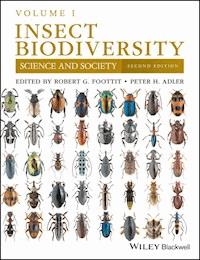
Cover Image: A sampling of beetle diversity in the Palearctic Region.
List of Contributors
Peter H. Adler
Department of Plant and Environmental Sciences
Clemson University
Clemson
South Carolina
USA
May Berenbaum
Department of Entomology
University of Illinois
Urbana
Illinois
USA
Patrice Bouchard
Canadian National Collection of Insects, Arachnids and Nematodes
Agriculture and Agri-Food Canada
Ottawa
Ontario
Canada
Adam J. Brunke
Canadian National Collection of Insects, Arachnids and Nematodes
Agriculture and Agri-Food Canada
Ottawa
Ontario
Canada
Michael F. Claridge
School of Biosciences
Cardiff University
Cardiff
Wales
UK
Gregory W. Courtney
Department of Entomology
Iowa State University
Ames
Iowa
USA
Peter S. Cranston
Evolution, Ecology and Genetics
Research School of Biology
The Australian National University
Canberra
Australia
Hugh V. Danks
Biological Survey of Canada
Canadian Museum of Nature
Ottawa
Ontario
Canada
Hume Douglas
Canadian National Collection of Insects, Arachnids and Nematodes
Agriculture and Agri-Food Canada
Ottawa
Ontario
Canada
Julian Dupuis
Department of Biological Sciences
University of Alberta
Edmonton
Alberta
Canada
Terry L. Erwin
Department of Entomology
National Museum of Natural History
Smithsonian Institution
Washington DC
USA
Robin M. Floyd
Wellcome Trust/MRC Stem Cell Institute
University of Cambridge
Cambridge
UK
and
Centre for Biodiversity Genomics
Biodiversity Institute of Ontario
University of Guelph
Guelph
Ontario
Canada
Robert G. Foottit
Canadian National Collection of Insects, Arachnids and Nematodes
Agriculture and Agri-Food Canada
Ottawa
Ontario
Canada
Christy J. Geraci
Department of Entomology
National Museum of Natural History, Smithsonian Institution
Washington DC
USA
Matthew L. Gimmel
Invertebrate Zoology
Santa Barbara Museum of Natural History
Santa Barbara
California
USA
Paul Z. Goldstein
Systematic Entomology Laboratory
Plant Science Institute
Agriculture Research Service
US Department of Agriculture
c/o Smithsonian Institution
Washington DC
USA
Paul D. N. Hebert
Centre for Biodiversity Genomics
Biodiversity Institute of Ontario
University of Guelph
Guelph
Ontario
Canada
Thomas J. Henry
Systematic Entomology Laboratory
Plant Science Institute
Agriculture Research Service
US Department of Agriculture
c/o Smithsonian Institution
Washington DC
USA
John Heraty
Department of Entomology
University of California
Riverside
California
USA
E. Richard Hoebeke
Georgia Museum of Natural History and Department of Entomology
University of Georgia
Athens
Georgia
USA
John T. Huber
Natural Resources Canada
Canadian Forestry Service
c/o Canadian National Collection of Insects, Arachnids and Nematodes
Ottawa
Ontario
Canada
Norman F. Johnson
Department of Evolution, Ecology and Organismal Biology and Department of Entomology
Ohio State University
Columbus
Ohio
USA
Kojun Kanda
Department of Biological Sciences
Northern Arizona University
Flagstaff
Arizona
USA
Ke Chung Kim
Frost Entomological Museum
Department of Entomology
Pennsylvania State University
University Park
Pennsylvania
USA
Alexander S. Konstantinov
Systematic Entomology Laboratory
Plant Science Institute
Agriculture Research Service
US Department of Agriculture
c/o Smithsonian Institution
Washington DC
USA
Boris A. Korotyaev
Zoological Institute
Russian Academy of Sciences
St Petersburg
Russia
Mervyn W. Mansell
Department of Zoology and Entomology
University of Pretoria
Pretoria
South Africa
Gary L. Miller
Systematic Entomology Laboratory
Plant Science Institute
Agricultural Research Service
US Department of Agriculture
Beltsville
Maryland
USA
Kelly B. Miller
Department of Biology
University of New Mexico
Albuquerque
New Mexico
USA
John C. Morse
Department of Plant and Environmental Sciences
Clemson University
Clemson
South Carolina
USA
Thomas Pape
Natural History Museum of Denmark
University of Copenhagen
Copenhagen
Denmark
Amanda Roe
Natural Resources Canada
Canadian Forest Service
Great Lakes Forestry Centre
Sault Ste. Marie
Ontario
Canada
Michael J. Samways
Department of Conservation Ecology and Entomology
Stellenbosch University
Matieland
South Africa
Clarke H. Scholtz
Department of Zoology and Entomology
University of Pretoria
Pretoria
South Africa
Geoffrey G. E. Scudder
Department of Zoology
University of British Columbia
Vancouver
British Columbia
Canada
Bradley J. Sinclair
Canadian National Collection of Insects and Canadian Food Inspection Agency
Ottawa Plant Laboratory – Entomology
Ottawa
Ontario
Canada
Kong-Wah Sing
State Key Laboratory of Genetic Resources and Evolution
Kunming Institute of Zoology
Chinese Academy of Sciences Kunming
P. R. China
and
Institute of Biological Sciences
University of Malaya
Kuala Lumpur
Malaysia
Jeffrey H. Skevington
Canadian National Collection of Insects, Arachnids and Nematodes
Agriculture and Agri-Food Canada
Ottawa
Ontario
Canada
Andrew B. T. Smith
Research Division
Canadian Museum of Nature
Ottawa
Ontario
Canada
Felix Sperling
Department of Biological Sciences
Biological Sciences Centre
University of Alberta
Edmonton
Alberta
Canada
Mark G. Volkovitsh
Zoological Institute
Russian Academy of Sciences
St Petersburg
Russia
Alfred G. Wheeler, Jr
Department of Plant and Environmental Sciences
Clemson University
Clemson
South Carolina
USA
Quentin D. Wheeler
College of Environmental Science and Forestry
State University of New York
Syracuse
New York
USA
John-James Wilson
International College Beijing
China Agricultural University
Beijing
P. R. China
and
Institute of Biological Sciences
University of Malaya
Kuala Lumpur
Malaysia
Laura S. Zamorano
Department of Entomology
National Museum of Natural History
Smithsonian Institution
Washington DC
USA
Foreword, Second Edition
Insects are the most exuberant manifestation of Earth’s many and varied life forms. Their rather simple unifying body plan has become modified and adapted to produce an enormous variety of species, and insects exploit virtually all terrestrial and freshwater environments on the planet, as well as many brackish waters. However, as a paradox debated extensively a few decades ago, they are largely absent from the seas and oceans. Features such as wings and the complete metamorphosis of many species have been cited frequently as fostering this massive diversity. The “success” of the insects can be measured by many parameters: their long-term persistence and stability of their basic patterns, the variety of higher groups (with almost 30 orders commonly recognized) and, as emphasized in this book, the wealth of species and similar entities. Each of these species has its individual biological peculiarities, ecological role, distribution, and interactions within the local community. And each may differ in habit and appearance, both from its close relatives and across its range, to reflect local influences and conditions. Every species is thus a mosaic of physical variety and genetic constitution that can lead to taxonomic and ecological ambiguity in interpreting its integrity and the ways in which it may evolve and persist.
Entomologists will continue to debate the number of insect “species” that exist and the levels of past and likely future extinctions that edit any such estimate. The difficulties in gaining consensus have two main axes – first, lack of understanding of how these entities may be recognized and categorized and, second, that many insect groups remain substantially undercollected and are poorly known. The first of these themes dominates much of this book – gaining agreement over “what is a species” is difficult and sometimes contentious. Many taxonomists hold strong and individualistic views, molded by years of study, of the limits of species and the validity of infraspecific categories such as subspecies and races that in practice can function as “evolutionarily significant units” in their insect group. One widespread trend, often not appreciated fully, is that widespread generalist insect species may not persist as such as their environment changes – loss of resources and fragmentation of previously extensive biotopes may cause populations to become isolated, and restricted to a limited subset of resources, such as particular host plants, on which they must then depend and specialize. Such situations may beget speciation, perhaps especially among phytophagous insects that display many examples of such localized but obligatory isolation. Populations involved commonly show haplotype differences and biological idiosyncrasies related to their local conditions, but otherwise are not easily separable. Generalist “species” may commonly comprise complexes of cryptic species masquerading as a single entity. Conventional “typological” taxonomists may tend to mirror the more conservative “generalist” approach, whereas other constituents (such as many butterfly collectors) may opt to recognize numerous isolated populations displaying small phenotypic variations as distinct (specific or subspecific) taxa. Individual specialists in any large insect group are likely to occupy different positions along the gradient of “lumpers” to “splitters” in how they treat such variety, and may defend their stance energetically.
Biologists and philosophers alike continue to debate the merits of the numerous species concepts, drawing on the reality quoted by one recent commentator that “there are n+1 definitions of ‘species’ in a room of n biologists,” with the most common inference that “a species is whatever a taxonomist says it is.” All recognized categories, however, are dynamic. Any given figure for insect diversity (as numbers of species) is a working hypothesis, as is each of the contributing species – so that complete and enduring enumeration is perhaps impossible to achieve.
Documenting and cataloging insect biodiversity as a major component of Earth’s life is a natural quest of human inquiry, but is not an end in itself and, importantly, is not synonymous with conserving insects or a necessary prerequisite to assuring their well-being. Despite many ambiguities in projecting the actual numbers of insect species, no one would query that there are a lot, and that the various ecological processes that sustain ecosystems depend heavily on insect activity. Indeed, “ecological services” such as pollination, recycling of materials, and the economically important activities of predators and parasitoids are signaled increasingly as part of the rationale for insect conservation because these values can be appreciated easily through direct economic impacts. All these themes are dealt with in this book, centered on questions related to our ignorance of fundamental matters of “how many are there?” and “how important are they?”, to which the broad answers of “millions” and “massive” may incorporate considerable uncertainty; this uncertainty, however, is reduced by many of the chapters here.




