


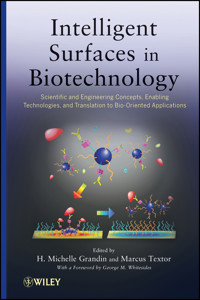
Intelligent Surfaces in Biotechnology E-Book
116,99 €
Mehr erfahren.
- Herausgeber: John Wiley & Sons
- Kategorie: Fachliteratur
- Sprache: Englisch
A comprehensive overview of smart and responsive surfaces in biotechnology and their applications A wave of recent advances in cell biology, biophysics, chemistry, and materials science has enabled the development of a new generation of smart biomaterials. Intelligent Surfaces in Biotechnology: Scientific and Engineering Concepts, Enabling Technologies, and Translation to Bio-Oriented Applications provides readers with a comprehensive overview of surface modifications and their applications, including coverage of the physico-chemical properties, characterization methods, smart coating technologies, and demonstration of performance in vitro and in vivo. The first part of the book covers applications in the fields of biosensing and biodiagnostics, while the second part focuses more on coatings for medical devices, drug delivery, and tailored cell-surface interactions. The book explores intelligent surface applications such as tissue engineering, drug targeting and delivery, wound healing and anti-infection strategies, biosensors, nanopatterning, and bioinspired design of novel responsive materials and multifunctional surfaces. Designed to aid scientists and engineers in understanding the rapidly developing field of biofunctional surfaces, Intelligent Surfaces in Biotechnology is an edited volume with each chapter written by a respected expert and featuring examples taken from the most state-of-the-art developments in the discipline. Cover Image: Design concept for a diagnostic microfluidic system based on responsive polymer- and antibody-conjugated nanobeads (see Chapter 2 of this book, Figure 2.5; reproduced by permission from the Royal Society of Chemistry).
Sie lesen das E-Book in den Legimi-Apps auf:
Seitenzahl: 717
Veröffentlichungsjahr: 2012
Ähnliche




















Table of Contents
Cover
Title page
Copyright page
DEDICATION
FOREWORD
THE BORDER BETWEEN LIVING AND NONLIVING
THE PROBLEMS OF STATIC SOLUTIONS TO DYNAMIC PROBLEMS
WHAT IS IT THAT MAKES FOR COMPATIBILITY?
“INTELLIGENCE” IN SURFACES AND INTERFACES
MATERIALS BY DESIGN: REDUCTIONIST SCIENCE, OR EMPIRICISM AND ENGINEERING?
TRADING INFORMATION ACROSS A BORDER
PREFACE
CONTRIBUTORS
CHAPTER 1 Stimulus-Responsive Polymers as Intelligent Coatings for Biosensors: Architectures, Response Mechanisms, and Applications
1.1 INTRODUCTION
1.2 SRP ARCHITECTURES FOR BIOSENSOR APPLICATIONS
1.3 MECHANISMS OF RESPONSE
1.4 SENSING AND TRANSDUCTION MECHANISMS
1.5 LIMITATIONS AND CHALLENGES
1.6 CONCLUSION AND OUTLOOK
ACKNOWLEDGEMENTS
CHAPTER 2 Smart Surfaces for Point-of-Care Diagnostics
2.1 INTRODUCTION
2.2 STANDARD METHODS FOR BIOMARKER PURIFICATION, ENRICHMENT, AND DETECTION
2.3 SMART REAGENTS FOR BIOMARKER PURIFICATION AND PROCESSING
2.4 SAMPLE-PROCESSING MODULES FOR SMART CONJUGATE BIOASSAYS
2.5 DEVICES FOR USE IN SMART CONJUGATE BIOASSAYS
2.6 CONCLUSIONS
CHAPTER 3 Design of Intelligent Surface Modifications and Optimal Liquid Handling for Nanoscale Bioanalytical Sensors
3.1 INTRODUCTION
3.2 ORTHOGONAL SMALL (NANO)-SCALE SURFACE MODIFICATION USING MOLECULAR SELF-ASSEMBLY
3.3 ALTERNATIVE SURFACE PATTERNING STRATEGIES
3.4 THE CHALLENGE OF ANALYTE TRANSPORT
3.5 CONCLUDING REMARKS
CHAPTER 4 Intelligent Surfaces for Field-Effect Transistor-Based Nanobiosensing
4.1 INTRODUCTION
4.2 FET-BASED BIOSENSORS
4.3 INTELLIGENT SURFACES FOR SIGNAL TRANSDUCTION AND AMPLIFICATION OF BIO-FETS
4.4 NEW TARGETS OF BIO-FETS
4.5 FUTURE PERSPECTIVE
CHAPTER 5 Supported Lipid Bilayers: Intelligent Surfaces for Ion Channel Recordings
5.1 INTRODUCTION
5.2 SUPPORTED LIPID BILAYERS
5.3 CHARACTERISTICS OF SSMs
5.4 ION CHANNELS IN SSMs
5.5 FUTURE PERSPECTIVE: ION CHANNELS IN MICROPATTERNED MEMBRANES
CHAPTER 6 Antimicrobial and Anti-Inflammatory Intelligent Surfaces
6.1 INTRODUCTION
6.2 ANTIBACTERIAL STRATEGIES
6.3 BIOACTIVE ANTIBACTERIAL SURFACES
6.4 STIMULUS-RESPONSIVE ANTIBACTERIAL COATINGS FOR WOUND DRESSINGS
6.5 ANTI-INFLAMMATORY SURFACES
6.6 CONCLUSIONS AND OUTLOOK
CHAPTER 7 Intelligent Polymer Thin Films and Coatings for Drug Delivery
7.1 INTRODUCTION
7.2 SURFACE-MEDIATED DRUG DELIVERY
7.3 DRUG DELIVERY VEHICLES WITH FUNCTIONAL POLYMER COATINGS
7.4 CONCLUDING REMARKS
CHAPTER 8 Micro- and Nanopatterning of Active Biomolecules and Cells
8.1 INTRODUCTION
8.2 CHEMICAL APPROACHES FOR PROTEIN IMMOBILIZATION
8.3 BIOMOLECULE PATTERNING BY “TOP-DOWN” TECHNIQUES
8.4 BIOMOLECULE NANOARRAYS BY BLOCK COPOLYMER NANOLITHOGRAPHY
8.5 APPLICATION OF NANOSTRUCTURED SURFACES TO STUDY CELL ADHESION
8.6 CONCLUSION
CHAPTER 9 Responsive Polymer Coatings for Smart Applications in Chromatography, Drug Delivery Systems, and Cell Sheet Engineering
9.1 INTRODUCTION
9.2 TEMPERATURE-RESPONSIVE CHROMATOGRAPHY
9.3 TEMPERATURE-RESPONSIVE POLYMER MICELLES
9.4 TEMPERATURE-RESPONSIVE CULTURE SURFACES
9.5 CELL SHEET ENGINEERING
9.6 CONCLUSIONS
Index
Color Plates
Copyright © 2012 by John Wiley & Sons, Inc. All rights reserved
Published by John Wiley & Sons, Inc., Hoboken, New Jersey
Published simultaneously in Canada
No part of this publication may be reproduced, stored in a retrieval system, or transmitted in any form or by any means, electronic, mechanical, photocopying, recording, scanning, or otherwise, except as permitted under Section 107 or 108 of the 1976 United States Copyright Act, without either the prior written permission of the Publisher, or authorization through payment of the appropriate per-copy fee to the Copyright Clearance Center, Inc., 222 Rosewood Drive, Danvers, MA 01923, (978) 750-8400, fax (978) 750-4470, or on the web at www.copyright.com. Requests to the Publisher for permission should be addressed to the Permissions Department, John Wiley & Sons, Inc., 111 River Street, Hoboken, NJ 07030, (201) 748-6011, fax (201) 748-6008, or online at http://www.wiley.com/go/permissions.
Limit of Liability/Disclaimer of Warranty: While the publisher and author have used their best efforts in preparing this book, they make no representations or warranties with respect to the accuracy or completeness of the contents of this book and specifically disclaim any implied warranties of merchantability or fitness for a particular purpose. No warranty may be created or extended by sales representatives or written sales materials. The advice and strategies contained herein may not be suitable for your situation. You should consult with a professional where appropriate. Neither the publisher nor author shall be liable for any loss of profit or any other commercial damages, including but not limited to special, incidental, consequential, or other damages.
For general information on our other products and services or for technical support, please contact our Customer Care Department within the United States at (800) 762-2974, outside the United States at (317) 572-3993 or fax (317) 572-4002.
Wiley also publishes its books in a variety of electronic formats. Some content that appears in print may not be available in electronic formats. For more information about Wiley products, visit our web site at www.wiley.com.
Library of Congress Cataloging-in-Publication Data:
Intelligent surfaces in biotechnology : scientific and engineering concepts, enabling technologies, and translation to bio-oriented applications / edited by H. Michelle Grandin, Marcus Textor.
p. cm.
Includes bibliographical references and index.
ISBN 978-0-470-53650-6
1. Biomedical materials. 2. Biotechnology–Materials. 3. Smart materials. 4. Surfaces (Technology) I. Grandin, H. Michelle. II. Textor, Marcus.
R857.M3I48 2012
610.28'4–dc23
2011041440
ISBN: 9780470536506
DEDICATION
Heike Hall, PhD
December 28, 1963–July 22, 2011
The editors and contributors to this volume sadly note the passing of our colleague and friend Heike Hall, and we dedicate this volume to her. Heike was a devoted mother and wife to her family, and she was a passionate colleague and gifted scientist to us.
Heike built her scientific career at the interfaces of cells with their extracellular milieu. She carried out her PhD studies in the laboratory of Melitta Schachner at ETH Zurich, working on basic questions of how neural cells adhere to the extracellular matrix molecule laminin. In her pioneering work, she demonstrated a critical role for the carbohydrate-containing neural cell recognition molecule L1. From there, she moved to Guy’s Hospital in London to work with Patrick Doherty and Frank Walsh on the role of fibroblast growth factor receptors in cell adhesion molecule-stimulated neuronal outgrowth. Following this, she moved back to Switzerland to undertake further postdoctoral studies with Jürgen Engel at the Biozentrum Basel. There she returned to her interest in L1 and expanded into the field of protein engineering, forming L1 trimers and immobilizing them on substrates to demonstrate that the trimers stimulated neuronal outgrowth much more potently than the monomeric form. With this work, she both understood more deeply L1 interactions in neurobiology, and she set the stage for the exploitation of L1 in functional nerve repair.
Following these very successful periods focused on basic biological investigations at the cell–matrix interface, Heike turned her attentions to biomedical applications of cell adhesion science, joining my laboratory at the ETH Zurich as a senior researcher, engineering cell adhesion in the context of tissue engineering and regenerative medicine. Based on her background in cellular neuroscience, Heike led our group in designing biofunctional scaffold materials for stimulating nerve repair. She continued to utilize her deep knowledge of L1 and also explored another protein, alpha dystroglycan. During this period, she also entered the field of angiogenesis and led projects developing L1-based proteins and other factors as angiogenic stimulators, inducing angiogenesis in the context of chronic wound repair.
After completing her habilitation in my laboratory, Heike joined the Department of Materials at ETH Zurich as a group leader, associated with the laboratory of Viola Vogel. There, she focused on new strategies for the development of biofunctional hydrogel matrices for integrated tissue repair, continuing to follow her passions in the repair of peripheral nerves and in the induction of angiogenesis in chronic wounds and taking on new areas of bone repair and nonviral gene delivery. These years were remarkable for their productivity and for the breadth of the science underlying Heike’s work, spanning from DNA–polymer interactions in gene therapy to cell–metal interactions in orthopedics, of course with her constant work on the influence of the extracellular matrix in cellular neurobiology at the core.
In her prematurely terminated career, Heike accomplished much, in both basic science and applied. She touched many careers of students and postdoctoral fellows as a mentor. And she touched many scientists, including myself, both as a valued colleague and even more as a valued friend.
JEFFREY A. HUBBELL
October 2011
Lausanne, Switzerland
FOREWORD
THE BORDER BETWEEN LIVING AND NONLIVING
The interface between the living and the nonliving—between cells or tissues, and materials—is, and has been for many decades, an area of science and technology where there are more questions than answers. Materials science—and particularly materials by design—is difficult; understanding “life” is even more difficult. The interface between materials and life compounds the two difficulties but adds a further, complicating twist: Biology and biochemistry at the interface with synthetic materials is—almost by definition—abnormal, and it is not even clear how much of what we know of “normal biology” can be applied in this region. Molecules normally found in interfaces in vivo, whatever they might be, are missing; proteins adsorb to synthetic interfaces, assume abnormal configurations, denature, and trigger the complex cascades that lead to inflammation, clotting, and bacterial attachment. It is a very important area and a very difficult one. A small area of interface with the wrong properties can trigger a large biological response.
THE PROBLEMS OF STATIC SOLUTIONS TO DYNAMIC PROBLEMS
One of the difficult problems of biointerfacial science is that most materials are static, and all of biology (over some scale of time) is dynamic. Bone and teeth remodel; cells divide, function, age, and die; skin sheds. Many synthetic materials used in biology, by contrast, are static. In some circumstances, the nonadaptive character of materials seems not to be a problem. For example, we assume—for convenience—that cells grown in plastic dishes recapitulate many of the characteristics of the same types of cells in tissue. We also know, however, that replacement of a hip joint by a construct of metal and polyethylene is good for only, perhaps, two decades and then must be replaced. We understand some of the mechanisms of failure of the synthetic joint but not others.
A concept that seems very attractive in attacking the problem of biointerfaces is that of “adaptive,” or “intelligent,” or “self-healing” materials. The goal is the development of materials that somehow replicate and mimic the ability of tissues and biological materials to adapt and renew. There is, however, an essential difference between “dynamic” materials and biological systems. The former are typically designed to respond to changes in environmental conditions by a change in structure and properties, and operate at, or close to, equilibrium. The latter are dissipative: Remodeling of bone involves the dissolution of existing bone by osteoclasts and redeposition of new bone by osteoblasts; both require ATP and metabolism. We do not, at the moment, know how to build dissipative biomimetic materials and structures that exist in a stable, out-of-equilibrium state, and the question is, thus, “how far can one go in building a biocompatible interface between synthetic and biological systems using the currently available tools of materials science?”
One interesting class of materials that is designed to be out of equilibrium, but is not truly dynamic in the sense of biological tissues and structures, is that intended for biodegradation and for applications such as drug delivery. These systems, rather than operating on the basis of remodeling requiring the production of ATP through metabolism, are designed to be out of equilibrium on the basis of a reactive structure. Poly(lactic acid) (PLA), for example, is thermodynamically unstable with respect to lactic acid in biological fluids, and the interface between PLA and tissue or blood is constantly renewed by hydrolysis and erosion of the polymer. In other materials and structures, the tendency of the interface to initiate unwanted biochemical processes can sometimes be accommodated by other forms of energy dissipation: For example, the tendency of a metal stent to initiate clotting in the blood passing over it is at least partially mitigated by fluid shear from this blood (which sweeps away clots) and by the slower, but also dissipative, processes that allow epithelial cells to cover the material of the stent.
WHAT IS IT THAT MAKES FOR COMPATIBILITY?
So, what makes for biological compatibility? In general, the answer is “We do not know.” Although we accept cells growing in culture dishes as being useful models for studies in cell biology, we know that these cells are not fully normal; we believe (but in general cannot prove) that the compromise between the biologically abnormal environment of the culture dish, and the convenience and acceptable expense of the culture dish, justifies the use of plasticware in cell biology. In research biology, many compromises are easy to accommodate because the consequences of failure are either small or hidden. In vivo, and especially in humans, the stakes are much higher, and biomaterials science is still severely limited by fundamental issues in compatibility. The field still needs new ideas.
“INTELLIGENCE” IN SURFACES AND INTERFACES
Can one make “intelligent” or “adaptive” surfaces for use in biomaterials science and bioengineering? The answer is clearly “yes,” but with clear caveats. Artificial hips and knees do not fully replicate natural structures; artificial lenses allow sight but have limitations; artificial teeth work well but not perfectly; surfaces in contact with blood often remove platelets and initiate clotting. Almost all synthetic materials, over time, induce some level of inflammation and fibrosis. The successes of biomaterials science in producing acceptable solutions to the problem of biocompatibility have been remarkable, but there remains enormous opportunity for improvement. One possible direction is toward intelligent surfaces and interfaces.
“Intelligence,” in this sense, is a word that is used flexibly. An “intelligent material” is one whose structure—in a particular environment—can change in a way that autonomously optimizes its performance in some application. An “intelligent child” might be one who plays Bach by the age of five. The same word “intelligent” is used in both sentences, but with very different meanings. Materials cannot have “intention,” and do not sense, control, and change even as a so-called intelligent machine might. The difference between “intelligence” and “adaptability” as applied in materials science might not be important; but since the current generation of “intelligent materials” is very close to the starting point in moving from completely inert, static structures to structures optimized for performance in complex biological environments, and capable of responding to changes in them, keeping the difference between intelligence and adaptability in mind is useful in understanding how large the gap between capability and ultimate need, and how great the opportunity for new science, is in this area.
MATERIALS BY DESIGN: REDUCTIONIST SCIENCE, OR EMPIRICISM AND ENGINEERING?
In searching for solutions to difficult problems, there are always the “top-down” and “bottom-up” approaches. In one, one hopes to understand the fundamental mechanisms by which synthetic materials and biological molecules and systems interact and use that understanding in the rational design of synthetic materials having intended properties. In the second, one relies more on intuition (sometimes guided by knowledge from other areas) and empiricism to develop useful technology, even if the outcome is that the technology is not completely understood. “Biointerfaces” are still closer to empiricism than to fundamental science. Even in what appears to be the simplest cases—for example, the adsorption of proteins on the surfaces of polymers and self-assembled monolayers—and although there are quite useful empirical solutions to the design of, for example, nonabsorbing surfaces, the mechanistic basis for their activity is still not completely understood. In more complex cases—for example, the design of nonclotting surfaces for contact with blood—there is still an enormous amount to be learned even about the steps that initiate clotting.
TRADING INFORMATION ACROSS A BORDER
One of the most challenging of problems in the interfacial science of biomaterials is that of sensing or actuation. “Information” in synthetic systems is typically carried in the form of electrical current or voltage in electrically conducting wires, or as light. Information in biological systems generally takes the form of molecules interacting with receptors, or of concentration gradients in ions (or of electrochemical potentials due to these gradients) across cell membranes. It remains a challenging problem to translate between these two fundamentally different currencies. The problem is particularly difficult when the biological signal to be detected is itself problematic. “Biomarkers” for use in the diagnosis and management of disease represent a specific example of high current interest. It is unquestionably correct that biomarkers exist for some diseases: For example, the concentrations of glucose and of glycosylated hemoglobin in blood are both biomarkers relevant to the management of diabetes. For many diseases, however, the basic biology of biomarkers remains uncertain or unvalidated: The recent example of prostate-specific antigen (PSA), which has gone from “biomarker for early prostate cancer” to “clinically marginally useful, or perhaps harmful, bioanalysis” over a 20-year period, is an example. Although the field of biomarkers will certainly advance in the next years, the basic philosophy of early detection and management of disease through simple analyses (or even through a more complex recognition of patterns in multiple analyses) is still a work in progress. That uncertainty aside, however, building the technological base that allows the design and fabrication of the interfaces between electronic or photonic systems and biological systems will clearly be useful, in research and ultimately in the clinic, and remains a complex and challenging problem.
PROF. GEORGE M. WHITESIDES
Harvard University
PREFACE
Polymer coatings have long been studied as a versatile yet simple way to modify the characteristics of a material’s surface, for example, to exhibit adhesive, insulating, or bioinert properties. More recently, the ability to impart selective, functional, and responsive properties to polymer and lipid bilayer coatings has significantly impacted a number of applications in biotechnology and medicine including biosensors, drug delivery, and tissue engineering. Such surfaces, for instance, hierarchically self-organized structures at interfaces, embody an “intelligence” mimicking natural biological systems, albethey primitive in comparison to those of even “simple” organisms or parts of them, including bacterial membranes. The nature of this research requires a multidisciplinary approach in developing the underlying scientific and engineering concepts, in enabling the technologies, and in translating these new surfaces to useful applications.
Within the pages of this book, our aim is to stimulate further research into the area of “intelligent surfaces,” so eloquently described by the distinguished scientist Prof. George M. Whitesides in the “Foreword” to this book (see pp. xv), that is, the search for materials that attempt to replicate and/or mimic the ability of tissues and biological materials to adapt and/or renew, in a dynamic and ultimately dissipative manner. For the purposes of this book, our definition of intelligent surfaces will include smart materials, that is, polymers whose properties are significantly altered by external stimuli, such as temperature, pH, or electric fields, and will go beyond to include the following:
surfaces that have one (or more) functional surface properties that can be changed in a controlled and useful fashion by external stimuli;surfaces that are cooperative, dynamic systems that respond or accommodate in a useful and reproducible way to environmental conditions;surfaces that use biological factors in vitro or in vivo to trigger a desired response, for example, controlled degradation of polymers, or the release of beneficial compounds;surfaces that use combinatorial and gradient surfaces as intelligent and efficient ways to test/explore the effect of multiple types or concentrations of surface cues and their combination in the interaction with the environment; andsurfaces that provide a designed multifunctionality and/or temporospatial control in the interaction with the (bio)environment.The authors contributing to this book are leading experts in the biomaterial and bioengineering sciences presenting valuable and inspiring views of the state of the art in this exciting, multidisciplinary field. Each chapter is designed to impart background knowledge and important design consideration for specific applications while transferring technological know-how, whenever possible, to scientists interested in the field. The first half of the book deals primarily with applications in biosensing and biodiagnostics, while the second half extends to coatings for medical devices, drug delivery, and controlled cell surface interactions.
In Chapter 1, the powerful attraction of stimulus-responsive polymers for medical sensors is presented, highlighting a need to further validate and optimize analyte specificity, detection limits, and sensor reliability/longevity. Chapter 2 presents one strategy for optimizing the use of the smart polymer, poly(N-isoproylacrylamide) (pNIPAAm), using a hybrid biosynthetic conjugate of proteins, inorganic nanoparticles, and smart polymers, for use in biosensing devices amenable to rapid near-patient point-of-care testing. Chapter 3 discusses fundamental criteria for surface-based and label-free biosensors, particularly in the nanoscale, emphasizing aspects of surface modification through self-assembly, alternative patterning strategies, and the challenges of analyte transport. A specific class of label-free biosensors, that is, the field-effect transistor-based biosensors or bio-FETs, is the topic of Chapter 4, presenting design criteria, new targets, and surface modifications strategies to facilitate signal transduction and amplification. Chapter 5 presents another approach to intelligent surface coatings inspired by nature, namely, supported lipid bilayers incorporating transmembrane proteins, with a focus on their application as sensors for ion channel activity.
Modification of biomaterial and medical device surfaces with intelligent surfaces that prevent infection, such as antibacterial and anti-inflammatory coatings, including grafting of bioactive molecules and coatings that release antibacterial agents, is discussed in Chapter 6. Chapter 7 presents layer-by-layer (LBL) sequential polymer deposition as a means to generate intelligent mulitlayered polymer films, incorporating cargo, for controlled release with a focus on applications in the important area of drug delivery. To further understand the interactions of cells on surfaces, micro- and nanopatterning of active biomolecules provides a useful tool as outlined in Chapter 8. And finally, Chapter 9 further discusses the use of responsive polymers for drug delivery, along with two other important uses of these intelligent coatings, namely, chromatography and the emerging field of cell sheet engineering for regenerative medicine.
Together, the chapters of this book provide an impressive insight into the exciting field of intelligent surfaces in biotechnology and should inspire scientists in the fields of biomaterials, polymer chemistry, bioengineering, and medical devices and technology to make further contributions to this important area of multidisciplinary science. The comparatively simple level of intelligence embodied in today’s surfaces, with respect to natural systems, is an indicator that the major proponent of the work required to develop surface solutions approaching the intelligence found in nature, for example, in the context of time- and space-dependent organization of macromolecular entities or release of multiple soluble cues, remains a task for the future.
The editors wish to express a heartfelt thank you to all chapter authors for their outstanding contributions and for their effort and patience in bringing this book to life. A special thank you is extended to Prof. George Whitesides for providing an erudite “Foreword” and to Prof. Jeffrey Hubbell for providing a special “Dedication” as described below. Furthermore, the editors wish to thank Ms. Josephine Baer for her dedication to the completion of this work.
Regrettably, our friend and colleague Dr. Heike Hall (coauthor of Chapter 6, “Antimicrobial and Anti-Inflammatory Intelligent Surfaces”) passed away during the writing of this volume. Despite her illness, she continued to be actively involved in the writing and revising of her chapter, thereby demonstrating her commitment to the science that captivated her attention. We wholeheartedly dedicate this work to her and are thankful to Prof. Jeffrey Hubbell for providing a special “Dedication” detailing the scientific achievements of Dr. Heike Hall (see pp. v).
H. MICHELLE GRANDIN
MARCUS TEXTOR
CONTRIBUTORS
Yoshikatsu Akiyama, Institute of Advanced Biomedical Engineering and Science, Tokyo Women’s Medical University, Tokyo, Japan
Daniel Aydin, Department of New Materials and Biosystems, Max Planck Institute for Intelligent Systems, Stuttgart, Germany, and Department of Biophysical Chemistry, University of Heidelberg, Heidelberg, Germany
Ashutosh Chilkoti, Department of Biomedical Engineering, Duke University, Durham, North Carolina
Laurent Feuz, Biological Physics, Department of Applied Physics, Chalmers University of Technology, Göteborg, Sweden
Allison L. Golden, Department of Bioengineering, University of Washington, Seattle, Washington
Hans J. Griesser, Ian Wark Research Institute, University of South Australia, Mawson Lakes, Australia
Stefani S. Griesser, Ian Wark Research Institute, University of South Australia, Mawson Lakes, Australia
Heike Hall, Cells and BioMaterials, Department of Materials, ETH Zurich, Zurich, Switzerland
Vera C. Hirschfeld-Warneken, Department of New Materials and Biosystems, Max Planck Institute for Intelligent Systems, Stuttgart, Germany, and Department of Biophysical Chemistry, University of Heidelberg, Heidelberg, Germany
John M. Hoffman, Department of Bioengineering, University of Washington, Seattle, Washington
Fredrik Höök, Biological Physics, Department of Applied Physics, Chalmers University of Technology, Göteborg, Sweden
Andreas Janshoff, Institute of Physical Chemistry, University of Göttingen, Göttingen, Germany
Toby A. Jenkins, Department of Chemistry, University of Bath, Bath, United Kingdom
Kazunori Kataoka, Department of Materials Engineering, Graduate School of Engineering, The University of Tokyo, Tokyo, Japan, and Division of Clinical Biology, Center for Disease Biology and Integrative Medicine, Graduate School of Medicine, The University of Tokyo, Tokyo, Japan
James J. Lai, Department of Bioengineering, University of Washington, Seattle, Washington
Ilia Louban, Department of New Materials and Biosystems, Max Planck Institute for Intelligent Systems, Stuttgart, Germany, and Department of Biophysical Chemistry, University of Heidelberg, Heidelberg, Germany
Alexandra P. Marques, 3B’s Research Group—Biomaterials, Biodegradables and Biomimetics, University of Minho, Headquarters of the European Institute of Excellence on Tissue Engineering and Regenerative Medicine, Guimarães, Portugal; and 3 ICVS/3B’s Laboratório Associado, PT Government Associate Laboratory, Guimarães, Portugal
Akira Matsumoto, Institute of Biomaterials and Bioengineering, Tokyo Medical and Dental University, Tokyo, Japan
Yuji Miyahara, Institute of Biomaterials and Bioengineering, Tokyo Medical and Dental University, Tokyo, Japan
Kenichi Nagase, Institute of Advanced Biomedical Engineering and Science, Tokyo Women’s Medical University, Tokyo, Japan
Masamichi Nakayama, Institute of Advanced Biomedical Engineering and Science, Tokyo Women’s Medical University, Tokyo, Japan
Michael A. Nash, Department of Bioengineering, University of Washington, Seattle, Washington
Teruo Okano, Institute of Advanced Biomedical Engineering and Science, Tokyo Women’s Medical University, Tokyo, Japan
Rogério P. Pirraco, Institute of Advanced Biomedical Engineering and Science, Tokyo Women’s Medical University, Tokyo, Japan; 3B’s Research Group—Biomaterials, Biodegradables and Biomimetics, University of Minho, Headquarters of the European Institute of Excellence on Tissue Engineering and Regenerative Medicine, Guimarães, Portugal; and ICVS/3B’s Laboratório Associado, PT Government Associate Laboratory, Guimarães, Portugal
Erik Reimhult, Laboratory for Biologically Inspired Materials, Department of NanoBiotechnology, University of Natural Resources and Life Sciences, Vienna, Austria
Rui L. Reis, 3B’s Research Group—Biomaterials, Biodegradables and Biomimetics, University of Minho, Headquarters of the European Institute of Excellence on Tissue Engineering and Regenerative Medicine, Guimarães, Portugal; and ICVS/3B’s Laboratório Associado, PT Government Associate Laboratory, Guimarães, Portugal
Joachim P. Spatz, Department of New Materials and Biosystems, Max Planck Institute for Intelligent Systems, Stuttgart, Germany, and Department of Biophysical Chemistry, University of Heidelberg, Heidelberg, Germany
Brigitte Städler, Interdisciplinary Nanoscience Centre (iNano), Aarhus University, Aarhus, Denmark
Patrick S. Stayton, Department of Bioengineering, University of Washington, Seattle, Washington
Claudia Steinem, Institute of Organic and Biomolecular Chemistry, University of Göttingen, Göttingen, Germany
Vinalia Tjong, Department of Biomedical Engineering, Duke University, Durham, North Carolina
Krasimir Vasilev, Mawson Institute, University of South Australia, Mawson Lakes, Australia
Masayuki Yamato, Institute of Advanced Biomedical Engineering and Science, Tokyo Women’s Medical University, Tokyo, Japan
Stefan Zauscher, Department of Mechanical Engineering and Materials Science, Duke University, Durham, North Carolina
Alexander N. Zelikin, Department of Chemistry, Aarhus University, Aarhus, Denmark
Jianming Zhang, Department of Mechanical Engineering and Materials Science, Duke University, Durham, North Carolina
CHAPTER 1
Stimulus-Responsive Polymers as Intelligent Coatings for Biosensors: Architectures, Response Mechanisms, and Applications
VINALIA TJONG, JIANMING ZHANG, ASHUTOSH CHILKOTI, and STEFAN ZAUSCHER
1.1 INTRODUCTION
Stimulus-responsive polymers (SRPs) are used in biomedical applications that range from drug delivery,1,2 regenerative medicine,3,4 tissue engineering,5,6 to biosensing.7–9 The function of SRPs in these applications is predicated on their ability to change conformation, surface energy, or charge state in response to a stimulus. Common stimuli include changes in temperature, light, pH, ionic strength, redox potential, mechanical force, the strength of electric and magnetic fields, and changes in the biomolecular and chemical composition of the environment.10,11 When SRPs are coated onto surfaces, they often retain their stimulus-responsive behavior, which can be harnessed for sensing applications. The use of SRP coatings in biosensor applications is schematically illustrated in Figure 1.1, where the coatings function as both the reaction matrix and the responsive layer, which produces a measurable output signal.10,11
Figure 1.1 Schematic showing the role of stimulus-responsive polymer coatings in the biosensor transduction paradigm. In this paradigm, the SRP coating serves as both a matrix for analyte interaction and as a responsive coating that transduces an input stimulus into a measurable signal.
In this chapter, we discuss the use of SRPs as responsive coatings for biosensor applications. We specifically focus on the different SRP architectures, the various transduction mechanisms that underpin the use of SRPs as sensor platforms, and highlight selected applications of SRPs in a biomedically relevant context. Finally, we discuss the limitations and challenges in the application of SRPs as coatings for biosensors.
1.2 SRP ARCHITECTURES FOR BIOSENSOR APPLICATIONS
To be useful for sensing applications,12–14 the architectures of SRP coatings for biosensors are designed to undergo large, and often reversible, structural changes in response to small changes in the local solvent environment or in response to specific binding events.15–17 Four types of SRP architectures are commonly used for biosensor applications: (i) cross-linked polymer networks (hydrogels), (ii) end-grafted polymer chains (polymer brushes), (iii) self-assembled multilayered polymer films (layer-by-layer [LBL] thin films), and (iv) molecularly imprinted polymer (MIP) coatings, as illustrated in Figure 1.2. To achieve better signal amplification, hybrid coatings are being developed that combine an analyte-specific matrix with transduction-enhancing materials (e.g., electrochemically or optically sensitive materials).
Figure 1.2 The four main architectures of stimulus-responsive polymers are (a) hydrogels, (b) polymer brushes, (c) layer-by-layer (LBL) multilayers, and (d) molecularly imprinted polymers (MIPs). Furthermore, biosensor platforms with hybrid structures that embed inorganic (AuNPs) or organic reporter molecules (redox label ferrocene) in the polymer matrix are shown (e, g, and h), and the combination of the two main structures (LBL and polymer brush) are illustrated in (f).
Adapted with permission from references [8], [13], and [132].
(See color insert.)
1.2.1 Cross-Linked Polymer Networks (Hydrogels)
In cross-linked polymer networks (Fig. 1.2a), individual polymer chains are cross-linked to yield a 3-D mesh of interconnected polymer chains. Due to this interconnectivity, polymer networks can be used as freestanding materials or as thin films on a support. The cross-links maintain network integrity and impart flexibility so that the network can swell and shrink upon exposure to a particular stimulus such as a change in the solvent conditions,18,19 temperature, pH, ionic strength, metabolite concentration, or other environmental changes. Acrylamide-based polymers such as poly(-isopropylacrylamide) (pNIPAM), acrylic acid-based polymers such as poly(hydroxylethyl methacrylic)acid (pHEMA), and copolymers such as poly(vinyl alcohol)–poly(acrylic acid) (pVA–pAA) are common SRP coatings (see also Table ).
Lesen Sie weiter in der vollständigen Ausgabe!
Lesen Sie weiter in der vollständigen Ausgabe!
Lesen Sie weiter in der vollständigen Ausgabe!
Lesen Sie weiter in der vollständigen Ausgabe!
Lesen Sie weiter in der vollständigen Ausgabe!
Lesen Sie weiter in der vollständigen Ausgabe!
Lesen Sie weiter in der vollständigen Ausgabe!
Lesen Sie weiter in der vollständigen Ausgabe!
Lesen Sie weiter in der vollständigen Ausgabe!
Lesen Sie weiter in der vollständigen Ausgabe!




