


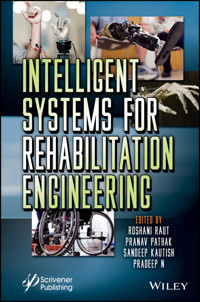
Intelligent Systems for Rehabilitation Engineering E-Book
190,99 €
Mehr erfahren.
- Herausgeber: John Wiley & Sons
- Kategorie: Wissenschaft und neue Technologien
- Sprache: Englisch
INTELLIGENT SYSTEMS FOR REHABILITATION ENGINEERING
Encapsulates different case studies where technology can be used as assistive technology for the physically challenged, visually and hearing impaired.
Rehabilitation engineering includes the development of technological solutions and devices to assist individuals with disabilities, while also supporting the recovery of the disabled who have lost their physical and cognitive functions. These systems can be designed and built to meet a wide range of needs that can help individuals with mobility, communication, vision, hearing, and cognition. The growing technological developments in machine learning, deep learning, robotics, virtual intelligence, etc., play an important role in rehabilitation engineering.
Intelligent Systems for Rehabilitation Engineering focuses on trending research of intelligent systems in rehabilitation engineering which involves the design and development of innovative technologies and techniques including rehabilitation robotics, visual rehabilitation, physical prosthetics, brain computer interfaces, sensory rehabilitation, motion rehabilitation, etc.
This groundbreaking book
- Provides a comprehensive reference covering different computer assistive techniques for the physically disabled, visually and hearing impaired.
- Focuses on trending research of intelligent systems in rehabilitation engineering which involves the design and development of innovative technologies and techniques.
- Provides insights into the role of intelligent systems in rehabilitation engineering.
Audience
Engineers and device manufacturers working in rehabilitation engineering as well as researchers in computer science, artificial intelligence, electronic engineering, who are working on intelligent systems.
Sie lesen das E-Book in den Legimi-Apps auf:
Seitenzahl: 380
Veröffentlichungsjahr: 2022
Ähnliche




















Table of Contents
Cover
Title Page
Copyright
Preface
1 Different Spheres of Rehabilitation Robotics: A Brief Survey Over the Past Three Decades
1.1 Introduction
1.2 An Overview of Robotics for Medical Applications
1.3 Discussions and Future Scope of Work
1.4 Conclusion
References
2 Neurorehabilitation Robots Review: Towards a Mechanized Process for Upper Limb
2.1 Introduction
2.2 Recovery and the Robotics
2.3 New Directions to Explore and Open Problems: Aims of the Editorial
2.4 Overview
2.5 Renewal Process
2.6 Neurological Rehabilitation
2.7 State-of-the-Art Healthcare Equipment
2.8 Towards Autonomous Restoration Processes?
2.9 Conclusion
References
3 Competent and Affordable Rehabilitation Robots for Nervous System Disorders Powered with Dynamic CNN and HMM
3.1 Introduction
3.2 Related Works
3.3 Solutions and Methods for the Rehabilitation Process
3.4 Proposed System
3.5 Analysis of the Data
3.6 Results and Discussion
3.7 Conclusion
References
4 Smart Sensors for Activity Recognition
4.1 Introduction
4.2 Wearable Biosensors for Activity Recognition
4.3 Smartphones for Activity Recognition
4.4 Machine Learning Techniques
4.5 Other Applications
4.6 Limitations
4.7 Discussion
4.8 Conclusion
References
5 Use of Assistive Techniques for the Visually Impaired People
5.1 Introduction
5.2 Rehabilitation Procedure
5.3 Development of Applications for Visually Impaired
5.4 Academic Research and Development for Assisting Visually Impaired
5.5 Conclusion
References
6 IoT-Assisted Smart Device for Blind People
6.1 Introduction
6.2 Literature Survey
6.3 Smart Stick for Blind People
6.4 System Development Requirements
6.5 Features of the Proposed Smart Stick
6.6 Code
6.7 Results
6.8 Conclusion
References
7 Accessibility in Disability: Revolutionizing Mobile Technology
7.1 Introduction
7.2 Existing Accessibility Features for Mobile App and Devices
7.3 Services Offered by Wireless Service Provider
7.4 Mobile Apps for People With Disabilities
7.5 Technology Giants Providing Services
7.6 Challenges and Opportunities for Technology Giants to Provide Product & Service
7.7 Good Practices for Spreading Awareness
7.8 Conclusion
References
8 Smart Solar Power–Assisted Wheelchairs For the Handicapped
8.1 Introduction
8.2 Power Source
8.3 Smart EMG-Based Wheelchair Control System
8.4 Smart Navigation Assistance
8.5 Internet of Things (IoT)–Enabled Monitoring
8.6 Future Advancements in Smart Wheelchairs
References
9 Hand-Talk Assistance: An Application for Hearing and Speech Impaired People
9.1 Introduction
9.2 Related Work
9.3 History and Motivation
9.4 Types of Sensors
9.5 Working of Glove
9.6 Architecture
9.7 Advantages and Applications
References
10 The Effective Practice of Assistive Technology to Boom Total Communication Among Children With Hearing Impairment in Inclusive Classroom Settings
10.1 Introduction
10.2 Students With Hearing Impairment
10.3 The Classifications on Hearing Impairment
10.4 Inclusion of Hearing-Impaired Students in Inclusive Classrooms
10.5 Total Communication System for Hearing Impairments
10.6 Conclusion
References
Index
End User License Agreement
Guide
Cover
Table of Contents
Title page
Copyright
Preface
Begin Reading
Index
End User License Agreement
List of Illustrations
Chapter 1
Figure 1.1 The architecture of the feed-forward neural network (FFNN) to obtain ...
Figure 1.2 Block diagram representation of the intention estimation algorithm.
Figure 1.3 The difficulty adjustment in games according to the flow model.
Chapter 2
Figure 2.1 Basic rehabilitation process.
Figure 2.2 Restoration cycle.
Figure 2.3 Robot system: upper limb rehabilitation.
Figure 2.4 Automated restoration cycle.
Chapter 3
Figure 3.1 Components of wrist robot.
Figure 3.2 Control room setup.
Figure 3.3 Block diagram of proposed methodology for the identification of prope...
Figure 3.4 Rehabilitation in case of nerve disorder.
Figure 3.5 Remote monitoring and rehabilitation (IoT).
Chapter 4
Figure 4.1 An overall structure of smart health monitoring systems.
Figure 4.2 The smart health monitoring framework.
Chapter 5
Figure 5.1 The working of Argus II Retinal Implant.
Chapter 6
Figure 6.1 Structure of artificial neuron.
Figure 6.2 Convolution neural network.
Figure 6.3 Layers of CNN.
Figure 6.4 LSTM structure.
Figure 6.5 Block diagram of hardware structure of smart stick.
Figure 6.6 Structure of YOLO.
Figure 6.7 Object detection results.
Chapter 7
Figure 7.1 Types of disabilities.
Figure 7.2 Accessibility features for mobile app.
Figure 7.3 Various services offered by the wireless service provider.
Figure 7.4 Mobile apps for person with disability.
Chapter 8
Figure 8.1 (a) Traditional solar-powered wheelchair with bulky silicon solar pan...
Figure 8.2 Basic block diagram of a power circuit in a solar-assisted wheelchair...
Figure 8.3 Typical characteristics of a PV module.
Figure 8.4 Boost converter MOSFET states, (a) when MOSFET is ON, (b) when MOSFET...
Figure 8.5 Amplitude-based myoelectric system control mechanism.
Figure 8.6 The block diagram of the EMG-based smart wheelchair control system.
Figure 8.7 (a) Surface EMG, (b) Invasive EMG electrodes.
Figure 8.8 Overlapping and non-overlapping window.
Figure 8.9 Linear and non-linear classifications.
Figure 8.10 IoT-enabled wheelchair connected with different modules and central ...
Chapter 9
Figure 9.1 Alphabets in American sign language.
Figure 9.2 Gestures for movements.
Figure 9.3 Flex sensors.
Figure 9.4 Base flex sensor circuit. which is converted to digital using the dig...
Figure 9.5 Arduino microcontroller.
Figure 9.6 American sign language symbols.
Figure 9.7 Hand gloves.
Figure 9.8 Training mode.
Figure 9.9 (a) System architecture (basic block of communication).
Figure 9.9 (b) System architecture (gloves interfacing with microcontroller).
Figure 9.9 (c) System architecture (with pattern matching feature).
Figure 9.10 Flow diagram.
Figure 9.11 Detection mode.
Figure 9.12 Values and signal obtained.
List of Tables
Chapter 1
Table 1.1 Summary of certain articles related to the use of robotics for stroke ...
Table 1.2 Summary of certain studies which explored smart robotics for rehabilit...
Table 1.3 Summary of certain articles on the control and stability analysis.
Table 1.4 List of some works done in areas with potential future.
Chapter 3
Table 3.1 Acceleration value of a healthy test person.
Table 3.2 Acceleration value of a Parkinson disease affected person.
Table 3.3 EMG value of the arm signal from a normal person.
Table 3.4 EMG value of the arm signal from a Parkinson’s disease affected person...
Table 3.5 EMG value of the foot signal from a normal person.
Table 3.6 EMG value of the foot signal from a Parkinson’s disease affected perso...
Table 3.7 EMG value of the thigh signal from a normal person.
Table 3.8 EMG EMG value of the thigh signal for Parkinson’s disease affected per...
Table 3.9.1 Normal person-left leg.
Table 3.9.2 Normal person-right leg.
Table 3.10.1 Gait disorder-left leg.
Table 3.10.2 Gait disorder-right leg.
Chapter 7
Table 7.1 Accessibility features for visually impaired.
Table 7.2 Accessibility features for deaf.
Table 7.3 Accessibility features for cognitive disabilities.
Table 7.4 Accessibility features for physically disabled.
Table 7.5 Apps for visually impaired.
Table 7.6 Apps for the speech and hearing impaired.
Table 7.7 Apps for physically disabled.
Table 7.8 Apps for cognitive disabilities.
Chapter 10
Table 10.1 The relevant terms.
Table 10.2 Assistive technology devices that are recommended for students with h...
Pages
v
ii
iii
iv
xiii
xiv
xv
xvi
xvii
1
2
3
4
5
6
7
8
9
10
11
12
13
14
15
16
17
18
19
20
21
22
23
24
25
26
27
28
29
30
31
32
33
34
35
36
37
38
39
40
41
42
43
44
45
46
47
48
49
50
51
52
53
54
55
57
58
59
60
61
62
63
64
65
66
67
68
69
70
71
72
73
74
75
76
77
78
79
80
81
82
83
84
85
86
87
88
89
90
91
92
93
95
96
97
98
99
100
101
102
103
104
105
106
107
108
109
110
111
112
113
114
115
116
117
118
119
120
121
122
123
124
125
126
127
129
130
131
132
133
134
135
136
137
138
139
140
141
142
143
144
145
146
147
148
149
150
151
152
153
154
155
156
157
158
159
160
161
162
163
164
165
166
167
168
169
170
171
172
173
175
176
177
178
179
180
181
182
183
184
185
186
187
188
189
190
191
192
193
194
195
196
197
198
199
200
201
202
203
204
205
206
207
208
209
210
211
212
213
214
215
216
217
218
219
220
221
222
223
224
225
226
227
228
229
230
231
232
233
234
235
236
237
238
239
240
241
242
243
Scrivener Publishing100 Cummings Center, Suite 541JBeverly, MA 01915-6106
Publishers at ScrivenerMartin Scrivener ([email protected])Phillip Carmical ([email protected])
Intelligent Systems for Rehabilitation Engineering
Edited by
Roshani Raut
Pranav Pathak
Sandeep Kautish
and
Pradeep N
This edition first published 2022 by John Wiley & Sons, Inc., 111 River Street, Hoboken, NJ 07030, USA and Scrivener Publishing LLC, 100 Cummings Center, Suite 541J, Beverly, MA 01915, USA © 2022 Scrivener Publishing LLCFor more information about Scrivener publications please visit www.scrivenerpublishing.com.
All rights reserved. No part of this publication may be reproduced, stored in a retrieval system, or transmitted, in any form or by any means, electronic, mechanical, photocopying, recording, or otherwise, except as permitted by law. Advice on how to obtain permission to reuse material from this title is available at http://www.wiley.com/go/permissions.
Wiley Global Headquarters111 River Street, Hoboken, NJ 07030, USA
For details of our global editorial offices, customer services, and more information about Wiley products visit us at www.wiley.com.
Limit of Liability/Disclaimer of WarrantyWhile the publisher and authors have used their best efforts in preparing this work, they make no representations or warranties with respect to the accuracy or completeness of the contents of this work and specifically disclaim all warranties, including without limitation any implied warranties of merchantability or fitness for a particular purpose. No warranty may be created or extended by sales representatives, written sales materials, or promotional statements for this work. The fact that an organization, website, or product is referred to in this work as a citation and/or potential source of further information does not mean that the publisher and authors endorse the information or services the organization, website, or product may provide or recommendations it may make. This work is sold with the understanding that the publisher is not engaged in rendering professional services. The advice and strategies contained herein may not be suitable for your situation. You should consult with a specialist where appropriate. Neither the publisher nor authors shall be liable for any loss of profit or any other commercial damages, including but not limited to special, incidental, consequential, or other damages. Further, readers should be aware that websites listed in this work may have changed or disappeared between when this work was written and when it is read.
Library of Congress Cataloging-in-Publication Data
ISBN 978-1-119-78566-8
Cover image: Pixabay.ComCover design by Russell Richardson
Set in size of 11pt and Minion Pro by Manila Typesetting Company, Makati, Philippines
Printed in the USA
10 9 8 7 6 5 4 3 2 1
Preface
Rehabilitation engineering uses engineering sciences to develop technological solutions and devices to assist individuals with disabilities and also supports the rehabilitation of those who have lost their physical and cognitive functions. Systems can be designed and built to meet a wide range of needs in order to help those with impaired mobility, communication, vision, hearing and cognition. And these tools and devices assist the disabled in their daily activities such as, for example, attending school or working.
Intelligent systems have a wide range of technological developments which will enhance research in the field of rehabilitation engineering. The growing list of these developments, such as machine learning, deep learning, robotics, virtual intelligence, etc., plays an important role in rehabilitation engineering.
The material collected in this book has been edited to provide information on current research achievements and challenges in the area of rehabilitation engineering and intelligent systems. The target audience of this book includes senior and junior engineers, undergraduate and postgraduate students, researchers, and anyone else interested in the trends, developments, and opportunities of rehabilitation engineering and intelligent system concepts. Research trends in the design and development of innovative technologies are highlighted along with the techniques involved. And even though it is impossible to include all current aspects of the research being conducted in targeted areas, the book is a useful resource in terms of presenting the various possible methodologies that can be applied to achieve results in the field. Presented below is a brief description of the topics covered in the 10 chapters of the book.
– Chapter 1 discusses the different spheres of rehabilitation robotics. Robots are being widely used in medical practice to support various procedures and therapies to help people with physical and psychological limitations. A survey was conducted on rehabilitation robotics that reviews Preface rehabilitation robots with an eye towards future applications. Many researchers have collaborated on an integrated human-robot structure with cognitive abilities; and orthotic and prosthetic devices can also benefit from rehabilitation robots. Additionally, sensing technology is being used in rehabilitation robots. Moreover, this chapter examines the use of rehabilitation robots in Europe and North America.
– Chapter 2 reviews the use of neurorehabilitation robots for an automated process for the upper limb. This chapter illustrates and defines all areas of mechanical recovery technology for novices, and captures the recent robot advances being widely used by talented scientists and clinicians. Also, a few company devices for mechanical recovery are given for a better understanding of the complete picture. The use of productive robotic methodologies promotes the recovery of motor skills. This innovation combines the outcomes of social investigations on motor learning and neurological recovery in the creation and execution of automated processes, with the approval of robot specialists who operate as ideal instructors. Human-robot collaboration assumes a leading role in creating a beneficial relationship, where the human body and the robot can benefit from each other’s components.
– Chapter 3 highlights an effective affordable rehabilitation robot for nervous system disorders powered by dynamic convolutional neural network (CNN) and hidden Markov model (HMM). Neurological disorders are a frequent health concern of billions of individuals around the world. This condition is caused by malfunctioning of the central and peripheral nervous systems. For example, Alzheimer’s and Parkinson’s diseases are not uncommon and wreck the lives of many people. In particular, those afflicted with Parkinson’s disease have impaired movement resulting in freezing of gait (FOG). The only accessible treatment option is the artificial creation of dopamine levels. Therefore, robotic rehabilitation devices have been proposed which apply vibrations to activate muscle performance. These bracelets, bands, and chains are part of the sensors which are fixed to the patient’s body. For processing sensor signals and decision-making, CNN and HMM are used.
– Chapter 4 focuses on smart sensors for activity recognition. Health informatics is used to collect, store, and retrieve essential health-related data. Information and communication technologies and wireless connections lead to the creation of smarter sensors. These devices are commonly used for self-monitoring of health and well-being. Use of smart sensors could help healthcare providers monitor the daily activities of the elderly. Also addressed in this chapter is the use of machine learning (ML) techniques on smartphones and wearables to capture and model human body motions and vital signs during activities of normal living.
– Chapter 5 discusses the use of assistive technology for those who are visually impaired. Acquiring knowledge is difficult for the blind, with Braille being the most commonly utilized technique of transferring information to them. These new forms of Braille include American Literary Braille, British Braille, Computer Braille, Literary Braille, Music Braille, and so on. Traditional Braille writing employs a slate and stylus. Other forms of Braille writers and computer software, such as voice recognition software, special computer keyboards and optical scanners, have been developed. Virtual Pencil math software, Audio Exam Player, and educational chatbots are a few examples of smart education solutions for the visually impaired. This chapter presents an overview of different rehabilitation procedures.
– Chapter 6 discusses IoT-assisted smart devices for the blind. Since blind people face several challenges, a lot of effort has been put into making them less reliant on others to perform tasks. As a result, we conceptualized and constructed an intelligent blindfold. Also, a smart walking stick helps visually impaired people safely move around without assistance. Even though several walking sticks and aids currently exist, they do not feature run-time autonomous navigation, object detection, identification warnings, or voice and face recognition. The proposed stick combines IoT, echo location, image processing, artificial intelligence and navigation system technology to help the user avoid obstacles.
– Chapter 7 focuses on the use of a technology that offers mobile accessibility to people with disabilities, who face numerous physical, social, and psychological problems. Inmany aspects of life, cutting-edge technologies are critically important. Mobile technology revolutionized the process of communication as well as education, business and rehabilitation. Many development platforms now have accessibility features that assist developers in designing apps by leveraging machine learning and deep learning, which benefit those with disabilities. A wide range of applications are available, but they all have advantages and disadvantages. The results of investigations may help those with disabilities find new alternatives that offer substantial assistance.
– Chapter 8 presents a smart solar-powered wheelchair. Mobilization is a requirement for those with disabilities, and for those with a serious impairment a mechanical wheelchair isan adequate alternative. Because mechanical wheelchairs present a significant risk of upper limb strain and injury, electric-powered wheelchairs were invented to help reduce this risk. However, inelectric-powered wheelchairs, motors are powered by batteries and hence have limited travel range and need frequent recharging. These limits can be eliminated by adding a thin-film solar panel that can be mounted behind the wheelchair as a folding, retractable roof, which doesn’t employ a fixed, large, and heavy fixed panel that cannot be dismantled. Various design options, including smart controls that use electroencephalography (EEG) signals, smart navigation systems, and data acquisition via the IoT are also being considered.
– Chapter 9 discusses hand-talk assistive technology. For those who are deaf, enabling their ability to communicate requires creative technology. Therefore, many technologies may be employed for communication. Since their major form of communication is gestures, a non-signing individual is unable to comprehend hand motions; therefore, a sign language-to-audible voice conversion technique is required in order for a person with “normal” hearing to be able to understand what is being said. This chapter discusses the technology that allows the deaf to converse with the general population by employing special sensor gloves. As the speech-and-hearing impaired person moves, their moving hand uses sign language, and the technology will intercept the movement and transform it into sound so that the person with “normal” hearing can easily hear it. For those that are speech-and-hearing impaired, speech recognition systems using EEG signals, smart navigation systems, and data collection via the IoT are also described in this chapter.
– Chapter 10 discusses assistive technology for hearing-impaired children. Appropriate educational services are critical for children with hearing impairment (CwHI) due to diseases or accidents. Current research reveals that using assistive technology (AT) to communicate fully with others in an inclusive educational settingis highly beneficial for these children. Assistive technology has a strong influence on integrating these children in schools. Additionally, self-motivation is another benefit of using AT for CwHI. Assistive technology is the use of any communication device used to raise, expand, or enhance the experiences of a CwHI. It promotes the concept of beautiful individuality and works toward the aim of inclusive education by helping students manage their own needs. An inclusive education model studied CwHI, and the results of many trials, methodologies, and facilities are discussed in this study. Also described are various techniques that enhance capabilities and resources to ensure that the AT can provide an inclusive classroom environment.
To summarize, innovation has played an essential part in rehabilitating individuals with disabilities over the ages by introducing new helpful devices and techniques. While it is still possible to improve both user satisfaction and healthcare expenses, society’s happiness and wealth can also be affected. Most importantly, these rehabilitation and assistive technologies and strategies help people recover by improving cognitive function and other capabilities.
The EditorsNovember 2021
1Different Spheres of Rehabilitation Robotics: A Brief Survey Over the Past Three Decades
Saumyadip Hazra, Abhimanyu Kumar, Yashonidhi Srivastava and Souvik Ganguli*
Department of Electrical and Instrumentation Engineering, Thapar Institute of Engineering and Technology, Punjab, India
Abstract
Robots have been widely applied in the medical field to aid various surgeries and different therapies, to assist movement for patients with physical disabilities, etc. Although some review works have been carried out, trends and applications deliberated, and future of rehabilitation robotics has been forecasted, yet a consolidated survey was missing in the literature. The objective of this survey is to present a review of the rehabilitation robots, which will also open the reader to understand futuristic applications in this domain. Several researchers worked on the integrated architecture of human beings and robots with cognitive skills. The application of rehabilitation robots in orthotics and prosthetics has also been significant. The use of sensing technology in rehabilitation robots has also been addressed. Further, the scenario of rehabilitation robotics in Europe and the northern part of America is also highlighted in this work.
Keywords: Rehabilitation robotics, assistance robots, neurological disorders, prosthetics, exo-skeleton, smart robotics
1.1 Introduction
Several researchers have contributed [1] to robotics applications in surgery, rehabilitation [2, 3], neurological disorders [4], prosthetics/exoskeleton [5, 6], assistance [7], etc. The usefulness and development of rehabilitation robotics have been sufficiently emphasized in literature [8, 9]. The guidelines issued by the European Commission for robotics in healthcare were examined, and areas in rehabilitation robotics where the development is required are highlighted in [10]. The optimal approach for the iterative learning control for the robotic systems was described with its application in [11]. The research done in the field of exoskeleton robotic system was overviewed, and its applications were provided [12]. A novel method was presented for the development of a device for patients who suffered from sprained ankles and was able to track the activity of ankle [13]. The design, control, and application of Gentle/G system were presented for the patients who were recovering from brain injury [14]. The control algorithms and use of AI were overviewed, and ongoing trends, issues, and future trends were discussed in [15]. The overview of the therapeutic robotic systems and its applications areas have been explored earlier [16]. A robotic workstation was constructed using a manipulator and was tested on spinal cord injury patients [17]. For the neuroprosthetics of spinal cord injury patients, an effective FES system was developed [18].
A robotic ontology, called RehabRobo-Onto, was developed that displayed the information of rehabilitation. A software RehabRobo-Query for facilitating the ontology was presented [19]. fMRI compatible rehabilitation robotic glove was introduced for hand therapy and was equipped with a pneumatic actuator that generated motion [20]. RehabRobo-Onto, which was robotic ontology, was equipped with a method that answered natural language queries [21]. The estimation of force between joint position and joint actuation was done using an extended state observer (ESO) [22]. The process of recovery of upper limbs stroke patients was reviewed [23]. With the help of Virtual Gait Rehabilitation Robotics (ViGRR), a new concept of rehabilitation was introduced that did not require any therapist [24]. The properties of the exoskeleton robotic system were studied, and predictions regarding their benefit in coordination movements were done [25]. A design of the exoskeleton robotic system was proposed for the knee orthosis of poliomyelitis patients [26]. The previous reviews of such works can be found in [27, 28]. Work has also been conducted on the development of FCE using machine learning for rehabilitation robotics [29]. The applications of disturbance observer for rehabilitation and the challenges faced by them are presented in [30].
In this chapter, a thorough review of the various applications of robotics in rehabilitation has been conducted. The applications of robotics in neurology, cognitive science, stroke, biomechanical, machine interface, assistive, motion detection, limb injury, etc. are considered in this chapter. The chapter is organized as follows. Section 1.2 gives an overview of robotics for medical applications. Section 1.3 presents the relevant discussion and future scope in this direction. Finally, the chapter is concluded in Section 1.4.
1.2 An Overview of Robotics for Medical Applications
1.2.1 Neurological and Cognitive
Behavioral approaches have been proved effective in many cases for the treatment of patients with different injuries. A multidisciplinary behavioral approach was made for patients who had movement issues [31]. Neurological disorders have been faced by many patients due to some or other reasons. In [32], a pneumatic muscle actuated orthosis system was developed, and in [33], VR technologies were used with rehabilitation robotics for curing of neurologically disordered patients. The overview of the tools used for the rehabilitation of patients with weak limbs due to neurological disorders was presented [34].
1.2.2 Stroke Patients
Stroke is a medical emergency that needs immediate treatment. A large number of cases around the world are witnessed every year. For disabled stroke patients, the key approaches used for treatment using MANUS robotic system were presented in [35]. A novel algorithm was developed based on performance-based-progressive theory for rehabilitation, and an algorithm was developed for triggering the recovery of stroke patients [36]. The approaches made in human-centered robotic systems were presented and consisted of patient-cooperative abilities that did not impose any predefined movement on stroke patients [37]. ARKOD device for knee rehabilitation was presented, which had damping closed-loop control and an electro-rheological fluid for effective flexion of knee movement [38]. Virtual Gait Rehabilitation Robot (ViGRR) for providing gait motion, training, and motivation to the stroke patients was designed and prototyped [39]. The wearable inflatable robot was designed for stroke patients and showed less cardiac activity for the therapist [40]. Table 1.1 enlists some of the published work with the proposed solution(s) for the stroke patients employing rehabilitation robotics.
Table 1.1 Summary of certain articles related to the use of robotics for stroke patients.
Ref. number
Area of rehabilitation robotics explored
Remarks
[35]
MANUS robotic systems
Different approaches used for treating disabled people and the main areas where MANUS system had significant effects were presented.
[36]
Assistance using a performance-based-progressive theory
A novel method for assistance was developed for stroke patients, and the assistance was based on speed, time, or EMG limits.
[37]
Human-centered
robotic systems
The system was applied for the rehabilitation of the impaired stroke patients, and patient-cooperative system, which produced actions based on the actions of the patient, was presented.
[38]
Knee rehabilitation device AKROD
A device was designed particularly for stroke patients and consisted of damped closed-loop control and electro-rheological fluid.
[39]
Haptic-based rehabilitation robot
Virtual Gait Rehabilitation Robot (ViGRR) was designed for stroke patients, and its prototype was also presented. It provided gait motion, training, and motivation.
[40]
Inflatable wearable robot
The device was tested on stroke patients and showed less cardiac and muscular activity by the therapist.
1.2.3 Biomechanical or Mechatronic Robotic Systems
A systems approach, mechatronics, mobility sensors, cost/benefit ratio, and softness were discussed for rehabilitation robotics [41]. An exoskeleton robot WOTAS was introduced and was loaded with control strategies that were based on biomechanical loading [42]. The analysis and applications of MEMS technology were tested by applying it to exoskeleton-based bio-mechatronic robotic systems [43]. Based on EMG signals, the torque produced by the muscles was determined using a biomechanical model, and it was predicted whether the proposed model was feasible or not [44]. An ankle rehabilitation robotic device was built, and its mechanical performance was tested [45].
1.2.4 Human–Machine Interfacing
Human–machine integration includes the tactics incorporated for better communication between machines and humans. The structure and implementation of CURL language, MUSIIC, RoboGlyph, and multitasking operator robotic system were presented [46]. The architecture of ARCHIN was produced whose task was to integrate machines with humans, and its performance was evaluated [47]. The perspective of human–machine interaction was presented, which included the issues faced by it and the solution to them [48].
1.2.5 Smart Robotics
A 2D vision-based localization system was illustrated, which could identify the light-emitting markers. It was equipped with a web camera and human–machine interaction interface [49]. An attempt was made for bridging the gap between assistive robotic systems and smart homes. Robotic system assisted the patient and smart home adjusted as per the requirements of the patient [50]. An algorithm was proposed for the therapy of impaired patients, which adopted with the patients as they recovered [51]. The feed-forward neural network (FFNN) was used for the determination of EMG signals from eight shoulder muscles [52]. A diagram representing the architecture of the feed-forward neural network (FFNN) to obtain the EMG signal from the different shoulder muscles is shown in Figure 1.1.
Figure 1.1 The architecture of the feed-forward neural network (FFNN) to obtain EMG signals from shoulder muscles.
Table 1.2 Summary of certain studies which explored smart robotics for rehabilitation.
Ref. number
Area of rehabilitation robotics explored
Remarks
[49]
2D vision-based localization system
The illustrated system could identify the light-emitting markers. The system was equipped with a web camera along with a human–machine interaction interface.
[50]
Assistive rehabilitation robotics and smart homes
The proposed methodology bridged the gap between these two aspects. The robotic systems extended the movement of patients and smart homes accessed their requirements and made necessary changes in itself.
[51]
A novel algorithm for impaired patients’ therapy
The proposed algorithm exploited the similarities between motor recovery and motor learning, which adopted with the patients as they recovered.
[52]
Feed-forward neural network (FFNN)
FFNN was used for predicting the EMG signals from eight shoulder muscles of patients.
[53]
VR strategies
VR was integrated with multimodal displays, which enhanced the performance and also provided feedback information to the patient and motivated the patients using additional audiovisual features.
[54]
Neural networkingbased facial emotion interpreter
Thermal images of persons who suffered from speech disorder were prepared, and then using a confusion matrix, its performance was evaluated.
[55]
Decision-making ability
Task-oriented robots were studied and were tested on BAXTER to check whether it was able to assist the person for training or not.
VR technology was integrated with multimodal displays, which provided feedback information to the patient and motivated him [53]. The facial emotions were determined using the thermal images for speech disorder patients using a confusion matrix [54]. The decision-making ability of task-oriented rehabilitation robot was tested on BAXTER robot, and its feasibility was determined [55]. A synopsis of the above discussion on the smart robotics being employed for rehabilitation purposes is deliberated in Table 1.2.
Table 1.2 summarizes some of the work that presented smart robotics for rehabilitation purposes. The work done in VR and NN technologies will instigate future research in this field.
1.2.6 Control and Stability Analysis of Robotic Systems
The stability of teaching-in method was estimated by applying it to rehabilitation robotics where it is the least error and fastest settling force was also calculated [56]. The prototype of device that enabled humans to feel and visualize synthetic objectives was designed [57]. Development of pneumatic controlled orthosis was described for stroke patients, and it was capable of position control of the robotic arm [58]. Design and interfacing of active leg exoskeleton (ALEX) were described for patients with impairment in which active force-field controller was used [59]. The complex nature of bio-cooperative rehabilitation systems and its control strategies was discussed. The probable solution to these problems was also described [60]. The stability analysis of rehabilitation robotics was presented, which consisted of the design of a controller to suppress the unintended movements [61]. An admittance control algorithm was applied on an underdevelopment rehabilitation robotics, and its preliminary report was generated [62]. The summary of the control aspects and the stability issues are presented in Table 1.3.
Thus, Table 1.3 enlists some of the work done in the field of control theory and stability analysis associated with robotics employed for rehabilitation purposes.
Table 1.3 Summary of certain articles on the control and stability analysis.
Ref. number
Area of rehabilitation robotics explored
Remarks
[56]
Stability of teaching-in method
The stability was analyzed applying it to rehabilitation robotics. The least error and fastest settling force were also calculated, and analysis was done on the elasticity of force sensor.
[57]
Devices that allowed humans to visualize and feel
The prototype required motor control and the ability to learn about human motor tasks and capability to adapt to different situations.
[58]
Pneumatic actuated orthosis
The system was developed for stroke patients. The system was capable of performing position control of the robotic arm and learning from the movement and storing it for movement the next time.
[59]
Design and interfacing of active leg exoskeleton (ALEX)
The device included a force-field controller for applying forces for proper movement, and the experimental results based on it were also presented.
[60]
Importance of psychological factors in rehabilitation
The article described challenges faced while using the closed-loop control of bio-cooperative rehabilitation systems.
[61]
Method for the stability analysis
The method consisted of the ability to customize as per the recovery rate of the patient and had a controller to suppress the unintended movements.
[62]
Admittance control algorithm on hand rehabilitation
The system consisted of a single degree of freedom. The robot was under development, and a preliminary report was generated, which showed positive results.
1.2.7 Assistive Robotic Systems
The importance of socially assistive robots was presented, which entertained the patients socially whenever they required [63]. For motivating, monitoring, and reminding stroke patients, an assistive robotic system was described, which also tracked the arm activity of the patient [64]. The cognitive strategy was extended with rehabilitation robotics by testing the Active Learning Program for Stroke (ALPS) [65]. Socially assistive robotics (SAR) was tested, and their kinematic and temporal features, which were related to fatigue, were determined [66].
1.2.8 Limb Injury
Importance of development of rehabilitation robotics for the patients who suffered from upper limbs impairment was highlighted [67]. An application of wireless sensing technology in rehabilitation robotics was presented for patients who had upper limb injury due to stroke [68]. For the rehabilitation of upper limb injury patients, a task-oriented robotic system ADAPT was designed, and its performance was evaluated [69].
1.2.9 Motion Detection
Patients who suffer from any kind of impairment are not able to produce proper movement. The robotic systems may help in determining their intention of motion and aid it by helping them to move. Production of torque in the desired direction and compensation of kinetic and breakaway friction was presented [70]. Investigation of support vector machine (SVM) identified the sEMG signals from the muscles and produced motion in that direction [71]. A method enhancing the degree of freedom of the patient and supporting the motion was developed. It was tested on ARM in III robotic system [72]. Based on the EMG signals produced by muscles, the torque and intention of motion were determined [73]. The visualization for the intention estimation algorithm is denoted by Figure 1.2 for inquisitive readers.
Figure 1.2 Block diagram representation of the intention estimation algorithm.
The intended motion of hand for hemiparetic hand patients was done using sEMG signals. It was introduced in the form of a soft glove [74].
1.3 Discussions and Future Scope of Work
The research focusing on workstation adaptations of rehabilitation robotics is mentioned in [75]. Rehabilitation game was integrated with robotics based on reinforcement learning method and depending on the skills of the player. The difficulty level of the game was increased gradually as per the skills of player [76]. A system was designed for adjusting the difficulty of game based on the score produced by the player [77]. A diagrammatic representation of the difficulty adjustment in games as per the flow model is provided with the help of Figure 1.3.
The works carried out then in Europe on rehabilitation robotics were summarized, and historical aspects and EU’s different funded and active projects were also summarized [78]. The projects that were carried out on rehabilitation robotics in North America were described, and they were judged as success or failure [79]. A summary of the project carried out jointly by VA and Stanford University was examined, and all the pros and cons of the project were listed [80]. Table 1.4 showcases a list of certain areas that have the potential future scope as well.
Figure 1.3 The difficulty adjustment in games according to the flow model.
Table 1.4 List of some works done in areas with potential future.
Ref. number
Area of rehabilitation robotics explored
Remarks
[14]
Gentle/G system for patients with brain injury
The design, control, and application of an experimental setup were presented for the rehabilitation. The robot had six active and three passive degrees of freedom.
[24]
Virtual Gait Rehabilitation
Robotics (ViGRR)
A novel concept for rehabilitation robotics; its insights were based on ViGRR and did not require any therapist.
[33]
VR in rehabilitation robotics
Approaches made to cure neurologically disordered patients, and the importance of exercises by clinical robots was presented.
[41]
Mechatronic rehabilitation robotics
A systems approach, mobility sensors, cost/benefit ratio, and softness were discussed. The importance of softness was also discussed and was considered as an important factor.
[65]
Robotic-assisted therapy
Active Learning Program for Stroke (ALPS) was designed, and testing was done on patients for a while and was found successful in extending cognitive strategies.
[66]
Socially assistive robotics (SAR)
SAR was tested, and kinematic and temporal features related to fatigue were determined. The test was done for a sit-to-stand test and concluded that three kinematic features had a relation with fatigue.
[71]
Support vector machine (SVM)
The feasibility of SVM for the identification of the locomotion from sEMG signals produced by the muscles for rehabilitation robotics was calculated.
Application of virtual reality, SVMs, etc. still requires innovative thinking and ingenuity. Robots with multiple degrees of freedom and robotic-assisted therapy have constantly been a subject of research. The readers interested in pursuing this field could consider the above topics for their study.
1.4 Conclusion
This chapter presents a review of the progress of rehabilitation robotics. Robots have found application in neurology, cognitive science, stroke, biomechanical, machine interface, assistive, motion detection, limb injury, etc. They have been used to aid surgeries and therapies, to take care of neurological disorders of patients, assisting patients for movement, etc. Adaptive robotics has been developed catering to patient needs and abilities. Moreover, the application of robots in orthotics, prosthetics, and neuro-rehabilitation has been intriguing. This chapter also presents the scenario of rehabilitation robotics in Europe and the northern part of America. The scope of research lies in the exploration of virtual reality, neural networks, and SVM, and application to robotics. The use of sensing technology in the rehabilitation robots with various degrees of freedom is also worthy of attention. The readers are encouraged to pursue this line of research.
References
1. Speich, J.E. and Rosen, J., Medical robotics, in: Encyclopedia of biomaterials and biomedical engineering, vol. 983, p. 993, 2004.
2. Loureiro, R.C., Harwin, W.S., Nagai, K., Johnson, M., Advances in upper limb stroke rehabilitation: a technology push. Med. Biol. Eng. Comput., 49, 10, 1103, 2011.
3. Yue, Z., Zhang, X., Wang, J., Hand rehabilitation robotics on post-stroke motor recovery. Behav. Neurol., 2017, 2017. 3908135.://doi.org/ 10.1155/2017/3908135
4. Tefertiller, C., Pharo, B., Evans, N., Winchester, P., Efficacy of rehabilitation robotics for walking training in neurological disorders: A review. J. Rehabil. Res. Dev., 48, 4, 387–416, 2011.
5. Nef, T., Guidali, M., Klamroth-Marganska, V., Riener, R., ARM in-exoskeleton robot for stroke rehabilitation, in: World Congress on Medical Physics and Biomedical Engineering, Munich, Germany, September 7-12, 2009, Springer, Berlin, Heidelberg, pp. 127–130, 2009.
6. Cardona, M., Destarac, M., Cena, C.G., Robotics for Rehabilitation: A State of the Ar, in: Exoskeleton Robots for Rehabilitation and Healthcare Devices, pp. 1–11, Springer, Singapore, 2020.
7. Pignolo, L., Robotics in neuro-rehabilitation. J. Rehabil. Med., 41, 12, 955-960, 2009.
8. Krebs, H.I., Rehabilitation robotics: an academic engineer perspective, in: 2011 Annual International Conference of the IEEE Engineering in Medicine and Biology Society, 2011, August, IEEE, pp. 6709–6712.
9. Yakub, F., Khudzari, A.Z.M., Mori, Y., Recent trends for practical rehabilitation robotics, current challenges and the future. Int. J. Rehabil. Res., 37, 1, 9–21, 2014.
10. Gelderblom, G.J., De Wilt, M., Cremers, G., Rensma, A., Rehabilitation robotics in robotics for healthcare; a roadmap study for the European Commission, in: 2009 IEEE International Conference on Rehabilitation Robotics, 2009, June, IEEE, pp. 834–838.
11. Rogers, E., Owens, D.H., Werner, H., Freeman, C.T., Lewin, P.L., Kichhoff, S., Lichtenberg, G., Norm optimal iterative learning control with application to problems in accelerator based free electron lasers and rehabilitation robotics. Eur. J. Control, 16, 5, 497–524, 2010.
12. Pons, J.L., Rehabilitation exoskeletal robotics. IEEE Eng. Med. Biol. Mag., 29, 3, 57–63, 2010.
13. Dai, J.S., Zhao, T., Nester, C., Sprained ankle physiotherapy based mechanism synthesis and stiffness analysis of a robotic rehabilitation device. Auton. Robots, 16, 2, 207–218, 2004.
14. Loureiro, R.C. and Harwin, W.S., Reach & grasp therapy: design and control of a 9-DOF robotic neuro-rehabilitation system, in: 2007 IEEE 10th International Conference on Rehabilitation Robotics, 2007, June, IEEE, pp. 757–763.
15. Novak, D. and Riener, R., Control strategies and artificial intelligence in rehabilitation robotics. Ai Mag., 36, 4, 23-33, 2015.
16. Krebs, H.I., et al., A paradigm shift for rehabilitation robotics. IEEE Eng. Med. Biol. Mag., 27, 4, 61–70, 2008.
17. Hillman, M.R., Pullin, G.M., Gammie, A.R., Stammers, C.W., Orpwood, R.D., Clinical experience in rehabilitation robotics. J. Biomed. Eng., 13, 3, 239–243, 1991.
18. Brunetti, F., Garay, A., Moreno, J.C., Pons, J.L., Enhancing functional electrical stimulation for emerging rehabilitation robotics in the framework of hyper project, in: 2011 IEEE International Conference on Rehabilitation Robotics, 2011, June, IEEE, pp. 1–6.
19. Dogmus, Z., Papantoniou, A., Kilinc, M., Yildirim, S.A., Erdem, E., Patoglu, V., Rehabilitation robotics ontology on the cloud, in: 2013 IEEE 13th International Conference on Rehabilitation Robotics (ICORR), 2013, June, IEEE, pp. 1–6.
20. Yap, H.K., Lim, J.H., Nasrallah, F., Low, F.Z., Goh, J.C., Yeow, R.C., MRC-glove: A fMRI compatible soft robotic glove for hand rehabilitation application, in: 2015 IEEE International Conference on Rehabilitation Robotics (ICORR), 2015, August, IEEE, pp. 735–740.
21. Dogmus, Z., Erdem, E., Patoglu, V., RehabRobo-Query: Answering natural language queries about rehabilitation robotics ontology on the cloud. Semant. Web, 10, 3, 605–629, 2019.
22. Sebastian, G., Li, Z., Crocher, V., Kremers, D., Tan, Y., Oetomo, D., Interaction Force Estimation Using Extended State Observers: An Application to Impedance-Based Assistive and Rehabilitation Robotics. IEEE Robot. Autom. Lett., 4, 2, 1156–1161, 2019.
23. Krebs, H.I., Volpe, B., Hogan, N., A working model of stroke recovery from rehabilitation robotics practitioners. J. Neuroeng. Rehabil., 6, 1, 6, 2009.
24. Berezny, N., Dowlatshahi, D., Ahmadi, M., Novel Concept of a Lower-limb Rehabilitation Robot Targeting Bed-bound Acute Stroke Patients. CMBES Proceedings, vol. 42, 2019.
25. Penalver-Andres, J., Duarte, J., Vallery, H., Klamroth-Marganska, V., Riener, R., Marchal-Crespo, L., Rauter, G., Do we need complex rehabilitation robots for training complex tasks?, in: 2019 IEEE 16th International Conference on Rehabilitation Robotics (ICORR), 2019, June, IEEE, pp. 1085–1090.
26. Yu, K.P., Yeung, L.F., Ng, S.W., Tong, K.Y., Bionic robotics for post polio walking, in: Intelligent Biomechatronics in Neurorehabilitation, pp. 83–109, Cambridge, Massachusetts, Academic Press, 2020.
27. Tejima, N., Rehabilitation robotics: a review. Adv. Rob., 14, 7, 551–564, 2001.
28. Hillman, M., 2 rehabilitation robotics from past to present–a historical perspective, in: Advances in Rehabilitation Robotics, pp. 25–44, Springer, Berlin, Heidelberg, 2004.
29. Fong, J., Ocampo, R., Gross, D.P., Tavakoli, M., Intelligent Robotics Incorporating Machine Learning Algorithms for Improving Functional Capacity Evaluation and Occupational Rehabilitation. J. Occup. Rehabil., 30, 3, 362–370, 2020.
30. Mohammadi, A. and Dallali, H., Disturbance observer applications in rehabilitation robotics: an overview, in: Powered Prostheses




