


56,99 €
Mehr erfahren.
- Herausgeber: John Wiley & Sons
- Kategorie: Wissenschaft und neue Technologien
- Sprache: Englisch
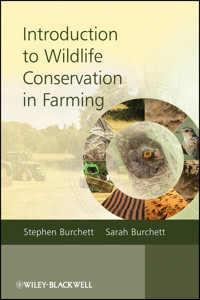
This book provides an invaluable, comprehensive and practical introduction to conservation issues associated with current farming practice. Representing both industry and conservation as an integrated and holistic system, it explores conservation issues within every farming discipline; from arable and horticulture to grasslands, woodlands, aquatic and coastal farming and will include an assessment of the impact of global warming. The book includes relevant case studies and international, real-world examples, focusing on applied management and not just ecological facts, theories and principles.
The carefully structured book begins by introducing the overall subject including some statistics on current farming activities, giving a brief outlook for the future of farming systems in relation to conservation. Each subsequent chapter will have its own introduction setting the commercial context and conservation value of an example farm, and will progress with a series of case studies that will include the following elements: site assessment; species list; soils management options; and a habitat management plan. A summary section will draw together the common themes of the chapter and develop a lead-in to subsequent chapters.
It will provide students with an informed appreciation of current practice whilst raising questions about the development of conservation in farming in the future.
Sie lesen das E-Book in den Legimi-Apps auf:
Seitenzahl: 534
Veröffentlichungsjahr: 2011
Ähnliche



















Contents
Preface
Acknowledgements
Chapter 1: Introduction
1.1 Conservation on farmland – why?
1.2 Historical relevance of on-farm conservation
1.3 Legislation and policy
1.4 Impact of agricultural policy on the environment
1.5 Further afield
References
Chapter 2: Mixed farming
2.1 Introduction
2.2 Conventional cereal crop production
2.3 Life cycle
2.4 Crop establishment
2.5 Nutrient requirements
2.6 Disease and pest control
2.7 Weed control
2.8 Harvest and crop quality criteria
2.9 Organic agriculture
2.10 Organic conversion
2.11 Soil fertility and crop rotations
2.12 Summary
2.13 Arable Flora
2.14 Elveden estate
2.15 Chapter summary
References
Chapter 3: Grasslands
3.1 Introduction
3.2 Cultivated grasslands for grazing domestic stock
3.3 Breed selection
3.4 Making more of native grasslands
3.5 Grassland ecosystems around the world
3.6 Temperate grasslands
References
Chapter 4: Forestry and conservation
4.1 Introduction
4.2 Forest management
4.3 Forest management techniques: the UK model
4.4 Coppice
4.5 Coppice and wildlife
4.6 Wood pasture
4.7 Commercial forestry
4.8 High forest
4.9 Planting
4.10 Harvesting
4.11 Sustainable forest management
4.12 Summary
References
Chapter 5: Farming and the aquatic environment
5.1 Water
5.2 Water framework directive
5.3 Part 1: On farm ponds, watercourses and riparian strips
5.4 Part 2: Fens, marshes and wetlands
5.5 Part 3: Estuaries, coastal and marine
5.6 Part 4: Aquaculture/fish farming
References
Chapter 6: The future of farming and its implications for conservation
6.1 Introduction
6.2 Industrial-scale farming and monocultures
6.3 Science and technology
6.4 Precision farming
6.5 Biotechnology
6.6 Tissue culture
6.7 Implications of reduced crop and stock diversity
6.8 Subsistence farming and emerging economies
6.9 Sustainable use of water, energy and waste
6.10 Agri-environment schemes
6.11 Conclusion
References
Acronym list
Species tables
Glossary
Index
This edition first published 2011 © 2011 by John Wiley & Sons, Ltd.
Wiley-Blackwell is an imprint of John Wiley & Sons, formed by the merger of Wiley’s global Scientific, Technical and Medical business with Blackwell Publishing.
Registered office:
John Wiley & Sons, Ltd, The Atrium, Southern Gate, Chichester, West Sussex, PO19 8SQ, UK
Editorial Offices:
9600 Garsington Road, Oxford, OX4 2DQ, UKThe Atrium, Southern Gate, Chichester, West Sussex, PO 19 8SQ, UK
111 River Street, Hoboken, NJ 07030-5774, USA
For details of our global editorial offices, for customer services and for information about how to apply for permission to reuse the copyright material in this book please see our website at www.wiley.com/wiley-blackwell.
The right of the author to be identified as the author of this work has been asserted in accordance with the UK Copyright, Designs and Patents Act 1988.
All rights reserved. No part of this publication may be reproduced, stored in a retrieval system, or transmitted, in any form or by any means, electronic, mechanical, photocopying, recording or otherwise, except as permitted by the UK Copyright, Designs and Patents Act 1988, without the prior permission of the publisher.
Designations used by companies to distinguish their products are often claimed as trademarks. All brand names and product names used in this book are trade names, service marks, trademarks or registered trademarks of their respective owners. The publisher is not associated with any product or vendor mentioned in this book. This publication is designed to provide accurate and authoritative information in regard to the subject matter covered. It is sold on the understanding that the publisher is not engaged in rendering professional services. If professional advice or other expert assistance is required, the services of a competent professional should be sought.
Library of Congress Cataloguing-in-Publication DataBurchett, Stephen.Introduction to wildlife conservation in farming / Stephen Burchett and Sarah Burchett.p. cm.Includes bibliographical references and index.ISBN 978-0-470-69935-5 (cloth)/978-0-470-69934-8(paper)1. Agricultural conservation. 2. Wildlife conservation. 3. Land use, Rural – Environmental aspects. 4. Agricultural ecology. I. Burchett, Sarah. II. Title.S604.5.B87 2011639.9 – dc22
2010020658
Preface
At the beginning of the 21st C the human population stands at around six billion people and is currently rising at an alarming rate in many regions such as Africa and South East Asia. Globally, the number of human beings is expected to reach nine billion by 2050. This continued increase in human population necessitates the expansion of agricultural systems and agricultural technology to ensure food production can meet future demands. Such increases will inevitably be in direct conflict with natural ecosystems, for instance tropical rainforests, and consequently with wildlife conservation. Indeed across the globe people are becoming increasingly aware of the need to protect the environment from the excesses of commercial agriculture, but it is often difficult for emerging economies to align food production systems with conservation efforts as these nations strive to secure their food supplies and to compete in the fiscal economy of the ‘global village’.
As mankind’s activities continue to shrink and degrade natural habitats, politicians and policy makers have realised that the farmed environment forms an integral component in the conservation of biodiversity. Consequently these parties have started to redefine agricultural policy with a view to mitigating the excess of agricultural pollution and improve the farmed environment for numerous species. Indeed, European Union (EU) politicians have now started to rewrite the Common Agricultural Policy (CAP) following the 1992 Earth Summit in Rio de Janeiro in order to meet Europe’s obligations on the conservation of biodiversity. The simple fact is that farming practice encompasses 47% of the European landscape and in the UK this figure is closer to 70%. These early developments in EU policy have made a start at realigning farming practice and environmental protection and has achieved some significant gains in the protection of watercourses, farmland habitats and associated endangered species, one good example is the increase in the number of cirl buntings in South Devon. However, this is a long and rocky road and not all of these developments in policy have resulted in improvements to biodiversity, in particular some arable reversion projects have resulted in losses to rare and vulnerable arable flora. These losses are often the consequence of rigid application of poor policy decisions that fail to recognise the historical co-evolution of species with traditional farming practices. The de-stocking of upland areas of the UK is one such example. Ecologically problems arose from overstocking due to headage payments paid to farmers during the 1970s and 1980s, these payments encouraged such overstocking; however the current policy of de-stocking has gone too far and is now having a direct, negative, impact on the composition of upland flora, as invasive species such as bracken and gorse out-compete smaller and diminutive native upland vegetation. It should not be forgotten that the UK upland habitats that exist today are actually the result of centuries of traditional farming practices.
Further afield governments are starting to follow Europe’s lead and there are some positive developments aimed at protecting the environment and the conservation of biodiversity. However, developing nations are expanding crop systems across virgin forests at frightening rates and consequently contemporary developments in policy are often too little and too late as well as being very difficult to enforce. Politicians, ecologists, agricultural scientists and farmers have to continue to work together to improve food production systems to ensure food security for the future, and to protect the environment at the same time.
This volume aims to introduce the concept of wildlife conservation within the farmed environment, and is structured into six chapters that explore key issues and present real life case studies of farmers, ecologists and researchers working together to improve farming practice and conservation of biodiversity. Chapter one sets the scope of the topic while chapters two, three, four and five review the key farming systems (arable, grassland, forestry and the aquatic environment, respectively). Each chapter gives an overview of these topics as well as presenting a series of case studies, that are complemented with maps, species boxes and tables of organisms protected by the application of good farming practice. Chapter six looks to the future and reflects on developing trends in farming practice and technology, and then evaluates some of the shortfalls in education. What becomes apparent is that at the primary school age groups, children are actively encouraged to look at the countryside and engage with wildlife, but that this all comes to an abrupt halt at secondary level. That is, that the development of conservation science lacks rigour for students in the 11 to 18 year old cohort, an issue that has to be addressed at a fundamental level as students enter higher education wishing to study environmental and conservation sciences.
Applying conservation methodologies within farming practice has a long way to go. However the authors have highlighted, using real examples, many ways in which farmers, with the support of politicians and scientists, can make a positive contribution to wildlife conservation at best, and mitigate environmental damage at the very least. This book is aimed at undergraduate students, conservation groups, policy makers and conscientious farmers in the hope of inspiring future practitioners of:
WILDLIFE CONSERVATION IN FARMING
Stephen BurchettSarah Burchett
Acknowledgements
The authors would like to acknowledge the following people who have helped us in our research and preparation of the manuscript.
From the UK: Sandra Hughes for her artwork, Jill Sutcliffe of the Institute of Ecology and Environmental Management (IEEM) for advice on manuscript preparation.
UK academic and farming contacts: Richard and Judy Foss of Down Farm, South Devon. Alison and Ian Samuel for discussions on organic farming in South Devon. Sue Peach of Drywall Farm, Widecombe, Devon. Jim Rudderham and Lindsay Hargreaves from Elveden Estate. Jamie Blackett from Arbigland Estate in Dumfries and Galloway. Henry Edmunds of the Cholderton Estate, Hampshire. David Robertson from the Forestry Commission for an informative visit around the Sunart Oakwoods. Mark Woods of Loch Duart Salmon Farm, Scotland. Tony Smith of Dragon Feeds, Wales.
From the US: Michael Wisniewski from the United States Department of Agriculture (USDA) for help and advice on farming in West Virginia and manuscript preparation. Julian Hoekstra and Jeff Adolphsen for informative discussions on the US Easement Programme.
US academic and farming contacts: Kevin Williams of the USDA Extension Service in North Carolina for organising informative visits with long leaf pine forest owners. Art Williams of Kalawi Farm, North Carolina. Brent Bogue (USDA), John Ann Shearer of the Fish and Wildlife Service (FWS) and land owner Jutta Kuenzler for an excellent wetlands restoration visit in North Carolina, plus Matt Kinane, Gerry Cohn of the American Farmland Trust and farmer Larry Perry in North Carolina, farmers Michael and Chrissie James in Maryland. Malin Clyde and Matt Tarr from University of New Hampshire Extension Service, who arranged many interesting and informative visits for us in New Hampshire, and Richard Langan for taking us out to see offshore aquaculture operations. Ned Therrien for showing us around his woodland lot in New Hampshire and farmer Chuck Cox also in New Hampshire. Eric Sideman from the Maine Organic Farmers & Gardeners Association (MOFGA).
From the rest of the world: Glen Reynolds from Danum Valley, Sabah, Borneo. Bill Spencer and Paul Troy of Hawaii Oceanic Technology™. Dr Shamsudin, Forestry and Environment Division of Forestry Research Institute Malaysia, for in-depth discussion on Malaysian Forestry and Enrichment Planting. Kristoffer Hylander from Department of Botany, Stockholm University for his insights on shade coffee growing.
This list is by no means exhaustive and we would also like to thank all of those people who have talked to us about farming and wildlife during our research period, and those who have sent e-mail links introducing further contacts.
1
Introduction
1.1 Conservation on farmland – why?
The population of planet earth stands in excess of 6.6 billion people, more than double what it was 50 years ago, and it is predicted to increase to approximately 9 billion in the next 50 years. That’s a lot of mouths to feed, and more of the land will inevitably need to be turned over to farming to supply that demand. As the amount of land used for production increases, so does the impetus for integrating conservation into farming, we cannot think just in terms of designating specific conservation areas and national parks. Such areas are extremely important, but they are simply not enough if we are to get the balance between that which we take out of the ecosphere, and that, which needs to be replenished and replaced, back on track.
There is considerable disparity in the percentage of land each country currently uses for farming. For example, in the United Kingdom (UK) around 23% of land is used for growing arable crops, in India the figure is nearly 50%, but in Egypt it accounts for less than 3%. The reasons are clear when one considers such issues as terrain, sub-strata, the underlying geology that predetermines the bedrock and subsequently the composition of the top soil, population dynamics and urbanisation, however food security has to be addressed on a global scale despite such statistics. In countries where the land is difficult to cultivate, conservation may not come very high up on the list of priorities when considering the need to feed an increasing population – but perhaps it should? Conservation is not just about protecting individual species; it comes as a whole package, where sustainable land management will endeavour to enhance habitat and species conservation while simultaneously producing nutritious and healthy food. Below are a few examples of the, often devastating, consequences when the proper connection between farming and habitat conservation is not made.
El Salvador, January 2001 and Argentina, February 2009 provide just two of numerous examples where heavy rainfall has created massive mudslides that have killed many people and devastated homes and arable land. Deforestation has been postulated as one possible cause; certainly it will have exacerbated the problem. Soil is bound together by roots such that removing trees can cause significant loss of topsoil which results in both poor soil structure for growing crops, damaging run-off into watercourses, (discussed in greater depth in Chapter 5), and, when there is high rainfall, these massive mudslides may result. So could these terrible tragedies have been avoided if large-scale deforestation had not taken place? They certainly believe so in Kyrgyzstan, Central Asia. With the support of Switzerland, large numbers of walnut trees (Juglans spp.) have been planted, and existing trees preserved. This has resulted in fewer mudslides and provided a new and sustainable source of income for the local rural populace, (www.sdc.admin.ch – accessed 12 January 2010).In the UK, grants were given to farmers to remove hedgerows (Agricultural Act 1947) to increase the area of production and increase the speed of harvesting, larger, more efficient machinery were then able to be used in the larger fields. Approximately 1/4 million miles of hedgerows were removed as a result. The long term effects of this decision were to increase soil erosion → which thus increased the need for chemical nutrient inputs → thus increasing costs → and so increasing the run-off into water courses → thus damaging streams, rivers and often estuaries, and increasing chemicals in the water table from where our drinking water originates. This is all before we consider the ecosystems damaged more directly by the removal of hedges. Hedges support a vast number of species of plants and invertebrates. Many of these invertebrates feed on crop pests, so an important ally was being removed along with the hedgerow plants. In turn, these invertebrates support numerous songbirds, many of which have now become endangered through both the loss of habitat and the increase in inputs mentioned. A whole cycle of damage followed as a result of this dubious decision, and no real long-term benefits resulted. Now in 2010 grants are being awarded to farmers to replant hedgerows.Lesen Sie weiter in der vollständigen Ausgabe!
Lesen Sie weiter in der vollständigen Ausgabe!
Lesen Sie weiter in der vollständigen Ausgabe!
Lesen Sie weiter in der vollständigen Ausgabe!
Lesen Sie weiter in der vollständigen Ausgabe!
Lesen Sie weiter in der vollständigen Ausgabe!
Lesen Sie weiter in der vollständigen Ausgabe!
Lesen Sie weiter in der vollständigen Ausgabe!
Lesen Sie weiter in der vollständigen Ausgabe!




