


45,50 €
Mehr erfahren.
- Herausgeber: John Wiley & Sons
- Kategorie: Wissenschaft und neue Technologien
- Serie: Apple Developer Series
- Sprache: Englisch
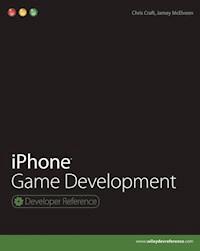
New Apple Developer Series!A technical and business guide to creating and selling iPhonegamesIf you've always wanted to develop a cool iPhone gameapplication and sell it for big bucks, this book is for you.iPhone Game Development covers all technical and commercialbases, from how to sign up for the Apple Development Program,master the development tools in the iPhone SDK, publish your gameto the App Store, and convince people to buy it.You'll find full coverage of Cocoa Touch and other greatfeatures of the iPhone SDK, plus pages of real-world examples withstep-by-step explanations. The book also includes loads ofroyalty-free code you can use for commercial development.* Apple's iPhone is not only a mobile phone, it's also a gameplatform rivaling big names like Nintendo and Sony; anyone can signup for the Apple Developer Program and publish their works to theApp Store* This hip book written by two successful gamers with over adecade of game development experience will teach you both thetechnical and business aspects of developing and publishing a gameto the App Store, plus how to convince end-users to buy it* Includes examples with step-by-step explanations of actualgames and apps currently on the App Store* A Companion Web site provides royalty-free code from thesamples in the book, which you can use to jumpstart your own gamedevelopmentSave weeks of development time with the expert guidance you'llfind in iPhone Game Development!Note: CD-ROM/DVD and other supplementary materials arenot included as part of eBook file.
Sie lesen das E-Book in den Legimi-Apps auf:
Seitenzahl: 549
Veröffentlichungsjahr: 2009
Ähnliche




















iPhone® Game Development
Table of Contents
Part I: Beginning iPhone Programminghref="http://www
Chapter 1: Getting Startedhref="http://www
Appreciating the History of Mobile Deviceshref="http://www
Introducing the iPhone SDKhref="http://www
Introducing the iPhone Developer Programhref="http://www
The cost of getting startedhref="http://www
Signing up to be an iPhone Developerhref="http://www
Un-Boxing Your iPhone Developer Toolshref="http://www
iPhone Dev Centerhref="http://www
iPhone Developer Program Portalhref="http://www
iTunes Connecthref="http://www
iPhone Developer Support Centerhref="http://www
Testing Applications on Your Devicehref="http://www
Generate and install a Development Certificatehref="http://www
Register iPhone and iPod touch Device IDshref="http://www
Create an App ID to identify your applicationhref="http://www
Generate and install a Development Provisioning Profilehref="http://www
Configure the Code Signing Identity of your applicationhref="http://www
Build and test your application on your development devicehref="http://www
Summaryhref="http://www
Chapter 2: Creating Your First App: Hello Worldhref="http://www
Setting Up Your Environmenthref="http://www
Getting the iPhone SDKhref="http://www
Installing the iPhone SDKhref="http://www
Test-Driving the SDKhref="http://www
Getting a sample app to try outhref="http://www
Running the sample in the iPhone Simulatorhref="http://www
Running the sample on your iPhone or iPod touchhref="http://www
Programming: Hello Worldhref="http://www
Defining your goalshref="http://www
Examining your optionshref="http://www
Coding the applicationhref="http://www
Summaryhref="http://www
Part II: Creating Simple iPhone Applicationshref="http://www
Chapter 3: Constructing Puzzle Appshref="http://www
Reviewing Famous Exampleshref="http://www
Understanding Game Design: Presenting Challengeshref="http://www
Create time pressurehref="http://www
Limit number of turnshref="http://www
Limit spacehref="http://www
Embracing Multi-Touchhref="http://www
Leveraging a new style of inputhref="http://www
Learning the technologyhref="http://www
Envisioning Animationshref="http://www
Programming: AmuckSliderhref="http://www
Defining your goalshref="http://www
Examining your optionshref="http://www
Coding the applicationhref="http://www
Analyzing Business Aspectshref="http://www
Summaryhref="http://www
Chapter 4: Building Novelty Appshref="http://www
Programming: iFlamehref="http://www
Programming: iDrumhref="http://www
Programming: Bonfirehref="http://www
Analyzing Business Aspectshref="http://www
Summaryhref="http://www
Part III: Shall We Play a Game?href="http://www
Chapter 5: Producing Action Gameshref="http://www
Reviewing Famous Exampleshref="http://www
Understanding Game Design: Excitement and Achievementhref="http://www
Enjoying the benefits of competitionhref="http://www
Creating spriteshref="http://www
The online marketplacehref="http://www
Creating soundshref="http://www
Programming: AmuckRacerhref="http://www
Defining your goalshref="http://www
Examining your optionshref="http://www
Coding the applicationhref="http://www
The Road Aheadhref="http://www
Full-screen animationhref="http://www
Putting the player in chargehref="http://www
What's Next?href="http://www
Analyzing Business Aspectshref="http://www
Summaryhref="http://www
Chapter 6: Building Community with Facebookhref="http://www
Getting to Know Facebookhref="http://www
Connecting to Facebook Accountshref="http://www
Download the Facebook Connect for iPhone SDKhref="http://www
The Facebook Connect sample projecthref="http://www
Registering as a Facebook developerhref="http://www
Creating a Facebook applicationhref="http://www
Setting the Facebook API key and application secrethref="http://www
Creating a feed templatehref="http://www
Creating a new Facebook Connect applicationhref="http://www
Working with sessionshref="http://www
Learning more about delegates and protocolshref="http://www
Creating alert viewshref="http://www
Logging inhref="http://www
Getting extended permissionshref="http://www
Publishing feed storieshref="http://www
Using the Facebook Platform APIhref="http://www
Analyzing Business Aspectshref="http://www
Summaryhref="http://www
Chapter 7: Connecting Players in Real Timehref="http://www
Facing the Challenges of Real-Time Multiplayer Gameshref="http://www
Network latencyhref="http://www
Lost packetshref="http://www
Understanding Game Design: Competitionhref="http://www
Practice makes perfecthref="http://www
Extending the learning curvehref="http://www
Choosing Your Connection Optionshref="http://www
Hooking Up with Your Peershref="http://www
Running and reviewing P2P Chathref="http://www
Dissecting the code behind P2P Chathref="http://www
Programming: AmuckPuckhref="http://www
Making a good first impressionhref="http://www
Understanding the datahref="http://www
Focusing on the detailshref="http://www
Connecting to players with peer-to-peerhref="http://www
Analyzing Business Aspectshref="http://www
Summaryhref="http://www
Chapter 8: Taking Turns with Other Playershref="http://www
Examining Turn-Based Game Playhref="http://www
Reviewing the game flowhref="http://www
Understanding the stageshref="http://www
Understanding Game Design: Strategyhref="http://www
Choosing Your Connection Optionshref="http://www
Head-to-headhref="http://www
Peer-to-peerhref="http://www
Web serviceshref="http://www
Push notificationhref="http://www
Finding Friends to Compete Againsthref="http://www
Connecting players with Web serviceshref="http://www
Adding push notification to the processhref="http://www
Programming: Amuck-Tac-Toehref="http://www
Designing the applicationhref="http://www
Abstracting for separation and reusehref="http://www
Examining the detailshref="http://www
Analyzing Business Aspectshref="http://www
Summaryhref="http://www
Part IV: Advanced Technical and Business Programming Conceptshref="http://www
Chapter 9: Grasping Advanced Programming Topicshref="http://www
Exploring the Camerahref="http://www
Getting Oriented with the Compasshref="http://www
Turning Up the Audiohref="http://www
Playing simple sounds with AudioToolkithref="http://www
Making some “real” noise with OpenALhref="http://www
Looking into Videohref="http://www
Discovering Geolocationhref="http://www
Stepping into the Third Dimensionhref="http://www
Analyzing the OpenGL ES templatehref="http://www
Drawing a cube with volumehref="http://www
Summaryhref="http://www
Chapter 10: Understanding the Business of Softwarehref="http://www
Learning Marketing Strategieshref="http://www
App Store reportshref="http://www
App Store statisticshref="http://www
Application sizehref="http://www
Application pricehref="http://www
Refundshref="http://www
Parental controlshref="http://www
Quality controlhref="http://www
Making the Best Appshref="http://www
Using soundhref="http://www
OpenGL EShref="http://www
Transitionshref="http://www
Xcode toolshref="http://www
iPhone 3GS featureshref="http://www
iPhone OS 3.0 featureshref="http://www
iPhone SDK 3.0 featureshref="http://www
Simulator vs. devicehref="http://www
Worldwide Developers Conferencehref="http://www
Apple Developer Connection (ADC) membershipshref="http://www
Apple Developer Forumshref="http://www
Apple Push Notification servicehref="http://www
Product iconshref="http://www
Supporting different iPhone OS versionshref="http://www
Exploring App Store Conceptshref="http://www
Supply and demandhref="http://www
Promo codeshref="http://www
Contestshref="http://www
App Store rejectionshref="http://www
App Store custom backgroundshref="http://www
Top free and paid applicationshref="http://www
iTunes Deep Linkshref="http://www
Worldwide distributionhref="http://www
App Store Logo License Programhref="http://www
iTunes Affiliates Programhref="http://www
Customer Reviewshref="http://www
Feedbackhref="http://www
Review sites and testimonialshref="http://www
Customer ratingshref="http://www
Using App Store Search Secretshref="http://www
Keywordshref="http://www
App Store application descriptionhref="http://www
On salehref="http://www
Videoshref="http://www
Maximum number of applicationshref="http://www
App Store application categorieshref="http://www
App Store approval wait timeshref="http://www
Marketing Yourselfhref="http://www
Social networkinghref="http://www
In-app marketing and advertisinghref="http://www
Competitionhref="http://www
Testinghref="http://www
In App Purchaseshref="http://www
Blogshref="http://www
Lite versionhref="http://www
App updateshref="http://www
Ad Hoc beta testinghref="http://www
Application nameshref="http://www
Application piracyhref="http://www
Screen shotshref="http://www
Summaryhref="http://www
Epilogue: Looking Aheadhref="http://www
Refining your skillshref="http://www
Answering the question: Is there more?href="http://www
Where to learn morehref="http://www
Preparing for the futurehref="http://www
Part V: Appendixeshref="http://www
Appendix A: Resourceshref="http://www
71squaredhref="http://www
148Apps.bizhref="http://www
AppsAmuckhref="http://www
How to make iPhone Appshref="http://www
iCodeBloghref="http://www
iDevGameshref="http://www
iLoungehref="http://www
iPhone Dev Centerhref="http://www
iPhone Dev SDKhref="http://www
iPhone SDK Articleshref="http://www
Mobile Orchardhref="http://www
The Unofficial Apple Webloghref="http://www
Wiley's Developer Reference Serieshref="http://www
Cocoa Touch for iPhone OS 3.0href="http://www
iPhone 3GS Portable Geniushref="http://www
iPhone Fully Loadedhref="http://www
Certificate in iPhone and Cocoa Developmenthref="http://www
Stanford University's iPhone Application Programming Classhref="http://www
WWDC 2009 Session Videoshref="http://www
Appendix B: 31 Days of iPhone Appshref="http://www
Day 1: Minutes to Midnighthref="http://www
Day 2: Bonfirehref="http://www
Day 3: openURLhref="http://www
Day 4: What Is My IP?href="http://www
Day 5: Count Me Inhref="http://www
Day 6: Reaction Timehref="http://www
Day 7: Speed Dialhref="http://www
Day 8: Flickr KMLhref="http://www
Day 9: Snow Fallhref="http://www
Day 10: Where Am I?href="http://www
Day 11: Plumb Bobhref="http://www
Day 12: U Decidehref="http://www
Day 13: My Googlehref="http://www
Day 14: Sleep Soundhref="http://www
Day 15: ZipWeatherhref="http://www
Day 16: World Tourhref="http://www
Day 17: Fireballhref="http://www
Day 18: Homeland Securityhref="http://www
Day 19: Altimeterhref="http://www
Day 20: Temperature Converterhref="http://www
Day 21: iDrumhref="http://www
Day 22: Pumpkin Facehref="http://www
Day 23: Hypnohref="http://www
Day 24: AmuckColorshref="http://www
Day 25: Sierpinskihref="http://www
Day 26: LavaFlowhref="http://www
Day 27: PhotoFramehref="http://www
Day 28: DigiClockhref="http://www
Day 29: Password Generatorhref="http://www
Day 30: DeathCalchref="http://www
Day 31: Moolahhref="http://www
Glossary href="http://www
iPhone® Game Development
Chris Craft and Jamey McElveen
iPhone® Game Development
Published byWiley Publishing, Inc.10475 Crosspoint BoulevardIndianapolis, IN 46256www.wiley.com
Copyright © 2010 by Wiley Publishing, Inc., Indianapolis, Indiana
Published by Wiley Publishing, Inc., Indianapolis, Indiana
Published simultaneously in Canada
ISBN: 978-0-470-49666-4
Manufactured in the United States of America
10 9 8 7 6 5 4 3 2 1
No part of this publication may be reproduced, stored in a retrieval system or transmitted in any form or by any means, electronic, mechanical, photocopying, recording, scanning or otherwise, except as permitted under Sections 107 or 108 of the 1976 United States Copyright Act, without either the prior written permission of the Publisher, or authorization through payment of the appropriate per-copy fee to the Copyright Clearance Center, 222 Rosewood Drive, Danvers, MA 01923, (978) 750-8400, fax (978) 646-8600. Requests to the Publisher for permission should be addressed to the Permissions Department, John Wiley & Sons, Inc., 111 River Street, Hoboken, NJ 07030, 201-748-6011, fax 201-748-6008, or online at http://www.wiley.com/go/permissions.
Limit of Liability/Disclaimer of Warranty: The publisher and the authors make no representations or warranties with respect to the accuracy or completeness of the contents of this work and specifically disclaim all warranties, including without limitation warranties of fitness for a particular purpose. No warranty may be created or extended by sales or promotional materials. The advice and strategies contained herein may not be suitable for every situation. This work is sold with the understanding that the publisher is not engaged in rendering legal, accounting, or other professional services. If professional assistance is required, the services of a competent professional person should be sought. Neither the publisher nor the authors shall be liable for damages arising herefrom. The fact that an organization or Website is referred to in this work as a citation and/or a potential source of further information does not mean that the authors or the publisher endorses the information the organization or Website may provide or recommendations it may make. Further, readers should be aware that Internet Websites listed in this work may have changed or disappeared between when this work was written and when it is read.
For general information on our other products and services or to obtain technical support, please contact our Customer Care Department within the U.S. at (877) 762-2974, outside the U.S. at (317) 572-3993 or fax (317) 572-4002.
Library of Congress Control Number: 2009936818
Trademarks: Wiley, the Wiley logo, and related trade dress are trademarks or registered trademarks of John Wiley & Sons, Inc. and/or its affiliates, in the United States and other countries, and may not be used without written permission. iPhone is a registered trademark of Apple, Inc. All other trademarks are the property of their respective owners. Wiley Publishing, Inc., is not associated with any product or vendor mentioned in this book.
Wiley also publishes its books in a variety of electronic formats. Some content that appears in print may not be available in electronic books.
This book is dedicated to the two most important women in my life: Mom, without your many sacrifices, nothing would have been possible; and Kathy, the love of my life, your love and patience strengthens me. —Chris
To my wife and kids, who made this possible, I thank God for all of you. —Jamey
About the Authors
Chris Craft is a software developer focusing primarily on device application development. He is a frequent CodeProject.com article author. Chris currently serves as a senior software architect for ACS Technologies Group, Inc., where he concentrates on his passion: mobile development. He previously was a senior developer for Taylor Data Systems, where he worked on sales force automation, field service, inventory, and data collection mobile applications. In the technical community, Chris is cofounder of a local developer user group and is also a member of Revolution Church. He has recently become engaged to Kathy Gulledge of Florence, South Carolina.
Jamey McElveen has been a game development enthusiast since 1995. He began coding games back in the days of DOS. With the release of the iPhone SDK he was one of the developers in the original gold rush to the App Store. Jamey works in Florence, South Carolina, as lead software architect at ACS Technologies Group, Inc. He is passionate about software and its role in Christianity and the field of Ministry. Jamey obtained his degree in Computer Engineering from Clemson University. He lives with his wife, Connie, and three boys, Jake, Slater, and Seth, in Timmonsville, South Carolina.
Chris and Jamey are the founders of the popular iPhone development site, http://appsamuck.com. They released their first training example the first day the NDA was lifted from the 2.0 SDK: 10/1/2008. They continued the series every day for 31 days until 10/31/2008.
Credits
Acquisitions Editor
Aaron Black
Executive Editor
Jody Lefevere
Project Editor
Lynn Northrup
Technical Editor
Jesse David Hollington
Editorial Director
Robyn Siesky
Editorial Manager
Cricket Krengel
Business Manager
Amy Knies
Senior Marketing Manager
Sandy Smith
Vice President and Executive Group Publisher
Richard Swadley
Vice President and Executive Publisher
Barry Pruett
Project Coordinator
Kristie Rees
Graphics and Production Specialists
Andrea HornbergerJennifer Mayberry
Proofreading
Laura L. Bowman
Indexing
BIM Indexing & Proofreading Services
Media Development Project Manager
Laura Moss
Media Development Assistant Project Manager
Jenny Swisher
Media Development Associate Producer
Doug Kuhn
Acknowledgments
Several people played an important role in the making of this book and we would like to acknowledge them here.
Most importantly, we would like to thank our Almighty God for the ability to learn, share, and many more reasons too numerous to count.
We would like to thank ACS Technologies Group, Inc., and its staff for their support and encouragement during this endeavor.
We would like to thank Wiley Publishing for having faith in two new authors with a passion for iPhone development. We would like to thank our acquisitions editor, Aaron Black, and our technical reviewer, Jesse David Hollington. We would like to thank our project editor, Lynn Northrup, for having the patience to initiate two new authors.
We would like to thank our reviewers, Page Brooks, Josh Hamrick, Alfonso Acevedo, Dayton Pruet, and Thorben C. Primke, for their insight and valued perspective.
Jamey McElveen would like to thank his wife, Connie, for her love, support, and encouragement during this endeavor. He would like to thank his boys, Jake, Slater, and Seth, for their understanding and extra efforts to help their dad out when he needed it. Jamey would also like to thank his mom, dad, and the rest of his family and friends for all their support and encouragement during this project. Finally, he would like to thank his friend and co-author, Chris, for encouraging him to take on this project in the first place and helping to push through the long hours together.
Chris Craft would like to thank his fiancée, Kathy, for her love, support, and encouragement. He would like to thank his mom, brother, and close friend, Shawn Morris, for their support and encouragement during this project.
Introduction
It was liberating to the computer industry when computers finally became small enough to take home and set up on a desk. As the technology has gotten smaller and more portable, it has continued to grow in power. The device and the components also became less expensive as the years and months passed. Soon all the components were consolidated into one device and we began using notebook computers that we could use in our laps.
In 1993, Apple had a vision for mobile computing that they first implemented in their device, the Newton Message Pad. This was a device that allowed you to do simple day-to-day tasks in the palm of your hand. Although it was not a successful venture for Apple at the time, we believe this was a pivotal milestone for the modern PDA. Others entered the PDA market, cell phones became the norm, and Apple introduced the iPod. In 2007, Apple took the best from all these mobile innovations and wrapped them together in the device you know today as the iPhone.
In summer 2008 Apple began allowing developers to write custom applications for the iPhone and sell them in their hugely successful App Store. We are realizing that these technologies that Apple has cleverly combined will synergize if leveraged with the right application. As we move forward with the iPhone we see the potential for applications that can connect people in ways we may not have considered until now.
iPhone Game Development is about releasing the potential to use this small but powerful device to host games that are fun, engaging, and just as powerful as the device they run on. Use the material in this book to help you bring your creations to life. We aim to help you explore beyond just porting your favorite games to a new platform and see the iPhone for its potential to connect and share experiences with other players.
How This Book Is Organized
If you are new to iPhone development, we suggest reading Part I to help you get started. The first steps in iPhone development can be some of the toughest ones, and they can be make-or-break points for many developers. The instructions in Part I can help new developers overcome these obstacles. If you are not new to iPhone development, feel free to skip ahead to Part II to begin learning game development.
iPhone Game Development is organized into five main parts:
Part I: Beginning iPhone Programming
This part of the book helps developers who may be new to iPhone development get started. There is much more to developing applications for the iPhone than just syntax and compiling. The chapters in this part keep you pointed in the right direction.
Part II: Creating Simple iPhone Applications
This part of the book gets you started creating basic games for the iPhone. If you are not new to iPhone development but you are new to iPhone game development, this is where you will want to begin. Many profitable games are still being sold today that use only the basic technologies discussed in these chapters.
Part III: Shall We Play a Game?
In this part we up the ante a little. The technologies introduced in this section help you move your creations to the next level. Even if you already have a successful game, you can use techniques discussed in these chapters to improve your game with Facebook integration, peer-to-peer connectivity, or global networking. These additions can lead to the holy grail of game sales: viral marketing.
Part IV: Advanced Technical and Business Programming Concepts
The chapters in this part cover advanced techniques you may want to pursue later. We have included a chapter on grasping advanced programming topics to serve as a catalyst for beginning to learn advanced techniques that you may wish to include in your game. The chapter on understanding the business of software helps you understand what to expect on the App Store and how to use strategies that other developers have used to get better results. We also discuss cost-effective ways to generate more sales and make your applications even more successful.
Part V: Appendixes
Check this part of the book for a list of useful links, books, and other helpful resources; a look at our 31 days of iPhone applications from http://appsamuck.com; and a glossary for concise definitions of terms that are helpful for you to know as you get started in iPhone game development.
Icons Used in This Book
To make this book as usable as possible, icons in the margins alert you to special or important information. Look for the following:
Caution
The Caution icon offers important information about a procedure to which you should pay particular attention.
Cross-Reference
The Cross-Reference icon refers you to a related topic elsewhere in the book. Because you may not read this book straight through from cover to cover, you can use cross-references to quickly find the information you need.
Note
The Note icon alerts you to a special point or supplementary information about a feature or task that may be helpful.
Tip
The Tip icon marks a tip that saves you time and helps you work more efficiently.
To further assist you in reading and learning the material in this book, the following conventions are used throughout:
New words or phrases that may require definition and explanation appear in italics. Text that carries emphasis and single characters that may be easy to lose in the text also appear in italics.
Menu commands are indicated in chronological order by using command arrows: File⇒Open.
Part I: Beginning iPhone Programming
Chapter 1
Getting Started
Chapter 2
Creating Your First App: Hello World
Chapter 1: Getting Started
In This Chapter
Appreciating the history of mobile devices
Introducing the iPhone SDK
Introducing the iPhone Developer Program
Un-boxing your iPhone developer tools
Testing applications on your device
If you are new to iPhone development or you are considering it, you may feel like it is a daunting prospect. We wish we could say it's a piece of cake, but the truth is, there's a little more to it. However, with a little guidance and encouragement, you will soon see your creations up and running on your device.
We cannot mention this enough about iPhone development: The best part is the reward. As a developer, nothing is more gratifying than to see your applications take life. It's even more satisfying to see your creations take life on the screen of the iPhone. Applications can really come alive when they respond to Multi-Touch, an accelerometer, and a compass.
Appreciating the History of Mobile Devices
Apple has had the vision for a powerful mobile device like the iPhone for many years. In August 1993, Apple announced the Newton Message Pad, a device that marked Apple's entry into the market of personal digital assistants (Figure 1.1).
The Apple Newton was not the success Apple hoped for—perhaps it was ahead of its time, and the market was just not ready for such an innovative idea. There is much speculation to why the Apple Newton failed, but after its fall, the market remained quiet for a few years. In March 1996, U.S. Robotics entered the marketplace. Taking design cues from the Apple Newton, they introduced the Pilot 1000 (or Palm Pilot). This time the market was ready, and the Palm Pilot became the first successful PDA. In the years that followed, more and more PDAs were introduced: Pocket PC, Handspring, and Compaq iPaq, to name a few. At the same time, mobile phones were becoming more affordable and commonplace. To help bridge this journey, devices like Palm, iPaq, and the Blackberry began to integrate with these mobile phones creating the “smart phone” device space.
In 2001 Apple announced the iPod, which was an almost-instant success (Figure 1.2).
Figure 1.1
Possibly the first personal digital assistant (PDA): the Newton Message Pad
Figure 1.2
The first iPod was introduced in 2001.
It is not surprising that Apple seized the opportunity and ingeniously combined the PDA, iPod, and mobile phone into one brilliant device, and in 2007, the iPhone was born (Figure 1.3).
Figure 1.3
The iPhone took the market by storm when it was introduced in 2007.
The iPhone was not the first device to combine the elements of PDA, media player, and phone. Blackberry and Windows mobile devices with these capabilities were being sold long before the iPhone. So why is the iPhone considered to be new and revolutionary? We believe it can be attributed to the unique and powerful design and user interface. In a nutshell, Apple got it right, marketing and designing the iPhone with the day-to-day user, not the businessperson or those just interested in business tools, in mind. You do not have to be a tech-savvy user to embrace the iPhone. In fact, the original iPhone lacked a lot of features found in other devices; however, it includes all the critical features that the average consumer cares about, and it arranges these features in a brilliant user interface.
Introducing the iPhone SDK
While thinking of the needs and desires of a day-to-day user, Apple realized that it needed to include variety. Apple had created a device that could, of course, browse the Web, check e-mail, and play music. However, this was just the tip of the iceberg. The device was also powerful enough to host many applications, including games. At first, developers were restricted to developing applications that were strictly browser-based. Applications in this space leveraged HTML, JavaScript, and Web-Kit. These applications were actually surprisingly good; however, the tides turned when Apple released the 2.0 OS and the iPhone SDK. To leverage the iPhone to its fullest capability and create the maximum amount of variety, Apple released the iPhone SDK in 2008. Developers flocked to the gates and began creating the first entries into the massive collection of native applications we see on the App Store today. The iPhone SDK is your opportunity to add to this variety of applications available for the iPhone.
Lesen Sie weiter in der vollständigen Ausgabe!
Lesen Sie weiter in der vollständigen Ausgabe!
Lesen Sie weiter in der vollständigen Ausgabe!
Lesen Sie weiter in der vollständigen Ausgabe!
Lesen Sie weiter in der vollständigen Ausgabe!
Lesen Sie weiter in der vollständigen Ausgabe!
Lesen Sie weiter in der vollständigen Ausgabe!
Lesen Sie weiter in der vollständigen Ausgabe!
Lesen Sie weiter in der vollständigen Ausgabe!
Lesen Sie weiter in der vollständigen Ausgabe!
Lesen Sie weiter in der vollständigen Ausgabe!
Lesen Sie weiter in der vollständigen Ausgabe!
Lesen Sie weiter in der vollständigen Ausgabe!
Lesen Sie weiter in der vollständigen Ausgabe!
Lesen Sie weiter in der vollständigen Ausgabe!
Lesen Sie weiter in der vollständigen Ausgabe!




